A damp, earthy smell in the hallway. A patch near the baseboard that looks darker than it did last week. A bathroom ceiling stain that keeps returning even after repainting. Individuals seeking mold testing rarely do so out of curiosity. They search because something feels off, and they want a straight answer.
That concern is reasonable. According to recent 2026 housing statistics summarized by RubyHome, 47% of U.S. homes have visible mold or a mold odor. Nearly half. If you're dealing with a suspicious smell, recurring moisture, or a spreading stain, you're not overreacting.
The hard part is knowing what to do next. Some companies talk as if every speck is an emergency. Others hide behind technical language and leave families more confused than when they started. The truth sits in the middle. Mold testing can be very useful, but it has limits. It can help identify contamination patterns, support a remediation plan, and document conditions. It cannot tell you, by itself, whether a building is “safe” in a medical sense or prove why a person feels sick.
That Unsettling Feeling When You Suspect Mold
A common pattern starts small. Someone notices the closet smells musty after rain. Then they remember the shower overflow from months ago. Then they spot bubbling paint near a window and start wondering how long moisture has been sitting inside the wall.
That progression matters because mold problems often begin as moisture problems. A family may focus on the visible staining, but the underlying issue is usually the leak, condensation, or wet building material feeding growth out of sight. If you're trying to trace one of those hidden sources, this guide on fixing shower leaks through ceiling is a useful example of how water can travel beyond the place where you first notice damage.
Why the anxiety feels so immediate
Mold triggers two kinds of stress at once. First, there's the health worry. Second, there's the property worry. People don't know whether they're looking at a small localized issue or something that has spread into insulation, drywall cavities, subflooring, or HVAC-adjacent spaces.
That uncertainty is why rushed guesswork rarely helps. Scrubbing the visible spot may remove staining on the surface while leaving wet material behind it. Painting over a water mark may make the room look better for a week while the source remains active.
Visible growth and musty odor are signals to investigate moisture first, not just surface appearance.
For homeowners and tenants, one of the most practical starting points is learning the signs of mold in your home. A clear checklist helps separate a one-time cosmetic issue from conditions that need professional evaluation.
What people need most in this moment
They need a calm process. Not fear. Not vague reassurance. A good mold investigation starts by answering basic questions in order:
- Where is moisture coming from
- What materials are affected
- Is the problem limited or widespread
- Will testing add useful decision-making data
That last question is important. Testing is a tool, not a ritual. In some situations, a careful visual inspection tells you enough to move straight to correction and cleanup. In others, targeted sampling helps define the scope and document hidden contamination.
Defining Professional Mold Testing Services
Professional mold testing is not the same thing as buying a DIY plate kit online and leaving it on a countertop. Real testing is part of a structured inspection process that looks at building conditions, moisture behavior, sampling strategy, and laboratory interpretation together.
A qualified inspector doesn't walk in, collect a random sample, and announce a diagnosis. The work starts with context. Where have leaks occurred. Which rooms smell musty. What materials stayed wet. Which occupants are noticing symptoms, and when. Those details shape what gets tested and why.

What makes a professional service different
Professional mold testing services near me should include more than collection media and a lab submission form. The inspection side matters just as much as the analytical side.
A competent service typically involves:
- A building-focused inspection that looks for water intrusion, humidity patterns, staining, odor, and material damage
- Moisture detection tools such as moisture meters and, where appropriate, thermal imaging to identify wet areas that aren't visible
- Strategic sample selection based on areas of concern rather than random locations
- Documented handling procedures so samples can be traced from collection to lab analysis
- Interpretation in context instead of handing over raw fungal names with no explanation
What it is not
Professional mold testing is not a medical exam. It doesn't diagnose illness, rule in a specific exposure injury, or replace care from a physician. It also isn't a shortcut around fixing moisture. If a roof leak, plumbing failure, or condensation issue remains active, the testing result won't solve the underlying problem.
Practical rule: Testing only helps when it answers a real decision. If the answer won't change what you need to repair or remove, sampling may add cost without adding clarity.
That's why good practitioners decide first whether testing is necessary, then choose the least intrusive and most informative method. Sometimes the right recommendation is targeted sampling. Sometimes it's direct remediation of visible, moisture-damaged materials. The professionalism shows in that judgment.
The Three Main Types of Mold Tests Explained
Not all mold tests answer the same question. Some measure what's moving through the air. Some identify what's growing on a material. Others examine a piece of the material itself. If you're searching for mold testing services near me, understanding this difference helps you ask better questions before anyone starts sampling.
Comparison of Mold Testing Methods
| Test Type | What It Measures | Best Used For |
|---|---|---|
| Air sampling | Airborne spores in a specific location at the time of collection | Comparing indoor conditions to outdoor background, evaluating hidden contamination patterns, documenting airborne impact |
| Surface sampling | Material collected from a visible area by swab, tape, or similar method | Confirming whether visible discoloration is mold and identifying growth on a specific surface |
| Bulk sampling | A piece of the suspect material itself | Determining whether mold is present within drywall, carpet, insulation, or other building materials |
Air sampling
Air sampling is the method people ask about most often. It can be useful, but it's also the method most often misunderstood. An air sample is a snapshot of airborne conditions during collection. It doesn't show what happened last week, and it doesn't stand alone without proper controls and inspection context.
Air data can help when mold is suspected behind walls or above ceilings, when odor is present without visible growth, or when an investigator needs to compare one area against another. It's also helpful after moisture events where contamination may not be obvious on the surface.
Surface and bulk sampling
Surface sampling answers a narrower question. It tells you whether a specific stain, dust-like patch, or discolored material contains mold. That can be useful when visual appearance is ambiguous.
Bulk sampling goes deeper by testing the actual piece of affected material. This is often the clearest option when drywall paper, insulation, ceiling tile, or other porous material appears compromised and the inspector needs to know whether contamination has penetrated into the material itself.
If you want a visual primer on what inspectors may be identifying in reports and microscopy findings, this guide on what mold spores look like helps make the terminology easier to follow.
Choosing the right method
The best testing plan depends on the question being asked.
- Use air sampling when hidden impact is suspected or room-to-room comparison matters.
- Use surface sampling when a visible patch needs confirmation.
- Use bulk sampling when the material itself may be colonized below the surface.
No serious practitioner should present one test type as the answer to every mold concern. Buildings are too variable for that.
When to Call for Mold Testing
Some calls are obvious. You open a wall after a plumbing leak and find dark, fuzzy growth. Other calls are less clear. The house smells damp every morning, but only in one room. A tenant reports recurring irritation. The ceiling stain is dry now, but nobody knows whether the cavity above it ever fully dried.
Situations that justify a professional evaluation
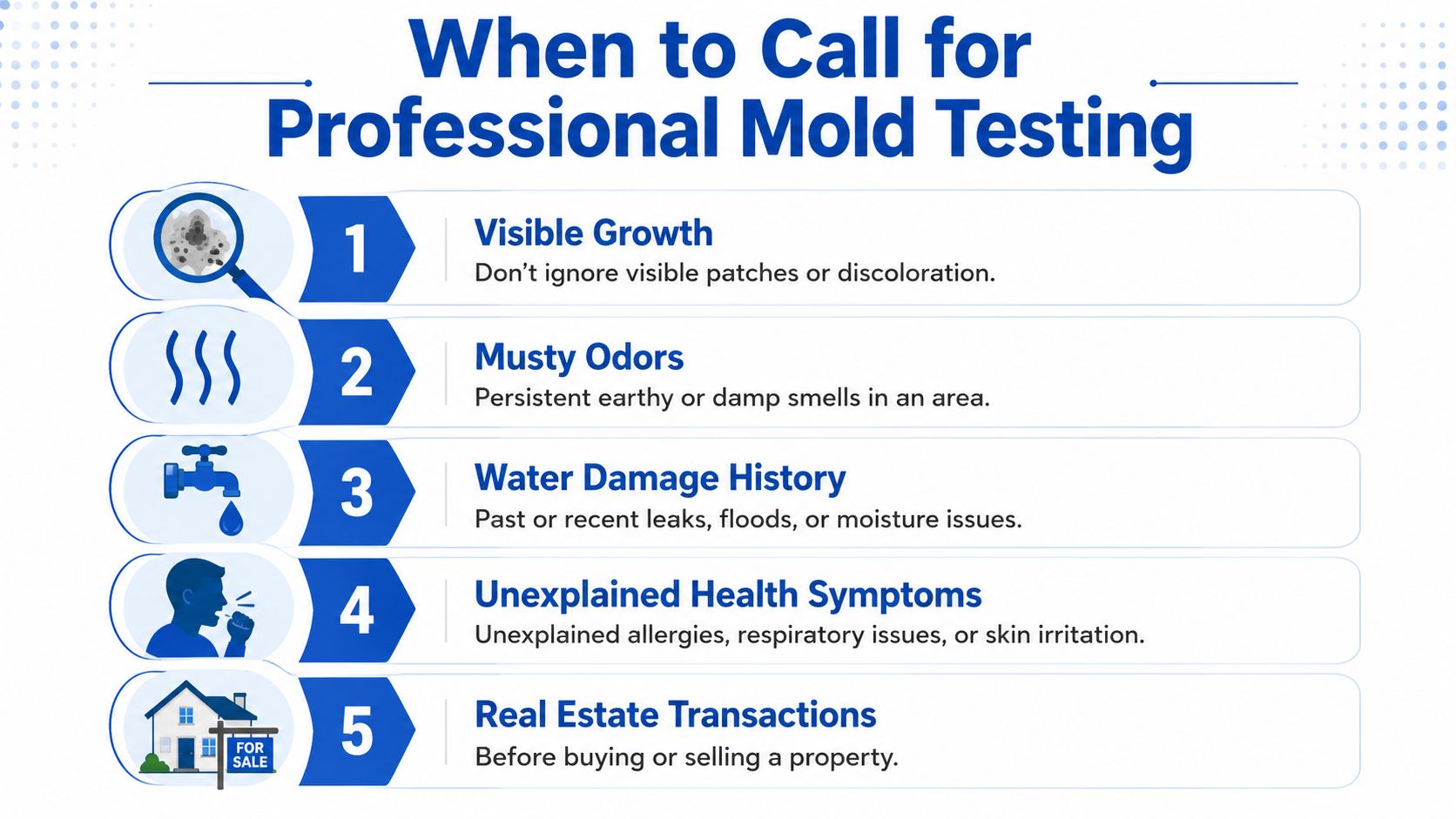
A mold inspection is worth considering when conditions point to hidden moisture or unresolved contamination, especially when the next decision affects repairs, occupancy, or a transaction.
Call when you have:
- Persistent musty odors in a room, cabinet, crawlspace, or HVAC-adjacent area
- Known water history such as roof leaks, plumbing failures, condensation problems, or prior flooding
- Visible damage to finishes including bubbling paint, warped trim, stained drywall, or soft materials
- Repeated recurrence after cleaning or repainting
- A real estate deadline where condition documentation matters
Health concerns need the right framing
People often search after someone in the home starts coughing, sneezing, or complaining of headaches. Those reports should be taken seriously, but they shouldn't be used to turn mold testing into a medical verdict.
Public health guidance is clear that mold testing isn't clinically diagnostic for health effects, and routine air sampling isn't usually the first recommendation in a building evaluation. What matters first is identifying visible growth, musty odor, and moisture sources. If someone is worried about possible exposure patterns, this overview of signs of toxic mold exposure can help frame the conversation, but building investigation and medical evaluation are separate tracks.
If a room smells musty and has a leak history, waiting for mold to become obvious usually makes the repair more disruptive.
Timing matters after water intrusion
One of the most practical intervention points comes right after materials get wet. NIOSH states that drying wetted materials within 48 hours of getting wet, or removing the materials, is a primary prevention strategy. Once that window is missed, porous materials can hold moisture long enough for mold to establish.
That doesn't mean every wet surface needs lab work. It means unresolved moisture should never be treated as harmless just because the wall looks normal from the outside.
The Mold Testing and Analysis Process Step by Step
A proper mold investigation should feel orderly. Families and property managers already have enough uncertainty. The process itself shouldn't add to it.
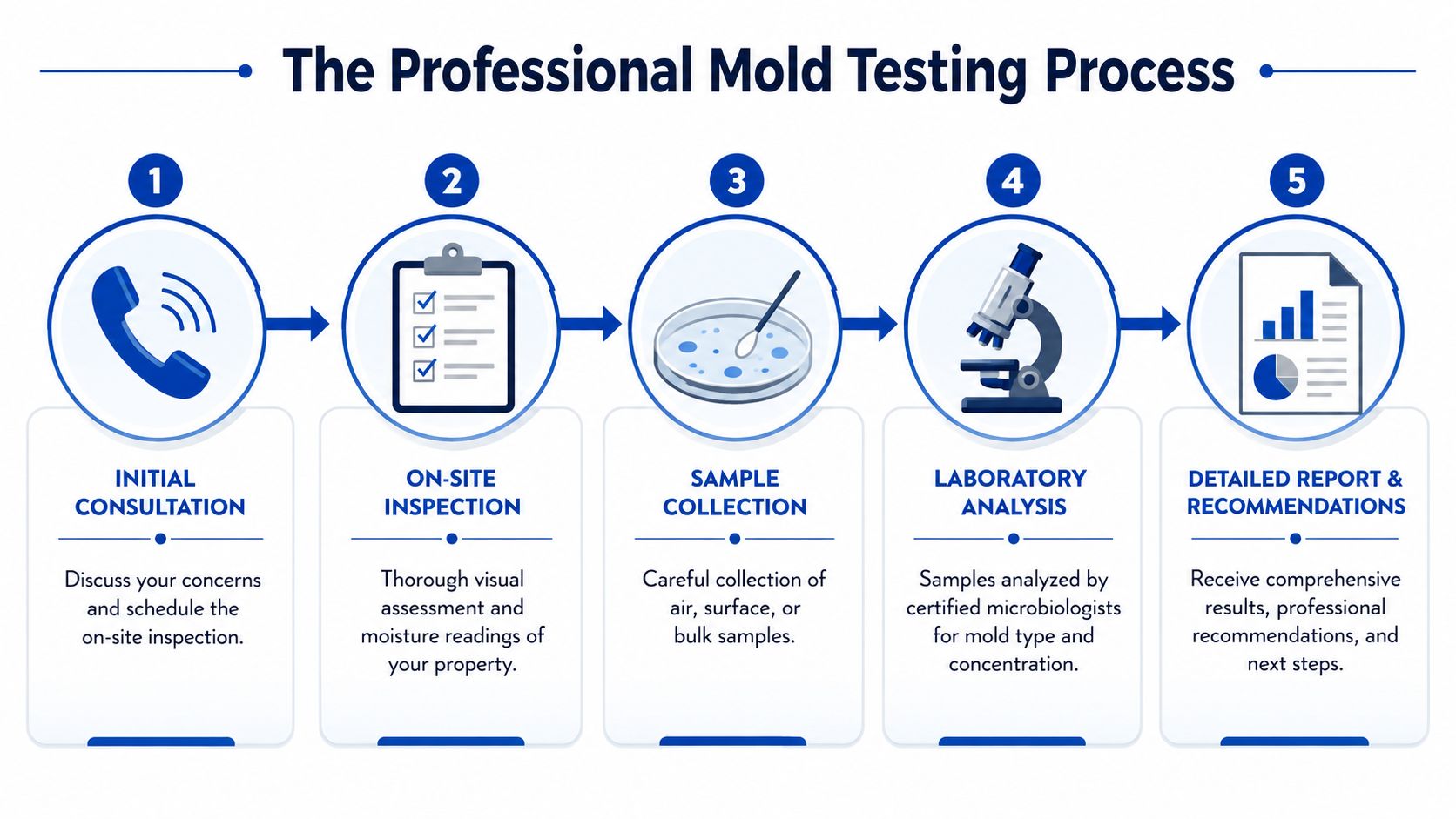
Near the start of a professional visit, many companies use a simple visual roadmap like this to explain what happens.
Step one through step three
Initial consultation. The first phone call should narrow the concern. Was there a leak. Is there visible growth. Which rooms smell unusual. Has any cleanup already happened. This determines whether the site likely needs inspection only, inspection plus sampling, or immediate containment advice.
On-site inspection. The inspector walks the property, interviews occupants or managers, and documents odor, staining, moisture conditions, and material damage. Tools like moisture meters help identify active or historic wetting. The inspection also helps avoid random sampling, which often produces data with little decision value.
Sample collection. If testing is justified, the inspector selects the right sample type for the question at hand. According to the IAC2 Mold Inspection Standards of Practice, a qualified inspection must include at least two outdoor air samples to serve as a control, creating a baseline for determining whether indoor air conditions are abnormally high.
That outdoor comparison is not a technical detail to gloss over. It's one of the most important quality checks in the process.
Step four and step five
This short video gives a helpful general overview before looking at the reporting side.
Laboratory analysis. Samples should go to a qualified laboratory with documented handling from collection through receipt. Chain of custody matters because it preserves sample identity, timing, and handling details. If you want to understand why that paperwork is so important, this explanation of chain of custody procedures is worth reading.
Report and consultation. The final report should connect findings to action. A good report identifies sampled locations, methods used, observations made during the inspection, and what those findings mean for repair or remediation planning. It should not bury the client under unexplained fungal names and expect them to decode the next step alone.
What a disciplined process avoids
An organized inspection helps prevent common mistakes:
- Sampling where no meaningful comparison exists
- Testing without documenting moisture sources
- Interpreting raw lab output without site context
- Using one result to make sweeping claims about the whole building
A mold report is strongest when the field observations and the laboratory findings support each other.
That's what people should expect when they search for mold testing services near me. Not a guess. A method.
Understanding Your Lab Report and What Comes Next
Lab reports can look intimidating. They often include Latin genus names, location labels, sample types, and concentration data that seem precise but feel disconnected from the actual problem in the building. The value of the report is not in sounding scientific. The value is in helping define the next safe step.
What the report is actually telling you
Most reports answer three practical questions. What was sampled. What was found. How do indoor findings compare to the controls and the conditions seen during inspection.
You may see references to spore types, raw counts, and concentration levels. On their own, those terms don't tell you whether a building has a major mold problem. Interpretation depends on where the sample came from, whether that room had odor or water history, and how indoor findings relate to the outdoor baseline and to visible conditions on site.
Why there is no simple pass or fail
The EPA states that there are no federal standards for mold spore concentrations in indoor air, so sampling cannot be used to “clear” a building. Instead, comparing indoor samples to outdoor control samples is the standard protocol for identifying building-specific contamination.
That means no honest professional should look at one page of lab numbers and declare a universal threshold has been crossed. Mold assessment doesn't work like a speed limit sign. It's a comparative, context-driven analysis.
A thoughtful reading of the report often looks like this:
- Indoor air aligns with outdoor background, and there's no strong inspection evidence of hidden impact
- One room shows an unusual indoor pattern that supports the odor or moisture concerns documented on site
- A surface or bulk sample confirms growth on a specific material, helping define what needs removal or cleaning
What comes next after results arrive
The next move depends on what the report supports. Sometimes the right step is moisture correction and selective demolition. Sometimes it's cleaning non-porous surfaces and removing porous materials. Sometimes the report confirms that the issue is narrower than feared, which can prevent unnecessary demolition.
What the report should not be used for is proving why a person feels ill. Mold testing is a building tool. Medical questions belong with a licensed healthcare provider, especially when symptoms are persistent or severe.
The best report doesn't just identify mold. It narrows the work so the cleanup is proportional, safer, and easier to verify.
For families and facility managers, that's a significant benefit. A report turns uncertainty into a repair map.
Your Trusted Partner for Mold Testing and Remediation
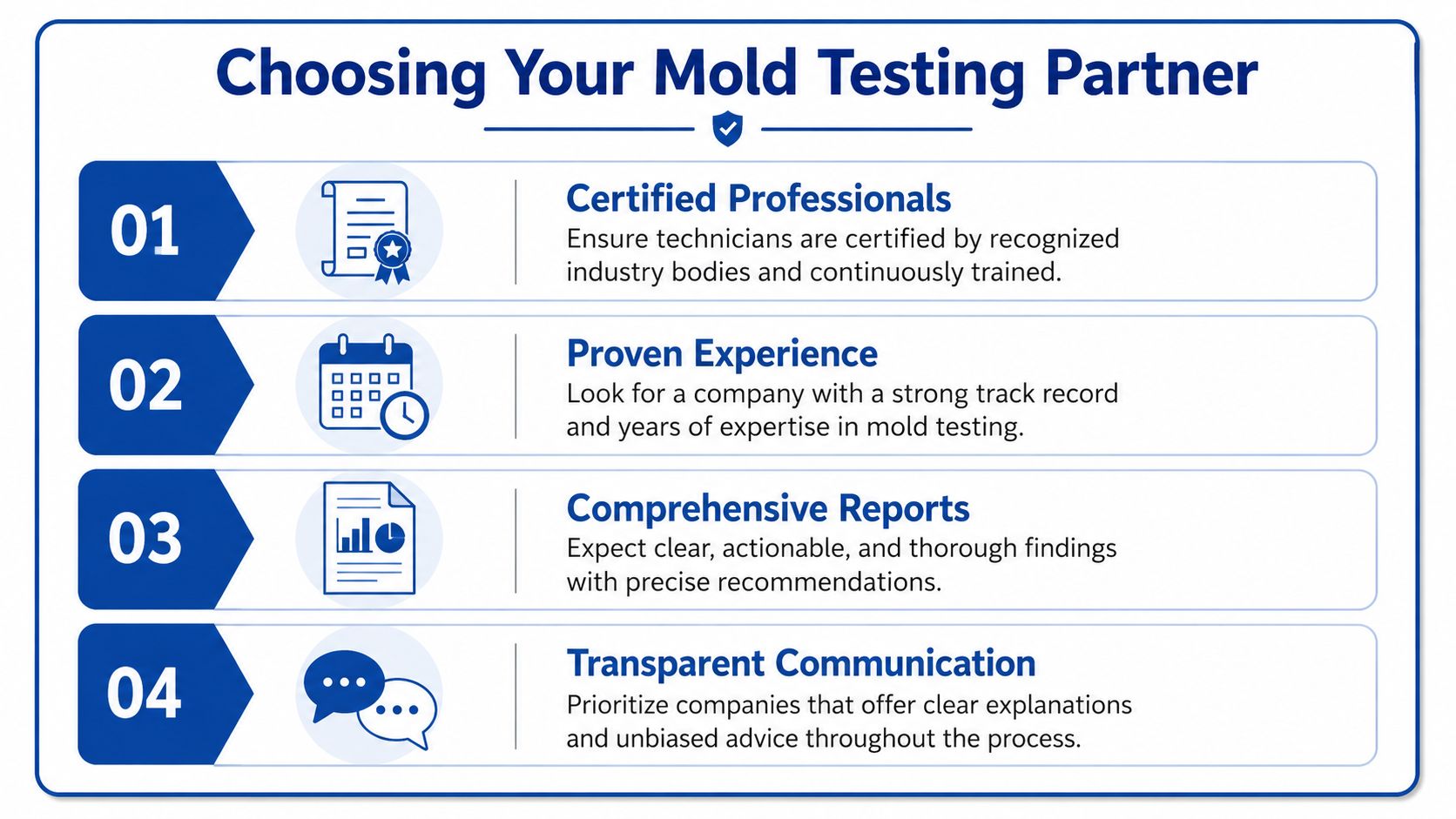
Choosing a mold provider is not just about who can show up first. It's about who follows a defensible process, explains limitations transparently, and avoids conflicts that can distort recommendations.
What to verify before hiring anyone
Start with the basics. Ask whether the company or technician meets the regulatory expectations in your state, whether they carry appropriate insurance, and whether they can explain exactly what inspection and sampling will include. In regulated states, this isn't optional paperwork. It's part of legal compliance.
Rules vary by location. Some states have active licensing or guidance frameworks for mold businesses, as outlined in this state-by-state overview from Curren Environmental. In Texas, requirements became stricter under Senate Bill 1255 as described here, including individual licensure or registration for employees performing assessment or remediation work. Even in places without a dedicated state mold license, professional certification is still valued by industries that need competence and defensible documentation, as noted in this discussion of Oklahoma mold removal license requirements.
If remediation is being planned, scope also matters. In Texas, for example, TDLR rules require a Mold Remediation Protocol when affected materials exceed 25 square feet. That requirement highlights a broader principle that applies everywhere. Larger projects need clearer written control measures, documentation, and performance standards.
Be careful with free inspections
One of the biggest traps for consumers is the free inspection that isn't really an inspection. It's a sales appointment designed to lead directly into paid remediation.
An emerging issue is the “free mold inspection” used as a sales tactic, with 70% described as lead-generation tools by remediation-only firms. That creates an obvious conflict of interest. The same company that benefits from a larger cleanup scope may also be the one defining the problem.
That doesn't mean every free visit is dishonest. It does mean you should ask direct questions:
- Will you also bid on the remediation
- Do you provide written findings even if I don't hire you for cleanup
- What standards guide your sampling plan
- Who analyzes the samples
- What would make you recommend no sampling at all
What a trustworthy provider sounds like
A reliable contractor doesn't promise certainty where none exists. They won't claim testing can diagnose illness. They won't use one air sample to make sweeping statements about an entire property. They'll talk about moisture sources, affected materials, containment, documentation, and how they protect occupants during cleanup.
They should also explain the trade-offs clearly. Sometimes independent inspection is the right first move. Sometimes visible contamination makes immediate corrective action more sensible than spending money on extra testing. Transparent advice is usually a sign that the company knows the work well enough not to oversell it.
If you're comparing options, this roundup of the best mold removal companies near me can help you think through credentials, communication, and scope.
The right provider doesn't just tell you what they found. They help you understand what the findings can support, what they can't prove, and how to move forward safely.
If you need calm, compliant help from a team that handles hazardous environments with discretion and respect, 360 Hazardous Cleanup is available to guide you through inspection support, remediation planning, and safe restoration. Their team approaches mold issues the way experienced environmental professionals should: by identifying the source, protecting occupants, documenting conditions carefully, and helping families and property managers make informed decisions without pressure.