
Mouse droppings are typically 1/8 to 1/4 inch long, similar in size and shape to a grain of rice. If you've just found small dark pellets in a cabinet, along a baseboard, or behind an appliance, that size is one of the clearest signs you may be looking at mouse activity.
That discovery can feel unsettling fast. The question of mouse droppings' size isn't typically posed out of mere curiosity. Instead, it arises because something suspicious has been found in an area where food is kept, children play, or staff and tenants require a safe environment.
The good news is that size, shape, and condition can tell you a lot. The harder truth is that identification isn't only about naming the pest. It also affects how the area should be handled, what health risks may be present, and whether the situation has moved beyond basic housekeeping into biohazard cleanup.
What to Know When You Find Suspicious Droppings
Finding droppings in your home or building usually triggers two questions right away. What is it, and is it dangerous?
Start with the size. Mouse droppings are usually small, rice-grain sized pellets, and that detail matters because it helps separate a mouse issue from a larger rodent problem. Professionals use that first visual check to decide what kind of contamination response may be needed.
First, pause before cleaning
If you're tempted to sweep it up quickly, stop there. Disturbing rodent waste can create a bigger exposure problem than leaving it undisturbed for a short time while you assess the area.
A careful first look is safer than a rushed cleanup. Check where the pellets are located, whether they appear isolated or scattered, and whether you're seeing them near food, storage, insulation, or HVAC-adjacent spaces.
Practical rule: Identification comes before cleanup. If you don't know what left the droppings, you also don't know the right safety response.
Why the size matters so much
Small droppings often point to mice, but the primary concern is what that clue implies. Mice don't just leave waste behind. They contaminate travel routes, feeding areas, and nesting zones. In homes, that often means kitchens, pantries, utility areas, garages, and hidden corners. In commercial properties, it can affect break rooms, inventory areas, wall voids, and shared common spaces.
If you need a deeper walkthrough on safe handling, this guide on cleaning mouse droppings safely is a useful next step. The key point is simple: once you suspect rodent waste, you're no longer dealing with an ordinary mess. You're evaluating a possible contamination event.
Identifying Mouse Droppings by Size Shape and Color
The simplest answer to how big are mouse droppings is also the most useful one. House mouse droppings have a standardized morphometric profile of ⅛ to ¼ inch (3.2–6.4 mm) in length, characterized by a spindle or grain-of-rice shape with one or both ends tapering to a sharp point. A single house mouse deposits approximately 50–75 pellets daily, according to Lewis Pest Control's guide to mouse droppings.
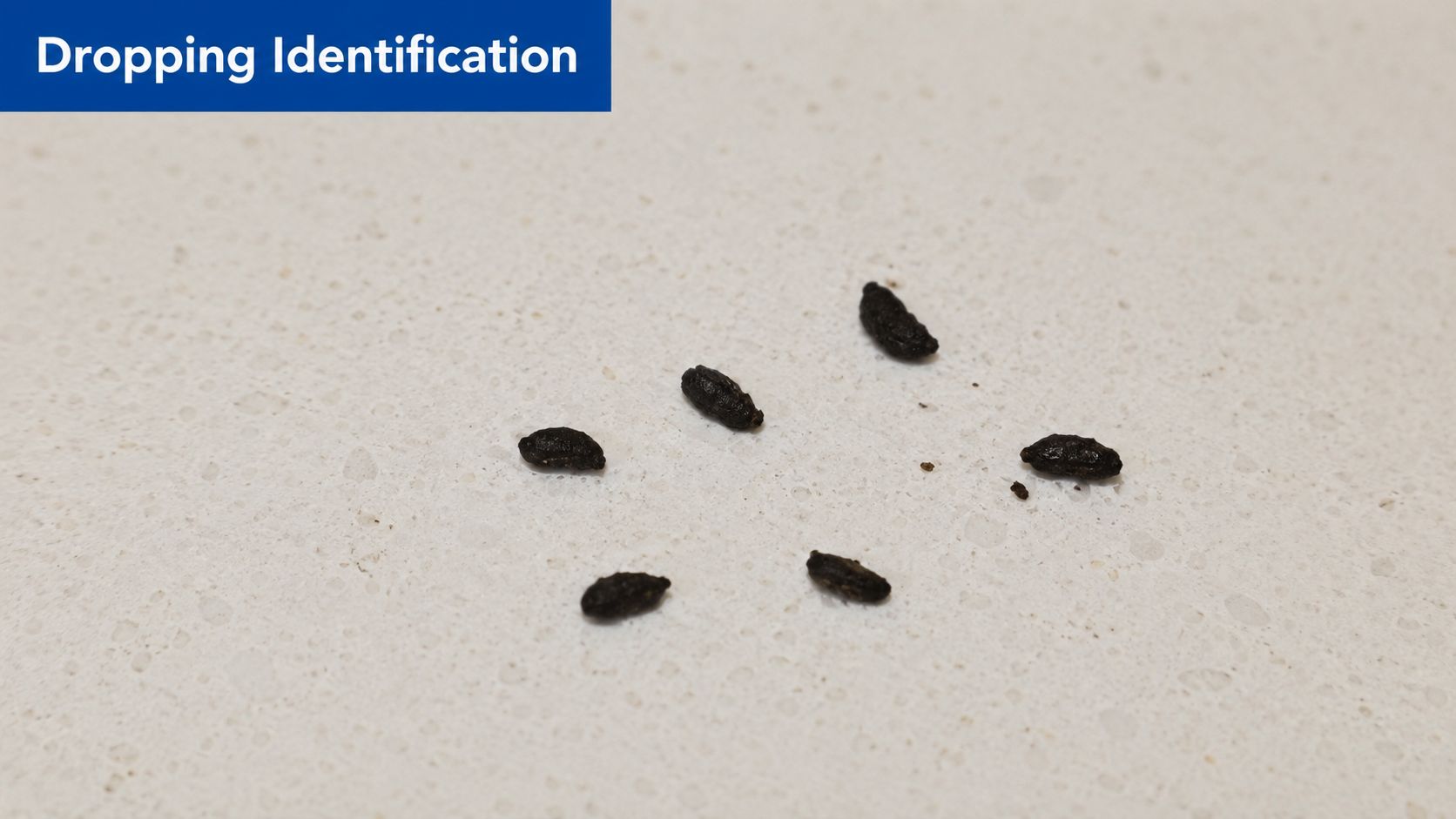
That's the measurement. The visual profile helps confirm it.
What they look like up close
Mouse droppings are usually:
- Small in length. Typically 1/8 to 1/4 inch
- Narrow through the middle. They don't look round or chunky
- Pointed at one or both ends. This is one of the easiest details to miss
- Similar to a grain of rice. That comparison helps when you don't have a ruler nearby
People often get confused because any small dark pellet can look similar from a distance. Seed husks, insect debris, and old crumbs can all be mistaken for rodent waste at first glance. The pointed ends are often what settles the question.
Fresh versus old droppings
Color and texture help you judge whether the activity may be recent.
Fresh droppings tend to look dark brown to black, and they often have a shiny surface. Older droppings lose that sheen. They become duller, lighter, and more brittle.
Fresh, glossy pellets usually suggest recent activity. Gray, dry, crumbling pellets suggest older contamination, but they still shouldn't be handled casually.
Many property owners underestimate the issue. A few pellets may not look serious, yet a mouse can leave many pellets in a short period, so scattered droppings in several spots may reflect ongoing traffic rather than a one-time visit.
If you're still weighing whether what you found came from a mouse or something larger, this visual guide to mouse or rat droppings can help narrow it down.
Mouse Droppings vs Rat Droppings A Clear Comparison
Once people learn that mouse droppings are small and pointed, the next concern is usually whether the droppings might belong to rats. That distinction matters because the size, placement, and cleanup approach can differ.
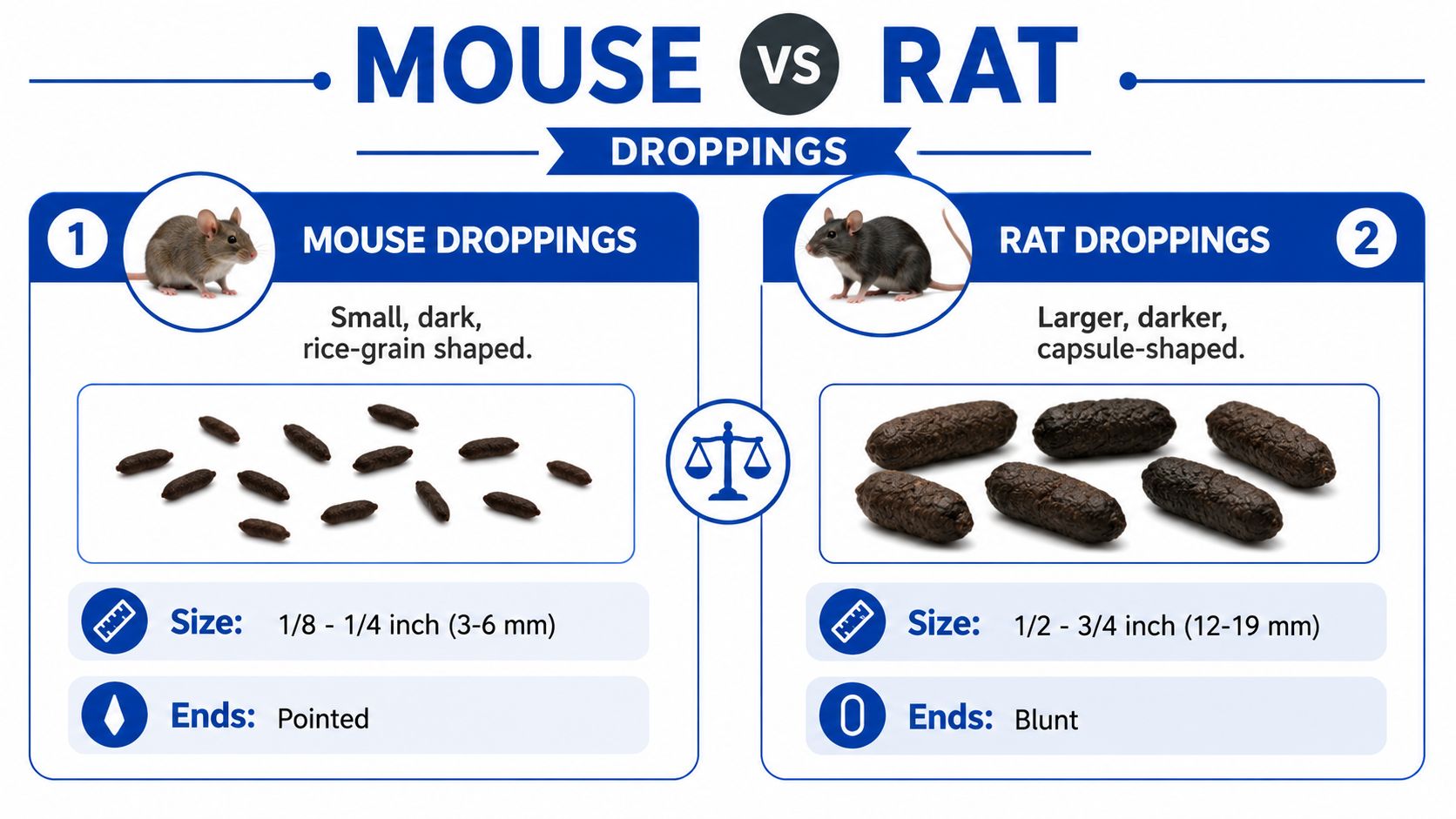
A helpful comparison comes from Thomas Pest Services' mouse poop reference, which notes that fresh mouse droppings are shiny and black, while aged ones are grayish and dusty. Unlike rat droppings which are often found in discrete, hidden areas, mouse droppings are typically scattered randomly along travel paths and near food sources.
Rodent Dropping Identification Guide
| Characteristic | Mouse Droppings | Rat Droppings |
|---|---|---|
| Typical size | 1/8 to 1/4 inch | Typically much larger |
| Shape | Spindle-shaped, like a grain of rice | More capsule-like |
| Ends | Pointed | Blunter |
| Fresh appearance | Shiny, dark, compact | Dark, but larger and heavier-looking |
| Older appearance | Grayish, dusty, crumbly | Also ages and dries, but remains more substantial in size |
| Where found | Scattered along travel paths and near food | More often in discrete, hidden areas |
What usually causes confusion
The biggest mistake is focusing only on color. Both mouse and rat droppings can look dark when fresh. Size and end shape are more reliable first indicators.
Another common mistake is assuming one pellet tells the whole story. Distribution matters. Mice often leave droppings in a wider scatter pattern. Rats are more likely to leave droppings in more contained locations.
If the pellets are very small and repeatedly show up along edges, cabinets, counters, or common travel routes, that pattern is more consistent with mice than rats.
For property managers and facility operators, this distinction affects more than identification. It changes the inspection plan, the likely nesting behavior, and the scope of contamination you may need to address behind walls, inside storage areas, or around food handling spaces.
Beyond Droppings Other Signs of a Mouse Infestation
Droppings are rarely the only clue. By the time you notice them, mice may have already left other signs nearby.
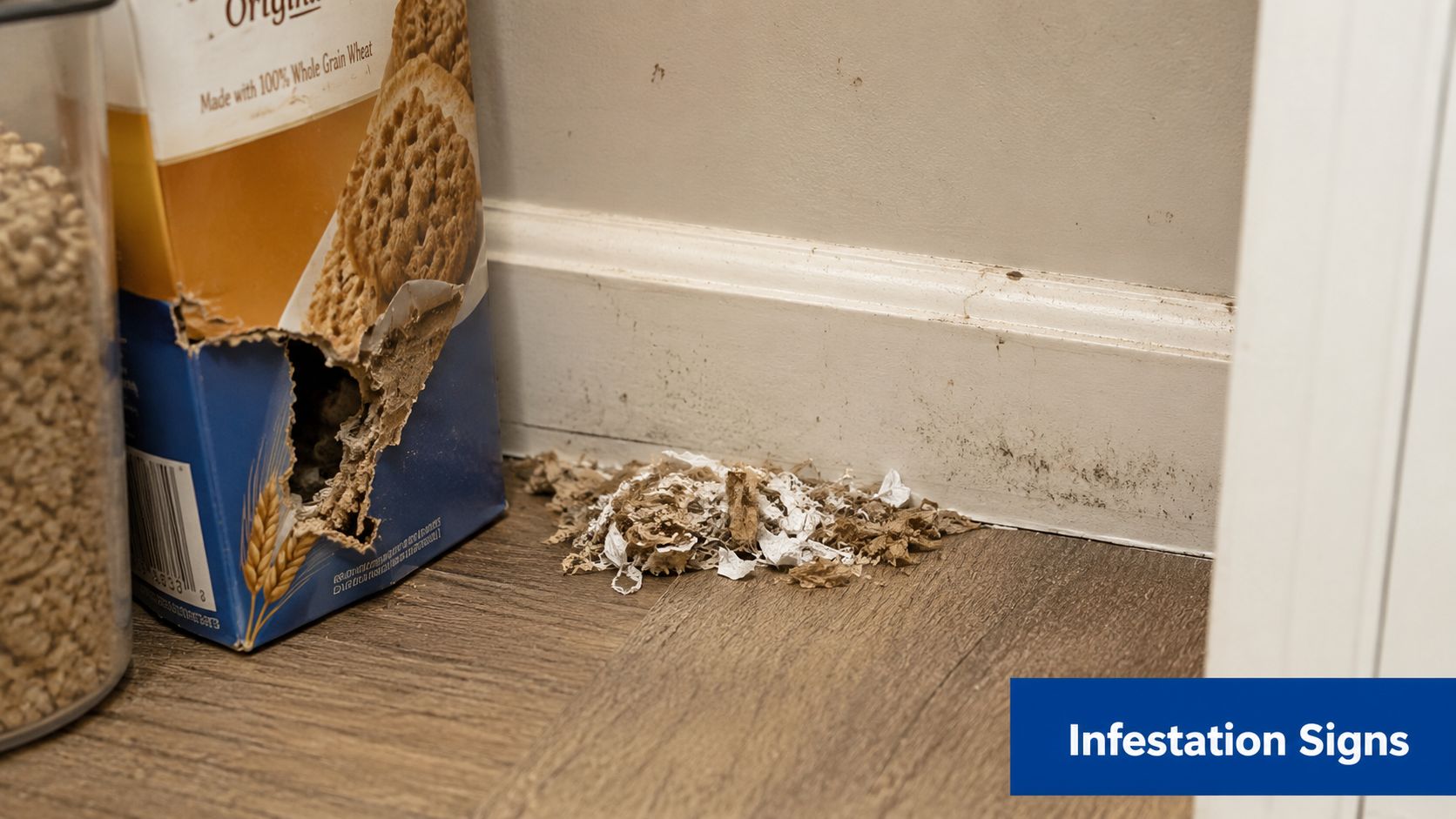
One of the clearest secondary indicators is damage from chewing. Scotts Miracle-Gro's rodent identification guide notes that mouse infestations often leave smaller, “scratchier” chew marks (less than 1/8 inch) and narrower entry gaps compared to rats, which create 1/8-inch teeth marks and larger holes.
Signs you can spot without special tools
Look for a pattern, not a single detail.
- Chewed packaging. Dry goods, pet food bags, and cardboard boxes are common targets.
- Shredded nesting material. Paper, insulation, fabric, and soft packaging often get pulled into hidden nesting spots.
- Grease marks. Mice may leave dark smudges along baseboards or tight travel routes.
- Night sounds. Light scratching or movement in walls and ceilings often becomes more noticeable after dark.
What these signs mean in practice
A few isolated droppings might suggest passing activity. Droppings plus chew marks plus nesting material usually suggest established use of the space.
That matters because contamination may extend farther than what's visible. If mice are nesting inside cabinets, behind appliances, in crawl spaces, or above ceiling lines, cleanup may involve porous materials and concealed surfaces, not just what you can wipe down.
For a broader prevention mindset, these home biohazard prevention tips can help you reduce recurring risk after the immediate issue is handled.
This short visual overview can also help you recognize common rodent activity patterns in real spaces:
The Hidden Health Risks of Rodent Contamination
The appearance of mouse droppings answers only part of the problem. The more serious issue is what those droppings may carry and how easily contamination can spread once the area is disturbed.
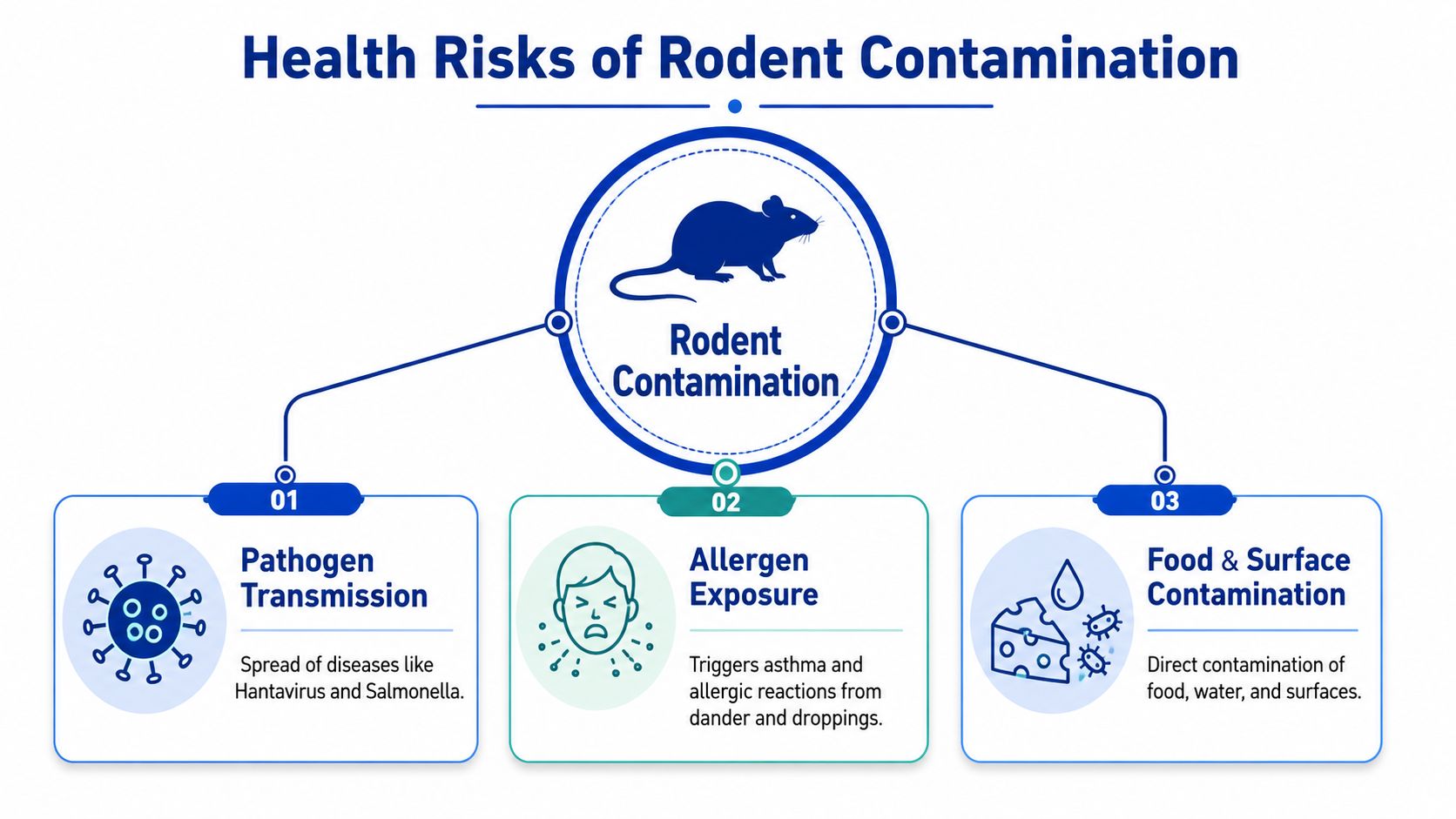
A key risk comes from the droppings' small size. As explained in this discussion of rodent waste hazards, the small size of mouse droppings (1/8–1/4 inch) allows them to be easily dispersed by air currents, increasing the risk of airborne hazard transmission for pathogens like Hantavirus and Salmonella.
Why DIY cleanup can become unsafe
People often think the danger comes from touching droppings directly. In many situations, the larger risk starts when dry material is disturbed.
Sweeping, dry brushing, or vacuuming can move particles into the air. In enclosed spaces such as attics, closets, utility rooms, and storage areas, that raises the chance of inhaling contaminated dust. Food prep surfaces, shelving, and stored inventory can also become secondary contamination points.
Three risk categories to keep in mind
- Pathogen exposure. Rodent waste can be associated with illnesses such as Hantavirus and Salmonella.
- Food and surface contamination. Waste near pantries, counters, break rooms, or storage areas affects more than one visible spot.
- Airborne spread during disturbance. Small particles can travel when waste is moved or cleaned improperly.
Important: Rodent waste is not just a pest-control issue. In many settings, it's a contamination-control issue.
Why professional remediation is different
A proper response isn't only about removing visible pellets. It involves identifying contaminated zones, handling waste safely, addressing affected materials, and following disposal practices that align with health and safety requirements.
That's especially important in rental housing, commercial properties, healthcare-adjacent settings, and any location where staff, residents, or visitors could be exposed. If contamination extends beyond a simple isolated spot, a more specialized process is usually warranted. For a broader look at infection-control thinking in hazardous environments, this page on bloodborne pathogen disinfection offers useful context on why regulated decontamination standards matter.
Safe Next Steps and When to Call a Biohazard Professional
If you've identified droppings that match the common mouse profile, don't rush into dry cleanup. Mouse droppings are consistently documented as measuring between 1/8 and 1/4 inch in length, a foundational metric used by professionals to immediately distinguish a mouse infestation from a rat infestation and determine the correct biohazard response, as outlined by Fox Pest Control's mouse dropping guide.
That identification is useful, but it's only the start of the decision.
What to do right away
- Leave dry droppings undisturbed if possible.
- Restrict access to the area, especially around food storage, children, pets, tenants, or staff.
- Document where you found them so the response addresses the full contamination pattern.
- Look for related signs such as nesting material, chew damage, and repeat sightings in multiple rooms.
When professional help becomes the safer choice
Professional biohazard cleanup should move to the front of the plan when droppings appear in multiple areas, when contamination affects porous materials, or when the site includes sensitive occupants or regulated workspaces. At that point, the challenge isn't just removing waste. It's restoring the environment in a way that reduces exposure risk and aligns with proper handling and disposal expectations.
If your concern may involve wildlife entry or broader animal activity around the structure, Rescreen Rescue's expert wildlife guide is a helpful companion resource for understanding removal considerations around the exterior of a property.
For situations involving contamination rather than simple housekeeping, working with a biohazard remediation company is often the most responsible next step.
When rodent waste is present, safety comes first. 360 Hazardous Cleanup provides compassionate, professional biohazard remediation with a focus on compliant handling, thorough decontamination, and respect for the people affected. If you need help assessing rodent contamination in a home, rental, commercial site, or sensitive facility, their team is available to respond with discretion and care.