
A property manager opens a vacant unit after an accident. A clinic supervisor finds blood on a floor seam near a treatment area. A warehouse safety lead gets a report that an employee was injured and bled onto equipment, cardboard, and concrete. In each case, the first instinct is often the same: get it cleaned up fast.
That instinct makes sense. It can also create the next exposure.
Bloodborne pathogen disinfection is not the same as making a surface look clean. Visual cleanup removes what people can see. Disinfection addresses what can still infect someone after the stain is gone. That difference matters for worker safety, occupant safety, OSHA compliance, waste handling, and liability after the incident is over.
People usually call after someone has already tried paper towels, household cleaner, or bleach from a spray bottle. That's where problems start. If visible soil is smeared across additional surfaces, if porous material has absorbed blood, or if contaminated waste was bagged incorrectly, the scene is no longer just messy. It becomes a regulated cleanup problem.
A proper response has to answer several questions at once. Was the material decontaminated. Were staff protected. Was waste packaged and removed lawfully. Can the property owner show that the response followed recognized standards if an employee, tenant, insurer, or regulator asks later.
When Cleaning Is Not Enough Understanding Biohazard Risks
The terms cleaning and disinfecting are frequently treated as synonyms. In biohazard work, they don't.
Cleaning removes visible soil, residue, and organic matter. It improves appearance and lowers surface contamination. Disinfection uses the correct chemistry, at the correct concentration, for the correct contact time, to inactivate pathogens on an already cleaned surface. If the first step is skipped, the second step can fail.
What property owners often miss
A blood spill can look small and still create a serious exposure issue. Blood travels into grout, under base trim, into flooring texture, and into fabrics faster than one might expect. What appears to be a simple wipe-down can spread contamination into a wider footprint.
That matters because occupational exposure is not limited to hospitals. OSHA identifies broad workplace risk from bloodborne pathogens, including healthcare and non-hospital roles where workers may contact blood or other potentially infectious material. The issue is not whether a surface looks restored. The issue is whether it is safe for the next person who touches it.
Practical rule: If blood or body fluid may be present, treat the area as potentially infectious until it has been properly cleaned, disinfected, and the waste has been contained for regulated disposal.
Why the misunderstanding creates liability
The legal problem usually begins with a false sense of completion. Someone wipes up visible blood, throws towels in ordinary trash, and reopens the area. If a later complaint arises, the record may show that no proper disinfection process was used, no appropriate waste handling occurred, and no trained personnel managed the scene.
That gap is where claims, worker exposure concerns, and compliance problems tend to grow. A professional response is not about adding ceremony to a simple task. It's about reducing risk that remains after casual cleanup stops.
The Invisible Dangers of Bloodborne Pathogens
Bloodborne pathogens are microorganisms that can cause disease when infected blood or certain other potentially infectious materials enter another person's body. In contamination events, the names that matter most are Hepatitis B virus (HBV), Hepatitis C virus (HCV), and HIV.

The risk is larger than most people assume
The CDC estimates that approximately 5.6 million healthcare workers in the U.S. face exposure to bloodborne pathogens, and OSHA notes that other at-risk groups include home health aides and personal care workers. The incubation periods also vary widely, from 14 days for Hepatitis C to 10 years or more for HIV (OSHA bloodborne pathogen hazards overview). That means a single exposure event may carry consequences long after the visible cleanup is forgotten.
For readers who need a primer on the organisms themselves, this overview of common bloodborne pathogens is a useful starting point.
Exposure isn't limited to direct contact with obvious spills
In the field, secondary exposure is often the bigger problem. Someone handles a contaminated tool. A maintenance worker touches a door frame cleaned incorrectly. A housekeeper changes a liner that contains blood-soaked absorbent material bagged without pre-decontamination. The contamination path spreads through hands, gloves, equipment, carts, and waste streams.
Here's where the danger becomes practical:
- HBV is highly relevant in cleanup planning: It can persist in contaminated porous materials for an extended period, which is why dried residue cannot be treated as harmless.
- HCV complicates delayed discovery events: A stain found well after the incident still has to be treated seriously.
- HIV draws understandable concern: Its long incubation window reinforces why exposure documentation and proper post-incident handling matter.
Dried blood is not proof of safety. It's only proof that time has passed.
Why professionals approach every event the same way
A seasoned remediation team doesn't guess based on color, age, or volume. It applies universal precautions and assumes infectious risk until proven otherwise through proper process. That's the disciplined approach these incidents require. Calm, repeatable, and compliant.
The Regulatory Framework for Bloodborne Pathogen Cleanup
OSHA's bloodborne pathogen rules are often treated like paperwork until there's an actual incident. Then people find out quickly that the regulations are not abstract. They govern who should respond, how exposure is controlled, what training is required, how waste is handled, and what a defensible cleanup record looks like.
OSHA is defining a safety system, not a suggestion
The central idea behind the standard is simple. If workers may encounter blood or other potentially infectious material, the employer must plan for that exposure before it happens. That includes documented procedures, training, proper protective equipment, and work practices that reduce contact and prevent cross-contamination.
The framework usually rests on a few essential principles:
- Exposure control planning: Employers need a clear process for identifying exposure tasks and assigning safe response methods.
- Universal precautions: Blood and similar materials are handled as potentially infectious.
- Work practice controls: The response method must reduce direct handling, splashing, aerosolization, and secondary spread.
- Training: Staff need role-specific instruction before an emergency puts them in contact with contamination.
For organizations building or refreshing training programs, practical resources on strategies for high-impact safety courses can help translate policy into safer behavior on the ground.
Why general janitorial service is not the same thing
A routine cleaning contract does not automatically create bloodborne pathogen competency. Janitorial teams may be excellent at sanitation and appearance management without being trained or equipped for regulated biohazard remediation. That distinction matters. The liability doesn't disappear because a mop was used by someone already on site.
A compliant response requires decisions about area isolation, PPE, cleaning chemistry, contact time, waste packaging, and documentation. If those decisions are made casually, the property owner may still carry the risk after the scene looks normal again.
A practical overview of OSHA guidelines for biohazard cleanup helps clarify where those obligations begin.
The reason regulators separate duties so carefully
Biohazard cleanup sits at the intersection of health, employment law, and environmental control. OSHA's rules exist because one person's incomplete cleanup can expose employees, vendors, tenants, residents, or waste handlers later. The standard is designed to stop that chain.
The safest cleanup is the one that still holds up when an insurer, regulator, or attorney reviews it afterward.
That is the practical value of compliance. It protects people first, and it also creates a record that the response met recognized safety expectations.
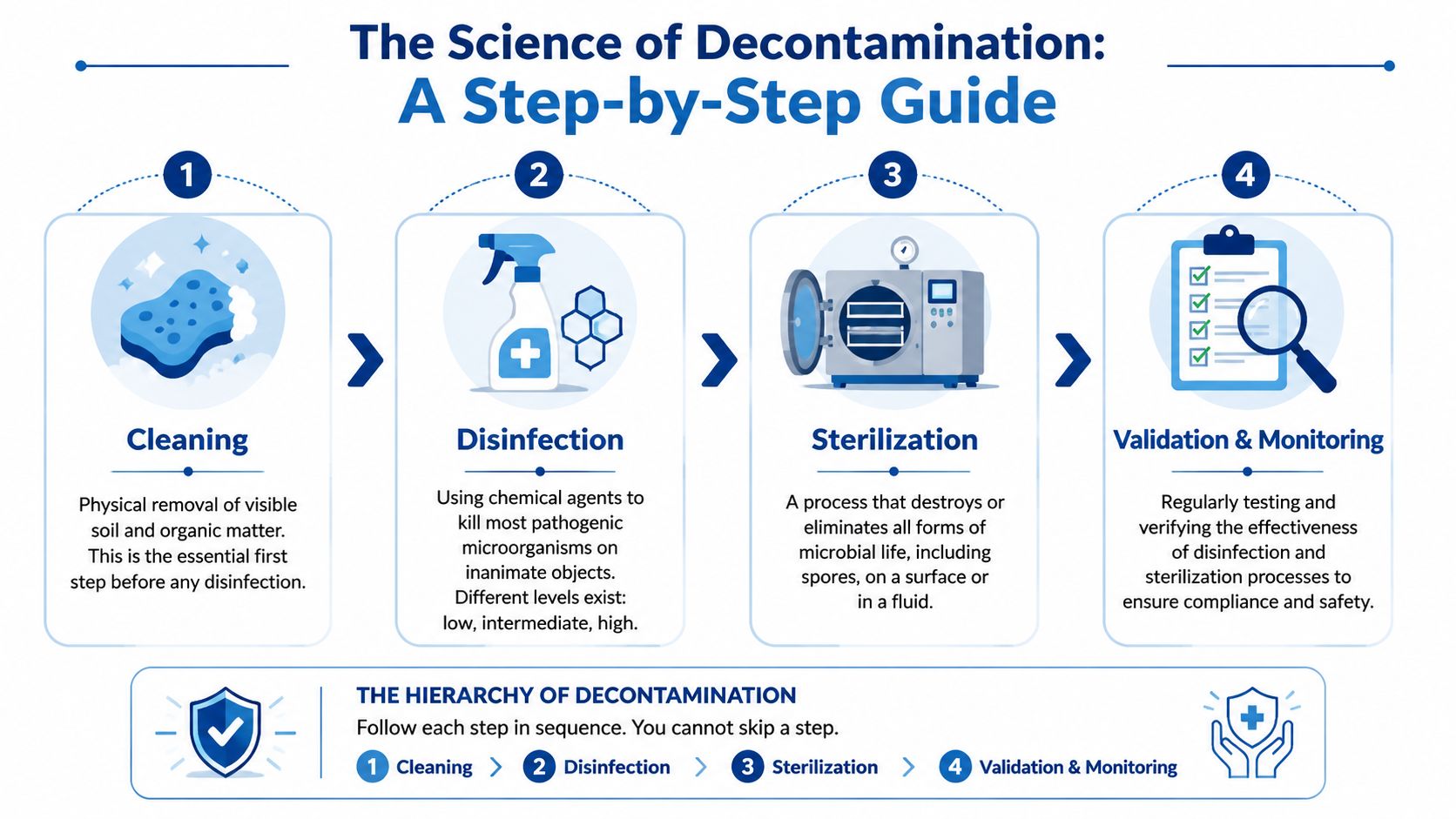
The Science of Proper Disinfection and Decontamination
The most common mistake in bloodborne pathogen disinfection is assuming the chemical does all the work. It doesn't. Chemistry only works when the surface is ready for it.
Cleaning first is not optional
Professional bloodborne pathogen disinfection requires EPA-registered tuberculocidal agents. For nonporous surfaces, a 1:100 bleach solution requires at least 10 minutes of contact time. Critically, enzymatic cleaners must be used first to remove organic matter, because bloodborne pathogen proteins can shield the organisms from the disinfectant and make it ineffective (CDC disinfection and sterilization recommendations).
That point gets missed in DIY cleanup all the time. If someone sprays bleach over visible blood and wipes immediately, they may do all three of the wrong things at once. They haven't removed the soil, they haven't met dwell time, and they may have spread the contamination outward.
What works and what fails
A quick comparison makes the gap clear:
| Approach | What it does | Where it fails |
|---|---|---|
| Household cleaner only | Removes some visible residue | Does not equal compliant disinfection |
| Bleach sprayed and wiped fast | May lighten or remove staining | Fails required contact time |
| Disinfectant on soiled surface | Adds chemical exposure to the mess | Organic matter can shield pathogens |
| Clean, then disinfect, then verify | Follows the actual decontamination logic | Requires training, correct products, and patience |
A proper sequence is more disciplined than people expect.
- Contain the area so traffic doesn't spread contamination.
- Remove visible soil and organic matter with the right cleaning method.
- Apply the disinfectant correctly and keep the surface wet for the required label time.
- Handle all used materials as regulated waste if contaminated.
Why bleach is not a complete strategy
Bleach has a legitimate role. It is not a shortcut and it is not universally suitable. OSHA-related guidance for spill cleanup recognizes specific dilution ranges. For small blood spills on non-critical surfaces, a 1:100 dilution of 5.25% to 6.15% sodium hypochlorite may be used, while larger spills require cleaning followed by a 1:10 dilution. The same guidance notes that disinfectant may need to remain in contact with contaminated surfaces for at least 25 minutes in some protocols, and hand hygiene standards call for alcohol-based hand rubs with at least 60% ethanol or 70% isopropyl alcohol, or handwashing with soap and water for a minimum of 20 seconds (blood exposure cleaning guidance).
Those details show why “just use bleach” is not enough. Concentration, surface type, pre-cleaning, and dwell time all matter.
For a closer look at the mechanics behind this process, the science behind biohazard decontamination lays out the distinction between surface cleaning and true restoration of safety.
If a disinfectant label says ten minutes, five minutes is not almost compliant. It is noncompliant.
The role of validation
A serious remediation process doesn't stop at application. Technicians inspect seams, edges, absorbent materials, and transfer points. They confirm that the cleaning stage removed what could block disinfectant action. On more complex jobs, they document what was removed, what was treated, and what had to be cut out and disposed of because disinfection alone could not solve the problem.
That is why bloodborne pathogen disinfection is a technical service, not a housekeeping variation.
Essential Safety Protocols PPE and Waste Disposal
The public usually notices the disinfectant. Professionals notice the barriers. PPE and waste control are what prevent one incident from becoming multiple exposures.
PPE has a specific job
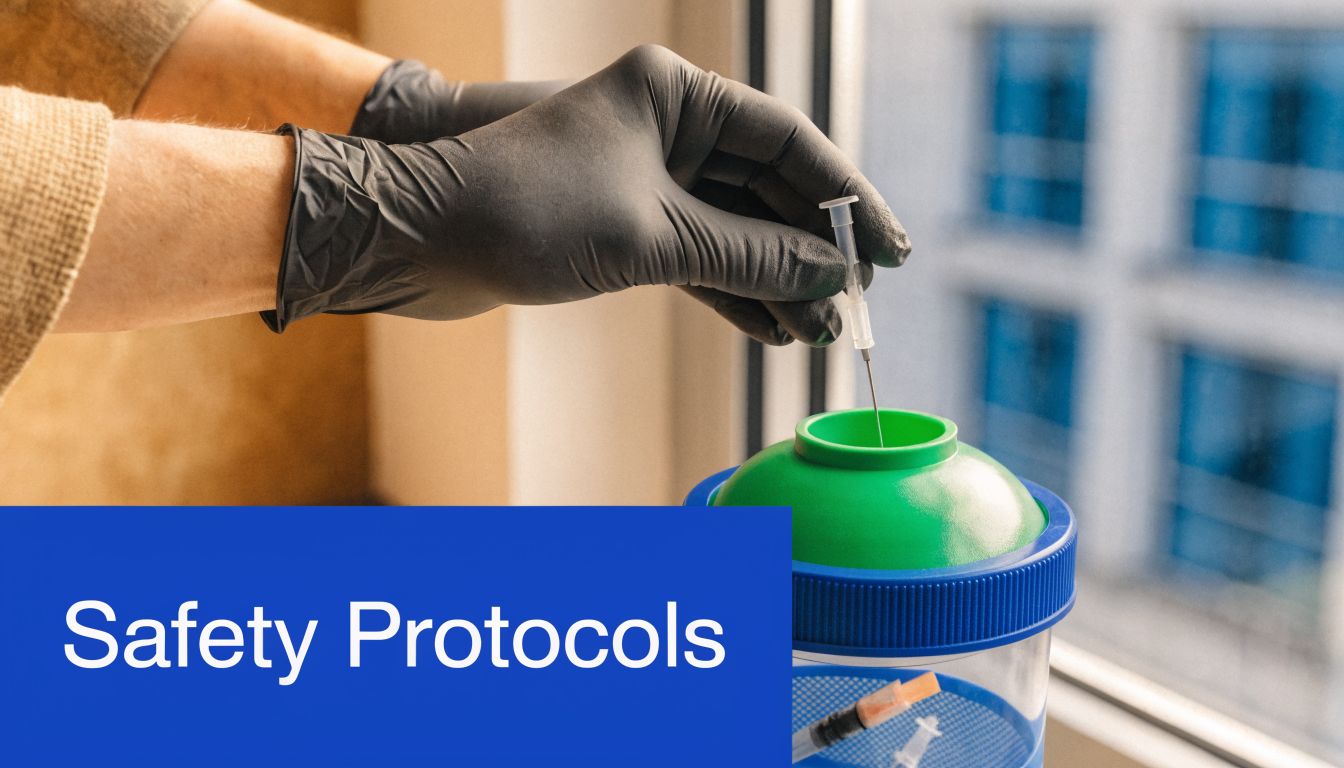
A proper ensemble is chosen based on the task, splash potential, surface conditions, and waste involved. That may include impermeable gloves, protective clothing, face and eye protection, and respiratory protection where aerosol or splash risk exists.
Each piece serves a different function:
- Gloves: Prevent hand contact with blood, contaminated tools, and waste packaging.
- Eye and face protection: Reduce mucous membrane exposure during agitation, extraction, or sharps handling.
- Protective garments: Keep contamination off clothing and skin, especially when kneeling, lifting, or working overhead.
- Respiratory protection: Relevant when cleanup conditions could create droplets, aerosols, or strong chemical exposure.
A practical reference on the importance of personal protective equipment in biohazard cleanup helps show why item selection matters as much as wearing PPE at all.
Waste is still hazardous after the surface is clean
This is the part many people underestimate. Contaminated towels, disposable mops, sharps, PPE, and absorbents remain part of the hazard until they are decontaminated, packaged, and moved through the proper disposal chain.
All infectious materials from cleanup must be placed in biohazard bags and secured within rigid, puncture-resistant containers. Absorbent materials must be soaked in a disinfectant solution like 10% bleach before being bagged, or laundered at a minimum of 140°F, so pathogens are neutralized before waste enters the disposal stream (professional bloodborne cleanup waste guidance).
That requirement exists to protect more than the cleanup crew. It protects custodians, transport personnel, sanitation workers, and anyone else who may come into contact with the waste later.
Here is a short visual example of sharps handling in practice:
Why disposal errors create downstream risk
Improperly packaged waste leaks. Soft containers tear. Loose sharps puncture. Bloody absorbent tossed into ordinary trash exposes people who never consented to that risk and may not even know it exists.
For organizations evaluating their broader exposure around regulated disposal, the Coverage Axis waste management risk advisory is a useful outside perspective on how disposal failures can create insurance and operational consequences.
Cleanup is not finished when the stain is gone. It is finished when the contaminated materials are safely contained, documented, and removed from the site correctly.
Red Flags That Demand Professional Biohazard Cleanup
A property manager opens a unit after a medical emergency and sees only a few visible stains near the bedroom door. The instinct is to call janitorial staff, wipe the surfaces, and get the space back in service. That is where costly mistakes start. Visible blood can be cleaned. Hidden contamination inside carpet backing, baseboards, drywall, and subfloor joints requires a different decision, because the issue is no longer appearance. It is exposure control, regulatory handling, and liability.
Some incidents can be addressed under a written exposure control plan by trained personnel with the right equipment and authority. Others require biohazard remediation from the outset. The dividing line is not how bad the scene looks. It is whether contamination may have moved beyond cleanable surfaces, whether occupants or workers have been put at risk, and whether the work now falls outside routine custodial scope.
Porous materials change the scope of work
Carpet, upholstered furniture, drywall, unfinished wood, insulation, and concrete seams create a problem that ordinary cleaning cannot solve. Fluids wick below the surface, spread laterally, and remain in materials that cannot be reliably disinfected in place. A stain may look minor and still require removal of affected contents or building materials.
This is the gap many people miss. Cleaning removes visible matter. Disinfection requires the right chemistry, contact time, and surface conditions. On porous materials, those standards often cannot be met with confidence. Once blood has absorbed into the material, the decision shifts from wiping to assessing what must be removed, contained, documented, and disposed of as regulated waste.
Signs that the job has moved beyond in-house cleanup
Use these conditions as a practical threshold:
- Blood entered carpet, fabric, drywall, insulation, unfinished wood, or cracks in concrete: surface treatment does not address what migrated below.
- Sharps, broken glass, or contaminated objects are present: recovery, packaging, and disposal require proper containers and trained handling.
- The event involved trauma, self-harm, an unattended death, or a serious accident: contamination often extends beyond the obvious area through transfer, pooling, or overlooked surfaces.
- Employees, residents, guests, or contractors may have already contacted the area: documentation, exposure response, and controlled remediation become more urgent.
- The space cannot be isolated with confidence: foot traffic can spread contamination and increase the cleanup footprint.
- A family member, tenant, or staff member would be expected to clean the scene themselves: emotional harm is a real risk, and it often leads to rushed, unsafe decisions.
One red flag is enough to pause. Several together usually mean a professional crew should take over.
Common mistakes that create liability
The field failures are predictable because the misunderstanding is predictable. People treat a biohazard scene as a dirty room.
| Common response | Why it creates problems |
|---|---|
| Spray bleach on carpet or upholstery | Liquid does not reliably reach all contaminated layers and may spread the contamination path |
| Assign janitorial staff without bloodborne training | The employer may be placing workers into an exposure situation without proper controls |
| Bag contaminated debris with ordinary trash | Disposal errors can expose downstream handlers and create compliance problems |
| Reopen once the area looks clean or smells better | Visual improvement is not proof that contaminated material was removed or that surfaces were properly disinfected |
The legal risk is not abstract. If an employee is exposed, if waste is mishandled, or if a tenant later claims the scene was not remediated correctly, the question becomes whether the response matched the hazard. For property owners and managers who may need to document those decisions, this guide on how to talk to your insurance company about cleanup services can help frame the scope clearly.
When specialist remediation is the safer business decision
On scenes involving porous materials, multiple affected surfaces, uncertain contamination spread, or emotionally sensitive circumstances, specialist teams bring a different process. They assess the migration path, isolate the work area, remove unsalvageable materials under containment, package regulated waste correctly, and document disinfection of salvageable nonporous surfaces. 360 Hazardous Cleanup handles this work under biohazard remediation protocols rather than routine janitorial standards.
That distinction matters because a cleaned scene can still be an unsafe scene. Professional remediation is not about making a small incident sound larger. It is about reducing the health risk, employment risk, and property liability that follow when cleaning is mistaken for disinfection.
Navigating the Aftermath Insurance and Official Coordination
Once the scene is safe to address, the next questions are usually practical. Who needs to authorize work. What should be documented. Will insurance require itemization, photos, or a specific scope description.
The answer depends on the property and the event, but one rule is consistent. Cleanup should not begin until the scene has been formally released by the relevant authority when law enforcement, a coroner, or a medical examiner is involved. Starting too early can interfere with official process and create avoidable complications.
Documentation matters just as much. Property owners, managers, and families should keep communication records, scene release information, and remediation paperwork organized from the start. Guidance on how to talk to your insurance company about cleanup services can help frame those conversations clearly and avoid common mistakes.
A competent remediation partner should be able to support that process with thorough records and calm coordination, so the people affected can focus on immediate decisions and recovery rather than trying to decode compliance requirements during a crisis.
If you need help with bloodborne pathogen disinfection, 360 Hazardous Cleanup provides 24/7 biohazard remediation with trauma-informed handling, compliant waste procedures, and documentation support for property owners, facilities, families, and insurers dealing with time-sensitive contamination events.