
You open a cabinet, step into an attic, or walk a warehouse aisle and notice small dark pellets where they shouldn't be. Most property owners have the same first question. Is this mouse or rat droppings, and can I just clean it up myself?
That concern is reasonable. Droppings are one of the clearest signs of rodent activity, but they’re also more than a housekeeping issue. In homes, clinics, offices, storage facilities, and multifamily buildings, they can signal contamination that needs to be assessed with the same care you’d apply to any other biological hazard.
A careful response starts with two things. First, identify what you’re seeing as accurately as possible. Second, avoid turning a localized contamination problem into an airborne exposure problem by cleaning it the wrong way. The difference between those two outcomes often comes down to risk assessment, containment, and whether the person handling the work understands biohazard protocols.
Identifying Rodent Infestations What to Look For
A proper identification starts before anyone touches the area. Pellets along a baseboard, inside a cabinet, above ceiling tiles, or under stored inventory are evidence, but the key value is in the pattern. In remediation work, we assess size, shape, condition, and distribution together because those details help define the likely species, the extent of contamination, and whether the problem looks isolated or established.
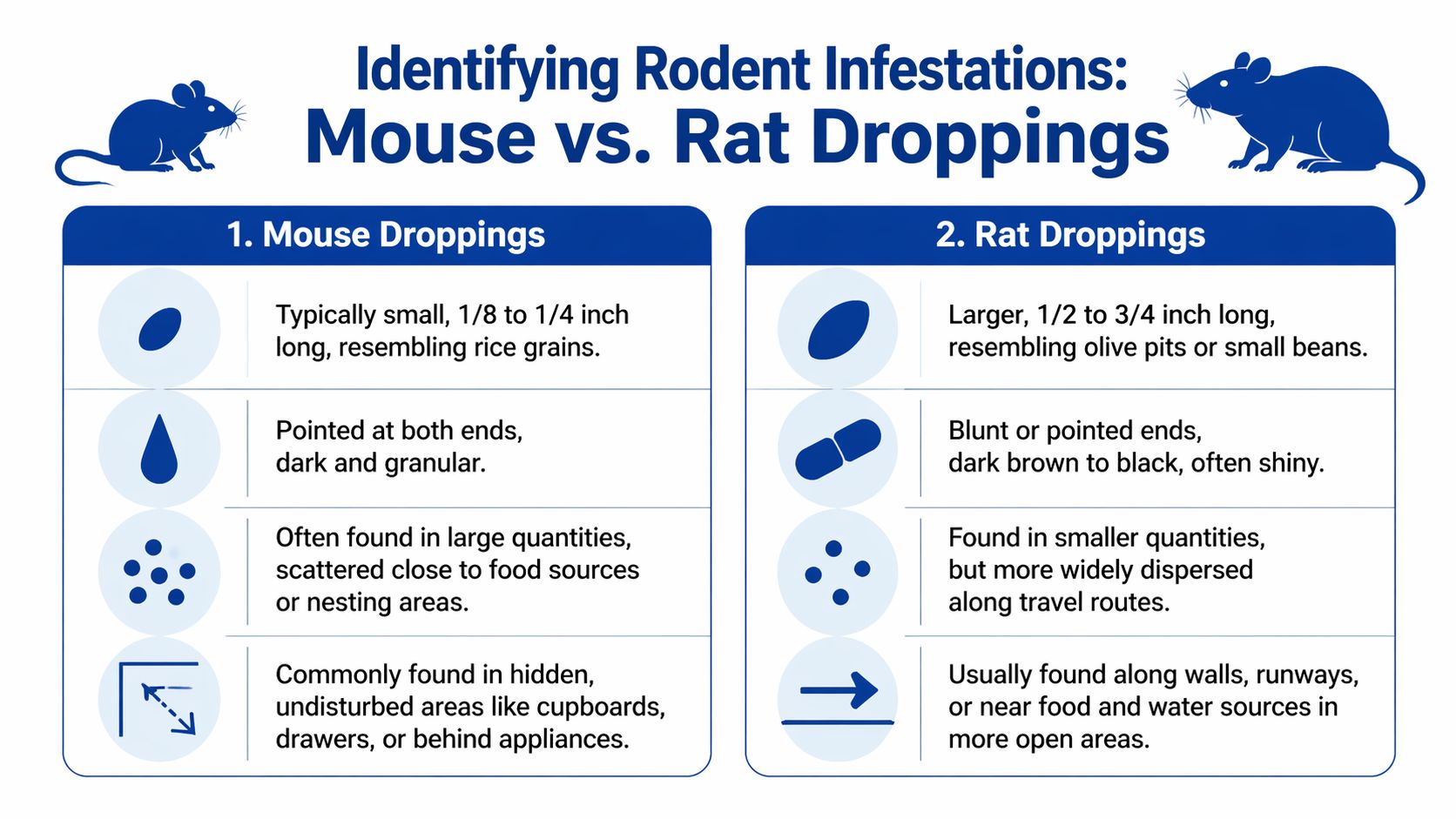
Mouse and rat droppings side by side
A quick field comparison helps narrow down what you are seeing:
| Feature | Mouse droppings | Rat droppings |
|---|---|---|
| Typical size | 1/8 to 1/4 inch long, as noted earlier in OSHA hantavirus guidance | 1/2 to 3/4 inch long |
| Ends | Pointed ends | Blunt ends |
| Common pattern | Scattered in small, dispersed piles near food sources | More concentrated, often in larger grouped areas |
| Operational meaning | Wider-area contamination may need to be mapped | Activity may be tied to repeat travel routes or latrine zones |
Species identification matters, but layout often tells the more useful story. Critter Control's guidance on mouse dropping patterns explains that mouse droppings are usually scattered in smaller, dispersed groupings, often near food, while rat droppings are more likely to appear in concentrated deposits with more consistent placement. For a property owner or facility manager, that difference helps with risk assessment. It can show whether you are looking at random pass-through activity, a feeding area, or a repeat-use zone that may require tighter containment and documentation.
One practical rule helps. A light trail along several wall edges points to movement. A dense deposit in one corner, behind equipment, or inside a utility chase points to a recurring harboring area.
Freshness changes the assessment
Fresh droppings are usually darker and softer. Older droppings tend to look dull, dry, and brittle. That distinction helps estimate whether activity is current, but it should never be the only factor used to decide what to clean, what to sample, or what to document.
In the field, I do not rely on one pellet or one room. I look at the quantity, the spread, the age range, and the location type. Droppings behind food storage, inside HVAC-adjacent voids, or across multiple units create a different compliance and exposure picture than a single deposit in a detached shed. That is the point where rodent evidence stops being a simple pest issue and starts looking like a contamination issue that may affect occupants, staff, tenants, or insurers.
A related resource on 8 signs of rodent infestation is useful if you are trying to confirm activity beyond droppings alone. Gnaw marks, rub marks, nesting material, grease trails, and repeated sightings help establish whether the infestation is active and how far it may extend.
What droppings can be confused with
Misidentification is common in warehouses, attics, crawlspaces, storage rooms, and cluttered structures. Small dark pellets may be mistaken for insect frass, bat guano, seed debris, or old animal waste. That is one reason visual screening should be treated as an initial assessment, not a final conclusion.
If you are unsure whether what you found should be handled as routine pest evidence or as a biological contamination event, this guide on how to recognize a biohazard in your home or workplace helps frame that decision. The answer affects cleanup methods, PPE, waste handling, documentation, and whether a certified remediation contractor should be involved.
The Hidden Health Risks of Rodent Droppings
Droppings are understood to be unsanitary. Fewer understand why the critical danger often starts when someone disturbs them.
A single mouse produces 50 to 75 droppings per day, and those droppings can harbor pathogens including hantavirus, according to Healthline’s summary of mouse dropping illness risks. The concern isn’t limited to what lands on a shelf or floor. As droppings dry out, contaminated particles can become airborne during improper cleanup.
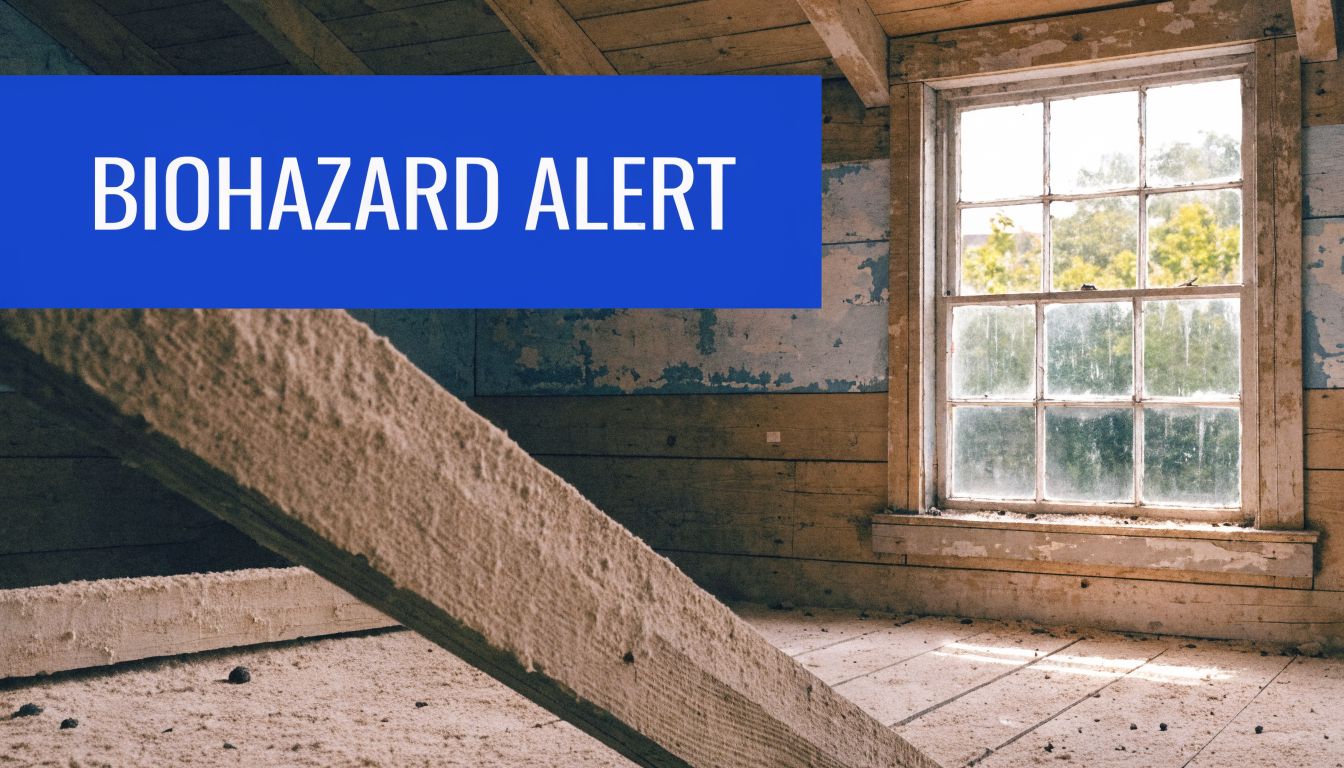
How exposure happens
The common mistake is treating droppings like ordinary dirt. People sweep them, vacuum them, or brush them aside. That action can aerosolize dried particles from droppings, urine, or nesting materials.
Healthline notes that hantavirus pulmonary syndrome is a severe respiratory illness with a mortality rate of approximately 38% in the United States, and transmission occurs primarily through inhaling aerosolized particles from dried droppings, urine, or nesting materials. That’s why a contamination event in an attic, crawlspace, storage room, vacant unit, or utility area deserves more caution than a standard cleaning job.
Exposure doesn’t always look dramatic at first. Hantavirus illness can begin with flu-like symptoms before progressing to severe respiratory distress. In practice, that means a person can underestimate the seriousness of an exposure because the initial symptoms don’t immediately feel like a biohazard emergency.
Why enclosed spaces raise the stakes
The risk climbs in enclosed, dusty, or poorly ventilated areas where droppings have accumulated undisturbed. Attics, wall voids, basements, utility rooms, cabins, and storage areas are common examples. These spaces trap settled dust and often tempt people to clean fast without proper respiratory protection.
One historical example underscores the point. Healthline’s review cites the 2012 Yosemite National Park outbreak, where 10 people were infected and 3 died after exposure to deer mouse droppings in tent cabins. That event is a reminder that contamination in enclosed settings can carry consequences far beyond nuisance cleanup.
Dried droppings are not safer simply because they’re old. In many cases, dried material is exactly what becomes airborne when someone disturbs it.
Secondary hazards property owners miss
Rodent contamination rarely stays isolated to the visible pellets. Droppings and urine can contaminate insulation, stored contents, shelving, HVAC-adjacent spaces, and porous building materials. In damp conditions, contamination can also contribute to mold growth, which complicates remediation because you’re no longer dealing with a single hazard type.
Facilities that house medically fragile people, older adults, or residents with respiratory conditions need to think beyond the immediate mess. A contaminated environment can aggravate allergies and asthma-related symptoms, and any cross-contamination during cleanup can expand the affected area.
That broader contamination logic is similar to what drives other regulated cleanup work involving infectious materials. If you want a useful baseline for how biological exposure risk is evaluated in professional remediation, this overview of common bloodborne pathogens helps explain why controlled handling, PPE, and decontamination sequencing matter so much.
Professional Cleanup and Disinfection Protocols
Rodent droppings require more than surface cleaning. The job has to be approached as controlled contamination work, with attention to exposure pathways, waste handling, and whether the area can be returned to safe use under the property’s occupancy needs.
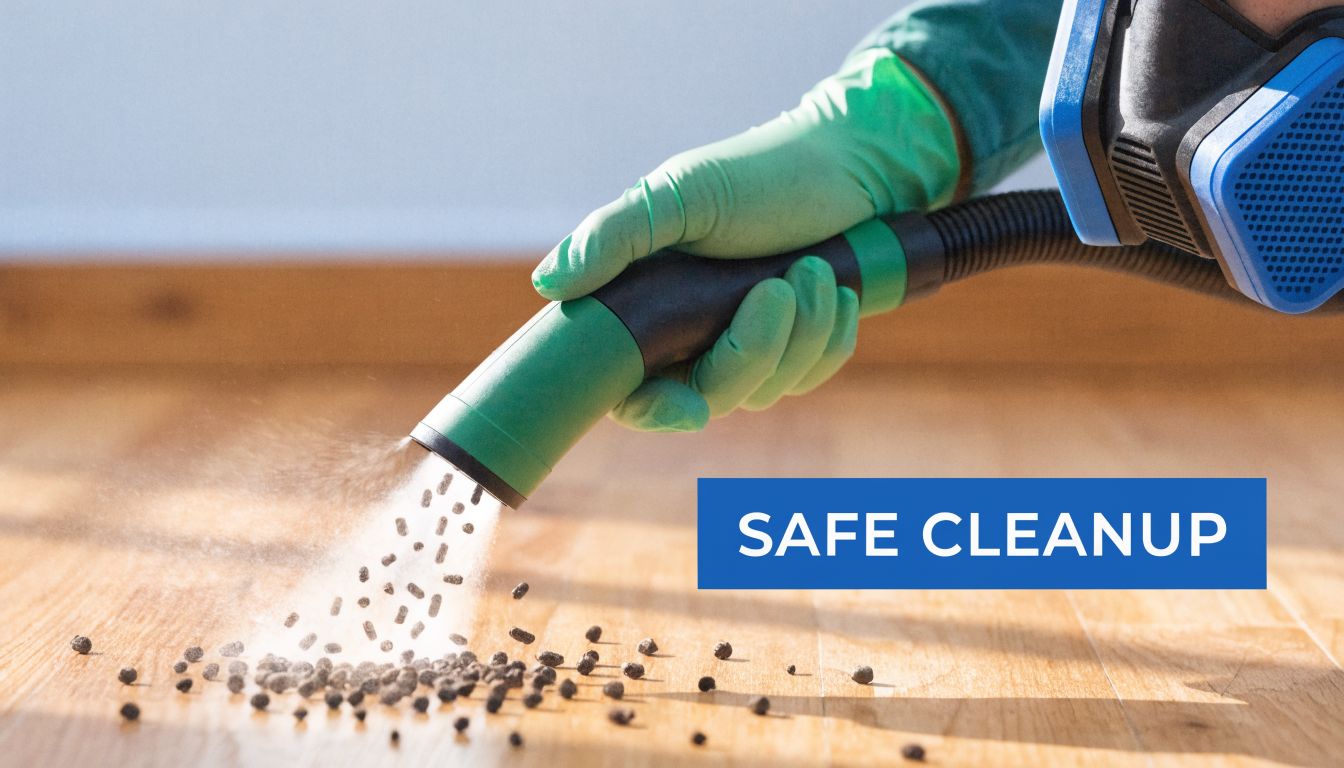
In practice, the first question is not how fast the droppings can be removed. It is whether the contamination is limited to a visible corner or has spread into insulation, storage contents, wall voids, utility chases, or ventilation-adjacent areas. That risk assessment determines the work plan, the protective equipment, and whether disposal rules apply to part of the material being removed.
What trained crews do first
Professional crews start by stabilizing the site.
A proper response usually includes:
- Site assessment: Identify where droppings, urine staining, nesting debris, and rub marks are present. Check whether contamination has reached porous materials or concealed spaces.
- Containment setup: Isolate the affected area so foot traffic, carts, tools, and airflow do not carry contamination into clean sections of the property.
- PPE selection: Match gloves, respiratory protection, and protective clothing to the level of contamination and the conditions inside the work area.
- Waste stream planning: Decide what can be disinfected and retained, what must be discarded, and how bagging, transport, and disposal will be handled under applicable local and state requirements.
That sequence protects workers, occupants, and the rest of the building.
It also prevents a common failure point. Cleanup that starts before containment often spreads contamination farther than the original rodent activity ever did.
What not to do
A large share of failed rodent cleanup jobs trace back to methods that disturb material too aggressively or treat the work like ordinary housekeeping.
Avoid these mistakes:
- Dry sweeping: This can push contaminated dust into the air and onto nearby surfaces.
- Standard vacuuming: Household vacuums are not designed to control potentially contaminated particulates.
- Spot cleaning only: Removing the visible pellets while leaving nearby debris, residue, and contaminated porous items behind leads to incomplete remediation.
- Working without a site plan: In multi-room contamination, attic spaces, crawlspaces, hoarded units, and HVAC-adjacent areas, random cleanup usually enlarges the problem.
The safest work is controlled, wet, and methodical.
The decontamination sequence that works
Professional cleanup follows an order designed to reduce airborne release and cross-contamination.
Control access to the area
Keep residents, tenants, staff, and vendors out until the work zone is defined and protected.Pre-treat contaminated material
Wetting droppings and debris with an appropriate disinfecting solution before removal lowers the chance of particles becoming airborne.Remove droppings and disposable debris carefully
Nesting material, heavily impacted paper goods, and some porous contents may need to be bagged and discarded rather than cleaned in place.Clean and disinfect surrounding surfaces in a set pattern
Shelving, cabinet interiors, wall edges, equipment surfaces, flooring transitions, and other contact areas should be addressed based on how contamination spread, not just where pellets are easiest to see.Evaluate secondary conditions
Moisture changes the scope of work. If the area also has water intrusion or microbial growth, the cleanup may involve a second hazard category with different containment and material-removal decisions. Property owners facing that overlap sometimes review outside specialty guidance such as Melbourne mould removal to understand how mold-related work can intersect with biological contamination, even though disposal rules and compliance requirements vary by jurisdiction.Document the work performed
Photos, room logs, disposal records, and notes on removed materials support insurance questions, tenant disputes, facility records, and follow-up repairs.
For a practical overview of sequencing and contamination control, this guide on the correct way to clean a biohazard site explains why the order of operations matters as much as the product used.
A short visual reference can also help illustrate the difference between casual cleaning and controlled remediation:
Where certified remediation fits
Some properties need more than pest control and more than janitorial service. If droppings are widespread, mixed with decomposition odors, present in a hoarding environment, or embedded in insulation and other porous materials, a biohazard remediation firm is often the safer choice because the work has to address exposure control, disposal, and clearance decisions together.
360 Hazardous Cleanup handles collection, decontamination, and disposal work under state and federal biohazard practices in situations where contamination extends beyond what routine cleaning can safely address.
Rodent exclusion and contamination remediation are related, but they are separate scopes of work. One stops the source. The other reduces the health and liability risk left behind.
Documenting Damage and Implementing Prevention Strategies
Once the contamination is stabilized, the smartest next move is documentation. Property owners often want to jump straight to repairs, repainting, or reopening a room. That can be a mistake if you haven’t preserved evidence of where the problem existed and how extensive it was.
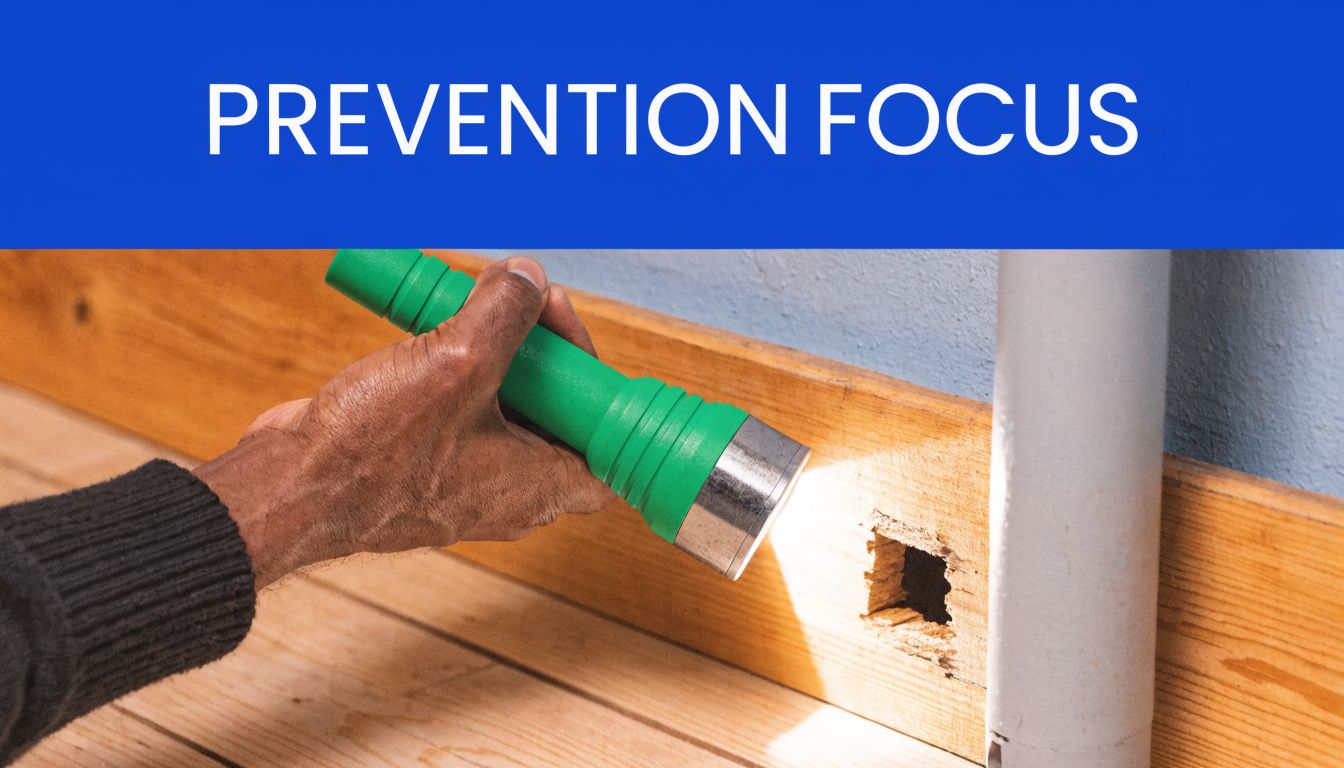
The National Park Service material referenced in the verified data notes that for insurance claims and professional assessment, forensic analysis of droppings is key. Quantity can indicate colony size, freshness can point to current activity, and location can guide remediation. That same source also notes that in specialized settings like warehouses, rodent stowaways in supply chains were up 22% in US ports, raising the stakes for facility shutdown risk and liability when contamination is misidentified or poorly documented, as summarized in this NPS rodent damage identification resource.
Documentation that actually helps
If you may need insurance support, tenant communication records, or internal facility reporting, document before changes are made.
Use a simple record:
- Photograph in place: Capture droppings before removal. Include wide shots and close-ups.
- Note exact locations: Room names, cabinet numbers, aisle locations, attic sections, unit numbers, or mechanical areas.
- Record condition: Fresh-looking, crumbly, isolated, repeated, near food storage, near HVAC, or mixed with nesting debris.
- Track related damage: Stained insulation, contaminated stock, damaged packaging, fouled vents, or moisture issues.
That information does more than support a claim. It helps define whether the issue was isolated, recurring, or building-wide.
Good documentation protects the owner twice. It supports the cleanup decision that was made, and it supports the prevention work that follows.
Prevention is a building management task
Prevention fails when it’s reduced to “seal a few holes.” Effective control depends on how the whole property operates.
A better prevention plan includes:
| Prevention area | What to review |
|---|---|
| Building envelope | Gaps at utility penetrations, base of exterior walls, door sweeps, dock edges, roofline access points |
| Interior sanitation | Food storage, crumbs under equipment, break room practices, pet food, waste handling |
| Storage practices | Clutter against walls, cardboard accumulation, inaccessible corners, packed utility chases |
| Moisture control | Leaks, condensation, drain problems, damp materials that support mold and pest activity |
Commercial and multifamily properties need another layer of discipline. Loading docks, shared trash areas, vacant units, maintenance rooms, and storage cages create recurring access and harborage issues if no one owns the inspection process.
For a broader prevention framework that applies to contamination risks beyond pests alone, this guide on 10 tips for preventing biohazard situations in your home is a practical reference. The principle is the same across many hazards. Remove the conditions that allow the problem to recur, not just the evidence that it happened.
When to Call a Biohazard Remediation Professional
Not every isolated pellet in a garage requires a full remediation response. Some situations do.
The decision should turn on scope, exposure risk, and liability, not on whether the mess looks small from the doorway.
Clear triggers for professional help
Call a biohazard remediation professional when any of the following apply:
Droppings appear in multiple rooms or across a large footprint
This usually means the contamination boundary is wider than what a quick surface wipe will solve.HVAC, vents, or air pathways may be involved
Once contamination intersects with air movement, the risk shifts from a localized cleanup issue to a possible distribution issue.The property includes vulnerable occupants
Homes with children, older adults, or immunocompromised residents need a lower threshold for professional handling. The same goes for clinics, long-term care settings, and behavioral health facilities.The site has complicating factors
Hoarding, decomposition, water damage, mold, heavy dust, or abandoned contents all change the cleanup profile.You need defensible documentation
Landlords, employers, facility managers, and commercial owners often need records that show the contamination was assessed and handled under recognized safety practices.
Why pest control and remediation are different calls
A pest control contractor focuses on exclusion, trapping, baiting, and population reduction. A remediation contractor focuses on contamination assessment, PPE, controlled removal, disinfection, and regulated disposal. Some situations need both.
That distinction becomes important in real estate transactions, tenant disputes, and commercial reopenings. The question isn’t only whether rodents are gone. The question is whether the environment they contaminated has been returned to a sanitary and defensible condition.
The liability side
For commercial owners and managers, this is also a duty-of-care issue. If employees, tenants, residents, or patients occupy the space, the cleanup method matters. Casual cleanup by untrained staff can expose the worker, spread contaminants, and create documentation problems later if someone becomes ill or alleges unsafe conditions.
A good rule is simple. If you’re debating whether the situation is “too much” for routine cleaning, it probably deserves a professional assessment before anyone starts disturbing material.
Frequently Asked Questions About Rodent Contamination
Property owners usually ask the same practical questions after the first inspection. The answers matter because most mistakes happen after someone has already identified the droppings and is trying to decide what’s safe.
Are old, crumbled droppings still dangerous
Yes. Old droppings shouldn’t be treated as harmless just because they’re dry. Dry, crumbly material can be easier to disturb, and that means a greater chance of spreading contaminated particles into the air during cleanup.
The age of the droppings helps assess activity, but it doesn’t remove the need for controlled handling.
Old droppings change the cleanup method very little. They still need wet cleaning, protective gear, and careful disposal.
Can I vacuum mouse or rat droppings with a shop vacuum
That’s a bad idea in most circumstances. Standard shop vacs and household vacuums are not designed as biohazard containment systems. They can blow fine contaminated particles back into the environment or contaminate the machine itself.
People often focus on getting the floor to look clean. The safer priority is preventing aerosolization.
What if I found droppings in a car, RV, or work vehicle
Treat confined vehicles carefully. Cars, fleet vehicles, RVs, and equipment cabs create a high-risk environment because contamination is close to your breathing zone and often lands inside vents, seat tracks, insulation, or stored contents.
Don’t start by turning on the fan or aggressively shaking out items. Have the vehicle assessed if droppings are heavy, repeated, or mixed with nesting materials.
Is it safe to wipe up just a few pellets
It depends on where they are and what else is nearby. A very small, isolated finding on a non-porous surface is different from repeated droppings in a pantry, attic, supply closet, or HVAC-adjacent space. The visible pellets may be only a fraction of the contamination.
If the same area shows repeat activity, stop thinking in terms of one cleanup event. Start thinking in terms of contamination source, travel pattern, and building access.
Can I paint over stains after cleaning
Not immediately. Stained areas should be evaluated first to determine whether contamination remains in porous material. Paint can hide visual evidence, but it doesn’t neutralize contaminated drywall, wood, insulation, or subflooring.
If staining came from repeated rodent activity, sealing or replacing affected materials may be necessary before cosmetic work makes sense.
Do droppings always mean there’s an active infestation
Not always, but they do mean rodents were present at some point. Freshness, quantity, and location help determine whether the activity is current or older. Recurring droppings after cleaning strongly suggest unresolved access or nesting.
In commercial properties, repeated findings in receiving areas, storage rooms, and food-adjacent spaces usually point to a systems problem rather than a one-time event.
How should I handle droppings in an attic or crawlspace
Attics and crawlspaces deserve extra caution because they’re enclosed, dusty, and often contain insulation or stored materials that trap contamination. These areas also tend to make people kneel, crawl, and stir settled debris, which increases airborne exposure risk.
If contamination is widespread or layered into insulation, this usually moves out of the routine-cleaning category.
What if droppings are in a hoarding situation or abandoned property
That changes the risk profile immediately. Hoarded properties and abandoned units often involve mixed hazards such as sharp debris, mold, insects, decomposition odors, and hidden contamination in pathways or contents. A person trying to sort and clean at the same time can easily spread contamination from room to room.
Those properties benefit from a coordinated plan that separates debris removal, contamination control, and final sanitation.
Will regular housekeeping staff be enough
For light routine sanitation after a verified, limited event, maybe. For anything with visible accumulation, repeat findings, vulnerable occupants, or hidden spread, housekeeping staff shouldn’t be asked to improvise a biohazard response.
The issue isn’t willingness. It’s training, PPE, waste handling, and the ability to document that the work was done correctly.
Where can I get answers about other biohazard cleanup questions
If you’re comparing risks across contamination types or trying to understand what professional cleanup involves more broadly, this resource on frequently asked questions about biohazard cleanup is a helpful next read.
If you’re dealing with mouse or rat droppings in a home, rental, healthcare setting, office, warehouse, or other occupied property, 360 Hazardous Cleanup can help assess the contamination, explain the safest response, and handle regulated cleanup when the situation goes beyond ordinary cleaning.