A blood spill is never just a stain. It is a significant biohazard that demands an immediate and, more importantly, a correct response. Attempting to clean up blood spills without professional training or equipment is not only risky but also creates a direct path to exposure to dangerous bloodborne pathogens and potential legal liability.
The only way to guarantee safety, compliance, and peace of mind is to engage a certified biohazard remediation team.
The Unseen Dangers Lurking in Blood Spills
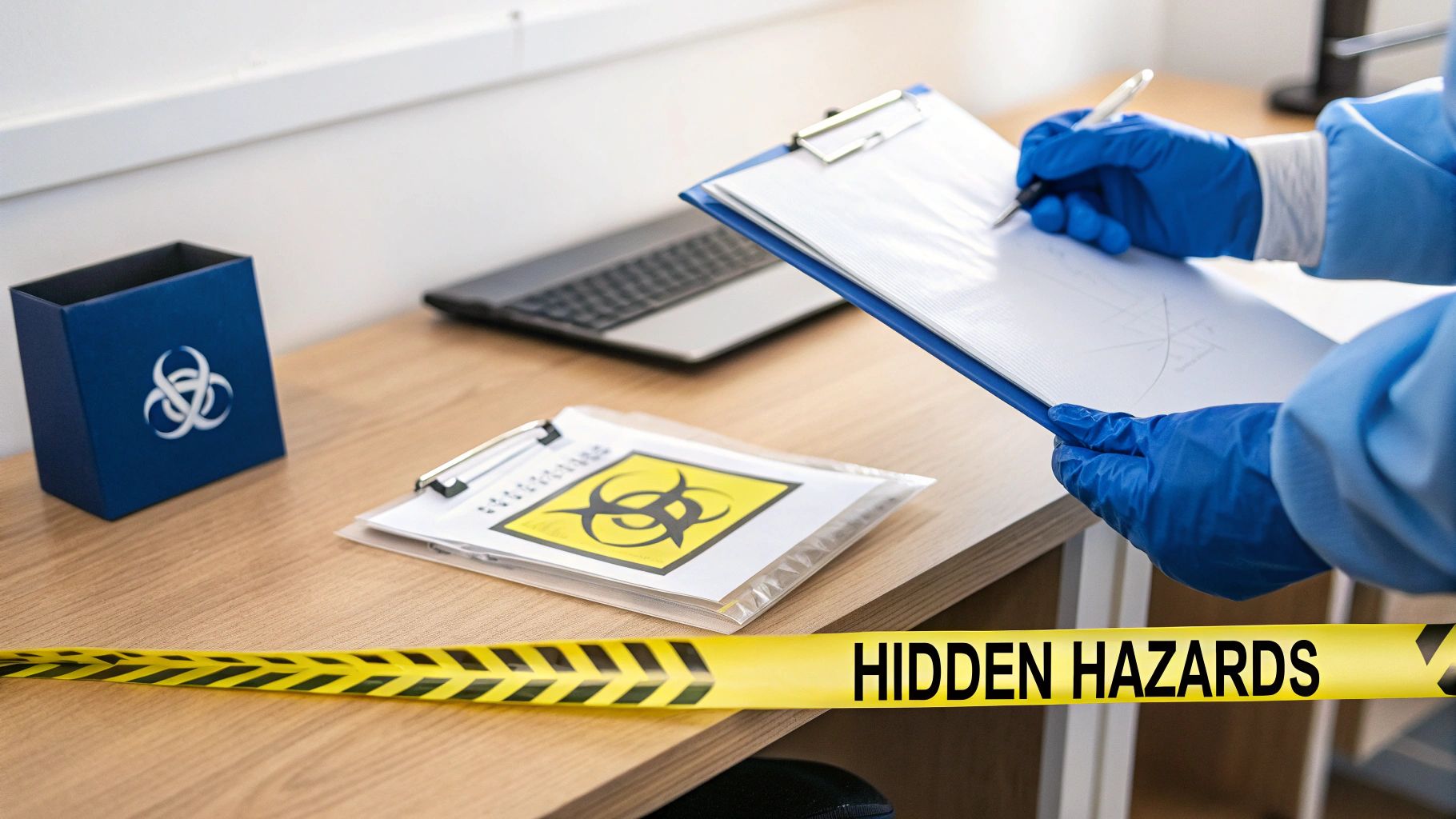
At a glance, a small spill may not seem like a significant threat. However, the real danger is invisible to the naked eye. Blood can be teeming with microscopic infectious agents known as bloodborne pathogens, which are capable of causing severe, life-altering diseases.
Even after blood has dried, these pathogens can remain viable on surfaces for days or even weeks. This creates an ongoing risk for anyone who enters the area, a critical fact often overlooked in the rush to perform a quick, DIY cleanup.
The Hidden Threat of Bloodborne Pathogens
The most common bloodborne pathogens are a major health concern. Exposure can occur from a minuscule amount of contaminated fluid entering the body through a small cut, scrape, or via the mucous membranes of the eyes or nose.
The three primary pathogens of concern are:
- Hepatitis B Virus (HBV): A highly resilient virus that attacks the liver, HBV can survive in dried blood at room temperature for at least a week.
- Hepatitis C Virus (HCV): Another virus causing serious liver damage, HCV can also remain viable on surfaces for extended periods.
- Human Immunodeficiency Virus (HIV): While more fragile outside the body than the hepatitis viruses, HIV still poses a significant risk, especially with fresh spills.
Understanding the resilience of these pathogens is crucial. You can learn more in our detailed guide on common bloodborne pathogens and the risks they pose. It underscores why standard cleaning methods are inadequate for biohazard remediation.
One of the most dangerous myths is the belief that dried blood is safe. Pathogens can be reactivated with moisture, instantly transforming a forgotten stain into an active biological hazard. This is a critical risk that only professional protocols can mitigate.
Why Standard Cleaning Products Fail
A common instinct is to use bleach or household cleaners to address a blood spill. While these products may remove the visible stain, they are not formulated to eliminate resilient bloodborne pathogens. Bleach, for example, is often neutralized by the organic material in blood, rendering it ineffective as a disinfectant in this scenario.
Furthermore, improper techniques like wiping or mopping can spread microscopic contaminants over a much larger area. What appears to be a cleaning effort can inadvertently expand the exposure zone.
This is a stark contrast to professional methods. Certified technicians utilize EPA-registered, hospital-grade disinfectants proven to kill these specific viruses, applied using meticulous, industry-certified protocols that leave no room for error.
DIY Cleanup Risks vs Professional Remediation Benefits
Deciding how to handle a blood spill is a critical choice with significant consequences. Here is a clear breakdown of the risks of a DIY attempt versus the benefits of professional remediation.
| Factor | DIY Cleanup Attempt | Professional Biohazard Remediation (360 Hazardous Cleanup) |
|---|---|---|
| Safety | High risk of exposure to bloodborne pathogens (HIV, Hepatitis B & C). | Utilizes full Personal Protective Equipment (PPE) to eliminate exposure risk for all personnel. |
| Effectiveness | Household cleaners are ineffective against resilient viruses present in blood. | Employs EPA-registered, hospital-grade disinfectants with proven efficacy against bloodborne pathogens. |
| Thoroughness | Likely to miss hidden contamination in porous materials or hard-to-reach areas. | Follows OSHA-compliant protocols for comprehensive containment, cleaning, and disinfection. |
| Cross-Contamination | High risk of spreading invisible contaminants to other areas of the property. | Establishes containment zones to prevent the spread of hazardous biological materials. |
| Disposal | Improper disposal of contaminated materials is illegal and poses a public health risk. | Adheres to strict federal and state regulations for biohazardous waste transport and disposal. |
| Emotional Toll | Cleaning a traumatic scene can be emotionally and psychologically damaging. | Provides a compassionate, discrete, and professional service, allowing you to focus on healing and recovery. |
| Liability | Leaves property owners legally liable for future exposures or incomplete cleanup. | Provides certification of disinfection, ensuring the area is safe and mitigating future liability. |
The risks associated with a DIY attempt far outweigh any perceived savings. Professional remediation is the only method to ensure the task is completed safely, legally, and comprehensively.
How to Safely Secure a Contaminated Area
When a blood spill occurs, the initial impulse may be to start cleaning. Do not. The most important initial action is to contain the area. The primary objective is to prevent a localized issue from becoming a property-wide contamination risk.
Every action should be focused on preventing the spread of biohazards and protecting others from exposure until trained professionals arrive.
Isolate the Area Immediately
First, ensure everyone is removed from the immediate vicinity. Calmly but firmly direct people away from the spill, making sure no one walks through or near it. In a public or high-traffic area, assertive action may be necessary to maintain safety.
Once the area is clear, establish a barrier. This can be achieved with available items—chairs, a closed door, or caution tape if accessible. The goal is to create a physical demarcation that prevents accidental entry into the contaminated zone. This single step is crucial for preventing cross-contamination from footwear.
Manage Airflow Carefully
Ventilation must be handled with care. Activating an HVAC system or fan may seem logical, but it can be a critical error. Forced air can aerosolize dried blood particles, spreading them throughout the building’s ventilation system.
If possible, open a window in the affected room that vents directly to the outside. This helps manage any odors from the spill itself (or later, from disinfectants) without distributing them throughout the property.
Securing an area requires a delicate balance. You must prevent entry while managing air circulation to avoid worsening an airborne hazard. This complexity is a key reason why professional assessment is vital.
Critical Actions to Avoid
The actions you avoid are as important as the ones you take. In a high-stress situation, impulsive actions can significantly worsen a dangerous situation.
Adhere to these critical "don'ts" when a blood spill is discovered:
- Never Touch Contaminated Items: Do not use bare hands to handle anything that has come into contact with blood. Bloodborne pathogens can easily enter the body through microscopic cuts or abrasions on the skin.
- Do Not Use Household Cleaning Tools: Mops, sponges, and paper towels will only smear the biohazard. These tools are not designed for disinfection and will become contaminated, creating an additional hazard.
- Avoid Using Bleach: As mentioned, bleach is often rendered ineffective by the proteins in blood. It is also incapable of addressing contamination that has absorbed into porous materials like wood, grout, or carpet padding.
- Don't Dispose of Waste in Regular Trash: Any material used to absorb a blood spill is classified as regulated biohazardous waste. Disposing of it in standard trash is often illegal and poses a serious health risk to sanitation workers and the public.
Properly securing a scene requires understanding that even minor contact demands significant protection. Our detailed guide on the extensive safety equipment needed to clean a crime scene illustrates why professional-grade gear is non-negotiable.
By taking these initial containment steps—and avoiding common mistakes—you maintain a stable and safe scene, ready for the meticulous professional remediation that is required.
A Look Inside Professional Blood Spill Remediation
When our certified technicians arrive, they assess far more than just a visible stain. They are trained to execute a meticulous, science-backed process designed to completely eradicate biohazardous threats. Attempting to clean up blood spills without this systematic approach is how unseen contamination spreads and health risks multiply.
The process begins long before any disinfectant is applied, starting with a comprehensive site assessment that extends beyond a simple visual inspection.
Initial Assessment and Containment
First, we determine the true scope of the contamination. Our technicians utilize specialized tools, such as luminol, to detect trace amounts of blood invisible to the naked eye. Contaminants can easily seep into subflooring, wick up drywall behind baseboards, or splatter in microscopic droplets far from the original spill.
This graphic illustrates the immediate steps anyone should take to secure an area, which our professionals expand upon by establishing a formal controlled work zone.
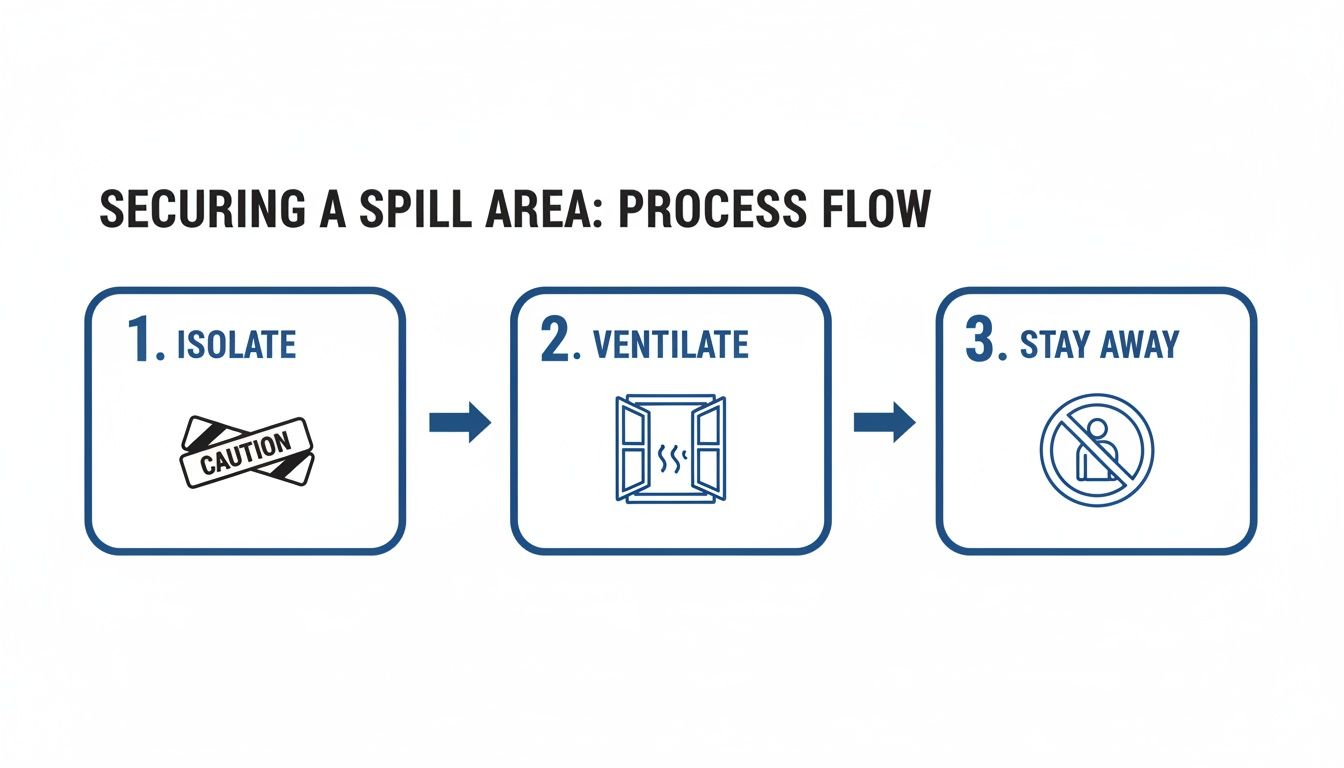
As shown, immediate safety hinges on three critical actions: isolating the spill, ventilating the room properly, and preventing entry.
Once the full extent of contamination is mapped, we establish a controlled work zone. This involves setting up physical barriers and may include creating negative air pressure to ensure no airborne pathogens escape during remediation. This phase is crucial for protecting the rest of the property from cross-contamination.
The Multi-Stage Remediation Process
With the site fully secured and contained, the physical remediation begins. This is not merely "cleaning"; it is a structured, multi-stage process that is fundamentally different from surface wiping.
The first step is the careful removal of all contaminated porous materials. This includes items like carpet, drywall, fabric, and upholstery that cannot be safely salvaged. These materials are immediately packaged in regulated biohazard containers, as surface cleaning would leave dangerous pathogens trapped within.
Next, our teams proceed to the deep cleaning phase. Using industrial-grade, specialized cleaners, we remove all visible blood and biological matter from every non-porous surface. This step is essential, as disinfectants are only effective on a surface that has been thoroughly cleaned of organic material. You can explore the scientific principles behind this in our guide to the science behind biohazard decontamination.
Only then is the area ready for disinfection. We apply EPA-registered, hospital-grade disinfectants formulated specifically to eliminate bloodborne pathogens like HIV, HBV, and HCV. We strictly adhere to the manufacturer's guidelines, including the specified "dwell time"—the period a surface must remain wet for the disinfectant to achieve a complete kill of the targeted pathogens.
Deodorization and Final Verification
Lingering odors are often an indicator of missed microscopic organic matter. A truly professional process always includes a final deodorization step, using technologies like hydroxyl generators or thermal foggers to neutralize any remaining odor-causing particles at a molecular level.
The final and most critical stage is verification. Our technicians use tools like adenosine triphosphate (ATP) testing—the same technology hospitals use to verify sanitation—to obtain scientific confirmation that surfaces are safe. This provides tangible proof that the area is not just visually clean but biologically safe.
Finally, we manage all biohazardous waste according to strict state and federal regulations. This process includes:
- Proper Packaging: All contaminated materials are placed into red biohazard bags, which are then sealed inside rigid, puncture-proof containers.
- Labeling and Transport: Each container is labeled with the universal biohazard symbol before being transported by a licensed medical waste carrier.
- Compliant Disposal: The waste is transported to a designated facility for destruction, typically via incineration, ensuring it poses no future risk.
This methodical, regulated, and verified process is the only way to ensure a property is restored to a safe and habitable state.
Why Certified Biohazard Technicians Are So Important
The most advanced equipment and powerful disinfectants are ineffective in untrained hands. When confronting a blood spill, the technician’s expertise is the most critical component for ensuring safety and efficacy. Professional biohazard remediation is a highly specialized discipline, built on rigorous training and certifications that are unattainable for an untrained individual.
This expertise is not just about following a cleaning checklist; it is about a deep understanding of the science of decontamination while providing trauma-informed, compassionate service. True professionals are equipped to manage situations that are both technically complex and emotionally charged.
The Bedrock of Professional Training
Certified biohazard technicians undergo intensive training that prepares them for the realities of this work. Their education is founded on safety, regulatory compliance, and scientific principles.
Key areas of mandatory training include:
- OSHA's Bloodborne Pathogens Standard (29 CFR 1910.1030): This is the foundational regulation for the industry. It outlines the detailed framework for protecting workers from blood and other potentially infectious materials through proper work practices, engineering controls, and Personal Protective Equipment (PPE).
- Hazardous Materials Handling: Technicians must master the strict protocols for containing, packaging, transporting, and disposing of all biohazardous waste in compliance with a complex web of local, state, and federal laws.
- Respiratory Protection Programs: This training ensures every technician can correctly select, fit-test, and use respirators to prevent exposure to airborne contaminants.
This is not a one-time training. Professionals are required to complete ongoing education to remain current on the latest safety protocols, technologies, and remediation techniques. You can learn more about why these credentials are so vital in our guide on training and certification for biohazard professionals.
A certified technician brings more than knowledge to a scene; they bring a trained eye capable of seeing what is invisible. This ability to detect hidden contamination is often the difference between a truly safe environment and a lingering biohazard.
Seeing Beyond the Visible Stain
Consider a complex and tragic event like an unattended death. The visible blood may seem contained, but the contamination is almost always more extensive. A certified technician knows that fluids follow the path of least resistance—seeping through carpets into subfloors and wicking up behind baseboards into drywall.
An untrained person might only clean the surface stain, assuming the job is complete. A professional knows that this is insufficient. Their training compels them to investigate further, checking for subfloor saturation, inspecting for hidden contamination behind walls, and recognizing how odors can indicate the presence of unseen organic material. This meticulous, science-backed approach is the only way to guarantee all biohazards are eliminated, protecting the health of future occupants and the building’s structural integrity.
This expertise is especially critical in clinical environments. A 2023 study found that a staggering 40% of needlestick injuries from blood cleanup in settings like hospitals and clinics expose workers to hepatitis C. This statistic highlights the essential need for certified teams equipped with advanced PPE and antimicrobial agents to manage these situations.
Ultimately, certification is your assurance of competence, safety, and professionalism. It confirms the technician has been trained to handle the most challenging scenarios with a calm, methodical, and compassionate approach. They don't just make a space look clean—they restore it on a biological level, allowing you, your family, or your employees to re-enter with complete peace of mind.
Navigating Insurance for Blood Cleanup Services
Following a traumatic event, managing the cost of cleanup should not be an additional burden. The emotional weight and logistical challenges are significant enough. Fortunately, many people are relieved to learn that professional biohazard remediation is often covered by their existing insurance policies.
Standard homeowner's, commercial property, or even auto insurance policies typically include provisions for this type of restoration work. The damage resulting from an accident, crime, or unattended death is generally considered a "loss" that requires professional remediation to restore the property to a safe, pre-incident condition.
Understanding Your Insurance Policy
A successful claims process begins with understanding your policy. Look for terms such as "biohazard remediation," "trauma scene cleanup," or "property restoration." The policy language can be dense and confusing, which is where the support of an experienced remediation company becomes invaluable.
We act as your advocate from the very beginning. Our team is proficient at reviewing policies, identifying relevant coverage, and communicating directly with your insurance provider on your behalf. This alleviates a significant burden, allowing you to focus on more important matters.
The most stressful part of any emergency is navigating the unknown. Our role is to provide clarity and support, not just in the physical cleanup but in managing the entire insurance process for our clients. We handle the paperwork so you don't have to.
Steps to Filing a Successful Claim
To ensure a claim for services to clean up blood spills is processed smoothly, meticulous documentation is paramount. From the moment we arrive on-site, our technicians document every detail of the scene and our remediation process.
This documentation serves as the critical evidence your insurance company requires. We always provide:
- Photographic and Video Evidence: We capture extensive photos and videos of the affected area before, during, and after our work. This provides the adjuster with a clear understanding of the contamination's extent and the thoroughness of our remediation.
- Detailed Work Scopes and Invoices: You will receive a comprehensive, line-item estimate and a final invoice that breaks down every service performed, from the removal of contaminated materials to the application of hospital-grade disinfectants.
- Proof of Proper Disposal: We supply official manifests that prove all biohazardous waste was transported and disposed of in compliance with all federal, state, and local regulations.
At 360 Hazardous Cleanup, our team works directly with insurance adjusters. We provide them with a complete, detailed packet of information to justify every action taken. This proactive approach helps prevent delays and disputes, expediting the approval process. You can learn more about how we assist with navigating insurance claims for biohazard cleanup on our blog.
If you encounter difficulties with claim approval, knowing how to appeal is important. There are valuable resources available, such as this guide on fighting insurance claim denial, which offers practical strategies. By partnering with a professional remediation company that understands the insurance landscape, you gain an ally committed to ensuring you receive all the benefits to which you are entitled under your policy.
We're Here to Help You Recover
Attempting to clean up a blood spill yourself is more than just cleaning a mess—it is a significant gamble with your health and the well-being of others. As we have discussed, the real danger lies not in what is visible, but in the invisible bloodborne pathogens and hidden contamination that pose a serious threat long after an area appears clean.
Engaging a certified biohazard remediation team is not merely a professional service; it is the only way to be certain that a space is restored to a biologically safe condition.
This is about more than just cleaning. It is about providing peace of mind. Knowing that trained experts have managed the situation with scientific precision and full regulatory compliance allows families and businesses to begin the process of moving forward without the lingering fear of what might have been missed.
After a traumatic event, your focus should be on healing, not on deciphering complex and dangerous cleanup protocols. We handle the biohazard so you can focus on what truly matters.
At 360 Hazardous Cleanup, we consider ourselves your partners in recovery. Our technicians are on call 24/7, ready to provide immediate, discreet, and deeply compassionate assistance whenever you need it.
If you are facing a difficult and overwhelming situation, please do not attempt to handle it alone. We are here to restore safety, answer your questions, and provide a clear path forward—any time, day or night.
Common Questions About Blood Spill Cleanup
When faced with the reality of a blood spill, numerous practical questions arise, even with an understanding of the risks. In a stressful moment, obtaining direct, factual answers is key to making safe and responsible decisions. We frequently address similar concerns from clients, and providing clarity is part of our mission.
The goal is to reinforce the most critical principles: safety, proper procedure, and the importance of professionalism in any biohazard situation.
How Long Do I Have to Address a Blood Spill?
A blood spill requires immediate attention to prevent health risks from spreading. A common misconception is that the danger dissipates once blood is dry; this is incorrect. Viruses like Hepatitis B can remain viable and infectious on a surface for over a week.
The proper course of action is to secure the area immediately and contact a professional remediation service. Delaying not only prolongs the health hazard but also exacerbates the situation. The longer a spill sits, the greater the chance of permanent stains, structural damage as moisture absorbs into floors and walls, and persistent odors that become more difficult to eliminate.
Can I Use Bleach on a Small Blood Spill?
While bleach is a common household disinfectant, it is not recommended for blood cleanup for several critical reasons. The organic compounds in blood can neutralize the active ingredients in bleach, rendering it ineffective against resilient pathogens.
Additionally, bleach is corrosive and can damage certain surfaces. The primary issue, however, is that wiping with bleach fails to address the main risk: contamination that has seeped deep into porous materials such as:
- Wood flooring and the underlying subfloor
- Carpet and padding
- Grout between tiles
- Drywall and baseboards
Professionals utilize broad-spectrum, EPA-registered disinfectants formulated specifically for biohazard remediation. These products are designed to completely eradicate pathogens without causing further damage to your property.
Many people mistakenly focus only on the visible stain. True safety is achieved by eliminating the microbial threat you cannot see, which requires specialized chemicals and techniques that household products cannot provide.
Will My Neighbors Know Why You Are Here?
Discretion is a fundamental component of our service. We understand that these situations are incredibly sensitive and private. At 360 Hazardous Cleanup, protecting your privacy is a top priority.
Our teams can arrive in unmarked vehicles upon request, and we conduct all our work with the utmost professionalism and respect for your circumstances. Our objective is to restore your property to a safe condition quickly and quietly, without drawing unwanted attention, allowing you and your family to manage the situation privately.
What Happens to Contaminated Materials?
Any material that has come into contact with blood is considered regulated biohazardous waste and cannot be disposed of in regular trash. This action is not only illegal but also creates a serious public health hazard.
Certified remediation companies like ours adhere to strict local, state, and federal regulations for managing this waste. We meticulously package all contaminated items in specially labeled, leak-proof containers. A licensed carrier then transports them for final destruction, typically through methods like incineration. This ensures the pathogens are completely destroyed and pose no further threat to the community or the environment.
When you're facing the overwhelming task of a biohazard cleanup, you don't have to go through it alone. The expert team at 360 Hazardous Cleanup is available 24/7 to provide immediate, compassionate, and professional help, ensuring your property is returned to a safe and clean state. Contact us anytime for a confidential consultation.