A facility manager usually finds out about MRSA at the worst possible moment. An employee reports a draining wound in a shared workspace. A resident in a senior living unit is transferred for treatment. A clinic calls about contamination concerns after an urgent care visit. The question comes fast: is routine cleaning enough, or has the situation crossed into biohazard response?
That's where the prevention of mrsa stops being a purely clinical topic and becomes an operations, safety, and liability issue. In the field, the biggest mistakes happen when people treat MRSA like either a hospital-only problem or a simple housekeeping problem. It's neither.
MRSA prevention works best when facilities understand two truths at the same time. First, many cases can be managed through disciplined hygiene, cleaning, and containment. Second, once bodily fluids, extensive surface contamination, porous materials, or repeated re-exposure enter the picture, the response has to become more controlled, documented, and compliant.
Understanding the Threat of MRSA Beyond Hospital Walls
MRSA stands for methicillin-resistant Staphylococcus aureus. It's a strain of staph that resists several antibiotics and can spread through direct contact and contaminated surfaces. While commonly associated with hospitals, the operational risk is much broader. Long-term care buildings, behavioral health settings, gyms, group homes, office restrooms, shared vehicles, and private residences can all become part of the exposure chain.
A common scenario looks ordinary at first. Someone with a draining skin infection uses a shared chair, restroom, bedrail, breakroom table, or vehicle seat. Staff wipe the obvious area, throw away some trash, and move on. If there's no clear protocol for isolation, PPE selection, waste handling, or disinfectant dwell time, the facility may still be leaving behind a viable transmission risk.
MRSA deserves attention because it isn't a niche organism. It causes approximately 10% of all hospital-associated infections in U.S. hospitals, and after years of decline, certain infections increased by as much as 41% during the COVID-19 pandemic, according to CIDRAP's summary of updated MRSA prevention guidance. That hospital data matters outside hospitals because it shows how quickly gains can reverse when prevention systems weaken.
Why non-hospital properties still carry real risk
Facility leaders outside acute care often underestimate how MRSA moves through a building. The main pathways are simple:
- Direct skin contact with an infected or colonized person
- Shared high-touch surfaces such as handles, rails, counters, keyboards, phones, and chairs
- Contaminated soft goods like linens, towels, uniforms, and some upholstery
- Improper cleanup of bodily fluids from wounds, drainage, or bandage disposal
That's why the prevention of mrsa has to be built into ordinary operations, not reserved for medical wings.
Practical rule: If a surface or item may have had contact with wound drainage, used dressings, or uncontained bodily fluids, treat the event as more than routine janitorial work until a qualified risk review says otherwise.
Where routine guidance often falls short
Most public guidance focuses on handwashing and standard infection control in healthcare. That's necessary, but it doesn't fully answer what a property manager should do after an exposure event in a tenant space, a transportation vehicle, a warehouse first-aid room, or a private home. That gap is exactly why environmental control matters.
For a broader look at how contamination risk extends into real cleanup operations, this overview of MRSA in hospitals and the cleanup process is useful context. The core point is simple: once contamination leaves the exam room and enters the built environment, prevention and remediation have to work together.
Foundational Defense Mastering Hand Hygiene and Environmental Cleaning
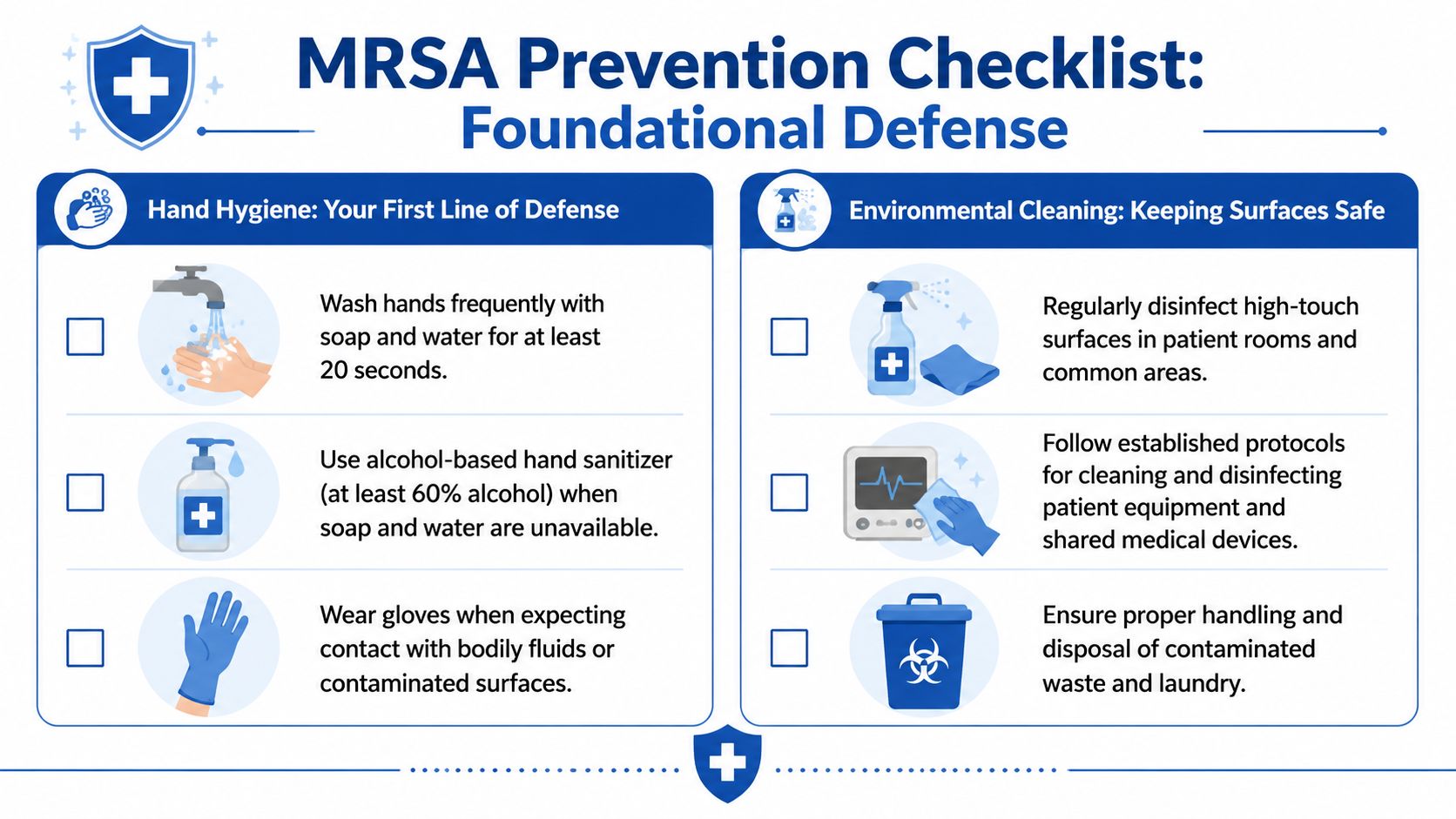
The prevention of mrsa starts with habits that seem basic and fail in practice when nobody measures them. Hand hygiene is the clearest example. Staff often believe they're compliant because sanitizer is available and signage is posted. Those are supports, not proof.
Facilities with hand hygiene compliance between 51% and 70% had 3.42 times higher MRSA surgical site infection rates, and the benchmark for safer performance is over 90% compliance, a threshold reached by only 4% of surveyed facilities, according to this hand hygiene and MRSA compliance review. For managers, the message is direct: if you aren't auditing, you don't know whether your first line of defense is functioning.
What effective hand hygiene looks like on the ground
Soap and water matter when hands are visibly soiled or after contact with bodily fluids. Alcohol-based hand sanitizer is useful when hands aren't visibly dirty and point-of-care speed matters. Gloves help, but they don't replace hand hygiene. People contaminate their hands while removing gloves all the time.
A workable facility standard usually includes:
- Placement that matches traffic by putting sanitizer where contact happens, not just at building entrances
- Defined moments for use such as before and after resident contact, after touching shared equipment, after glove removal, and after handling waste or laundry
- Observed audits rather than self-attestation
- Immediate correction when staff skip the step, especially during busy periods
For teams that need a plain-language refresher on core infection practices, The CNA Guide to infection control is a helpful supplemental resource because it translates standard precautions into day-to-day actions staff can recognize.
Environmental cleaning is not just wiping surfaces
Routine cleaning removes soil. Disinfection is the step that targets organisms after soil is removed. Many failures happen because teams combine those ideas, rush the process, or use a product incorrectly. A disinfectant that never stays wet for the required dwell time hasn't done the job.
For MRSA-sensitive spaces, managers should identify and rank surfaces by touch frequency and contamination likelihood.
| Area or item | Priority level | Typical control |
|---|---|---|
| Door handles, rails, light switches | High | Scheduled disinfection with documented frequency |
| Shared equipment, carts, wheelchairs, exam furniture | High | Clean and disinfect between users when applicable |
| Restrooms, sinks, counters | High | Increased frequency plus spot response after visible contamination |
| Floors and low-touch walls | Moderate | Routine cleaning, targeted disinfection when contamination is suspected |
| Porous, damaged, or hard-to-clean items | Elevated concern | Evaluate for removal, isolation, or professional treatment |
Clean first when soil is present. Then disinfect with a product labeled for the organism of concern, using the manufacturer's contact time and application method.
What works and what doesn't
What works is boring and consistent:
- Written schedules for high-touch surfaces
- EPA-registered disinfectants used exactly as labeled
- Disposable wipes or controlled-use cloth systems
- Clear separation between clean tools and dirty tools
- Replacement of damaged surfaces that can't be adequately disinfected
What doesn't work is just as predictable:
- Spray-and-walk-away habits
- One rag moving room to room
- Unlabeled secondary bottles
- Deep cleaning language with no scope definition
- Assuming housekeeping can handle a bodily fluid event without biohazard training
A more detailed review of practical surface protocols appears in this guide to cleaning superbugs and infectious bacteria. The key lesson is that hand hygiene and environmental cleaning only work when someone owns the process, checks compliance, and corrects drift.
Containing the Threat PPE and Isolation Best Practices
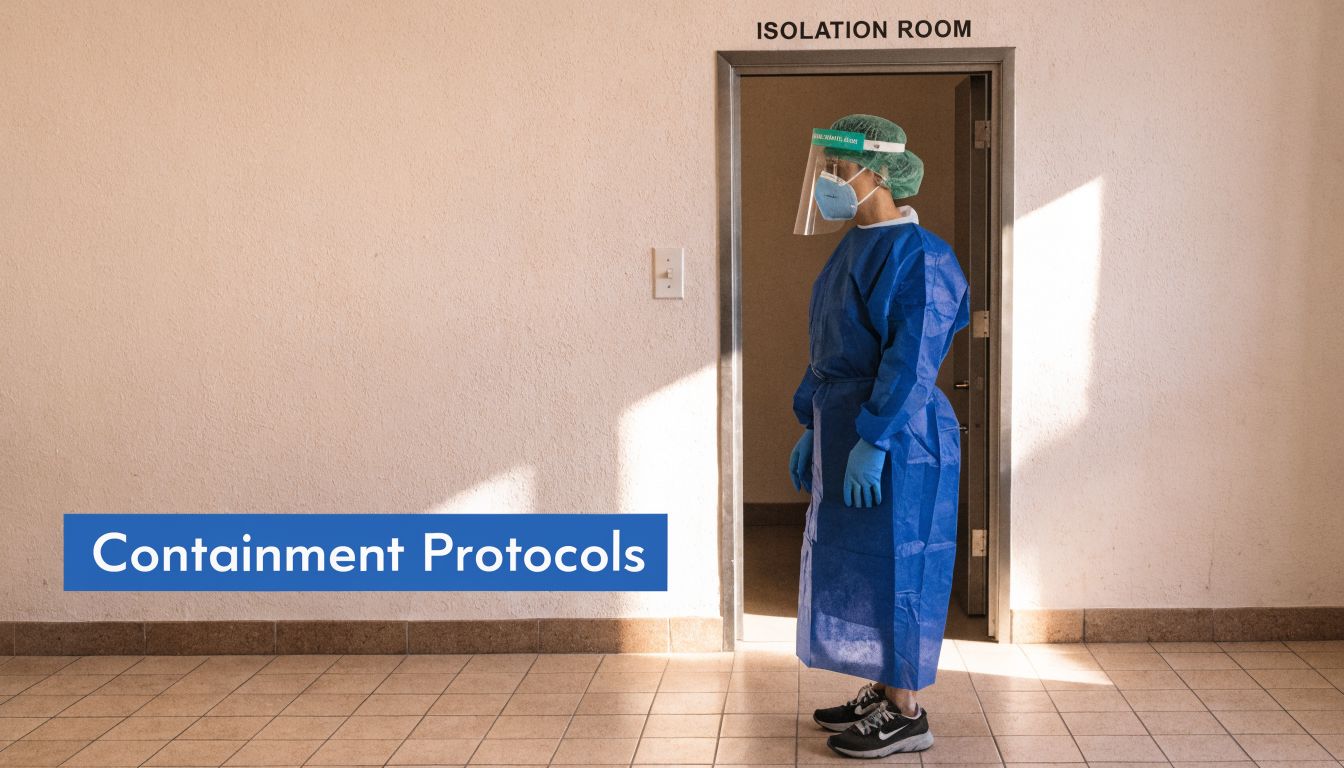
Containment is where prevention either becomes disciplined or falls apart. Once a person is known or suspected to have MRSA with active drainage, uncontrolled secretions, or contaminated dressings, you need more than reminders about sanitizing hands. You need barriers that interrupt transmission before contamination spreads into hallways, carts, laundry routes, and break areas.
A useful model comes from the Veterans Affairs system. A multifaceted program that included contact precautions and enhanced hygiene reduced staph infections by 43% between 2005 and 2017, as summarized by AAFP's coverage of CDC MRSA findings. That result matters because it reinforces a field truth. Barrier methods work when facilities apply them consistently, not selectively.
What contact precautions mean in practical terms
For non-clinical managers, contact precautions can sound more complicated than they are. The purpose is to stop contaminated hands, clothing, and tools from carrying organisms to the next person or next surface.
That usually means:
- Gloves for anticipated contact with contaminated skin, dressings, laundry, or surfaces
- Gowns or protective clothing when clothing may brush against the person, bedding, furniture, or contaminated areas
- Dedicated equipment when possible, or immediate cleaning and disinfection after use
- Restricted movement of contaminated items until they're bagged, labeled, and routed correctly
In commercial settings, the exact form may differ from a hospital room, but the logic doesn't. If a first-aid cot, transport chair, or restroom stall has been contaminated, staff should control access, use PPE correctly, and avoid carrying contamination into clean zones.
The PPE failure points I see most often
Most PPE mistakes happen during removal, not during wear. Staff glove up properly, do the task, then touch their face, radio, phone, door handle, or shirt front during doffing. That defeats the whole point.
Common breakdowns include:
Wrong level of protection
Thin gloves without a gown in a splash or contact-heavy task often leave sleeves and uniforms contaminated.No doffing sequence
If staff remove PPE by instinct instead of procedure, they contaminate their hands or clothing.Poor staging
There's no waste container, hand hygiene station, or clean exit path at the point of removal.Mixed dirty and clean equipment
Reusable tools get placed back on carts before decontamination.
A solid primer on task-specific protective gear is this resource on the importance of PPE in biohazard cleanup.
A quick visual walkthrough can also help teams that need to retrain on isolation workflows:
The right PPE only works if staff can put it on, work in it, and remove it without contaminating themselves or the environment.
Adaptation for buildings outside acute care
Property managers don't need to turn office suites into hospital units. They do need a response threshold. If there's a known or suspected MRSA contamination event involving bodily fluids, open wound drainage, heavily soiled laundry, or a confined area with repeated contact points, isolation principles should kick in immediately. Limit access. Control traffic. Protect staff. Preserve a clean path out.
That's the difference between simple cleaning and actual containment.
Proactive Strategies Screening and Decolonization Protocols
Some MRSA prevention measures are universal. Others are targeted, clinical, and appropriate only under medical oversight. Screening and decolonization fall into that second group. Facility leaders should understand them well enough to coordinate with infection prevention staff, occupational health, and clinical partners, but they shouldn't treat them as a DIY building management project.
The strongest evidence for decolonization comes from intensive care settings. A landmark trial found that universal decolonization using chlorhexidine bathing and intranasal mupirocin was the most effective intervention for reducing MRSA clinical cultures and all-cause bloodstream infections in ICUs, according to the REDUCE MRSA trial summary in PubMed Central. That doesn't mean every facility should immediately adopt universal decolonization. It means high-risk healthcare environments may benefit from structured protocols directed by clinicians.
What screening actually tells you
A screening swab can help identify colonization. That's useful in some settings, especially when a facility needs to make decisions about cohorting, targeted precautions, or pre-procedure planning. But a positive screen doesn't, by itself, define the severity of environmental contamination. It also doesn't replace cleaning, disinfection, or waste controls.
For administrators, the practical takeaway is this:
- Screening is a medical tool, not a substitute for environmental response
- Decolonization is a treatment protocol, not a housekeeping intervention
- Building operations still need universal basics even when screening is available
That distinction matters because facilities sometimes overvalue testing and undervalue daily prevention discipline.
Where decolonization fits and where it doesn't
Decolonization may be appropriate in ICUs, some surgical pathways, or other high-risk settings under established clinical protocol. It is less useful as a blanket answer for every suspected exposure in a workplace, apartment building, or non-acute residential environment.
A simple comparison helps:
| Question | Environmental operations answer | Clinical answer |
|---|---|---|
| Was a space contaminated? | Isolate, clean, disinfect, document | May prompt consultation if exposure is significant |
| Is a person colonized? | Not determined by cleaning staff | Determined through medical screening |
| Should chlorhexidine or mupirocin be used? | Not an environmental decision | Medical oversight required |
| Can normal occupancy resume? | Depends on contamination control and verification | May also depend on patient-specific factors |
If a household or caregiver is trying to understand what a swab process looks like, an at-home MRSA swab test can serve as a reference example of how screening is commonly framed for consumers. It shouldn't replace physician guidance, especially where symptoms, wound drainage, recurrent infection, or vulnerable occupants are involved.
Screening can support a prevention program. It can't rescue a weak cleaning program, and it can't resolve an active contamination event on its own.
The operational trade-off managers should recognize
Screening and decolonization require coordination, documentation, and follow-through. They can strengthen a high-risk prevention program, but they also consume staff time and depend on clinical oversight. If the facility doesn't already have dependable hand hygiene, contact precautions, environmental cleaning, and waste handling, advanced interventions won't compensate for those gaps.
That's why administrators should think of screening and decolonization as precision tools. They're powerful in the right setting, but they don't replace environmental control.
Creating a Culture of Safety with Training and Policy
Most MRSA failures aren't caused by a missing product. They're caused by a missing system. A facility can buy disinfectants, gloves, gowns, signage, and laundry bags, then still perform badly because nobody defined who responds, what gets documented, when escalation happens, and how staff report a concern without getting blamed for it.
That's why prevention of mrsa has to live inside policy, onboarding, supervision, and follow-up. Staff need to know the difference between routine cleaning, contamination response, and events that require outside remediation.
What a workable facility program includes
A sound MRSA prevention program usually has four operating parts.
Written response criteria
Spell out what triggers which response. Staff shouldn't have to guess whether a used bandage in a regular trash can is a housekeeping issue or a supervisor issue. Written criteria should cover visible blood or wound drainage, contaminated linens, sharps concerns, repeated contamination in the same area, and occupancy restrictions after a cleanup event.
Task-based training
Training should match roles. Front desk staff need reporting rules. Housekeeping needs product use, dwell time, and waste handling. Supervisors need incident triage and vendor activation authority. Clinical personnel need role-specific isolation and transport procedures.
A deeper look at workforce preparation appears in this article on training in biohazard cleanup.
Documentation that can survive scrutiny
If a regulator, insurer, risk manager, or family member asks what happened, verbal reassurance won't help. Keep records that show:
- Who cleaned the area
- What product was used
- Which surfaces or items were addressed
- When the work occurred
- Whether waste and laundry were segregated
- Who approved return to service
Non-punitive reporting
Staff hide problems in punitive cultures. They throw away contaminated items unnoticed, skip reporting a body fluid incident, or wipe down the obvious spot and hope nothing comes of it. Management has to reward escalation, not punish it.
A simple policy framework
Not every building needs a long manual. It does need clarity. This compact framework works well for many facilities:
Recognize
Define contamination indicators and reporting pathways.Restrict
Limit access to the affected area and control traffic.Protect
Assign PPE and hand hygiene requirements by task.Remediate
Distinguish routine cleaning from disinfection and biohazard response.Record
Document actions, products, disposal steps, and release decisions.
Staff are more likely to follow a protocol they can remember under stress than one they need to reread in the middle of an incident.
The culture shift that matters most
Managers sometimes focus so heavily on technical standards that they miss the human variable. People cut corners when they feel rushed, unsupported, or unclear about authority. A strong safety culture fixes that by making the right action easier than the fast action.
That means stocking the right supplies where exposures happen, training for realistic scenarios, checking logs, correcting errors quickly, and making it normal to say, “This one is beyond routine cleaning.”
When to Call for Professional Biohazard Remediation
There's a clear line between prevention and remediation, but many facilities don't recognize it until after a failed cleanup. The line is crossed when contamination is no longer a simple surface maintenance issue and becomes a controlled decontamination problem.
That usually happens after exposure to bodily fluids, wound drainage, heavily contaminated textiles, recurring contamination in the same room, or contamination involving porous materials and difficult-to-access surfaces. It also happens when an internal team cannot verify that all affected areas, waste streams, and touchpoints were properly addressed.
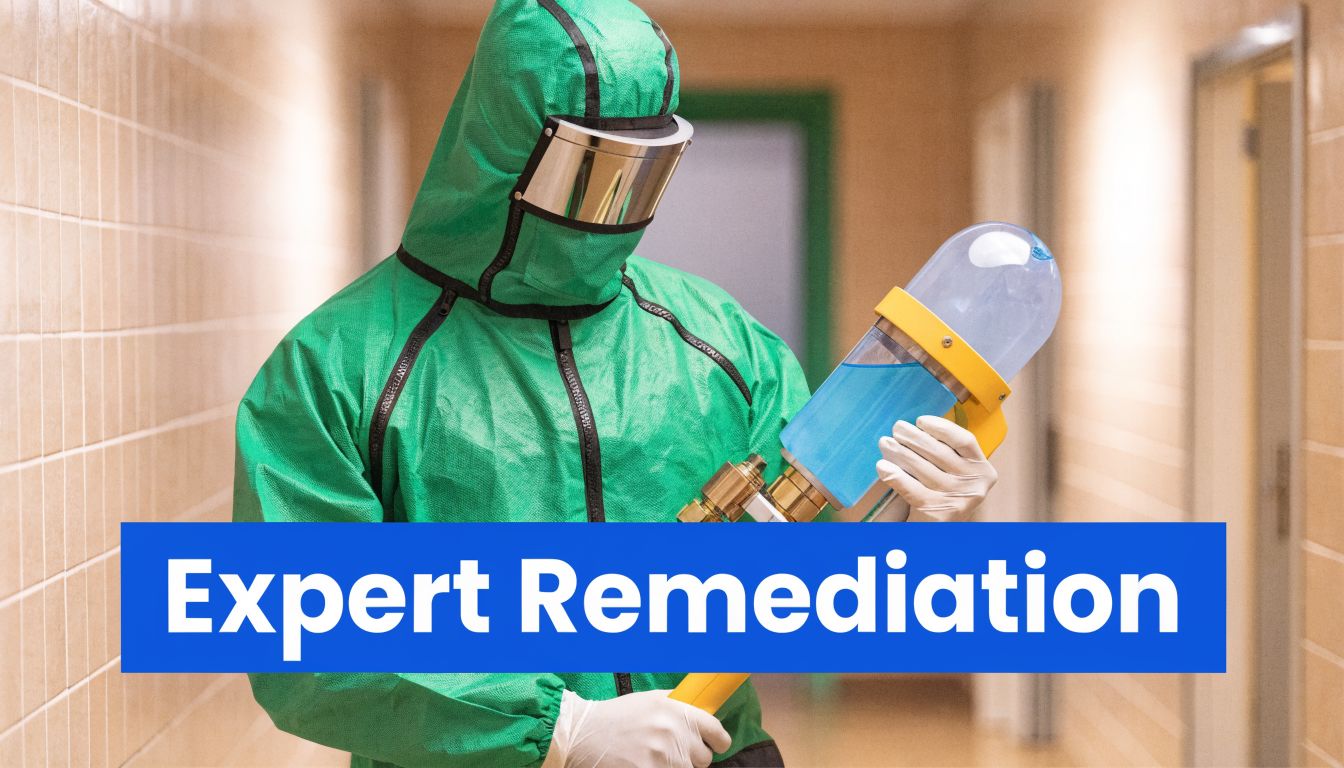
One reason this matters is persistence. MRSA can survive on dry surfaces for weeks to months, with some studies showing survival for up to 7 months, as noted in AHRQ's MRSA prevention resource. That means a rushed wipe-down after an incident may leave behind a long tail of risk, especially on damaged, porous, or repeatedly touched items.
The limits of standard janitorial response
Routine custodial teams are essential, but their role has limits. Most janitorial programs are designed for maintenance cleaning, not evidence-based response to biohazard contamination. That distinction matters in several ways.
| Routine cleaning task | Biohazard remediation task |
|---|---|
| Scheduled surface care | Incident-specific contamination mapping |
| General product use | Organism-appropriate disinfectant selection and dwell control |
| Regular trash handling | Regulated segregation and disposal of biohazardous waste |
| Broad area service | Focused treatment of contact points, porous materials, and hidden spread pathways |
| Visual cleanliness standard | Exposure-control and compliance standard |
A janitorial team may remove visible soil and improve appearance. That doesn't mean the area is safe for reoccupation after a significant MRSA event.
Red flags that should trigger escalation
If any of these conditions are present, managers should strongly consider professional help:
- Visible bodily fluids or wound drainage on furniture, flooring, fixtures, or shared equipment
- Contaminated porous items such as mattresses, upholstered seating, carpeting, or absorbent wall materials
- Repeated contamination events in the same room, vehicle, or resident space
- Occupied settings with vulnerable people such as long-term care, behavioral health, dialysis, or post-acute environments
- Staff uncertainty about waste handling, PPE, or proper disinfectant use
- Multi-surface spread involving touchpoints outside the obvious source area
- Need for documented compliance because of insurer, regulator, legal, or landlord concerns
Why professional remediation changes the outcome
Professional biohazard remediation brings more than stronger chemicals. It brings a controlled process. That includes hazard assessment, containment, proper PPE, compatible disinfectant selection, dwell-time discipline, treatment of hard and soft surfaces, regulated waste handling, and documented completion.
It also addresses a field reality many people miss. Some contamination sits in seams, cracks, absorbent materials, or hard-to-reach edges where standard methods don't perform well. Biofilms can further complicate disinfection because organisms can persist within protective layers on surfaces. Once that happens, the difference between “it looks clean” and “it has been remediated” becomes significant.
For organizations weighing escalation criteria, this overview of reasons to call a biohazard cleaning company helps frame the decision.
What to expect from a qualified provider
A competent remediation provider should be able to explain, in plain language:
- How they define the affected area
- What PPE and containment steps they'll use
- How they handle porous versus non-porous materials
- What waste stream controls apply
- How they document the work for compliance and internal records
Where tools and outside support are needed, one option is 360 Hazardous Cleanup, which performs biohazard remediation using EPA-registered disinfectants for organisms such as MRSA and applies incident-specific protocols for contaminated surfaces, bodily fluids, and waste handling. The important point isn't brand preference. It's whether the provider can execute a compliant infectious-disease cleanup rather than a cosmetic cleaning job.
If your team is debating whether the incident is “too much” for in-house cleaning, that uncertainty is itself a warning sign. High-risk contamination events shouldn't be managed by guesswork.
The prevention of mrsa always starts with basics. Hand hygiene, cleaning discipline, PPE, isolation, training, and policy are the foundation. But when contamination becomes substantial, persistent, or operationally complex, prevention has to transition into professional remediation. That's how facilities protect occupants, reduce repeat exposure, and avoid the costly mistake of reopening a space that only looks clean.
If you're facing a suspected MRSA contamination event and need a clear, compliant path forward, 360 Hazardous Cleanup can help assess the situation, determine whether routine cleaning is sufficient or remediation is necessary, and carry out biohazard response with documented attention to safety, waste handling, and reoccupation readiness.