A musty smell in the hallway. A dark patch above the baseboard. Paint that keeps bubbling back after you wipe the wall down. In Orlando, that's often how a mold problem starts for a homeowner, landlord, or facility manager. It rarely arrives as a dramatic event. More often, it shows up after a slow plumbing leak, an AC issue, storm-driven moisture, or humidity that stayed trapped just long enough.
What makes this stressful is the uncertainty. People want to know whether the stain is active mold, whether the air is safe, whether the drywall has to come out, and whether insurance will help pay for any of it. Those are reasonable questions. They also point to the same conclusion. The most important decision isn't what spray to buy. It's which mold remediation company Orlando property owners trust to inspect the damage properly, contain it safely, document it clearly, and help avoid expensive mistakes.
Why Finding the Right Mold Remediation Company Matters
A common Orlando scenario goes like this. Someone notices a stale odor in a bedroom after a heavy rain. They clean the vent cover, open the windows, and run a fan. A week later, the smell is still there. Then a closet wall starts showing discoloration, or the laminate floor near an exterior wall begins to cup. By the time visible growth appears, the underlying issue often isn't the spot you can see. It's the moisture source feeding it.
That's why mold isn't a cosmetic problem. When moisture stays trapped in drywall, under flooring, inside insulation, or around HVAC components, growth can spread into concealed spaces. Wiping the surface may improve the appearance for a day or two, but it doesn't correct the water path, remove contaminated porous materials, or control airborne spores during cleanup.
Why DIY usually creates more work
The biggest problem with improvised cleanup is cross-contamination. Scrubbing without containment can disturb spores and move them into rooms that weren't affected before. Bleach and consumer sprays also create false confidence. They may lighten staining on some hard surfaces, but they don't replace a documented remediation plan.
For landlords managing tenant complaints, basic education helps. This guide for landlords on mold removal is useful for understanding common drywall issues and when a problem has moved beyond routine maintenance.
A property owner also needs to think beyond mold-specific credentials and look at the company's judgment under pressure. The same screening principles used for trauma and environmental cleanup matter here too, especially around safety, documentation, and liability. 360 Hazardous Cleanup outlines those decision points in this resource on what to consider when choosing a cleanup company.
Mold work goes wrong when people treat it like painting over a stain. The real job is moisture control, contamination control, and verification.
What the right company changes
The right contractor slows the situation down in a good way. They identify where the moisture came from, define the affected area, separate clean space from contaminated space, and explain what can be cleaned versus what needs to be removed. That protects occupants and gives the owner a paper trail for maintenance files, resale disclosures, and insurance conversations.
In Orlando, that disciplined approach isn't optional. Humidity gives small problems room to grow fast, and poor cleanup can leave a property looking better while conditions behind the wall stay active.
Recognizing the Signs of Mold in Your Orlando Property
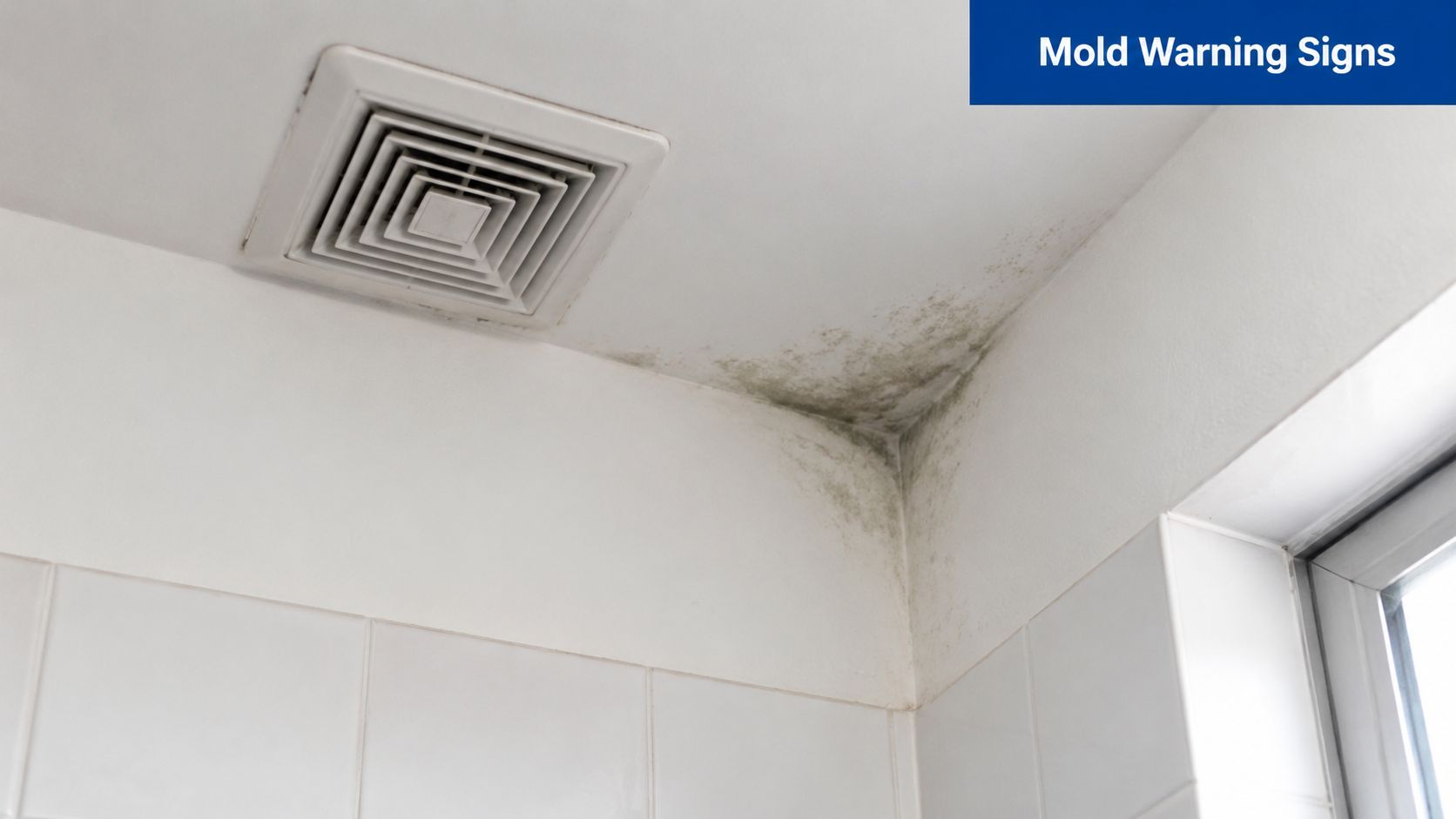
The first sign of mold often isn't visual. It's a smell that doesn't belong. If a room smells earthy, stale, or musty even after cleaning, that matters. If that odor gets stronger when the AC starts, the problem may involve hidden moisture, ductwork, or a wall cavity rather than an exposed surface.
What to look for room by room
Different materials show moisture and growth differently. Drywall may stain, soften, or form bubbling paint. Wood trim can darken or swell. Caulk lines in bathrooms may discolor repeatedly after cleaning. Around windows, you may see recurring condensation marks or peeling finishes.
Watch for these practical clues:
- Persistent odor: A musty smell with no obvious source often points to hidden growth.
- Surface changes: Bubbling paint, warped baseboards, peeling wallpaper, or repeated staining suggest moisture is still active.
- HVAC clues: Odor that changes when the system runs can indicate contamination in or around the air-handling path.
- Bathroom and laundry warning signs: Ceiling corners, behind vanities, around toilet seals, and near washing machine connections deserve a close look.
- Repeated “cleaning success” that doesn't last: If discoloration returns quickly, the material may still be wet or contaminated below the surface.
Hidden mold is the most misleading type because people don't see it until damage expands. That's why a visual check alone isn't enough when signs keep returning.
When the problem is large enough to require outside clearance
A common industry benchmark is more than 10 square feet of contamination. At that point, it's highly recommended to involve a licensed environmental hygienist or third-party assessor for final clearance testing, according to this explanation of mold removal and remediation steps.
If the affected area is growing, recurring, or tied to a leak you can't fully trace, stop spot-cleaning and get a professional inspection.
If you're seeing dark growth on painted drywall, this article on black mold on walls gives a practical overview of why wall contamination needs a more careful response than a household wipe-down. For owners who need direct help, 360 Hazardous Cleanup provides inspection and mold-response services for homes and commercial properties where the source, scope, and safe next step need to be documented clearly.
The Professional Mold Remediation Process Explained
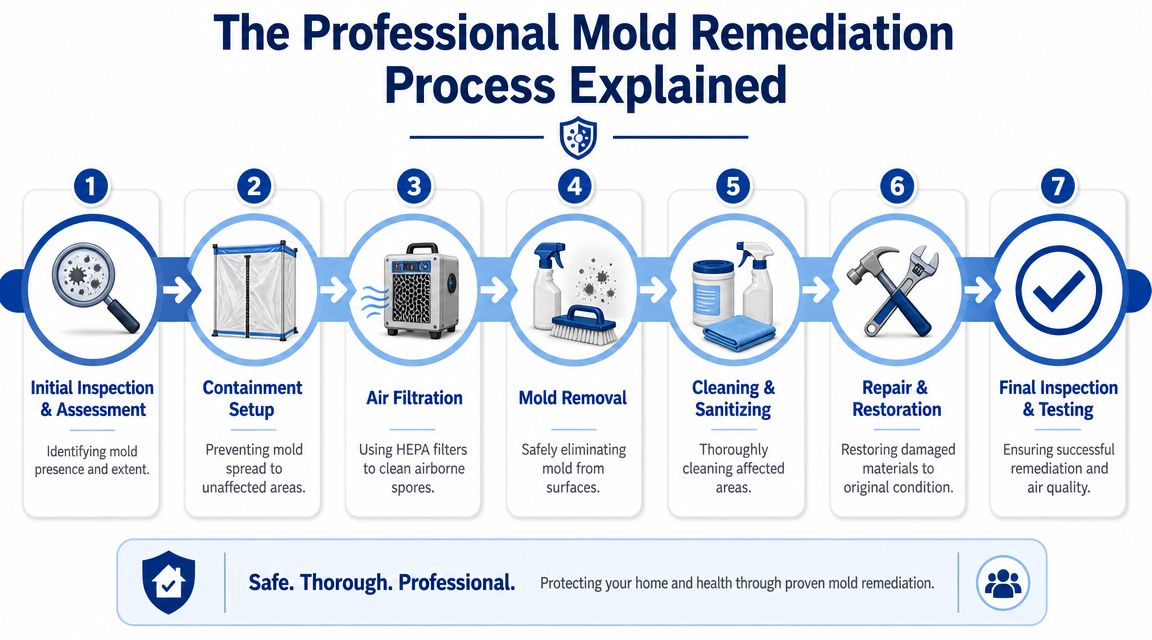
A proper remediation job follows a sequence. Good companies don't skip around based on convenience. They start by identifying the moisture source, because cleanup fails when the leak, humidity problem, or drainage issue remains active.
The workflow that protects the rest of the property
A technically sound remediation workflow includes inspection of the moisture source, containment with plastic barriers and negative air pressure, HEPA air filtration, removal or cleaning of contaminated materials, cleanup and restoration, and post-remediation verification, as outlined in this breakdown of the professional mold remediation process.
That sequence matters for a reason:
Moisture investigation comes first
If technicians remove damaged drywall before understanding where the water came from, they may miss the actual failure point. The visible mold is often downstream from the cause.Containment comes before demolition
Plastic barriers isolate the work zone. Negative air pressure helps keep disturbed particles from moving into hallways, bedrooms, offices, or occupied suites.HEPA air filtration runs during active work
Demolition and cleaning can put spores into the air. HEPA filtration helps capture that material while work is underway.Removal and cleaning are selective, not random
Some porous materials need removal. Some non-porous or semi-porous components can be cleaned if they remain structurally sound. Good technicians explain those distinctions instead of treating every surface the same.Final cleanup and repair finish the environmental side of the job
A space isn't ready for rebuild just because the visible staining is gone. Debris removal, detailed cleaning, and stabilization of the area come before restoration decisions.
What inexperienced crews get wrong
The most common failures are predictable. No containment. No pressure control. No moisture correction. No meaningful documentation. That leaves owners with a cleaner-looking room and an unresolved building problem.
A water-loss mindset helps here. Claims and remediation professionals in other markets make the same point when discussing restoring water damage in Bellingham. The drying path, the source documentation, and the sequence of work all affect whether the building recovers.
This short video gives a helpful visual on how the process unfolds in practice.
What a homeowner or manager should expect on site
A competent mold remediation company Orlando owners hire should be able to explain the job in plain language. Ask what area will be contained, what equipment will run, which materials are expected to be removed, and how the crew will confirm the area is ready for reconstruction or re-occupancy.
For a broader homeowner-focused explanation of safe cleanup principles, this guide on mold remediation and protecting your health and home is a useful reference. It helps owners understand what professional handling looks like before authorizing work.
How to Vet and Hire the Right Orlando Mold Company
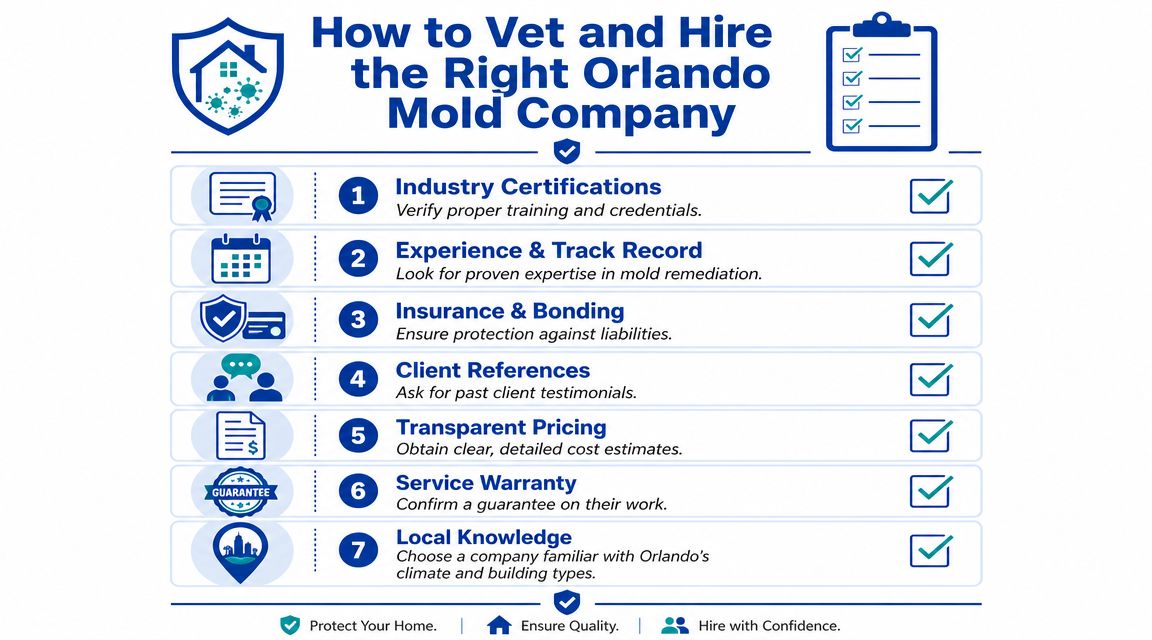
Hiring the right contractor is partly about technical skill and partly about risk control. A company can sound confident on the phone and still cut corners on licensing, paperwork, containment, or insurance. In mold work, those gaps become your problem.
The non-negotiables
In Florida, mold assessors and remediators must be licensed by the Department of Business and Professional Regulation under sections 468.84 to 468.8424 of the Florida Statutes, and the Florida Department of Health notes that hiring an unlicensed contractor puts the property owner at significant risk and may void insurance coverage in some situations. Review that requirement directly on the state's Florida mold information page.
That one rule eliminates a lot of bad options immediately.
Use this hiring filter:
- Verify state licensing: Don't rely on a truck logo or a business card. Confirm the company is operating within Florida's licensing framework for mold work.
- Ask about scope separation: If assessment, remediation, and clearance are being handled, find out who performs each part and how independence is maintained when needed.
- Review written documentation: A serious company should describe the affected area, containment plan, materials to be removed or cleaned, and what completion looks like.
- Check insurance relevance: General liability matters, but environmental work also raises pollution and contamination questions. Ask what coverage applies to mold-related operations.
- Listen to how they talk about safety: If the answer to every question is “we spray it and seal it,” keep looking.
Questions worth asking before you sign
Ask these directly
- Are you licensed in Florida for the mold work you're proposing?
- What is the suspected moisture source, and how will you confirm it has been corrected?
- How will you contain the affected area and protect the rest of the property?
- Which materials do you expect to remove, and which do you expect to clean?
- Will you recommend a third-party hygienist or assessor for clearance when the scope calls for it?
- What photos, readings, and reports will I receive for my records or insurance file?
- How do you handle occupied homes, tenants, staff, or vulnerable occupants during the project?
Red flags that deserve a hard stop
Some warning signs are immediate. No license information. No written scope. No mention of containment. Pressure to start demolition before discussing moisture correction. Vague assurances that “insurance always covers this.” Those are not minor issues.
If you want a stronger interview checklist before calling vendors, this article on the top questions to ask before hiring a cleanup company is a practical place to start.
The best contractor isn't the one who talks fastest. It's the one who can explain risk, process, and documentation without dodging specifics.
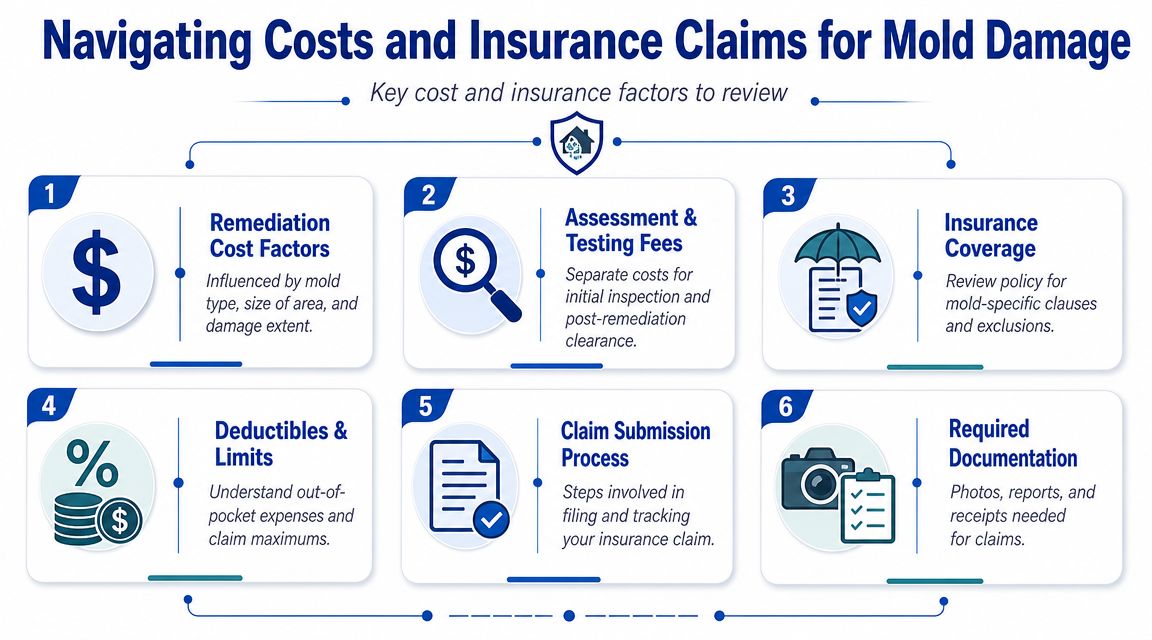
Navigating Costs and Insurance Claims for Mold Damage
Mold claims create stress because the owner is dealing with two separate problems at once. One is environmental and technical. The other is administrative. If the paperwork is weak, even good remediation work can still turn into an expensive dispute.
What remediation can cost in Orlando
According to Angi's Orlando pricing guide, the average mold remediation cost is $2,634, with most projects falling between $1,040 and $4,228. The same guide notes that HVAC-related remediation can run $3,000 to $10,000, while whole-house remediation can reach $10,000 to $30,000. Review the local figures in Angi's Orlando mold remediation cost guide.
Those numbers tell you two things. First, scope matters. Second, documentation matters just as much when the project gets larger or involves multiple systems.
A short comparison helps:
| Situation | Cost impact |
|---|---|
| Localized area on accessible building material | Often lower end of the range |
| HVAC-related contamination | Often significantly higher due to system complexity |
| Whole-house contamination | Highest exposure because multiple rooms and materials may be involved |
What insurers usually focus on
The central insurance question is often whether the mold resulted from a covered water loss or from a long-term unresolved condition. Sudden and accidental water events are treated differently from gradual problems. That's why owners should document early and carefully.
Keep a claim file with:
- Photos before disturbance: Show the staining, affected rooms, and any visible moisture path.
- Moisture records and inspection notes: If a professional takes readings or identifies source conditions, save that report.
- Repair timeline: Record when you discovered the issue, when mitigation started, and what emergency steps were taken.
- Invoices and scope documents: These help establish what work was environmental remediation versus unrelated renovation.
How to avoid common claim problems
The most common claim mistake is waiting too long to document the loss before tearing materials out. The second is assuming mold is always a separate denial issue, when the actual coverage question may be the original water event and how well it was documented.
Treat the claim like evidence preservation. Before demolition changes the scene, capture the condition of the property in a way an adjuster can follow.
For owners who need help preparing for that conversation, this guide on how to talk to your insurance company about cleanup services lays out the documentation habits that reduce friction. A contractor who can provide clear photos, moisture findings, scope notes, and separation between remediation and rebuild work is often easier for carriers and adjusters to evaluate.
Your Partner in Restoring a Safe and Healthy Environment
When mold shows up, people want certainty fast. They want to know what's causing it, whether the problem is contained, how the cleanup should be handled, and whether they're about to face a large uninsured bill. Those concerns are valid, especially in Orlando where moisture problems can move from minor to complex quickly.
The safest path is steady and disciplined. Confirm the source of moisture. Treat visible growth as a warning sign, not the whole story. Use licensed professionals. Expect containment, HEPA filtration, material-specific cleaning or removal, and final verification when the scope calls for it. Keep records from the start if insurance may become involved.
What peace of mind really comes from
Peace of mind doesn't come from a low quote or a fast promise. It comes from knowing the work is being done in a way that protects occupants, limits spread, respects Florida requirements, and gives the owner a usable file when questions come later. That matters for families, landlords, office managers, healthcare environments, and commercial operators alike.
A reliable mold remediation company Orlando property owners choose should make the next step clearer, not more confusing. They should be able to explain what they know, what they still need to verify, and what actions can wait versus what needs immediate control.
When it's time to call
If the odor keeps returning, the staining is spreading, or the property has had a recent leak, hidden water intrusion, or HVAC moisture issue, don't keep testing household products on it. Get a documented inspection and a containment-minded plan. That protects the building, the people using it, and your ability to make sound insurance and repair decisions.
The best remediation work is calm, methodical, and well documented. That's what turns a stressful discovery into a manageable project.
If you need help evaluating a mold situation, 360 Hazardous Cleanup provides 24/7 support for homeowners, landlords, property managers, and commercial facilities that need safe remediation, clear documentation, and practical guidance during a stressful event.