At first glance, it's easy to use "clutter" and "hoarding" interchangeably. However, for property managers, family members, or first responders, understanding the difference is a critical first step in addressing a potentially hazardous situation. One is a matter of household organization; the other is a complex mental health condition that requires a professional, trauma-informed response.
The fundamental difference comes down to this: clutter is temporary disorganization, while hoarding is a persistent psychological condition that makes discarding items intensely distressing, often rendering living spaces unsafe and unusable. Recognizing this distinction is key to determining the appropriate and safe way to intervene.
Defining The Line Between Clutter And Hoarding
Let's clarify the distinction. Clutter consists of the items of everyday life—a pile of mail on the counter, laundry that needs folding, or boxes you haven't unpacked from a move. While the space may be messy, it remains functional. You can walk through the rooms, use the kitchen, and sleep in the bed. With a bit of time and effort, it can be cleared.
Hoarding, recognized as a disorder in the Diagnostic and Statistical Manual of Mental Disorders (DSM-5), is entirely different. It is defined by a persistent difficulty parting with possessions, regardless of their actual value. This is not about procrastination; it’s a deep-seated need to save items, leading to an accumulation that overtakes active living areas and compromises their intended use, often creating significant health and safety risks.
Key Behavioral and Environmental Distinctions
The "why" behind the accumulation is a core differentiator. Clutter piles up due to a busy schedule or a temporary lack of organization. Hoarding, on the other hand, is driven by intense emotional distress associated with the thought of discarding items. This is a crucial point because the solutions are worlds apart. Clutter requires a weekend cleanup; hoarding requires a compassionate, professional intervention grounded in safety and psychological understanding.
This visual helps clarify the contrast between a disorganized but functional space and a hazardous hoarding environment.
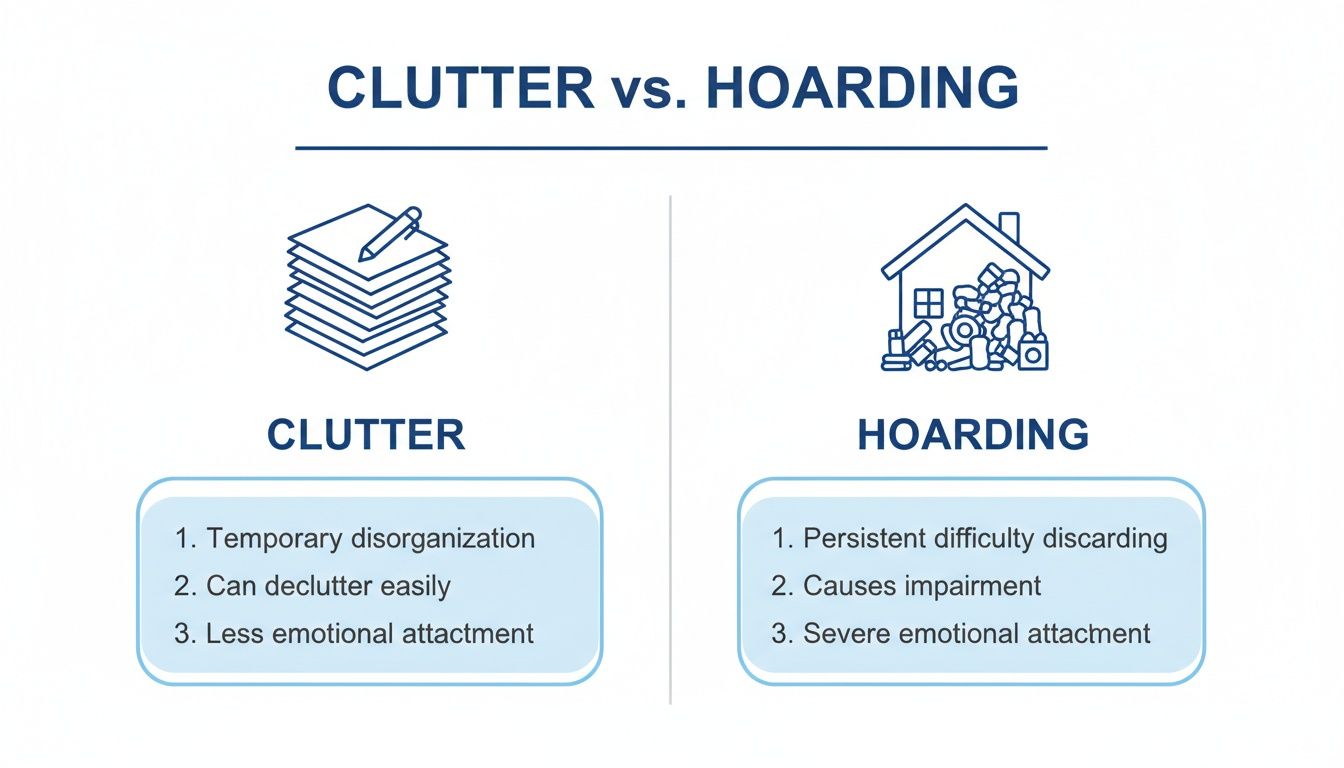
As the chart shows, clutter is disorganized but manageable. Hoarding involves an unusable living space, is rooted in deep emotional distress, and often creates hazardous conditions.
From Collection to Compulsion
It is also important to separate hoarding from collecting. Many people collect items—stamps, antiques, figurines—and it is a perfectly healthy hobby affecting roughly 30% of the population. Collections are typically organized, displayed, and cared for.
Hoarding disorder is a distinct psychiatric condition that affects an estimated 2.6% of adults globally. The accumulation is usually chaotic and unsanitary and infringes on the basic functions of the home. The American Psychiatric Association provides a clinical definition that further clarifies this as a serious mental health issue requiring a specialized response.
For a quick reference, this table breaks down the core differences you might encounter.
Quick Comparison: Clutter vs. Hoarding Disorder
| Characteristic | Typical Clutter | Hoarding Disorder |
|---|---|---|
| Living Space | Rooms are still functional and accessible, even if they're messy. | Living areas become unusable due to the sheer volume of items. |
| Emotional State | Can cause some mild stress or annoyance. | Creates significant distress and impairs social or occupational life. |
| Attachment | Items are disorganized and can be discarded without significant anxiety. | A strong emotional attachment to items exists; extreme distress at the idea of discarding them. |
| Sanitation & Safety | The space is generally safe, sanitary, and free of immediate health risks. | Often results in unsanitary conditions, pest infestations, fire hazards, and biohazard risks. |
This table makes it clear that while both involve an accumulation of possessions, the impact on the individual and their environment is profoundly different.
The critical line is crossed when a property is no longer safe or functional. If exits are blocked, pests are present, or sanitation is compromised, the situation has moved beyond simple clutter and requires a professional risk assessment.
Recognizing these signs is the first step in determining what level of response is needed. To learn more, you can explore our guide to navigating different types and levels of hoarding.
The Clinical Realities Of Hoarding Disorder
While it's easy to draw a line between simple clutter and hoarding, it is critical to grasp that hoarding isn't a character flaw or a lifestyle choice. It’s a recognized mental health condition called Hoarding Disorder, formally outlined in the Diagnostic and Statistical Manual of Mental Disorders, Fifth Edition (DSM-5). This clinical designation changes everything—it moves the conversation from judgment to a trauma-informed, supportive approach focused on safety and professional care.
The disorder is defined by a persistent, severe difficulty in parting with possessions, no matter their actual value. This behavior isn't about laziness; it stems from a deep-seated perceived need to save items and the extreme distress that accompanies the thought of letting them go. This psychological anchor is what separates hoarding from disorganization and makes "just cleaning it up" an ineffective and often harmful strategy.

The Three Core Criteria
For a situation to be clinically diagnosed, the DSM-5 sets out specific criteria. Understanding these helps property managers and families recognize the seriousness of the problem.
- Persistent Difficulty Discarding Possessions: This is the cornerstone. The individual feels intense anxiety at the thought of throwing things away, which leads directly to an overwhelming accumulation of items.
- Congestion of Living Areas: The sheer volume of possessions becomes so severe that it actively compromises or completely blocks the intended use of living spaces—kitchens that cannot be used for cooking, beds that cannot be slept in, and hallways that are no longer passable.
- Significant Distress or Impairment: The hoarding behavior causes real, measurable distress or interferes with social, occupational, or other vital areas of life, including maintaining a safe environment for themselves and others in the home.
That last point is key. It’s not just about the amount of "stuff"; it's about the profound, negative impact it has on a person’s life, health, and safety.
A key takeaway for property managers is that hoarding disorder is a diagnosable condition that requires a response grounded in compassion and safety protocols. Attempting to force a cleanup without addressing the underlying psychological drivers is likely to fail and can escalate the situation.
Beyond The Accumulation
Hoarding disorder rarely exists in isolation. It often co-occurs with other mental health conditions, like major depressive disorder, anxiety disorders, and obsessive-compulsive disorder (OCD). In fact, approximately 75% of individuals with hoarding disorder have another co-occurring mental health condition. This complexity is exactly why a multi-faceted approach involving mental health professionals is crucial for any long-term solution.
The goal is not just to clean a property but to connect the individual with the support network they need. You can learn more in our post on understanding and managing hoarding disorder. This knowledge empowers you to act as a supportive ally, not an adversary. By recognizing the clinical realities, families and property managers can make informed decisions that prioritize both the person’s well-being and the safety of the environment, paving the way for effective, professional intervention.
Uncovering The Hidden Risks In Hoarding Environments
While hoarding and clutter are clinically different, the real danger lies in the domino effect of risks that hoarding environments create. For families, property managers, and first responders, these are not abstract concepts—they are immediate, tangible threats to life and safety.
A hoarded property is far more than a mess. It is a complex hazard zone where multiple dangers collide, demanding a professional, safety-first response. This is not a situation for standard cleaning; attempting to remediate it without proper training and equipment is insufficient and can be extremely dangerous.
Critical Health And Safety Hazards
The most urgent dangers in a hoarding environment are almost always health and safety-related. These properties can rapidly transform into breeding grounds for biohazards and physical threats, endangering anyone who lives in or enters the space.
-
Fire Hazards: When accumulated items block exits, cover heating vents, or are piled on appliances, they create a significant fire risk. Stacks of paper, fabrics, and plastics are highly flammable, meaning a small spark can become an uncontrollable blaze in seconds. Blocked pathways also prevent emergency personnel from entering to provide aid.
-
Pest Infestations: Hidden food waste, organic matter, and countless hiding spots are an open invitation for rodents, cockroaches, and other pests. These infestations damage the property and spread disease, contaminating the environment with droppings and bacteria.
-
Biohazard Contamination: Unsanitary conditions often lead directly to serious biohazards. It is common to find animal or human waste, rampant mold growth from hidden leaks, and decaying organic material. These release airborne pathogens, creating a major respiratory risk for anyone inside.
The consequences of hoarding disorder go far beyond appearances, creating documented public health emergencies that strain community resources. Tragically, research shows that approximately 30% of hoarding-related deaths are due to cold exposure because clutter blocks access to or prevents the safe use of heating systems. Blocked emergency exits, inaccessible fire suppression equipment, pest infestations, mold, and biohazard contamination are just the beginning of the risks involved.
Structural Integrity And Property Damage
Beyond immediate health threats, the sheer weight of accumulated items can compromise a building's structure. This is a slow-moving, often invisible danger with catastrophic potential.
The constant pressure from heavy, dense piles of belongings can cause floors to sag, support joists to crack, and walls to bow. Over time, this stress can lead to a partial or even total structural collapse, endangering not just the occupants but neighboring properties as well.
Furthermore, hidden water leaks from buried plumbing or a damaged roof can go unnoticed for years. This leads to widespread wood rot and mold that grows unchecked inside walls and under floors. Remediating this type of hidden damage is complex and often requires major demolition and reconstruction by trained professionals.
You can learn more about how 360 Hazardous addresses these specific dangers in our detailed guide on the hidden dangers of hoarding environments.
For property managers, the liability associated with these risks is substantial. A failure to address a known hoarding situation can lead to legal action, insurance claim denials, and significant financial losses if an accident or injury occurs.
Legal And Financial Consequences
Finally, the fallout from hoarding can extend to legal and financial challenges, creating significant stress for property owners and families. Cities and counties have health and safety codes that can trigger citations, heavy fines, or even the condemnation of a property if it’s deemed uninhabitable.
For landlords, the eviction process can be complicated and emotionally draining, requiring strict adherence to legal protocols. The costs for professional cleanup, biohazard remediation, and structural repairs can be staggering. This is why choosing a qualified, certified remediation company is critical—it’s not just about safety, but also about ensuring the work is documented properly for insurance and legal purposes to mitigate further financial risk.
An Assessment Checklist For Property Managers And Families
It can be incredibly difficult to determine where manageable clutter ends and a hazardous hoarding situation begins. To help you make that distinction, we’ve developed an objective checklist for families and property managers to use for a non-invasive evaluation.
This tool is designed to remove guesswork and personal judgment. Instead, it focuses on observable, fact-based criteria related to safety, sanitation, and the structural integrity of the property. Using it helps you document conditions accurately so you can make an informed, confident decision about the necessary next steps.

Hoarding Severity Assessment Checklist
Use this checklist to objectively evaluate a property's condition. It is built to help you determine the level of risk and identify when it's time to bring in professional help.
| Assessment Area | Observation Question | Significance (Low, Moderate, High Risk) |
|---|---|---|
| Accessibility & Egress | Are all doors and windows completely clear and usable? | High Risk: Blocked exits are a severe fire hazard and code violation. |
| Is there a clear, unobstructed path through every room? | High Risk: Needing to climb or squeeze past items indicates a dangerous fall hazard. | |
| Can you easily access the furnace, water heater, and electrical panel? | High Risk: Obstructed utilities prevent maintenance and create immediate fire or flood risks. | |
| Sanitation & Health | Are there strong, persistent odors in the home? | High Risk: Foul smells signal hidden biohazards like mold, decay, or animal waste. |
| Are there any signs of pests (droppings, live insects, rodents)? | High Risk: Infestations spread disease and cause structural damage. | |
| Are the kitchen and bathrooms sanitary and fully functional? | Moderate to High Risk: Unusable facilities create unsanitary living conditions. | |
| Structural Integrity | Do you see any sagging floors, bowing walls, or cracked ceilings? | High Risk: These are urgent signs the building's load capacity has been exceeded. |
| Is there any evidence of leaks or unaddressed water damage? | High Risk: Hidden moisture leads to rot and compromises the building’s foundation. | |
| Are appliances (stove, heaters) and vents clear of obstructions? | High Risk: Items stacked against appliances are a significant fire hazard. |
If you answered "no" to multiple questions, especially those marked as High Risk, the situation has likely moved beyond simple clutter. These red flags point to a hazardous environment that requires professional attention.
For property managers navigating these complex issues, our biohazard cleanup guide for property managers offers more specific guidance on liability and tenant safety. When your evaluation reveals multiple high-risk indicators, it’s time to call a professional, trauma-informed remediation service to ensure the property is made safe for everyone.
When Professional Hoarding Cleanup Is Essential
It's one thing to understand the difference between clutter and hoarding, but it’s another to know the exact moment a situation requires professional help. Engaging certified experts is not about giving up; it is about acknowledging that certain hazards have moved beyond the scope of a standard cleaning service and now pose a serious risk to health, safety, and the property itself.
That line is crossed when the environment involves biohazards, structural dangers, or a sheer volume of items that requires specialized training and equipment. Attempting to tackle these situations without the right expertise can expose individuals to dangerous pathogens, cause further property damage, or lead to serious injury. A standard cleaning service is not trained, equipped, or insured for these complex risks. This is precisely where a certified biohazard remediation company becomes a critical partner.

Scenarios Demanding Professional Intervention
While every situation is unique, certain red flags are immediate signals that it is time to engage professionals. If you encounter any of the following, a professional assessment is your next step.
- Presence of Biohazards: This is non-negotiable. Any discovery of human or animal waste, bodily fluids, signs of an undiscovered death, or significant mold growth demands immediate professional action. These materials contain pathogens that can cause severe illness if not handled with the correct personal protective equipment (PPE) and disinfection protocols.
- Severe Pest Infestations: A large-scale infestation of rodents, roaches, or other pests is more than an exterminator can handle alone. These pests create a biohazardous environment with their droppings and nests, which must be fully remediated according to industry standards, not just swept away.
- Structural Hazards: Are floors sagging? Do walls appear to be bowing? If the weight of the accumulated items is physically straining the building, the scene is unsafe. Professionals are trained to identify these dangers and create a remediation plan that prioritizes safety and prevents further damage.
In severe cases, knowing when to contact specialized hoarding cleanup services is a crucial step toward safe restoration.
The Compliant Remediation Process
When you engage a professional biohazard team, you get a structured, safety-first process that standard cleaners cannot provide. The approach is methodical and designed to protect everyone involved while adhering to strict industry regulations.
It all starts with a thorough site assessment to identify every potential hazard, from biological materials and hidden sharps to structural weak points. This inspection allows the team to build a detailed work plan tailored to the property’s unique challenges, outlining the required PPE, containment strategies, and waste disposal needs.
Choosing a certified remediation company is a non-negotiable step for mitigating liability. A qualified team adheres to OSHA standards, properly manages regulated medical waste, and provides documentation proving the property was restored to a safe, habitable condition.
Key Differentiators of a Professional Service
The true difference between a cleaning service and a professional biohazard remediation company comes down to three core principles: training, compliance, and compassion. These are the elements that transform a dangerous environment back into a safe home.
- Regulatory Compliance and PPE: Professionals use hospital-grade disinfectants and follow strict OSHA guidelines. Technicians wear appropriate PPE—respirators, hazmat suits, and specialized gloves—to protect themselves from airborne pathogens and other contaminants.
- Proper Biohazard Disposal: You cannot simply discard hazardous materials in a dumpster. Regulated biohazardous waste must be collected, transported, and disposed of according to strict federal and state laws. Certified companies manage this entire chain of custody legally and safely.
- Compassionate Communication: True professionals understand the human element behind hoarding. They lead with a trauma-informed approach, which means communicating with empathy, respecting the individual’s emotional state, and working with families and mental health providers to achieve a sustainable, positive outcome.
This commitment to safety, compliance, and compassionate service is what separates experts from standard cleaners. It ensures a high-stress, time-sensitive situation is handled with the utmost care, protecting property owners and providing a real path forward for the person affected.
Finding Compassionate Support And Professional Resources
Addressing a hoarding situation is not just about the physical cleanup—it's about understanding and supporting the deep-seated emotional and psychological roots of the behavior. For any recovery to be sustainable, it requires a solid support system that pairs professional remediation with dedicated mental health care.
Our professional mission is to connect clients with the full spectrum of resources they need to truly heal, long after the remediation is complete. Ultimately, effective intervention is never about judgment. It is about restoring a safe, clean environment and clearing a path toward lasting stability.
Building A Network Of Care
The journey toward recovery almost always starts by finding the right mental health professionals and support groups. These resources can provide the tools and compassionate guidance needed to address the core of hoarding disorder.
- Mental Health Organizations: National organizations are a great place to begin. They offer reliable information, point you toward treatment options, and can help you find therapists who specialize in hoarding disorder.
- Local Support Groups: There is incredible power in connecting with people who understand what you are going through. Groups like Clutterers Anonymous provide confidential peer support, which helps reduce the isolation and shame many individuals feel.
- Therapeutic Services: Cognitive Behavioral Therapy (CBT) has proven to be a highly effective treatment for hoarding disorder. Finding a qualified therapist is a critical step in learning new coping skills and changing behaviors for good.
True recovery combines a safe, restored living space with ongoing psychological support. One without the other is often a temporary fix, not a lasting solution. Our goal is to facilitate both aspects of this process.
Finding The Right Professional Help
Trying to navigate the healthcare system can feel monumental, especially during a crisis. Practical guides can be a lifesaver. For an example of accessible resources, you can learn more about how to get therapy in the UK.
By integrating professional cleanup with mental health support, families and property managers can build a comprehensive plan that tackles both the immediate safety risks and the individual’s long-term well-being. This dual approach is the most effective way to ensure a positive, sustainable outcome. To better understand our methods, you can read about the importance of compassionate communication in our detailed article.
Frequently Asked Questions About Hoarding Situations
When you’re facing a potential hoarding situation, the questions can feel overwhelming. It is a delicate, complex issue, and knowing where to begin is difficult. Here, we provide direct, expert answers to the most common questions from families and property managers navigating these challenging circumstances.
What’s The First Step If I Suspect A Tenant Is Hoarding?
The most critical first step is to focus on health and safety, not judgment. Your approach should be grounded in the lease agreement and your legal responsibility to maintain a safe environment for all residents.
Start by carefully documenting any specific, observable violations. Are emergency exits blocked? Are there odors or signs of pests that could impact neighboring units? These objective facts are your starting point. When you communicate, lead with compassion and frame your concerns around the tenant’s well-being and the safety of the building.
Before taking any formal steps, it is essential to speak with legal counsel. Landlord-tenant laws are specific and complex. For any situation that presents an immediate risk—like a biohazard or a severe fire hazard—your best course of action is to call a professional remediation company for an official assessment.
Is Hoarding Cleanup Covered By Homeowners Insurance?
This is a complex question, and the answer depends on the specific policy. Most standard homeowners insurance policies will not cover the cost of removing personal belongings or what they might define as "clutter."
However, there is a crucial distinction. Coverage may apply for the damage caused by the hoarding. This includes issues like water damage from a leak that went unnoticed, structural repairs necessitated by the weight of the items, or biohazard remediation stemming from unsanitary conditions.
Key Insight: Insurance is about damage and peril, not just cleaning. Documented biohazards, structural damage, or fire-related repairs are far more likely to be covered than the labor of sorting and removing possessions.
Our team works with insurance carriers regularly. We understand how to properly document the scene, identify covered perils during our assessment, and communicate effectively with adjusters. A key part of our service is assisting families and property owners in navigating the claims process to maximize what their policy will cover, easing the financial strain during an already stressful time.
How Can I Help A Family Member Who Hoards Without Starting A Conflict?
This requires a tremendous amount of patience, empathy, and a shift in perspective. Your goal is not to "fix the house"; it is to support the person. Any conversation you have needs to come from a place of genuine concern for their safety and well-being.
Try using "I" statements to express how you feel without making them feel attacked. For example, instead of saying "You have to clean this up," you could say, "I'm worried that the pathways are blocked and you might fall." This approach avoids blame and opens the door for a real conversation.
The most effective long-term solution involves professional help. Gently encourage them to connect with a therapist specializing in hoarding disorder, as the cleanup is just one part of a much larger healing process. Never force a cleanup on someone. It must be a collaborative effort, ideally with guidance from a mental health expert. Engaging a compassionate, trauma-informed cleanup company ensures the work is done with the dignity and respect your loved one deserves, which is foundational for any lasting change.
When facing the overwhelming task of restoring a property affected by hoarding, you need a partner who combines technical expertise with deep compassion. 360 Hazardous Cleanup provides discreet, compliant, and trauma-informed remediation services to restore safety and peace of mind. Contact us 24/7 to learn how we can help at https://360haz.com.