A facilities director once told me that the first time he saw a biohazard level 4 suit in person, he expected something that looked dramatic and improvised, like a movie prop. What he found instead was a carefully engineered life-support system, paired with strict procedures that left no room for shortcuts.
Beyond the Silver Screen Understanding BSL-4 Suits
Film and television often treat high-containment suits as visual shorthand for danger. A worker zips up, walks into a room, and the audience gets the message. Real BSL-4 suits are far less theatrical and far more serious.
A biohazard level 4 suit is used in the most restrictive laboratory environments on earth. Its presence means people are working around pathogens that demand maximum containment, not just extra caution. That distinction matters for facility managers, first responders, and property owners, because it helps separate ordinary infection control from true high-consequence biological risk.
What the suit really signals
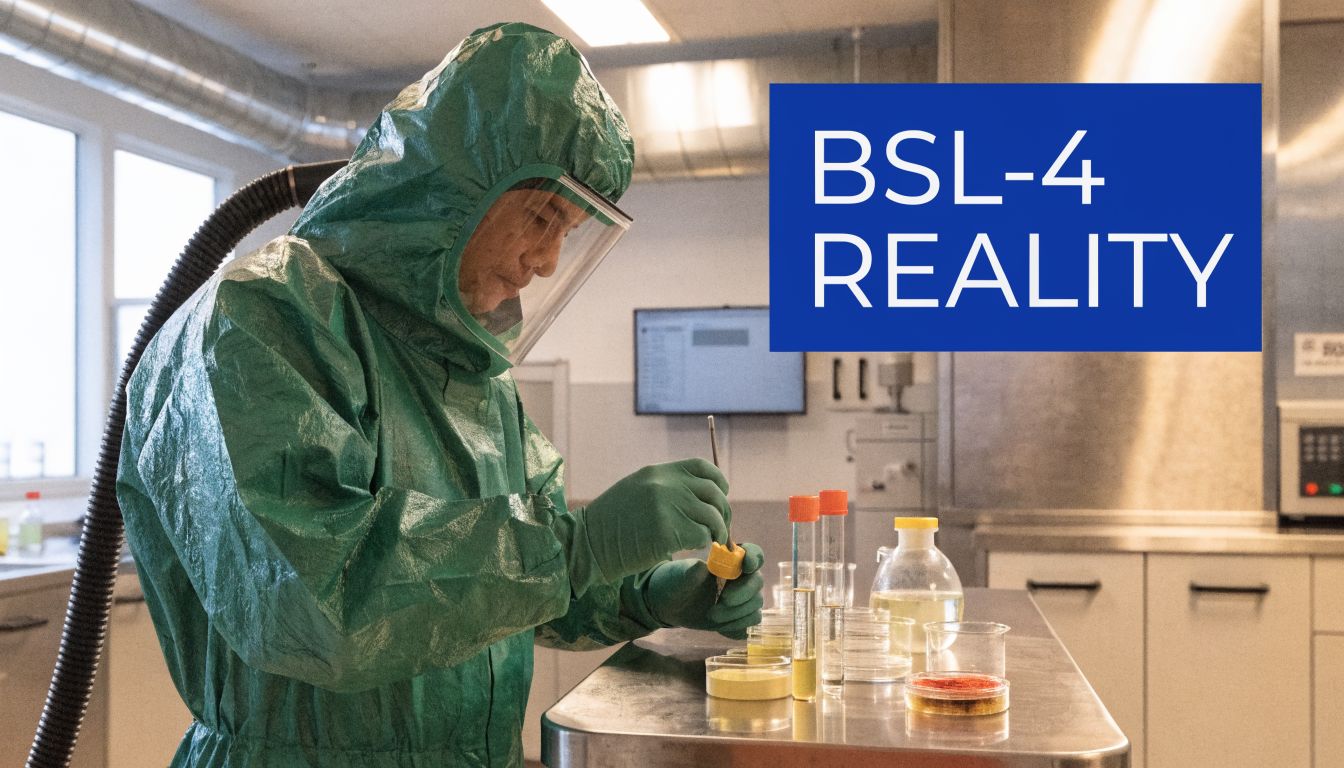
The clearest way to understand this equipment is to start with what it represents. A BSL-4 suit is not standard hospital PPE. It is not the same as a disposable coverall, an N95, or even a powered respirator used in many industrial settings. It belongs to a world of maximum containment.
The scale of that world is larger than many people realize. The global network of BSL-4 labs has grown to 51 facilities across 27 countries as of 2023, roughly double the number from a decade earlier, and 75% are located in urban areas, according to Science’s reporting on the growth of high-security pathogen labs. That same report notes these facilities handle agents such as Ebola and Marburg, which explains why the suit functions as a last line of defense.
Why non-specialists should care
Most readers will never enter a BSL-4 laboratory. Still, the principles behind this gear matter outside research settings.
- Risk has levels: Not every biohazard calls for the highest possible suit. Safe response starts with matching protection to the actual hazard.
- Equipment never stands alone: A high-end suit without training, inspection, and decontamination procedures creates false confidence.
- Containment is a systems problem: Air handling, waste treatment, access control, and documentation matter as much as the suit itself.
A BSL-4 suit tells you that the danger is not just contact. It is also inhalation, containment failure, and the consequences of even a small procedural mistake.
For readers who want the broader framework first, this overview of biosafety levels and what they mean in practice helps place BSL-4 in context.
The best way to demystify the suit is to stop thinking of it as clothing. It’s part barrier, part breathing system, part emergency backup, and part protocol made visible.
Defining the Four Levels of Biosafety Protection
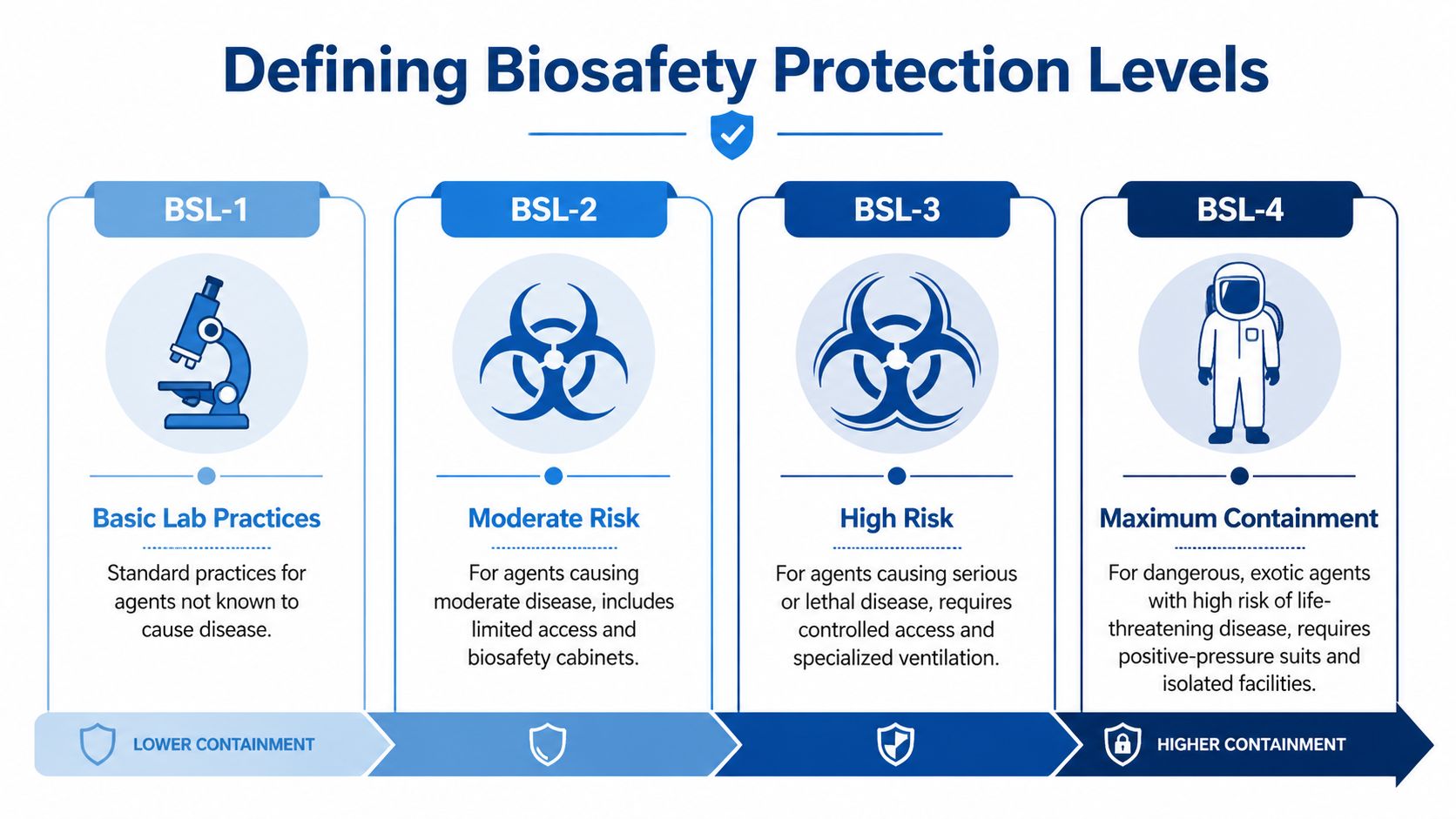
People often hear “level 4” and assume the number means “more dangerous.” That’s only partly true. The four biosafety levels describe a ladder of containment practices, facility controls, and protective equipment. As the level rises, the consequences of failure rise with it.
The easiest way to picture the system is to think of nested layers. BSL-4 includes the protections from BSL-1, BSL-2, and BSL-3, then adds maximum containment measures such as a positive-pressure suit or a Class III biosafety cabinet, as described in this biosafety level reference.
The progression from basic work to maximum containment
At BSL-1, workers follow standard lab practices for agents not known to cause disease in healthy adults. The controls are basic and the environment is relatively open.
At BSL-2, the work involves agents that can cause disease but are generally handled with established precautions. Limited access, gloves, gowns, and biosafety cabinets become part of normal operations.
At BSL-3, the concern shifts to agents that can cause serious or potentially lethal disease through inhalation. Controlled access, specialized ventilation, and more rigorous respiratory and procedural controls come into play.
At BSL-4, the situation transforms. This level is reserved for dangerous, exotic pathogens that may be aerosol-transmissible and may have no known treatment options. Here, workers rely on full encapsulation through a positive-pressure suit or work within highly sealed containment systems.
Why a BSL-4 suit is different in kind
A common mistake is to think a biohazard level 4 suit is just a thicker version of lower-level PPE. It isn’t.
If a surgical mask or fitted respirator acts like a filter at your face, a BSL-4 suit acts more like a personal controlled environment around your whole body. The suit encloses the worker completely and uses supplied air to maintain protection. That design addresses a different class of threat.
A simple analogy helps. If you poke a tiny hole in a balloon, air pushes outward. That outward push is the basic idea behind positive pressure. In a BSL-4 suit, that outward airflow helps keep dangerous material from moving inward through a breach.
Practical rule: If the hazard can’t be managed by ordinary barrier PPE and local controls alone, the answer isn’t “more of the same.” It may require a different containment model entirely.
Comparison of PPE Requirements by Biosafety Level BSL
| Biosafety Level | Typical Agents | Required PPE and Practices |
|---|---|---|
| BSL-1 | Agents not known to cause disease in healthy adults | Standard lab practices and routine protective measures |
| BSL-2 | Agents that can cause moderate disease | Gloves, gowns, facial protection as needed, limited access, biosafety cabinets |
| BSL-3 | Agents that can cause serious or lethal disease through inhalation | Controlled access, specialized ventilation, stronger respiratory precautions, cumulative BSL-1 and BSL-2 practices |
| BSL-4 | Dangerous, exotic agents with high risk of life-threatening disease | Positive-pressure suit or Class III biosafety cabinet, isolated maximum-containment facility, cumulative protections from lower levels |
For workplaces outside research labs, this distinction still matters. OSHA-related biohazard decisions depend on matching the task, route of exposure, and environment to the right controls. That’s why practical guidance such as these OSHA guidelines for biohazard exposure and workplace incidents is so useful for operational planning.
The key takeaway is simple. BSL-4 is not just “the top of the same scale.” It is the point where the entire protective strategy changes.
Anatomy of a Positive-Pressure Biohazard Suit
A biohazard level 4 suit looks simple from a distance. Up close, it becomes clear that every part has a job, and every job connects to survival.
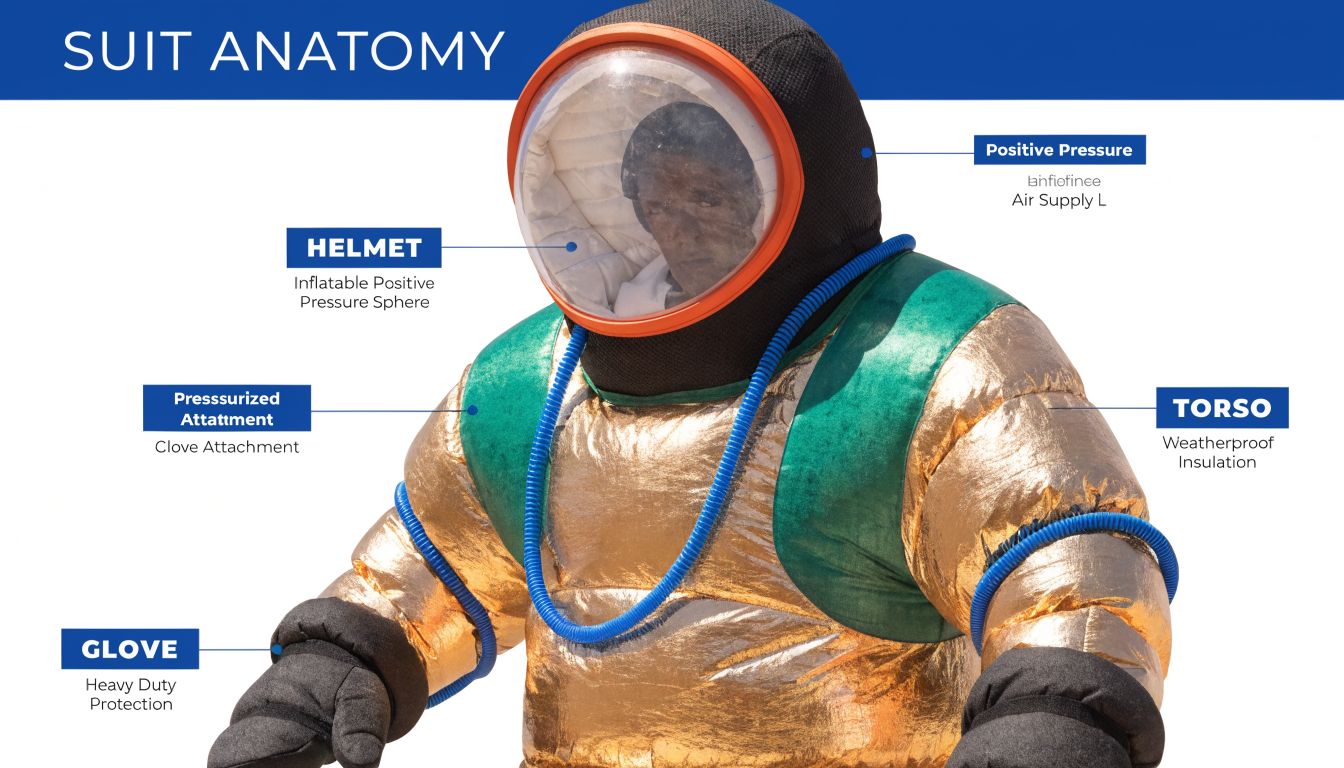
The outer shell has to withstand movement, contact, and routine decontamination. The visor has to preserve visibility without becoming a weak point. The air connection has to do more than supply breathing air. It also has to keep the suit pressurized. If any of those parts fail, the protection model fails with them.
The suit is a system, not a garment
Initial focus often lands on the visible material. That’s understandable, but the suit’s protective value comes from the way its components work together.
Key elements usually include:
- Encapsulating body shell: This creates the sealed barrier around the worker.
- Integrated head and face protection: Clear visor areas let the worker see while remaining within the sealed environment.
- Air supply connection: The suit depends on supplied air to maintain breathable conditions and pressure.
- Sealed gloves and footwear interfaces: Hands and feet are common failure points in protective clothing, so integration matters.
- Communication support: Workers in fully enclosed gear need reliable ways to coordinate with teammates.
This is why people with industrial safety backgrounds sometimes underestimate BSL-4 gear at first. The suit isn’t just resisting splashes or particulates. It is actively maintaining a pressure-controlled protective envelope.
How positive pressure works
The engineering principle is straightforward, even if the application is not. The suit receives supplied air that inflates it and creates outward airflow. If a puncture occurs, contaminants are pushed away rather than drawn in, according to CDC biosafety training on positive-pressure suit use.
That outward flow is the heart of the design. It’s what separates this equipment from passive protective clothing.
The CDC training also notes that personnel perform a mandatory inspection lasting about 5 minutes before every lab entry to identify leaks. That inspection is not a formality. If the suit can’t hold pressure, it cannot provide the protection the worker is counting on.
Where readers often get confused
Some people hear “positive pressure” and assume more pressure is always better. It isn’t. Excess pressure can damage the suit. Too little pressure defeats the whole concept. The suit has to stay within a controlled operating range.
Others assume the suit itself contains unlimited safety margin. It doesn’t. The suit depends on disciplined pre-entry checks, continuous air supply, and immediate response to any abnormal condition.
A puncture-resistant suit is valuable. A pressurized suit with verified air supply is what makes BSL-4 protection possible.
What this means outside the lab
For non-laboratory professionals, the lesson is broader than the suit itself. High-level PPE only works when the user understands its limits, support systems, and failure points. That principle applies in remediation, emergency response, and healthcare isolation work.
A practical example is PPE planning during complex cleanup operations. Teams need more than the right items on a checklist. They need fit, inspection, staging, replacement planning, and exit procedures. That’s the same reason resources on the role of PPE in biohazard cleanup focus on systems rather than gear alone.
The impressive part of a biohazard level 4 suit isn’t that it looks sealed. It’s that it has to keep performing under exacting conditions, with no tolerance for casual use.
The Human Factor Donning Doffing and Decontamination
The suit gets the attention. The procedure keeps people alive.
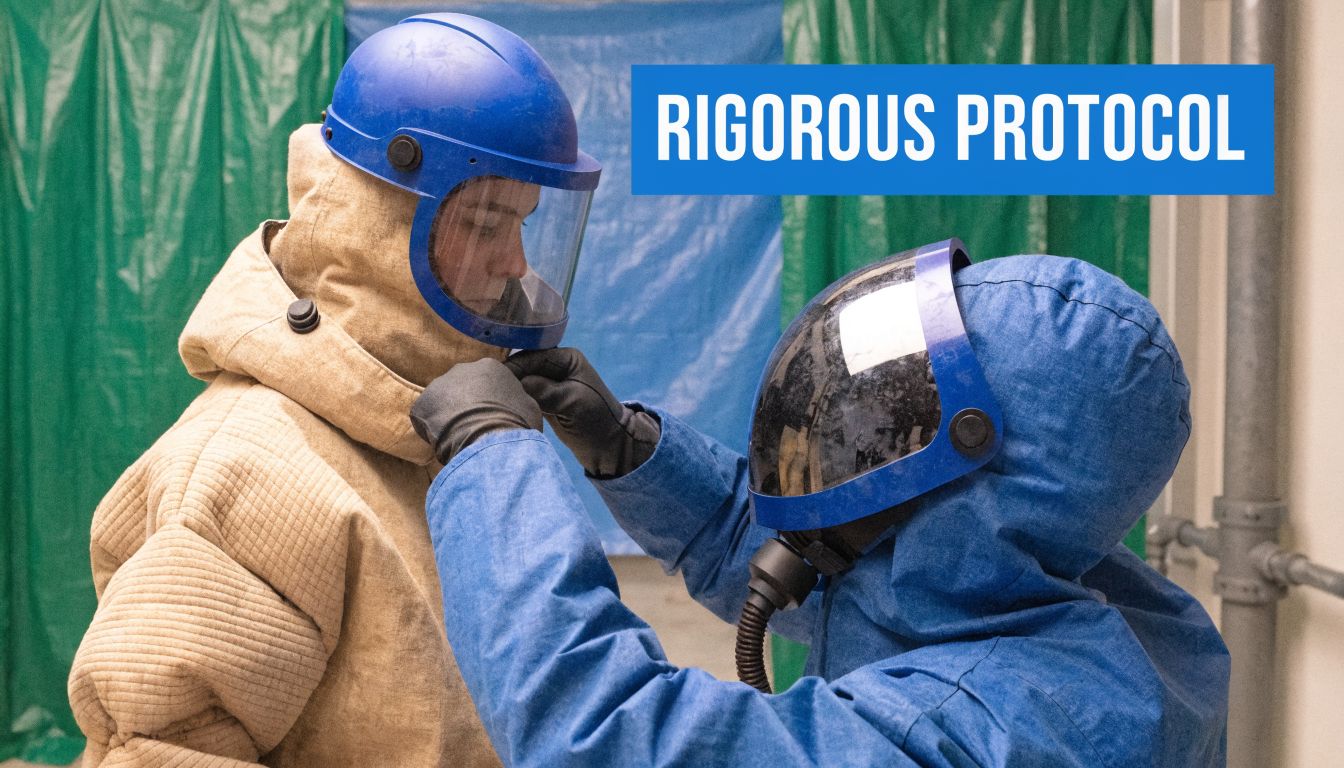
In high-containment work, putting the suit on and taking it off are not routine dressing tasks. They are controlled sequences. Every motion has a reason, and every missed step can turn safe equipment into contaminated equipment.
Entry starts long before the lab door
Before a worker approaches a containment area, preparation already begins. Clothing changes, equipment checks, and suit verification all happen before exposure risk is introduced. That sequence is easy to overlook if you’ve only seen still photos of a finished suit.
The logic is simple. You don’t want people improvising once they are close to the hazard. They need a repeatable routine that reduces decision-making under stress.
A careful entry sequence often involves:
- Changing into designated clothing so outside contaminants don’t travel in and lab contaminants don’t travel out.
- Putting on the suit methodically with attention to seals, gloves, and connections.
- Verifying air supply and suit integrity before crossing into the controlled space.
- Confirming communication and task readiness so workers don’t need unnecessary extra trips.
Exit is where discipline matters most
The most dangerous misconception is that the hard part is over once the task is complete. In reality, leaving the space can be just as critical as entering it.
BSL-4 exit procedures require a chemical shower for full-body suit decontamination before the suit is removed in a separate chamber, and liquid waste from sinks and equipment must undergo validated heat treatment before release, according to this overview of BSL decontamination requirements. Those steps exist because contamination control has to extend beyond the person to the surrounding systems.
The outside of the suit may have done its job perfectly. That’s exactly why it has to be treated as contaminated until decontamination is complete.
For facility leaders, this is a useful mindset even in less extreme situations. Whether you’re managing an infectious cleanup, a trauma scene, or severe wastewater intrusion, the removal phase often creates the greatest chance of cross-contamination. That’s one reason discussions about Category 3 water damage are so relevant. Once water is grossly contaminated, the handling and decontamination process matters as much as the visible damage itself.
Why doffing is harder than it looks
Removing contaminated protective gear sounds easy until you consider the goal. The worker must avoid transferring anything from the suit exterior to the body, inner clothing, nearby surfaces, or another person helping with the process.
That is why trained teams rely on:
- Sequenced removal: Items come off in a controlled order, not whichever piece feels easiest first.
- Separate spaces: Decontamination and removal happen in designated zones.
- Documentation: Inspections, leak findings, and repairs are logged.
- Waste controls: Fluids and disposable materials are managed under containment rules.
A short visual overview helps show how procedural this environment is:
Procedure is the real protective technology
People sometimes ask whether a better suit could reduce the need for such strict process. The answer is no. The stricter the environment, the more important procedure becomes.
That same lesson applies in modern remediation work. Decontamination technology has improved, but technology never replaces disciplined execution. It only supports it. That’s why operational guidance on how decontamination technology has advanced is most useful when paired with training, documentation, and containment planning.
A biohazard level 4 suit is impressive. A team that can use it correctly, every time, is what makes the protection real.
When Maximum Containment Is The Only Option
Some hazards are serious but manageable with standard clinical or industrial precautions. Others demand a completely different response. A biohazard level 4 suit belongs to that second category.
The most obvious use case is high-containment research. Scientists use this equipment when they handle pathogens that create extraordinary risk if exposure occurs through inhalation, surface contamination, or system failure. In those settings, the suit supports work that cannot be done safely with ordinary respirators, gowns, and face shields.
Scenarios that justify this level of protection
A BSL-4 suit is appropriate when several conditions come together at once. The agent is exceptionally dangerous. The route of exposure can include aerosols. The consequences of release are severe. The environment is built for maximum containment.
That combination is rare, which is why true BSL-4 work is rare.
Examples include:
- Research on high-consequence viral agents: Especially when the organism is exotic, aerosol risk is a concern, and treatment options may be absent.
- Response to unknown biological threats: Specialized public-sector teams may require maximum containment while identifying the hazard.
- Biodefense investigations: When a suspected deliberate release involves a dangerous biological agent, containment standards rise quickly.
- Work with emerging pathogens: Early-stage handling may require the most conservative controls until the threat is better understood.
What property owners and response leaders should take from this
Most facilities will never need a true BSL-4 suit. That doesn’t make the topic academic. It provides a benchmark for understanding how professionals think about exposure control at the highest end of the risk spectrum.
The main lesson is proportionality. Competent responders do not overreact, but they also do not under-protect. They assess the likely agent, route of transmission, environmental spread, waste stream, and consequences of error. Then they build containment around those facts.
Maximum containment is not a dramatic choice. It is a narrow, evidence-based response to a narrow set of hazards.
For commercial properties, healthcare settings, and public agencies, that mindset matters in more common events too. A severe bodily fluid release, an unattended death, an infectious contamination event, or a suspicious unknown substance all require structured hazard assessment. The answer won’t be a BSL-4 suit, but it may still involve restricted access, staged decontamination, regulated waste handling, and specialized PPE.
That’s where broader hazmat services for complex contamination events become relevant. The practical value lies in knowing which level of response fits the actual hazard, and when trained outside specialists should take over.
Navigating the Regulatory and Logistical Landscape
People sometimes ask whether an organization could buy a few high-containment suits and keep them on hand for worst-case scenarios. In practice, that idea collapses almost immediately.
A biohazard level 4 suit only works inside a tightly controlled operating framework. The suit depends on training records, inspection routines, air systems, decontamination infrastructure, access control, maintenance logs, and validated exit procedures. Without those pieces, the equipment becomes a false solution.
Compliance is built into the process
In maximum-containment work, oversight isn’t an extra layer added after the fact. It shapes how the work is done from the beginning.
From the verified standards discussed earlier, several realities stand out:
- Pre-use verification is mandatory: The suit must be checked for leaks before entry.
- Air supply continuity is critical: Loss of pressure removes the protective barrier.
- Exit protocols are documented: Chemical showering, suit removal, leak inspection, and repair logging are part of the operating discipline.
- Facility systems matter too: Waste treatment and filtration controls are part of the same compliance environment.
That last point often surprises non-specialists. The person in the suit gets the attention, but regulators and safety officers also care about liquid waste, filtered exhaust, equipment discharge, and the integrity of the building systems surrounding the suit.
Logistics are just as demanding as regulation
Even perfect written procedures won’t help if the organization can’t sustain them operationally. High-containment equipment requires procurement planning, storage conditions, replacement schedules, maintenance capability, and recurrent hands-on training.
The practical burdens include:
| Operational area | Why it matters |
|---|---|
| Suit maintenance | Decontamination processes can degrade components, so suits must be inspected, repaired, or replaced when needed |
| Training | Workers need repeated practice in entry, communication, emergency response, and exit sequences |
| Recordkeeping | Logs establish accountability for inspections, leaks, repairs, and certification status |
| Facility support | The suit depends on controlled air supply, decontamination chambers, and validated waste handling systems |
Why most organizations rely on specialists
The broader lesson for healthcare sites, commercial facilities, and property owners is straightforward. Extreme biohazard response is not a procurement problem. It is a capability problem.
That is why regulated remediation work should be handled by trained professionals who understand chain of custody, contamination zones, disposal rules, worker protection, and post-cleaning verification. In stressful situations, people often want immediate action. The safer path is competent action supported by documentation and regulatory discipline.
A mature safety program doesn’t ask, “What equipment can we buy?” It asks, “What risks can we responsibly manage, and when must we bring in specialists?”
Beyond the Suit A Complete System of Safety
If you remember only one point, remember this. A biohazard level 4 suit is not the safety system. It is one component inside a larger safety system.
Effective protection comes from the combination of engineered controls, disciplined procedures, trained personnel, and constant verification. The suit matters. The room matters. The air supply matters. The exit sequence matters. The documentation matters. Remove any one of those, and the margin of safety narrows fast.
What maximum containment teaches every sector
Even if your work has nothing to do with a BSL-4 laboratory, the principles still apply.
- Match protection to the hazard: More gear is not always better. Correct gear is better.
- Treat exits as carefully as entries: Cross-contamination often happens during removal, transport, or disposal.
- Build around systems, not heroics: The safest operations rely on repeatable procedure, not individual improvisation.
- Respect the unseen pathways: Airflow, waste streams, surfaces, and documentation can matter as much as visible contamination.
Those lessons hold up in healthcare, industrial settings, property management, emergency response, and residential biohazard remediation. They also help explain why trained cleanup professionals insist on access control, containment zones, PPE selection, decontamination sequencing, and lawful waste handling even when outsiders see “just one room” or “just one incident.”
The human side of high-risk cleanup
People dealing with contamination events are often under stress. They may be grieving, worried about liability, trying to reopen a facility, or concerned about staff exposure. In those moments, technical jargon doesn’t help much unless someone can translate it into calm, practical steps.
That is what good biosafety practice does. It turns fear into procedure.
The best protective equipment in the world cannot compensate for rushed decisions, unclear roles, or weak decontamination discipline.
A biohazard level 4 suit represents the outer edge of biological protection. It also reminds us that the highest standard in safety is never bravado. It is preparation, training, humility, and respect for consequences.
When contamination is serious, people need more than cleanup. They need careful judgment, regulatory compliance, and a team that understands both risk control and the human weight of the situation.
When you need discreet, compliant, and compassionate help with a biohazard scene, 360 Hazardous Cleanup provides expert remediation for trauma scenes, unattended deaths, infectious contamination, industrial incidents, and other high-risk environments. Their team is available around the clock, follows strict handling and disposal protocols, and helps families, facilities, and agencies move from crisis toward recovery with professionalism and care.