A call comes in after hours. A tenant reports a chemical odor in a service corridor. A supervisor opens a storage room and finds leaking containers. A patrol officer clears a residence after an unattended death and now has to decide whether anyone can safely re-enter. In those moments, the question isn’t “What PPE do we have?” It’s “What protects people from the hazard that is present?”
That distinction matters.
Facility managers and first responders often face scenes where the main threat is airborne. Vapors, gases, oxygen-deficient atmospheres, and unknown inhalation hazards can injure someone long before visible contamination reaches the skin. That’s where level b personal protective equipment enters the conversation. It’s built for operations where respiratory protection has to be at the highest level, while skin protection can be lower than a fully encapsulating suit.
The Critical Role of Protective Equipment in Hazmat Scenes
A responder cracks open a utility room after a leak report and gets hit with a strong solvent odor. A maintenance supervisor wants a fast answer on whether the area can stay open. That decision has to be made before anyone steps farther into the hazard, because inhalation exposure can cause harm in seconds while the visible scene still looks controlled.
Protective equipment is part of the hazard assessment, not an afterthought. On a real scene, the right ensemble has to match the exposure route, the task, the heat burden, the time required inside the work zone, and the team’s ability to decontaminate safely afterward. Facility managers feel that pressure in staffing and downtime. First responders feel it in entry limits, air management, and whether a quick reconnaissance is worth the risk.
One mistake shows up again and again. People judge the scene by what they can see on surfaces, even though the first serious threat may be in the air. That is how workers end up under-protected in corridors, mechanical rooms, loading areas, and death scenes where decomposition byproducts or cleaning chemicals have changed the atmosphere.
Practical rule: If the atmosphere may be unsafe to breathe, nobody enters for a “quick look” without the right protection and training.
Good PPE protocol also has a cost side. Sending a team in with more protection than the task requires slows work, increases fatigue, raises decontamination time, and can limit mobility. Sending them in with less protection than the atmosphere demands creates a medical emergency and can turn one exposure into a site-wide shutdown. The right call balances worker safety, operational continuity, and the reality that non-encapsulated suits and respiratory equipment have to be cleaned, inspected, and returned to service correctly after the job.
That is why disciplined teams use written entry criteria, buddy checks, air monitoring, and decontamination lines instead of improvising on scene. For a broader overview of the role of PPE in ensuring safety during biohazard cleanup, that primer is a useful reference.
Level B matters in this discussion because many hazmat and biohazard events are driven by respiratory risk first, while splash protection and contact protection remain necessary but do not require a fully encapsulating suit.
What Is Level B PPE Explained
A responder arrives at a loading dock after a chemical release. Air monitoring is incomplete, employees report throat and eye irritation, and nobody can confirm whether the product has meaningful skin absorption. In that window, the PPE decision cannot be based on appearances or habit. Level B is often the right call when inhalation risk may cause the first serious injury and the skin hazard, while still present, does not justify a fully encapsulating suit.
Level B PPE means the entry team uses the highest level of respiratory protection while accepting a lower level of skin protection than Level A. For facility managers and first responders, that definition matters because it drives staffing, work time, decontamination setup, and cost from the first operational period.
The practical point is simple. Level B is selected for atmospheres that may be dangerous to breathe, especially where vapors, gases, particulates, or oxygen-deficient conditions are part of the hazard picture. The suit protects against splash and contaminated surfaces, but the respirator drives the decision.
NIOSH and OSHA HAZWOPER materials describe Level B for operations where maximum respiratory protection is needed and full vapor-tight skin protection is not. If your team is reviewing other specialized equipment used in biohazard cleanup operations, keep that same logic in mind. Buy and deploy equipment as a system tied to the exposure route, not as isolated items.
That distinction prevents a common mistake. Some supervisors see a hooded chemical suit and assume they have broad chemical protection covered. They do not. A non-encapsulated Level B configuration can protect a worker well during splash-driven tasks, but it does not give the vapor barrier of Level A, and it should never be treated as interchangeable.
The decision standard
On scene, I frame Level B around three questions:
- Is the atmosphere the main threat?
- Can the contaminant injure through inhalation faster than through skin contact?
- Do the known or suspected conditions allow a non-encapsulated chemical suit without creating an unacceptable dermal risk?
If the answer pattern supports respiratory-first protection, Level B moves into the discussion. If there is significant vapor skin hazard, unknown severe skin absorption risk, or a need for total encapsulation, the answer usually shifts toward Level A.
What Level B means operationally
Level B is not just a label on a PPE chart. It changes how the job is run. Air supply duration limits entry time. Heat stress becomes a planning factor. Decontamination has to be set up for a suit that may carry contamination on the outer surface, especially in biohazard and mixed-exposure scenes where fluids, residues, and chemical splash can remain on closures, gloves, and boot interfaces.
That affects cost as much as safety. A Level B entry can be the right middle ground when SCBA protection is warranted but a fully encapsulating suit would slow mobility, reduce dexterity, and add decon burden without reducing the actual risk in a meaningful way.
Typical uses
Level B commonly fits operations such as:
- initial entry during site characterization
- drum or container work where vapor exposure is a concern
- spill control with inhalation risk and limited splash exposure
- support roles in decontamination corridors and hot-zone operations
- selected biohazard cleanup scenarios involving respiratory uncertainty, chemical disinfectants, or decomposition-related atmospheric concerns
For a facility manager, the takeaway is direct. Level B is a hazard-based decision, not a visual one. Use it when the air can do the most harm, confirm that skin exposure risk is lower than a Level A event, and build the rest of the work plan around decon, cylinder time, and the limits of a non-encapsulated suit.
The Anatomy of a Level B Ensemble
On a real entry, Level B succeeds or fails at the interfaces. A crew can have the right suit on paper and still create exposure points at the wrists, ankles, hood, or facepiece if the ensemble is assembled without checking how the parts work together under movement, heat, and contamination.
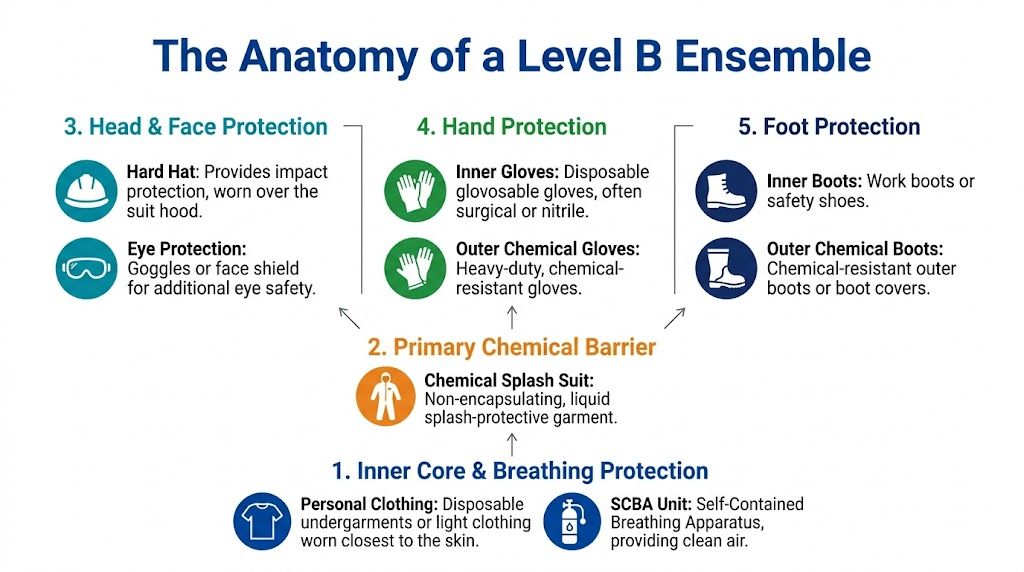
A Level B ensemble is built around one priority: high respiratory protection with a non-encapsulating garment system that resists splash and contact hazards. In practice, that usually means a positive-pressure full-face SCBA or supplied-air respirator, a hooded chemical-resistant suit, inner and outer chemical-resistant gloves, and chemical-resistant boots. Facility managers should read that as a system decision, not a shopping list. If one component fails compatibility, the whole entry profile changes.
Respiratory protection sets the limits of the job
The breathing apparatus drives work time, team spacing, communication planning, and emergency exit options. That is why I treat cylinder duration, facepiece fit, regulator function, and low-air alarm status as operational controls, not pre-entry paperwork. If the air hazard justifies Level B, the respirator is the life-support component.
A full-facepiece also covers the eyes, which matters in chemical splash and decomposition scenes where airborne irritation can impair judgment before a worker recognizes the problem. For first responders, this is the point where PPE selection and incident command meet. The best suit in the cache does not fix a weak air plan.
The suit protects against splash and surface contact
The Level B garment is usually a hooded, chemical-resistant suit designed for liquid splash, contaminated surfaces, and contact transfer during work. It gives meaningful body protection, but it does not create a vapor-tight envelope. That distinction matters in scene assessment, especially when decision-makers are trying to balance protection, mobility, and heat stress.
For facility managers, this is one of the biggest trade-offs. A non-encapsulated suit is often faster to work in and easier to decontaminate than Level A, but only if the hazard supports that choice. If the material presents a serious dermal absorption risk or demands vapor protection at every seam and closure, Level B is the wrong answer no matter how convenient it is.
Gloves, boots, and closures usually decide field performance
Hands and feet take abuse. Workers kneel in residue, climb stairs, drag hose, open containers, and handle tools with reduced dexterity. That is why glove and boot selection should match both the contaminant and the task.
Key interface points need deliberate setup:
- Wrist connections: glove-to-sleeve overlap has to stay intact while reaching, lifting, and handling equipment
- Lower leg coverage: the suit and boot interface must hold during walking, kneeling, and stepping through liquid or debris
- Hood-to-facepiece fit: the hood cannot interfere with the seal, field of view, or head movement
- Closures and seams: zippers, storm flaps, and tape points need inspection before entry and again during decon
This is also where purchasing shortcuts create expensive problems. A cheaper glove may resist the chemical but fail on grip. A bulk boot may hold up to splash but turn slick on coated floors. Those failures slow the job, increase fatigue, and add contamination risk during doffing.
Some teams add hard hats, cut-resistant outer layers, or task-specific face protection when the work demands it. The point is to cover realistic exposure routes without making the ensemble so cumbersome that workers fumble tools, overheat, or rush the exit. For a broader view of how PPE fits with the rest of a regulated response package, see specialized equipment used in biohazard cleanup operations.
What a sound Level B setup looks like
A good ensemble lets the wearer breathe safely, move with control, communicate clearly, and complete decontamination without turning every transition point into a secondary hazard. Before I clear a team for entry, I want to see them crouch, reach, turn, walk, and simulate tool use. Static fit is not enough.
Level B works well when the materials are compatible, the interfaces stay covered under motion, and the crew has a realistic plan for decontaminating a non-encapsulated suit. It breaks down when teams mix gear without verifying fit, rely on tape to fix poor overlap, or ignore how the outer surfaces will be cleaned before doffing. In actual cleanup work, that is the difference between a controlled operation and an exposure investigation.
Comparing PPE Levels A B and C
Confusion around PPE levels usually comes from one mistake. People compare the suits by how heavy they look instead of by what hazard route they address.
The most useful way to separate Levels A, B, and C is this: Level A is for maximum respiratory and skin protection. Level B is for maximum respiratory protection with less skin protection. Level C is for known conditions where air-purifying respirators are appropriate.
The key difference between A and B
Level B provides respiratory protection equivalent to Level A because it uses SCBA for IDLH atmospheres, but it does not provide total encapsulation. That makes it appropriate when there are no dermal absorption hazards requiring a vapor-tight suit. It also offers 20% faster donning and doffing times than Level A, according to OSHA Appendix B guidance.
That mobility difference matters in real operations. Faster entry preparation and exit can support more efficient scene work, but only when the hazard profile allows it.
PPE Level Comparison
| Feature | Level A | Level B | Level C |
|---|---|---|---|
| Respiratory protection | SCBA, maximum protection | SCBA or equivalent high respiratory protection | Air-purifying respirator for known hazards |
| Skin protection | Highest, fully encapsulating | Lower than Level A, splash protective | Lower, depends on garment and known hazard |
| Suit design | Vapor-tight encapsulating suit | Non-encapsulating hooded chemical-resistant suit | Chemical-resistant clothing with APR |
| Best use case | Unknown or severe inhalation and dermal hazards | Serious inhalation hazard without major dermal absorption risk | Known airborne contaminant in suitable atmosphere |
| Main limitation | Heat stress, restricted movement, slower work | Less vapor skin protection than Level A | Not suitable for unknown or IDLH atmospheres |
How professionals decide
A competent team asks a short list of hard questions:
- Is the atmosphere IDLH or potentially oxygen-deficient? If yes, that usually rules out Level C.
- Can the substance cause serious harm through skin absorption? If yes, Level B may not be enough.
- Are the contaminants identified and measured? If no, assumptions become dangerous.
- What task is being performed? Entry, sampling, overpack, decon, and victim access all create different exposure patterns.
Field judgment matters: The right PPE level is the one that matches the actual exposure route, not the one that looks most aggressive.
If you want a broader discussion of how these tiers map to biohazard and hazmat scenes, understanding biohazard safety levels is a useful companion resource.
The practical mistake to avoid is assuming higher always means better. Sometimes higher means slower, hotter, less mobile, and harder to decontaminate. If the assessment supports Level B, that choice can improve execution without compromising safety. If the assessment points to Level A or Level C, forcing Level B can be the wrong move in either direction.
When Is Level B PPE the Right Choice for Cleanup
A crew arrives at a mechanical room after a reported chemical release. The odor is strong, ventilation is poor, and no one can confirm what product failed. In that moment, the PPE decision has to protect the team without creating unnecessary heat load, delay, and fatigue. Level B is often the right call when the air may be dangerous to breathe, but the available information does not point to a vapor-tight skin protection requirement.
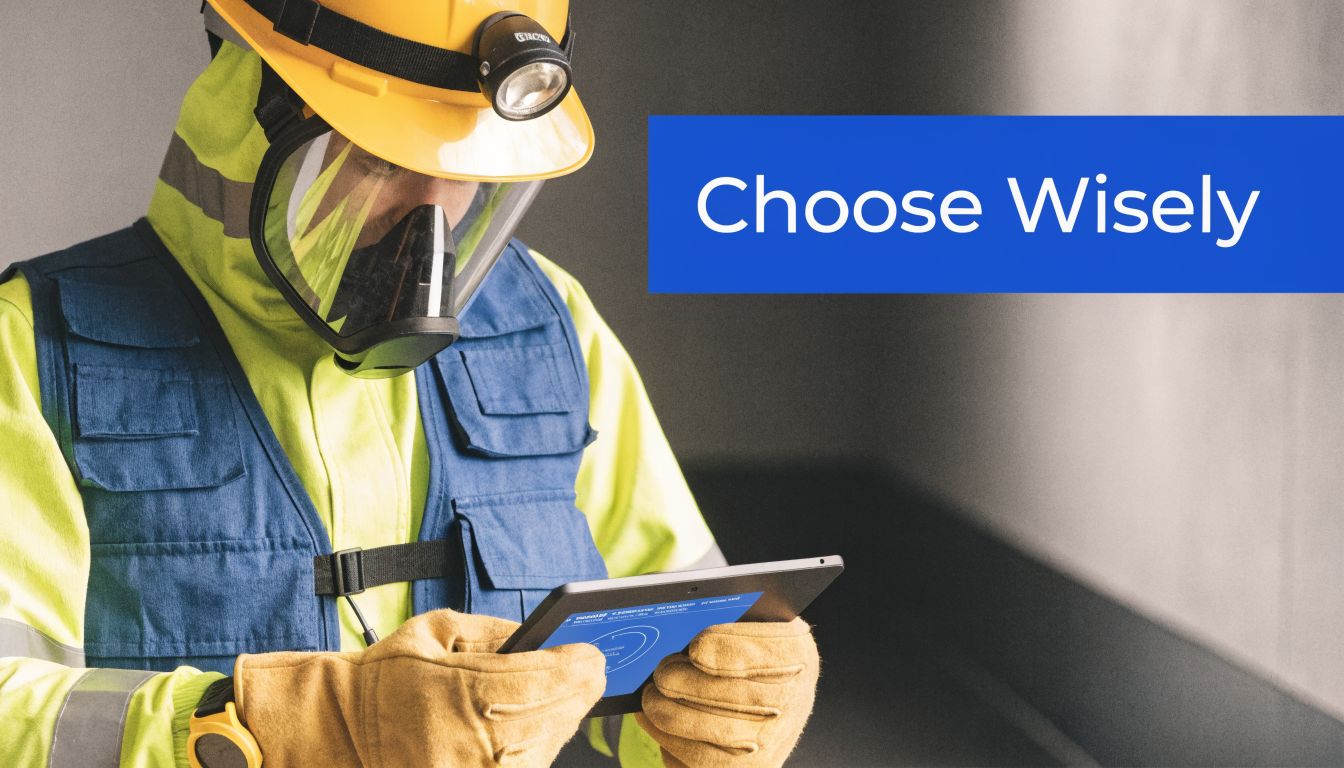
For facility managers, this is not only a compliance question. It affects staffing, work time, decon setup, and project cost. For first responders, it affects how long crews can operate before heat stress and visibility become the limiting factor. The right choice comes from matching the ensemble to the actual exposure routes and the task in front of the team.
Situations where Level B often makes sense
Level B is commonly selected for cleanup and response work such as:
- Initial entry during hazard characterization: The atmosphere may be unsafe, oxygen conditions may be uncertain, and responders need SCBA while monitoring and identifying the hazard.
- Leak investigation and container handling: Splash risk is present, off-gassing is possible, and the job requires more mobility than a fully encapsulating suit allows.
- Industrial process upsets in confined or poorly ventilated areas: Inhalation exposure drives the risk assessment, but known skin hazards do not justify Level A.
- Some decomposition or biohazard scenes with airborne irritants: Respiratory protection may need to be upgraded while dermal risk remains manageable with a non-encapsulated chemical-resistant suit.
The trade-off is straightforward. Level B gives strong respiratory protection and better mobility than Level A, but it does not solve a severe vapor or dermal absorption hazard.
How experienced teams make the call
On a real scene, the decision usually turns on four questions.
First, what is the atmosphere doing right now? Air monitoring, oxygen readings, visible vapor conditions, and occupancy history matter more than assumptions made on dispatch.
Second, how can the contaminant hurt the worker? If inhalation is the main concern and splash protection is enough for the skin, Level B may fit. If skin absorption could cause serious injury, the team needs a higher level of skin protection.
Third, what task will the crew perform? A short entry to meter the space is different from overpacking a leaking drum or removing contaminated material for two hours.
Fourth, what happens after entry? With a non-encapsulated suit, decon planning has to be part of the selection decision, not an afterthought. Facilities that already understand how decontamination technology has advanced in the last 5 years are usually better prepared to support safe exit, equipment rinse-down, and controlled doffing.
When Level B is the wrong choice
Level B should not be used as a middle-ground default.
It is not enough when the substance presents a major dermal absorption hazard, when vapor exposure to the skin is a serious threat, or when the incident profile supports fully encapsulating protection. In those cases, Level A is the safer match.
It is also more PPE than some jobs require. Once monitoring confirms an adequate oxygen level, identifies the contaminant, and supports the use of an air-purifying respirator, Level C may allow safer work overall because crews can communicate better, move more easily, and stay productive longer.
That cost-benefit point matters in cleanup work. Overprotecting on paper can undercut field performance. Heavier ensembles slow containment, increase fatigue, complicate tool use, and extend time in the hot zone. Underprotecting is dangerous. Overprotecting without a hazard basis creates a different set of risks.
A practical standard for facility managers and responders
The best Level B decisions are easy to defend after the fact. The team can explain the airborne hazard, describe the expected skin exposure, identify the task, and show how decontamination and doffing will be controlled.
Some firms, including 360 Hazardous Cleanup, use that scene-based process instead of assigning the same PPE package to every call. That is the right approach. Level B is a specific operational choice for a specific hazard profile, not a symbol of how serious the incident looks.
Decontamination Maintenance and Storage Protocols
A Level B ensemble doesn’t stop being a hazard when the work ends. Because the suit is not vapor-tight, contamination can collect on outer surfaces, interfaces, and equipment components in ways that make removal risky. Many failures happen after the main task is done.
EPA incident reports show that 28% of hazmat response failures are linked to inadequate decontamination procedures, leading to secondary exposures in 15% of cases involving liquid splashes common in biohazard scenes, according to this discussion of PPE protection levels and decon gaps.
Why Level B decon needs extra attention
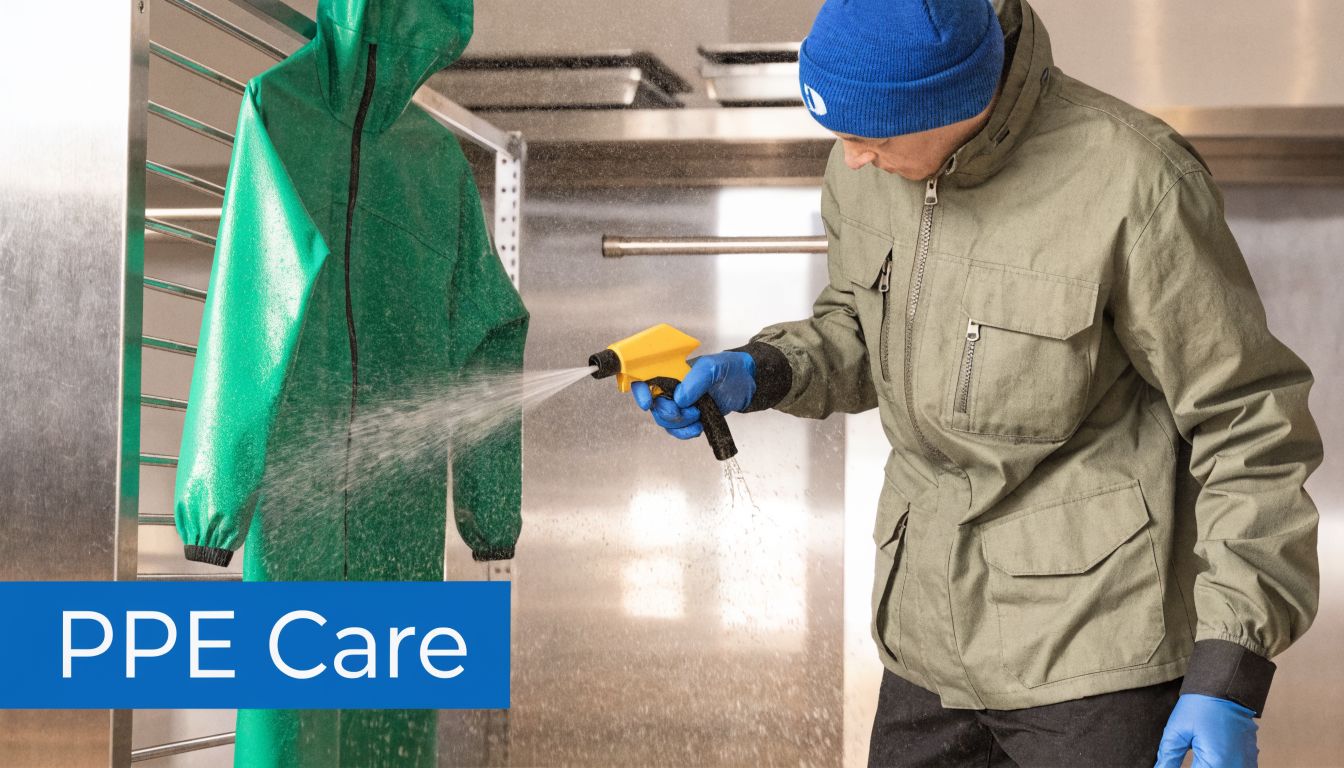
With a non-encapsulated suit, the challenge isn’t only visible residue. It’s transfer. Contamination can move from boots to floor surfaces, from glove cuffs to wrists, and from the suit exterior to the wearer during doffing.
That’s why decon has to be planned before entry. The exit corridor, waste handling setup, and doffing order all need to be defined before the responder ever crosses into the hot zone.
A practical decon sequence
While the exact sequence depends on the contaminant and the agency protocol, the process usually follows this logic:
- Gross reduction first: Remove or rinse visible contamination from outer surfaces before touching closures or interfaces.
- Outer layer control: Address the most contaminated external items, often outer gloves and boots, in a controlled order.
- Suit removal with spotter oversight: A trained observer watches for contact mistakes and helps control the peel-back of contaminated material.
- Respiratory protection last: The air hazard may still be present during early decon, so the breathing apparatus usually stays on until the wearer reaches a safe stage of the process.
- Waste segregation: Disposable materials, absorbents, and contaminated consumables go into the proper waste stream immediately.
Contamination that leaves the hot zone on a worker’s cuffs or boot soles is still part of the incident.
Maintenance after the incident
Once the responder is safely out, the equipment still needs attention.
What teams check
- SCBA condition: Cylinder status, facepiece condition, straps, valves, and contamination around contact surfaces.
- Suit integrity: Tears, seam failure, degraded closures, and contamination that prevents safe reuse if the garment is reusable.
- Gloves and boots: Any puncture, swelling, residue retention, or sole damage.
- Documentation: What entered the scene, what was exposed, what was disposed of, and what requires service.
Storage matters too. Clean equipment should be dry, protected from damage, and kept in a controlled environment so the next deployment doesn’t begin with hidden defects.
For readers interested in how modern decon methods have evolved, recent advances in decontamination technology provide useful context.
The broad lesson is straightforward. A sloppy exit can undo a disciplined entry. With Level B, that risk is higher because the suit’s design requires careful handling at every interface.
Understanding Training and Regulatory Compliance
A Level B suit and SCBA can make an unprepared employee look ready for entry. That is one of the more dangerous situations I see in facilities after a spill, unattended death, chemical release, or mixed biohazard event. The gear creates confidence fast. Competence takes training, medical screening, repetition, and supervision.
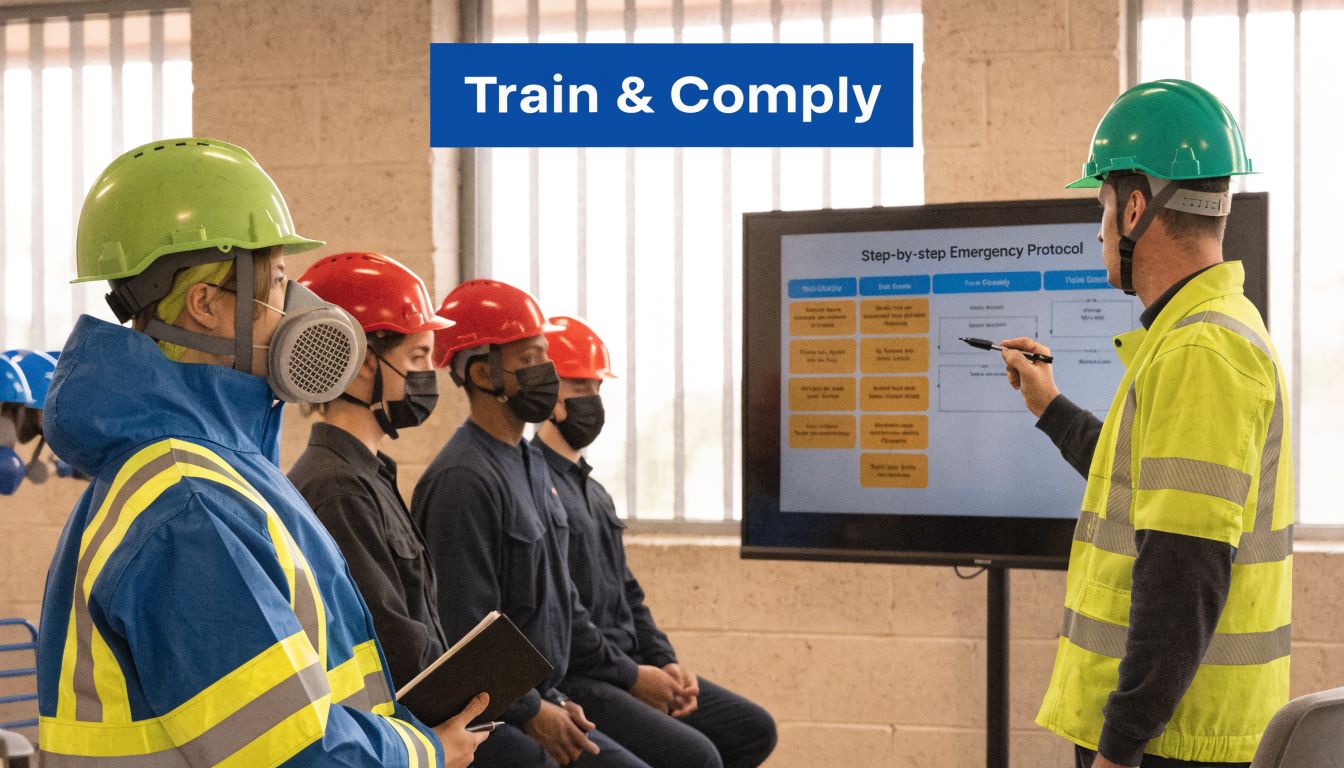
OSHA and EPA expectations treat PPE as one part of a larger response system. For Level B, that system usually includes respiratory protection procedures, fit-related skills, medical clearance where required, incident command discipline, and documented drills under conditions that resemble the actual job. A facility manager deciding whether to use in-house staff or call a specialized contractor should start there. If the program is weak, buying suits is a poor substitute for readiness.
What compliance looks like in practice
On paper, compliance can look simple. On scene, it is a chain of decisions that has to hold up under heat, fatigue, noise, poor visibility, and time pressure.
A workable program usually includes:
- Task-based hazard assessment: PPE selection has to match the atmosphere, splash risk, physical hazards, and the limits of a non-encapsulated suit.
- Respiratory program oversight: SCBA use requires inspection routines, cylinder management, facepiece checks, maintenance records, and trained supervisors.
- Hands-on donning and doffing practice: Teams need repetitions that expose common errors at the hood, glove, boot, and facepiece interfaces.
- Medical and physical readiness: Level B work taxes breathing, mobility, and heat tolerance. That affects work duration, staffing, and rescue planning.
- Documentation: Training records, equipment inspections, air monitoring results, and the reason a Level B decision was made all matter after the incident.
The pattern behind many PPE failures is familiar. Crews rush the entry, skip realistic drills, or assign people who know the policy but have never worked a hot zone in full kit. That gap matters because Level B leaves less room for sloppy movement and poor communication than many teams expect.
Why skill at the hand level matters too
Level B decisions are often driven by inhalation risk, but hand injuries still change the outcome of a cleanup. Responders work around broken glass, torn metal, damaged equipment housings, and debris that can cut through the wrong glove system. Chemical resistance alone is not enough for those tasks. Facilities comparing glove selection factors across work settings may find this overview of safety standards for anti-cutting gloves useful when evaluating how cut resistance fits into task planning.
A short training demonstration often says more than a checklist can:
Why outside support is often the safer call
Many facility teams are capable of initial isolation, scene control, and limited defensive actions. Fewer are equipped to sustain a Level B operation with air monitoring, decon staffing, backup personnel, medical oversight, and post-incident documentation. That is the core cost-benefit question. Maintaining that capability internally for a low-frequency, high-consequence event can be hard to justify unless hazardous response is a routine part of the operation.
For organizations reviewing what a defensible training program should include, training requirements for compliant biohazard cleanup operations offers a useful reference point.
Compliance is how teams reduce the chance that one victim becomes two.
Frequently Asked Questions About Level B PPE
Can our in-house maintenance team use Level B gear for a one-time incident
Only if the organization already has the required training, respiratory program controls, hazard assessment procedures, and decontamination capability. The suit and SCBA alone aren’t enough. In most facilities, a one-time event is exactly when people overestimate what improvised internal response can handle safely.
Does Level B mean the scene is automatically more dangerous than a Level C scene
Not automatically. It means the inhalation hazard drives the PPE decision. Some scenes require Level B because the air may be unsafe even if the skin hazard is relatively limited. Other scenes look alarming but can be managed with Level C once conditions are identified and confirmed.
Is Level B the same as a fully sealed hazmat suit
No. That’s one of the most common misunderstandings. Level B provides very strong respiratory protection, but it does not provide the fully encapsulating vapor-tight protection associated with Level A.
Can first responders enter briefly without full Level B if they won’t stay long
Short exposure time doesn’t make an unsafe atmosphere safe. If respiratory protection at the Level B standard is indicated, entry without it can still cause serious harm. Duration changes work planning, but it doesn’t cancel the hazard.
A fast entry into a bad atmosphere is still an exposure.
How do insurance and documentation issues affect PPE decisions
PPE selection should follow the hazard assessment first. Documentation then supports that decision. Carriers, adjusters, and facility stakeholders often want to know why a certain protection level was used, especially on complex losses. Clear records on atmospheric conditions, task requirements, and contamination concerns help support both safety and claim handling.
Is Level B always the more responsible choice because it seems more protective
No. Overusing heavy PPE can complicate an operation without adding meaningful protection. It can reduce mobility, increase heat strain, slow communication, and raise project costs. The responsible choice is the one that fits the actual hazard.
Can crews still work discreetly while using this kind of PPE
Yes. Professional teams can preserve privacy through controlled access, careful staging, and discreet operations where appropriate. The visibility of the equipment doesn’t prevent respectful scene management.
What should a facility manager ask before approving entry
Ask these questions:
- What is the primary exposure route? Air, skin, splash, or mixed hazard.
- What monitoring or characterization supports the PPE choice? Decisions should be explainable.
- What is the decontamination plan? Entry is only half the operation.
- Who is supervising PPE compliance and doffing? Errors often happen on the way out.
- What happens if conditions change? Good teams reassess continuously.
When a scene may involve airborne hazards, the safest next step is a qualified assessment, not a guess. 360 Hazardous Cleanup provides 24/7 biohazard remediation and hazmat support with regulated handling, discreet response options, and clear communication for families, facilities, agencies, and property stakeholders facing time-sensitive incidents.