When confronted with a biohazard scene, the actions taken in the first few minutes are critical for safety. The immediate priorities are to secure the area to prevent entry and call for professional help. It is imperative to not attempt to clean the area yourself. Household cleaners are ineffective against bloodborne pathogens, and self-remediation can lead to severe health consequences and incomplete decontamination.
What To Do Immediately After a Biohazard Incident
Discovering a traumatic or hazardous scene is a deeply distressing experience. While shock and overwhelm are natural responses, the immediate focus must shift to practical safety measures. The primary goal is to prevent further harm or contamination.
This requires resisting the instinct to clean or restore normalcy. Mishandling biohazardous materials like blood, bodily fluids, or chemical waste creates severe health risks. Dangerous pathogens—including HIV, Hepatitis B, and Hepatitis C—can survive on surfaces for days or weeks, posing a significant threat to anyone not equipped with appropriate Personal Protective Equipment (PPE). Standard cleaning supplies are incapable of eliminating these microscopic dangers.
Your First Steps Toward Safety
Before a certified team arrives, several crucial steps can protect you and others. These actions are about containment and communication, not cleaning.
- Evacuate the Area: Immediately have all individuals, including pets, leave the affected room. Pets can track contaminants to other parts of the property.
- Secure the Space: Close and lock the door to the contaminated area. A simple sign or tape across the doorway can prevent accidental entry.
- Ventilate with Caution: If the hazard is not airborne (e.g., chemical fumes), opening a window in the affected room may help with odors. However, do not activate central heating or air conditioning, as the HVAC system can circulate airborne contaminants throughout the building.
- Avoid All Contact: This is non-negotiable. Do not touch any fluids, stained items, or affected surfaces. Pathogens can enter the body through skin and small, unnoticed cuts.
Your safety and the safety of others is the only priority. A biohazard scene is a hazardous environment containing invisible threats. A DIY cleanup attempt not only exposes individuals to disease but often fails to properly decontaminated the area, leaving hidden dangers behind.
Notifying the Right People
Once the area is secured, your next call should be to a certified biohazard remediation company. These trained professionals are equipped to handle hazardous materials safely and in full compliance with OSHA regulations and local laws.
For a more detailed breakdown of what to do (and what not to do), you can learn more about creating a safety checklist after discovering a biohazard. This guide provides a clear plan for managing the situation responsibly while awaiting professional intervention. Following these steps helps control the crisis, protect everyone involved, and initiate the process of safely restoring the property.
How to Find and Vet a Certified Biohazard Cleanup Company
After containing the immediate danger, the focus shifts to selecting a qualified team for the remediation. A search for "biohazard cleanup services near me" will yield numerous options, but not all providers possess the required expertise. Choosing the right company is critical for safety and for ensuring the property is legally and scientifically restored to a habitable condition.
Biohazard remediation is a highly specialized field governed by strict regulations from agencies like OSHA and the EPA to protect public health. The company you entrust with this task must have certified training, specialized equipment, and a thorough understanding of decontamination protocols.
Differentiating Specialists From Generalists
While a general restoration company may offer "deep cleaning," this service is fundamentally different from professional biohazard remediation. A true specialist understands the science of bloodborne pathogens, the methods for neutralizing chemical hazards, and the critical techniques to prevent cross-contamination. They arrive with certified technicians, industrial-grade equipment, and a documented process for handling, transporting, and disposing of hazardous waste in accordance with all regulations.
The table below clarifies why these services are not interchangeable.
| Feature | Professional Biohazard Cleanup | Standard Cleaning Services |
|---|---|---|
| Technician Training | Certified in OSHA, bloodborne pathogens, HAZWOPER, IICRC standards. | Basic cleaning techniques; no specialized hazard training. |
| Safety Protocols | Full PPE, containment zones, negative air pressure, medical-grade agents. | Standard gloves, household cleaners. |
| Equipment | HEPA vacuums, foggers, ozone machines, specialized chemical neutralizers. | Vacuums, mops, commercial-grade cleaning solutions. |
| Waste Disposal | Follows strict federal and state laws for biohazardous waste transport. | Throws waste in regular municipal trash. |
| Regulatory Compliance | Adheres to all OSHA, EPA, and local health department regulations. | Not governed by biohazard-specific regulations. |
| Liability & Insurance | Carries contractor's pollution liability and other specific insurance. | General liability only; no coverage for bio-risks. |
Choosing a certified professional is not merely about achieving a better clean; it is about protecting yourself from future health risks and potential legal liability.
The growth of the professional remediation industry underscores the increasing recognition of these risks. The global biohazard and crime scene cleanup market was valued at USD 1.21 billion in 2026, jumping from USD 1.15 billion in 2025, and is expected to hit USD 1.68 billion by 2032. This expansion highlights the essential role these compassionate providers play in restoring safety and enabling families and property owners to begin the healing process.
Building Your Vetting Checklist
When contacting potential providers, use a checklist focused on credentials and documented expertise. A reputable firm will be transparent and have this information readily available.
Industry Certifications: The IICRC (Institute of Inspection, Cleaning and Restoration Certification) is a key indicator of quality. Inquire if technicians hold these certifications.
OSHA Compliance: This is mandatory. The company must confirm its team is trained on OSHA's Bloodborne Pathogens standard (29 CFR 1910.1030).
Appropriate Insurance: General liability is insufficient. Verify they carry workers' compensation and, most importantly, contractor’s pollution liability insurance, which protects you from environmental contamination issues arising from their work.
Permits and Licensing: The company must possess all required state and local permits for transporting and disposing of biohazardous waste. Do not hesitate to ask for proof.
This quick guide covers the immediate safety steps you should take the moment you encounter a biohazard.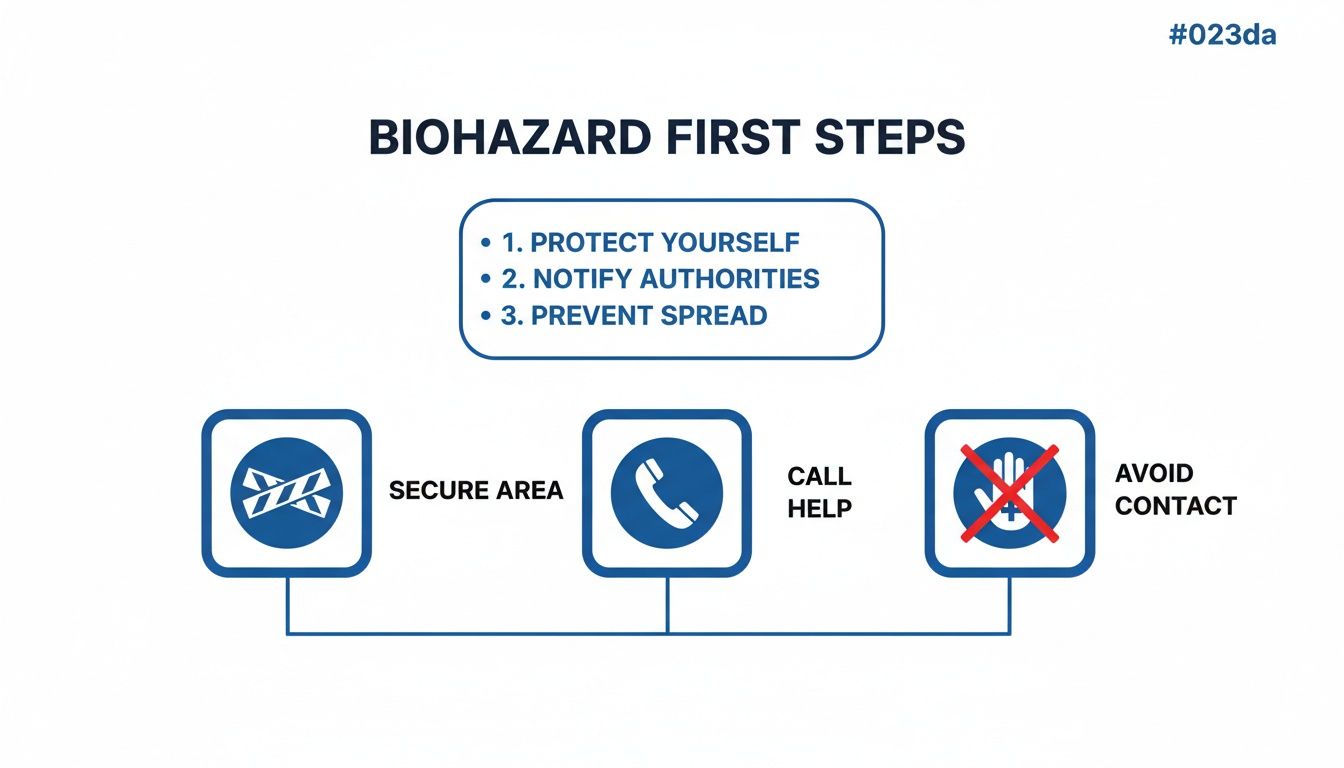
Following these initial containment steps is what you do before you even start calling and vetting a professional service.
Evaluating a Company's Experience and Protocols
Credentials provide a baseline, but a company’s experience and operational approach reveal its true capabilities. You are seeking a partner who can manage the unique aspects of your situation with professionalism and compassion.
Ensure the company has experience with diverse scenarios, as protocols for an industrial accident differ significantly from those for an unattended death. This specialized knowledge often extends to related fields; for instance, many of the same demanding standards apply to firms that provide professional hospital equipment disposal services.
Ask for a detailed explanation of their waste disposal process. A professional team should clearly describe how they document, transport, and dispose of all biohazardous materials at a licensed facility. They should also provide a manifest for your records, which serves as proof of compliant handling.
For more guidance, check out our in-depth article on what you need to know when choosing a trusted cleanup partner. Investing time in making the right choice now provides invaluable peace of mind later.
Key Questions to Ask Before You Hire a Cleanup Service
Selecting the right company in a time of crisis depends on asking the right questions. Once you have verified their basic credentials, a direct conversation is the most effective way to assess their expertise, professionalism, and compassion. This is more than a transaction; it is an act of trust, placing your safety and property in their hands during a vulnerable time.
A reputable biohazard cleanup service will welcome your questions and provide clear, direct answers. Vague responses or hesitation to discuss specifics should be considered a major red flag. Use these questions to ensure you are hiring a true professional who can manage your situation with the required care and skill.
Questions About Experience and Capabilities
Every biohazard scene is unique, rendering a one-size-fits-all approach ineffective. The methodology for an industrial chemical spill is vastly different from the meticulous, compassionate approach required for an unattended death or hoarding situation. You need a team with direct, relevant experience.
Begin by inquiring about their specific expertise:
- "Have you managed situations precisely like this one before?" A simple "yes" is insufficient. An experienced company can confidently discuss the unique challenges associated with hoarding, trauma scenes, or industrial accidents.
- "Are your technicians employees or subcontractors?" This is a critical distinction. Direct employees are typically held to higher standards of training, background checks, and adherence to company protocols.
- "What is your standard protocol for a scene of this nature?" They should be able to outline their process, from initial assessment and containment to final testing and documentation.
This line of questioning helps verify that their operational procedures align with industry best practices and the specific requirements of your situation. For a deeper dive, our guide on the top questions to ask before hiring a cleanup company offers even more detail.
Questions About Safety and Compliance
Safety is the cornerstone of professional biohazard remediation. This extends beyond protecting their crew to safeguarding you, your family, or your employees from any residual health risks. Their answers must demonstrate a firm grasp of all applicable rules and regulations.
Focus your questions on their documented safety procedures:
- "What specific Personal Protective Equipment (PPE) does your team use?" At a minimum, this should include biohazard suits, full-face respirators with appropriate cartridges, double-layered gloves, and dedicated footwear.
- "How do you establish containment and prevent cross-contamination?" A professional team will describe using plastic sheeting to seal the affected area, creating negative air pressure to control airflow, and establishing distinct "clean" and "dirty" zones.
- "How do you dispose of biohazardous waste?" They must confirm they use licensed and regulated biohazard disposal facilities and should be able to provide a manifest or certificate of destruction as proof.
A company that cannot clearly articulate its safety and disposal protocols is a liability. Proper remediation is a science, and adherence to federal and state regulations—including those from OSHA and the EPA—is non-negotiable.
Questions About Logistics and Discretion
The practical aspects of the cleanup process are immensely important, especially during a time-sensitive and emotionally taxing event. These questions address timing, communication, and respect for your privacy.
- "What is your emergency response time to my location?" A rapid response is crucial to prevent further damage and contamination. A professional service should be available 24/7 and provide a clear arrival window.
- "Do you use unmarked vehicles?" For many clients, particularly in residential neighborhoods or active businesses, discretion is paramount. A company that prioritizes your privacy demonstrates a client-focused, compassionate approach.
- "Who will be my single point of contact throughout this process?" A dedicated project manager or team lead prevents confusion and ensures you always have a direct line for communication.
Asking these questions empowers you. You become an informed partner in the process, able to select a company that possesses not only the technical skills but also the empathy and professionalism to guide you through this challenging time.
Navigating Insurance for Biohazard Cleanup Costs
Following a traumatic event, a common concern is the financial burden of cleanup. The associated stress can feel as overwhelming as the emotional shock. Fortunately, professional biohazard cleanup is often covered by property insurance.
Most standard homeowner's, commercial property, and renter's insurance policies include provisions for restoring a property after unexpected damage. This coverage frequently extends to biohazard situations like unattended deaths, accidents, or crime scenes. Insurers typically classify these events as property damage requiring specialized, professional intervention.
Understanding Your Policy and Getting a Claim Started
Your first step should be to contact your insurance agent or carrier to open a claim as soon as possible. Be prepared to provide the date, time, and a general description of the incident.
A reputable biohazard remediation company is an invaluable partner in this process. Professionals work directly with insurance carriers daily and understand the requirements for documentation and communication. Many professional firms can handle direct billing with your insurer, alleviating a significant administrative burden during an already difficult time.
You will likely need the following information:
- A police or incident report number: This official record helps validate the claim.
- Photographs of the scene: Thorough photo documentation is essential for the insurance adjuster. Your cleanup team will handle this before any work begins.
- Your policy number: Keep this accessible for all communications.
The Role of the Insurance Adjuster
Once a claim is filed, your insurance company will assign an adjuster to the case. The adjuster's role is to assess the damage, review the cleanup company’s proposed scope of work, and determine coverage under your policy.
An experienced biohazard cleanup company knows precisely what adjusters need. We provide detailed, line-item estimates that justify every step of the remediation process—from containment and waste disposal to structural cleaning and final verification testing. This professional documentation is key to securing timely and complete claim approval.
Navigating an insurance claim can feel complex, but you do not have to do it alone. A professional remediation company acts as your advocate, ensuring every necessary step is documented and clearly communicated to your insurer to help streamline the approval process.
The demand for these services highlights their essential nature. In the United States, the home decontamination services market—driven largely by biohazard cleaning—generated USD 1,348.9 million in revenue in 2024. This is a critical service, not a small niche. The market is projected to grow to USD 2,339.2 million by 2030, demonstrating the vital role these services play for families and property owners. Using a professional service ensures compliant disposal, prevents liability, and restores the property to a safe, habitable state much faster. If you're interested in the data, you can explore the full findings on home decontamination services.
Making the Process Smoother
Clear communication is vital. Maintain a log of every conversation with your insurance company, noting the date, time, and the name of the representative. Do not hesitate to ask for clarification if you are unsure about your coverage.
Ultimately, the goal is to restore your property safely without adding financial trauma to an already difficult situation. Partnering with a cleanup company that understands the insurance landscape allows you to focus on what matters most: moving forward. For more practical advice, refer to our guide on how to talk to your insurance company about cleanup services.
What to Expect During the Professional Cleanup Process
Understanding the cleanup process can alleviate significant stress. Professional biohazard remediation is not merely cleaning; it is a systematic, science-based process designed to restore a space to a safe, livable condition with compassion and expertise.
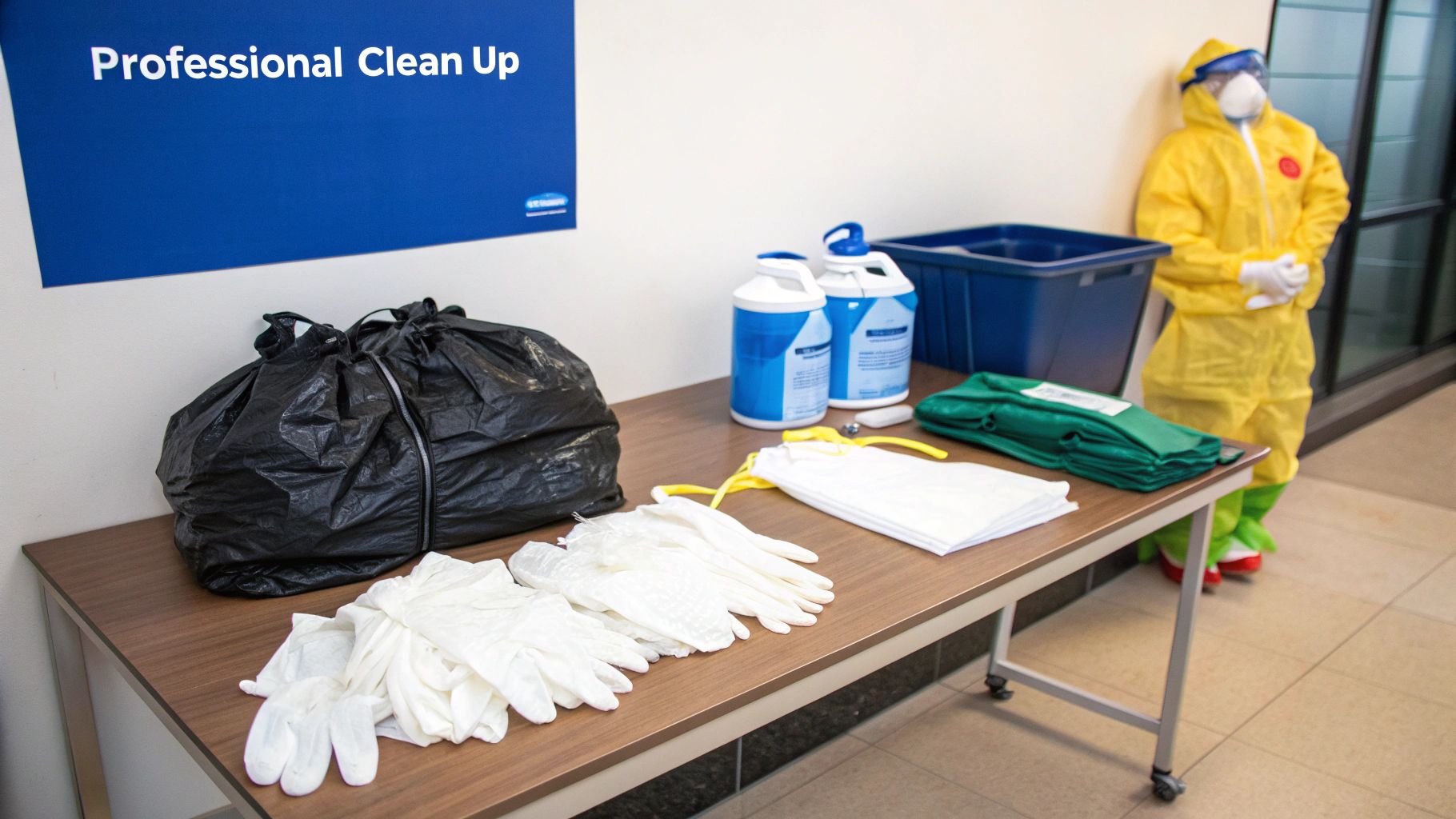
Upon arrival, the certified team conducts a calm, professional on-site assessment. They will walk through the affected area with you, if you are comfortable, to understand the situation, answer initial questions, and develop a precise plan of action.
This initial evaluation is critical for determining the appropriate equipment, team size, and a realistic timeline. Afterward, the project manager will present a detailed, transparent proposal outlining every step of the work.
Establishing Containment and Ensuring Safety
Before any remediation begins, the crew's top priority is preventing cross-contamination. This is a key differentiator between a true professional and a standard cleaning service.
They will establish a secure containment zone using heavy-duty plastic sheeting to seal doorways, vents, and any other pathways to unaffected areas. They often use negative air pressure machines with HEPA filters to scrub the air and create a vacuum effect, ensuring no airborne pathogens escape the work area.
Every technician entering this zone will wear full Personal Protective Equipment (PPE), including:
- Biohazard Suits: An impermeable barrier against liquids and pathogens.
- Full-Face Respirators: Protection from inhaling airborne contaminants.
- Double-Layered Gloves and Shoe Coverings: Prevention of direct contact and tracking of contaminants.
This meticulous setup is non-negotiable and guarantees the safety of both the technicians and any other occupants of the building.
The Remediation and Restoration Stages
Once the containment zone is secure, the team begins the methodical removal of all biohazardous materials. This includes not only cleaning surfaces but also removing any contaminated items, such as carpeting, furniture, and personal belongings that cannot be salvaged.
This process is always handled with the utmost respect and discretion. Porous materials are carefully cut out, removed, and packaged in specially marked biohazard containers for compliant disposal.
The core of professional biohazard remediation is methodical elimination. The process addresses not just what is visibly soiled but also scientifically identifies and removes all contaminated materials—even those that appear clean—to guarantee the area is truly safe.
After all hazardous materials are removed, the deep cleaning phase begins. Technicians use proprietary, hospital-grade disinfectants to clean, sanitize, and decontaminate all remaining surfaces, including walls, ceilings, and subflooring. An EPA-registered disinfectant is used to eliminate any lingering bacteria, viruses, or fungi.
The process often concludes with deodorization using specialized equipment like hydroxyl or ozone generators to neutralize any persistent odors. For a closer look, check out our comprehensive step-by-step guide to the biohazard cleanup process.
This multi-stage approach ensures the property is not just visually clean but biologically safe. The hazardous waste management market, which encompasses these critical services, was valued at USD 17.22 billion in 2023 and continues to grow, with North America leading the market. This growth is driven by strict U.S. regulations mandating compliant cleanup and disposal, reinforcing the importance of adhering to established protocols.
As a final step, many companies offer post-remediation testing to scientifically verify that the area is free of contaminants. This provides documented proof that the property has been restored to a safe state, offering you complete peace of mind to focus on moving forward.
Frequently Asked Questions About Biohazard Cleanup
If you are facing a biohazard situation for the first time, you likely have many questions. It is a stressful and overwhelming experience, and obtaining clear, straightforward answers is the first step toward restoring safety and order.
As a trusted industry leader, we have addressed these common questions for countless individuals searching for "biohazard cleanup services near me." Our goal is to provide the factual information you need to make informed decisions for your property and your safety.
How Much Does Biohazard Cleanup Usually Cost?
This is often the first question asked, and the answer is that the cost depends entirely on the specific situation. There is no flat rate because every scene is unique. The final cost is determined by factors such as the size of the affected area, the type of biohazard involved (e.g., bloodborne pathogens versus chemical spills), and the extent of contamination to materials like drywall, flooring, or subflooring.
A reputable company will not provide a quote over the phone without first conducting an on-site assessment to understand the full scope of work. Following this assessment, you should receive a detailed, written estimate that itemizes all associated costs.
Crucially, most homeowner's and commercial property insurance policies cover the cost of professional biohazard cleanup. A seasoned remediation company can work directly with your insurance provider, often limiting your out-of-pocket expense to your policy deductible.
How Long Will the Cleanup Process Take?
The timeline for cleanup can vary significantly. A smaller, contained incident may be fully remediated within a few hours, allowing for safe re-entry.
Conversely, a more extensive situation—such as a severe hoarding environment or a trauma scene affecting multiple rooms and structural materials—could require several days to complete safely and thoroughly. After assessing the scene, the project manager should provide a clear and realistic timeline.
Can I Just Clean a Biohazard Scene Myself?
While the desire to restore order is understandable, attempting to clean a biohazard scene yourself is extremely dangerous and strongly ill-advised. Standard household cleaners, including bleach, are not effective at eradicating resilient bloodborne pathogens like Hepatitis B, Hepatitis C, or HIV.
Professionals adhere to strict OSHA regulations and use specialized equipment for critical reasons:
- Proper Protection: They wear certified Personal Protective Equipment (PPE) to prevent exposure.
- Effective Tools: They use EPA-registered, hospital-grade disinfectants designed to eliminate dangerous pathogens, which are not available to the public.
- Compliant Disposal: They are licensed to handle, transport, and dispose of all biohazardous waste in accordance with federal, state, and local laws.
Attempting a self-cleanup not only poses a serious health risk but also fails to guarantee that the area is truly decontaminated. Hidden biohazards could remain, posing a threat to future occupants.
Will My Neighbors Find Out What’s Going On?
Privacy and discretion are fundamental to this work. Professional biohazard remediation companies understand the deeply personal and sensitive nature of these situations and make protecting your privacy a top priority.
This commitment to discretion means that crews should arrive in unmarked vehicles and work quietly and respectfully to avoid drawing unwanted attention. When vetting a company, feel empowered to ask about their privacy protocols. A compassionate, professional firm will prioritize your need for discretion from start to finish.
When you need immediate, compassionate, and professional assistance, 360 Hazardous Cleanup is here for you 24/7. Our certified team has the expertise to handle any biohazard situation with the utmost care, ensuring your property is restored safely and respectfully. Visit us at https://360haz.com to learn more or to request immediate help.