When police officers, paramedics, or the coroner leave a scene, those present are left with the same painful question. What happens now?
If you're standing outside a bedroom, an apartment, an office, or a vehicle after a traumatic event, the silence can feel unreal. Families are grieving. Property managers are worried about safety and liability. Business owners are trying to protect staff and preserve privacy. In that moment, many people first hear the term crime scene cleanup and assume it means ordinary cleaning after a difficult event.
It doesn't.
What is crime scene cleanup? It's the professional removal, decontamination, and lawful disposal of blood, bodily fluids, and other hazardous contamination after a traumatic event. The work is part safety response, part regulatory compliance, and part compassionate support for the people left behind.
After the First Responders Leave
A common scene goes like this. The authorities finish their work. A family member is crying in the driveway. A landlord is asking whether the unit can ever be rented again. Someone opens the front door, sees visible staining, and thinks a mop, bleach, and trash bags might be enough.
That instinct is understandable. It's also where people get hurt.
Crime scene cleanup isn't janitorial work. It's bio-remediation. That means trained technicians assess contamination, isolate the area, remove affected materials, disinfect according to industry standards, and arrange compliant disposal of biohazard waste. The point isn't to make a room look clean. The point is to make it safe.
Why this field changed
Two decades ago, many scenes were handled informally by property owners or general cleaning crews. That has changed. The industry has professionalized significantly, with the U.S. market generating over $358 million annually, driven by compliance requirements and a better understanding of biohazard risk, not by rising crime, according to this industry overview on the growth of professional biohazard remediation.
That shift matters for one reason. The public now understands that a traumatic scene can carry risks you can't see.
The hardest part for most families isn't only the shock. It's realizing the space they know so well has become a hazardous environment.
If you've never dealt with this before, it's normal to assume the police or ambulance team also handles the cleanup. They don't. Their role is emergency response, investigation, and transport. Once the scene is released, the responsibility for remediation usually returns to the property owner, family, manager, or insurer.
What families and managers need most
At this stage, people need three things:
- Clear direction: What can be touched, what can't, and who should enter the area.
- Safe next steps: How to avoid accidental exposure or cross-contamination.
- Coordination with authorities: How cleanup begins only after the scene is formally released.
For a closer look at how biohazard teams coordinate with agencies on scene release and access, see how 360 Hazardous Cleanup collaborates with law enforcement and first responders.
Why Professional Bio-Remediation Is Not Negotiable
The visible damage is only part of the problem. The primary hazard often sits below the surface, inside carpet backing, subfloor seams, drywall, furniture padding, baseboards, and cracks that no household cleaner can reach.
Consider an iceberg. The visible stain is the top. Unseen contamination is what creates the significant risk.
Surface cleaning misses the actual hazard
Professional cleanup follows ANSI/IICRC S540 standards and uses a multi-step process with EPA-registered, hospital-grade disinfectants. It often includes removing porous materials such as carpet and drywall because bloodborne pathogens can remain inside them. That's what separates certified remediation from ordinary cleaning, as explained in this guide to crime scene cleanup process and safety.
A standard cleaner may wipe, spray, deodorize, and leave. That can make a room look better while leaving contamination in place. In some cases, it can spread it.
Standard cleaning vs professional bio-remediation
| Factor | Standard Cleaning / DIY | Professional Bio-Remediation |
|---|---|---|
| Primary goal | Make the area look clean | Make the area safe and compliant |
| Training | General cleaning knowledge | Specialized training in trauma and biohazard remediation |
| Hidden contamination | Often missed | Assessed and addressed systematically |
| Porous materials | Usually left in place | Removed when contaminated |
| Disinfectants | Consumer or general-purpose products | EPA-registered, hospital-grade disinfectants |
| Waste disposal | Regular trash may be used incorrectly | Biohazard containers and compliant disposal procedures |
| Cross-contamination risk | High if handled improperly | Controlled through containment and process |
| Legal exposure | Property owner assumes more risk | Documentation and regulated handling reduce risk |
It's also a liability issue
Property owners sometimes focus first on cost. The larger issue is often risk transfer. If a scene isn't properly remediated, later exposure can create health concerns, tenant disputes, employee safety questions, insurance complications, and claims that the property wasn't restored to a safe condition.
That doesn't mean every incident turns into a legal battle. It means improper cleanup creates unnecessary exposure at the exact moment people need less chaos, not more.
Practical rule: If blood, bodily fluids, decomposition, or unknown biological material is present, don't treat it as a housekeeping problem.
Families often ask whether they can remove just the obvious material and leave the rest for a cleaner. That approach usually creates two problems at once. It exposes the person doing the work, and it alters the scene before a trained team can determine how far contamination traveled.
If you want a plain-language explanation of credentials and why they matter, this article on why biohazard cleanup requires certification and specialized training is a useful starting point.
The Crime Scene Cleanup Process Step by Step
Understanding that the work follows a structured process often helps alleviate feelings of overwhelm. A professional crew doesn't walk in and start scrubbing. The job is methodical.
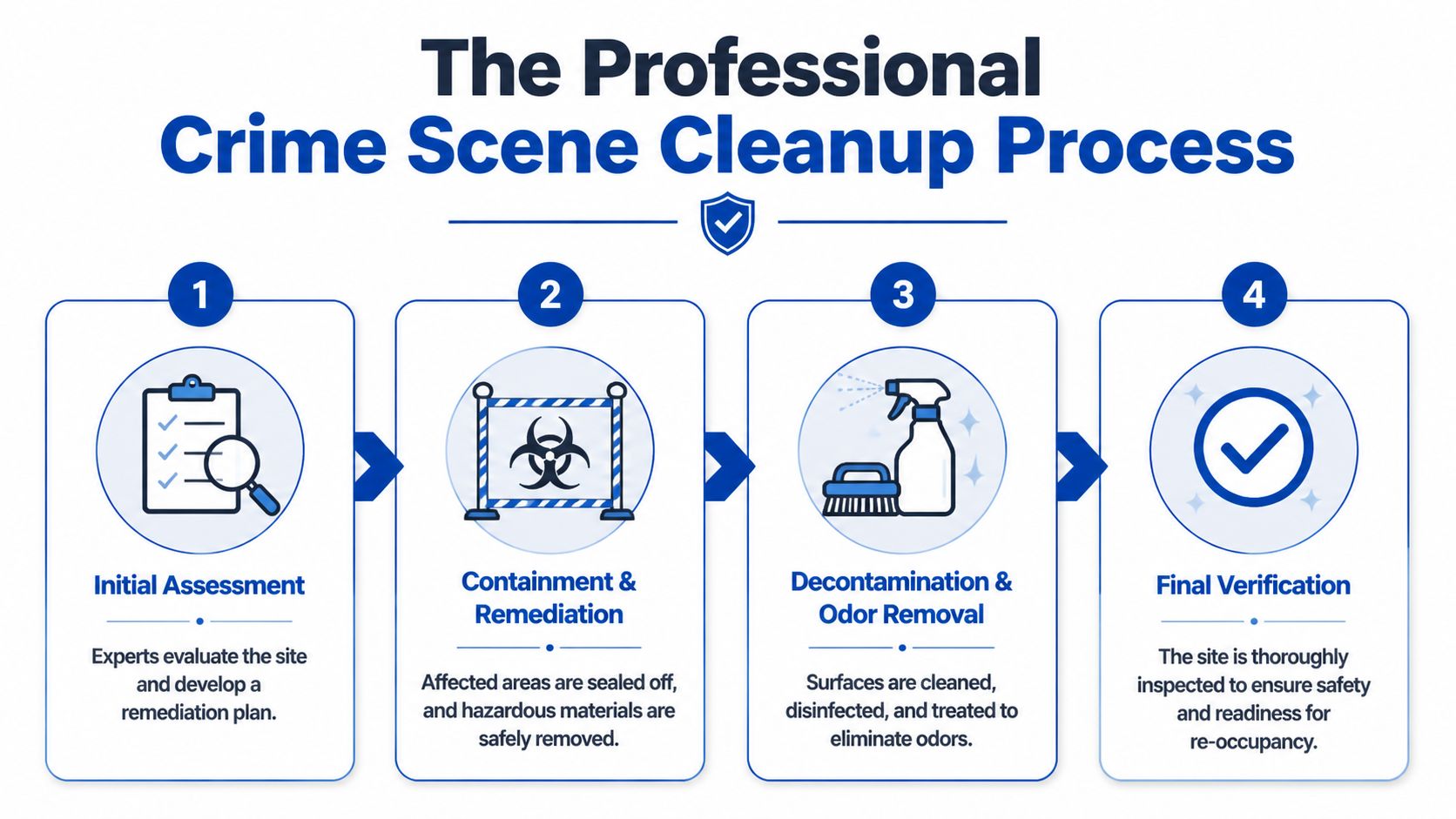
To make that easier to picture, here is the workflow at a glance.
Phase one initial assessment
The first task is control. Technicians identify the affected area, determine where contamination may have traveled, and establish boundaries so other rooms, hallways, or work areas don't become part of the problem.
At this point, the team is asking practical questions. What materials are porous? What can be decontaminated? What has to be removed? Is there a shared HVAC concern? Is the scene inside a home, a common area, a vehicle, or a workplace with foot traffic?
A useful walkthrough of this workflow appears in this step-by-step guide to the biohazard cleanup process.
Phase two containment and removal
Once the plan is set, technicians isolate the work area and begin removal of contaminated material. This can include soft goods, sections of carpet, padding, drywall, insulation, furniture, or other items that can't be safely restored.
This stage is where people often realize why ordinary cleaning isn't enough. Fluids don't respect visible boundaries. They can move downward, sideways, and into joints, seams, and absorbent material.
Here's a short visual explanation of how professional cleanup is approached in the field.
Phase three decontamination and odor treatment
After physical removal, technicians clean and disinfect all salvageable surfaces. This is a deliberate sequence, not a single spray-and-wipe pass. The goal is to reduce the biological load and treat the entire affected area, including surfaces that may not look damaged.
Odor treatment matters here too. Persistent odor usually means some form of contamination remains or has penetrated deeper than expected. Cover scents don't solve that.
If a room still smells wrong after "cleaning," that smell is often telling you the source hasn't been fully removed.
Phase four final verification
The last phase is confirmation. A responsible team doesn't assume the job is complete because the room looks restored. The space is inspected carefully to confirm the remediation plan was completed, contaminated waste was packaged for lawful disposal, and the property is ready for the next step, whether that's reconstruction, re-occupancy, or turnover.
People sometimes ask if crime scene cleanup includes rebuilding. It can include light demolition and preparation for repair, but remediation and reconstruction aren't always the same scope. What matters most is that hazardous material is removed first, before anyone paints, patches, or replaces flooring.
Navigating Insurance, Costs, and Timelines
The emotional shock of a traumatic event is often followed by immediate financial panic. Who pays for this? How long will it take? What do we tell the adjuster? Can anyone start today?
In many situations, insurance may help. As the crime scene cleanup service market grows, carriers are becoming more familiar with biohazard remediation claims, and professional cleanup companies have established documentation and direct billing processes. One market projection states the sector is expected to reach $1.5 billion by 2035, reflecting a maturing industry and more standardized claims handling, according to this market analysis of crime scene cleanup services.

What affects price
There isn't one flat rate for this kind of work. Cost usually depends on conditions at the scene.
- Extent of contamination: A localized area is different from contamination that reached flooring, walls, or adjacent spaces.
- Material type: Non-porous surfaces may be restorable. Carpet, padding, drywall, and upholstered furniture may need removal.
- Access and logistics: Apartments, vehicles, commercial buildings, stairwells, elevators, and after-hours entry all affect labor and containment planning.
- Documentation needs: Insurance, property transfer, employer reporting, or chain-of-custody concerns can add administrative work.
- Odor and reconstruction prep: Some jobs end at remediation. Others require demolition, odor treatment, and readiness for contractors.
How long it usually takes
Timelines vary because the work depends on safety, not speed alone. Some scenes can be addressed in a relatively short visit. Others take much longer because contamination spread farther than expected or because materials must be removed in layers.
A realistic way to think about it is this:
- Smaller, contained scenes: May be completed in hours
- Moderate scenes: Often require a full day
- Complex scenes: Can extend into multiple days, especially when structural materials are involved
How documentation helps
Good documentation protects everyone. It helps families avoid repeating painful details, gives adjusters what they need to process claims, and creates a clear record of what was found, removed, treated, and disposed of.
If you're preparing to speak with a carrier, this guide on how to talk to your insurance company about cleanup services, insurance tips, common pitfalls, and what you should know can help you organize the conversation.
For readers who are comparing providers, 360 Hazardous Cleanup is one example of a company that coordinates documentation and insurance communication as part of biohazard response work.
The Importance of Discretion and Evidence Preservation
A scene can't be cleaned just because someone wants it cleaned. It must first be released by law enforcement or the appropriate authority. Until that happens, entering, moving items, or trying to sanitize surfaces can interfere with an investigation and create avoidable legal problems.
Evidence comes first
Technicians who handle these scenes understand that they arrive after investigators finish, not before. Once the release happens, the cleanup team still works carefully because personal property, structural damage, and scene context may matter for insurance, legal review, or family records.
For property owners who want a simple way to organize records, photos, and transfer logs, this free evidence documentation resource can be helpful when you're thinking about chain-of-custody and scene handoff.
Don't move items "to help" before you know the scene has been fully released. What feels respectful in the moment can create confusion later.
Privacy is part of the job
The second issue is discretion. People often think first about sanitation, but privacy matters just as much. A family may not want neighbors watching. A business may need to protect staff morale and customer confidence. A landlord may need to manage access without exposing a tenant's private tragedy.
Professional crews handle this with discretion. That can include controlled site access, limited on-site discussion, careful scheduling, and unmarked vehicles when requested. Just as important, the people doing the work must be nonjudgmental. Every scene involves a real person, a real loss, and people who didn't choose to become experts in trauma overnight.
In practical terms, discretion means the team protects both the integrity of the site and the dignity of the people attached to it.
Who Needs Crime Scene Cleanup Services
The term sounds narrow, but the need is broader than is commonly understood. Crime scene cleanup services are used whenever a traumatic event leaves biological contamination that must be removed safely.
Common situations
- Families after a death at home: This may involve suicide, an accident, or an unattended death. The immediate need is usually to make the space safe without forcing loved ones to enter and clean the scene themselves.
- Landlords and property managers: A unit may need remediation before it can be shown, repaired, or re-occupied. Their concern is both safety and legal readiness.
- Business and facility managers: A workplace injury, medical emergency, or traumatic incident can leave contamination in offices, restrooms, production spaces, vehicles, or public-facing areas.
- First responders and victim advocates: They often need a reliable referral option for families who ask what to do after the scene is released.
- Commercial property owners: Warehouses, plants, retail sites, and office buildings sometimes face incidents that require containment, documentation, and fast coordination with risk managers.
It's not limited to "crime"
People often get confused: not every trauma scene is a crime scene. The same type of remediation may be needed after:
- Unattended deaths
- Workplace accidents
- Medical emergencies with heavy blood loss
- Vehicle incidents
- Events involving bodily fluids in shared spaces
What connects these situations isn't the cause. It's the presence of contamination that requires trained handling, lawful disposal, and a careful return to normal use.
Your First Step Toward Recovery and Safety
When people ask what is crime scene cleanup, they're usually asking something deeper. They're asking whether they really need help, whether it's safe to wait, and whether calling a professional is an overreaction.
It isn't.
The physical hazard matters, but the emotional hazard matters too. The psychological impact of exposure to traumatic scenes is often overlooked, and forcing family members to clean after a loved one's death can deepen trauma. That concern is reflected in the discussion summarized in this reference on crime scene cleanup and the often-overlooked emotional toll of post-trauma exposure.
What to do right away
If you're facing this now, keep the next steps simple.
Secure the area
Limit entry. Keep children, employees, tenants, and pets away from the affected space.Don't touch or clean anything
Don't bag items, strip bedding, mop floors, or use household chemicals. That can increase exposure and complicate remediation.Call a certified biohazard remediation company
Ask whether the scene has been released, what documentation they'll need, whether they work with insurance, and how soon they can respond.
Recovery includes emotional support
Cleanup solves one part of the problem. People still need support afterward. If you or someone close to the incident needs to talk with a counselor, local resources such as Interactive Counselling Grande Prairie may be a helpful place to start while the practical details are being handled.
Some cleanup professionals also keep referral pathways for grief support and trauma-informed care. If that matters in your situation, this resource on how cleanup professionals can connect families to grief counseling resources offers a useful perspective.
Calling for professional cleanup isn't only about sanitation. It's a way to protect health, preserve dignity, and keep one traumatic event from causing further harm.
Few individuals ever expect to need this service. If you do, you shouldn't have to figure it out alone. The right response protects the property, reduces liability, respects the investigation, and gives families and managers room to focus on what matters most next.
If you need immediate help after a traumatic event, 360 Hazardous Cleanup provides 24/7 biohazard remediation, crime scene cleanup, and trauma scene support with an emphasis on safety, compliance, discretion, and compassionate communication.