You're likely investigating what does a meth lab look like not out of curiosity. You're worried about a rental unit, a recently purchased property, a garage on a commercial site, or a room that doesn't feel right. That instinct matters.
The common perception is that a meth lab looks obviously dangerous, often conjuring images of broken furniture, chaos, needles, and a room that screams criminal activity. Real scenes often don't look that way. Some look neglected. Some look improvised. Some look almost completely ordinary until the details start adding up.
The important question isn't whether a place looks messy. It's whether it shows a pattern of chemical use, concealment, and hazardous residue. That's what changes this from a property concern into a life-safety issue.
Recognizing the Unseen Dangers of a Meth Lab
A lot of bad assumptions start with appearances. One of the most important facts to understand is that a meth house may appear “very normal and orderly,” according to the Nevada attorney general's meth house guidance. North Carolina's SBI also notes that homemade kitchen labs can look ordinary enough to escape the untrained eye. That's why the answer to what does a meth lab look like isn't a single dramatic image. It usually starts with several smaller warning signs that don't belong together.
A clean driveway doesn't mean the property is safe. A neatly made bed doesn't mean a spare room wasn't used for illegal production. A garage can look organized and still contain evidence of chemical processing, dumping, or residue.
Why one clue isn't enough
One coffee filter by itself means nothing. One mason jar by itself means nothing. One covered window might have an innocent explanation. The problem starts when you see multiple unusual signs in the same space, especially when they suggest concealment, chemical handling, and waste.
That same pattern-recognition mindset applies to other hazard scenes too. Property owners who want a broader framework for evaluating suspicious environments should understand how to recognize a biohazard in your home or workplace, because the first mistake people make is treating an unknown hazard like a housekeeping issue.
Practical rule: If a room looks ordinary but contains improvised chemical gear, unusual waste, or signs that people were actively hiding activity, treat it as unsafe until professionals say otherwise.
Why concerned families often miss the risk
People also get pulled in two directions at once. They may be worried about contamination, and at the same time dealing with addiction, custody questions, or unsafe living conditions involving children. In those situations, legal and family-protection issues can overlap quickly. If that's part of your situation, Protecting your rights in CPS drug cases is a useful resource for understanding the legal side without losing sight of immediate safety.
The part many owners underestimate is what you can't see. A former meth lab can stop looking active long before it stops being dangerous. Occupants may remove equipment, wipe down counters, repaint walls, or clear trash. That doesn't mean the chemical hazard is gone. It often means the visible signs are reduced while the hidden contamination remains.
Key Visual Indicators of Meth Production
When people ask what does a meth lab look like, they usually want a checklist. Checklists help, but they also create false confidence. The safest way to assess risk is to look for clusters of repurposed items, unusual quantities, and visible residue.
North Carolina SBI guidance notes that a meth lab often looks less like a formal lab and more like an ordinary room repurposed with improvised equipment, including Pyrex containers or mason jars, tubing, funnels, coffee filters, and plastic soda bottles used in one-pot production. It also emphasizes that the strongest signal is the combination of altered containers, unusual quantities, and chemical residue, not any single object on its own, as described in the North Carolina SBI signs of a meth lab reference.
Equipment that doesn't fit the room
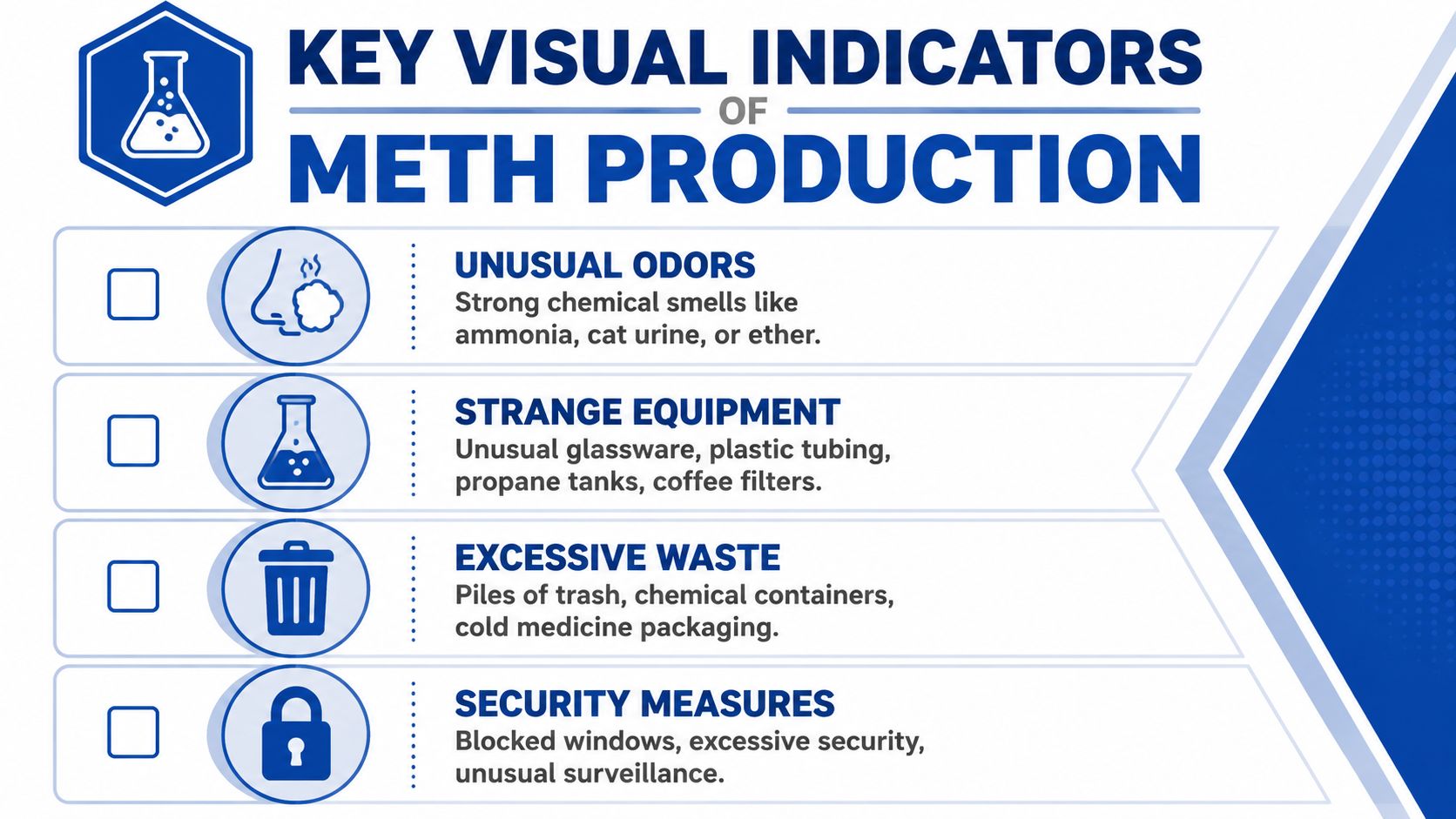
A kitchen or garage used for meth production often contains items that are common in isolation but suspicious in combination.
- Modified containers: Plastic soda bottles, jars, or glass cookware that appear altered, stained, pressurized, or set aside for something other than food use.
- Transfer tools: Funnels, rubber tubing, and makeshift connectors that suggest liquids or gases were being moved between containers.
- Protective items in the wrong context: Gloves, masks, or similar gear sitting beside jars, filters, powder residue, or chemical containers.
- Filtering materials: Coffee filters, especially when stained or stacked in unusual amounts.
A normal garage might have a funnel and gloves. A normal kitchen might have glassware. What doesn't fit is seeing those items grouped with residue, discarded packaging, and hidden work areas.
Waste patterns that raise concern
Production leaves debris. Not ordinary household trash, but waste that reflects repeated handling of ingredients and byproducts.
Look for signs like these:
- Cold medicine packaging in unusual volume
- Chemical containers mixed into general trash
- White powder residue on surfaces or around containers
- Layered liquids sitting in bottles or jars
- Red-stained coffee filters or cloth
If you're assessing a suspicious garage, basement, or utility area, it's also worth reviewing why improper cleanup after chemical spills in garages and basements is risky. One of the biggest mistakes owners make is assuming they can bag up the debris, mop the floor, and move on.
Environmental concealment clues
Some of the most telling visual signs aren't on the work surface. They're around it.
| Visual clue | Why it matters |
|---|---|
| Blacked-out windows or foil-covered glass | Suggests occupants wanted to hide interior activity or light |
| Heavy privacy measures | Can indicate a desire to prevent maintenance, neighbors, or management from seeing inside |
| Dumping evidence outside | Suggests hazardous waste may have been discarded beyond the room itself |
| Unusual trash buildup | Can reflect repeated chemical use rather than ordinary household living |
If a room contains ordinary household items arranged for an ordinary purpose, that's one thing. If the same room contains ordinary items arranged for chemical processing and concealment, that's a different risk category entirely.
Unusual Smells and Behavioral Red Flags
Some scenes announce themselves before you ever see a suspicious object. Official U.S. guidance lists unusual odors such as ether, ammonia, or acetone among common indicators of meth production, along with waste, covered windows, and chemical dumping, in the U.S. Department of Justice clandestine lab guidance.
That doesn't mean every chemical smell points to a lab. Paint, solvents, automotive work, and commercial cleaning can all create strong odors. What matters is the smell plus the surrounding behavior and property conditions.
What the smell often tells you
People usually describe these odors in practical terms. Ammonia-type smells can remind you of harsh cleaners or cat urine. Ether-related odors may resemble starting fluid. Acetone can smell like strong solvent or nail product remover. If those smells keep returning in a residence, motel room, detached shed, or garage without a clear lawful reason, pay attention.
Smell is also one of the few warning signs that can travel beyond the room itself. Neighbors, maintenance staff, and delivery personnel sometimes notice it first in hallways, breezeways, parking areas, or near trash storage.
Behavior around the property matters
Suspicious behavior doesn't confirm illegal manufacturing, but it can sharpen the picture when paired with physical clues.
Watch for patterns such as:
- Restricted access: Tenants who repeatedly block entry for inspections, repairs, or emergency maintenance.
- Short-stay traffic: Visitors arriving at odd hours and leaving quickly.
- Extreme secrecy: Windows kept covered all the time, unusual surveillance, or efforts to isolate parts of the property.
- Outdoor dumping: Containers, stained materials, or waste placed in yards, drains, alleys, or tree lines.
People who are also trying to understand whether substance use may be affecting a loved one can review critical indicators of meth addiction, especially when the property concern is tied to a family or tenant crisis.
A suspicious smell is a warning. A suspicious smell paired with concealment, unusual waste, and evasive behavior is a reason to back away and report it.
Odor can also be confusing, which is why people sometimes normalize it or misidentify it as decomposition, sewage, or a dead animal. If you've ever dealt with a persistent odor problem in a property, understanding how difficult it can be to identify the smell of a dead body helps explain why smell alone should never be your only test.
Health Risks and Property Contamination Dangers
A meth lab is dangerous for two separate reasons. The first is the active production process, which involves volatile chemicals and unstable conditions. The second is the contamination left behind after the activity stops. Property owners often focus on the first and underestimate the second.
Official guidance warns that the risk isn't just the drug itself but the toxic chemical process, and that operators often leave waste behind or dump it nearby, creating contamination beyond the immediate cooking area. That matters because a room can look empty and still be unsafe.
Contamination doesn't stay on the counter
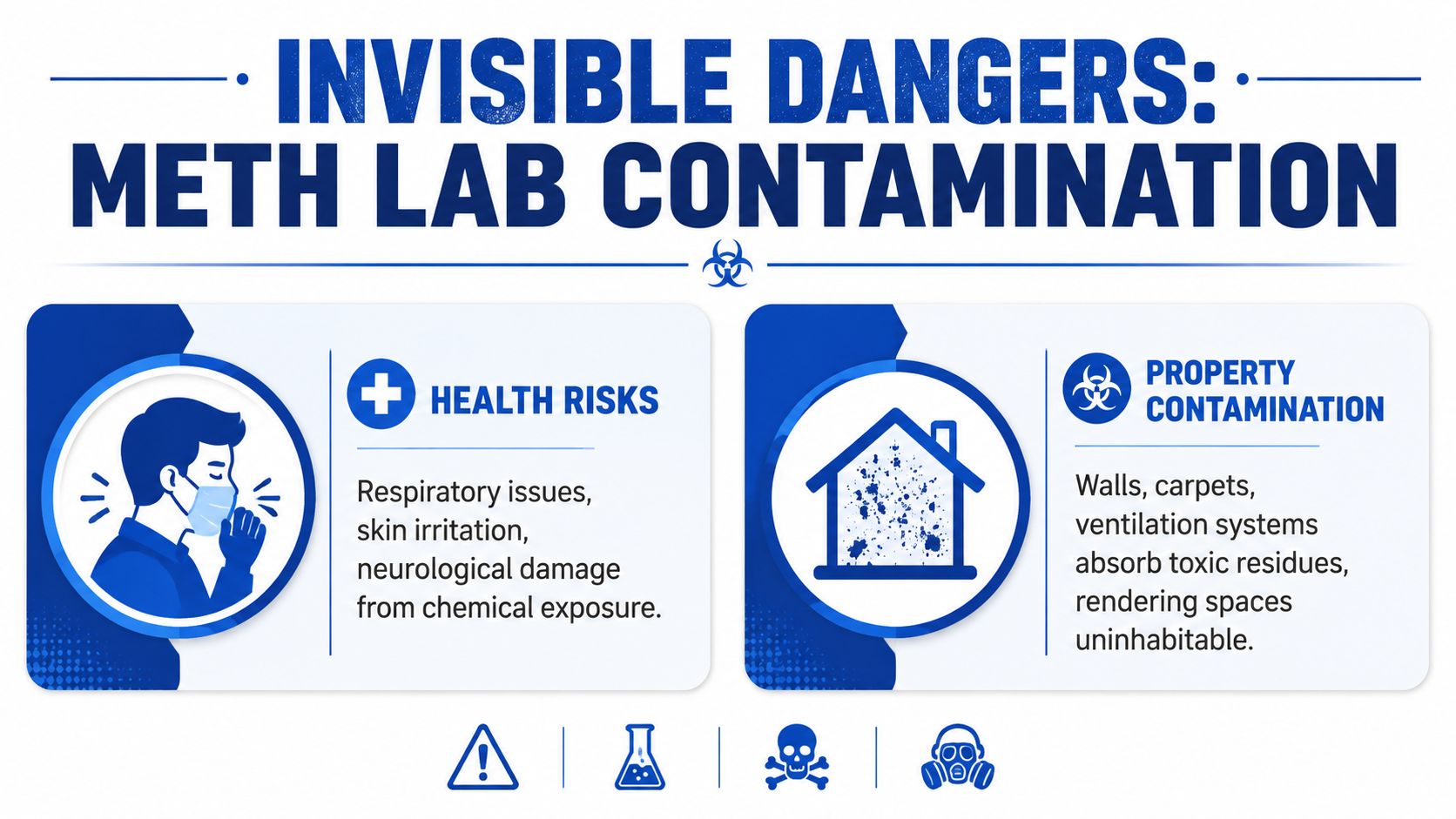
Chemical residue doesn't respect the edge of a table. It can spread onto walls, flooring, cabinets, ventilation pathways, stored contents, and adjacent surfaces. In a residential setting, that may mean contamination in bedrooms, hallways, or HVAC-connected spaces. In a commercial or mixed-use building, the concern can widen fast.
This is the same reason professionals treat these scenes as environmental hazards rather than housekeeping problems. If you want a broader view of exposure concerns, the health risks of biohazard exposure and how cleanup experts mitigate them lays out why surface appearance doesn't equal safety.
What exposure can do to people
The health effects vary by the chemicals involved, the amount of residue, ventilation, and how long someone remains in the space. The practical concern is straightforward. Occupants can inhale fumes, absorb contaminants through skin contact, or track residue from one area to another.
Common concerns include:
- Breathing irritation: People may react to lingering chemical contamination with coughing, throat irritation, or respiratory distress.
- Skin and eye contact problems: Residue on surfaces can irritate exposed skin or eyes.
- Neurological concerns: Chemical exposure can affect concentration, coordination, or general well-being.
- Increased vulnerability for children: Young children are more likely to contact contaminated surfaces directly and then put hands or objects in their mouths.
Why former labs are still serious scenes
A property doesn't become safe because the occupants moved out or because law enforcement removed obvious equipment. In many cases, the hidden problem is what remains in porous materials, dust, and hard-to-clean assemblies.
The most dangerous meth lab scene isn't always the one that looks active. It's often the one someone has already tried to make look clean.
That reality changes how owners should respond. You are not deciding whether the room needs tidying. You are deciding whether the building may require hazard assessment, controlled decontamination, and documentation before anyone should re-enter or re-occupy it.
Immediate Steps If You Suspect a Meth Lab
The safest response is simple, and people still get it wrong every day. If you suspect meth production, don't investigate it yourself.
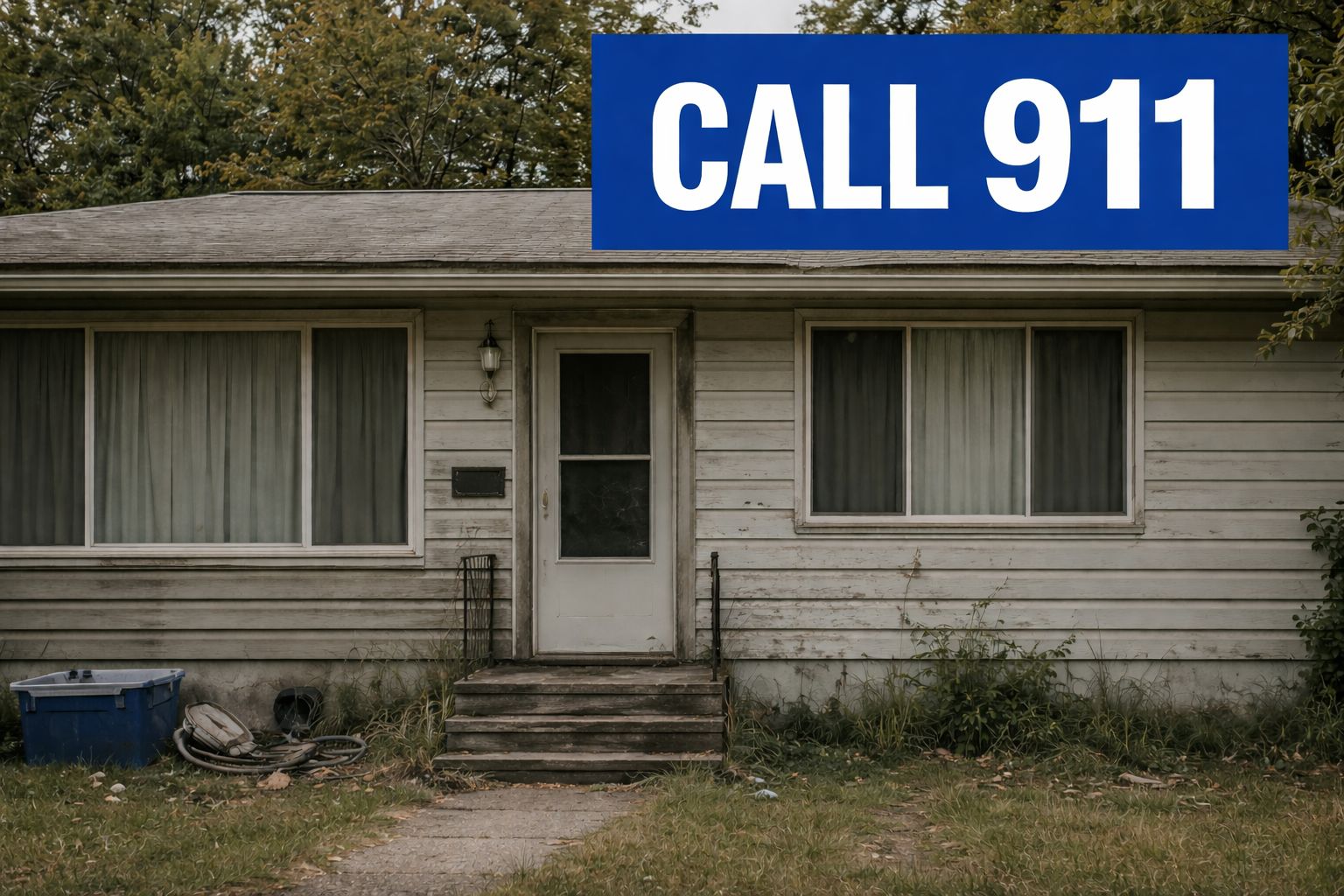
Official U.S. guidance emphasizes that meth labs are identified by a cluster of clues and can be found in places ranging from residences to vehicles. It also warns that contamination can extend beyond the immediate area because waste is often dumped nearby. That's why professional assessment is essential, not optional.
What you should do right away
If you're a homeowner, landlord, manager, neighbor, or staff member, take these actions:
- Leave the area. If you're inside, get out. If you're nearby, create distance.
- Avoid touching anything. Don't open containers, move trash, flip switches, or handle filters, bottles, powders, or stained materials.
- Call law enforcement from a safe location. If the danger feels immediate, call emergency services.
- Keep others out. That includes family members, maintenance crews, contractors, and curious neighbors.
- Document only from a safe distance. If you need to note an address, vehicle description, or visible exterior concern, do it without approaching the scene.
What not to do
The instinct to confirm your suspicion can put you in danger fast.
- Don't confront occupants
- Don't enter to take photos
- Don't try to ventilate the space
- Don't start cleaning
- Don't assume the danger is over because the room looks inactive
This video gives a useful general safety reminder about why suspected drug lab scenes require distance and official response, not amateur inspection.
Leave detection and enforcement to law enforcement. Leave hazard assessment and decontamination to trained remediation professionals.
That division matters. Entering the space can expose you to chemicals, interfere with evidence, and increase the number of people who may need medical evaluation or decontamination afterward.
Why Professional Meth Lab Cleanup Is Non-Negotiable
After law enforcement secures a meth lab, the scene usually isn't ready for occupancy, repairs, or turnover. It's still a hazardous environment until trained remediation personnel assess it, remove contaminated materials where needed, decontaminate impacted areas, and verify that the property is safe for the next step.
That's where many owners make an expensive mistake. They call a general cleaning company, a handyman, or an in-house maintenance team. Those people may be capable in their own trades, but meth contamination isn't a janitorial issue. It's a regulated hazardous remediation problem.
What professional cleanup actually involves
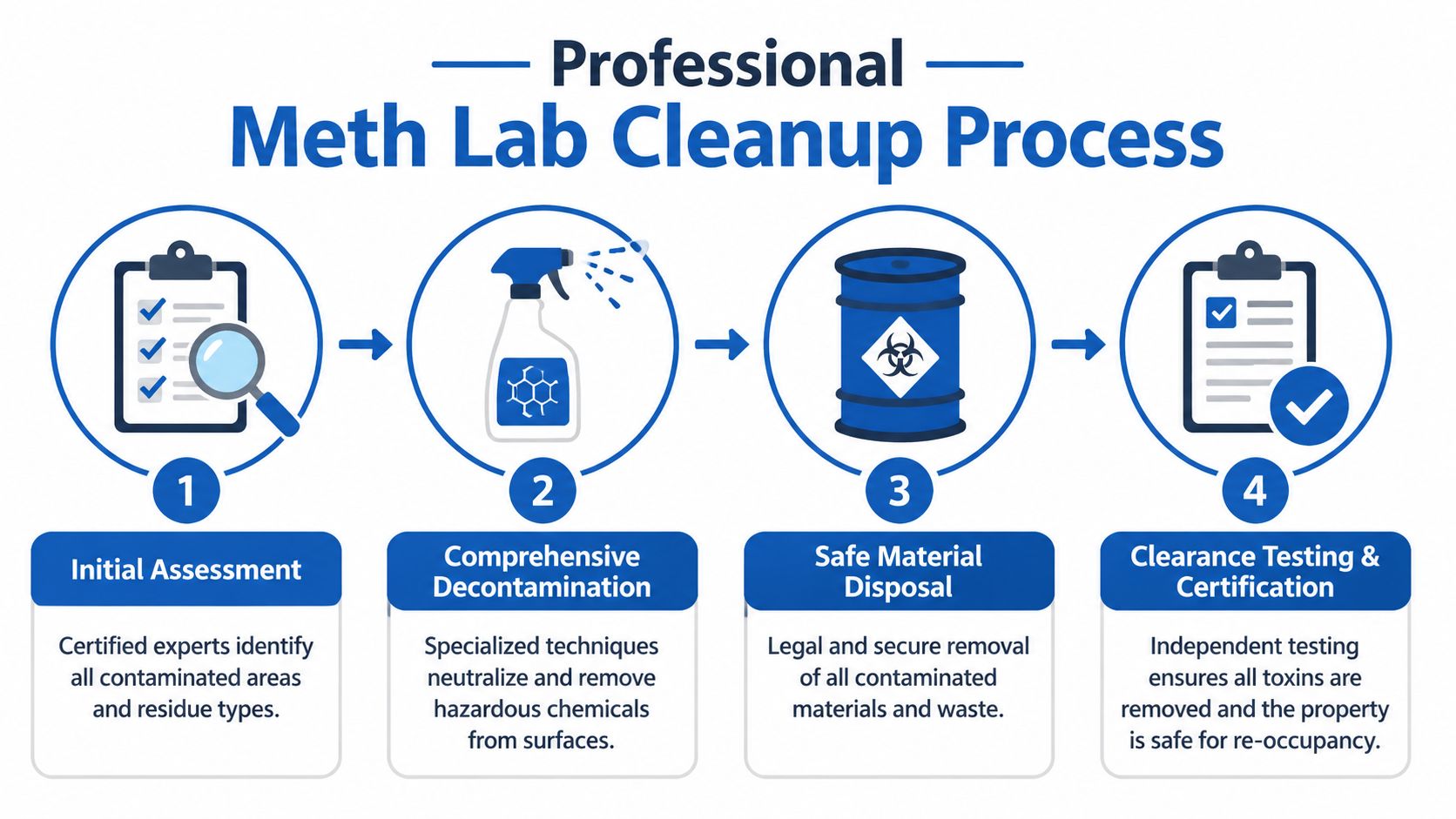
A proper response typically includes several layers of work rather than one surface wipe-down.
| Cleanup stage | Why it matters |
|---|---|
| Initial assessment | Identifies where contamination may have spread and what materials are affected |
| Controlled decontamination | Reduces the chance of spreading residue into clean areas |
| Hazardous material handling and disposal | Prevents unsafe transport, illegal dumping, or accidental exposure |
| Clearance and documentation | Supports safe re-occupancy and shows the property was handled correctly |
The details vary by property type. A detached shed, motel room, apartment unit, warehouse office, and vehicle all present different containment and material-removal problems. That's exactly why cookie-cutter cleanup fails.
Why DIY and standard cleaning don't work
Regular cleaners clean what they can see. Meth remediation has to account for what you can't safely evaluate without training, protective equipment, and a compliant process.
A mop won't solve contamination in porous surfaces. Air freshener won't fix chemical residue. Repainting over a wall doesn't make it safe. Throwing debris in a dumpster can create a new liability instead of closing the old one.
If you want a plain-language explanation of the difference between appearance and actual remediation, the importance of professional biohazard cleanup and why DIY is not the way to go is worth reading.
What property owners should expect from the right provider
A qualified remediation company should approach the scene with discretion, regulatory awareness, and a documented process. That means protecting occupants and neighboring spaces, preventing cross-contamination, managing waste properly, and helping owners understand what can be cleaned, what must be removed, and what proof is needed before re-occupancy.
The best providers also understand the human side of this. Meth lab discoveries often happen in the middle of tenant disputes, family emergencies, criminal investigations, failed real estate transactions, or trauma. Owners don't need theatrics. They need clear risk communication and competent action.
If you're dealing with a suspected or confirmed meth lab, 360 Hazardous Cleanup provides discreet, compliant biohazard and hazmat remediation for homes, rentals, commercial properties, and complex scene conditions. Their team is available around the clock to help you secure the property, understand the next steps, and move toward safe re-occupancy with the professionalism a high-risk scene requires.