The term "trauma scene cleanup" often brings to mind dramatized depictions from television, but the reality is a highly specialized, scientific service dedicated to managing the aftermath of deeply painful events. It is far more than simple cleaning—it is the professional, regulated process of sanitizing, decontaminating, and deodorizing a location where a traumatic incident has occurred.
This service is absolutely essential for safely removing biohazardous materials, such as blood and bodily fluids, which can harbor dangerous pathogens. Attempting this type of cleanup without professional training is not just emotionally distressing; it poses serious health risks to anyone involved and fails to meet legal compliance standards.
Understanding Why Professional Cleanup is Not Optional
When an accident, unattended death, or violent crime occurs, the visible aftermath is often only a fraction of the problem. What remains unseen are the microscopic dangers that standard cleaning products and methods cannot eliminate. Attempting to clean a trauma scene without proper training, equipment, and personal protective gear is a significant risk, as exposure to bloodborne pathogens and incomplete decontamination can lead to long-term health consequences.
The core purpose of professional trauma scene cleanup is to restore a space to a safe, livable condition while protecting everyone from further harm. This is a matter of public health, regulatory compliance, and emotional well-being, not just surface appearances.
More Than Just a Cleaning Service
It’s a common misconception to view trauma remediation as a heavy-duty cleaning job, but this overlooks the critical science behind it. Certified technicians are not just wiping down surfaces; they are executing rigid, documented protocols to contain, clean, and disinfect the area, ensuring every biological threat is neutralized according to industry and government standards.
The process is methodical and thorough:
- Containing the Scene: The first and most critical step is to prevent cross-contamination. Professionals immediately isolate the affected area to keep biohazards from spreading to other parts of the property.
- Removing All Biohazards: Every contaminated material—both visible and hidden within porous surfaces—is carefully removed and packaged for compliant disposal.
- Disinfection and Deodorization: Using EPA-approved, hospital-grade disinfectants, technicians eliminate bloodborne pathogens and other dangerous microorganisms.
- Proper Waste Disposal: All biohazardous waste is transported and disposed of according to strict federal and state regulations, a process that cannot be handled through municipal waste systems.
This meticulous work ensures the environment is truly safe again. A huge part of this involves tackling biological matter on different surfaces. While a homeowner might look up tips for things like blood stain removal from carpets, professional remediation handles contamination on a scale that is far more hazardous and complex.
The Compassionate Side of Restoration
Beyond the technical expertise, trauma scene cleanup is a service founded on compassion. Professionals in this field understand they are entering a home or business during a time of incredible grief and shock. Their role is to lift a significant burden, providing families, property managers, and business owners the space to begin the healing process.
By handling the physical restoration with discretion, respect, and empathy, a professional cleanup service delivers more than a clean space. It offers the first real step toward reclaiming peace of mind and making an environment feel safe again.
Ultimately, hiring a professional service is the only responsible choice for safety, legal compliance, and emotional support. Certified technicians possess the correct equipment, training, and mindset to manage these difficult situations correctly. They protect everyone from unseen dangers and the emotional weight of the task, ensuring the restoration is complete—both physically and for the well-being of all affected.
The Professional Remediation Process Step by Step
When facing a traumatic event, understanding what to expect can provide a small but welcome sense of control. Professional trauma scene cleanup is not a haphazard process—it’s a methodical, carefully executed sequence of steps designed to restore a space to a safe condition. From the moment technicians arrive, they follow a strict protocol grounded in safety regulations, scientific principles, and deep respect for the situation.
This is not just about cleaning. It's about systematically eliminating every potential hazard, leaving nothing to chance. The entire goal is to transform a dangerous environment back into a safe, neutral space, allowing you to begin the emotional healing process.
This flowchart gives a high-level overview of the core phases, from identifying biohazards to ensuring the area is completely restored.
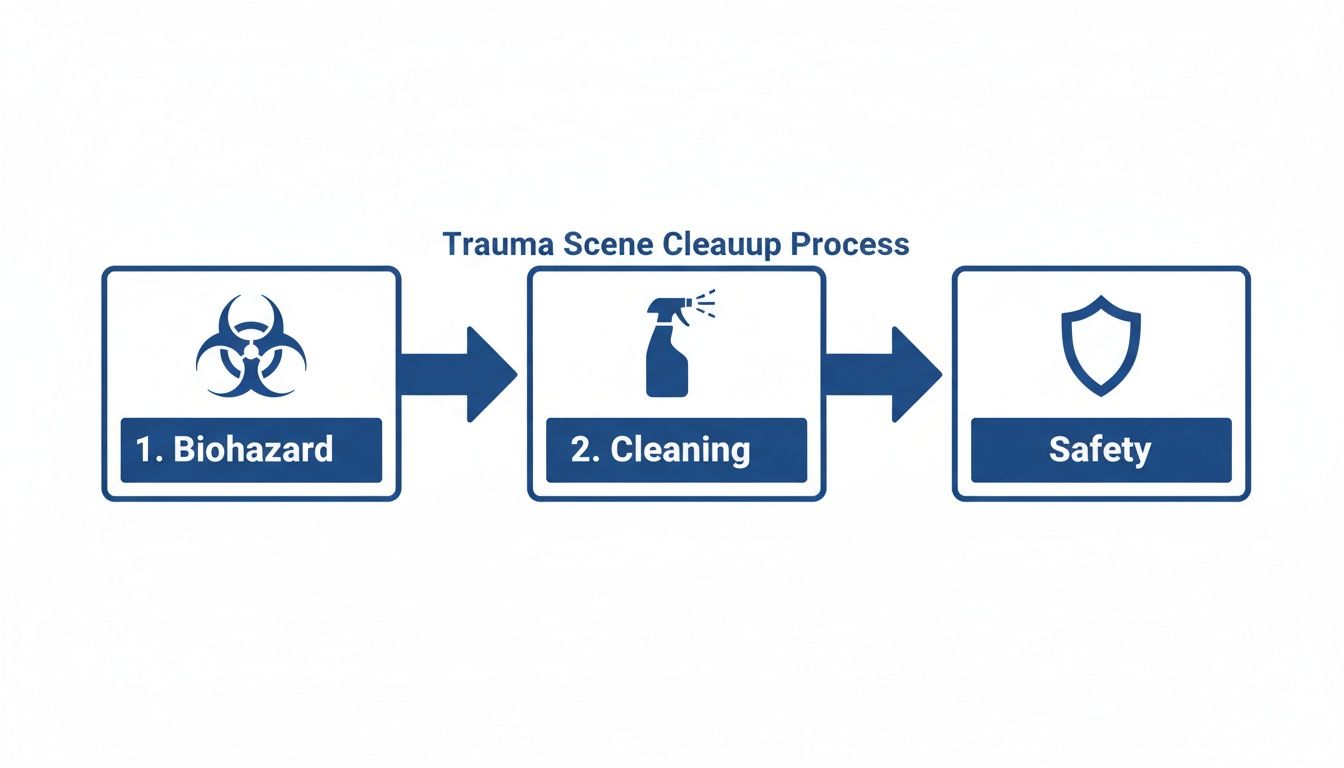
As you can see, the work moves from assessment and removal to deep cleaning and final verification. Every step builds on the last to ensure a thorough and compliant restoration.
Step 1 Assessment and Containment
The first action our team takes on-site is a rapid, detailed assessment. We identify the full scope of the contamination, pinpointing every affected area—both obvious and hidden. We then immediately establish a strict safety perimeter. This isn’t just about caution tape; it’s about creating a fully controlled environment.
Using heavy-grade plastic sheeting and negative air pressure systems, we build a containment zone. This is a critical step that prevents airborne pathogens or contaminants from spreading to other parts of the property, protecting unaffected rooms and ensuring the safety of everyone nearby.
Step 2 Biohazard Removal and Deep Cleaning
With the area secured, the physical work of removing all biological materials begins. This is the most intensive part of any trauma scene cleanup. Our technicians, equipped with specialized personal protective equipment (PPE), meticulously remove every contaminated item. If necessary, this includes structural elements like drywall, flooring, or subflooring that have been compromised.
Once all hazardous materials are gone, the deep cleaning and disinfection phase starts. This is far more advanced than household cleaning.
- Initial Cleaning: First, we clean all surfaces to remove any visible traces of biological matter.
- Disinfection: Next, we apply EPA-registered, hospital-grade disinfectants specifically formulated to kill bloodborne pathogens and other dangerous microorganisms.
- Deodorization: Finally, we use advanced deodorizing agents to completely neutralize any odors, ensuring the space is free from any distressing reminders of the event.
This multi-stage process guarantees that every surface is treated, eliminating visible threats and, more importantly, the microscopic ones that cannot be seen.
The goal of professional remediation is not just to make a room look clean. It’s to render it biologically safe. This requires specialized chemicals and techniques that eliminate pathogens capable of surviving on surfaces for days or even weeks.
Step 3 Waste Disposal and Final Verification
After the cleaning is complete, all removed materials are handled as biohazardous waste. These items cannot simply be thrown in a dumpster. They must be carefully packaged in specially marked, leak-proof containers designed for compliant disposal.
Our team manages this entire process, transporting the waste to a licensed medical waste facility. We handle all documentation and adhere to every strict state and federal regulation, protecting you from any potential liability.
The final step is verification. A supervisor conducts a meticulous inspection, often using ATP (adenosine triphosphate) testing to scientifically confirm that surfaces are free from microorganisms. Only when the area is verified as completely sanitized and safe do we consider the job complete. This provides families and property owners with the confidence they need to re-enter the space.
For a deeper dive into these procedures, you can learn more about the complete biohazard cleanup process in our detailed guide.
Navigating Safety Regulations and Legal Risks
Attempting to clean up a trauma scene on your own is not just an emotional and physical burden—it’s a serious legal and financial risk. These scenes are governed by a complex web of strict federal and state regulations designed to protect public health. This framework is a critical safeguard for preventing the spread of dangerous diseases and ensuring environmental safety.
Ignoring these regulations can lead to significant fines, legal liability, and long-term health problems for anyone entering the area. That’s why hiring a professional trauma scene cleanup company is a critical risk management decision. It shields property owners from legal repercussions while ensuring the space is truly safe for future occupants.
The Role of OSHA and Bloodborne Pathogens
The most important regulations come directly from the Occupational Safety and Health Administration (OSHA). Specifically, OSHA's Bloodborne Pathogens Standard (29 CFR 1910.1030) dictates the exact, non-negotiable procedures for handling materials contaminated with blood and other potentially infectious materials (OPIM).
This standard is not a suggestion—it’s the law for any situation involving occupational exposure to biohazards.
- Required Personal Protective Equipment (PPE): Professionals are required to wear specific gear, including non-porous suits, double-layer gloves, respirators, and full eye protection. This creates a complete barrier against invisible pathogens.
- Mandatory Training: Every technician must complete and document extensive training on bloodborne pathogens, safety protocols, and the proper use of specialized equipment.
- Decontamination Procedures: The standard demands a meticulous cleaning and disinfecting process using EPA-approved, hospital-grade chemicals proven to kill viruses like HIV, Hepatitis B, and Hepatitis C.
There is no room for error with these protocols. A certified company like 360 Hazardous Cleanup operates strictly within these guidelines, ensuring every step taken on your property is fully compliant and documented. For a deeper dive into these crucial rules, you can read our guide to understanding the OSHA guidelines for biohazard cleanup.
DIY Cleanup vs Professional Remediation: A Critical Comparison
It can be tempting to think you can handle a cleanup yourself, but the differences between a DIY attempt and professional remediation are stark. This table breaks down what is truly at stake.
| Aspect | DIY Cleanup Attempt | Professional Trauma Scene Cleanup |
|---|---|---|
| Safety Gear | Relies on store-bought gloves, masks, and household cleaners. Offers minimal to no protection against microscopic pathogens. | Uses certified, full-body PPE (hazmat suits, respirators, double gloves) to prevent any exposure. |
| Cleaning Agents | Standard bleach and disinfectants, which are often ineffective against resilient biohazards and can miss hidden contamination. | Employs EPA-registered, hospital-grade virucides and specialized chemicals designed to completely eradicate pathogens. |
| Waste Disposal | Illegally disposes of contaminated materials in regular trash, posing a public health risk and violating the law. | Follows strict federal and state laws for packaging, transporting, and destroying biohazardous waste at licensed facilities. |
| Legal Compliance | Almost always non-compliant with OSHA and EPA regulations, opening the property owner to severe fines and lawsuits. | Guarantees full compliance with all regulations, providing a chain of custody for waste and complete documentation. |
| Effectiveness | Visually clean at best. Fails to eliminate invisible biohazards, leading to persistent odors and long-term health risks. | Ensures the area is biologically safe, odor-free, and legally compliant, restoring the property to a habitable state. |
The takeaway is clear: the risks of DIY cleanup far outweigh any perceived savings. Professional remediation is the only way to ensure the job is done safely, legally, and completely.
EPA Rules for Biohazardous Waste Disposal
Beyond cleaning the scene, disposing of contaminated materials is another heavily regulated aspect of the job. You cannot simply toss items exposed to biohazards into a dumpster. The Environmental Protection Agency (EPA) and state health departments have precise rules for how biohazardous waste must be handled, transported, and ultimately destroyed.
This regulated medical waste must be:
- Segregated from other trash right at the scene.
- Placed inside designated, leak-proof, and puncture-resistant containers.
- Labeled with the universal biohazard symbol.
- Transported by a licensed hauler to a specialized disposal facility for incineration.
When you partner with a professional remediation company, you transfer this entire legal responsibility to them. A certified team ensures every piece of contaminated material is disposed of according to the law, providing you with a full chain of custody and protecting you from any future liability.
Hiring a certified professional is the only way to guarantee that a trauma scene is not just visually clean but legally compliant and biologically safe. It's an investment in certainty and security during a time of immense uncertainty.
Mitigating Liability with Professional Remediation
The consequences of an improper cleanup can be devastating. If a future tenant, employee, or visitor becomes ill from lingering pathogens, the property owner could face catastrophic lawsuits. The trauma scene cleanup industry exists because these risks are very real, and the standards for eliminating them are incredibly high.
Awareness of these risks is growing, as reflected in the market. The biohazard and crime scene cleanup industry was recently valued at $3.46 billion USD and is projected to grow to $5.5 billion by 2035. This growth is fueled by a greater public understanding of hygiene, safety, and the absolute need to follow strict OSHA and EPA regulations.
Ultimately, choosing a professional service like 360 Hazardous Cleanup is the only definitive way to mitigate risk. It ensures the job is done right, all regulations are met, and your legal and financial interests are protected from start to finish.
Understanding Timelines, Costs, and Insurance
After a traumatic event, practical questions quickly surface. How long will this take? What will it cost? These are completely normal and valid concerns, especially during a time of incredible stress.
While no two trauma scenes are the same, the answers depend on a few key variables. Most importantly, you probably don't have to face the financial burden alone. Many people are relieved to learn that professional biohazard remediation is often covered by property insurance. A compassionate, expert cleanup company will not only handle the physical work but also guide you through the financial process.

Factors That Influence Timelines and Costs
The scope of work is the primary driver of the schedule and the final cost. A professional team will always assess the scene first to provide a clear, transparent estimate based on the specific circumstances.
Key factors include:
- Size of the Affected Area: A small, contained incident in a single room is very different from a situation that has spread across multiple rooms or floors.
- Nature of the Incident: The severity of the event plays a huge role. A scene with minimal biological material requires a different approach than one with widespread contamination that has seeped into the building’s structure.
- Affected Materials: Cleaning hard, non-porous surfaces like tile is straightforward. However, when porous materials like carpet, drywall, or unfinished wood are involved, they can absorb biohazards, requiring more intensive work—and sometimes, complete removal is the only safe option.
The Role of Property Insurance in Covering Cleanup
This is a critical point that brings immense relief to families and property managers. Most standard homeowners and commercial property insurance policies provide coverage for professional trauma scene cleanup.
This is because these situations are typically classified as property damage. The costs to safely decontaminate and restore your property to a livable, pre-incident condition are often covered under your policy.
However, filing a complex claim while also dealing with grief is overwhelming. This is where a true professional partner excels. They don't just clean; they become your advocate.
A reputable biohazard remediation company will manage the entire insurance claims process on your behalf. This includes detailed documentation, direct communication with your adjuster, and transparent invoicing to ensure the claim is processed smoothly and efficiently.
This support is designed to take the administrative and financial weight off your shoulders, allowing you to focus on what matters most—your family or your business—knowing the details are in expert hands.
How a Professional Partner Manages the Insurance Process
An experienced cleanup provider knows exactly what insurance companies need to approve a biohazard remediation claim. They manage every step with precision.
Here’s a look at what that process typically involves:
- Initial Assessment and Documentation: The team documents everything before starting work. They take extensive photos, create detailed notes, and map out a precise scope of work that justifies the remediation plan.
- Direct Communication with the Insurer: They speak the insurance adjuster's language. Your cleanup provider will submit all required paperwork and explain the necessary protocols directly to your carrier, preventing miscommunication.
- Transparent Invoicing: Using industry-standard pricing and specialized software, they create line-item invoices that clearly detail every cost. This transparency helps get claims approved faster.
- Advocacy for You: If the insurer has questions or pushes back on a necessary step, the remediation company is in your corner, advocating to ensure all work required for a safe restoration is covered by your policy.
This comprehensive support is invaluable. It helps prevent surprise out-of-pocket costs and ensures the financial part of the recovery is handled correctly. To learn more about this, you can read about how 360 Hazardous Cleanup helps navigate insurance claims and gives clients confidence during a difficult time.
Finding the Right Partner: How to Choose a Trauma Scene Cleanup Provider
Choosing the right company for a trauma scene cleanup is one of the most critical decisions you will make during an incredibly challenging time. This isn't just about cleaning; it's about entrusting a team with the safety and restoration of your property. They must be both technically skilled and deeply compassionate. A true professional operates with precision, empathy, and total discretion, ensuring the entire process is handled with the respect you and your family deserve.
Making a careful, informed choice is the best way to protect your family, employees, or tenants from further physical and emotional distress. The right team will not just restore the space—they will provide a sense of security and support when you need it most.

The Non-Negotiables: Core Technical Qualifications
Before hiring anyone, you must verify they meet the absolute minimum industry standards. Think of these qualifications as the foundation for safe and effective trauma scene cleanup. They are what separate true professionals from untrained operators who could put you at risk.
Your checklist should have these three items at the very top:
- Proper Licensing and Insurance: The company must hold all appropriate local and state licenses to operate legally. More importantly, they need specific insurance policies, including general liability, workers' compensation, and—this is crucial—contractor’s pollution liability to cover any biohazard-related incidents.
- Industry-Recognized Certifications: Ask if their technicians are certified by the IICRC (Institute of Inspection, Cleaning and Restoration Certification). This is the gold standard in our industry and demonstrates formal training in the correct protocols for biohazard remediation.
- OSHA and EPA Compliance: A reputable company will be upfront about its strict adherence to OSHA’s Bloodborne Pathogens standard and EPA regulations for disposing of biohazardous waste. This isn't just red tape; it's your guarantee that they are following the law and keeping everyone safe.
As you look at different companies, be sure to review their professional service offerings to confirm they have direct experience with trauma scenes. The demand for these skills is growing fast. The professional crime scene cleanup market, a key part of the broader trauma cleanup field, was valued at $62.9 million USD and is expected to hit $76.5 million by 2031. This growth is a direct result of more awareness around workplace safety and biohazard risks, highlighting just how important it is to hire certified, professional teams.
The Human Side: Why Compassion and Communication Matter
Technical skills are only half the equation. The human qualities of a provider are just as vital, especially when you are inviting them into your life during a moment of vulnerability. The team's ability to act with empathy, respect, and discretion can make an enormous difference in your experience.
A truly professional trauma scene cleanup company understands that their job is not just about decontaminating a space—it’s about lifting a burden. They should communicate clearly, answer all questions patiently, and treat your property and privacy with the utmost respect.
Look for a company that makes these compassionate practices a priority:
- Clear, Simple Communication: They should be able to walk you through the process, timeline, and costs without using confusing jargon. You should feel comfortable asking anything.
- Discretion and Privacy: True professionals will offer to use unmarked vehicles and will maintain strict confidentiality to protect your family’s privacy during a difficult time.
- Empathy and Respect: The crew should be sensitive to what you're going through, working efficiently and respectfully to minimize any further disruption to your life.
Choosing the right provider is a major step in the recovery process. Our guide on what to consider when choosing a biohazard cleanup company offers more tips to help you make a confident decision. By focusing on both proven qualifications and compassionate service, you can find a partner who will handle the situation with the professionalism and care it demands.
Common Questions About Trauma Scene Cleanup
In the midst of a crisis, your mind races with questions. This is completely normal. When overwhelmed by stress and grief, getting clear, straightforward answers can be a small but powerful step toward finding your footing again.
This section is here to address the most pressing concerns we hear from families, property managers, and business owners. Our goal is to cut through the confusion and provide the clarity you need to move forward.
Is Trauma Scene Cleanup Covered by My Insurance?
This is usually the first question people ask, and for good reason. The answer almost always brings a wave of relief: in the vast majority of situations, yes. Most standard homeowner's, commercial property, and even auto insurance policies cover professional trauma scene cleanup.
From an insurance perspective, the presence of biohazardous materials is considered property damage. Your policy is designed to restore your property to its original, safe condition, and that includes professional decontamination.
A reputable cleanup company does more than just the physical work; they become your advocate. They should handle the entire insurance process for you, which includes:
- Detailed Photo Documentation: They will take extensive photos before touching anything, creating a clear record to justify the necessary work.
- Direct Communication with Your Adjuster: They submit all paperwork and speak directly with the insurance company, explaining the technical requirements so you don’t have to.
- Transparent, Itemized Invoicing: They use industry-standard pricing software to create a detailed invoice that insurance companies understand, which helps get the claim approved faster.
This hands-on claims management takes a huge administrative weight off your shoulders at a time when you can least afford another burden.
How Quickly Can You Respond to a Cleanup Call?
Biohazard emergencies cannot be put on hold. The longer a scene remains unaddressed, the higher the risk of contamination spreading and the more extensive the damage becomes. That is why 24/7 availability and rapid response are non-negotiable for a professional trauma cleanup provider.
A qualified team understands this urgency. They are always on standby, ready to dispatch technicians at a moment's notice. As soon as law enforcement or the coroner officially releases the scene, a professional crew can often be on-site within hours to start their assessment and set up containment. This immediate action is crucial for protecting the property and preventing further emotional trauma for everyone involved.
What Happens to the Items Removed from the Scene?
It's natural to wonder about personal belongings and other materials that must be removed. Anything contaminated with biohazardous material cannot simply be thrown in a dumpster. Doing so is not only illegal under strict federal and state laws but also poses a serious public health risk.
Instead, every single item that cannot be salvaged is treated as regulated medical waste. The process is meticulous and legally required:
- All contaminated materials are carefully packaged into special, leak-proof, puncture-resistant containers.
- These containers are then clearly labeled with the universal biohazard symbol.
- A licensed biohazardous waste transporter takes the materials from the property to a specialized disposal facility.
- At the facility, the waste is completely destroyed, usually through incineration, following all EPA regulations.
This strict chain of custody guarantees that all hazardous materials are disposed of safely and legally. It protects the community and ensures you have no future liability. The growing awareness of these safety protocols is a key reason the trauma cleaning market is projected to grow at a 6.6% CAGR from 2025 to 2031.
Is the Area Safe to Enter After the Cleanup Is Done?
The entire purpose of a professional cleanup is to return a space to a condition that isn’t just visibly clean—it must be biologically safe. A reputable company will never call a job "done" until they can prove the area is 100% safe to re-enter.
To do this, the final step is always post-remediation verification. This isn’t just a quick look-around; it’s a scientific confirmation that the disinfection was successful. Technicians often use tools for ATP (adenosine triphosphate) testing, which can detect any remaining microscopic organic material on a surface.
A professional cleanup isn’t complete until it’s verified. Only after testing confirms that all biohazards have been eradicated will a certified provider declare the area safe, giving you the documented assurance you need to return.
This final quality check provides true peace of mind. It is the ultimate sign that you chose a provider deeply committed to your health and safety. For even more detailed answers, you can check out our complete guide covering frequently asked questions about biohazard cleanup.