When a property is affected by tear gas, the immediate thought may be to open windows and let the space air out. However, this is a dangerous misconception. Effective tear gas cleanup is a meticulous, professional process designed to completely remove hazardous chemical residues that settle on every surface. These invisible particles can pose serious health risks long after the initial odor has faded, making certified, professional remediation essential for ensuring the safety of a home or business.
The Invisible Threat of Tear Gas Residue
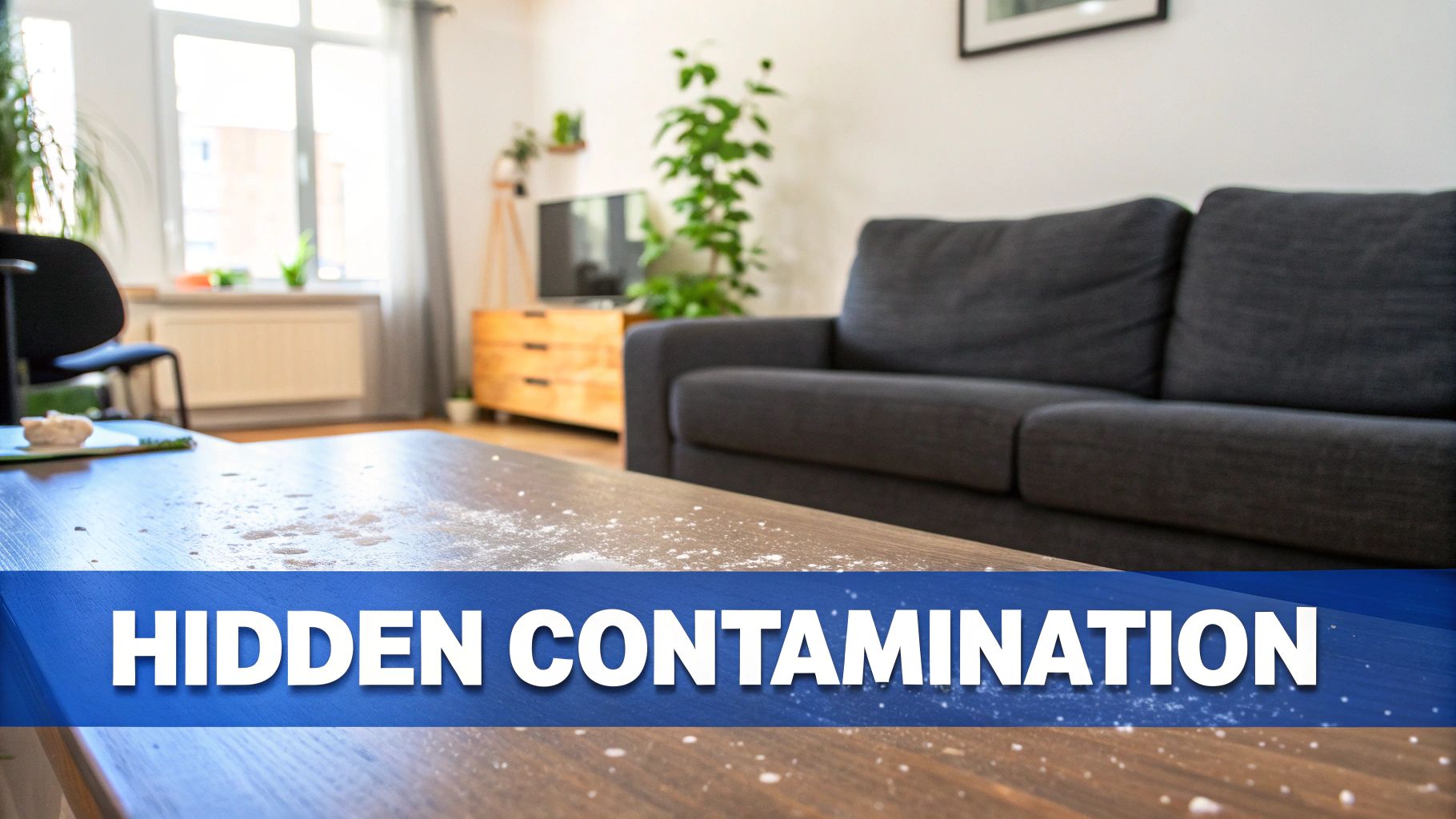
During a tear gas deployment, the immediate, painful effects are overwhelming. Once the visible cloud dissipates and the air seems clear, it is easy to assume the danger has passed. The reality is that the most persistent threat is the one that cannot be seen.
Tear gas is not a true "gas" that simply evaporates. It is a chemical agent—typically a fine powder or an oily resin—dispersed as an aerosol. Once deployed, these microscopic particles settle everywhere, from carpets and furniture to walls and deep within ventilation systems.
A Contaminant That Spreads Easily
The pervasive nature of tear gas residue can be compared to glitter. A small spill in one area can seem contained, but for weeks, particles continue to appear everywhere. Tear gas particles act similarly, but with far more serious health consequences.
Each time a person walks through a contaminated room or the HVAC system activates, these particles are disturbed and re-aerosolized into the air. This renews the exposure risk and creates a cycle of harm, transforming a property into an ongoing health hazard. The dangers of these airborne risks in biohazard environments are significant and demand a professional response.
A critical mistake is assuming the danger is over when the air clears. In reality, the hazardous particulate matter has simply settled, waiting to be disturbed and re-aerosolized, which can prolong health risks for weeks or even months.
The True Cost of Lingering Residue
Leaving tear gas residue unaddressed can lead to severe consequences for both the health of occupants and the property itself. Individuals may suffer from persistent respiratory irritation, skin rashes, and burning eyes long after the initial incident.
To properly assess and mitigate these dangers, professionals rely on specialized equipment. For instance, using a certified industrial indoor air quality monitor is crucial for detecting the concentration of harmful particulates still present. This is why professional tear gas cleanup is not just a recommendation—it is an essential step to restore a building to a certifiably safe condition. Only a trained remediation team has the correct protocols, equipment, and expertise to locate, neutralize, and completely remove this invisible threat.
Understanding the Health Risks of Tear Gas Agents
To effectively manage tear gas cleanup, it is crucial to understand the nature of the contaminants. The term "tear gas" is a misnomer, as it is not a true gas that dissipates. It is a powerful chemical agent, typically a fine crystalline powder like CS gas or an oily substance like OC (pepper spray), that is dispersed as an aerosol.
This physical form is precisely what makes it a persistent problem. These tiny particles do not simply float away; they settle on and aggressively adhere to any surface they contact, embedding themselves deep into porous materials like drywall, carpets, furniture, and HVAC ductwork.
More Than Just a Temporary Irritant
While the immediate, painful effects of tear gas are well-known, the lasting danger comes from the chemical residue it leaves behind. Ongoing exposure to these lingering particles can cause a range of serious and even chronic health problems, turning a home or business into a long-term hazard.
Attempting to clean this residue without proper training and equipment is dangerous. Standard cleaning methods can easily disturb these toxic particles and re-aerosolize them. This re-exposure can make a hazardous situation significantly worse and prolong health risks for everyone in the building.
The most significant mistake in tear gas cleanup is underestimating the tenacity of these chemical agents. What begins as a fine powder can be repeatedly disturbed, re-contaminating the air and leading to chronic exposure that poses serious health threats, especially to vulnerable individuals.
The Sobering Scale of Contamination
The use of tear gas is a widespread issue, making professional cleanup a global necessity. Since 2015, over 119,000 people worldwide have been injured by tear gas and similar chemical irritants during protests, highlighting how frequently these agents are deployed.
There are verified incidents across more than 115 countries where homes, businesses, and even medical facilities have been contaminated. With North America holding a 38.5% share of the market, the frequent use of these agents in civil unrest often creates complex biohazard scenes where chemical residue mixes with blood and other bodily fluids, demanding a specialized, expert response. The ACLU provides a deep dive into the global scope and regulation of these agents.
Who Is Most at Risk?
While prolonged exposure to tear gas residue is unsafe for anyone, certain individuals are far more vulnerable to severe health complications. These microscopic chemical particles can trigger extreme reactions and cause lasting harm in sensitive populations.
- Children and Infants: Their small, developing respiratory systems are incredibly fragile, making them susceptible to severe lung damage from inhaling the particulates.
- The Elderly: Pre-existing health conditions, especially those related to the heart or lungs, can be dangerously aggravated by exposure to chemical irritants.
- Individuals with Pre-existing Conditions: For people with asthma, COPD, or other respiratory illnesses, breathing in re-aerosolized tear gas can trigger a life-threatening attack.
- Pregnant Women: The risks of exposure to a developing fetus are often unknown, making complete and thorough decontamination an absolute necessity for safety.
These heightened dangers underscore why professional remediation is the only responsible course of action. To better understand the specific chemicals involved, the following is a breakdown of the most common agents.
Common Tear Gas Agents and Their Effects
The table below outlines the primary chemical agents used in tear gas, their physical state as residue, and the health effects they can cause.
| Chemical Agent | Common Name | Physical State (Residue) | Primary Health Effects |
|---|---|---|---|
| 2-chlorobenzalmalononitrile | CS Gas | Fine white crystalline powder | Severe burning in eyes, nose, throat; coughing; skin irritation; disorientation. |
| Oleoresin Capsicum | OC Spray / Pepper Spray | Oily, sticky orange/red resin | Intense burning pain; temporary blindness; respiratory distress; inflammation. |
| Dibenzoxazepine | CR Gas | Crystalline solid, pale yellow powder | Extreme skin pain (especially with water); eye pain; coughing; more potent than CS. |
| Chloroacetophenone | CN Gas | Crystalline solid (similar to sugar) | Severe eye irritation and tearing; skin burning; considered highly toxic and less common now. |
Understanding these agents clarifies why a simple wipe-down is ineffective. A certified team understands the science behind these contaminants and arrives equipped with the proper gear and neutralizing agents to eliminate them permanently. This expertise is essential for addressing the full range of health risks associated with biohazard exposure and ensuring a property is truly safe. The objective is not just to clean visible surfaces, but to eliminate the invisible threat and provide genuine peace of mind.
Why DIY Cleanup Is a Dangerous Mistake
When your property has been exposed to tear gas, the instinct to clean and restore normalcy is understandable. However, attempting to handle tear gas cleanup yourself is not only ineffective—it is a dangerous mistake that can significantly worsen the problem.
This situation involves more than dust or a simple mess; it involves a potent chemical agent designed to incapacitate. Household cleaners are not formulated to neutralize these compounds. In fact, they may inadvertently reactivate the tear gas particles or create new toxic substances, making the "solution" far worse than the original problem.
Household Cleaners Can Make Things Worse
Attempting to wipe down a surface contaminated with tear gas often just smears the invisible, oily residue, pushing the chemicals deeper into porous materials. This creates a hidden reservoir that can release irritants for months or even years.
- Drywall and Wood: These materials act like sponges, absorbing oily particles and trapping them far below the surface, where they continue to off-gas long after the area appears clean.
- Carpets and Upholstery: The residue becomes ground deep into the fibers. Every time someone walks on the carpet or sits on the couch, these chemical agents are re-aerosolized into the air.
- HVAC Systems: Activating the heating or air conditioning system after contamination is one of the most critical errors. The system will draw in the particles and distribute them throughout the ductwork, contaminating every room in the building and turning a localized issue into a property-wide disaster.
This type of cross-contamination is precisely why professional intervention is required. You can learn more about the dangers of handling these situations independently in our guide on the serious health risks of DIY biohazard cleanup.
The Personal Health Risks Are Severe
Even if it were possible to clean the area effectively, attempting a DIY cleanup without proper protective equipment poses severe personal health risks. This requires more than just rubber gloves and a paper mask from a hardware store.
Professionals use full-face respirators with specific chemical-filtering cartridges, non-porous hazmat suits, and specialized gloves to create a complete barrier against exposure. Anything less is a gamble with your well-being.
Without professional-grade PPE, you directly expose your skin, eyes, and lungs to chemical agents. This can result in severe chemical burns, chronic respiratory damage, and long-term health complications that far outweigh any perceived savings from a DIY attempt.
The use of tear gas is increasingly common worldwide, with no country banning its use on its own citizens. This trend is fueling a projected market growth to USD 1.87 billion by 2030, indicating how frequently properties face this contamination issue. As deployment technology advances, property managers and homeowners are left to manage the increasingly complex contamination to avoid liability.
The science is clear: tear gas residue is a hazardous material that cannot be safely removed with household supplies. The only way to be certain your property is safe for occupants is to engage certified professionals who possess the training, equipment, and chemical expertise to neutralize the threat completely.
The Professional Remediation Process Explained
Attempting to clean up tear gas independently is dangerous and almost always ineffective. Restoring a property to a safe, habitable state requires a careful, science-driven approach that only certified professionals can provide. This is not a standard deep clean; it is a comprehensive decontamination process designed to locate, neutralize, and remove hazardous chemicals from every part of the affected area.
The remediation process is a multi-step operation where each phase builds on the last to ensure no contamination remains. It begins with safety, containment, and strategic planning long before any cleaning occurs. This methodical approach is the only way to guarantee the complete removal of all harmful residues and provide true peace of mind.
Initial Site Assessment and Safety Planning
The first step our trained technicians take is performing a thorough site assessment. They arrive prepared to determine the extent of the contamination, identify the specific chemical agent used, and map its spread. This involves more than a quick visual inspection. The team identifies "hot spots" and determines how far the residue has traveled, paying close attention to porous materials like carpet and drywall, as well as the HVAC system.
Based on this assessment, they create a detailed remediation plan. This blueprint outlines the specific neutralizing agents required, the appropriate Personal Protective Equipment (PPE) for the crew, and a clear strategy for containing the hazardous materials to prevent any risk of cross-contamination during the cleanup.
Establishing Containment and Negative Air Pressure
Once the plan is finalized, the team establishes a secure containment zone. They seal off the entire affected area from the rest of the building using heavy-duty plastic sheeting and specialized tape, creating an isolated work zone similar to a laboratory environment to prevent hazardous materials from escaping.
To enhance safety, technicians often set up negative air pressure machines. These industrial-strength air scrubbers pull air from inside the contaminated zone through a series of filters, including a High-Efficiency Particulate Air (HEPA) filter. This creates a slight vacuum, ensuring that any microscopic particles disturbed during the cleanup are captured immediately instead of drifting into clean areas of the property.
The use of negative air pressure is a non-negotiable industry standard for any professional biohazard remediation. It is a critical step that actively prevents dangerous particles from becoming airborne again and spreading, protecting both our team and the rest of the building.
The diagram below illustrates why DIY cleaning attempts often worsen the situation, reinforcing the necessity of professional containment.
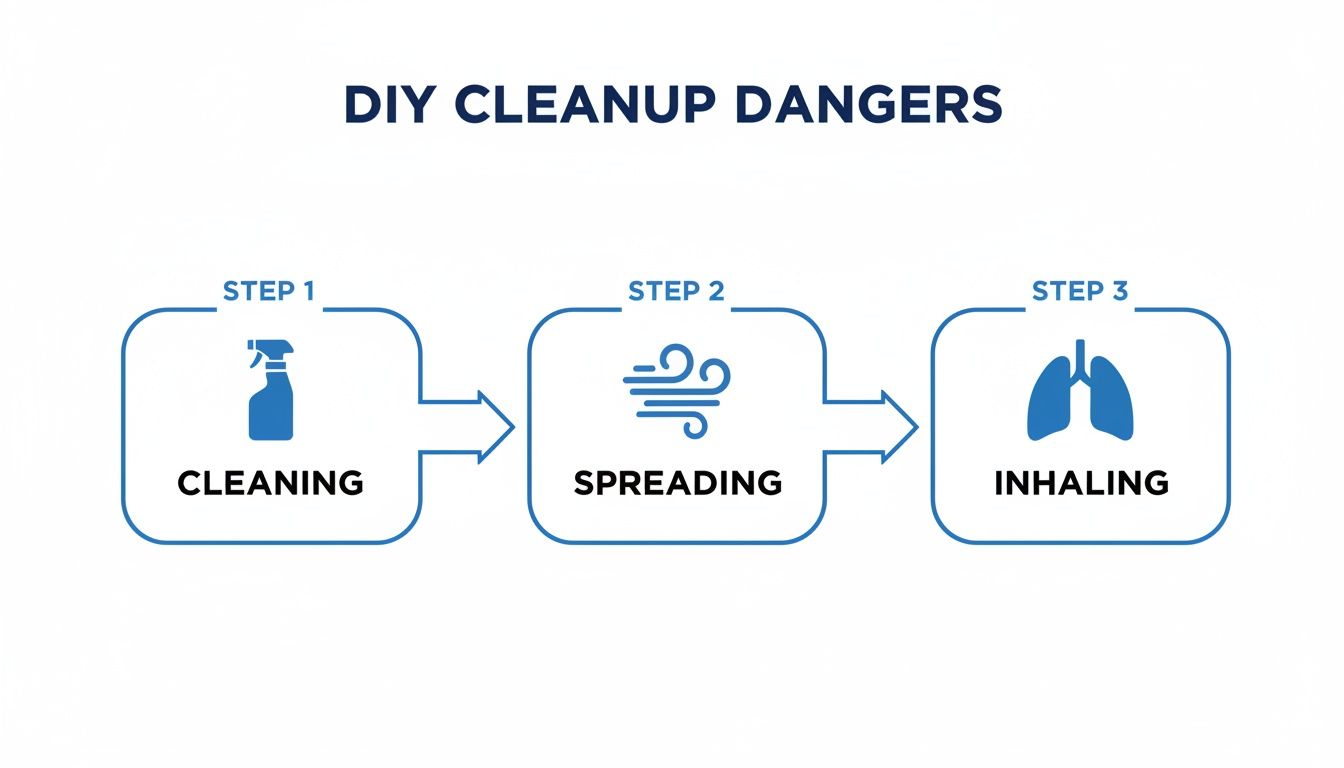
This visual clearly shows the dangerous cycle of spreading and inhaling contaminants that occurs without proper containment and air filtration.
Systematic Decontamination and Final Clearance
With the site fully secured, the decontamination work begins. This process is far more complex than simple surface cleaning.
-
HEPA Vacuuming: The first step is to meticulously vacuum every surface with industrial HEPA vacuums. These machines are engineered to trap microscopic particles—down to 0.3 microns—that a standard vacuum would simply redistribute into the air.
-
Application of Neutralizing Agents: Next, technicians apply specialized chemical solutions designed to break down and neutralize the active compounds in tear gas. Unlike soap and water, which can reactivate some agents or smear the residue, these professional-grade solutions render the chemicals inert and harmless.
-
Detailed Cleaning and Removal: Every surface—walls, ceilings, floors, and fixtures—is then carefully cleaned by hand. For porous items like furniture or carpets, technicians use advanced techniques such as thermal fogging or steam cleaning. In cases of severe saturation, items may need to be properly disposed of as hazardous waste. For a closer look at what this work entails, see our step-by-step guide to the biohazard cleanup process.
-
Air Scrubbing and Final Verification: After all physical cleaning is complete, the air scrubbers continue to run to capture any lingering airborne particles. The final, crucial step is post-remediation testing to verify that the property has been restored to a safe, pre-incident condition, confirming that no hazardous residue remains. This commitment to proven, verified safety is the hallmark of a true professional.
Navigating Insurance Claims for Cleanup
After experiencing a traumatic event like a tear gas incident, navigating the financial aspects of cleanup adds another layer of stress. Fortunately, many commercial and homeowner's insurance policies provide coverage for damages resulting from civil unrest or law enforcement actions.
However, understanding your coverage is only the first step; managing the claims process presents its own challenges. This is where a professional remediation company becomes more than just a cleanup service—they act as an invaluable partner, handling the administrative burden so you can focus on recovery.
The Role of a Professional Remediation Partner
A certified cleanup company does much more than just remove contamination. They serve as your advocate throughout the insurance process. From the initial assessment, a professional team will provide the detailed, itemized documentation that insurance adjusters require to process a claim efficiently and without delays.
This documentation includes:
- Comprehensive Damage Reports: A detailed account outlining the extent of chemical residue spread throughout the building and on personal belongings.
- Transparent Cost Estimates: A clear, line-by-line breakdown of all costs, including labor, equipment, neutralizing agents, and proper hazardous waste disposal.
- Direct Communication: They will liaise with your insurance adjuster, answering technical questions and providing progress updates so you don't have to.
This level of professional support can be the difference between a smooth claims process and a frustrating one. The goal is to eliminate guesswork and provide the insurer with a clear, fact-based assessment of the necessary work. To learn more, see our guide on how 360 Hazardous can help with insurance coverage for biohazard cleanup.
Documenting Your Claim for Success
Thorough documentation is the foundation of any successful insurance claim. Before any cleanup begins, it is vital to take extensive photos and videos of all affected areas. This visual evidence, combined with a police report if available, creates an undeniable record of the incident.
Partnering with a professional remediation company ensures that every step of the cleanup is meticulously documented according to industry standards, providing the proof of loss that insurance carriers need to approve your claim.
Unfortunately, the need for these services is growing. The global tear gas market was valued at USD 1.60 billion in 2025 and is projected to reach USD 2.37 billion by 2033. This growth is driven by an increasing demand for crowd control solutions, which means more properties will face contamination and require specialized tear gas cleanup.
Successfully navigating the aftermath of a tear gas incident almost always involves working with an insurance company. For more guidance, it's helpful to understand the details of mastering your homeowner insurance claim process. By engaging experts from the start, you can be confident that your claim will be handled correctly every step of the way.
How to Choose a Qualified Remediation Specialist

When it is time to restore your property after a tear gas incident, selecting the right company is the most critical decision you will make. This is not a task for a standard cleaning service; it is a complex job that requires a deep understanding of chemical agents, hazardous waste protocols, and public health regulations. The team you choose will directly impact the long-term safety of everyone who enters the building.
Entrusting this work to an unqualified team can lead to a false sense of security while dangerous chemical residues remain. A true professional operates with a level of precision that guarantees a safe, fully restored environment. Making the right choice is about protecting health, ensuring compliance, and achieving genuine peace of mind.
Non-Negotiable Qualifications and Certifications
When vetting potential companies, their credentials should be your first point of inquiry. Any legitimate biohazard remediation specialist will be transparent about their team’s training and qualifications. These certifications are not just formalities; they are proof of a commitment to industry best practices and safety standards.
Look for specialists who hold certifications from nationally recognized organizations. These credentials confirm that technicians have undergone rigorous training to handle hazardous materials and adhere to the strictest safety protocols.
A company’s certifications are a direct reflection of its professionalism. They are proof that the team is trained in the latest safety standards and remediation techniques, ensuring the job is done correctly and safely the first time.
Here are the most critical credentials to verify:
- IICRC Certification: The Institute of Inspection, Cleaning and Restoration Certification (IICRC) is the gold standard in the restoration industry. This certification demonstrates a company's expertise across a wide range of remediation disciplines.
- OSHA HAZWOPER Training: The Occupational Safety and Health Administration’s (OSHA) Hazardous Waste Operations and Emergency Response (HAZWOPER) training is non-negotiable for anyone working with hazardous substances. It ensures the crew knows how to protect themselves—and you—from chemical exposure.
- Comprehensive Insurance: The company must carry specific insurance policies, including general liability and pollution liability. This coverage protects you from any accidental damages or unforeseen issues that may arise during the cleanup.
Key Questions to Ask Potential Providers
Once you have confirmed a company's credentials, the next step is to inquire about their specific process for tear gas cleanup. The way they answer your questions will reveal their expertise and commitment to thoroughness. A true professional will welcome these questions and provide clear, confident answers.
Focus on their methods, safety measures, and client communication practices. Do not hesitate to ask for details—the specifics are what separate a true expert from others.
Before hiring anyone, be sure to ask these questions:
- What specific decontamination protocols do you use for chemical agents like CS gas? Their answer should go beyond "deep cleaning" and include details about using chemical-neutralizing agents, not just standard detergents.
- How do you handle and dispose of contaminated materials and hazardous waste? A qualified specialist will be able to explain their process for following strict federal, state, and local waste disposal regulations.
- Can you provide verifiable references or case studies from previous tear gas remediation projects? Proven experience is the best indicator of competence. This confirms they have the real-world skills to handle your situation.
- What is your commitment to client privacy and discretion? Reputable companies understand the sensitive nature of this work. They should offer discreet services, such as using unmarked vehicles, to protect your privacy.
By asking these critical questions and verifying their credentials, you can confidently choose a specialist who will restore your property safely and professionally, ensuring it is completely free from any lingering hazardous residues.
Frequently Asked Questions About Tear Gas Cleanup
When you are dealing with the aftermath of a tear gas incident, it is natural to have urgent questions. It is a confusing and stressful situation, and property owners are often unsure of the next steps. We have compiled answers to the most common questions to provide the clarity you need to move forward.
How Long Does Tear Gas Residue Remain Dangerous?
This is a critical question we are often asked. Without a professional tear gas cleanup, the chemical agents do not simply disappear. They settle as microscopic oily or crystalline particles that embed themselves deep into porous materials like drywall, carpeting, upholstery, and wood.
These lingering particles can remain a threat for months or even years. The danger is that they can be reactivated by humidity, moisture, or physical disturbance, which re-releases the irritants into the air. It is a persistent health risk that does not resolve on its own.
Can I Go Back Inside to Get My Belongings?
We strongly advise against this. While the desire to retrieve important personal items is understandable, re-entering a contaminated property without professional-grade Personal Protective Equipment (PPE) is extremely risky. The residue is often invisible but can cause severe respiratory distress, skin burns, and serious eye damage.
Upon arrival, a certified remediation team's first priority is to secure the site. They can then guide you through a safe process for retrieving essential items without compromising your health.
Your safety is the absolute priority. Attempting to enter a contaminated zone without the proper respiratory and skin protection can lead to immediate and long-term health complications. Always wait for professional clearance.
What Happens to My Furniture and Other Contaminated Items?
Determining what can be salvaged is a key part of the professional remediation process. Our certified technicians carefully evaluate each item to decide the best course of action.
- Porous Items: Items like couches, mattresses, rugs, and unsealed wood absorb chemical agents most deeply. We inspect them closely. Depending on the level of contamination, many can be restored using specialized deep-cleaning and deodorizing techniques.
- Non-Porous Items: Hard-surface items are generally easier to decontaminate. Materials like metal, glass, or sealed plastics can almost always be fully cleaned and restored.
- Disposal: Unfortunately, some items may be too saturated to be safely salvaged. Anything deemed a total loss must be disposed of as hazardous waste in accordance with strict federal and state regulations to protect public health and the environment.
Will the Tear Gas Cleanup Process Be Discreet?
Absolutely. We understand that this is an incredibly sensitive and private matter. Any reputable, professional cleanup company places the highest priority on client confidentiality.
Our teams arrive in unmarked vehicles and follow strict privacy protocols from start to finish. We are committed to handling your situation with the respect and discretion it deserves. Our goal is to provide a thorough, effective cleanup while minimizing any additional stress on you, your family, or your business.
When you need a compassionate and professional response, 360 Hazardous Cleanup is available 24/7 to restore safety and peace of mind. Contact us for immediate, discreet assistance with tear gas cleanup by visiting https://360haz.com.