The smell of decomposition is unmistakable. Once experienced, this distinct and pervasive odor is never forgotten. It's a powerful and deeply unsettling signal that a biohazardous event has occurred—one that demands immediate, professional attention.
This odor is not merely unpleasant; it is the direct result of the natural breakdown of organic tissue. As bacteria begin this process, they release a complex mixture of gases that saturate the air, creating an environment that is not just foul-smelling but genuinely unsafe. For those facing this situation, understanding the science behind the smell and the associated risks clarifies why specialized, professional remediation is not just an option, but a necessity.
Understanding What Causes The Odor of Decomposition
When confronted with the smell of decomposition, feeling overwhelmed and distressed is a natural response. Understanding the science behind it can help demystify the situation and highlight why this task requires trained professionals. This odor is more than just an unpleasant smell—it is a clear warning sign of an active biohazard scene that poses significant health risks and requires specialized remediation.
The process of human decomposition progresses through several predictable stages, each contributing to the development and intensity of the smell. While this is a natural biological process, it creates significant environmental hazards within a home or property that must be professionally addressed.
The First Signs of Odor
Immediately following a death, the body enters the fresh stage. For the first 24 to 72 hours, there are few external signs of decomposition and typically no significant odor. Internally, however, a process called autolysis is already underway as the body’s own enzymes begin to break down cells and tissues.
It is during the next phase, the bloat stage, that the smell of decomposition becomes truly noticeable and potent.
- Bacterial Proliferation: Anaerobic bacteria, primarily from the digestive tract, begin to multiply rapidly, feeding on the body’s tissues.
- Gas Production: As these bacteria break down tissues, they produce a large volume of gases, including methane, hydrogen sulfide, and other volatile organic compounds.
- Visible Swelling: This internal gas pressure causes the body to swell, which is the hallmark of this stage, typically occurring between three to five days after death.
This is the point where the signature compounds responsible for the foul odor, such as cadaverine and putrescine, are released in large quantities.
The smell of decomposition is more than just an unpleasant experience; it’s a direct warning signal. The presence of these airborne compounds signifies that the environment is contaminated with biological material that can harbor dangerous pathogens.
When Decay Becomes Advanced
As the process advances into the active and advanced decay stages, the odor intensifies dramatically. During active decay, bodily fluids are purged, seeping into and saturating surrounding materials like carpets, subflooring, drywall, and furniture.
These fluids are teeming with bacteria and become a primary source of the persistent, deeply penetrating odor. The smell grows more complex, often described as a sickeningly sweet combination of rotting meat and sharp chemicals. To better understand the complete timeline, you can learn more about the stages of human decomposition in our detailed guide.
Without professional intervention, these odors and the biohazards causing them will not resolve on their own. They will only worsen, posing increasing risks to both health and property over time.
The Science Behind What You Are Smelling
The unmistakable and deeply unsettling smell of decomposition is not a single scent but a complex chemical signature. Understanding the science behind it explains its potency and why professional remediation is the only safe and effective solution.
The odor is the direct result of microorganisms breaking down organic tissue. This process releases a potent, gaseous mixture known as volatile organic compounds (VOCs).
After death, the body’s natural defense systems cease to function. This allows vast colonies of bacteria, especially those in the digestive tract, to multiply unchecked. As they consume tissue for fuel, they release a cocktail of chemical byproducts into the air, creating the smell associated with decomposition.
The Key Chemical Culprits
The most infamous compounds responsible for the odor are two diamines with names that are unsettlingly direct:
- Cadaverine: Produced during the breakdown of the amino acid lysine, it is a major contributor to the foul, ammonia-like smell.
- Putrescine: Formed from the amino acid ornithine, this compound is responsible for the classic putrid, rotting-meat odor.
When combined with other compounds like hydrogen sulfide (rotten eggs) and skatole (a strong fecal odor), the result is the uniquely offensive and pervasive smell of decomposition.
This process is not instantaneous. It often begins with a faintly sweet smell within hours as autolysis starts. However, by day 3-5, the process accelerates, releasing the infamous "death bloom" stench as gases like cadaverine and putrescine accumulate. This rapid escalation is why time is of the essence in addressing such situations.
The visual timeline below illustrates how quickly the odor develops and intensifies.
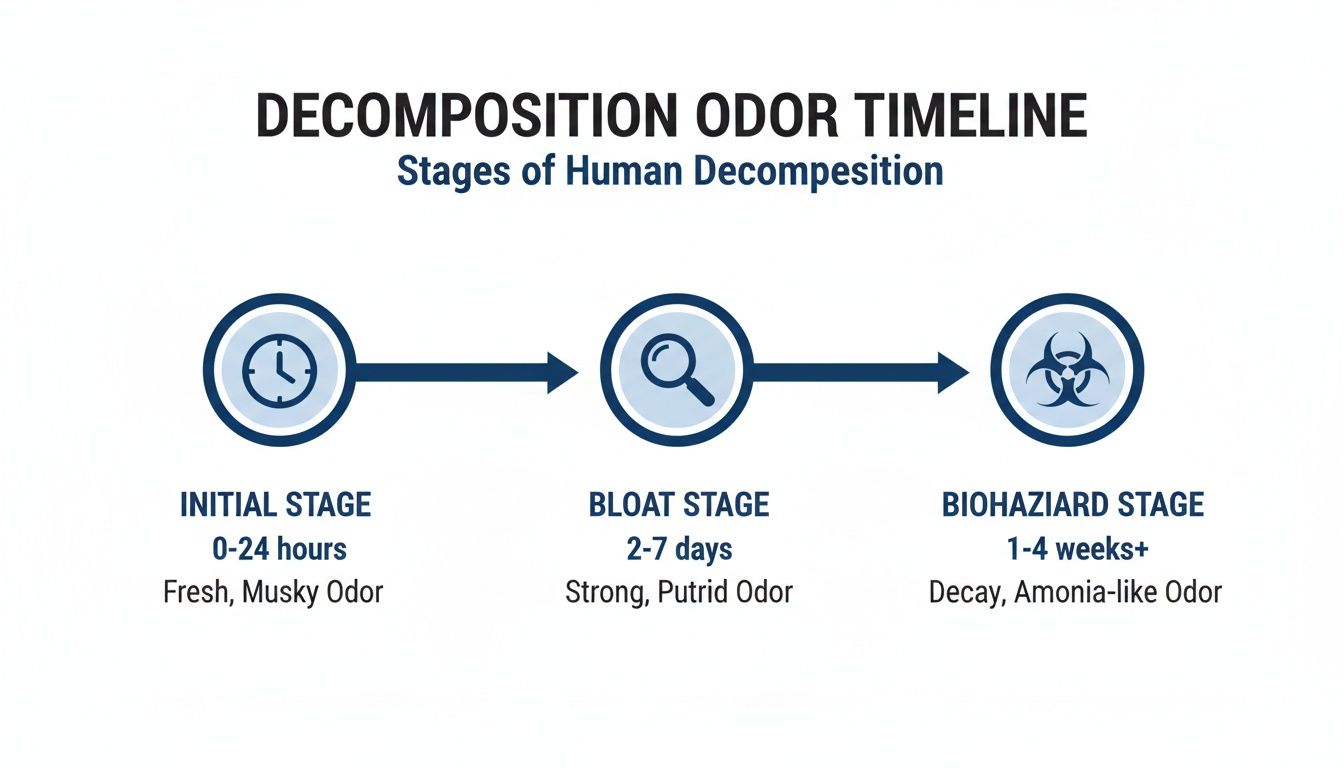
As the timeline shows, the situation progresses from unnoticeable to a severe biohazard in a very short period, highlighting the urgency of professional remediation.
This table outlines the progression of decomposition, connecting the timeline to the specific odors and the biochemical processes creating them.
Timeline Of Decomposition Odors And Their Causes
| Timeframe | Stage Of Decomposition | Primary Chemical Compounds | Odor Description |
|---|---|---|---|
| 0-12 Hours | Autolysis (Fresh) | ATP breakdown, enzymes | Faint, slightly sweet or metallic |
| 1-3 Days | Bloat | Hydrogen sulfide, methane, amines | "Rotten eggs," sour, increasingly foul |
| 3-10 Days | Active Decay | Cadaverine, putrescine, skatole | Overpowering, putrid, "death bloom" |
| 10-25+ Days | Advanced Decay & Dry | Volatile fatty acids, phenols | Cheesy, moldy, earthy, less intense but persistent |
This table demonstrates the clear, predictable progression of the problem. What begins as a subtle issue rapidly evolves into a complex biohazard that demands a scientific solution.
Why The Odor Penetrates Everything
Those volatile organic compounds behave like smoke on a molecular level. They are tiny, airborne particles that travel through the air and settle on every surface. Porous materials are particularly vulnerable, acting like sponges that absorb these odor-causing molecules deep into their structure.
This is precisely why the smell of decomposition becomes trapped. It’s not just in the air; it's absorbed into drywall, wood subflooring, carpeting, insulation, and even concrete. Surface cleaning will not resolve the underlying problem.
Standard household cleaners and air fresheners are entirely inadequate for this task. They may mask the smell for a short time, but they do not eliminate the source molecules embedded within the property. The odor will invariably return, often just as strong. To truly eliminate it, the VOCs themselves must be neutralized. For a deeper dive into managing these chemicals, this guide on how to remove VOCs from your home is a helpful resource.
This is why professional biohazard remediation is essential. Certified technicians utilize specialized, high-strength enzymatic solutions designed to locate and destroy these organic compounds at a molecular level. These treatments are paired with advanced equipment, such as ozone generators and hydroxyl machines, to neutralize the odor at its source permanently.
It is a scientific problem that requires a scientific solution. You can learn more by reading our complete guide to decomposition and the biohazards behind unattended deaths. Only a professional, systematic approach can guarantee the complete removal of the smell and ensure the property is safe and habitable once more.
Health Hazards And Structural Risks You Cannot Ignore
The distinct smell of decomposition is more than a deeply unpleasant odor—it is a critical warning of a dangerous biohazardous environment. It is crucial to understand the very real, tangible risks it represents. This situation is not merely about an offensive smell; it's about significant threats to your health and the structural integrity of the property itself.
Ignoring this warning can lead to severe, long-lasting consequences.
The air in a space where decomposition has occurred is saturated with microscopic threats. As the body breaks down, bacteria and viruses that were once contained are released into the air, creating a serious inhalation risk for anyone who enters without proper protection.
Airborne Pathogens And Biological Contaminants
As decomposition progresses, it releases a host of microorganisms into the air. Breathing this contaminated air without appropriate Personal Protective Equipment (PPE) is a significant health risk.
Potential exposures include:
- Bacteria: Pathogenic bacteria from the body, such as E. coli and Streptococcus, can become airborne and lead to serious respiratory infections or other illnesses if inhaled.
- Viruses: Bloodborne viruses like Hepatitis B and C can remain viable in dried blood and bodily fluids for days or even weeks, posing a risk if these materials are disturbed.
- Mold Spores: The moisture released during decomposition creates an ideal breeding ground for mold, which can grow rapidly on nearby surfaces. Mold releases spores that can trigger severe allergic reactions and respiratory problems.
It's vital to grasp these threats. You can learn more about the specific airborne risks in biohazard environments in our detailed guide. Just as decomposition odors signal danger, other contaminants like mold pose similar risks, which is why understanding indoor air dangers through mold VOC testing is so important.
The biohazard remediation industry has grown in response to these risks, with the unmistakable smell of decomposition serving as a key indicator of bacterial overgrowth and fluid leakage. In fact, coroners and funeral homes report that in 60% of scenes, these odors persist for more than 72 hours, significantly increasing the risk from pathogens like Clostridium perfringens, which can double its presence in warmer climates.
The presence of a decomposition odor is a definitive confirmation that the area is biologically contaminated. Entering without certified training and industrial-grade PPE is a significant gamble with your health.
Lasting Damage To Property And Structures
Beyond the immediate health hazards, the long-term damage to a property can be financially devastating. The same biological processes creating the odor also cause permanent physical damage.
Decomposition fluids are corrosive and seep deep into any porous material they contact, creating a cascade of destruction that standard cleaning products cannot fix.
Common areas that suffer structural contamination include:
- Flooring: Bodily fluids will saturate carpets, padding, and rugs, seeping directly into wood or concrete subfloors. These materials must be professionally removed, not just surface-cleaned.
- Drywall and Insulation: Walls and the insulation within them act like sponges, absorbing odors and fluids. This often leads to mold growth inside wall cavities, necessitating complete replacement.
- HVAC Systems: Airborne particles and odors are drawn into the ventilation system, contaminating ductwork and potentially spreading the biohazard throughout the entire property.
Attempting to paint over stains or scrub with household cleaners is both ineffective and unsafe. The source of the contamination remains locked deep within the structure, where it will continue to release odors and harbor bacteria. Only a certified remediation company possesses the equipment, chemicals, and training to safely remove all contaminated materials and neutralize the threat permanently. Professional intervention is essential to protect the health of future occupants and preserve the property's long-term value.
Why DIY Cleanup Is A Dangerous Mistake
When confronted with the deeply unpleasant smell of decomposition, the first instinct for many property owners is to attempt a cleanup themselves. While this impulse is understandable, it is a critical and dangerous mistake. A do-it-yourself approach to a decomposition scene exposes individuals to severe health risks, potential legal liabilities, and is guaranteed to be ineffective.
Standard household cleaning products are simply not equipped to handle a biohazard of this magnitude. Bleach, ammonia-based cleaners, and scented air fresheners are powerless against the biological material left behind. They cannot eliminate the deeply embedded odor molecules, nor can they neutralize the dangerous pathogens that are always present in such an environment.
Household Products Are Ineffective and Unsafe
Standard cleaners are designed for surface-level spills, not for remediating a complex biohazard. While they might temporarily mask an odor or clean a visible stain, they do nothing to remove the biohazardous source that has seeped into porous materials like subflooring, drywall, and insulation.
This superficial approach creates a false sense of security while leaving a contaminated, hazardous environment behind. The smell of a dead body is a direct warning signal of biological contamination. If the smell persists, so do the health threats.
Attempting to clean a decomposition scene with household products is like trying to extinguish a house fire with a squirt gun. It is the wrong tool for the job and will only allow the underlying danger to spread, causing more damage and increasing health risks.
Furthermore, mixing common cleaners like bleach and ammonia can create toxic chloramine gas, adding another layer of immediate, life-threatening danger to an already hazardous situation.
The Requirement for Professional-Grade Equipment
Certified biohazard remediation is governed by strict regulations from agencies like the Occupational Safety and Health Administration (OSHA) for a reason. These standards exist to protect both technicians and the public from exposure to infectious materials. Adhering to these protocols is not optional—it is a legal and ethical requirement for safe and effective remediation.
Professionals are required to use specific equipment and chemical agents that are unavailable to the public.
- Personal Protective Equipment (PPE): This includes more than a simple mask and gloves. It means full-body biohazard suits, full-face respirators with specialized filters, multiple layers of tested gloves, and sealed footwear to create a complete barrier against contaminated materials.
- EPA-Registered Disinfectants: We utilize hospital-grade, broad-spectrum disinfectants specifically formulated to kill bloodborne pathogens, bacteria, and viruses associated with human remains.
- Advanced Odor Neutralization Technology: To permanently eliminate the odor, the molecules causing it must be destroyed. We use equipment like industrial-grade ozone generators and hydroxyl machines to ensure the smell is permanently gone, not just masked.
Without this specialized equipment and the extensive training required to use it safely, individuals are left completely vulnerable to the hazards present. It is important to understand why DIY biohazard cleanup is a serious health risk and the associated dangers.
Legal Risks and Improper Disposal
Beyond the immediate health risks, there are significant legal consequences to consider. Biohazardous waste—which includes any material contaminated with bodily fluids—cannot be discarded in regular trash. Federal and state laws mandate a strict chain-of-custody for its collection, transport, and final disposal at a licensed medical waste facility.
Improper disposal of these materials can lead to heavy fines and serious legal liability. A certified firm like 360 Hazardous Cleanup handles all complex regulatory paperwork and ensures every step is compliant, protecting you from legal repercussions. Choosing a professional is not just about effective cleanup; it’s about ensuring safety, compliance, and peace of mind during an incredibly difficult time.
What To Expect From Professional Remediation Services
Discovering the source of a decomposition odor is an incredibly distressing experience. The hours and days that follow can feel overwhelming, but you do not have to navigate this situation alone. Engaging a certified biohazard remediation firm like 360 Hazardous Cleanup provides a clear, structured path forward, ensuring the situation is handled with safety, compassion, and professionalism. Knowing what to expect can provide a measure of stability during a challenging time.
Our entire process is designed to be thorough, compliant, and discreet. We understand the sensitivity of these situations and prioritize clear communication and your privacy—we will use unmarked vehicles upon request. Our goal is to restore the environment safely and efficiently, allowing you to focus on what truly matters.
The Initial Assessment and Containment
The moment our certified technicians arrive, their first step is a comprehensive on-site assessment. We evaluate the full extent of the contamination, identify all affected materials, and develop a precise remediation plan. This is far more than a visual inspection; we determine how deeply the smell of a dead body and related biohazards have penetrated porous surfaces like wood, drywall, and concrete.
Once the scope of the job is understood, we immediately establish a critical containment zone. This involves sealing off the affected area from the rest of the property with heavy-duty plastic sheeting and specialized negative air pressure machines. This non-negotiable step prevents cross-contamination, ensuring airborne pathogens and odor-causing molecules are contained and safely filtered from the air.
Meticulous Removal and Cleaning
With the area secured, our team begins the physical removal of all contaminated materials. This painstaking process goes far beyond what any standard cleaning service can accomplish. Any item that has absorbed biohazardous fluids—carpets, furniture, drywall, and even subflooring—must be professionally removed, packaged, and prepared for compliant disposal according to strict regulations.
After removal, we proceed with a multi-stage cleaning and disinfection protocol.
- Initial Cleaning: We apply proprietary, industrial-strength cleaning solutions designed to break down and lift biological matter.
- Broad-Spectrum Disinfection: We then treat all surfaces with EPA-registered, hospital-grade disinfectants proven to eliminate bloodborne pathogens, viruses, and bacteria.
- Final Verification: We use scientific testing methods to confirm that the area is biologically clean and completely safe for re-occupancy.
Every step is meticulously documented to ensure full compliance with state and federal laws. To get a deeper look into our structured approach, you can read our step-by-step guide to the biohazard cleanup process.
Advanced Odor Neutralization Technology
The final and most critical phase is the permanent elimination of the odor. Simply cleaning surfaces is never enough to eradicate the pervasive smell of a dead body, as odor molecules embed themselves deep within structural materials. We deploy advanced technology to destroy these molecules at their source.
Odor neutralization is a scientific process, not a masking effort. Unlike air fresheners that temporarily cover smells, our methods break down the volatile organic compounds responsible for the odor, ensuring it never returns.
This process often involves highly specialized equipment, such as:
- Ozone Generators: These powerful machines fill the space with ozone (O3), a potent oxidizing agent that permeates every crevice to chemically alter odor molecules, rendering them inert.
- Hydroxyl Generators: This technology uses UV light to create hydroxyl radicals—nature's own "detergent"—which are incredibly effective at breaking down and neutralizing airborne organic compounds and pathogens without leaving any residue.
In commercial and multi-unit residential settings, this level of thoroughness is essential. Property managers are seeing a rise in insurance claims related to unattended deaths, and adjusters report that 20-30% of these incidents involve severe odor permeation that requires full removal and disposal of materials like drywall and carpet to meet OSHA and EPA standards.
By combining meticulous physical cleaning with advanced chemical and technological neutralization, we guarantee the complete restoration of the environment. Our compassionate, systematic approach ensures that the property is not just visually clean, but biologically safe and permanently free of any distressing odors.
Answering Your Questions About Decomposition Odor
When you are dealing with the smell of decomposition, you are in a deeply distressing situation and undoubtedly have urgent questions. We have compiled clear, straightforward answers to the most common concerns to provide you with the practical guidance needed to understand the situation and determine the next steps.
How Long Before You Can Smell a Dead Body?
Generally, the odor becomes noticeable within 24 to 48 hours after death. However, this timeline is not absolute and can accelerate dramatically depending on environmental factors.
High heat and humidity act as catalysts for the bacteria that drive decomposition. In a hot, humid room, a distinct smell can develop in less than a day. Conversely, in a cold, dry space, it may take significantly longer for the odor to become apparent.
It is critical to understand that this odor will not simply "air out" or dissipate on its own. The smell is a direct result of ongoing biological breakdown. Until the source is professionally removed and the affected areas are scientifically neutralized, the odor and the biohazards causing it will remain.
This is why professional intervention is crucial. The goal is not to mask a smell, but to eliminate its source.
Can I Use Air Fresheners or Bleach to Get Rid of the Smell?
No, and attempting to do so is dangerous. This is one of the most significant misconceptions. Air fresheners, scented candles, and household sprays only mask the odor temporarily. They do nothing to remove the microscopic, odor-causing particles that have absorbed into surrounding surfaces.
Bleach is also not a viable solution. While it is an effective disinfectant on hard, non-porous surfaces, it is completely ineffective against biohazardous fluids that have seeped into materials such as:
- Wood Subflooring: Fluids penetrate deep into the grain, far beyond the reach of a surface cleaner.
- Drywall and Insulation: These materials act like sponges, trapping moisture, bio-fluids, and contaminants.
- Carpet and Padding: The entire flooring system almost always becomes saturated and must be professionally removed.
Using these products creates a false sense of security while delaying a proper cleanup. This allows bacteria, mold, and pathogens more time to grow and spread, increasing health risks and causing further property damage. True odor elimination requires destroying the molecules at their source with specialized enzymatic treatments and professional equipment.
Is the Smell of a Dead Body Harmful to Breathe?
Yes, the smell is a clear warning sign of a biohazardous environment. While the odor-causing compounds themselves are not typically toxic at the concentrations found in a home, they are a direct indicator that other dangerous airborne contaminants are present.
The air at a decomposition scene contains a mixture of bacteria, viruses, and mold spores released during the breakdown process. Breathing this contaminated air can lead to various health issues, from headaches, nausea, and respiratory irritation to more serious infections, especially for individuals with compromised immune systems.
The smell confirms the presence of infectious biological material in the air. This is precisely why OSHA requires professionals to wear full Personal Protective Equipment (PPE), including respirators, before entering these environments. It is not a safe space for anyone who is unprotected.
Will My Insurance Policy Cover Professional Cleanup Costs?
In the vast majority of cases, the answer is yes. Most homeowner, commercial property, and landlord insurance policies cover professional biohazard remediation services following an unattended death. The situation is typically treated as unexpected property damage, similar to a fire or major water leak.
We understand that navigating an insurance claim is the last thing you want to handle during a time of grief. At 360 Hazardous Cleanup, we take that entire burden off your shoulders by working directly with all major insurance carriers.
Here’s how we manage the process for you:
- Detailed Documentation: We provide the insurer with all necessary information, including comprehensive photos, moisture readings, and a precise scope of the required work.
- Direct Communication: We manage the entire claims process, communicating with adjusters and ensuring all paperwork is filed correctly and promptly.
- Your Advocate: Our team acts as your advocate, working to ensure the services needed to make your property safe again are fully covered, minimizing any out-of-pocket costs for you.
We handle all the logistics so you can focus on what matters most—your family. This expert, compassionate guidance is at the core of our commitment to supporting our clients through life’s most difficult moments.
When facing the overwhelming reality of a biohazard situation, you need a partner you can trust to act with speed, professionalism, and compassion. The certified experts at 360 Hazardous Cleanup are available 24/7 to restore safety and peace of mind. For immediate, discreet assistance, visit us at https://360haz.com.