Properly cleaning a blood spill is more than just wiping a surface until it looks clean; it is a meticulous, multi-step process that demands specific personal protective equipment (PPE) and EPA-registered disinfectants. Without these, you are essentially guessing, which can leave behind invisible biohazards that threaten the health of everyone who enters the space. Attempting this work without professional training creates a serious and unnecessary risk.
Understanding the Hidden Dangers in Blood Spills
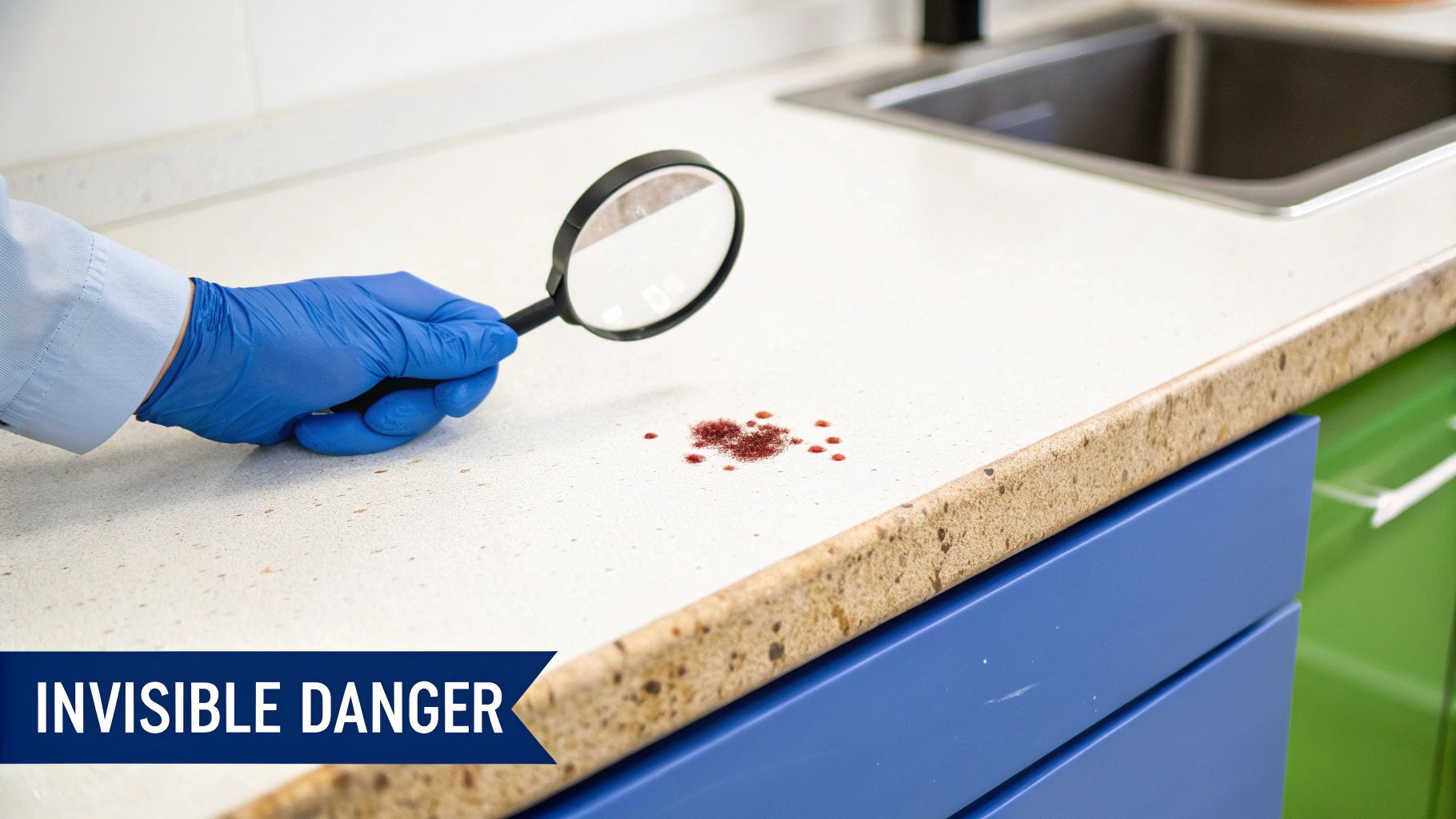
It’s tempting to look at a small blood spill and dismiss the risk. The reality is, what you can't see is far more dangerous than what you can. Every drop of blood must be handled as potentially infectious material because it can contain dangerous bloodborne pathogens.
These microscopic threats are precisely why a strict, proven procedure for cleaning blood spills is critical for safety. This isn't just about aesthetics; it's about systematically neutralizing invisible dangers that pose a real risk to health and well-being.
The Science of Contamination
Bloodborne pathogens are microorganisms, like viruses or bacteria, that are transmitted through human blood and cause disease. The most commonly known are Hepatitis B (HBV), Hepatitis C (HCV), and Human Immunodeficiency Virus (HIV). What makes them so hazardous is their resilience outside the body.
For instance, the HBV virus can survive in dried blood on a surface for up to a week, remaining fully infectious that entire time. HCV can last for several weeks under certain conditions. This means a spill that was improperly cleaned days ago can still pose a direct threat to the next person who touches that surface.
The most dangerous assumption one can make is that a spill is "safe" because the source individual appeared healthy. Many people with chronic infections show no outward symptoms but can easily transmit the disease.
This highlights a non-negotiable principle in professional biohazard remediation: universal precautions. We treat all human blood and certain body fluids as if they are known to be infectious. It's the only way to guarantee safety for our technicians and our clients.
Why Professional Protocols Matter
Every year, hepatitis B chronically affects over 400 million people worldwide, making any blood spill a potential source of infection. Attempting to clean blood without proper knowledge exposes you and others to serious pathogens. Untrained individuals lack the specialized equipment, correct chemical agents, and proven protocols to perform the job safely, which can lead to severe infections or even regulatory penalties.
A professional procedure for cleaning blood spills follows several critical stages that certified technicians are trained to execute perfectly:
- Risk Assessment: We begin by evaluating the spill's size, its location, and the types of materials affected—porous surfaces like carpet present a completely different challenge than non-porous tile.
- Containment: The first action is always to isolate the area. This prevents anyone from accidentally tracking contaminants to other parts of the property.
- Removal: We then safely remove all visible blood and biological material using specialized tools and techniques.
- Disinfection: Next, we apply an EPA-registered, hospital-grade disinfectant. The key here is contact time—the chemical must remain wet on the surface for a specific period to effectively kill pathogens.
- Disposal: Finally, all contaminated materials are packaged, transported, and disposed of as regulated biohazardous waste, in strict compliance with local and federal laws.
If even one of these steps is skipped or performed incorrectly, pathogens can be left behind. This creates a false sense of security while the danger remains present. To learn more, explore our detailed guide on the risks associated with bloodborne pathogens. Understanding these complexities is the first step toward realizing why calling a professional is the safest choice for everyone.
Your First Moves After a Blood Spill Occurs
When you encounter a blood spill, your actions in the first few moments are absolutely critical. Before you consider grabbing a cleaning product, your primary responsibility is to control the scene and prevent the situation from worsening. This initial response establishes the foundation for a safe and effective cleanup.
The very first step is to secure the area. The immediate goal is simple: stop anyone from walking through the spill and tracking biohazards throughout the building. This can be as simple as closing a door or using furniture to block off a hallway. While a "Wet Floor" sign may be better than nothing in a public area, a physical barrier is always preferable for a biohazard.
Once the area is isolated, stand back and assess the situation. How large is the spill—a few drops or a significant pool? What type of surface is involved? A spill on a non-porous tile floor is a different challenge than blood that has soaked into carpet, grout, or unfinished wood, where pathogens can seep in and hide.
Gearing Up With Personal Protective Equipment
Let us be clear: before you take a single step toward the spill, you must be wearing the right Personal Protective Equipment (PPE). This isn't a recommendation; it is a non-negotiable requirement for any safe cleanup procedure. PPE is the only barrier between you and potentially infectious materials. Standard kitchen gloves are not sufficient.
Proper PPE creates a complete barrier. Here is what is absolutely necessary:
- Non-Porous Gloves: Use disposable, medical-grade nitrile gloves. In our professional work, we always double-glove. If the outer glove is compromised, you still have a layer of protection.
- Eye Protection: Goggles or a full-face shield are essential. They protect the mucous membranes in your eyes from splashes, which occur more often than you might think.
- Fluid-Resistant Gown or Coveralls: A disposable gown protects your clothes and skin. For anything more than a minor spill, we use full-body coveralls for complete protection.
- Shoe Covers: Don't forget your feet. Disposable shoe covers prevent you from tracking contaminants out of the area when the work is complete.
- Respiratory Protection: An N95 respirator is a wise precaution, especially if the cleanup process could aerosolize any dried particles.
We cannot stress this enough: one of the most dangerous mistakes people make is thinking they don't need full PPE for a "small" spill. It only takes one tiny, unseen cut on your hand or a microscopic droplet splashing into your eye for a bloodborne pathogen to enter your system. There is no room for compromise on safety.
Making the Right Initial Assessment
Your quick assessment from a safe distance helps determine the scope of the problem. As a rule of thumb, any spill larger than a dinner plate requires professional intervention. The volume of biohazardous material is too significant to handle safely without specialized equipment and training.
You also need to evaluate what the blood has touched. If it has soaked deep into porous materials like carpet padding, subflooring, or unsealed wood, a surface clean is insufficient. Pathogens will have seeped deep inside, making true decontamination impossible with store-bought products. This is the moment to decide whether to call in experts.
To get a clearer picture of what to do in these initial moments, you can review our checklist for what to do after discovering a biohazard. Getting these first steps right—securing the scene, assessing the damage, and equipping yourself with proper PPE—is the foundation of a safe, effective, and responsible cleanup.
The Professional Process for Cleaning and Disinfecting
Once the area is secure and you are fully equipped in the correct PPE, it is time for the actual cleanup. This is not just wiping up a mess; it is a methodical process that professionals use to contain, clean, and disinfect a contaminated area. The goal is to eliminate every trace of biohazardous material, both visible and invisible.
First, manage the active spill. Forget paper towels. Professional technicians use high-quality absorbent materials to soak up the bulk of the liquid. This simple step is crucial—it contains the spill, stops it from spreading, and makes the subsequent cleaning stages far more manageable.
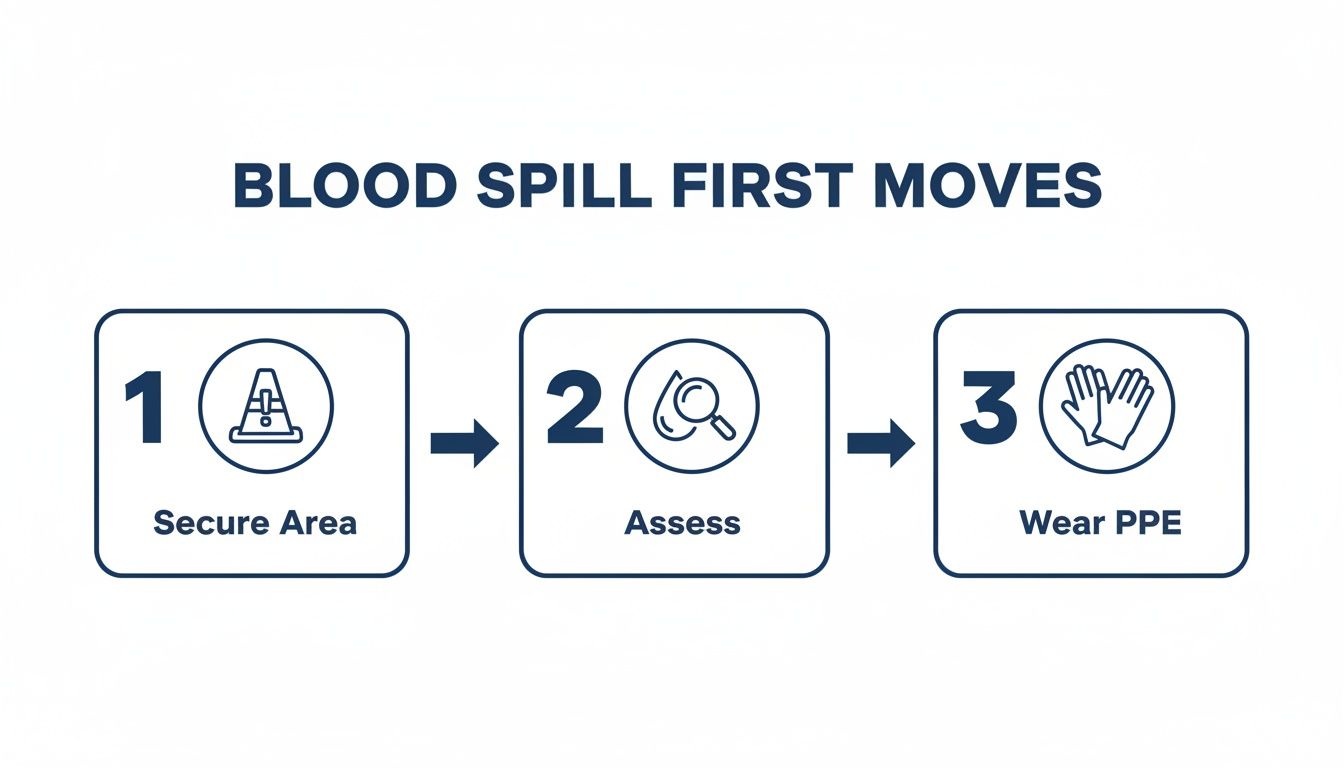
This visual reinforces a critical point: before any contact with the spill, a strict safety protocol—secure the area, assess the risk, and put on PPE—is non-negotiable.
After the liquid is contained, all saturated materials and any remaining visible biohazards are carefully removed and placed directly into a red biohazard bag. This is not regular trash. It is now considered regulated medical waste and must be handled accordingly.
The Critical Difference Between Cleaning and Disinfecting
We have now reached the most misunderstood part of blood spill cleanup. Getting this wrong can render the entire effort useless, and unfortunately, it's a mistake we see all too often.
Many people’s first instinct is to grab a bottle of bleach and spray it directly onto the blood. This is a significant and dangerous error.
Crucial Safety Alert: Never apply disinfectant directly to a blood spill. When a disinfectant hits raw blood, it causes the proteins to coagulate, or clump together. This process creates a protective barrier that traps live pathogens underneath, making it impossible for the disinfectant to reach and kill them. The surface might look clean, but it remains a serious biohazard.
The correct procedure always occurs in two distinct phases:
- Cleaning: First, you must physically remove all contamination. Using a detergent or soap solution and disposable cloths, thoroughly clean the surface until all visible blood and organic matter are gone.
- Disinfecting: Only after the surface is completely clean can you apply an EPA-registered, hospital-grade disinfectant. This chemical is what actually kills the microscopic bloodborne pathogens left behind.
This two-step approach is the only way to ensure the disinfectant makes direct contact with the pathogens it is designed to kill. You must also respect the product's dwell time—the amount of time it needs to stay wet on the surface to be effective. Cutting this short will not achieve the required level of disinfection.
Choosing the Right Disinfectant and Dilution
Not all disinfectants are suitable for this task. For biohazard remediation, professionals only use EPA-registered hospital-grade disinfectants that are proven to kill bloodborne pathogens like HBV and HIV.
While standard household bleach (sodium hypochlorite) can be effective, it has limitations. It must be mixed to the correct dilution, and a fresh batch should be prepared daily as it loses potency quickly. The World Health Organization (WHO) provides clear guidelines, recommending a 0.5% sodium hypochlorite solution—a 1:10 dilution of standard 5.25% household bleach—for use after the surface has been cleaned.
Approved Disinfectants and Recommended Dilution Ratios
Knowing which product to use for the job is essential. This table breaks down common choices and their proper applications.
| Disinfectant Type | Recommended Dilution | Best For | Key Consideration |
|---|---|---|---|
| Sodium Hypochlorite (Bleach) | 1:10 for high-risk spills 1:100 for general cleaning |
Porous and non-porous surfaces. Highly effective and inexpensive. | Must be prepared fresh daily. Corrosive to metals. Strong fumes. |
| Quaternary Ammonium Compounds ("Quats") | Follow manufacturer's label | General disinfection of non-critical surfaces like floors and furniture. | Less effective in the presence of heavy organic matter. Good cleaner. |
| Accelerated Hydrogen Peroxide | Ready-to-use or as directed | Broad-spectrum use on multiple surface types. Fast-acting. | Environmentally friendly (breaks down into water and oxygen). |
| Phenolic Disinfectants | Follow manufacturer's label | Hard, non-porous surfaces in healthcare settings. | Can be irritating to skin and is toxic if ingested. |
While bleach is a common reference point, most professionals utilize commercial-grade, pre-mixed disinfectants. These products offer a stable chemical composition, clear instructions, and a broader kill spectrum, ensuring reliable and compliant results every time. Our comprehensive guide to the biohazard cleanup process dives deeper into the specific tools and agents we use in the field.
By strictly following this sequence—contain, remove, clean, then disinfect—you ensure the cleanup is not just visually effective but truly restores the area to a safe, pathogen-free state.
Handling Biohazardous Waste the Right Way
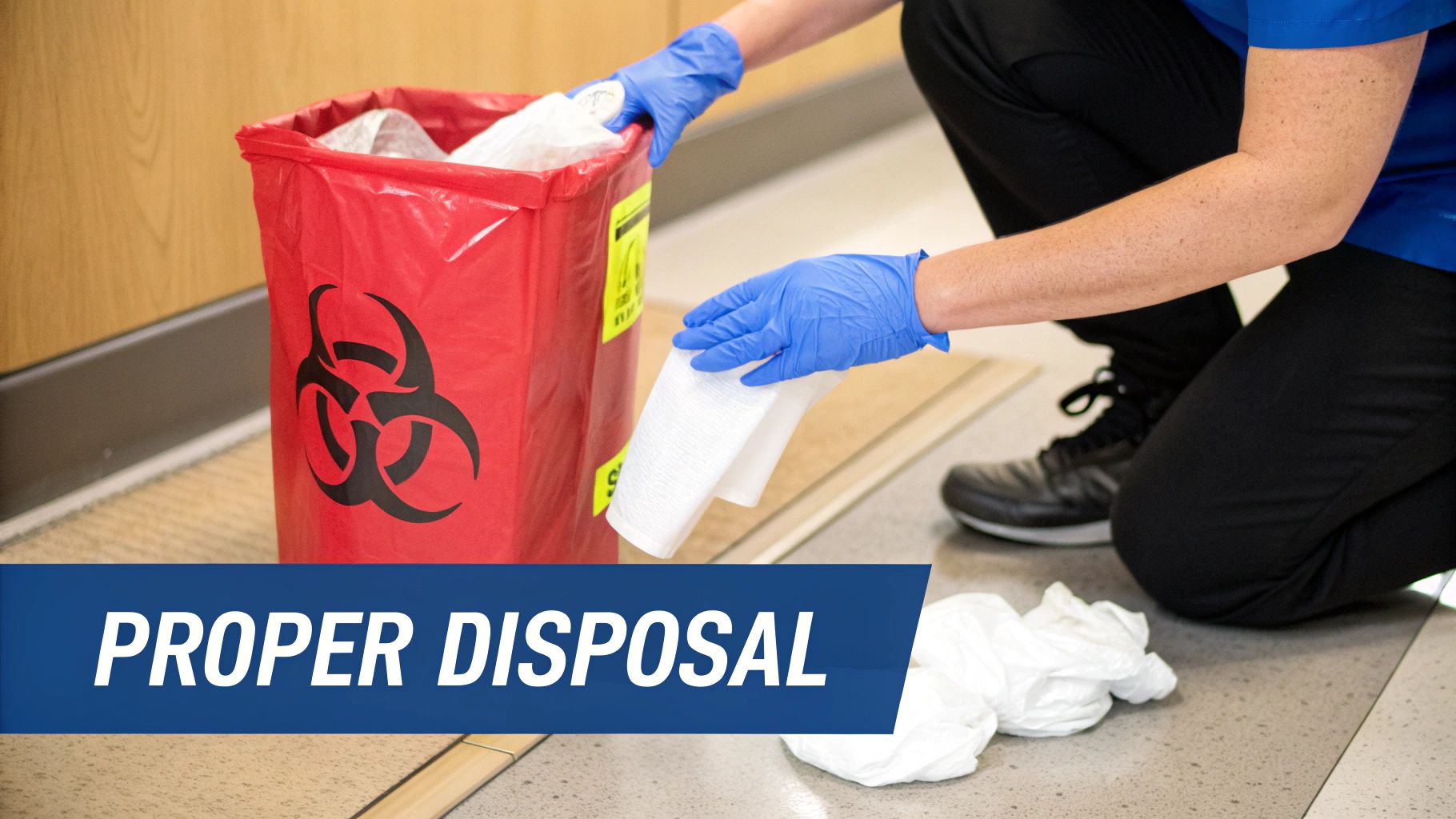
Once the area of a blood spill has been successfully disinfected, it is easy to think the job is done. However, you have only reached the halfway point. Every item used for the cleanup—from blood-soaked towels and absorbent pads to your used gloves and gown—has now become regulated biohazardous waste.
This classification is significant. You cannot simply toss these items into the nearest trash can. Doing so is not only a bad idea but also a violation of strict federal, state, and local laws that can lead to serious consequences. The final and arguably most critical step is ensuring all contaminated material is handled and disposed of with absolute precision and in full compliance with regulations.
The Red Bag Protocol
All potentially infectious waste must be collected and sealed inside specially designed, leak-proof red biohazard bags. These are not just colored trash bags; they are a universal symbol indicating the contents are hazardous and require extreme caution.
The moment you place the first used cloth into a red bag, a chain of custody begins. From that point until its final, documented destruction, that waste becomes a legal and financial liability for which you are responsible.
Any misstep in this process—a torn bag, an incorrect label, or disposal in a municipal dumpster—can lead to severe penalties, including hefty fines and even criminal charges. These regulations are in place to protect sanitation workers, the public, and the environment from accidental exposure.
Why Improper Disposal is So Risky
The consequences of cutting corners here extend far beyond a financial penalty. A single contaminated needle or blood-soaked dressing tossed into a regular garbage bin could cause a devastating injury to a sanitation worker or an unsuspecting member of the public.
This is why having clear biohazard waste guidelines is a non-negotiable part of any effective safety management system. It is a foundational element of workplace safety that protects employees and the community from accidents with lasting repercussions.
Properly managing biohazardous waste is a complex process involving several key steps:
- Proper Segregation: All contaminated items are carefully placed in approved red bags.
- Secure Containment: Bags are sealed tightly and often placed inside a rigid, secondary container to prevent punctures or leaks during transport.
- Correct Labeling: Containers must be marked with the universal biohazard symbol and other required tracking information.
- Licensed Transport: Only certified and licensed companies are legally permitted to transport regulated medical waste.
- Documented Destruction: The waste is taken to a specialized facility to be destroyed, usually by incineration or autoclaving, with a manifest tracking its journey from start to finish.
The Professional Advantage in Waste Management
This is where engaging a professional biohazard remediation service becomes invaluable. Our role is not just to clean the scene; we manage the entire lifecycle of the waste generated, completely shielding you from liability.
Regulatory compliance is paramount. OSHA standards not only dictate the type of disinfectant to use but also have strict rules for the containment and disposal of all infectious materials. When you partner with a certified company like 360 Hazardous Cleanup, you are entrusting this entire regulated process to experts who operate under these rules daily.
We handle the packaging, manifest creation, and coordination with licensed medical waste transporters, relieving you of this burden. This protects property owners from the complex legal and logistical challenges of disposal. Our team ensures every regulation is met, providing you with the documentation and peace of mind you need. For a deeper look into this critical service, you can learn more about our professional biohazard waste disposal protocols.
Knowing When to Call a Biohazard Professional
Following the correct procedure for a blood spill is a demanding, high-stakes process. An error is not just a matter of a lingering stain—it's a serious health risk.
While a tiny drop on a sealed countertop may be manageable with the right PPE and disinfectant, there is a clear line where a DIY approach shifts from responsible to dangerous. Recognizing that line is the most important part of keeping everyone safe.
Deciding to call for professional help is not a sign of failure; it is a smart, responsible choice based on the real-world risks involved. Biohazard remediation is a highly specialized field for good reason. We bring certified training, industrial-grade equipment, and a deep understanding of safety regulations that cannot be replicated with household supplies and an online guide.
Clear Signals to Call for Backup
Some situations are immediate red flags. If you encounter any of the following, the spill is beyond a DIY fix, and your first call should be to a certified biohazard remediation company.
These are the non-negotiable signs:
- Spill Size: A blood spill larger than a standard dinner plate is too large to manage on your own. The sheer volume of potentially infectious material requires professional containment, cleaning, and disposal protocols.
- Porous Surfaces: This is a game-changer. When blood soaks into materials like carpet, upholstery, untreated wood, or concrete, surface cleaning is ineffective. The biohazards are drawn deep into the material, where they cannot be seen or reached, creating a hidden health risk and a source of persistent odors.
- Multiple Rooms Affected: If blood has been tracked or spread across several areas, the risk of cross-contamination is incredibly high. Professionals are trained to establish containment zones and follow strict procedures to prevent the spread of pathogens from one room to another.
- A Traumatic Event Was Involved: Any situation involving a crime scene, unattended death, or other trauma requires a professional response. These scenes are emotionally overwhelming and often present complex biological hazards that demand a systematic, compassionate, and expert approach.
One of the biggest mistakes we see is underestimating how far biohazards can travel. Blood can easily seep through floorboards into the subfloor or wick up inside drywall, contaminating areas you can't even see. We use specialized moisture meters and other tools to find every hidden pocket of contamination and ensure nothing is missed.
The Unseen Value of Professional Remediation
Hiring a professional biohazard team offers much more than just cleaning power. While many businesses use fantastic general cleaning and maid services for routine upkeep, blood spill cleanup is a completely different discipline requiring specialized expertise.
Here is what a certified team provides:
- Regulatory Peace of Mind: We manage the entire process of biohazardous waste disposal according to strict regulations—from proper packaging in marked red bags to the final documented disposal. This protects you from the serious legal and financial penalties of improper handling.
- Emotional Support and Discretion: Especially after a traumatic event, our job is to lift the burden of the physical cleanup so you don't have to face it. We work with compassion and absolute discretion, using unmarked vehicles upon request to protect your privacy.
- Insurance Navigation: Dealing with insurance claims for this type of work can be challenging. We have years of experience working directly with insurance carriers, providing the detailed documentation they need to process your claim smoothly.
- Guaranteed Decontamination: Our job isn't done until the area is scientifically verified as safe. We use ATP testing and other methods to confirm that the space has been returned to a completely biohazard-free state, giving you total confidence.
Ultimately, knowing your limits is a critical part of the safety process. If you have any doubt about the severity of a blood spill, the safest action is always to call a professional. An expert assessment can provide clarity and protect the health of your family, employees, or tenants. For more guidance, you can learn how to determine when your home needs a biohazard cleaning company in our detailed article.
Common Questions About Blood Spill Cleanup
Even with the best procedures available, a real-life blood spill brings up practical questions. In a stressful situation, you need clear, authoritative answers—not guesswork. With our extensive experience in the field, we have heard nearly every question there is.
Here are our expert responses to the most common inquiries.
Can I Just Use Bleach or a Household Cleaner on a Blood Spill?
This is perhaps the most common question we receive, and the assumption behind it is a dangerous one. While people reach for bleach or a strong household cleaner thinking it will disinfect everything, the reality is much different. Most of these products are not formulated to kill the incredibly resilient bloodborne pathogens of concern, such as Hepatitis B, Hepatitis C, or HIV.
OSHA regulations are clear for a reason. You must use an EPA-registered tuberculocidal disinfectant or a very specific bleach-to-water solution (1:10 ratio). Anything less might make the surface look clean but can leave microscopic threats behind, providing a false—and hazardous—sense of security. We exclusively use certified, hospital-grade disinfectants because there is no room for error.
What's the Single Biggest Mistake People Make?
The most frequent and dangerous mistake is not using the correct Personal Protective Equipment (PPE). It's easy to think, "It's just a small spot," and grab it with a paper towel. However, handling blood without non-porous gloves and proper eye protection is a direct invitation for infection. All it takes is one tiny, unnoticed cut on your hand to create an entry point for a life-altering pathogen.
A close second is spraying disinfectant directly onto a fresh spill. This is a significant mistake. When disinfectant hits pooled blood, it can cause proteins to coagulate, forming a protective shield over the pathogens. The disinfectant cannot penetrate that shield, trapping the danger underneath. You always clean the organic material first, and only then do you disinfect the clean surface.
The proper sequence—clean first, then disinfect—is non-negotiable for effective remediation. Reversing these steps can render your entire effort useless and leave behind a hidden biohazard.
How Do You Handle Blood on Porous Surfaces Like Carpet?
This is where the situation becomes particularly challenging for a non-professional. When blood spills on porous materials like carpet, mattresses, or upholstered furniture, it does not just sit on the surface. It immediately soaks deep into the fibers, padding, and frame, far beyond the reach of any topical treatment.
In these cases, professional remediation is not about "cleaning" the stain. We often must cut out and completely remove the affected sections of carpet and padding. Items like mattresses or sofas are almost always considered a total loss because it is impossible to guarantee complete decontamination from deep within the core. They must be properly packaged and disposed of as regulated medical waste. Simply shampooing the spot might remove the stain, but the biohazard—and the odor—will remain trapped deep inside.
When facing a situation that feels overwhelming, you don't have to manage it alone. The compassionate, certified professionals at 360 Hazardous Cleanup are available 24/7 to restore safety and provide peace of mind. For immediate and discreet assistance, contact us today.