Navigating insurance coverage for mold remediation can be complex. It is rarely a standalone policy; instead, coverage is almost always tied directly to the source of the water damage.
If a "covered peril"—such as a pipe that suddenly bursts—causes the water intrusion, the resulting mold cleanup is generally covered, typically up to a specific limit. However, if the mold developed due to a slow leak, inadequate maintenance, or persistent high humidity, a standard policy will almost certainly not cover the remediation costs. Understanding this distinction is critical for any property owner.
Unpacking the Link Between Water Damage and Coverage
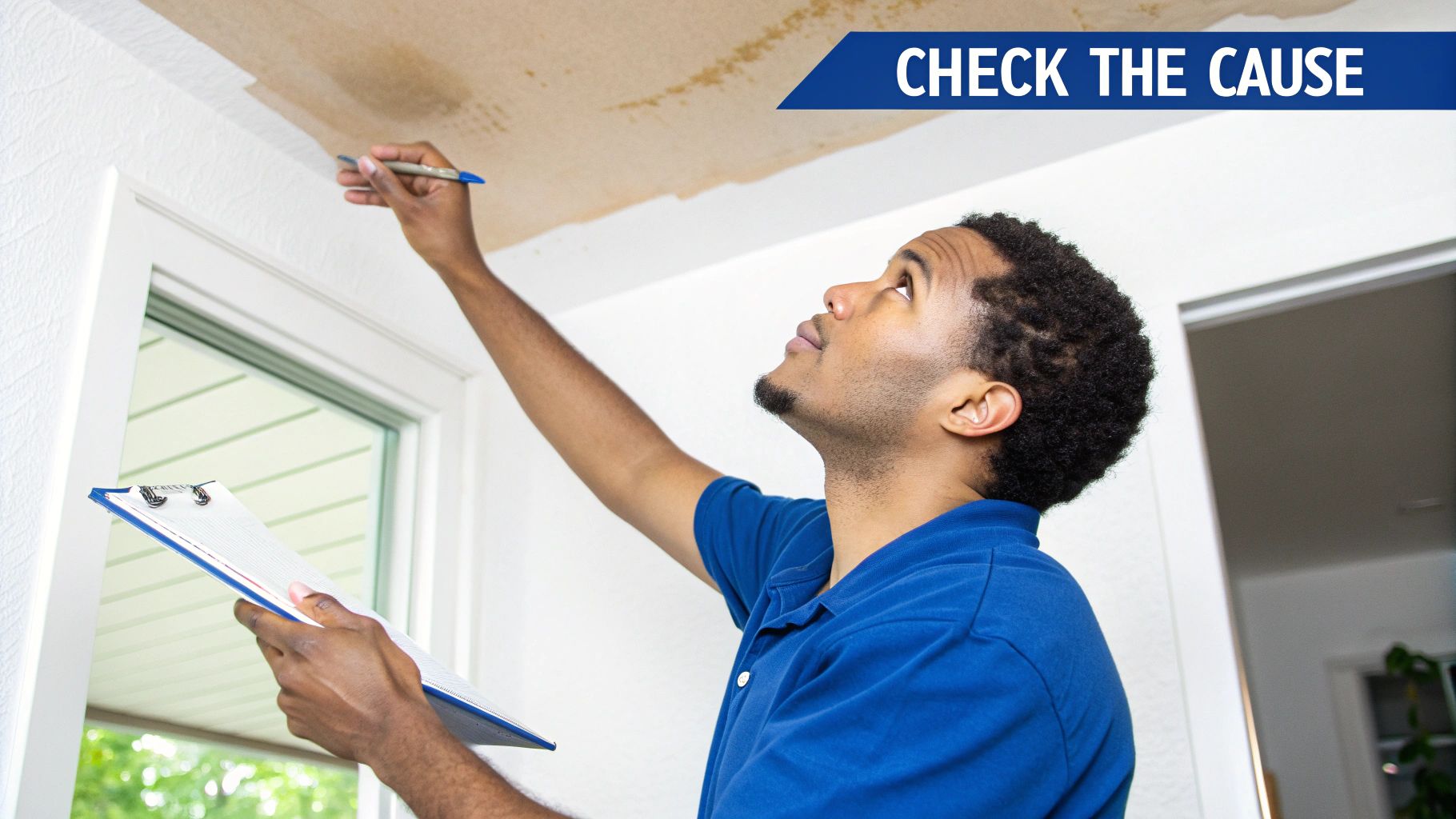
When you discover mold, your immediate concern is remediation. For an insurance adjuster, however, the primary question is, “What was the origin of the water?” The answer to this question is the single most important factor in determining the validity of your claim. At its core, insurance is designed to protect you from sudden and accidental events, not from problems that develop over time due to deferred maintenance.
This is a fundamental principle of property insurance. It's beneficial to understand the basics of how insurance works before you find yourself in a crisis. Your policy is a contract that covers specific, unforeseen incidents—what the industry defines as “perils.”
A Guide to Covered Mold Scenarios
The source of water damage is the definitive detail. This table provides a clear breakdown of common scenarios and how an insurer is likely to evaluate them.
| Cause of Water Damage | Is the Water Damage Typically Covered? | Is Mold Remediation Typically Covered? | Key Considerations |
|---|---|---|---|
| Burst Pipe | Yes | Yes (up to a limit) | This is a classic "sudden and accidental" event. |
| Appliance Malfunction | Yes | Yes (up to a limit) | A dishwasher or washing machine hose failure is unforeseen. |
| Storm Damage/Roof Leak | Yes | Yes (up to a limit) | Damage from a specific storm is a covered peril. |
| Slow, Leaky Pipe | No | No | This is considered a maintenance issue that developed over time. |
| High Humidity/Poor Ventilation | No | No | Insurers view this as preventable through proper home maintenance. |
| Groundwater Seepage | No | No | Standard policies exclude flood damage; separate flood insurance is required. |
The recurring theme is clear: if the event was sudden and accidental, you are likely covered. If the damage was gradual, coverage under a standard policy is improbable.
Sudden and Accidental vs. Gradual Damage
Insurance carriers draw a firm distinction between these two categories, and it is what separates a covered claim from a denial.
Sudden and Accidental: This category includes events you cannot predict. Examples include a washing machine hose bursting, an ice dam causing a roof leak during a severe winter storm, or the water damage left after firefighters extinguish a kitchen fire. Since the source of the water is a covered peril, the resulting mold is often considered part of the same claim.
Gradual Damage: This encompasses all problems resulting from unresolved maintenance issues. This includes a slow-leaking pipe under a sink, a poorly ventilated bathroom that remains damp, or foundation cracks that allow groundwater to seep in over months. Insurers view these issues as preventable and will almost always deny the associated mold claim.
A common misconception is that discovering "toxic black mold" will influence an insurer's decision. In reality, the species of fungus is irrelevant to the carrier. The decision is based entirely on the cause of the water intrusion, not the type of mold that resulted from it.
The Critical Importance of Prompt Action
Even when water damage originates from a covered event, your subsequent actions are crucial. Every insurance policy contains a clause requiring you to mitigate further damage. This means you must take immediate, reasonable steps to stop the source of water and begin the drying process as soon as it is safe.
If you delay, the insurer could argue that the mold growth was preventable and deny your claim on that basis. This is why contacting a professional remediation company immediately is so important. A certified team not only handles the physical cleanup but also provides the detailed, time-stamped documentation needed to prove you acted responsibly, thereby protecting both your property and your insurance claim.
If you are concerned about a discovery in your home, you can learn how to identify black mold on walls in our detailed guide.
Finding Mold Coverage in Your Insurance Policy
Insurance policies can feel like a labyrinth of legal jargon, especially when you are facing a potential mold issue. This section is designed to be your guide. We will walk you through the key sections of your policy, highlighting where to find language related to mold and explaining what it means for your financial responsibility.
Our goal is to empower you to read and understand your policy with confidence before a crisis occurs.
Think of your policy as the official rulebook for your property. To understand the rules for mold, you need to be familiar with three key terms: covered peril, exclusion, and sub-limit.
Decoding Key Insurance Terms
Understanding these terms is the essential first step.
- Covered Peril: This is an event or disaster your insurance policy specifically agrees to cover, such as fire, theft, or sudden water damage from a burst pipe. If mold grows as a direct result of one of these covered events, it is likely to be covered as well.
- Exclusion: This is a list of events and conditions your policy explicitly states it will not pay for. For mold, this is the most critical section to review. Nearly every standard homeowners policy today includes a "fungus or mold exclusion."
- Sub-Limit: This is a cap on the amount an insurer will pay for a specific type of damage, even if it is part of a larger covered claim. Mold is almost always subject to a sub-limit.
To put it simply, an exclusion is a locked door—if mold is explicitly excluded, there's no coverage. A sub-limit, on the other hand, is a door that is only partially open. It allows for some coverage, but only up to a specific dollar amount, which is often far less than the actual cost of remediation.
The Fungus Exclusion and Mold Sub-Limits
In response to a surge in expensive claims years ago, most insurance companies rewrote their policies to specifically exclude mold, fungus, and bacteria. However, the presence of this exclusion does not always mean you have zero coverage.
Many policies pair this broad exclusion with a "buy-back" or limited coverage endorsement. This means that while general mold coverage is removed, a small, fixed amount is "given back," subject to a strict sub-limit. For most residential properties, these sub-limits are capped between $5,000 and $10,000.
While this may seem helpful, a comprehensive professional mold remediation project can easily cost $20,000 to $30,000, leaving you responsible for a significant gap. It is crucial to locate this figure on your policy's declaration page or in the endorsements section to understand your true financial exposure. For a deeper dive into standard coverage, you can learn more about biohazard cleanup coverage in our guide.
The Mold Rider or Endorsement
If you reside in a humid climate or simply want enhanced protection, you may be able to purchase a "mold rider" or endorsement. This optional add-on increases your sub-limit for mold remediation. While it does not provide unlimited coverage, it can raise your cap to a more realistic amount.
This trend of limiting coverage is not exclusive to homeowners. The global mold remediation insurance market is valued at USD 2.4 billion, and property owners—especially in high-risk commercial sectors—are finding it increasingly difficult to secure adequate coverage. High restoration costs have prompted insurers to impose severe restrictions, often offering mold coverage only for specific "named perils" with very restrictive sub-limits. A thorough understanding of your policy is the only way to prepare for the reality of a mold problem.
The Link Between Water Damage and Mold Claims
When seeking insurance coverage for mold remediation, the outcome hinges on one critical question: what was the source of the water? Your insurance adjuster will investigate this, and the answer will determine the success of your claim. Insurance is designed to protect you from unforeseen events, not to cover issues that have developed over months.
This fact establishes a clear division between two types of water damage: sudden and accidental versus gradual and ongoing. Understanding this difference is the first step in protecting your property and finances.
Sudden and Accidental Water Events
This is precisely what insurance is intended for. A sudden and accidental event is one you could not have anticipated and which occurs rapidly. A burst pipe is a classic example—an abrupt, single event that causes immediate damage.
Here are common examples of water events that are typically covered:
- A washing machine supply hose fails, flooding the laundry room.
- An overflowing toilet or bathtub causes water to leak through the floor to the level below.
- A pipe freezes and bursts during a winter storm, releasing a large volume of water.
- Water damage resulting from firefighters extinguishing a fire in your home.
When mold growth is a direct consequence of these types of covered events, the remediation is almost always included in the claim, though still subject to the coverage limits discussed earlier.
Gradual Damage and Maintenance Issues
This is where most property owners encounter challenges and receive mold claim denials. Gradual damage refers to any water problem that occurs over a prolonged period, typically due to poor maintenance or a slow, undetected leak. From an insurer's perspective, this type of damage was preventable.
Examples of gradual issues that insurers almost never cover include:
- A slow-dripping pipe under a kitchen sink that has been leaking for months.
- Improperly sealed windows that allow rain to seep in incrementally over time.
- High humidity in a bathroom without proper ventilation, leading to surface mold growth.
- Foundation cracks that permit groundwater to slowly enter a basement.
The decision tree below illustrates how an insurer analyzes a claim, starting with whether the water source was a covered event.
As shown, a successful claim begins with a covered event. From there, exclusions and sub-limits are the hurdles that can reduce or eliminate your coverage.
Your Responsibility to Mitigate Damage
Even when water damage results from a covered event, you have a "duty to mitigate." This standard clause in every policy requires you to take reasonable steps to prevent the problem from worsening. Failure to act quickly can jeopardize your entire claim.
The moment you discover a covered water event, your insurer expects you to stop the source of water and begin drying the affected areas immediately. If you delay, they can argue that the subsequent mold growth is your fault—not a direct result of the initial event.
This is precisely why a rapid-response professional remediation team is so critical. A certified crew from 360 Hazardous Cleanup not only initiates the drying process but also meticulously documents the cause and extent of the damage from the outset. This professional documentation serves as powerful evidence for your adjuster and establishes the foundation for a successful claim.
Knowing the 8 unmistakable signs of mold in house can help you act quickly and prevent a minor issue from escalating. To learn more, see our guide on the hidden dangers of mold after water damage.
How to Navigate the Insurance Claim Process
Discovering mold is stressful enough; realizing you must navigate an insurance claim can feel overwhelming. The process may seem complicated, but with a clear plan, you can approach it with confidence and professionalism.
Let's review the steps required to build a solid case and reduce uncertainty.
Your first and most important action is to notify your insurance carrier immediately. As soon as you discover a leak, flood, or any water issue with the potential for mold, make the call. Delaying this step could lead the insurance company to argue that you failed to act promptly to prevent further damage, which could compromise your claim.
Your First Moves After Finding Mold
Once you have made that initial call, your primary focus should be on documentation. Your mission is to create a comprehensive record of the damage that tells the complete story of the event. This requires more than a few quick photos from your phone.
Approach this as an investigator building a case. Every photo, note, and video strengthens your position and makes it more difficult for an insurer to dispute.
Your evidence file should include:
- Extensive Photographs: Document everything. Capture the source of the water (the broken pipe, the damaged roof), the standing water, and every area or item that was affected. Take wide-angle shots to show the overall scope and close-ups to detail the severity of the damage.
- A Walkthrough Video: A video can be exceptionally persuasive. Walk through the affected area and narrate what you are seeing. Show how the water traveled from its origin to other parts of your property.
- A Written Log: Maintain a detailed journal. Record the date and time you discovered the damage, the name of every person you speak with at the insurance company, and a list of any steps you take to mitigate further damage.
The Insurance Adjuster's Role
After you file the claim, your insurer will assign an adjuster to your case. The adjuster's job is to investigate the incident, determine the cause, and estimate the cost of repairs based on your policy's terms. They will schedule a visit to inspect the property in person.
Be prepared for this visit. Have all your photos, videos, and notes organized and accessible. Walk them through the damage, explaining the timeline of events clearly and calmly. Presenting them with a well-organized file of evidence demonstrates your diligence and helps them understand the true scope of the problem.
An insurance adjuster's primary function is to verify the loss. It is far easier for them to question a claim based on vague descriptions than one supported by a mountain of organized proof. Your preparation directly impacts their final report.
Obtaining a Credible Remediation Estimate
This is one of the most critical components of a successful mold remediation insurance coverage claim. Your insurance company will require a detailed, line-item estimate from a certified and reputable remediation company. A vague, one-line quote on an invoice is a significant red flag and will almost certainly be rejected.
Here’s a checklist to help you gather the essential documentation for your claim. Having these items organized will streamline the process and strengthen your case.
Your Mold Claim Documentation Checklist
| Document or Evidence | Why It's Essential | Pro Tip |
|---|---|---|
| Photos & Videos | Provides undeniable visual proof of the water source, the extent of the damage, and affected property before cleanup begins. | Narrate your videos. Explain what you're filming, the date, and what happened. Capture both wide-angle and close-up shots. |
| Written Damage Log | Creates a timeline of events, records conversations with your insurer, and tracks steps taken to mitigate damage. | Use a dedicated notebook or digital file. Note the date, time, and person you spoke with for every communication. |
| Police or Fire Reports | If the water damage was caused by a covered event like a fire or break-in, this report is official, third-party validation. | Request a copy of the official report as soon as it's available and provide it to your adjuster immediately. |
| Professional Remediation Estimate | A detailed, line-item quote from a certified company justifies the cost and outlines the professional scope of work required. | Ensure the estimate is from an IICRC-certified firm. It should detail containment, equipment, labor, and disposal costs. |
| Proof of Ownership/Receipts | For damaged personal property, you'll need to prove you owned the items and what their value was. | Maintain a home inventory file with photos and receipts for major purchases before a disaster happens. It is an invaluable resource. |
| Moisture Meter Readings | Professional testing results provide scientific data on the extent of moisture saturation in building materials. | Ask your remediation company to document initial and post-remediation moisture readings in their report. |
A professional estimate from a company like 360 Hazardous Cleanup is not just a suggestion; it’s a necessary tool. It proves you are serious and provides the adjuster with the information needed to approve the claim.
For more expert advice on these conversations, see our article on how to talk to your insurance company about cleanup services.
Why Professional Remediation Protects Your Claim
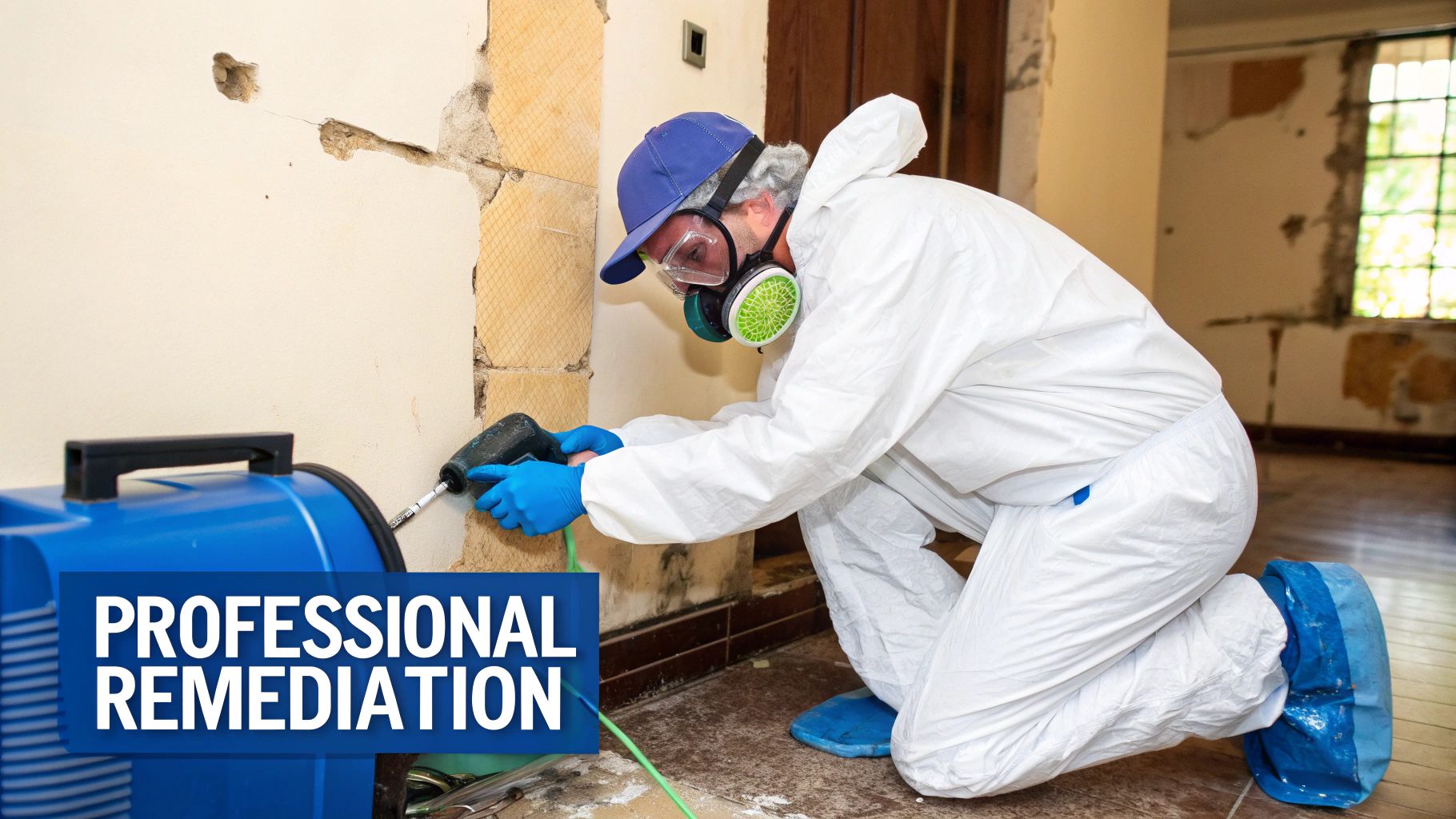
From an insurer's perspective, a DIY mold cleanup attempt is a significant liability. While the impulse to address the issue immediately is understandable, this approach almost always creates more problems for both your property and your insurance claim.
Attempting to manage a serious mold problem on your own is fraught with risk. Without proper containment protocols, you can easily distribute mold spores throughout your home, escalating a localized issue into a widespread contamination. More importantly, you risk exposing yourself and your family to serious health hazards.
Professional remediation is a scientific process designed to protect health, preserve property, and ensure your insurance claim is handled with the seriousness it deserves.
The Standard of Care Insurers Expect
Insurance companies operate by managing risk. When they cover a mold remediation insurance coverage claim, they require assurance that the work will be completed correctly to prevent recurrence. They expect the remediation to meet strict industry standards, such as those established by the Institute of Inspection, Cleaning and Restoration Certification (IICRC).
A certified remediation company provides that assurance. Professionals use specialized equipment and proven methodologies that cannot be replicated with consumer-grade products.
- Containment Barriers: Technicians do not begin demolition without first isolating the affected area. They seal it with heavy-duty plastic sheeting and establish negative air pressure to ensure spores do not escape into unaffected parts of the home.
- HEPA Filtration: They deploy industrial-grade air scrubbers and vacuums fitted with High-Efficiency Particulate Air (HEPA) filters. These are designed to capture microscopic mold spores from the air and surfaces.
- Controlled Demolition: Professionals are trained to carefully remove and dispose of contaminated materials like drywall and insulation in a manner that minimizes cross-contamination.
To an insurer, professional remediation is not just a cost—it's a critical investment in closing the claim properly. A certified company's validation demonstrates that the problem was addressed correctly and safely, drastically reducing the likelihood of future related claims.
Documentation That Builds a Stronger Claim
Beyond the physical work, a professional remediation team provides the single most important element your claim needs to succeed: credible documentation. While your personal photos and notes are a good start, they lack the authority of a formal report from a certified expert.
This detailed report becomes undeniable proof for your insurance adjuster. It will typically include a moisture map, temperature and humidity readings, a complete scope of the work performed, and post-remediation verification testing to confirm the mold has been eliminated. This level of detail validates the extent of the damage and justifies every action taken.
The demand for these professional services is growing. The mold remediation market is projected to grow from USD 1,340.3 million in 2025 to USD 1,751.9 million by 2032. This trend is driven by an increase in water damage incidents, which leads to more mold-related insurance claims. In fact, property damage—including losses from water and mold—accounted for 97.3% of all homeowners insurance payouts in recent years. You can discover more insights about these market trends on Barchart.com.
Attempting to cut corners with a DIY approach often results in a denied claim and an ongoing health hazard. When faced with a mold problem, engaging experts is a necessity. You can learn more about why insurance companies trust professional restoration teams in our detailed article.
Don’t Go It Alone: Why You Need a Remediation Pro on Your Side
Managing mold damage and an insurance claim simultaneously is an overwhelming task. You should not have to navigate this complex process alone. This is precisely when engaging a certified, experienced expert can transform a crisis into a manageable project. A professional remediation team serves as the crucial bridge between you and your insurer, ensuring every step is handled correctly.
The process begins with a thorough, scientific assessment of the damage. Experts understand exactly what insurance adjusters require, providing detailed documentation from moisture maps to line-item estimates that justify the entire scope of work. They become your advocate, often communicating directly with the insurance company to explain technical details and clarify the requirements for a complete and safe restoration.
Finding an Ally in a Tough Market
Choosing the right remediation company is more critical than ever. The demand for mold services is growing, with the global market expected to reach USD 1,516.8 million by 2030. As public awareness of mold-related health risks increases, insurers are seeing more claims. In response, they are tightening policies with stricter exclusions and lower sub-limits. You can read the full research about these market dynamics from Grand View Research.
With such high stakes, you need a partner who is fluent in the language of insurance and committed to the highest safety standards.
What to Look for in a Remediation Company
When vetting a potential team, focus on their credentials and their professional approach. A reputable company should be able to demonstrate:
- IICRC Certification: This is the non-negotiable gold standard in the restoration industry. It ensures the team is trained in proven, safe protocols for containment, air filtration, and material removal.
- Direct Insurance Experience: A company that works with insurance carriers daily understands the process. They are proficient with the required paperwork, communication protocols, and evidence needed to keep your claim progressing.
- Compassion and Discretion: This is a stressful time, and you need a team that operates with empathy. True professionals offer services like unmarked vehicles upon request and manage the project with respect for your family and privacy.
A true partner does more than remove mold. They manage the technical aspects of the job and the claim, allowing you to focus on what matters most—your family’s health and returning to normalcy.
Ultimately, the goal is to restore your property and your peace of mind. By entrusting the project to a dedicated team, you can be confident that your home is being made safe according to strict industry guidelines and that your mold remediation insurance coverage claim is being managed properly from the start. It transforms a chaotic event into a methodical recovery led by compassionate professionals.
A Few Lingering Questions About Mold Insurance
Even with a solid understanding of the basics, you will likely have specific questions about your situation. Let's address some of the most common inquiries from property owners to help you feel confident in handling what comes your way.
Does Homeowners Insurance Cover Mold On My Personal Belongings?
This is an excellent question. When it comes to personal belongings, the insurance company applies the same principle as it does to the structure of your home: the cause of the water damage is the determining factor.
If a covered event, such as a sudden pipe burst, led to the water damage, your policy’s personal property coverage should apply. This coverage helps pay for the cleaning or replacement of items like furniture, clothing, and electronics, up to your policy limit.
However, if the mold resulted from a flood—which requires a separate flood insurance policy—your standard homeowners policy will not cover those damaged belongings. This is why it is so critical to photograph all damaged items extensively before they are discarded. Document everything.
What Do I Do If My Mold Claim Is Denied?
Receiving a denial letter is frustrating, but it is not necessarily the final word. Your first step is to request a formal denial letter from the insurance company. They are legally required to provide one, and it must explain the exact reason for the denial, citing the specific language in your policy.
If you review their reasoning and believe an error has been made—for instance, if they classified a sudden leak as "gradual wear and tear"—you can file an appeal. To do this effectively, you will need to present new evidence. An independent report from a certified mold inspector or a plumber can be a game-changer, providing a professional opinion to counter the insurer's initial finding. If the appeal is unsuccessful, you might consider hiring a public adjuster to advocate on your behalf.
Your most effective tool against a wrongful denial is robust documentation from day one. A detailed report from a professional remediation company, complete with moisture readings and initial photos, provides the objective proof needed to build a strong appeal.
I Found Mold During a Home Inspection. Is That Covered?
The answer here is almost always no. Mold discovered during a home inspection is considered a pre-existing condition. Insurance is designed to cover unexpected accidents that occur while the policy is active, not problems that existed before the property was purchased.
Dealing with mold found during an inspection typically falls to the seller to remediate, or it becomes a point of negotiation in the sale. An insurance policy will not pay for mold that was present before the policy's inception date.
When facing a mold problem, you need more than just a cleanup service—you need a partner who understands both the science of remediation and the complexities of an insurance claim. The team at 360 Hazardous Cleanup provides the meticulous documentation and direct insurer communication necessary to restore your property safely and ensure your claim is managed correctly. If you require immediate, professional assistance, visit us at 360haz.com.