A musty smell that won't go away. A brownish stain that appeared after a roof leak. Paint that starts to bubble along an exterior wall. Those are the moments when people start asking the same question: is this a cleaning problem, or something deeper?
In practice, a mold remediation consultation is the point where guesswork stops. It tells you whether you're dealing with light surface impact, hidden moisture behind finishes, or an active contamination problem that needs containment and source removal. It also gives you something just as important as a diagnosis: a plan that protects health, limits property damage, and helps you make informed insurance and repair decisions.
Your First Step Toward a Safer Environment
When mold is suspected, most property owners are already under pressure. A tenant is complaining about odors. Staff are worried about air quality. A child's bedroom has a dark patch near the baseboard after a plumbing issue. The stress is real because mold problems rarely stay neatly confined to what you can see.
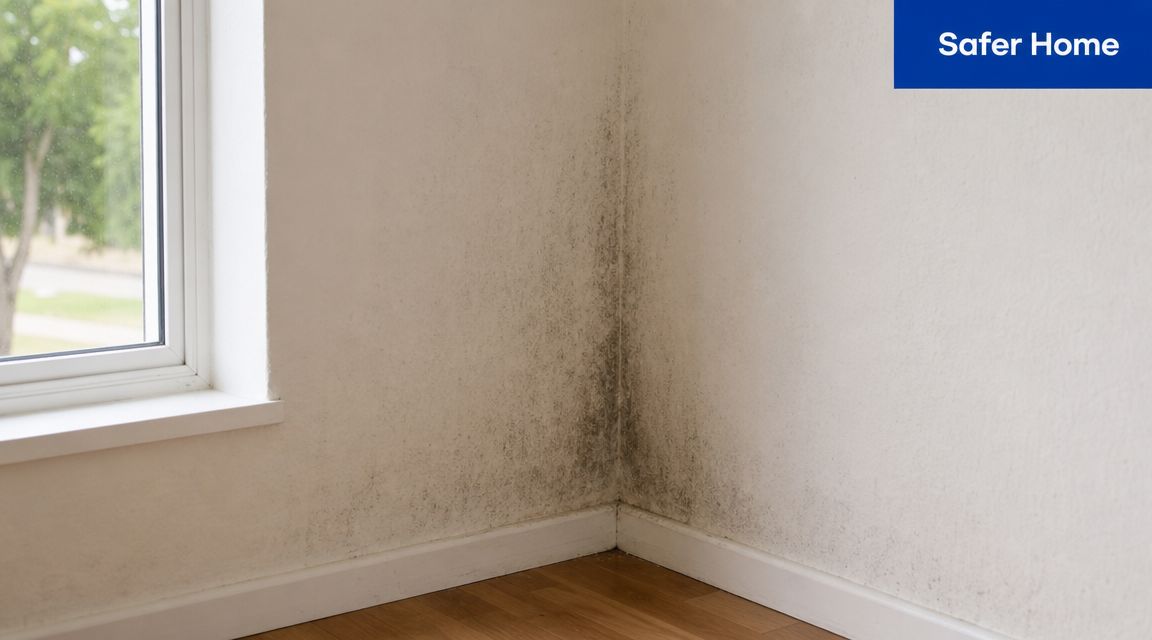
A proper consultation starts by slowing the situation down and replacing fear with facts. The consultant looks at the visible signs, asks about leaks, humidity, ventilation, and occupancy concerns, then begins mapping what's happening in the building. If you're still trying to decide whether your concern looks like a real mold issue, this overview of unmistakable signs of mold is a useful starting point because it reflects the kinds of clues people usually notice first.
The key point is simple. Cleanup should never start with a guess. It should start with a diagnosis.
For many properties, the consultation also opens the door to prevention. Once moisture patterns and vulnerable materials are identified, owners can make better long-term decisions about drainage, ventilation, and maintenance. Broader building awareness then matters significantly, explaining why guidance on understanding mold prevention and mitigating risks for healthier homes often becomes part of the conversation early.
Practical rule: If mold is visible or the space smells musty, treat that as a moisture problem first and a cleaning problem second.
A calm, methodical assessment gives you clarity on both.
Why a Professional Mold Consultation is Required
A homeowner wipes down a dark patch behind a dresser, repaints the wall, and feels relieved for a week. Then the odor returns after the next rain. That pattern is common because mold is rarely a surface-only problem. It is a sign that moisture is still entering, condensing, or staying trapped somewhere in the building.
A professional consultation gives you more than a cleanup price. It establishes cause, scope, and risk. That matters for health decisions, repair planning, and property value because recurring mold can stain a disclosure history, delay a sale, and turn a small correction into repeated demolition.
What basic testing and DIY cleanup often miss
Home test kits can confirm that spores exist, but they do not explain why growth is happening in that location, how far moisture has spread, or whether nearby materials are still wet. A wall can look dry and still hold excess moisture in insulation, framing, subflooring, or the back side of drywall.
The primary question is not whether mold is present. The primary question is whether the moisture driver has been identified and documented.
That distinction changes everything. A proper consultation looks at the building as a system. Roof leaks, plumbing failures, crawlspace humidity, poor bathroom exhaust, HVAC condensation, window sweating, and drainage defects can all produce similar staining. The remediation plan will fail if the source remains active.
If you are still deciding whether the issue has crossed from concern to action, this guide on when professional mold remediation is actually needed helps frame that decision.
If mold returns after cleaning, the moisture problem is still there.
Why documentation matters as much as cleanup
Property owners often call for an estimate and do not realize they also need a record. A sound consultation creates that record. It ties visible growth to observed moisture conditions, affected materials, likely pathways of water intrusion, and the recommended corrective steps.
That documentation can support insurance conversations, contractor coordination, tenant communication, and future resale questions. It also helps separate pre-existing conditions from recent water events, which is often where claims and repair disputes get complicated.
There is another practical issue. Mold work is not governed by one simple federal rulebook. The EPA points owners and contractors to established remediation guidance and moisture control practices in its mold cleanup guidance for homes and commercial buildings. In practice, that means the consultant must build a plan that is technically sound, clearly documented, and appropriate for the materials and occupancy involved.
What qualified consultants do differently
A qualified consultant is not there to sell the biggest demolition scope. The job is to determine what has to be removed, what can be dried or cleaned, what areas may be hidden but connected, and what must be corrected so the problem does not come back.
That usually means answering questions like these:
- What is the actual moisture source
- How long have materials likely been wet
- Which materials are salvageable and which are not
- Are hidden cavities or adjacent rooms likely involved
- What level of containment and occupant protection makes sense
- What written findings will support the next repair, claim, or clearance decision
A good consultation protects more than the immediate work area. It protects the long-term condition of the property and gives you a defensible plan instead of a temporary cosmetic fix.
What Happens During the On-Site Assessment
Most consultations follow a disciplined sequence. The process should feel less like a sales call and more like a building investigation.
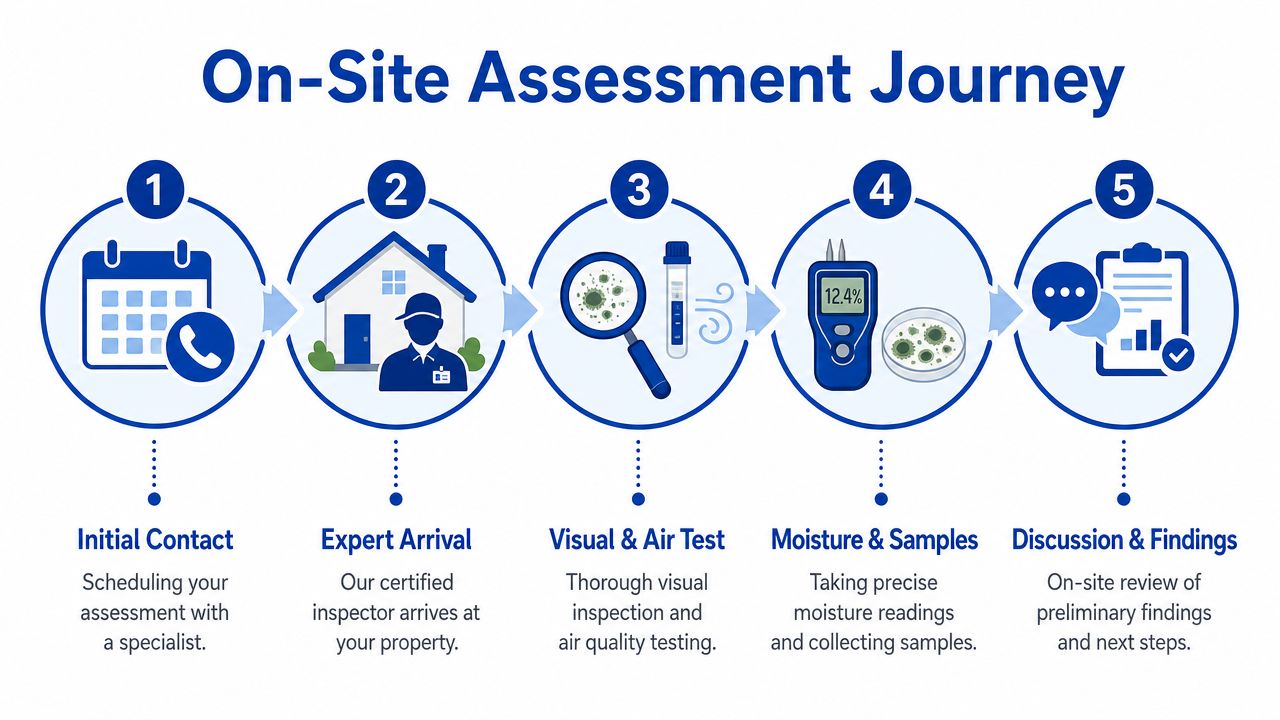
The visit begins with history, not instruments
Before tools come out, the consultant gathers context. When did the odor start? Was there a roof leak, plumbing backup, condensation issue, or HVAC problem? Has anyone already cleaned or removed material? Are occupants reporting symptoms in one room or across the property?
Those answers shape the inspection. They also help the consultant decide where hidden moisture is most likely to sit and whether the visible growth is probably the whole issue or just the part that surfaced first.
Visual inspection and moisture mapping
The visual survey looks at staining, warping, bubbling paint, delamination, discoloration, and residue on finishes and contents. It also looks at building details that often drive recurrence, such as poorly sealed penetrations, wet insulation, window condensation patterns, and airflow dead zones.
Then the consultant starts moisture mapping with tools such as moisture meters and, when appropriate, thermal imaging. The point isn't gadget use for its own sake. It's to compare suspect areas to normal materials nearby and identify where water has migrated beyond the visible mark.
A strong assessment often checks:
- Wall assemblies behind visible staining or soft drywall
- Baseboards and flooring edges where leaks can wick outward
- Ceiling cavities below roof or plumbing events
- Mechanical areas where condensation and poor drainage can sustain dampness
- Adjacent rooms because mold growth rarely respects the line where the stain stops
Determining scope before demolition starts
Experience saves money and reduces rework. Consulting guidance commonly recommends removing porous gypsum board at least 2 feet beyond visible mold growth as outlined in professional mold remediation reference guides. The consultation determines whether that rule applies as written, whether the impact extends further, and which materials can be cleaned rather than removed.
A quick look from the doorway can't make that call reliably.
If the suspected issue involves dark staining on drywall or repeated moisture at wall surfaces, this resource on black mold on walls can help property owners understand why wall assemblies need careful evaluation.
The visible colony is often just the edge of the problem. Wet material, hidden cavities, and settled contamination define the real scope.
When sampling helps and when it doesn't
Sampling is one of the most misunderstood parts of a mold remediation consultation. People often expect testing to be automatic. It isn't.
If there is visible mold, routine air sampling is often unnecessary. The contamination is already present, and the immediate need is to define cause, extent, and safe remediation procedures. Sampling becomes more useful when the consultant is testing a specific hypothesis, such as hidden contamination in a space without visible growth, occupant complaints with unclear sources, or post-remediation verification.
When sampling is used, it should follow a plan. Guidance commonly calls for comparative ambient or control samples and an independent post-remediation verification process before containment is removed. That sequence matters because random testing without a decision framework often confuses owners more than it helps them.
What you should expect before the consultant leaves
By the end of the visit, you should understand:
| Assessment outcome | What it means |
|---|---|
| Likely moisture source | The leak, condensation pattern, drainage issue, or ventilation failure that has to be corrected |
| Affected materials | Which items are likely salvageable and which are likely headed for removal |
| Probable remediation boundaries | Where containment and work areas may need to begin and end |
| Immediate precautions | Whether access should be limited, contents protected, or occupants temporarily relocated from part of the space |
That early clarity is what turns a stressful discovery into a manageable project.
Decoding Your Mold Remediation Plan
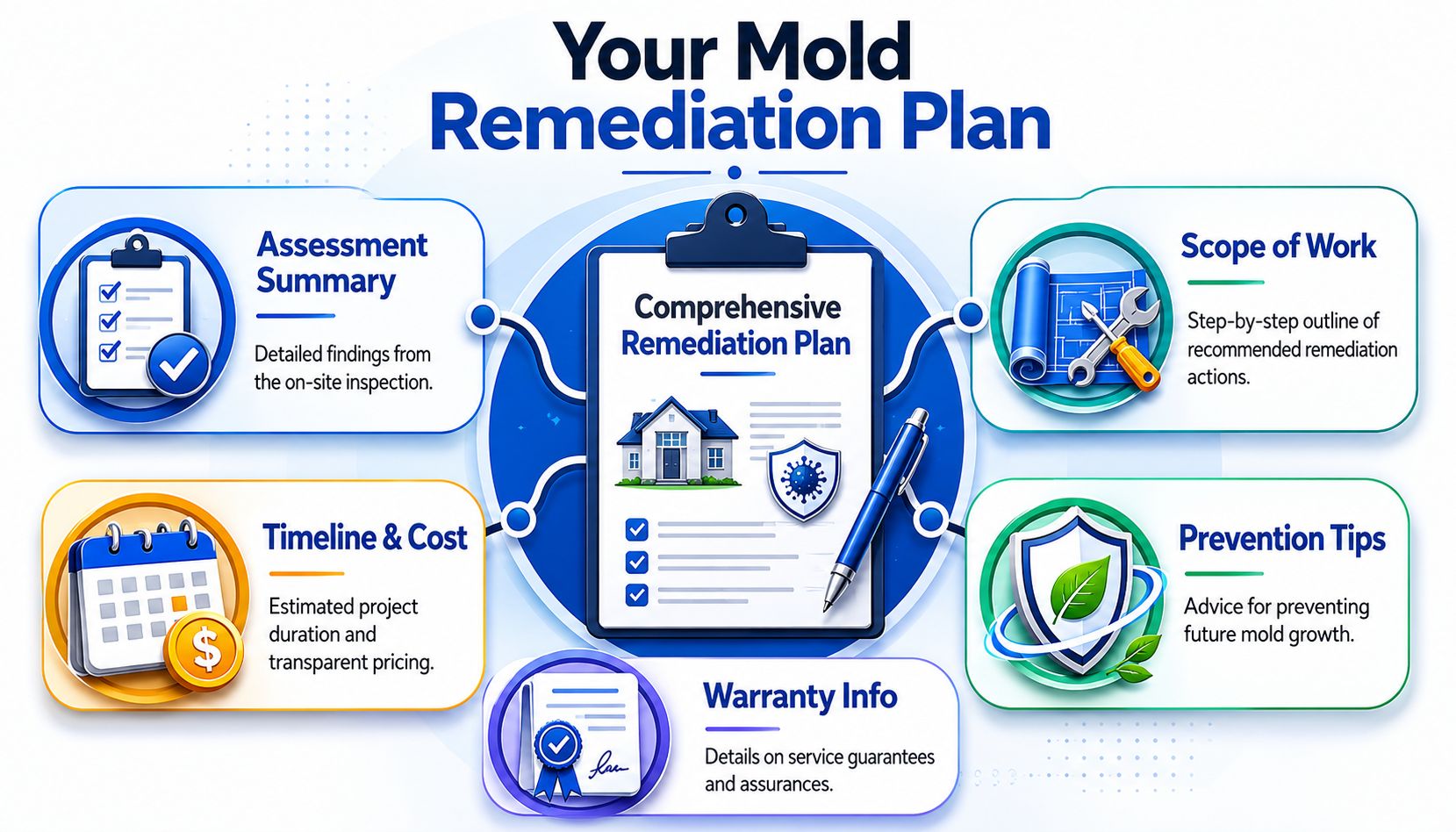
Once the site visit is complete, the most valuable deliverable isn't a vague estimate. It's a written remediation plan that translates field findings into an actionable scope of work.
The Condition 1 2 3 framework in plain English
One of the most useful standards in the field is the ANSI/IICRC S520 framework, which classifies conditions as Condition 1, Condition 2, or Condition 3 in the IICRC mold restoration standard overview.
Here's what that means in practical terms:
- Condition 1 means normal fungal ecology. The area doesn't show abnormal contamination.
- Condition 2 means settled spores or growth linked to a moisture history. Something has affected the area, even if active visible growth isn't dominating the surface.
- Condition 3 means actual visible mold growth. At that point, remediation generally shifts to source removal rather than trying to kill growth in place.
That distinction matters. If a site is at Condition 3, the plan should focus on removing contaminated material where needed, cleaning remaining surfaces properly, and controlling cross-contamination during the work.
What a sound plan should contain
A strong mold remediation consultation report should answer the questions owners and adjusters need answered.
Look for these elements:
- A defined work area. The plan should identify the affected spaces and nearby areas that need protection.
- Containment instructions. It should state whether isolation is needed to keep contamination from spreading during demolition and cleaning.
- Material-specific recommendations. Drywall, insulation, wood trim, contents, and hard surfaces don't all get treated the same way.
- Moisture correction requirements. The plan should identify the leak, humidity issue, or building defect that must be addressed before or alongside remediation.
- Clearance criteria. It should describe how the project will be evaluated at the end, including visual review, moisture conditions, and any post-remediation verification requirements.
What doesn't belong in a good plan
Be cautious if the proposal centers on fogging, spraying, or “killing mold” without addressing removal of contaminated porous material. Be equally cautious if there's no mention of moisture correction. Mold doesn't need a dramatic failure to return. A slow leak, trapped humidity, or unresolved envelope issue is enough.
A useful plain-language question to ask is: “What keeps this from coming back in the same area?”
That question often reveals whether you're looking at a real remediation strategy or a surface treatment.
How property owners can read the report more confidently
If you're reviewing a written scope, this quick checklist helps:
| Report item | Why it matters |
|---|---|
| Condition classification | Tells you whether the issue is normal, residual, or active growth |
| Moisture source finding | Identifies what has to be repaired for long-term success |
| Removal boundaries | Prevents under-scoping and repeat work |
| Cleaning methods | Shows whether the approach fits the materials involved |
| Verification steps | Defines how the job will be judged complete |
For readers who want a broader primer before comparing proposals, what mold remediation is gives helpful context on how assessment, containment, removal, and cleaning fit together.
A clear plan protects everyone involved. It helps the owner authorize the right work, helps the remediation crew execute safely, and helps insurers or managers understand why each line item exists.
Navigating Timelines Costs and Insurance
A typical call goes like this. The owner has already seen staining, smelled the musty air, and wants to know two things right away. How long will this disrupt the property, and will insurance help pay for it?
The answer depends less on the mold itself than on what caused the moisture, how far it spread, and how clearly the consultation documents those conditions. That is why a good consultation works as a diagnostic step first and a pricing step second. It sets the schedule, protects against avoidable cost, and gives you a record that can support claim conversations later.

What drives the schedule
The site visit is often the fastest part. The timeline starts to stretch when the consultation uncovers hidden moisture, occupied work areas, or repairs that have to happen before rebuild can begin.
Several factors commonly affect the schedule:
- Access restrictions in tenant spaces, patient areas, schools, or active work zones
- Hidden damage inside wall cavities, under flooring, or above ceilings
- Coordination with other trades such as plumbing, roofing, HVAC, or reconstruction
- Drying time and clearance timing before containment can come down and finishes can go back
- Moisture source correction when the underlying problem is condensation, drainage failure, or building-envelope leakage
In practice, the longest delays usually come from missed diagnosis at the front end. If the consultation stops at visible growth and fails to identify the moisture source, crews can remove damaged material correctly and still end up back in the same area months later. That repeat cycle costs more than a careful assessment ever does.
When outside water entry appears to be part of the problem, consultation sometimes needs input from local waterproofing specialists. That is especially true in basements, crawlspaces, below-grade walls, and buildings with recurring seepage after rain.
How consultation quality affects cost
Mold work is not priced like replacing a faucet or painting a room. Cost changes with containment needs, material loss, labor access, cleaning detail, and the repairs required to keep the problem from returning.
A strong consultation helps control cost in two ways. It reduces under-scoping, where affected material gets missed and the job has to expand midstream. It also reduces over-scoping, where owners pay to remove or rebuild more than conditions justify.
Good documentation separates damaged materials from salvageable ones, identifies what must be removed, and shows what can be cleaned or dried in place. That matters for owners comparing bids, and it matters when reviewing mold remediation company options for your project, because low numbers often come from missing scope rather than actual efficiency.
Some firms, including 360 Hazardous Cleanup, assist with assessment records and communication that owners can use when coordinating with property managers, insurers, or restoration contractors.
Insurance files are stronger when they show cause, extent, recommended scope, and how completion will be verified.
Why insurance often turns on the written record
Insurance decisions usually depend on cause, timing, and documentation. A carrier may look closely at whether the issue came from a sudden covered event, a long-term maintenance problem, repeated seepage, or humidity conditions that developed over time. The consultation cannot rewrite the cause of loss, but it can document it clearly.
That record is often the difference between a vague complaint and a defensible file. Photos, moisture readings, affected-area mapping, notes on damaged materials, and a clear explanation of the likely source help adjusters understand why certain work steps are being recommended. If clearance or post-remediation verification is part of the plan, that should be stated plainly too.
Earlier sections covered the accepted guidance many consultants use in practice. Here, the practical point is simple. Insurance conversations tend to go better when the report explains why the loss occurred, what areas are affected, what corrective work is tied to the moisture source, and what standard will be used to judge the job complete.
This overview helps show how building investigations and remediation decisions connect in practice:
Owners do not need a polished packet full of filler. They need a clear record that protects health, supports property value, and shows exactly what must happen so the problem is handled once and handled correctly.
Choosing a Partner for Lasting Peace of Mind
A mold remediation consultation should leave you with more than a price. It should leave you with a reliable understanding of what's wet, what's contaminated, what must be removed, what can be saved, and what has to be repaired so the problem doesn't return.
New York State guidance highlights a mistake that shows up again and again: hiring a company that doesn't properly diagnose the moisture cause or require follow-up verification, as reflected in New York mold assessment and remediation guidance. That's why experienced property owners ask harder questions before approving work.
Questions worth asking before you hire anyone
- How are you identifying the moisture source, not just the mold?
- Will the written plan define containment, removal scope, and clearance requirements?
- Who performs post-remediation verification, and when does it happen?
- How will your documentation support an insurance file or facility record?
If exterior drainage, waterproofing, or envelope defects appear to be part of the root cause, consultation sometimes needs to extend beyond mold alone. In those cases, input from local waterproofing specialists can help clarify whether the recurring moisture is entering through the building shell rather than originating from an interior leak.
For owners comparing providers, this review of mold remediation companies is a useful reminder that the right partner should be judged on process discipline, documentation quality, safety controls, and follow-through.
The best outcome is not a room that looks cleaner for now. It's a property that's dry, documented, safely restored, and far less likely to force you back into the same problem later.
If you need clear answers about suspected mold, hidden moisture, or documentation for next steps, contact 360 Hazardous Cleanup. Their team is available around the clock to assess conditions, explain the remediation path in plain language, and help you move toward a safe, compliant resolution.