Needing a mold remediation company in Houston, you're probably not starting from a calm place. You may have found staining around an AC vent, a musty odor after a leak, or visible growth after a storm or plumbing failure. In commercial buildings, it may be a tenant complaint, a failed maintenance inspection, or a recurring humidity problem that no one has fully solved.
The most important thing to know is that mold is rarely a stand-alone cleaning problem. In Houston, it's usually a moisture problem with a mold symptom attached to it. If the water source isn't identified and corrected, the project can look finished while the building stays vulnerable.
That is why smart property owners don't just shop for removal. They verify the problem first, make sure the work is done under the right Texas rules, and require proof that the building is dry and stable before they sign off.
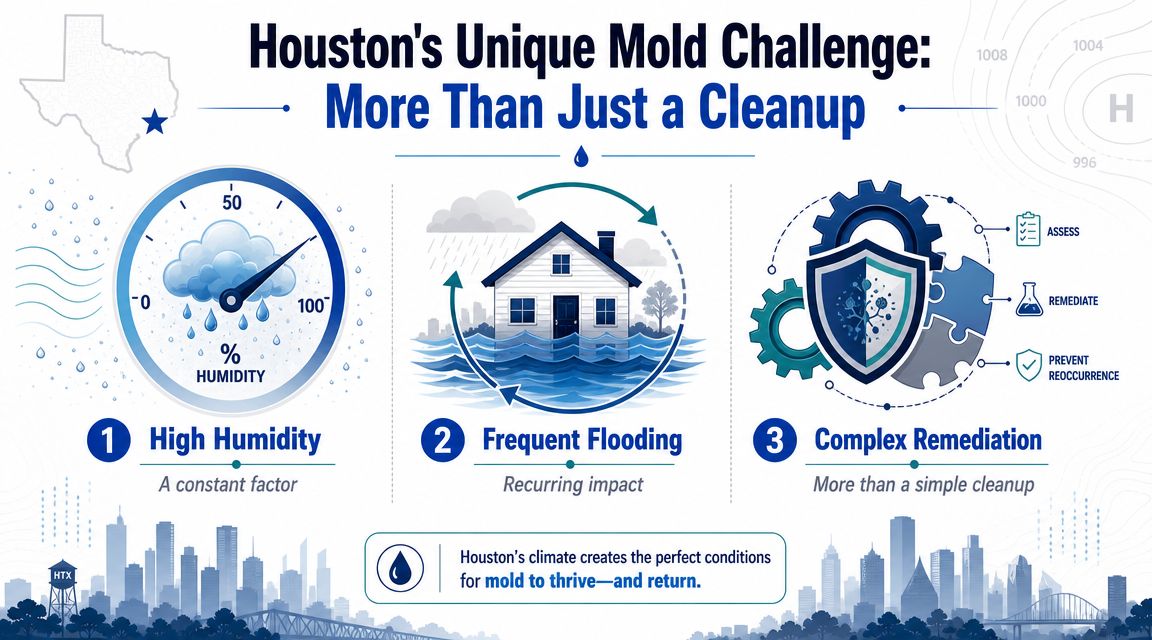
Houston's Unique Mold Challenge More Than Just a Cleanup
Houston property owners face a different mold reality than owners in drier markets. The local environment puts constant pressure on buildings. Humidity, storm exposure, flooding risk, and recurring water intrusion all make mold more likely to return if the response is incomplete.
That matters because mold isn't always dramatic at first. A slow roof leak above ceiling tile, condensation near ductwork, or wet wall cavities after a storm can feed growth long before anyone sees widespread staining. By the time the smell is obvious, the problem may involve more than a simple wipe-down.
Why Houston buildings stay at risk
A lot of owners blame themselves when they discover mold. Usually, they shouldn't. In this region, even well-maintained properties can develop mold after weather events, HVAC issues, drainage failures, or hidden plumbing leaks.
Three building conditions show up again and again:
- Persistent indoor moisture: Humid outdoor air and poorly controlled indoor conditions can keep materials damp enough for growth.
- Storm-related intrusion: Wind-driven rain, flooding, and roof damage can wet hidden assemblies that don't dry evenly.
- Mechanical-system problems: HVAC imbalance, condensate issues, and insulation failures often create chronic moisture around vents, chases, and walls.
If you've seen black mold on walls, don't assume the color tells you everything you need to know. What matters most is where the moisture came from, what materials were affected, and whether spores have spread beyond the visible area.
Practical rule: If mold keeps coming back in the same place, the cleanup wasn't the main failure. Moisture control was.
What doesn't work
What fails most often in Houston is cosmetic treatment. Spraying, painting over staining, or cleaning only the exposed area may make a room look better for a short time. It doesn't address wet insulation, saturated drywall, duct contamination, or the leak that started the cycle.
A proper response treats mold as a building-condition problem. That means identifying the source, defining the affected area, protecting unaffected spaces, and confirming that the environment is stable before the job is considered complete.
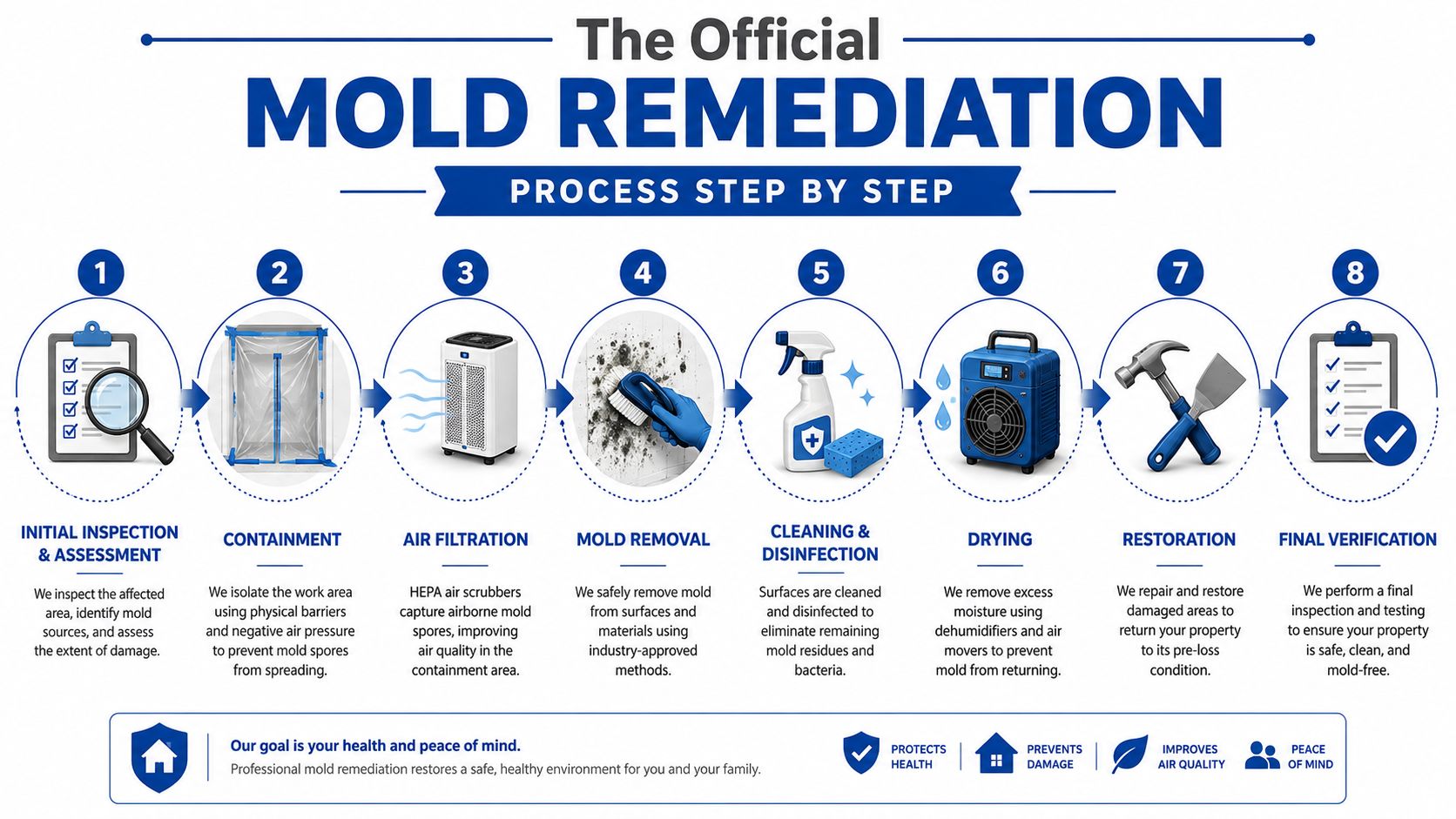
The Official Mold Remediation Process Step by Step
A legitimate mold project follows a sequence. If a contractor jumps straight to spraying chemicals or tearing out materials without a clear scope, the process is already off track.
The EPA states in its mold cleanup guidance that the fix is eliminating the water source, not just removing visible mold. The same guidance also makes clear that larger jobs require professional containment and disposal protocols to prevent cross-contamination and to address the underlying moisture issue.
Early in the process, it helps to see the full workflow at a glance.
What a professional job includes
A proper mold remediation company in Houston should be able to explain each stage in plain language:
Assessment and scope development
Someone has to determine what is affected, what likely caused it, and what the work area should include.Containment setup
The crew isolates the affected zone so disturbed spores don't migrate into clean parts of the home or facility.Air filtration
HEPA-filtered equipment helps control airborne particles during demolition, cleaning, and drying.Removal of unsalvageable materials
Porous materials that can't be safely restored are removed and handled under controlled conditions.Detailed cleaning of remaining surfaces
This isn't a quick spray-and-leave service. It involves careful cleaning of structural and surface materials that are meant to remain.Drying and moisture correction
The source problem has to be corrected. Otherwise, the job may fail even if the visible growth is gone.Repairs and rebuild coordination
Drywall, flooring, trim, or ceiling components may need replacement after remediation.
For a more detailed explanation of this workflow, see what mold remediation involves.
This walkthrough is also useful if you want a visual explanation of how crews move from inspection to clearance.
What owners should watch closely
The biggest mistake I see is treating mold like a janitorial issue. Janitorial cleaning has its place. Mold remediation is different because disturbing mold without containment can spread contamination.
Another common mistake is focusing only on kill claims from consumer products. Surface products may support cleaning or prevention in limited situations, but they don't replace moisture correction, source removal, or controlled demolition where needed. For a plain-language consumer perspective on that point, BacteriaFAQ's mold prevention insights are worth reading.
Larger jobs succeed when the crew controls air movement, removes damaged materials correctly, and leaves the property with a resolved moisture problem, not just a cleaner-looking surface.
What to Look For in a Houston Remediation Partner
Not every contractor advertising mold help is qualified to manage a regulated mold project in Texas. That distinction matters more in Houston because the volume of water-related property damage creates urgency, and urgency can push owners into fast but poor decisions.
The first screen is licensing. The Texas Department of Licensing and Regulation explains in its mold program requirements that mold assessment and mold remediation require specific licenses. That regulatory structure isn't a formality. It creates accountability, defines who can perform regulated work, and helps owners separate trained providers from general cleanup crews working outside the proper scope.
Non-negotiables before you sign anything
Use this checklist when you're evaluating companies:
- Verify Texas mold licensing: Ask for the exact license information for the services being offered.
- Request proof of insurance: Liability and workers' compensation coverage protect both the property owner and the workforce.
- Ask who writes the scope: The company should be able to explain whether the project starts with independent assessment, remediation, or both in a compliant sequence.
- Review written documentation: You want a clear work plan, not a verbal promise.
- Confirm experience with occupied properties: Homes, clinics, offices, and multifamily buildings all require different containment and communication practices.
Signs of a mature operation
A dependable provider doesn't rush past documentation. They explain what they found, what materials are affected, how the area will be isolated, what clearance standard will be used, and what happens if hidden damage appears once materials are opened.
Training also matters beyond the license itself. Providers working around hazardous materials, occupant safety, and regulated cleanup should be able to explain the standards their crews follow. This overview of why certifications and training matter beyond the basics gives useful context on that point.
The right company doesn't just arrive with equipment. They arrive with a documented process, a compliance mindset, and the discipline to stop a small problem from becoming a larger one.
Understanding the Costs and Navigating Insurance
Mold costs surprise people because the invoice usually reflects more than removal. Inspection, containment, labor, specialized filtration, disposal, drying, and repairs can all sit inside the same event. Once wall cavities, flooring systems, or HVAC-adjacent materials are involved, the project becomes a coordination issue as much as a cleanup issue.
A Houston cost guide reports an average mold remediation price of $2,025, with most homeowners paying between $888 and $3,298. The same guide says larger or more complex jobs can exceed $20,000, and typical removal pricing runs $10 to $25 per square foot. Mold inspection typically ranges from $300 to $1,075, according to Angi's Houston mold remediation cost guide.
Sample Mold Remediation Cost Breakdown in Houston
| Service/Scope | Typical Cost Range |
|---|---|
| Inspection | $300 to $1,075 |
| Removal pricing benchmark | $10 to $25 per square foot |
| Typical project range | $888 to $3,298 |
| Average project cost | $2,025 |
| Larger or more complex jobs | Can exceed $20,000 |
What pushes the bill up or down
The total usually turns on scope, not just visible mold.
- Material type: Drywall, insulation, carpet, and wood assemblies all behave differently once wet or colonized.
- Access difficulty: Tight attics, wall cavities, crawlspaces, and occupied clinical or commercial environments raise labor and containment complexity.
- Moisture source: A one-time plumbing event is different from an unresolved roof leak or HVAC condensation issue.
- Post-remediation repairs: Rebuilding can be a separate line item after the environmental work is complete.
Insurance adds another layer. Coverage often depends less on the word mold and more on what caused the moisture event, how quickly the loss was addressed, and how well the damage was documented. Photos, assessment reports, moisture findings, and a clear scope can all support a cleaner claim file.
If you're a tenant dealing with recurring mold or a landlord trying to understand obligations, this overview of Texas tenant rights for mold gives helpful legal context. For owners filing a property claim, this guide on how to talk to your insurance company about cleanup services can help you prepare before adjuster conversations begin.
Documentation matters more than people expect
Many claim problems start with poor records. If the file only shows a cleaned surface and an invoice, the carrier may still have open questions about cause, affected materials, and whether the source was corrected. Good documentation doesn't guarantee coverage, but weak documentation makes a difficult process harder.
Critical Red Flags and Questions to Ask
A bad mold contractor usually reveals themselves early. The trouble is that owners under pressure often miss the warning signs because they want a fast answer and a fast price.
One of the biggest red flags in Texas is a company that wants to inspect, write the remediation scope, perform the remediation, and then issue its own clearance as if those steps were independent. Texas rules are designed to prevent that conflict.
The state requires mold assessment to be conducted by a licensed consultant or technician who is not employed by the company performing the remediation, according to the Texas mold rules on assessment and remediation separation. That separation helps protect the owner from inflated scopes and unreliable sign-off.
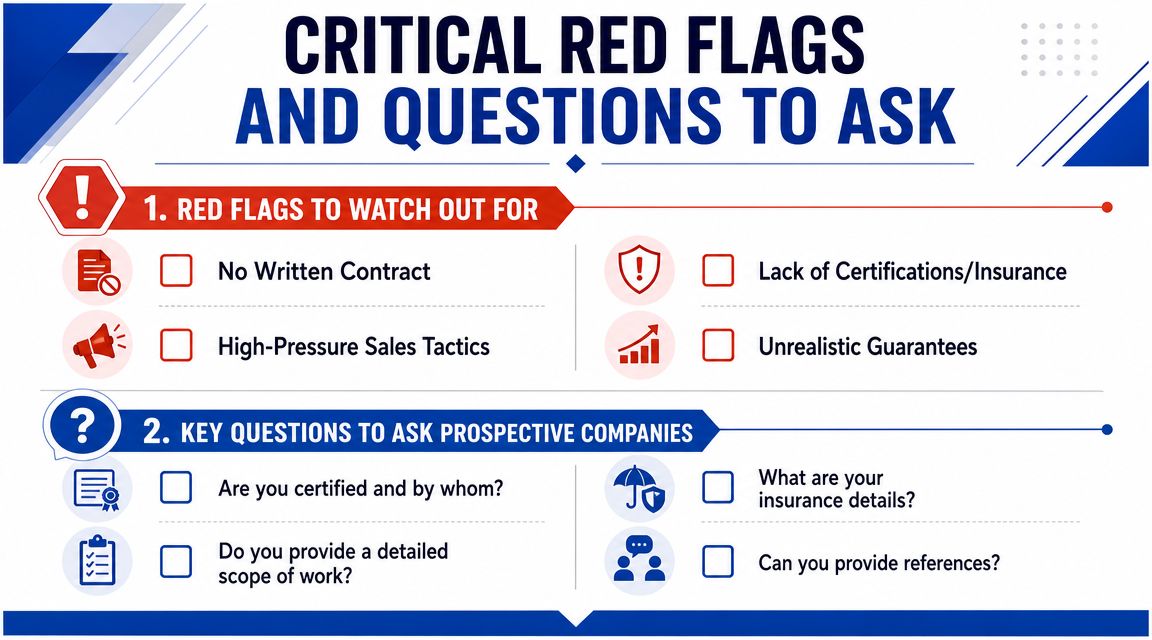
Red flags that should slow you down
- One-price promises before inspection: Mold scope can't be priced responsibly from a casual glance or a texted photo.
- No mention of containment: If they don't talk about isolating the work area, they may not control spread during cleanup.
- Pressure to start immediately without paperwork: Fast response is good. Skipping written scope, authorization, or safety planning is not.
- Guaranteed results without discussing moisture: No contractor can solve recurrence if the source hasn't been identified and fixed.
- Their own clearance on their own work: In Texas, that should raise immediate concern.
Questions worth asking every company
Take a screenshot of this list and use it during calls:
- Who performed or will perform the mold assessment?
- Is that person independent from the remediation company as required under Texas rules?
- What containment methods will you use to protect unaffected areas?
- How will you determine which materials can be cleaned and which must be removed?
- What documentation will I receive before, during, and after the job?
- What condition must the property meet before final sign-off?
- Who confirms the moisture source has been corrected?
If a company gets irritated by careful questions, that's useful information. Professional operators expect informed clients.
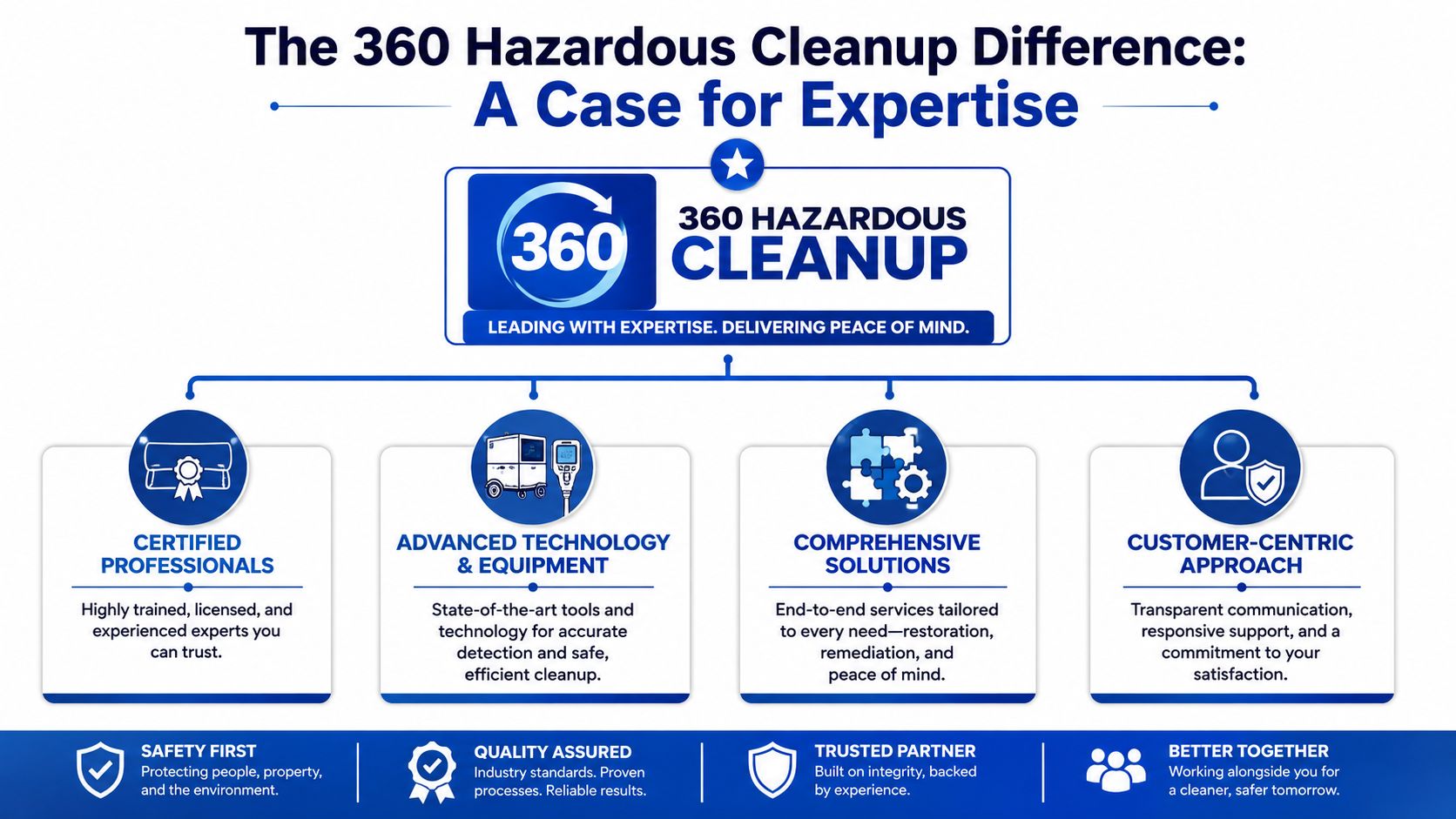
The 360 Hazardous Cleanup Difference A Case for Expertise
A strong mold response looks calm, organized, and documented from the first call. That's true whether the site is a family home, a medical office, a warehouse, or a multifamily unit with active occupants.
Consider a common Houston scenario. A property manager discovers mold odor after repeated HVAC complaints in a tenant suite. Maintenance has cleaned vents before, but the smell keeps returning. Ceiling tile shows staining, a wall cavity feels damp, and the tenant wants answers immediately because staff are working in the space.
What a disciplined response looks like
The right move isn't to send in a crew with spray bottles and demolition tools before anyone defines the problem. The right move is to secure the area, coordinate compliant assessment, document moisture conditions, and build a work plan that matches the actual scope.
That is where an experienced provider can help steady the process. 360 Hazardous Cleanup's compliance and training overview reflects the kind of framework owners should expect from any serious remediation partner: regulated handling, clear communication, occupant safety planning, and disciplined field execution.
Why expertise changes the outcome
In a project like that, the value isn't just removal. It's coordination.
- Occupied-space judgment: Crews have to protect staff, patients, residents, or tenants while work is underway.
- Moisture-focused decision making: The team needs to trace the problem back to the building condition that caused it.
- Documentation for stakeholders: Owners, managers, insurers, and sometimes legal counsel all need records they can rely on.
- Respectful communication: People are often stressed, embarrassed, or worried about health and liability. The tone of the response matters.
I've found that owners feel the difference quickly when a company explains the sequence clearly, sets realistic expectations, and doesn't overpromise. Good remediation lowers confusion as much as it lowers contamination.
The strongest projects don't feel chaotic. They feel controlled, because each step has a reason and each decision is documented.
Conclusion Your Action Plan for a Safe and Mold-Free Property
If you suspect mold, the next move doesn't have to be complicated. It does need to be thoughtful.
Start by treating the issue as a moisture event, not just a stain or odor. If the cause is still active, stop the water intrusion or humidity source as quickly as possible. Then avoid disturbing the area unnecessarily, especially if drywall, insulation, ceiling materials, or HVAC components may be affected.
A practical next-step checklist
- Document what you see: Take photos, note odors, and record when the issue appeared.
- Limit casual cleanup: Don't sand, tear out, or aggressively scrub suspect materials without a plan.
- Ask about compliant assessment: In Texas, independence between assessment and remediation is a key safeguard.
- Require a written scope: Make sure containment, removal criteria, drying, and final verification are addressed.
- Keep insurance in mind: Save invoices, reports, photos, and communications from the beginning.
Choosing a mold remediation company in Houston isn't only about who can arrive first. It's about who can help you confirm the problem, correct the moisture source, complete the work safely, and leave you with documentation that stands up after the crew is gone.
When the process is handled correctly, you get more than a cleaned area. You get a safer property and a clearer path forward.
If you need calm, compliant guidance for a suspected mold problem, 360 Hazardous Cleanup can help you take the first step. Their team provides 24/7 response, mold remediation support for residential and commercial properties, and practical help with documentation, safety, and insurance coordination so you can move from uncertainty to a clear plan.