
Most residential mold remediation jobs land around $1,200 to $3,800, with national averages reported at $2,368 and $2,364 and common pricing of about $10 to $25 per square foot for the affected area (HomeAdvisor's homeowner cost guide). That's the baseline, not the full budget, and the actual total depends on whether the job stops at visible cleanup or expands into testing, containment, demolition, drying, HVAC work, clearance, and repairs.
If you're reading this after finding discoloration on drywall, catching a musty smell near an air vent, or opening a tenant complaint that suddenly became urgent, the cost question is probably tied to a bigger fear. You want to know what this is going to take, how bad it might be, and whether someone is about to hand you an estimate that makes no sense.
That's a fair concern. Mold pricing confuses people because many online guides discuss the headline remediation number but skip the surrounding work that often drives the final invoice. In practice, property owners don't pay for “mold cleaning” as an isolated act. They pay for a controlled process that protects unaffected areas, removes contaminated material safely, documents conditions, and reduces the chance of the problem returning.
The Difference Between Mold Cleaning and Professional Remediation
When people say “mold cleaning,” they often mean wiping off what they can see. Sometimes that's all they've been told. A maintenance tech sprays a product, the surface looks better, and everyone hopes the problem is gone.
That approach can fail quickly when mold has moved beyond the finish surface. Drywall paper, insulation, subflooring, wood framing, ceiling cavities, and duct interiors can all hold contamination that a spray bottle won't solve. If the moisture source is still active, surface cleaning becomes a temporary cosmetic step, not a real fix.
What cleaning does and what remediation does
Cleaning usually focuses on visible material at the surface. It may remove staining or residue from a hard, accessible area. It does not automatically include investigation, containment, air control, disposal, or repair of the moisture source.
Remediation is broader. It means identifying what's affected, isolating the work area, controlling cross-contamination, removing unsalvageable material, cleaning salvageable surfaces with appropriate methods, and addressing the conditions that allowed mold to grow in the first place. If you want a plain-language overview of that process, this guide on what mold remediation involves is a useful starting point.
Practical rule: If the plan only talks about spraying, fogging, or “killing mold” without discussing containment and moisture correction, you're probably not looking at full remediation.
Why that distinction affects cost
Professional pricing reflects labor, safety controls, and scope. A qualified crew may need to build containment with plastic barriers, run HEPA-filtered air scrubbers, protect adjacent occupied spaces, remove porous materials, and bag waste for proper disposal. None of that looks like ordinary housekeeping because it isn't.
Location matters too. Mold in a bathroom corner is one thing. Mold tied to ductwork or the air handler creates a different level of concern because the HVAC system can distribute contamination through the building. Property owners who suspect that issue should understand the basics of understanding duct mold and HVAC cleaning before agreeing to any shortcut service.
What doesn't work well
A few low-cost approaches routinely disappoint owners:
- Paint-over fixes: Covering staining without removing affected material can hide the problem from view while moisture continues behind the surface.
- Odor-only treatments: Deodorizers may reduce the smell for a while, but they don't remove contaminated porous materials.
- One-step spray claims: If the estimate suggests a single treatment handles inspection, removal, prevention, and verification, ask much tougher questions.
The reason mold cleaning services cost more than many people expect is simple. Proper remediation is part environmental control job, part demolition job, and part moisture-management job. When done correctly, it protects occupants, supports insurance documentation, and limits the chance of paying for the same problem twice.
The Average Cost of Mold Remediation in 2026
A common call starts the same way. A property owner finds staining behind a dresser or under a sink, searches for an average price, sees a few mid-range numbers online, and assumes the project will stay in that lane. Sometimes it does. Just as often, the final bill is higher because the actual cost includes more than the removal crew.
Current homeowner benchmarks still place many mold remediation jobs in the mid-four-figure range. Earlier national cost data cited in this article puts the average around $2,300 to $2,400, with many smaller jobs falling roughly between $1,200 and $3,700, and per-square-foot pricing often landing near $10 to $25. Those numbers are useful for early budgeting. They are not a full project budget.
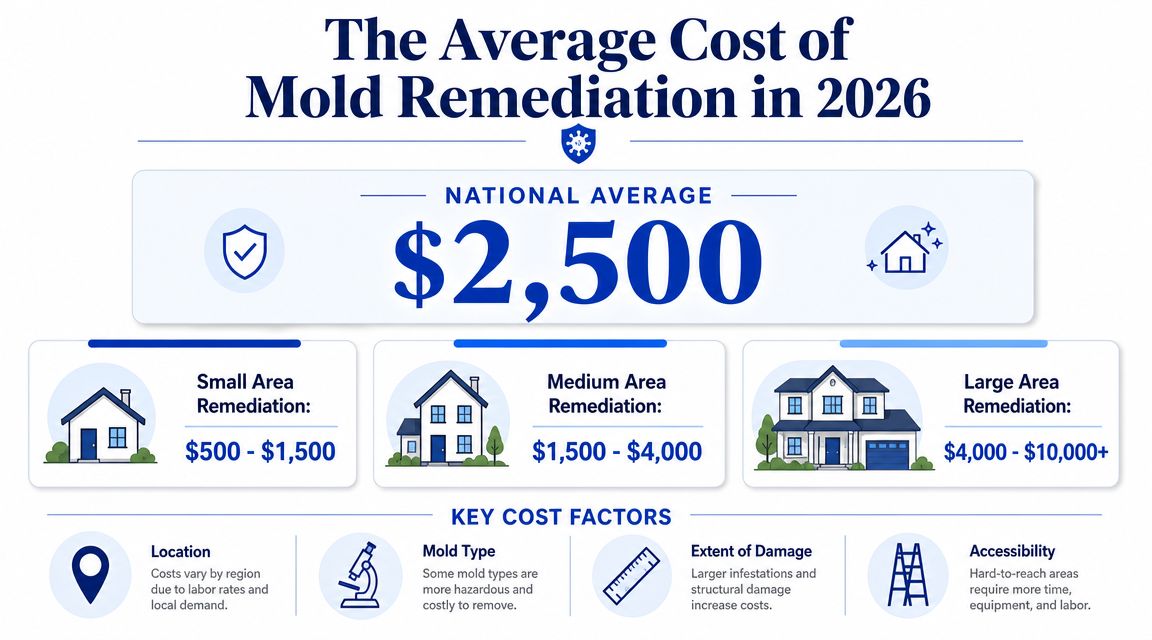
What the average really means
The average usually reflects straightforward residential work with visible growth, reasonable access, and a limited area of removal. It helps owners sanity-check bids. It also helps identify estimates that look far too cheap for the amount of protection and labor the job should require.
The trouble is that many online calculators stop at remediation labor and skip the rest of the chain. A real mold project can include the initial inspection, moisture tracing, containment setup, material removal, cleaning, post-remediation verification, and repairs after the affected materials come out. That total cost is what matters if you are trying to plan cash flow, compare bids fairly, or decide whether an insurance claim is worth pursuing.
Owners who are still sorting through provider options can review these mold remediation company considerations before signing a contract.
Why total project cost matters more than the headline number
A small visible patch may stay close to the national average. The job gets more expensive once the crew has to open assemblies, protect occupied rooms, or wait on separate clearance testing before reconstruction starts.
In practice, the all-in budget often includes items that are billed by different parties. The remediation contractor may handle containment and removal. An assessor may charge separately for inspection or clearance. A plumber or leak specialist may be needed to find the moisture source first. If that source has not been confirmed, owners are budgeting with one eye closed. This is one reason a good homeowner's guide to leak detection can be helpful before approving mold work tied to an unexplained moisture problem.
I tell owners to ask a simple question: “What will I likely spend from discovery to clearance to put this area back into service?” That question produces better estimates than asking for a low starting price.
A practical way to read online cost calculators
Use national averages as a screening tool, not as approval for the scope. They work reasonably well for a small, open, visible issue. They become less reliable when the project includes any of the following:
- Moisture source still unknown
- Possible growth behind drywall, cabinets, or flooring
- HVAC or duct involvement
- Occupied rooms that need extra protection
- Separate testing, clearance, or reconstruction
Two homes can show the same stain on the surface and end up with very different invoices. One may need limited removal and cleaning. The other may require cavity drying, negative air, disposal, third-party clearance, and finish repairs. The visible mold may look similar. The total job cost is not.
Key Factors That Determine Your Final Remediation Bill
A property owner sees a few dark spots on drywall and expects a cleaning bill. Then the crew opens the wall, finds wet insulation, microbial growth on the framing, and a leak that never stopped. The final cost changes because the job changed.
That is the pattern behind many mold invoices. The visible growth matters, but the final bill usually depends on where the contamination has spread, how hard it is to reach, what has to be removed, and what it takes to keep the rest of the property clean while the work happens.
Angi's mold remediation cost guide gives a useful snapshot of how sharply pricing can change by location and scope. It lists wall remediation at $1,000 to $20,000 per area, HVAC mold remediation at $3,000 to $10,000 per system, and whole-house remediation at $10,000 to $30,000 per home. Those ranges are wide for a reason. Two projects with the same square footage can require very different labor, containment, and repair work.
Sample costs by location
| Affected Area | Typical Cost Range |
|---|---|
| Walls | $1,000 to $20,000 |
| HVAC system | $3,000 to $10,000 |
| Whole house | $10,000 to $30,000 |
Access drives labor hours
Access is one of the biggest price drivers, and it gets overlooked constantly.
Open framing in an unfinished basement is usually faster and cheaper to remediate than mold above a finished ceiling, behind built-in cabinets, inside a crawlspace, or under glued flooring. In occupied homes, crews also have to protect nearby rooms, maintain safe pathways, and control dust and spore movement around people and belongings. Those steps are part of the job cost, even though they do not look like "cleaning."
Hidden moisture also changes the budget. If the source has not been identified, the remediation scope may solve the symptom without solving the cause. Owners dealing with unexplained moisture can benefit from a basic homeowner's guide to leak detection before authorizing invasive work.
Material type changes both removal and rebuild costs
Non-porous materials can sometimes be cleaned and retained. Porous materials often cannot.
Drywall, insulation, ceiling tile, carpet pad, and some engineered wood products may need to be cut out and discarded once growth has penetrated the material. That shifts the project into demolition, bagging, disposal, drying, and later reconstruction. The remediation invoice may only cover part of that total. The repair bill often lands separately.
That pattern shows up often after flooding, plumbing failures, or slow leaks. If you are sorting out whether a past water event may have left hidden contamination behind finishes, this article on the hidden dangers of mold after water damage explains the risk clearly.
Scope can expand after demolition begins
Experienced estimators price in phases because mold does not stay politely within the stain you can see on the surface.
Visible scope
Confirmed contamination that can be measured and accessed without opening assemblies.Suspected hidden scope
Areas suggested by moisture readings, odor, staining patterns, or adjacent water damage.Contingency scope
Additional work that may become necessary once drywall, trim, flooring, or insulation is removed.
This is why change orders are common on legitimate jobs. A careful contractor is not guessing low to win the project. A careful contractor is acknowledging that the true boundary of contamination may not be visible until access is created.
The cheapest estimate often assumes the smallest possible affected area. That can produce a low approval number and a much higher final invoice.
Square footage helps, but it does not control the whole price
The square-foot rule is useful for rough screening, especially in open, visible, easy-to-isolate areas. It becomes much less useful when the project involves cavities, mechanical systems, multiple material layers, tenant protection, or repair coordination afterward.
Commercial properties add another layer of cost pressure. Night work, occupant notices, documentation requirements, restricted access, infection-control style barriers in sensitive spaces, and tighter disposal procedures can all add labor and equipment time. The mold itself may be similar to a residential job. The working conditions are not.
For owners trying to understand the total remediation cost, this is the point that matters most. The cleanup line item is only one part of the bill. Access work, containment, disposal, moisture correction, clearance, and post-remediation repairs often determine what you spend to put the space back into service.
Decoding a Professional Mold Remediation Estimate
A property owner gets two quotes for the same basement. One is a short one-page price for "mold treatment." The other runs several pages and includes containment, air filtration, disposal, clearance, and notes about materials that may need to be opened. The second estimate often looks expensive at first glance. In practice, it usually gives a far clearer picture of what the full job may cost from the first inspection through final verification and repairs.
A professional remediation estimate should read like a work plan with pricing attached. If the scope is vague, the price is hard to trust. Owners run into trouble when they compare a cleaning number from one contractor against a full remediation scope from another. Those are different services, different risk levels, and often very different end results.

Common line items and what they actually pay for
A well-written estimate often includes work that has nothing to do with spraying or wiping visible growth. Those charges support safe removal, limit cross-contamination, and document whether the space is ready for rebuild.
Typical line items include:
- Initial assessment and testing: Used to define the affected area, document current conditions, and decide whether hidden spread is likely.
- Containment setup: Plastic barriers, zipper doors, and controlled entry points isolate the work zone from clean parts of the property.
- Air filtration: HEPA-filtered negative air machines help capture airborne particulates during demolition and cleaning.
- Selective demolition: Removal of drywall, insulation, baseboard, cabinetry, or other porous materials that cannot be reliably saved.
- Detailed cleaning: HEPA vacuuming, damp wiping, and cleaning of surfaces inside the contained area.
- Post-remediation verification: Clearance inspection or testing to confirm the area meets the agreed standard before rebuild starts.
The estimate may also separate work into phases. That is a good sign when the contractor is being honest about what is known now and what depends on what is found after materials are opened.
What to question before you sign
A simple estimate is not automatically a bad estimate. A vague one is.
Ask direct questions if you do not see the following:
- Containment details: How will the crew keep spores and dust out of adjacent rooms?
- Material removal limits: Which materials are being removed, and which are being cleaned in place?
- Drying or moisture correction: Who is responsible for fixing the source of water, and is that included or excluded?
- Repairs and reconstruction: Does the price stop at demolition and cleaning, or does it include putting the space back together?
- Clearance responsibility: Who confirms the job is complete, and what standard are they using?
This is also the point where insurance paperwork starts to matter. If you expect to file a claim, the contractor's scope and documentation should line up with the cause of loss and the sequence of work. Property owners who need help organizing that conversation can review this guide on talking to your insurance company about cleanup services, common pitfalls, and what to prepare.
A strong estimate connects the mold work to the building problem
The best proposals explain why each task is there. If window leakage caused the growth, the estimate should identify the remediation scope and clearly state whether window repair is included, excluded, or assigned to another trade. If the issue involves a crawlspace, attic, or HVAC components, the quote should spell out what areas are being addressed and what access limits remain.
That level of detail protects the owner from open-ended billing and protects the contractor from being held responsible for areas they were not allowed to inspect or remove. It also helps prevent a common budgeting mistake. Owners approve the cleanup number, then discover later that clearance, rebuild, and moisture repairs were never part of that quote.
Read the estimate with one question in mind: does this document show the likely total path back to a usable space, or just the first cleaning step? That distinction matters more than the lowest number on the page.
Navigating Insurance Coverage for Mold Damage
You find mold behind a baseboard after a pipe leak, call your carrier, and the first question is not about the staining on the wall. It is about what caused the moisture, when it started, and what was done once it was discovered. That is why insurance affects the total remediation cost so much. Coverage decisions can change who pays for inspection, containment, removal, clearance testing, and the repairs needed to put the space back in service.

In practice, mold claims are usually evaluated through the moisture event behind them. Carriers are often more open to coverage when growth follows a sudden, documented water loss such as a supply line break or overflow. They are often more resistant when the file points to long-term leakage, neglected maintenance, chronic humidity, or a problem that sat too long without action.
That distinction affects more than the remediation invoice. It can also affect who pays for the inspection, whether post-remediation clearance is reimbursable, and whether drywall, flooring, insulation, or finish repairs fall back on the owner.
What to document before cleanup starts
Start building the file before material is removed. Once demolition begins, part of the evidence is gone.
Useful documentation usually includes:
- Photos of visible conditions: Capture staining, damaged finishes, moisture marks, and affected contents before anything is opened or discarded.
- Timeline notes: Write down when the issue was first noticed, who found it, and any events that may connect to the moisture source.
- Repair history: Pull together plumber invoices, maintenance logs, roof repairs, tenant complaints, and prior leak reports.
- Professional findings: Inspection notes, moisture readings, and written remediation recommendations help show that the scope is tied to observed conditions, not guesswork.
Tell the adjuster what happened, when you discovered it, and what qualified professionals observed. Avoid filling in gaps with assumptions.
If you are getting ready for that first call, this guide on talking to your insurance company about cleanup services, common pitfalls, and what to prepare can help you stay organized.
How a remediation contractor can help
A remediation company does not decide what the policy covers. It can, however, document the loss in a way that makes the scope easier for an adjuster to review. Good job files include moisture mapping, site photos, notes on affected materials, containment plans, and a clear separation between remediation work and rebuilding work.
Coordination matters here. Some firms remove contamination and stop there. Others also provide the kind of documentation that helps the owner, adjuster, industrial hygienist, and reconstruction contractor stay on the same page about what was found, what was removed, what still needs clearance, and what repairs remain. 360 Hazardous Cleanup provides mold and toxic material testing and works with insurance documentation, which can help owners understand the full path of cost before authorizing the project.
A short overview can help if you're preparing for those conversations:
What to avoid saying
Loose wording can hurt a claim. I have seen owners unintentionally describe a maintenance issue when they meant to report a recent discovery.
Stay factual. Describe when the condition was found, what symptoms were visible, what water event is known, and what the inspection documented. Avoid statements like “it has probably been there forever” or “we have smelled that for months” unless you know that is true and are prepared for the coverage consequences.
The goal is simple. Give the carrier a clean, documented account of the cause, the condition, and the work required to return the property to a usable state. That is the part many online mold cost calculators miss. The actual bill often includes far more than cleanup alone.
How to Hire a Certified Mold Remediation Company
Hiring the right contractor matters as much as understanding the cost. A poor mold job can leave contamination in place, spread debris into clean areas, and create disputes over what was or wasn't included.
The safest choice is usually a company that treats mold as a controlled environmental project, not a general cleaning add-on. That means trained technicians, a written scope, clear safety procedures, and a willingness to explain what's being removed, what's being cleaned, and what still needs repair by other trades.
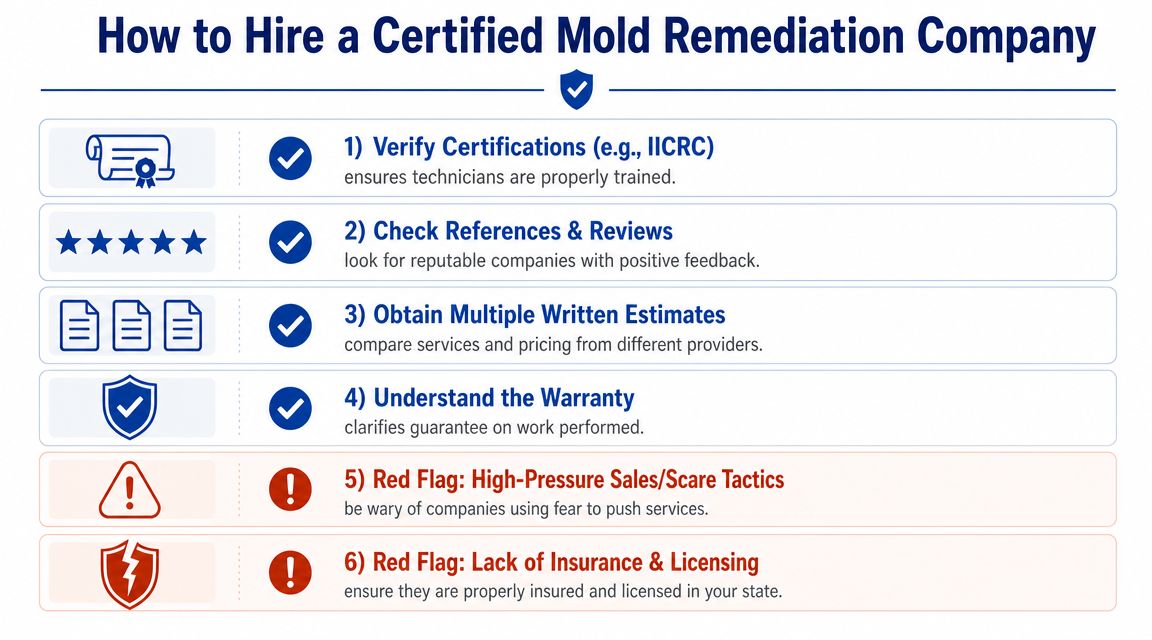
Questions worth asking before you sign
Ask direct questions. A qualified contractor shouldn't be bothered by them.
- Who is supervising the work? You want to know whether the person writing the estimate understands containment, removal methods, and jobsite safety.
- How will you isolate the affected area? Listen for specifics such as barriers, negative pressure, HEPA filtration, and occupant protection.
- What materials do you expect to remove? This helps you understand whether the quote assumes cleaning only or includes demolition.
- How do you handle clearance? The answer should explain how completion is evaluated and documented.
- What is excluded from this estimate? This question often reveals whether repairs, painting, insulation replacement, or HVAC work are separate.
- Are you insured for this kind of work? General liability alone may not answer every environmental risk question.
For a broader contractor-vetting framework, this checklist on what to consider when choosing a biohazard cleanup company applies well to mold work too, especially on training, documentation, and safety controls.
Red flags that deserve caution
Some warning signs are easy to miss when you're worried and want the problem gone quickly.
| Red Flag | Why it matters |
|---|---|
| Very low bid with vague scope | It may exclude containment, disposal, or rebuild-related work |
| Scare tactics | Pressure can push owners into approving work they don't understand |
| “We just spray and seal it” | That usually signals cosmetic treatment, not full remediation |
| No written exclusions | Disputes often start when hidden damage appears |
| No discussion of moisture source | Mold returns when the cause remains in place |
If a contractor can't describe the job in plain language, don't trust the estimate.
A better hiring mindset
Don't shop mold work the same way you'd shop carpet cleaning. The goal isn't the cheapest invoice. The goal is a scope that matches the actual conditions, protects occupants, and holds up under inspection, insurance review, or a future sale.
That usually means slowing down long enough to compare written scopes line by line. One quote may look higher because it includes containment, filtration, disposal, and verification. Another may look cheaper because it leaves those steps vague. Those are not equivalent offers.
If you need a clear, documented assessment of mold conditions and the likely full scope of cleanup, 360 Hazardous Cleanup can help you understand the problem, the safety requirements, and the practical costs before work begins.