Pepper spray incidents rarely stay contained to the moment of discharge. Someone gets exposed, panic sets in, people start wiping surfaces with whatever is nearby, and within minutes the irritant has spread from skin to clothing, from clothing to upholstery, and from one room into the air system. That’s when a manageable event turns into a lingering contamination problem.
Knowing how to remove pepper spray starts with one basic fact. Oleoresin capsicum (OC) is oil-based. It clings. It transfers. It keeps causing pain if you treat it like ordinary dirt or smoke residue. A broad law enforcement study found pepper spray effective in 85% of incidents, which helps explain why it remains widely used, but that same effectiveness comes from capsaicin’s ability to bind stubbornly to skin and surfaces, making fast and correct decontamination critical, according to the National Institute of Justice report on pepper spray effectiveness and safety.
Most online advice stops at flushing your face. That’s necessary, but it’s only part of the job. If pepper spray was discharged indoors, inside a vehicle, in a hallway, near soft goods, or around ventilation, you may be dealing with an environmental cleanup issue as much as a first aid issue.
First Steps After Pepper Spray Contamination
The first few minutes are more critical than commonly acknowledged. If pepper spray has just been discharged, your priorities are simple. Get people out of the contaminated area, reduce active exposure, and stop the residue from spreading. That applies whether the incident happened in a home, office, waiting room, retail space, or vehicle.
OC causes intense irritation because capsaicin binds aggressively to moist tissues and oily surfaces. It doesn’t behave like dust you can just wipe away with a dry towel. It smears. It reactivates when touched. It can move from hands to doorknobs, from doorknobs to phones, and from fabric back onto skin hours later.
What to do right away
Start with these actions:
- Move to fresh air. If exposure happened indoors, get everyone outside or into a well-ventilated area as quickly as possible.
- Stop touching your face. Rubbing drives the irritant across the skin and into the eyes.
- Remove contaminated people from shared spaces. Don’t let someone sit on a couch, car seat, or bed if their clothes are still contaminated.
- Open windows and doors if it’s safe to do so. Air movement helps reduce the concentration of airborne irritant.
- Separate the problem into three zones. The person, their clothing and belongings, and the contaminated environment all need their own cleanup process.
Practical rule: Treat pepper spray like an oily chemical contaminant, not like a bad smell. Odor control alone won’t solve re-exposure.
That distinction matters. Personal first aid focuses on eyes, skin, and breathing. Property cleanup focuses on emulsifying and removing residue from hard and soft surfaces. If the discharge involved another agent, the response may differ. A quick review of tear gas vs. pepper spray and their different impacts can help if you’re unsure what was used.
What usually makes things worse
A lot of secondary contamination comes from well-meaning mistakes.
| Common reaction | Why it fails |
|---|---|
| Wiping skin with dry towels | Spreads residue instead of removing it |
| Using hot water | Can worsen skin penetration and discomfort |
| Tossing clothes into a shared hamper | Cross-contaminates other fabrics |
| Turning on central HVAC immediately | Can circulate aerosolized residue |
| Using oily lotions or creams | Gives capsaicin more to cling to |
If the event was minor and limited, you may be able to manage it with careful first aid and targeted cleaning. If spray traveled through multiple rooms, hit porous materials, or entered a commercial environment, the response needs to be more controlled.
Immediate First Aid for Pepper Spray Exposure
A direct spray in the face can turn a room chaotic fast. People panic, start rubbing their eyes, grab random home remedies, and spread the residue further. The safest response is controlled, simple, and fast.
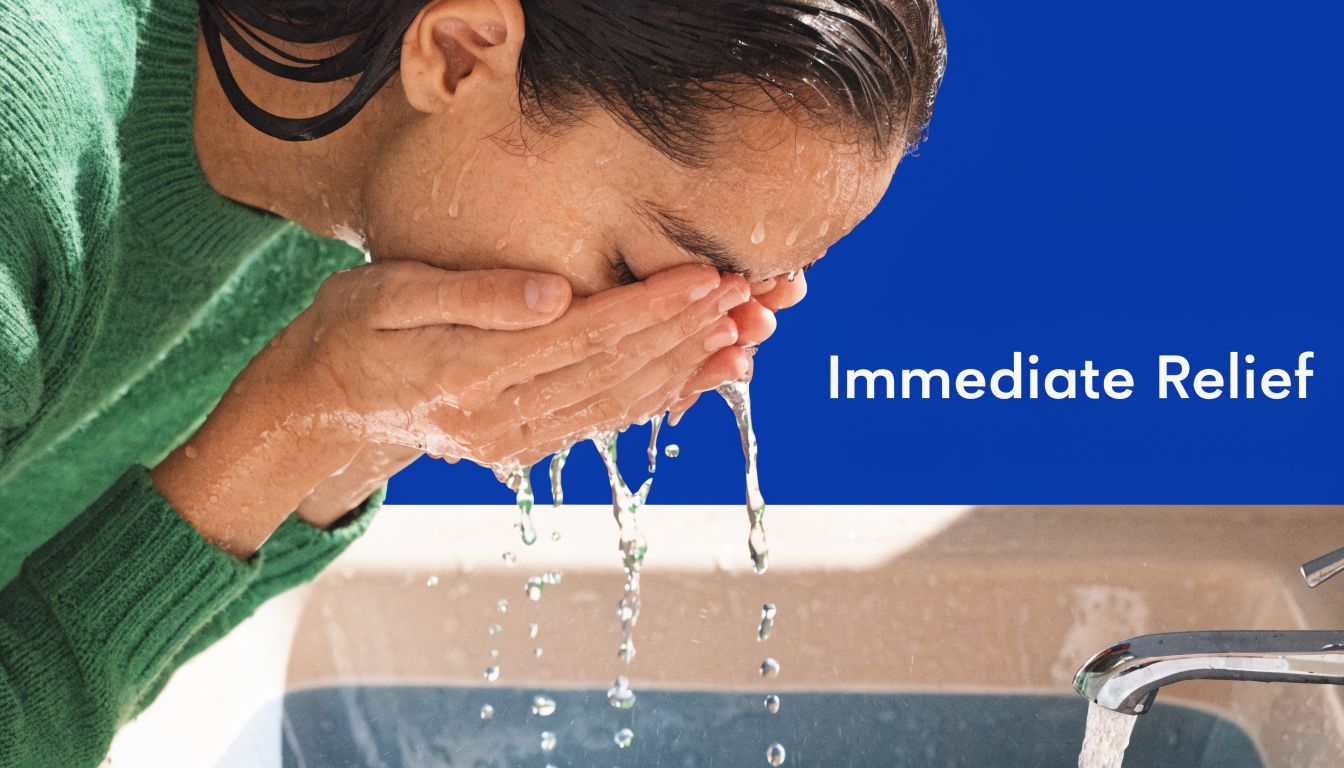
Start with fresh air and steady flushing
Move the exposed person to clean air as soon as you can. Keep them upright, encourage slow breathing, and stop them from touching their face. Panic increases rubbing, and rubbing spreads OC oil into the eyes, skin folds, and hairline.
Then flush exposed areas with cool or cold water for 10 to 15 minutes. Use plenty of water. A weak splash is less helpful than a continuous rinse. Avoid hot water because heat can intensify burning and may increase skin irritation.
Plain water is the first choice in the field because it is available, predictable, and less likely to create new problems. In real cleanup work, I have seen more setbacks from improvised remedies than from people who stuck with steady flushing.
Treat eyes, skin, and breathing as separate problems
Each area needs a slightly different response.
- Eyes: Hold the eyelids open and flush continuously with cool water or saline. Direct the flow away from the unaffected side of the face. Remove contact lenses if present, then discard them.
- Skin: Rinse first. After the initial flush, wash gently with a mild soap or a grease-cutting dish soap to help lift the oily residue. Pat dry with a clean cloth. Do not scrub.
- Breathing irritation: Get the person away from the contaminated area, loosen tight clothing, and monitor their breathing closely. Coughing and throat irritation often improve in clean air, but worsening shortness of breath needs medical attention.
Keep helpers protected too. Secondary exposure happens all the time during confused scenes, especially when several people are using the same towels, touching contaminated clothing, or leaning into the victim’s breathing space. Basic personal protective equipment for contaminated cleanup tasks helps prevent a second patient.
What to avoid during first aid
Stress leads people to try whatever they have heard online or seen in a video. Some of those fixes make the burn last longer.
Avoid these common errors:
- Rubbing the face or eyes: This pushes residue across more skin and increases irritation.
- Hot showers: Heat often makes symptoms feel worse.
- Oily creams, petroleum products, or heavy lotions: OC residue clings to oils.
- Aggressive wiping with dry towels: Dry friction spreads the contaminant instead of lifting it away.
- Reusing contaminated washcloths or towels: That transfers residue back onto cleaned skin.
Milk, baby shampoo, antacids, and similar home remedies get a lot of attention, but they are not more reliable than cool water for immediate first aid. In an indoor contamination event, they also create more material to clean off sinks, floors, and bathroom surfaces afterward.
When first aid is not enough
Get medical care if the person has severe breathing trouble, chest tightness, persistent eye pain, vision changes, or an asthma flare that is not settling down. Use a lower threshold for children, older adults, and anyone with underlying heart or lung disease.
Relief on the skin does not mean the incident is over. If spray was released inside a home, business, or vehicle, residue may still be on door handles, furniture, flooring, and in the air path around return vents. That is the gap many first-aid guides miss. The person may improve, then get exposed again when they go back inside.
Decontaminating Clothing and Personal Belongings
Clothing is one of the most common sources of repeat exposure. A shirt that feels “mostly fine” can still transfer residue to your neck, hands, laundry basket, or car seat. The right laundry process matters because OC doesn’t rinse out of fabric the way sweat or dust does.
Remove and isolate first
Take contaminated clothing off carefully. If possible, avoid pulling a contaminated shirt across the face. If the item is heavily exposed, cutting it off may reduce contact during removal.
Once removed, isolate the items immediately. Don’t drop them on furniture. Don’t mix them with household laundry. Don’t leave them in an open hamper.
Bagging contaminated items before transport is often the difference between one cleanup job and several smaller ones throughout the property.
This is also the point where disposal may be appropriate for heavily contaminated low-value items. If you do discard materials used in cleanup, handling and containment should follow safe waste practices. For broader contaminated material handling, this overview of biohazard waste disposal requirements is a useful reference.
The laundering process that works
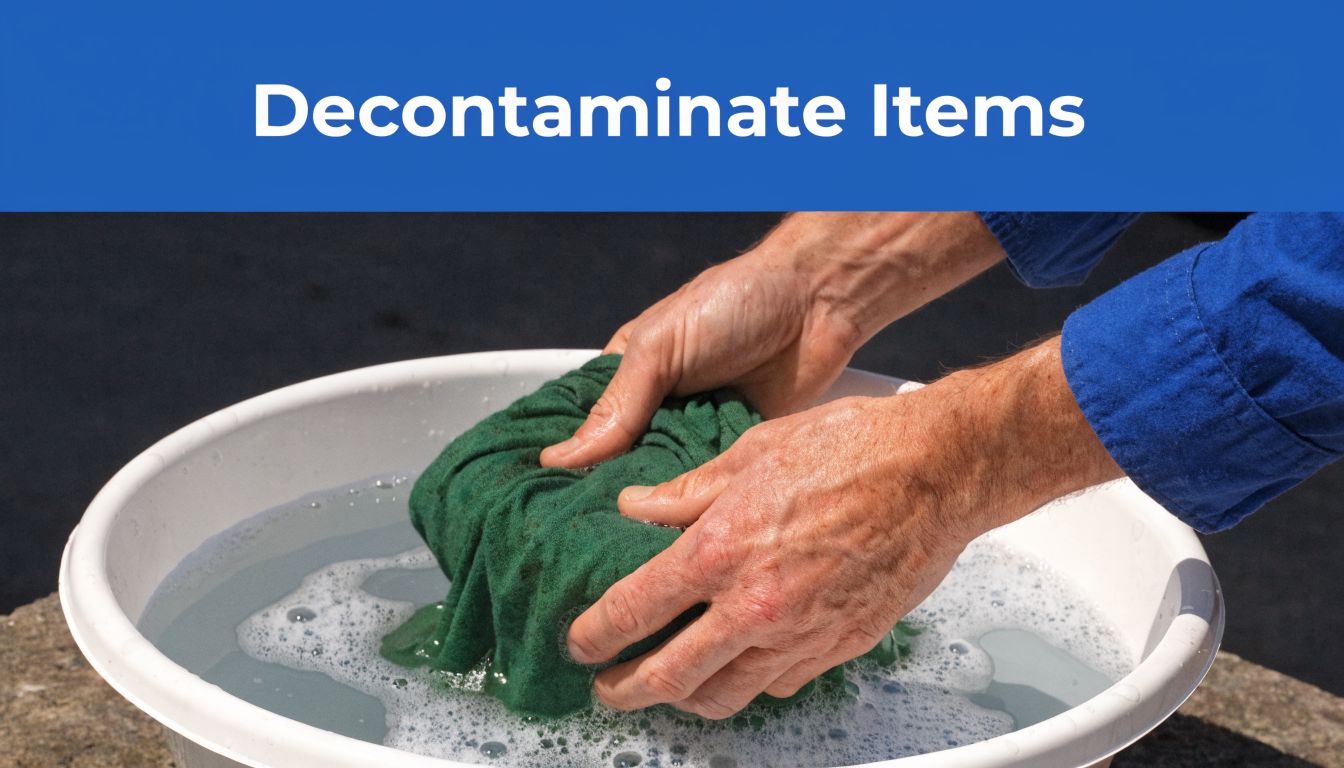
The most useful fabric protocol is straightforward and specific. Pre-soak contaminated clothing for at least 30 minutes in cold water with a double dose of heavy-duty detergent. That method is reported to be 85% effective at degrading OC oils in the first wash cycle, compared with 50% for water alone, and multiple wash cycles may be necessary for 98%+ removal, according to the detailed decontamination guidance for OC, CS, and CN exposure.
After the pre-soak:
- Wash separately: Keep contaminated clothing out of mixed loads.
- Use cold water: Don’t rely on heat to “sanitize” the item.
- Choose strong detergent: A heavy-duty formula works better than plain water because surfactants break up the oily residue.
- Inspect before reuse: If the item still causes irritation or retains residue, wash again.
What to do with shoes, bags, and everyday items
Not everything can go in the washer. That’s where a lot of cleanup efforts stall.
Use this rule of thumb:
| Item type | Best approach |
|---|---|
| Glasses, phones, hard cases | Wipe with cool water and mild detergent, then rinse and dry |
| Shoes with hard exteriors | Clean with soap solution and cloth, paying attention to seams |
| Fabric bags or backpacks | Spot treat, then wash if manufacturer allows |
| Leather goods | Test gently in a small area first, because aggressive washing can damage the material |
| Paper items | Often best discarded if directly contaminated |
Electronics need special care. Apply cleaner to a cloth, not directly onto the device, and avoid soaking openings. For personal items with textured surfaces, seams, or straps, assume residue may be hiding where your hand naturally grips the object.
When belongings shouldn’t be salvaged
If an item still triggers irritation after repeated cleaning, or if it’s highly porous and low value, replacement may be the safer choice. That often includes cheap pillows, heavily contaminated soft bags, and certain foam-lined accessories.
The goal isn’t to save every object. It’s to stop the cycle of re-exposure.
Cleaning Pepper Spray from Your Home and Surfaces
Indoor pepper spray contamination behaves differently from direct skin exposure. Once aerosolized OC settles on walls, counters, floors, carpet, drapes, and furniture, you’re dealing with an oily residue spread across multiple material types. That requires a methodical cleanup. Random wiping usually smears the problem wider.
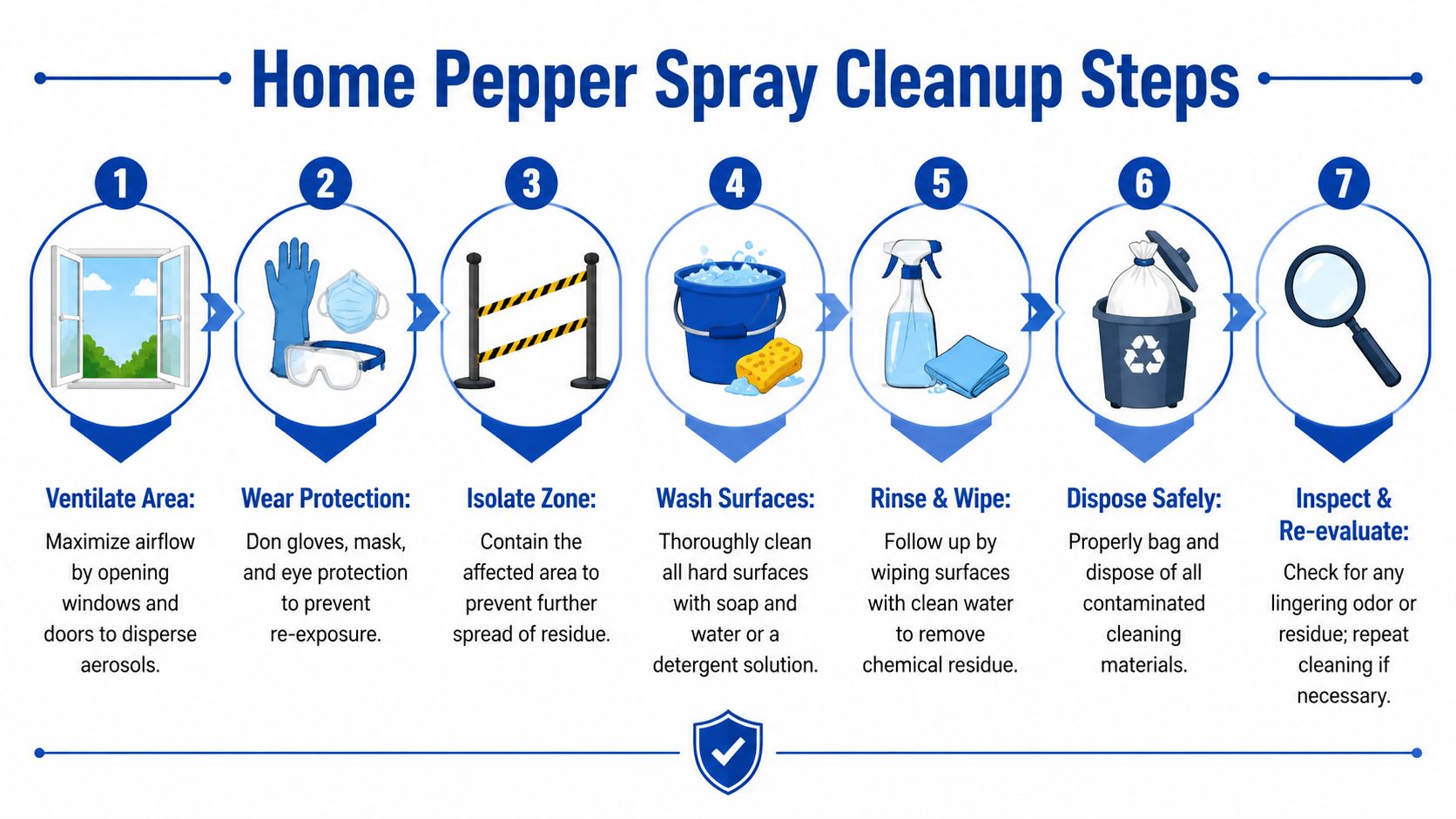
Here is the general workflow used for small-scale indoor cleanup.
Set up the area before cleaning
Before you touch a single surface, ventilate. Open windows and doors if conditions allow. Create airflow that pushes contaminated air outward, not deeper into the building. Then put on gloves, eye protection, and a mask.
If only one room is involved, close interior doors when possible to reduce spread. If foot traffic has already carried residue into other areas, identify that path first. Hallway handles, light switches, faucet handles, and seat backs are frequent transfer points.
Hard surfaces need soap, dwell time, and a cold rinse
For non-porous surfaces, plain water is not enough. Professional protocols recommend an oil-free dish soap and cold water solution, allowing it to dwell for 15 minutes so the surfactant can emulsify the OC oils. That process is described as 70 to 80% more effective than water alone, and for fabrics a HEPA-filtered vacuum can capture over 95% of remaining residue, according to the indoor pepper spray cleanup guidance from SABRE.
Use that method on:
- Counters and tables: Clean from the least contaminated edge toward the heaviest contamination.
- Door hardware and switches: These are high-transfer points and easy to miss.
- Tile, sealed floors, and painted walls: Apply, let dwell, wipe, then rinse with cold water.
- Bathroom surfaces: Include faucet handles, mirrors, and sink rims where face flushing may have spread residue.
If a room still “feels spicy” after casual cleaning, assume residue remains. Sensory irritation is a warning sign, not a mystery.
Soft surfaces are more difficult
Porous materials hold onto OC longer and release it again when disturbed. Carpet, upholstered chairs, mattresses, curtains, and fabric-covered vehicle interiors all fall into this category.
For those materials:
- Vacuum carefully with HEPA filtration if available.
- Avoid aggressive brushing that can kick residue back into the air.
- Use a mild detergent solution sparingly and test small areas first.
- Repeat cleaning as needed because a single pass may not fully remove residue.
If contamination is limited to a small rug or removable fabric cover, laundering may solve the issue. But fixed upholstery and wall-to-wall carpeting are harder. Deep fibers trap residue, and moisture alone can move that contamination deeper rather than lifting it out.
For broader indoor chemical remediation principles, including overlapping concerns with crowd-control agents, this guide to tear gas removal and indoor decontamination provides useful context.
The hidden issue with HVAC contamination
Do-it-yourself cleanup often fails. If the pepper spray discharge happened near a return vent, central air handler, fan, or duct opening, the building may no longer have a room-specific problem. It may have an air-distribution problem.
A contaminated HVAC system can:
| HVAC issue | Why it matters |
|---|---|
| Return vents pull aerosol inward | Residue may enter ductwork |
| Filters capture only part of the material | Remaining irritant can continue circulating |
| Air movement reintroduces settled particles | Symptoms return after cleaning seems finished |
| Shared duct branches spread contamination | Additional rooms become affected |
That’s why turning the system on immediately after an incident can backfire. In a small, isolated event, shutting the system down during cleanup may help contain the problem. In larger properties, air handling needs a more technical assessment before normal operation resumes.
What works and what usually doesn’t
Usually effective for small areas
- Ventilation
- Cool water
- Oil-free dish soap
- Careful wiping
- HEPA vacuuming on fabrics
Usually ineffective or risky
- Hot water mopping
- Dry dusting
- Scent sprays and air fresheners
- Steam cleaning too early
- Running fans that blow contamination into clean zones
If the spray was limited and you can clearly define the contaminated surfaces, a careful homeowner cleanup may be enough. Once the affected area becomes uncertain, involves multiple rooms, or includes ventilation spread, the situation moves out of routine household cleaning and into remediation.
When to Call for Professional Pepper Spray Cleanup
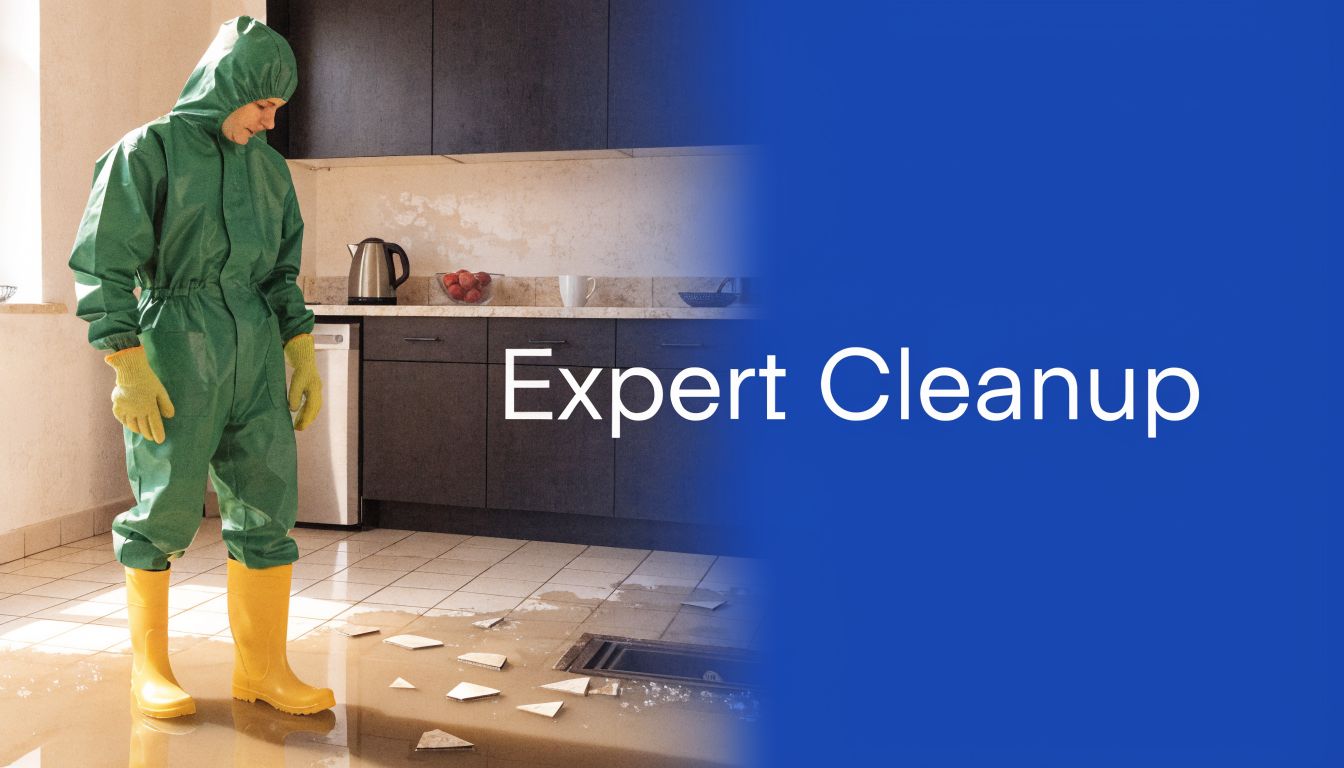
Some pepper spray incidents are small and contained. A brief accidental discharge near an entryway or a direct skin exposure with no environmental spread may be manageable. Others aren’t. The moment contamination reaches multiple rooms, enters soft furnishings, affects a business, or combines with bodily fluids, the risk profile changes.
Situations that usually exceed DIY cleanup
You should strongly consider professional help if any of these apply:
- The spray was discharged indoors in more than one room
- HVAC returns, vents, or ductwork were nearby
- A business, clinic, school, or shared facility is involved
- Vulnerable occupants are present, such as children, seniors, or people with respiratory conditions
- The scene includes blood or other bodily fluids
- There’s uncertainty about where contamination traveled
- Occupants still experience irritation after surface cleaning
A lot of online material gives decent first aid advice but stops there. It doesn’t address larger enclosed spaces well. One source discussing that gap notes a 15% rise in workplace chemical irritant incidents and states that professional methods such as surfactant foggers and HEPA vacuums can reach 99.9% efficacy, helping avoid re-aerosolization in larger indoor environments, as described in this discussion of pepper spray cleanup and indoor contamination limits.
What professionals actually do differently
This isn’t just about having stronger cleaning products. It’s about controlling spread, choosing the right sequence, and documenting the work.
A proper remediation response typically includes:
| Professional step | Why it matters |
|---|---|
| Site assessment | Identifies where aerosol and residue likely traveled |
| Containment | Prevents clean areas from becoming dirty areas |
| PPE and controlled entry | Protects workers and limits transfer |
| Surfactant-based removal methods | Targets oily OC residue instead of masking it |
| HEPA vacuuming and air management | Reduces suspended and settled particulate contamination |
| Waste handling and bagging | Prevents secondary exposure during disposal |
| Verification before re-entry | Helps confirm the space is ready for occupancy |
When carpets and upholstery are involved, a specialized cleaning contractor may also be part of the solution. For example, if residue has settled into area rugs or soft floor coverings after the primary hazard is controlled, a resource such as Rubber Ducky Rug Cleaning Birmingham can help property owners think through deep textile cleaning standards after contamination events.
Why commercial and mixed-hazard scenes need more than janitorial cleaning
In offices, behavioral health settings, apartment common areas, hospitals, and law enforcement scenes, cleanup has to account for occupant safety, documentation, and waste handling. If pepper spray is mixed with blood, saliva, vomit, or trauma scene residue, that’s no longer just a chemical irritant issue. It becomes a mixed-hazard event.
That’s also where general maintenance teams can get put in an unfair position. They may know how to mop a floor or shampoo carpet, but they’re not always equipped to assess aerosol travel, contaminated porous materials, or regulated waste.
One available option in those situations is when to call a hazardous cleanup professional for mold, blood, or chemicals. In practice, teams such as 360 Hazardous Cleanup handle these incidents by assessing contamination paths, controlling spread, removing affected materials when needed, and disposing of waste under applicable state and federal requirements.
A space doesn’t have to look damaged to remain unsafe. Pepper spray residue is often a contact hazard and an inhalation irritant long after the visible event is over.
The practical decision line
Call for professional remediation when reopening the space carries consequences. That includes businesses trying to resume operations, landlords preparing units for occupancy, healthcare facilities protecting medically vulnerable people, and families who can’t risk recurring exposure in bedrooms, living rooms, or vehicles.
If your main question is “Can I wipe this down myself?” the answer might be yes. If your real question is “How do I know this property is safe again?” that’s usually the point where professional involvement becomes the smarter choice.
Frequently Asked Questions About Pepper Spray Removal
How long can pepper spray residue linger in a home or vehicle
It depends on where it landed and how it was cleaned. Hard, non-porous surfaces are usually more straightforward. Carpet, upholstery, headliners, fabric seats, curtains, and ventilation systems can hold residue longer and release it again when disturbed. If a room or vehicle still causes eye, skin, or throat irritation after cleaning, assume residue remains.
How do you remove pepper spray from a car interior
Treat a vehicle like a very small enclosed room with fabric and airflow challenges. Open all doors first and let it air out. Wear gloves and eye protection. Clean hard surfaces with a mild soap solution, then wipe again with clean water. For fabric seats, carpet, and floor mats, work carefully to avoid over-wetting and spreading the residue deeper.
The challenge in vehicles is the cabin air system. If the spray entered vents or was discharged while the fan was running, contamination may keep cycling. In those cases, basic detailing often won’t solve the problem.
Can pets be affected by pepper spray residue
Yes. Pets are close to floors and upholstery, and they groom themselves after contact. That makes secondary exposure a real concern. If a pet was directly exposed, contact a veterinarian promptly. If the pet may only have contacted contaminated surfaces, keep it out of the area until cleanup is complete and wash pet bedding separately if exposure is suspected.
Should I be worried about long-term health effects
With prompt first aid and proper decontamination, recovery is typical, but severe symptoms should never be brushed off. Breathing problems, persistent eye pain, worsening skin reactions, or symptoms in someone with asthma or another respiratory condition deserve medical attention. The immediate hazard is usually irritation, but repeated re-exposure from contaminated surfaces can prolong the problem.
Why does the smell remain even after I cleaned everything
Because odor and contamination are not the same thing. A room can smell irritating because active residue is still present, or because cleaning moved the material without fully removing it. Air fresheners don’t solve that. A second, more controlled cleaning pass may be necessary, especially on textiles and touchpoints.
Can I use a regular house cleaner or disinfectant
Sometimes on hard surfaces, but only if it can cut oil and won’t damage the material. Many products sanitize without doing much to emulsify OC residue. That’s why mild dish soap is often more useful than a heavily fragranced cleaner in the first stage of removal.
What if I own rental property or manage facilities in a dense urban area
Documentation, occupant communication, and containment matter almost as much as the cleaning itself. If you’re dealing with tenant turnover, common-area contamination, or mixed hazards, it helps to review broader hazardous cleanup standards for dense markets. Property owners looking for regional context may find this guide for property owners in Los Angeles useful when thinking through compliance and professional remediation triggers.
Is there a point where I should stop trying to clean it myself
Yes. Stop when you can’t confidently define the contamination area, when symptoms return after cleaning, when vents or multiple rooms are involved, or when vulnerable people need to re-enter the space. At that point, persistence can spread the residue farther.
If you’re dealing with pepper spray in a home, vehicle, workplace, healthcare setting, or mixed-hazard scene, 360 Hazardous Cleanup can help assess the contamination, contain the spread, and complete compliant remediation so the property can be safely reoccupied.