Properly disposing of medical waste is not merely about following rules—it is a critical process of segregating, containing, and transporting hazardous materials to a licensed facility. Mishandling these materials can lead to significant public health risks and severe legal consequences. This is why engaging a professional partner with proven expertise in safe and compliant disposal is essential for any organization that generates medical waste.
Why Proper Medical Waste Disposal Is Non-Negotiable
Viewing improper medical waste disposal as a minor compliance oversight is a dangerous misconception. In reality, it poses a substantial public health threat with far-reaching consequences.
When materials such as used needles, contaminated gloves, or pathological samples are discarded with general trash, the risk of spreading infectious diseases increases dramatically. For any facility generating this waste—from a large hospital to a small dental office—understanding these risks is the first step toward building an organizational culture rooted in safety and responsibility.
Consider a small urgent care clinic where a busy staff member discards lightly blood-stained gauze pads into a general waste bin. While seemingly insignificant, this single shortcut can initiate a dangerous chain of events. The cleaning crew, sanitation workers, and potentially the general public are now at risk of exposure to bloodborne pathogens. This is not just a regulatory violation; it is an action that exposes the clinic to substantial fines, litigation, and irreparable damage to its reputation.
Before waste can be managed effectively, it must be correctly identified. The following is a breakdown of the most common types of medical waste, their sources, and the specific dangers they present.
Identifying Common Types of Medical Waste
| Waste Type | Common Examples | Primary Risk |
|---|---|---|
| Sharps | Needles, syringes, scalpels, broken glass | Puncture wounds and transmission of bloodborne pathogens like HIV and Hepatitis |
| Infectious | Contaminated gloves, gauze, cultures, swabs | Spreading bacterial, viral, or fungal infections through contact or airborne particles |
| Pathological | Human tissues, organs, body parts, fluids | High risk of spreading infectious agents and causing serious emotional distress |
| Pharmaceutical | Expired or unused medications, IV bags | Environmental contamination of soil and water; risk of misuse if not secured |
| Chemical | Solvents, disinfectants, lab reagents | Can be toxic, corrosive, or flammable, posing risks to people and the environment |
Recognizing these categories is fundamental. Each requires a specific handling protocol, and improper segregation can lead to serious safety breaches and compliance violations.
The Scope of the Problem
The volume of potentially hazardous material generated by healthcare activities is staggering. According to the World Health Organization, approximately 15% of all waste generated by healthcare activities is considered infectious, toxic, or otherwise hazardous.
In high-income countries, a single hospital bed can produce up to 0.5 kg of hazardous waste per day. This data underscores why professional disposal is not a luxury but a critical component of safe operations. For more on the global scale of this challenge, see the analysis at researchnester.com.
The danger is not limited to direct human contact. Improperly discarded pharmaceuticals can leach into water supplies, while infectious agents can harm local wildlife and disrupt ecosystems. Therefore, it is not enough to know what to do; understanding why these protocols are critical is paramount.
For any organization, the goal must be proactive risk mitigation. One single lapse in your medical waste protocol can destroy years of trust and meticulous operational planning. Viewing professional disposal as an investment in safety is the only way to protect your staff, your community, and your organization's future.
Ultimately, understanding how biohazard cleanup can save your property and your health is key to making informed decisions. It reframes the issue around prevention and professional responsibility, ensuring every piece of waste receives the precise, careful handling it demands. This is the bedrock of a compliant, safe, and trustworthy operation.
Your First Line of Defense: Segregation and Containment
The entire medical waste disposal process hinges on what happens the moment an item becomes waste. This first, critical step is segregation, and it is arguably the single most important action your facility can take to ensure safety, maintain compliance, and control costs. An error at this stage creates a domino effect of risks that follows the waste through to its final disposal.
Think of it as sorting recycling at home, but with significantly higher stakes. Just as you would not mix glass with paper, you cannot mix sharps with pharmaceutical waste. Correctly sorting everything at the point of generation prevents cross-contamination, protects staff from injuries, and ensures each type of waste receives the specific, legally required treatment.
Proper segregation also has a direct impact on your budget. When non-hazardous trash is mistakenly placed in a regulated medical waste bin, the entire container must be treated as hazardous—a far more expensive process. Diligent sorting is an investment that yields returns in both safety and financial efficiency.
This infographic illustrates how a simple mistake at the point of generation can escalate into serious consequences.
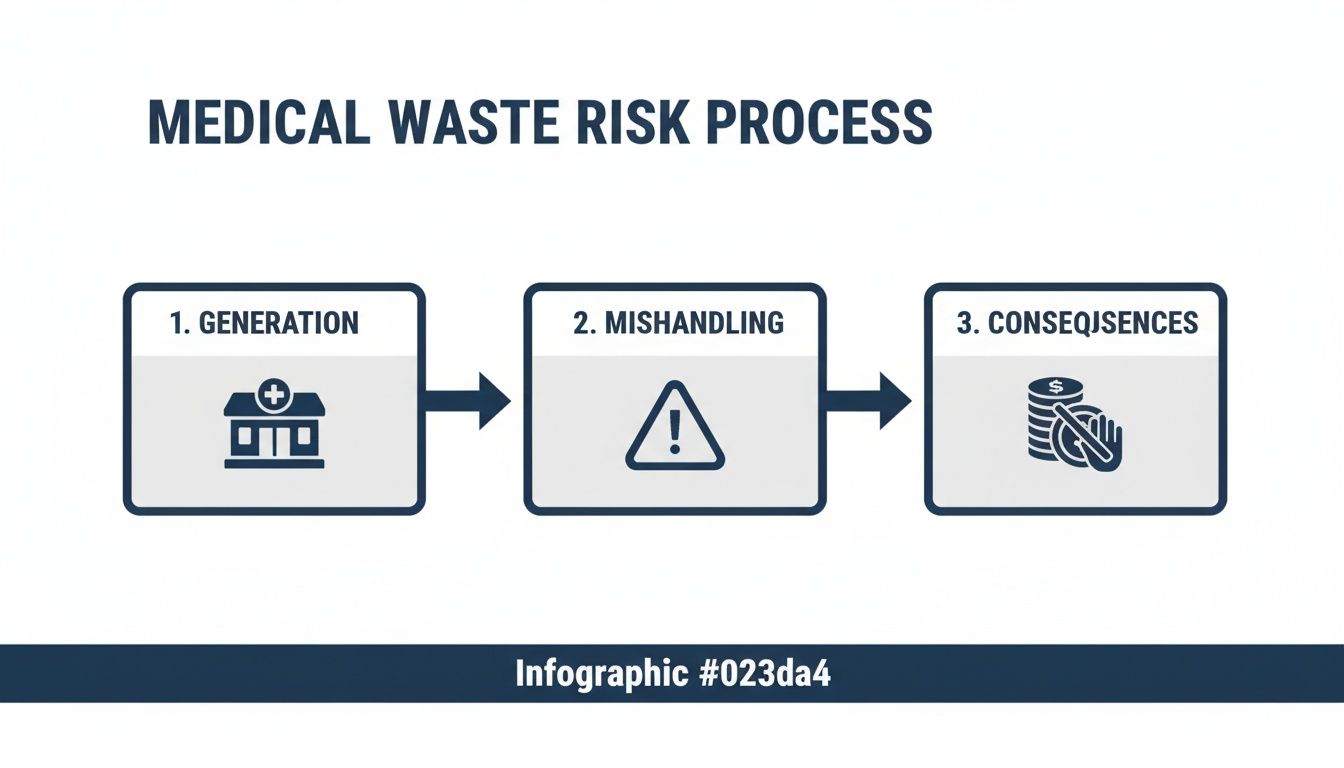
As you can see, a minor procedural slip-up is not just an internal issue; it is a direct link between routine patient care and major financial and safety liabilities.
The Universal Color-Coding System
To simplify sorting and reduce human error, the industry employs a universal color-coding system. It is imperative that every team member who handles materials that become waste knows this system thoroughly. Each color provides a clear visual cue for a specific type of risk and dictates exactly how that waste must be handled.
The purpose is instant visual recognition, which helps staff make the right decision in a split second, even during high-stress situations. Consistent use of these containers is not just a best practice—it is a cornerstone of regulatory compliance.
Key Container Types and Their Purpose
- Red Bags and Containers: Designated for biohazardous or infectious waste. This includes items saturated with blood or other potentially infectious materials (OPIM), such as soiled gloves, gauze, and medical tubing.
- Yellow Containers: Used for trace chemotherapy waste. This is where you dispose of empty chemo vials, used syringes, and the PPE worn during the administration of chemotherapy drugs.
- Black Containers: Reserved for hazardous pharmaceutical waste as defined by the EPA. This includes medications that are toxic, corrosive, or ignitable.
- Blue Containers: Intended for non-hazardous pharmaceutical waste, such as expired over-the-counter medications that do not fall under the EPA's hazardous criteria.
- Puncture-Proof Sharps Containers: These durable, clearly marked containers are designed exclusively for "sharps"—needles, scalpels, lancets, and anything that can pierce skin. They are typically red and must be securely locked when full to prevent accidental needlesticks.
Optimizing Container Placement and Use
Knowing the colors is only the first step; the placement of these containers is equally vital. Strategic placement is key to preventing accidents and ensuring items are disposed of correctly and immediately. A sharps container, for instance, must be within arm's reach of where the needle or scalpel is used.
This proximity rule prevents a staff member from having to walk across a room with an exposed sharp—a common cause of preventable injuries. Similarly, red biohazard bags should be readily accessible in patient rooms and treatment areas where contaminated gowns and gloves are removed.
Proper segregation isn't just a rule—it's a critical behavior that defines a facility's commitment to safety. When staff understand the 'why' behind the color codes, compliance transforms from a task into a shared responsibility for protecting one another and the community.
Additionally, staff must be trained to never overfill waste containers. An overstuffed bag cannot be tied securely, and a sharps container filled beyond its designated line is a major needlestick hazard. Most sharps containers have a "fill line" for this reason—it must be respected.
Once a container is full, it must be sealed, labeled correctly, and moved to a secure storage area to await pickup. This meticulous attention to detail is crucial for managing the risks associated with common bloodborne pathogens and ensuring everyone's safety.
Navigating Medical Waste Regulations and Compliance
When it comes to medical waste disposal, the regulatory landscape can seem like a complex web of acronyms and agencies. Federal bodies establish baseline standards, but state and local authorities often impose even stricter requirements. Misunderstanding these regulations is not an option—non-compliance leads to serious penalties.
Who’s Making the Rules?
At the federal level, several key agencies oversee different stages of the medical waste journey.
- Occupational Safety and Health Administration (OSHA): OSHA is focused on worker safety. Its Bloodborne Pathogens Standard is the definitive guide for protecting employees from infectious materials, specifying everything from proper labeling and containers to mandatory training.
- Environmental Protection Agency (EPA): The EPA regulates certain types of medical waste, particularly those classified as hazardous waste under the Resource Conservation and Recovery Act (RCRA).
- Department of Transportation (DOT): As soon as waste leaves your facility, the DOT's regulations take effect. They have strict guidelines for how hazardous materials must be packaged, labeled, and transported to prevent spills or exposure during transit.
These federal regulations are merely the foundation. The real complexities often arise from state health departments and local environmental agencies, which have the authority to enforce their own, more stringent rules. A practice that is compliant in one state could result in a fine just across the border.
The Critical Role of State and Local Oversight
Imagine an unannounced visit from a state health department inspector. They will not just verify federal compliance; they will use a checklist based on hyper-specific local and state codes. They will want to review your training logs, disposal procedures, and, most importantly, your waste manifests.
A waste manifest is a non-negotiable legal document. It is a multi-part form that tracks regulated medical waste from the moment it is sealed at your facility to its final destruction. This "cradle-to-grave" paperwork is your only legal proof of compliance.
Without a complete and accurate waste manifest for every single shipment, you have zero verifiable proof that your hazardous waste was handled correctly. This one piece of missing paperwork can trigger tens of thousands of dollars in fines, making it one of the most critical parts of compliance.
This is where the value of a professional partner becomes clear. A certified medical waste disposal company does more than transport waste; they act as your regulatory shield, managing the complex paperwork, staying current with changing state laws, and ensuring every step is documented and defensible. It all begins with correctly identifying and separating waste, which requires a deep understanding of official clinical waste and regulated medical waste classifications.
The market for medical waste containers in North America is projected to reach USD 3.88 billion by 2032, driven by strict EPA and state regulations. Fines under RCRA can exceed $25,000 per violation, per day, yet an estimated 30% of U.S. facilities underreport their waste, putting public health at risk. Conversely, adhering to proper disposal protocols has been shown to reduce the risk of infection by up to 95%—a powerful reminder of the direct link between compliance and safety.
Engaging an expert is not about offloading a task. It is an investment in protecting your organization from the crippling financial and reputational damage of a compliance failure. For a closer look at these requirements, you can learn more about OSHA and biohazard cleanup compliance standards in our detailed article.
Choosing The Right Medical Waste Treatment Method
Once your facility's medical waste is segregated, contained, and transferred to a licensed hauler, its journey is far from over. The next stage is treatment—the process of neutralizing pathogens to render the waste safe for final disposal. For any facility manager, understanding these methods is not just a technical detail; it is about making informed decisions that protect public health and align with environmental responsibilities.
The choice of treatment method is not arbitrary. It is carefully dictated by the type of waste and the specific regulations in your state or municipality. While several technologies exist, a few key methods are the industry workhorses, each with its own advantages and limitations. The ultimate goal is always the same: to ensure safety while minimizing environmental impact.
This is a strategic choice that demonstrates not only compliance but also responsible community stewardship.
Incineration: The Power Of High-Temperature Destruction
For decades, incineration has been the preferred solution for the most challenging types of medical waste, especially pathological materials like human tissues or certain chemical and pharmaceutical wastes. This method uses controlled, high-temperature combustion to completely destroy pathogens, reducing the original waste volume by as much as 90%. The intense heat obliterates even the most resilient microorganisms, converting hazardous materials into inert ash.
From our experience, incineration remains the most effective option for:
- Pathological Waste: Tissues, organs, and other anatomical waste that require complete destruction.
- Trace Chemotherapy Waste: Safely breaking down cytotoxic drugs and their hazardous residues.
- Certain Pharmaceutical Waste: Destroying controlled substances to prevent diversion and misuse.
However, while incredibly effective, incineration has faced scrutiny for its air emissions and carbon footprint. This has paved the way for more environmentally friendly technologies to become prominent for other waste streams.
Autoclaving: A Greener Approach With Steam
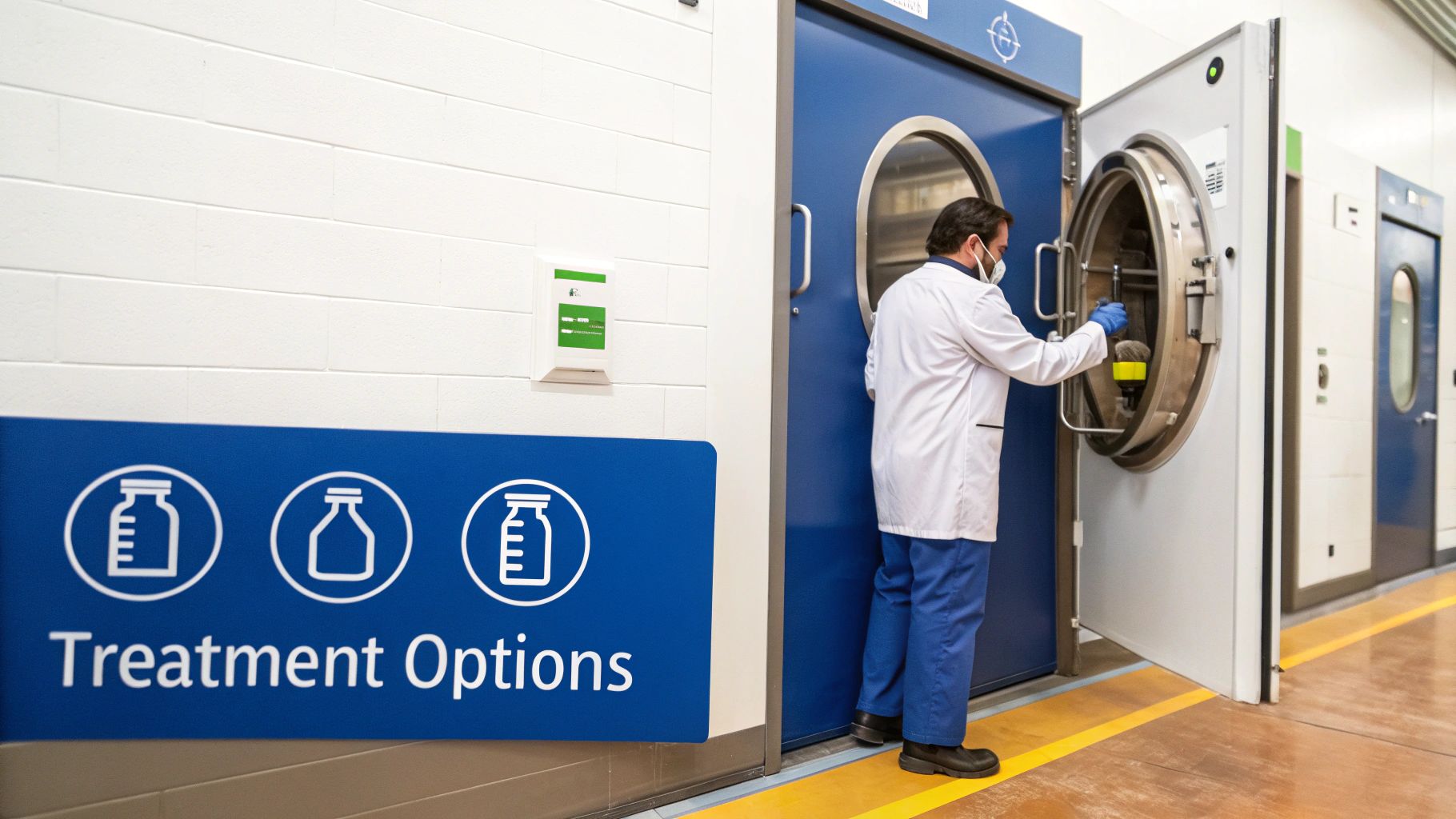
Autoclaving, or steam sterilization, is the most common and fastest-growing alternative to incineration. It operates like a large, industrial-scale pressure cooker, using high-pressure, high-temperature steam to kill all microorganisms. This is the same fundamental technology hospitals use to sterilize surgical instruments, simply applied on a larger scale.
Once treated, the waste is considered non-infectious. It is typically shredded to become unrecognizable and can then be safely disposed of in a sanitary landfill. Autoclaving is ideal for sharps, contaminated PPE, and lab cultures. It is important to note, however, that it is not suitable for pathological, chemotherapy, or hazardous chemical waste, as steam does not alter their chemical properties.
Choosing a treatment method is a balancing act between effectiveness, cost, and environmental impact. While incineration offers total destruction for specific waste streams, autoclaving provides a powerful, emission-free alternative for the bulk of everyday medical waste.
We've witnessed a significant industry shift firsthand. While incineration remains the gold standard for destroying 99.99% of pathogens, greener options are becoming increasingly important. Autoclaving's popularity surged after 2020, when the pandemic caused medical waste volumes to increase by up to 300% in some regions. More facilities are also moving toward off-site centralized processing, a trend expected to dominate the market by 2035 because it can reduce on-site management costs by 30-50%.
To provide a clearer picture, here is a comparison of common treatment methods.
A Comparison of Medical Waste Treatment Methods
This table offers a quick overview of the most common technologies, their mechanisms, and their best applications.
| Treatment Method | How It Works | Best For | Environmental Impact |
|---|---|---|---|
| Incineration | High-temperature combustion burns waste into sterile ash. | Pathological, chemotherapy, and certain pharmaceutical wastes. | High; produces air emissions (CO2, dioxins) and requires significant energy. |
| Autoclaving | High-pressure steam sterilizes waste, killing microorganisms. | Sharps, infectious waste (PPE, cultures), general medical waste. | Low; produces no harmful air emissions, uses less energy than incineration. |
| Chemical Disinfection | Waste is shredded and soaked in a powerful chemical disinfectant. | Liquid medical waste, some solid infectious waste. | Moderate; requires careful management and disposal of chemical residues. |
| Microwave Treatment | Shredded waste is misted with water and heated by microwaves to sterilize it. | Sharps, infectious waste (similar to autoclaving). | Low; energy-efficient and produces no harmful emissions. |
This at-a-glance comparison can help you understand the options your waste disposal partner might use, ensuring you make an informed and responsible choice.
Other Emerging Treatment Technologies
Beyond the primary methods, other technologies are finding their niche. Chemical disinfection involves shredding waste before submerging it in a strong disinfectant, but the chemicals themselves require careful handling and disposal.
Microwave treatment is another option where waste is shredded, sprayed with water, and then heated with microwaves to create pathogen-killing steam.
Each method has its place. A knowledgeable and experienced disposal partner can guide you to the most appropriate and compliant solution for your facility’s unique waste streams. Partnering with experts is the best way to ensure you’re engaging in safe and responsible hazardous waste disposal that protects both people and the planet.
When to Partner With a Professional Disposal Service
Deciding how to manage your facility's medical waste is one of the most critical operational choices you will make. The temptation to manage it in-house to reduce costs often overlooks the enormous risks involved. Attempting to manage regulated medical waste without certified expertise is not just a logistical challenge—it is a direct threat to your employees, public health, and your organization's financial stability.
Professional medical waste disposal is not merely an expense; it is a non-negotiable investment in risk mitigation. A single compliance mistake can result in fines that dwarf years of service fees, and an accidental exposure can trigger legal and reputational damage that is impossible to reverse.
The Hidden Dangers of Going It Alone
When you manage medical waste disposal yourself, you assume 100% of the liability. This extends far beyond simply bagging waste and placing it in a designated area. You become personally responsible for every step of the cradle-to-grave process.
This burden is heavier than most realize and includes:
- Constant Employee Training: Your staff must be experts on a complex web of OSHA, EPA, and DOT regulations. This requires continuous education as laws evolve, not just a one-time training session.
- Steep Costs for Equipment and Permits: Proper disposal requires specialized containers, secure and compliant storage areas, and often, expensive transportation permits. These costs accumulate quickly, erasing any perceived savings.
- Massive Legal Exposure: If a needlestick injury occurs, a container leaks in transit, or an audit uncovers a paperwork error, the legal and financial consequences fall directly on you.
The reality is that in-house management demands a level of expertise, time, and resources that most organizations do not possess. It is also beneficial to consider the full ecosystem of professional support available, including certified partners for related needs like medical equipment recycling services.
The Clear Advantages of a Certified Partner
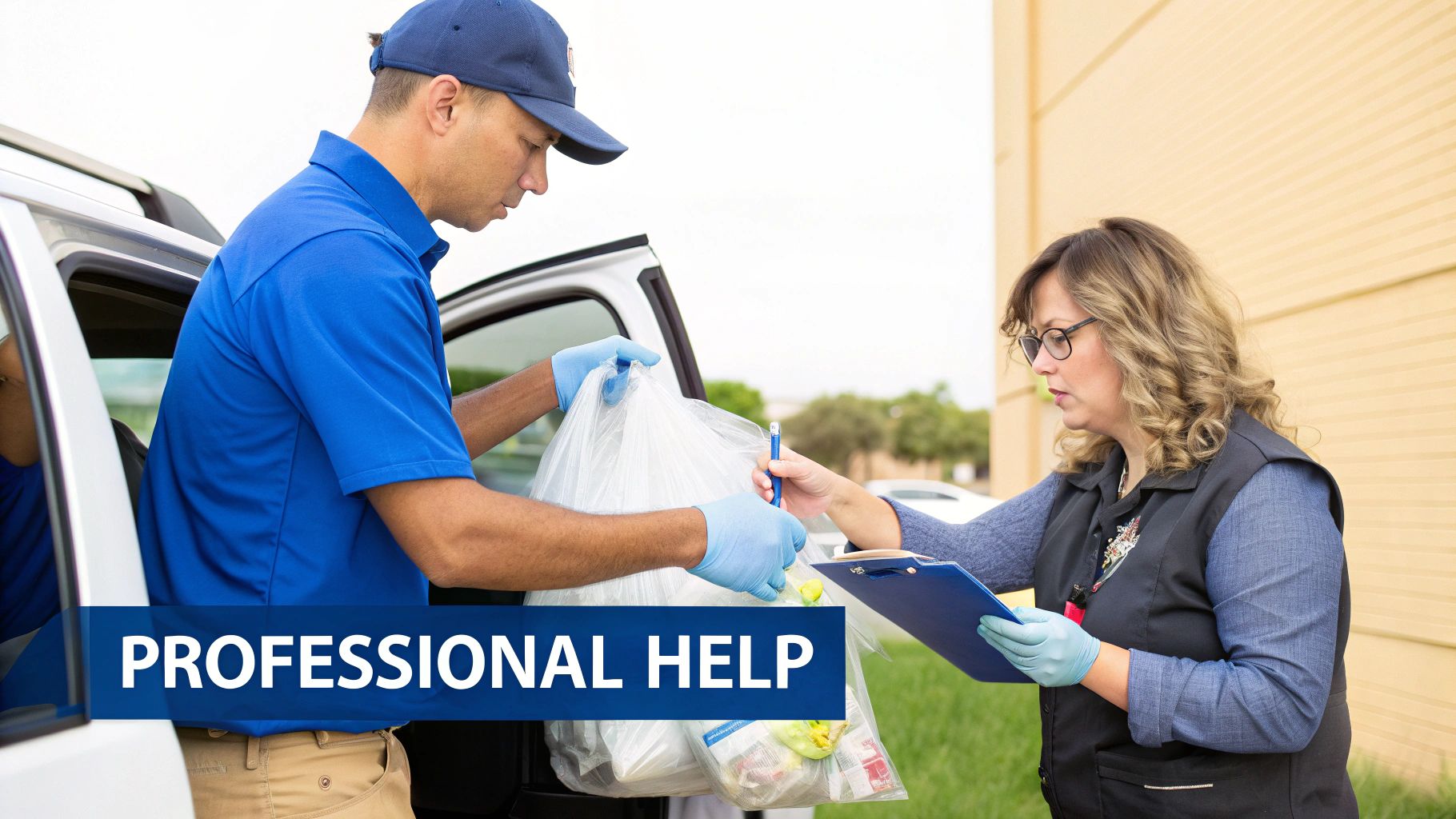
Engaging a certified biohazard remediation and disposal service like 360 Hazardous Cleanup fundamentally changes the equation. You are no longer just managing risk; you are transferring it to qualified experts. A true partner provides a comprehensive compliance shield, allowing you to focus on your core operations.
The benefits are immediate. A professional service guarantees compliance with all federal, state, and local regulations. They manage the complex chain-of-custody documentation, ensuring every manifest is accurate. This meticulous record-keeping is your best defense in the event of an inspection.
Partnering with a professional disposal service is not about outsourcing a task. It's about insourcing expertise, guaranteeing compliance, and securing peace of mind in a high-stakes environment.
A top-tier partner also offers services designed for the unpredictable nature of healthcare and other industries that generate biohazardous waste.
What Sets a Professional Service Apart:
- 24/7 Emergency Response: Biohazard situations do not adhere to a 9-to-5 schedule. A dedicated partner is on call around the clock to handle spills, contain unexpected hazards, and manage urgent disposal needs safely and promptly.
- Discreet and Compassionate Service: In sensitive situations, such as those following a trauma or unattended death, professionalism is paramount. Reputable companies use unmarked vehicles upon request and operate with absolute respect for privacy, ensuring a difficult time is not made worse.
- Insurance Advocacy: Navigating an insurance claim for biohazard cleanup can be overwhelming. An experienced partner will work directly with your insurance carrier, providing the necessary documentation to help streamline the process.
Ultimately, the decision comes down to one question: can your organization afford the risk of getting it wrong? For any entity that values its people, its compliance record, and its reputation, the answer is a firm no. A professional partnership is not a luxury; it is an essential layer of protection.
Your Top Questions About Medical Waste Disposal
Even with robust procedures in place, questions about medical waste inevitably arise. Whether you are a facility manager focused on compliance or an individual dealing with at-home medical care, clear answers are essential for maintaining safety.
Here are some of the most common questions we encounter.
Can I Just Toss Medical Sharps From My Home in the Trash?
Absolutely not. While it may seem convenient, disposing of needles, syringes, or lancets in household garbage is illegal in many areas. More importantly, it puts sanitation workers, family members, and pets at serious risk of injury. A single accidental needlestick can transmit dangerous bloodborne pathogens.
The only safe method for handling sharps is to place them in an FDA-cleared sharps container immediately after use. If one is not available, a heavy-duty, puncture-proof plastic bottle—such as a laundry detergent or bleach container—can serve as a temporary solution, provided the lid is secured tightly. Once full, the container must be taken to a proper collection site, such as a local pharmacy, hospital, or a professional medical waste hauler.
What’s a Waste Manifest, and Why Does It Matter So Much?
A waste manifest is your legal proof of proper disposal. It is a critical document required by the EPA that tracks regulated medical waste from the moment it leaves your facility to its final destruction, establishing a "chain of custody."
This form is signed by you (the generator), the licensed transporter, and the treatment facility. This "cradle-to-grave" tracking is your only verifiable defense during a regulatory audit. Without these records, you could face significant fines and legal consequences. For any healthcare provider or business, retaining these documents is absolutely mandatory. To explore more common questions, check out our guide on frequently asked questions about biohazard cleanup.
What Should I Expect to Pay for Professional Medical Waste Disposal?
There is no single price for professional medical waste services, as costs depend on several factors.
A reputable company will provide a detailed quote based on:
- Volume of Waste: The amount you generate and its frequency.
- Type of Waste: Sharps, pharmaceuticals, and pathological waste have different handling and treatment requirements, which affects pricing.
- Pickup Frequency: Whether you require service daily, weekly, or monthly.
- Your Location: State and local regulations can influence transportation and disposal fees.
While it is easy to view this as another expense, it is more accurately an essential investment in risk management. The financial impact of one compliance violation or a lawsuit from improper disposal would be devastating—far exceeding the cost of professional services.
A partnership with a certified disposal company isn't an expense—it's an investment in safety, compliance, and institutional integrity. The cost of professional service is a fraction of the cost of a single mistake.
What Should I Look for in a Medical Waste Disposal Company?
Choosing the right partner is one of the most important decisions you will make. The company you hire is an extension of your commitment to safety and public health, so select wisely.
When vetting potential companies, do not hesitate to ask for proof of the following:
- Full Licensing and Insurance: They must be fully compliant with all OSHA, EPA, DOT, and state-specific regulations. This is non-negotiable.
- Proven Track Record: Look for a team with years of experience and a solid reputation for reliability and professionalism.
- 24/7 Availability: Biohazard issues can arise at any time. You need a partner who can respond to emergencies day or night.
- Discreet and Compassionate Service: An excellent provider understands the sensitive nature of this work. They should offer options like unmarked vehicles and always operate with respect and privacy.
- Transparent Processes: They should provide clear, upfront pricing and handle all paperwork, such as waste manifests, without hidden fees or confusion.
These are not just desirable qualities; they are the hallmarks of a true risk mitigation partner, not just a pickup service. They provide the peace of mind that your medical waste is being handled with the highest standards from start to finish.
When facing the complexities of biohazard remediation and medical waste disposal, you need a partner who offers more than just a service—you need an ally in safety and compliance. 360 Hazardous Cleanup provides compassionate, expert support 24/7, ensuring every situation is handled with professionalism, discretion, and strict adherence to all regulations. If you need immediate assistance or want to establish a reliable disposal plan, contact us today.