Addressing a hoarding situation requires a foundational understanding: hoarding is a complex mental health condition, not a lifestyle choice, a bad habit, or a character flaw. The only effective path forward is through empathy and a focus on safety. This critical mindset shifts the dynamic from confrontation to a productive, supportive conversation, which is where real progress begins.
Understanding Hoarding Beyond the Clutter

When encountering a home affected by hoarding, the sheer volume of possessions can be overwhelming and emotionally jarring. However, to provide meaningful help, one must look past the physical clutter to understand the person and the disorder driving the behavior.
Hoarding is a recognized disorder characterized by a persistent difficulty in discarding possessions, regardless of their actual value. This behavior stems from intense emotional attachments and a perceived need to save items, where the thought of letting go causes significant distress. For a deeper understanding of this distinction, our guide on the differences between clutter and hoarding provides essential clarity.
The Psychological Roots of Hoarding
A compassionate response begins with understanding the "why." Hoarding disorder rarely exists in isolation; it is frequently linked to other conditions and significant life experiences that foster a deep-seated need for control and security.
These underlying drivers can include:
- Anxiety and Depression: Possessions can create a false sense of comfort, serving as a physical buffer against overwhelming anxiety.
- Trauma or Grief: Following a significant loss or traumatic event, hoarding may become a coping mechanism, with items acting as a shield against painful emotions.
- Cognitive Challenges: Many individuals with hoarding disorder struggle with executive functions such as decision-making, organization, and categorization.
Research indicates that hoarding disorder often has early origins—with 70% of cases appearing before age 21—and can worsen significantly after stressful events, which trigger escalations in approximately 80% of chronic cases. This data underscores that patient, trauma-informed support is not just beneficial; it is essential for effective intervention.
Hoarding is a response to distress. The clutter is a physical manifestation of emotional pain. Approaching it with empathy, rather than judgment, is essential for creating an environment where healing can begin.
Legal and Safety Considerations
In severe cases, the situation transcends personal well-being, escalating into serious legal and safety concerns. When a home becomes unsanitary, exits are blocked, or the structure is at risk, it may violate health codes, fire regulations, or lease agreements.
When hoarding is linked to severe mental health conditions, it may be necessary to explore legal options like Guardianship of Persons with Mental Illness. This becomes relevant when an individual can no longer care for themselves or their property, creating a danger to themselves or others. Recognizing these complexities is precisely why a professional, trauma-informed approach is not just helpful—it is often legally and ethically necessary to ensure safety and compliance.
How to Start a Conversation Without Starting a Fight

Initiating a conversation about hoarding is often the most significant hurdle. It is a deeply sensitive topic, and the wrong approach can cause the individual to feel attacked, leading to withdrawal or complete shutdown. The goal is not to win an argument but to open a line of communication built on genuine trust and concern.
This conversation must originate from a place of care for their safety and well-being. Frame your concerns around specific, observable risks rather than personal opinions about the "clutter." For example, instead of making a judgmental statement, focus on a tangible safety issue.
Choosing the Right Words and Tone
The language you use can either build a bridge or erect a wall. Utilize "I" statements to express your feelings without assigning blame. This simple rhetorical shift focuses on your concern for their safety, which is far less confrontational.
Here are a few ways to rephrase common frustrations:
- Instead of: "You have to get rid of all this junk."
- Try: "I'm worried about the pathways being blocked. I care about you and want to make sure you can move around safely."
- Instead of: "How can you live like this?"
- Try: "I've noticed it’s tough to get to the stove, and I'm concerned you're not able to cook hot meals."
This empathetic approach is critical. For a more comprehensive look at the condition itself, we've developed a guide on managing hoarding disorder and supportive strategies.
Active Listening and Validation
After you have shared your concerns, the most important action you can take is to listen. Allow them to express their feelings without interruption, even if you do not understand their perspective. Their attachment to their belongings is real and often tied to personal history that may be unknown to you.
Validating their feelings does not mean you agree with the situation; it means you acknowledge that their emotions are real to them. Statements like, "I can see this is really difficult for you to talk about," or "It sounds like that item has a lot of meaning to you," demonstrate that you are truly hearing them.
Avoid making demands or issuing ultimatums. The goal is collaboration, not coercion. Threatening to dispose of items or cleaning without permission will shatter trust and intensify their protective instincts over their possessions.
To maintain positive momentum, it is crucial to sidestep common pitfalls. Certain actions can derail the conversation instantly, creating resistance that complicates future attempts at communication.
Actions to Avoid During the Conversation:
- Touching or moving belongings without explicit permission. This is a significant boundary violation and can feel like a personal attack.
- Using judgmental or critical language. Words like "junk," "trash," or "disgusting" are profoundly hurtful and will lead to shutdown.
- Arguing over the value of specific items. The value is emotional and personal, not monetary. This is not a debate you can win.
- Expecting immediate change. This is the first step in what is often a long and gradual process.
By focusing on safety, listening with genuine empathy, and respecting their emotional connection to their possessions, you can lay the groundwork for a path forward—together. This initial conversation is about planting a seed of trust, not clearing the entire forest at once.
When first assessing a hoarding situation, the sheer volume of clutter is overwhelming. But the visible mess is often just the beginning. The greatest danger lies in what is unseen—the serious, sometimes life-threatening hazards hidden beneath the surface.
To create a safe and effective plan, one must move past the initial shock and conduct a methodical assessment of the environment to understand the true scope of the problem. What appears to be a simple mess to an untrained eye can actually be a complex matrix of structural, fire, and biological threats. This is where professional experience becomes critical for risk mitigation.
Fire Hazards and Impeded Egress
One of the most immediate and significant dangers in a hoarded home is the risk of fire. Clutter acts as fuel, allowing a small spark from faulty wiring or a forgotten candle to escalate into an uncontrollable blaze within seconds.
The problem is compounded by physical blockages. When assessing a home, look for these specific fire-related red flags:
- Blocked Exits: Doors and windows obstructed by possessions can make escape impossible during an emergency. This also prevents first responders from entering, turning a potential rescue into a recovery mission.
- Obstructed Vents and Heaters: Stacks of flammable materials like paper or fabric near furnaces, water heaters, and space heaters are a common cause of residential fires.
- Overloaded Electrical Systems: Hoarding often conceals frayed wires, overloaded outlets, and extension cords buried under piles of combustibles—a constant and severe fire hazard.
The global impact of hoarding disorder highlights the seriousness of these situations, which create substantial liabilities for property owners and a significant strain on emergency services. Government studies have identified self-neglect as a key issue for Adult Protective Services, further emphasizing the need for professional intervention.
This checklist provides a starting point for hazard identification, but it is not a substitute for a professional inspection by certified experts.
Hoarding Environment Risk Assessment Checklist
| Risk Category | Specific Hazards to Look For | Potential Consequences |
|---|---|---|
| Fire & Electrical | Blocked exits, windows, hallways Items near heat sources (vents, heaters) Frayed wires, overloaded outlets No working smoke detectors |
Inability to escape, rapid fire spread, electrical shock or fire, delayed emergency response |
| Biological & Health | Mold, mildew (visible or musty smells) Pest infestation (droppings, nests) Rotten food, garbage, human/animal waste Dust, allergens, poor air quality |
Severe respiratory illness, infectious diseases (Hantavirus, Salmonella), allergic reactions, chronic health issues |
| Structural & Physical | Sagging floors or ceilings Cracked walls or foundations Heavy objects stored improperly Trip-and-fall hazards |
Catastrophic building collapse, serious injury from falls, structural failure during cleanup |
This checklist covers common issues, but every situation is unique. Always proceed with extreme caution and prioritize safety above all else.
Unseen Health Threats and Biohazards
Beyond the fire risk, serious illnesses often lurk within the clutter. These homes can become breeding grounds for bacteria, mold, and pests, posing significant health risks to anyone who enters.
Identifying potential biohazards is a crucial part of the evaluation. Many of these contaminants are hidden, having saturated porous materials like carpets, drywall, and subflooring. Safe handling requires specialized equipment, personal protective gear, and certified training.
A critical mistake is assuming that what you can't see can't hurt you. In hoarding situations, the most dangerous contaminants are often invisible, airborne, or absorbed deep within the home's structure.
Common biological hazards include:
- Mold and Mildew: Poor ventilation and hidden moisture create ideal conditions for toxic mold growth, which can lead to severe respiratory problems when spores are inhaled.
- Pest Infestations: Decaying food and waste attract rodents, cockroaches, and other pests that carry diseases and contaminate surfaces with their droppings.
- Biohazardous Waste: The accumulation of garbage, rotten food, and human or animal waste creates a direct threat of exposure to dangerous pathogens. Professional handling of hoarding situations and biohazard cleanup is essential to mitigate these risks.
Structural Integrity Risks
Finally, the immense weight of accumulated items can compromise a building's structural integrity. This is a slow-developing but incredibly dangerous risk that is nearly impossible for an untrained individual to assess accurately.
The constant, excessive load places immense pressure on the home's frame, far exceeding its design capacity. Over time, this stress can cause floors to sag, support beams to crack, and, in worst-case scenarios, lead to a catastrophic collapse. A professional structural assessment is vital before any cleanup process begins to ensure the safety of all personnel.
Creating a Realistic and Collaborative Cleanup Plan
Upon recognizing the immediate risks, the first instinct may be to start discarding items aggressively. This approach is a mistake. A successful cleanup is a marathon, not a sprint, and proceeding too quickly can cause significant emotional distress for the individual, damaging trust and setting back progress.
The only effective strategy is a realistic, collaborative plan that prioritizes their emotional state. This requires a shift in mindset from total cleanup to harm reduction. The initial goal is not a spotless home but a safe one. Focus on clearing pathways to exits, removing obvious health hazards like decaying food, and ensuring the kitchen and bathroom are functional.
Setting Small, Achievable Goals
For an individual with hoarding disorder, the prospect of cleaning an entire room is paralyzing. It is essential to break the process down into small, manageable steps to build momentum without causing emotional overload. Early success is measured in inches, not rooms.
Begin with a single goal that feels achievable for everyone involved. Proven methods include:
- The One-Square-Foot Rule: Focus on clearing a single square foot of space. Acknowledge and celebrate this small victory before moving on.
- The 15-Minute Method: Agree to work together for just 15 minutes at a time, followed by a scheduled break. This prevents physical and emotional exhaustion.
- One Box at a Time: Use a simple three-box system—keep, trash, and donate. Tackle only enough items to fill those boxes in one session.
Collaboration is paramount. Granting the individual a sense of control over their belongings is vital for building trust. Instead of making demands, ask questions like, "Could we work together to clear a path to the stove?" This cooperative approach reduces feelings of helplessness and positions them as a partner in their own recovery. It can also be beneficial for supporters to research strategies for getting more organized to lead the effort more effectively.
The diagram below illustrates why prioritizing safety is so critical. These are the key risks your initial plan must address.
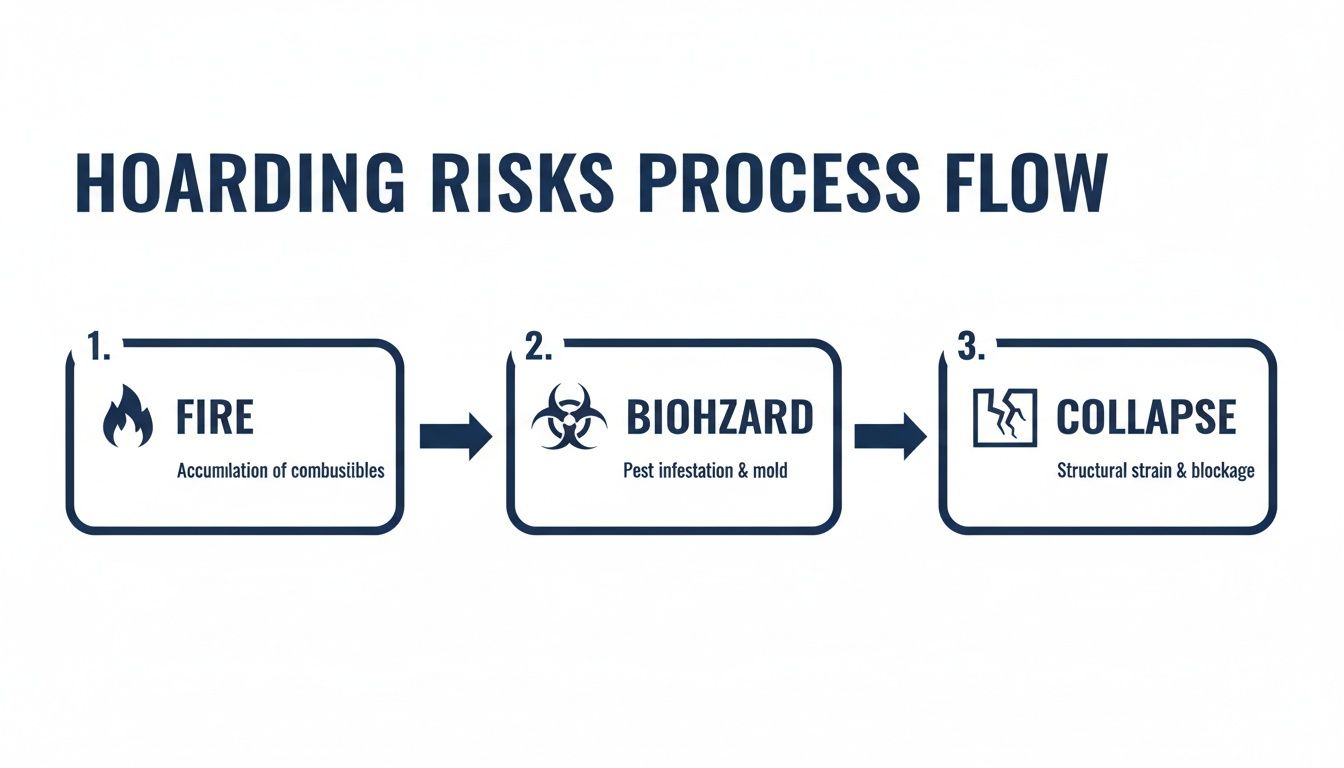
This visual reinforces how interconnected the dangers are. Clutter can quickly escalate into a fire hazard, a biohazard situation, or even structural failure.
Recognizing the Limits of a DIY Effort
As you progress, the true scale of the problem will become apparent. You may find that progress is painstakingly slow, emotional resistance is too high, or you uncover hazards you are not equipped to handle.
This is the point where you must be honest about the limitations of a DIY cleanup.
A successful cleanup plan isn't just about removing stuff; it's about creating a safe, livable space. When you're dealing with biohazards, structural issues, or extreme emotional distress, bringing in professionals isn't just an option—it's a necessity for safety and compliance.
If you discover mold, animal waste, or other biohazards, all work must stop. Handling these materials safely requires specialized training and personal protective equipment (PPE). Attempting to manage it yourself can expose everyone involved to serious health risks. Furthermore, navigating the emotional complexities requires a level of trauma-informed care that most friends and family are not prepared to provide. Understanding the biggest mistakes families make can clarify when it's time to engage professionals.
Ultimately, a realistic plan includes knowing when to call for expert assistance. A professional biohazard remediation team provides not only the necessary equipment but also a structured, compassionate process. They are trained to operate with discretion and efficiency, neutralizing hazards while respecting the sensitive human element of the situation. This ensures the cleanup is not only complete but also establishes a safe foundation for genuine, long-term recovery.
When You Absolutely Need a Professional Cleanup Crew
Even with the best intentions and a compassionate plan, some hoarding situations cross a critical threshold, moving beyond what friends, family, or property managers can safely handle. Recognizing this threshold is not an admission of failure; it is a responsible and necessary step to protect everyone involved, especially the individual with hoarding disorder.
The decision to call for professional intervention often comes down to one question: Is the environment hazardous? If the answer is yes, a DIY cleanup poses an unacceptable risk. Attempting to remediate biohazards, major pest infestations, or structural issues without certified training and proper equipment can lead to serious illness, injury, or permanent property damage.
Red Flags That Demand Professional Intervention
Certain discoveries are non-negotiable indicators that expert help is required. These are not merely signs of clutter; they are clear evidence of a hazardous environment that poses immediate health and safety risks. If you encounter any of the following, cease all activity and contact a professional remediation company.
- Presence of Biohazards: This is the most critical reason to engage professionals. This includes human or animal waste, bodily fluids, decaying organic matter, or used medical supplies. These materials host dangerous pathogens and require disposal in accordance with strict federal and state regulations.
- Significant Pest Infestations: An entrenched infestation of rodents, cockroaches, or other vermin constitutes a serious biohazard. Pests leave behind droppings, urine, and nests that contaminate surfaces and spread disease. A professional crew is needed not only to clear the clutter but also to decontaminate the biohazardous waste left behind.
- Widespread Mold Growth: Visible or odorous mold often indicates a deeper moisture problem. Disturbing mold without proper containment protocols can release millions of spores into the air, causing severe respiratory issues and cross-contaminating the property.
- Potential Structural Damage: Sagging floors, cracked walls, or bowing ceilings are signs that the building's structural integrity may be compromised. Continuing to move items without an expert assessment could trigger a catastrophic collapse.
These situations require more than household cleaning supplies; they demand Personal Protective Equipment (PPE), industrial-grade disinfectants, and a deep understanding of biohazard containment and decontamination protocols. This is precisely where a company like 360 Hazardous Cleanup becomes an essential partner.
The Critical Role of Safety and Regulatory Compliance
A frequently overlooked aspect of hoarding cleanup is the complex web of laws governing hazardous material disposal. Items contaminated with biohazards cannot be placed in standard municipal waste. Doing so can violate local and federal laws, resulting in significant fines and legal liability.
Hiring a certified professional isn't just about making the cleanup easier; it's about ensuring the process is safe, legal, and effective. Certified technicians are trained to mitigate risks you may not even be aware of, protecting both the home's occupants and the wider community.
Professionals adhere to strict protocols from agencies like OSHA to ensure every step—from containment to disposal—is handled correctly. This regulatory compliance is especially crucial for property managers and landlords, who have a legal obligation to provide a safe living environment. If you are weighing your options, exploring a list of professional hoarder cleanup companies can provide a clear overview of the specialized services required.
Compassion Meets Expertise
Hoarding disorder affects an estimated 2-6% of the global adult population, creating incredibly complex challenges for families and property owners. In commercial properties, healthcare facilities, or rental units, partnering with experts ensures the space is restored safely and empathetically, allowing all parties to focus on recovery, not risk.
360 Hazardous Cleanup offers 24/7 hoarding cleanup services with a team that has over 75 years of combined experience. Having handled tens of thousands of scenarios, they conduct thorough assessments and can often begin same-day remediation, always using unmarked vehicles for discretion. They manage all challenging aspects—biohazards, mold, and waste disposal—in full compliance with state and federal regulations and can advocate with insurance carriers to ease the financial burden. Further insights from the Senate Aging Committee highlight the national scope of this issue.
Ultimately, the decision to engage professionals is an act of care. It acknowledges the severity of the situation and prioritizes the health and safety of the person struggling with hoarding. A trauma-informed crew knows how to navigate the cleanup with the dignity and respect every individual deserves, creating a safe foundation for long-term recovery to begin.
Common Questions We Hear About Hoarding
When navigating a hoarding situation, a host of practical and challenging questions inevitably arise regarding legal rights, costs, and post-cleanup strategies.
Here, we provide clear answers based on our extensive experience assisting families, landlords, and property managers with these precise concerns.
What Are a Landlord's Legal Options If a Tenant Is Hoarding?
Discovering a hoarding situation in a rental property presents a significant challenge. It requires a delicate balance between the responsibility to maintain a safe property and the legal protections afforded to tenants. Hoarding can be considered a disability under the Fair House Act, precluding immediate eviction.
The proper first step is formal, written communication. Issue a notice detailing specific lease violations, such as blocked fire exits, health code infractions from waste, or pest infestations. This notice must provide the tenant with a reasonable, clearly defined timeframe to rectify the issues.
From the outset, meticulous documentation is essential. Maintain a detailed log of all communications and take clear photographs of the violations. If the tenant is unresponsive and the situation involves serious biohazards, your next call should be to Adult Protective Services (APS) or legal counsel. An official assessment from a certified remediation company provides the unbiased, professional evidence needed to support any further legal action.
Does Insurance Cover Professional Hoarding Cleanup Costs?
This is a frequent and critical question, and the answer is nuanced. Most standard homeowner's or renter's insurance policies will not cover the cost of decluttering—that is, sorting and removing personal belongings.
However, policies often do cover the secondary damage caused by hoarding. For instance, if a hidden water leak buried under clutter leads to extensive mold growth, the mold remediation portion of the project would likely be covered. The same principle applies to repairing structural or fire damage resulting from the hoarding conditions.
The key to a successful insurance claim is ironclad, professional documentation. Insurance carriers require detailed proof of damage and a precise scope of work for the remediation, not just anecdotal evidence.
This is where an experienced biohazard remediation company is invaluable. We understand exactly what adjusters require: detailed assessments, moisture readings, photographic evidence, and formal documentation. We often work directly with insurance companies on your behalf, navigating the complexities to help you secure the maximum coverage you are entitled to for the hazardous aspects of the cleanup.
How Do We Keep Hoarding from Happening Again?
A professional cleanup provides a safe, clean slate, but it is crucial to recognize that the cleanup itself does not cure the underlying disorder. Preventing a relapse requires a long-term support system focused on mental and emotional health.
The most critical component is professional therapy for the individual. Cognitive Behavioral Therapy (CBT) is particularly effective for hoarding disorder, as it helps individuals identify and change the thought patterns and behaviors that drive the compulsion. A therapist can provide a toolbox of coping strategies for managing anxiety and the urge to acquire new items.
On a practical level, preventing relapse also involves:
- Building new habits: Collaboratively create simple, sustainable organizational systems.
- Setting clear boundaries: Gently establish household rules regarding new acquisitions and schedule regular, low-stress check-ins.
- Finding a support group: Connecting with others who share similar experiences can be incredibly powerful, reducing the feelings of isolation and shame that often accompany this disorder.
The cleanup offers a fresh start. Long-term success is built upon a foundation of compassionate support and consistent mental healthcare.
What if the Person with Hoarding Disorder Refuses Help?
This is the most heartbreaking and frustrating scenario. You cannot legally force a competent adult to accept help if they refuse. However, the situation changes when their living conditions pose an immediate danger to themselves or others.
If you identify clear, life-threatening risks—such as completely blocked exits, no running water, severe biohazards, or visible structural damage—it is time to contact the authorities. Reach out to Adult Protective Services (APS) or your local code enforcement agency.
These agencies can conduct a wellness check. If they determine the living conditions are imminently dangerous, they often have the legal authority to mandate a cleanup to resolve specific safety violations. In such cases, they will almost always require a certified and insured company to perform the remediation to ensure it meets official safety and health standards.
When you’re facing the overwhelming task of a hoarding cleanup, you don't have to do it alone. The compassionate, certified professionals at 360 Hazardous Cleanup are available 24/7 to restore safety and peace of mind. Learn more about our discreet and thorough hoarding and biohazard remediation services.