You're probably here because one of two things is true. You've seen what mold can do to a building and to the people living or working inside it, and you want a career that solves real problems. Or you're looking for work that's hands-on, technical, and meaningful, not another job where your effort disappears into a spreadsheet.
That instinct matters in this trade. Mold remediation isn't glamorous work, but it is important work. You walk into spaces that smell wrong, feel damp, and carry a lot of stress for the owner or tenant. Your job is to make the structure safer, stop the spread, document what happened, and leave the property in a condition that people can trust again.
If you want to learn how to become a mold remediation specialist, start with the right expectation. This is not just cleaning. It's contamination control, moisture investigation, material removal, drying verification, client communication, and compliance. The people who last in this field are steady under pressure, careful with PPE, disciplined with paperwork, and respectful with clients who may already be overwhelmed.
A Career Protecting Health and Property
A strong candidate for this field usually has a few traits in common. You notice details other people miss. You don't mind physical work. You can follow a procedure even when a client is anxious, a contractor is waiting on you, and the clock is working against the job.
That combination is rare, and it's why good remediation specialists are valuable. When mold is present, families worry about health, owners worry about property damage, and facility managers worry about disruption, liability, and whether the underlying moisture problem was resolved. A specialist has to think through all of it.

What the work actually feels like
Some days you're setting containment in a small residential bathroom after a slow leak. Other days you're coordinating with building staff in a larger occupied property where every movement has to protect unaffected areas. In both settings, people look to you for answers.
That's why technical skill alone isn't enough. You need the judgment to explain what's happening without creating panic, and the restraint to avoid making promises before you've verified conditions. At 360 Hazardous Cleanup, that mix of safety, professionalism, and plain communication is part of what clients need during high-stress remediation work, especially when mold has already disrupted daily life. If you want a homeowner-focused overview of why that matters, this piece on mold remediation protecting your health and home gives useful context.
Practical rule: If you can't explain the plan calmly to a worried client, you're not ready to lead the job yet.
Who tends to do well in this career
The best new hires usually grow into the role because they respect the process. They don't freelance with contamination control. They don't treat moisture readings like guesswork. They don't rush a clearance-ready finish before materials are dry.
This career is also rewarding in a deeper sense. You're protecting indoor environments where people sleep, recover, work, and raise families. You're often stepping into a problem after the occupant has already dealt with leaks, odors, damaged materials, insurance calls, or health concerns. Restoring order in that environment means something.
If that kind of responsibility feels motivating rather than intimidating, this can be a very good path.
The Foundational Knowledge Every Specialist Needs
Before you think about credentials, learn the science behind the work. Mold remediation goes wrong when a technician treats it like stain removal. Surface cleaning by itself doesn't solve a moisture-driven contamination problem, and careless disturbance can spread spores into unaffected spaces.
A specialist needs working knowledge in three areas. First, mold growth conditions. Second, building moisture behavior. Third, contamination control during demolition and cleanup.
The workflow that separates professionals from amateurs
The most reliable field approach is not complicated, but it is disciplined. A technically sound workflow is source identification → containment → HEPA air filtration → removal/cleanup → replacement, with containment and continuous HEPA negative-air control used to prevent cross-contamination while disturbed spores are airborne. Operational guidance also emphasizes finishing only when framing is fully dry, with a benchmark of below 17% moisture content in wood framing and no visible mold or odor remaining, as outlined in this six-step mold removal and remediation workflow.
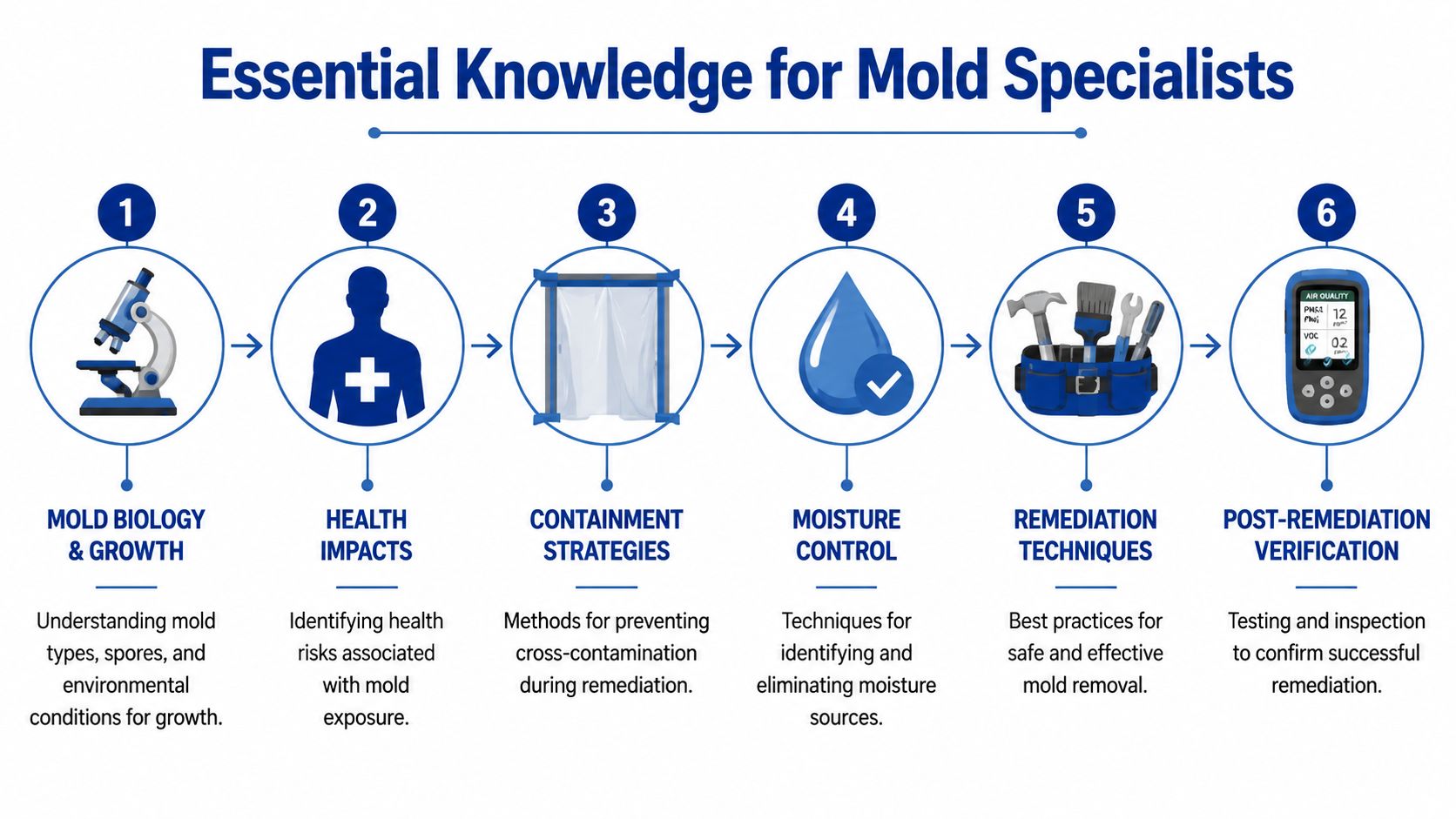
If you skip the source investigation, the problem comes back. If you skip containment, you contaminate more of the structure. If you skip drying verification, you close up wet materials and set up the next failure.
For a client-friendly explanation of the broader process, 360 Hazardous Cleanup has a useful page on what mold remediation is.
What to study before you ever cut drywall
Focus your early learning on these topics:
- Mold biology: Know that mold growth follows moisture and available food sources. You don't need to become a lab scientist, but you do need to understand that visible growth is often only part of the problem.
- Building science: Learn how roof leaks, plumbing failures, condensation, poor ventilation, and hidden wall or floor moisture create recurring damage.
- Airflow management: Understand why negative air, sealed work zones, and controlled entry matter during disturbance.
- Material judgment: Some materials can be cleaned under the right conditions. Others need removal because they're porous, degraded, or too contaminated to trust.
- Drying standards: Moisture meters, visual inspection, and odor assessment are not optional. They are part of deciding whether the job is done.
Removal is only one phase of remediation. The real skill is controlling where contamination goes, and proving the structure is dry enough to rebuild.
What doesn't work
A lot of newcomers make the same mistakes. They think bleach is a plan. They think odor equals diagnosis. They think a dehumidifier in the hallway replaces containment and negative air in the work area.
It doesn't.
The field rewards technicians who can slow down, inspect carefully, and work clean. If you want to become a mold remediation specialist, that mindset matters as much as any course certificate you hang on the wall.
Your Certification and Training Roadmap
Certification matters, but it does not carry you through a hard day in the field by itself. A homeowner may be anxious, an adjuster may want updates, and your supervisor may need clean documentation before the crew leaves. Employers hire for training. They keep people who can follow procedure, communicate clearly, and stay steady when the job gets uncomfortable.
Start with training that builds a safe entry point into the trade. That usually means coursework in water damage, microbial contamination, PPE, containment, and equipment use, followed by supervised field time. The goal is not to collect certificates fast. The goal is to build judgment you can use under pressure, when the work zone is hot, the client is worried, and every shortcut can create a health problem or a liability problem.
What recognized credentials show employers
Recognized credentials show that you have trained to an accepted standard and that you are serious about staying in the trade long enough to do it well. Some credentials also require documented field experience, which matters because mold work is full of decisions that only make sense after you have seen enough jobs go right and wrong.
The career path is real. EnvironmentalScience.org notes a career profile for mold remediation technicians with a median annual salary of $48,920 in 2024 and higher earnings for experienced workers. Income rises with skill, reliability, and the kind of reputation that makes a company trust you with sensitive jobs, detailed paperwork, and client-facing conversations.
For a broader view of how standards connect to daily risk control, read why certifications and training matter beyond the basics. It explains why training is tied to worker safety, regulatory exposure, and defensible job performance, not just hiring optics.
Licensing can carry legal weight
Certification and licensing are not the same thing. In some states, licensing determines who can legally perform or advertise certain mold-related services. New York is a good example. As described in the EnvironmentalScience.org guide above, mold assessors and remediation contractors need a valid state license, and that license has to be renewed on schedule.
New technicians should get clear answers to these questions before accepting a role:
| Question | Why it matters |
|---|---|
| What training does my employer require before I enter a containment zone? | It shows whether the company has real safety procedures, documented onboarding, and qualified supervision. |
| What licenses or registration rules apply where I will be working? | It keeps you from learning bad assumptions that could limit your role or expose the company and client to legal problems. |
A strong employer will answer both without hesitation.
Choose a first employer that teaches the full job
New hires often focus on who will get them in the field fastest. I would focus on who will train them cleanly. Bad habits spread fast in this trade, especially around containment setup, respirator discipline, debris handling, and recordkeeping.
Look for a company that does four things well:
- Pairs new technicians with experienced leads: Real correction in the moment helps you build safe habits before mistakes become routine.
- Treats PPE and containment as standard procedure: If a supervisor cuts corners on setup or respiratory protection, the problem is cultural, not temporary.
- Teaches documentation from day one: Photos, moisture readings, daily notes, scope changes, and client updates protect the company and the occupants.
- Explains the reason behind the procedure: Good trainers do not just tell you what to do. They explain what can go wrong if you skip a step.
If you are entering the trade from another career, this article is essential reading for career-switching adults. The first ninety days matter more than many people expect. You are learning the technical side of remediation, but you are also proving that you can handle routine, accountability, and the emotional weight of walking into other people's disrupted homes.
That is what separates a person with a certificate from a professional clients and crews can trust.
From Classroom to Fieldwork Gaining Hands-On Experience
Day one in the field can start in a bedroom that smells damp, with a worried homeowner standing in the hallway asking whether their kids can sleep there tonight. You are unloading air scrubbers, checking your PPE, watching where you place every tool, and listening carefully because the client's stress level tells you how much communication this job will require. That pressure is part of the work.
What a new technician learns on site
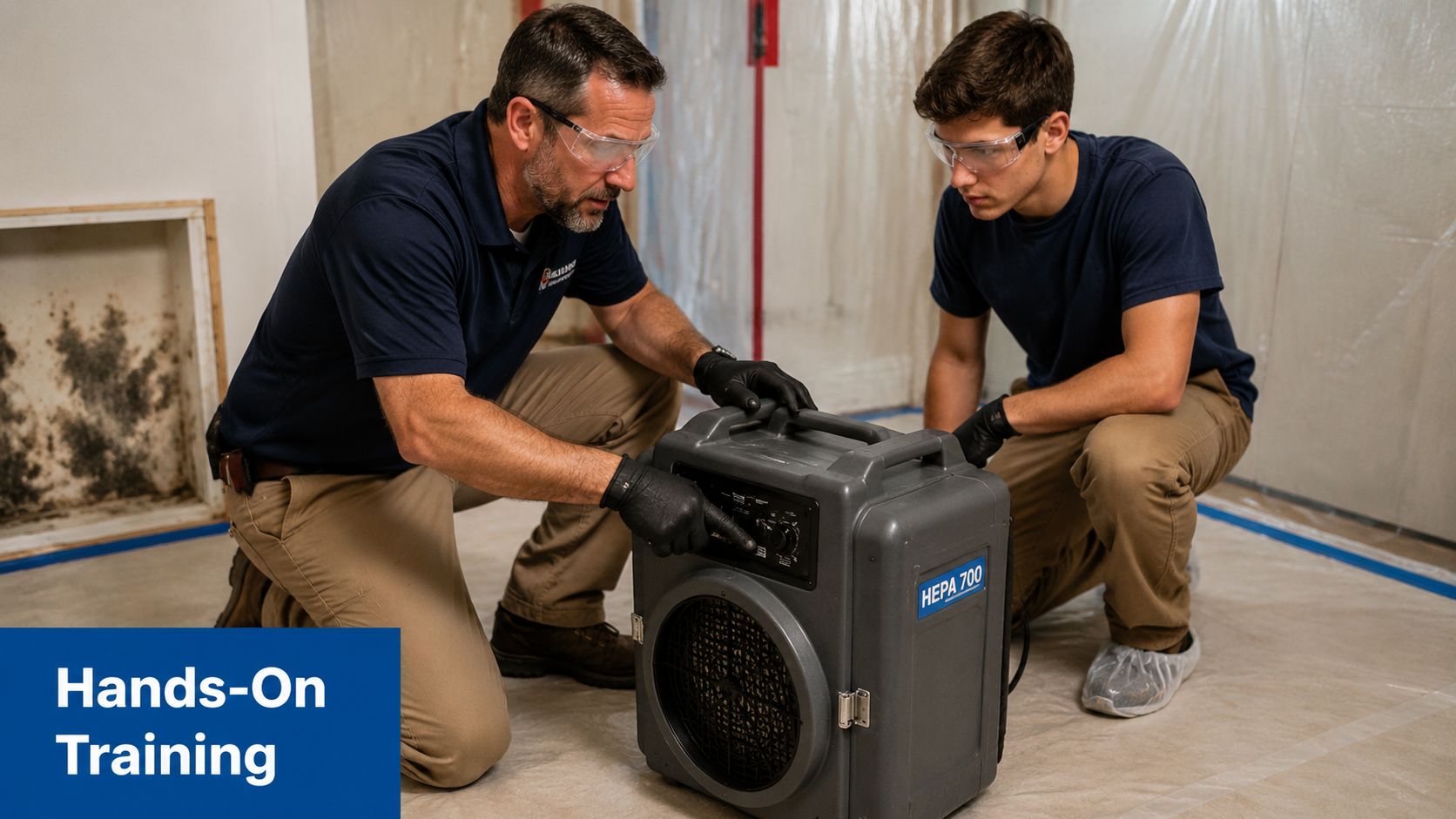
Strong field training starts before any material is removed. New technicians need to learn entry and exit procedures, tool staging, containment checks, waste routing, and how to keep clean areas clean while production is moving. The skill is in controlling where contamination goes, how workers move, and what gets documented while the job is still unfolding.
That lesson gets sharper once clients are involved. A homeowner dealing with visible wall growth, musty odors, or staining near wet trim is often tired, worried, and already frustrated by delays or conflicting advice. Clear communication lowers tension. Explain what the containment is doing, what negative air is for, why some materials have to stay exposed until they dry, and what the next update will be. People can handle bad news better than vague answers.
For someone entering from another trade or from a completely different line of work, this article from Prentice is essential reading for career-switching adults. It matches what I see with new hires who do well early. They ask questions, accept correction, and stay steady when the job site gets uncomfortable.
Safety habits that build trust fast
A field supervisor notices habits before speed. These are the ones that matter early:
- Protect the breathing zone: Wear the right respirator for the task, check the fit, and stop treating PPE like a formality.
- Respect the containment line: Gloves, boots, cords, and tools can spread debris if you move carelessly.
- Use meters, not assumptions: Material condition, drying progress, and clearance decisions need readings.
- Document in real time: Photos, moisture logs, daily notes, and scope changes are stronger when they are recorded as the work happens.
- Stay calm with occupants: Your tone affects cooperation, access, and confidence in the crew.
The emotional side of the trade surprises many new technicians. Some jobs are in family homes. Some are in rentals where the tenant is angry and the owner is defensive. Some are in schools or commercial spaces where everyone wants the work done immediately but no one wants disruption. A professional keeps the room calm, answers what they can, and does not let tension pull the crew off procedure.
Here's a practical demonstration worth watching when you want to connect equipment handling to real field conditions:
Experience matters because judgment takes repetition
Advanced credentials require documented field time, and for good reason, as noted earlier in the article. Classroom training gives you terminology, standards, and process. Fieldwork teaches judgment. You learn when a wall cavity that looks dry still reads wet, when dust control is starting to fail, and when a stain is old residue versus an active moisture problem that will keep feeding growth.
You also learn that closeout starts long before the final wipe. Good technicians keep notes, track readings, photograph conditions, and communicate scope changes while the job is active. That discipline protects the client, the company, and the crew lead signing off on the work.
If you want a practical example of how visible growth can point to a larger moisture problem, this guide on black mold on walls is a useful field-facing reference.
The Business of Remediation Insurance and Regulations
A lot of people entering this trade think the work ends when the last debris bag leaves the property. It doesn't. On many jobs, the closeout package matters almost as much as the cleanup itself.
Property owners, managers, insurers, and in some markets regulators all want proof. They want to know what conditions were found, what corrective steps were taken, who performed what role, whether the underlying moisture issue was addressed, and what happened after remediation was complete.
Documentation is part of the job, not office busywork
In many regulated markets, the job extends beyond cleanup to include extensive documentation. For instance, New York City requires a licensed mold assessor to conduct a post-remediation assessment and file a mold post-remediation certification online to confirm the project was completed successfully and the underlying condition was fixed, as described by the New York City mold abatement requirements.
That should change how you think about your role. You're not just removing damaged material. You're participating in a chain of evidence that supports occupancy decisions, insurance handling, contractor coordination, and liability control.
A clean-looking room is not the same thing as a properly closed project.
How insurance and compliance connect in the real world
On insurance-related work, weak documentation creates friction. If notes are thin, photos are inconsistent, or moisture correction is poorly recorded, the property owner may struggle to explain the necessity and scope of work. That doesn't mean every claim turns on one technician's notes, but disciplined records make everyone's job easier.
It also affects your employer's risk profile. Mold work involves potential allegations around cross-contamination, incomplete remediation, or failure to identify ongoing moisture sources. Anyone moving toward supervisory or independent contracting work should understand coverage issues, including pollution-related exposures. This guide to pollution insurance for specialty trades is a practical starting point for that side of the business.
Here's what a professional specialist keeps in mind near the end of a job:
- Scope records: What areas were affected and how the work zone was defined.
- Condition evidence: Photos, notes, and readings that support decisions made during the project.
- Communication trail: Clear updates to owners, managers, or adjusters reduce confusion later.
- Closeout readiness: Final steps should align with whatever post-remediation or assessor requirements apply locally.
If you want a client-facing look at where cleanup and insurance conversations often break down, this article on how to talk to your insurance company about cleanup services, insurance tips, common pitfalls, and what you should know is worth reviewing.
Launching Your Career A 6 to 12 Month Timeline
The fastest way into this field is not to chase every possible class at once. Build in sequence. Learn the basics, get on a crew, become dependable in the field, then add advanced specialization as your judgment improves.
Months 1 through 3
Start with foundational training and job research. You're looking for employers who can teach containment, moisture control, PPE use, equipment handling, and documentation under supervision.
Use this phase to clean up your résumé. If you've worked construction, maintenance, restoration, environmental services, safety, facilities, or healthcare support, highlight the parts that show reliability, hazard awareness, and comfort with procedures. If you've never worked in those fields, stress punctuality, physical stamina, communication, and willingness to follow standards.
Months 4 through 6
Get into the field and pay attention to habits. There, you learn how crews stage equipment, protect unaffected areas, talk to clients, and document work as it happens.
Ask direct interview questions before you accept a role:
| Question to ask | What a strong answer sounds like |
|---|---|
| How are new technicians trained on containment and PPE? | The employer describes supervised field training, not just a quick orientation. |
| Who reviews documentation and moisture readings? | A lead or supervisor checks work consistently. |
| How do you handle occupied properties? | The company has a process for communication, cleanliness, and minimizing disruption. |
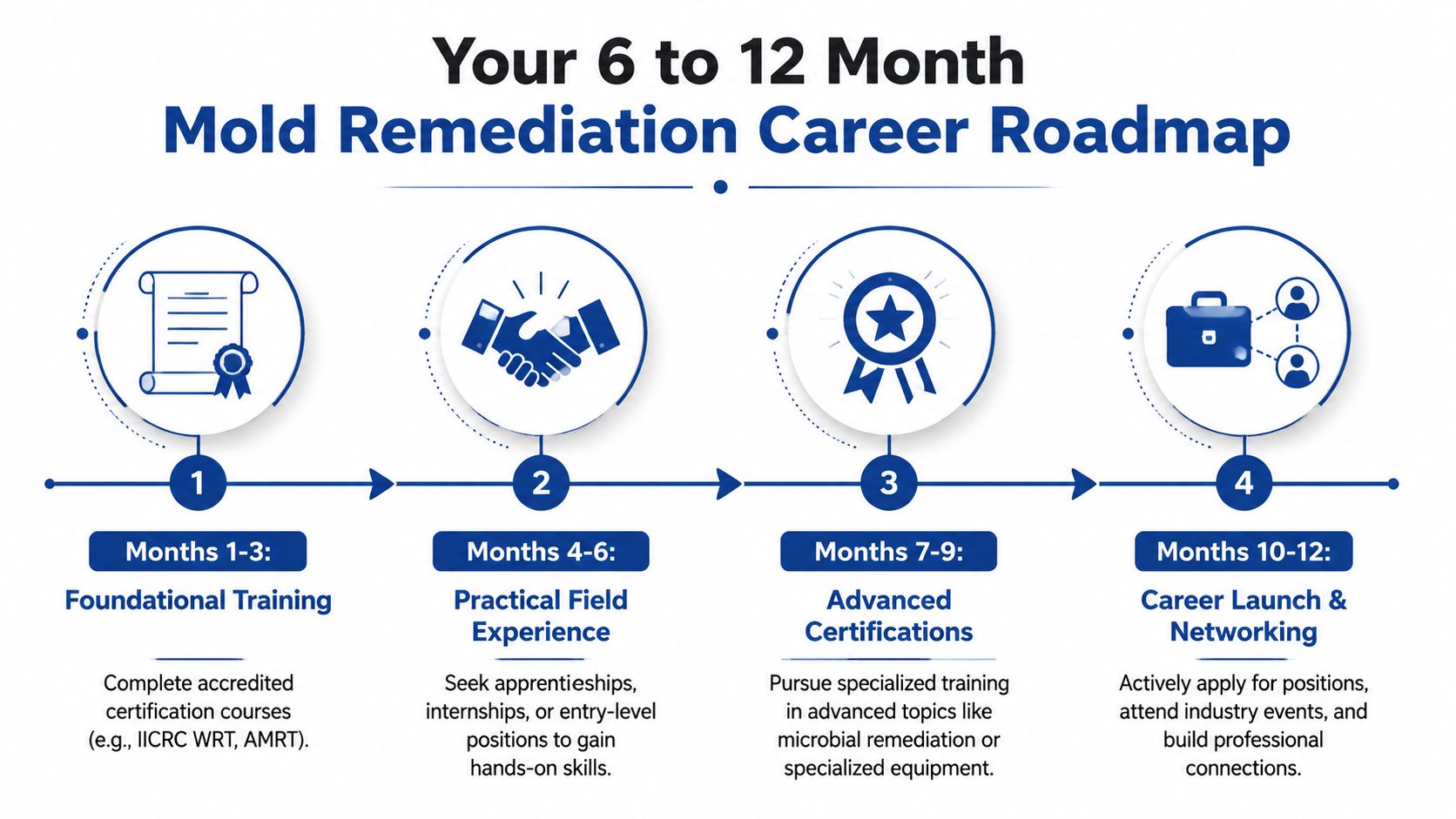
Months 7 through 12
By now, you should know whether you like the daily work. If you do, deepen your training and aim for greater responsibility. The goal isn't just to become faster. It's to become safer, more precise, and more trusted by leads, clients, and project partners.
Field advice: The technician who keeps the work zone controlled, the paperwork usable, and the client informed becomes hard to replace.
What career launch looks like in practice
If you're serious about learning how to become a mold remediation specialist, don't measure progress only by what card or certificate you hold. Measure it by whether a supervisor trusts you to protect the containment, whether a client understands your explanation, and whether your job notes hold up after the work is done.
This is demanding work. It's physical. It requires emotional control. It asks you to care about details when other people are rushing. But it also lets you solve visible problems and protect people in spaces that matter to them.
That's a career worth building.
If you're dealing with an active mold issue, need documentation-conscious remediation support, or want to understand what professional cleanup should look like before hiring a crew, 360 Hazardous Cleanup provides mold remediation and environmental cleanup services with a strong focus on safety, compliance, and clear communication.