
You pull a box off a garage shelf, open it, and find the kind of leftovers that never seem to have a clear exit. Half-used paint cans. An old bottle of weed killer. Brake fluid from a car you no longer own. A mystery cleaner with a torn label.
The pause at that moment is often for the same reason. These products don't belong in the kitchen trash, but they also don't feel safe to keep. A household hazardous waste event exists for exactly that problem. It gives residents a legal, organized way to hand off certain chemicals and products so they can be managed safely instead of ending up in a landfill, storm drain, or storage corner for another year.
That said, not every dangerous material belongs at one of these events. Some situations call for a completely different response, especially when blood, bodily fluids, medical sharps, or trauma-related contamination are involved. Knowing the difference protects your health, your property, and anyone who handles the waste after you.
The Importance of Proper Hazardous Waste Disposal
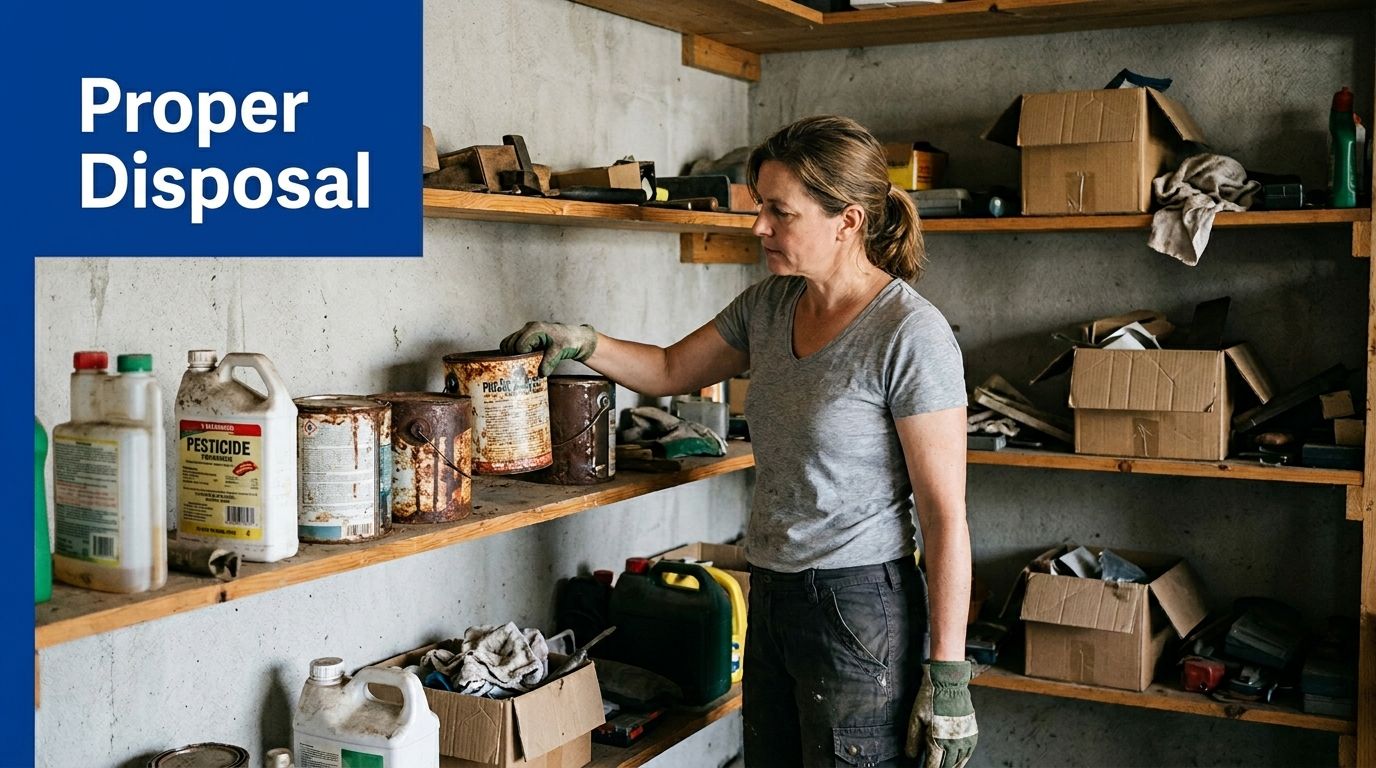
Spring cleaning often starts with good intentions and ends with a row of questionable containers on the floor. A homeowner sorts through shelving in the basement or garage and realizes that many of the products they've kept for years are flammable, corrosive, toxic, or reactive.
That's where a community household hazardous waste event becomes valuable. It gives residents a safer path for disposing of products that should never be poured down a drain, tossed in curbside trash, or abandoned in a shed.
Why these events matter
Americans generate approximately 1.6 million tons of household hazardous waste annually, and the average home may accumulate as much as 100 pounds of hazardous materials in garages, attics, and storage closets, according to the South East Texas Regional Planning Commission's household hazardous waste guidance. That scale explains why local drop-off events are more than a convenience. They're a public health and environmental service.
Common items such as oil-based paints, solvents, pesticides, and automotive fluids can create long-term problems when discarded improperly. They can contaminate soil, move into groundwater, and expose sanitation workers or family members to chemicals that weren't meant for regular trash handling.
Practical rule: If a product can burn, corrode, poison, or react, treat disposal as a safety task, not a decluttering task.
Where confusion starts
Many people use the phrase “hazardous waste” to describe everything dangerous in a home. That's understandable, but it creates confusion. A can of old stain and a room contaminated by bodily fluids are not handled the same way. One may fit a scheduled community collection model. The other may require immediate, on-site professional remediation.
That distinction matters because moving the wrong material can spread contamination instead of solving it. If you've ever dealt with a property issue involving biological contamination, this guide on biohazard waste management risks and compliance gives broader context on why transport rules and handling standards are so strict.
What Qualifies as Household Hazardous Waste
A practical definition helps. Household hazardous waste usually means leftover consumer products from home use that can harm people, property, sanitation systems, or the environment if they're discarded carelessly.
That includes products you probably recognize right away, such as paint thinner, pool chemicals, pesticides, fertilizer, gasoline, antifreeze, and some household cleaners. It also includes items that seem harmless because they're common, like batteries or old solvents stored under a sink or on a workshop shelf.
Common categories found around the home
A useful way to sort items is by where they're used:
- Garage and auto products: Motor oil, brake fluid, antifreeze, fuel additives, and degreasers.
- Painting and repair supplies: Oil-based paint, stain, varnish, lacquer, paint stripper, and solvents.
- Cleaning chemicals: Strong cleaners, drain openers, and products marked corrosive, flammable, or toxic.
- Yard and garden products: Weed killers, insecticides, fungicides, and certain fertilizers.
- Household batteries and similar items: Batteries that local programs specifically accept.
One point trips people up. Some products have both hazardous and non-hazardous versions. Latex or water-based paint, for example, is often handled differently from oil-based paint. If dried according to local guidance, latex paint may be allowed in regular trash, while oil-based paint still needs hazardous waste handling.
Household Hazardous Waste Event accepted vs prohibited items
| Commonly Accepted | Commonly Prohibited |
|---|---|
| Oil-based paint | Biohazardous waste |
| Paint thinner and solvents | Medical waste |
| Pesticides and herbicides | Sharps and needles |
| Automotive fluids such as antifreeze or brake fluid | Trauma scene materials |
| Household cleaners with hazardous properties | Business waste |
| Batteries accepted by the local program | Large electronics and computers |
| Stain, varnish, and similar finishing products | Tires |
| Pool or specialty household chemicals accepted by the local program | Unknown contaminated porous materials from a scene |
Why prohibited items are prohibited
Prohibited items usually fall into one of three groups:
- They need a different disposal system. Large electronics, tires, and certain paint streams often go to separate recycling or convenience center programs.
- They come from businesses, not households. Commercial waste is typically regulated differently.
- They present infectious or scene-based contamination. Blood, bodily fluids, medical waste, and trauma debris are not household hazardous waste event materials.
If an item came from a medical incident, unattended death, crime scene, or a space with bodily fluid contamination, stop treating it like ordinary household hazardous waste.
For a broader breakdown of categories and handling logic, this overview of what qualifies as hazardous waste and how it's disposed of safely is a helpful companion.
How to Prepare for a Safe Drop Off
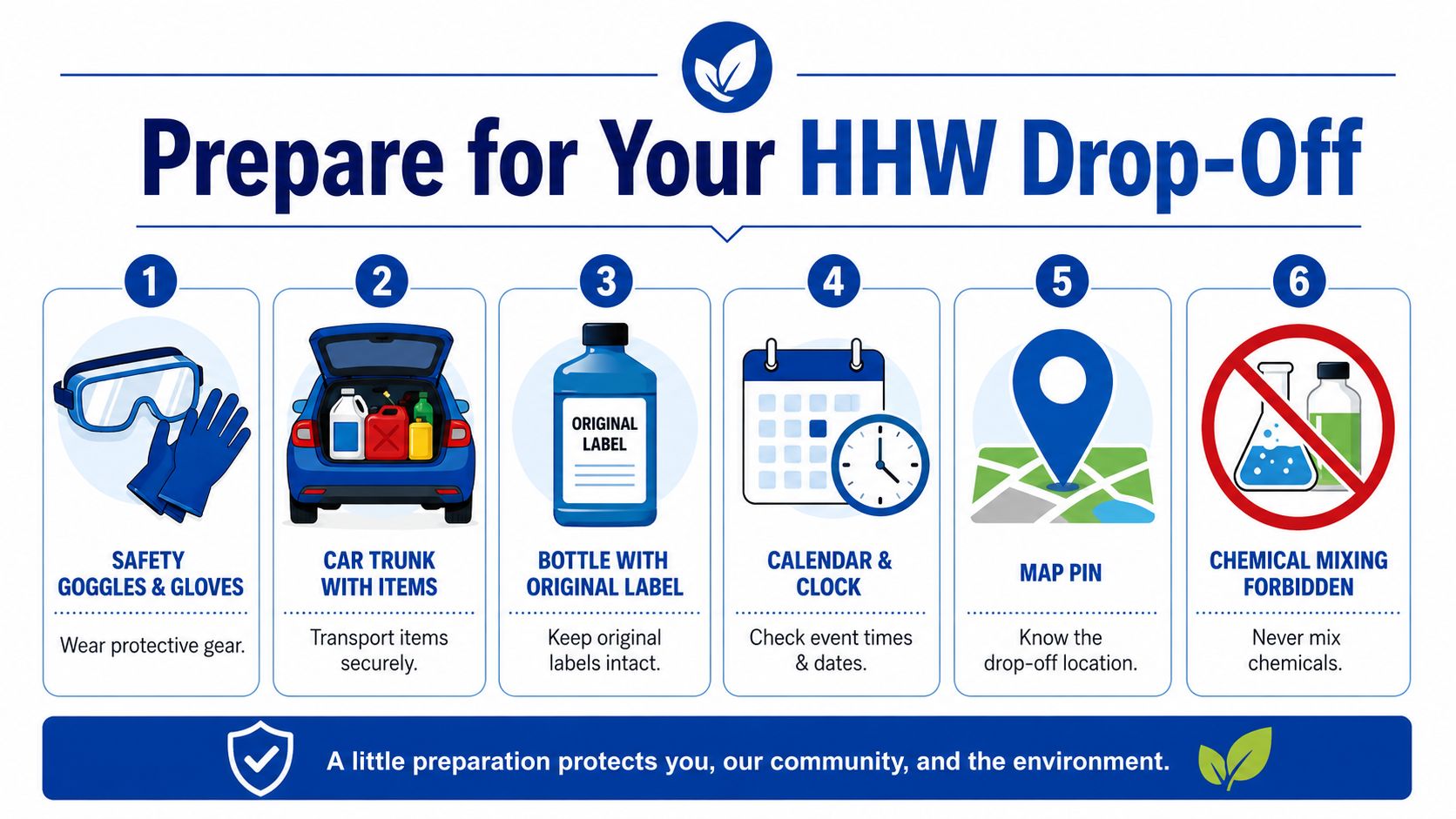
Preparation starts at home, not in the event line. The safest drop-off happens when every item is identified, sealed, and packed so staff can unload it without guessing what it is or dealing with leaks.
A simple preparation checklist
Start with labels. Keep products in their original containers whenever possible. Labels help event staff identify the contents and keep incompatible chemicals apart.
Check for leaks. If a container is damaged, place it in a stable secondary container for transport, but don't pour the contents into a food or drink bottle.
Pack upright. Use a sturdy box or plastic bin in the trunk or truck bed. Newspaper or other absorbent padding can help reduce tipping and minor seepage.
Separate unlike materials. Don't stack bleach next to unknown cleaners or mix products to “save space.” Mixing chemicals creates risk before you ever leave home.
Review event limits. Some residents load up a vehicle assuming everything in storage can go in one trip. That's often not how these programs work.
A key rule appears in many event standards: HHW programs typically limit volume per vehicle to 15 gallons or 125 lbs and require waste to remain in original labeled containers to prevent misidentification and hazardous reactions, as noted in the Texas HHW event analysis and preparation guidance.
What not to do before leaving
Good intentions can turn dangerous:
- Don't combine partial containers: Mixing old lawn chemicals or cleaners can create fumes, heat, or unknown reactions.
- Don't transport open containers inside the passenger cabin: Keep materials away from people and pets.
- Don't repackage mystery liquids into cups, jugs, or water bottles: That makes identification harder and increases the chance of accidental exposure.
A lot of garage incidents start with “I thought I could clean it up myself.” If you're dealing with a spill rather than stored products, this guide on why improper garage and basement chemical cleanup is risky explains where DIY handling becomes unsafe.
Before you go, it also helps to watch a basic visual walkthrough of collection-day practices:
Finding Events and What to Expect On Site
Finding a household hazardous waste event usually starts with your city, county, parish, township, or public works department. Local sanitation districts, solid waste authorities, and county environmental offices often publish event calendars on their websites and social media pages. Some communities also announce them through local news, utility inserts, or neighborhood groups.
If you're helping tenants, employees, or residents prepare for attendance, it's smart to verify the event rules directly from the local organizer. Accepted items, residency requirements, and appointment systems can vary.
Why timing matters
These events are often scheduled in milder parts of the year for a reason. HHW collection events are commonly held in spring and fall because extreme temperatures can increase the internal pressure of flammable containers or cause brittle fractures in others. That temperature-based scheduling helps reduce transport and handling risk.
Many programs also narrow the on-site window to a daytime block. Short, controlled operating hours let crews manage traffic, stage materials correctly, and reduce exposure to hotter parts of the day.
Arrive with patience. Collection events are designed around safe handling, not speed alone.
What the drop-off process usually looks like
For first-time attendees, the site can feel more formal than expected. That's a good sign. A well-run event is structured.
You'll usually see:
- Traffic control at the entrance: Cones, signs, and attendants direct vehicles into a queue.
- Instructions to remain in the vehicle: Staff often unload materials for safety and sorting control.
- Screening questions: Workers may ask whether the waste is from a household and whether any item is leaking, unlabeled, or business-related.
- Sorting by compatibility: Materials are separated into different handling streams once removed from the vehicle.
If you want a visual example of how public-facing hazardous material events are organized on the ground, this Moline OS event gallery shows the kind of controlled setup that helps people move through the process safely.
When an HHW Event Is Not the Right Solution
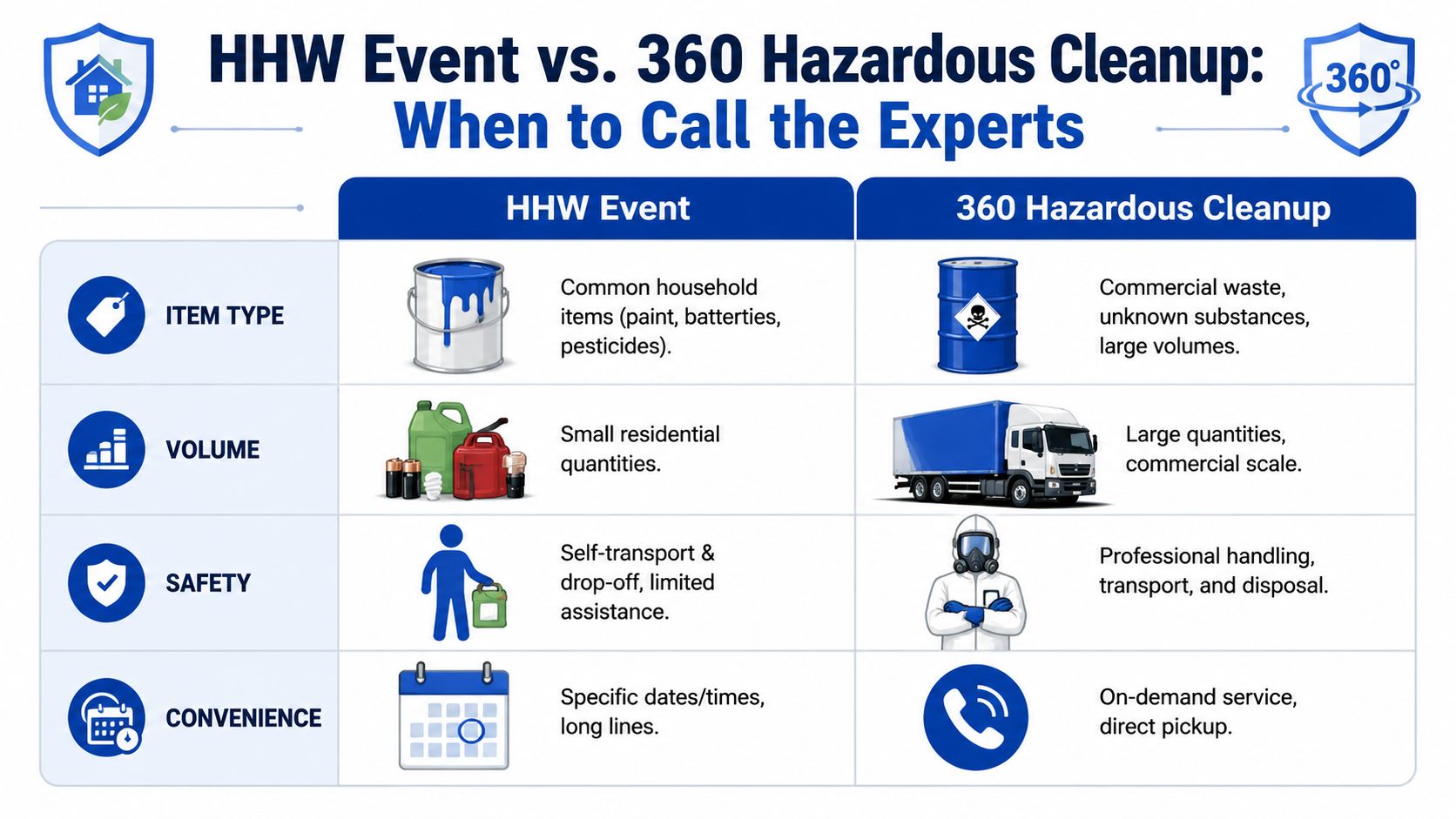
The biggest misunderstanding around a household hazardous waste event is this. People assume any dangerous material from a home or property can be loaded into a car and brought to the site. That is not true.
Biohazardous waste does not belong at these events. That includes contamination from trauma scenes, unattended deaths, suicides, bodily fluids, sharps, certain medical waste, and environments where porous materials have been exposed to infectious matter.
Why biohazards are different
Chemical waste and biological contamination create different risks. With household chemicals, the main concerns are often fire, corrosion, toxicity, and environmental release. With biohazards, the concern includes potential infectious exposure, cross-contamination, and improper decontamination of surfaces and porous contents.
Biohazard remediation requires trained professionals because untreated biological hazards can remain infectious for extended periods, and OSHA Standard 1910.1030 requires specific training, personal protective equipment, and exposure control plans that general services and HHW events are not certified to implement, according to Ventura County guidance referencing biohazard handling requirements.
That means a contaminated mattress, carpet pad, subfloor area, restroom, vehicle interior, or rental unit cannot be treated like a box of old household chemicals. The hazard isn't just the visible material. The hazard may also be what has soaked in, spread, or dried onto surfaces.
Situations that need immediate professional remediation
A scheduled drop-off event is the wrong tool when the problem is on-site contamination. Examples include:
- An unattended death in a home or apartment
- A suicide or trauma scene
- Blood or bodily fluid contamination after an accident
- Needles, sharps, or medical exposure in a property
- Hoarding conditions involving biological contamination
- Commercial or industrial incidents involving unknown or mixed hazardous materials
In those situations, moving items yourself can increase liability and exposure. It can also disturb evidence, spread contamination into hallways or vehicles, or create secondary exposure for family members, tenants, or staff.
The legal and safety line property owners shouldn't cross
Property owners sometimes call a janitorial team, maintenance staff member, or relative because they want quick help. That choice can backfire. General cleaning services are not set up for regulated biohazard handling, exposure control documentation, or specialized disposal pathways.
A scene can look manageable and still be unsafe. Visual cleanup is not the same as remediation.
Commercial properties face another layer of complexity. A clinic, warehouse, behavioral health facility, rental portfolio, or office suite may need documented containment, removal, disinfection, and disposal procedures that stand up to insurance review and regulatory scrutiny. A monthly or seasonal HHW event can't fill that role because it isn't built for on-demand response, scene control, or infectious material remediation.
Guidance for Hosting a Community HHW Event
Running a community event takes more than a parking lot and a date on the calendar. Organizers have to plan for traffic, worker safety, waste segregation, public communication, contractor coordination, and compliant final disposal.
That's why successful programs usually involve public agencies working closely with a licensed hazardous waste management firm. The event itself may only last a day, but the preparation begins much earlier.
The cost and coordination reality
A strong benchmark comes from Texas. A detailed analysis found an average cost of $121.06 per participant at a one-day HHW collection event, with an overall average cost of $20,416 per event, highlighting the need for licensed hazardous waste firms and substantial planning.
Those figures matter because they show what communities are really supporting when they fund these services. The public sees a drop-off lane. Behind that are trained crews, transportation controls, waste profiling, packaging systems, approved disposal channels, and outreach efforts that tell residents what to bring and what to leave home.
Core planning priorities
Organizers usually need to get four things right:
- Site selection: Choose a location with room for queueing, unloading, emergency access, and clear entry and exit flow.
- Public instructions: Residents need plain guidance on accepted items, prohibited materials, container rules, and proof-of-residency requirements if applicable.
- Qualified partners: A licensed hazardous waste contractor should handle collection logistics, segregation, transport, and disposal planning.
- Contingency planning: Staff need a plan for leaks, unlabeled containers, traffic backups, weather complications, and prohibited waste arriving on site.
A community group or municipality may also need to decide whether the event is aimed strictly at residents or whether there will be a separate pathway for small institutional or special waste streams. Mixing those categories without planning creates confusion at the gate and risk at the loading area.
A useful organizer mindset
The best events don't try to accept everything. They define a safe scope and communicate it clearly.
That clarity protects workers, residents, and budgets. It also prevents the most serious mistake of all. Allowing people to assume that a public household event can handle biological contamination, scene debris, or urgent commercial incidents that require a specialized response.
Your Partners in Safe and Compliant Disposal
A household hazardous waste event is one of the most useful public services a community can offer. It gives residents a responsible outlet for products like solvents, pesticides, automotive fluids, and certain paints that shouldn't go into regular trash.
That service has limits, and those limits are important. HHW events are built for scheduled drop-off of specific residential materials. They are not designed for trauma scenes, medical sharps, blood contamination, unattended death cleanup, or urgent commercial biohazard incidents.
For community leaders, property managers, and facility teams, the planning lesson is simple. Match the response to the hazard. A neighborhood collection day works well for standard residential chemical waste. A biologically contaminated property needs immediate, regulated remediation by trained specialists. If you're coordinating community operations more broadly, resources on planning neighborhood fairs effectively can also help with site flow, attendee communication, and event-day logistics around public-facing programs.
When conditions go beyond a standard drop-off program, the safer choice is to involve qualified hazmat and remediation professionals who can manage containment, documentation, transport, and disposal correctly. For a broader view of those regulated response capabilities, visit these hazmat services.
When a household hazardous waste event fits the problem, use it with confidence. When the hazard involves blood, bodily fluids, trauma, medical waste, hoarding contamination, or unknown dangerous materials, don't transport it yourself. 360 Hazardous Cleanup provides compassionate, compliant, 24/7 support for biohazard remediation, crime scene cleanup, unattended death cleanup, industrial incidents, and other high-risk situations where safety, discretion, and proper documentation matter most.