When you hear the word "hoarding," you might picture rooms overflowing with accumulated items, but the reality is that hoarding disorder begins subtly. Hoarding Level 1 represents the earliest and often most overlooked stage of this complex condition. On the surface, it can resemble common clutter, making it difficult to distinguish from a simple organizational challenge. However, it is fundamentally different.
While the space remains functional, Level 1 is defined by the underlying behaviors—a consistent pattern of excessive acquisition and a significant, distressing difficulty in discarding possessions, regardless of their actual value.
Distinguishing Early Stage Hoarding From Simple Clutter
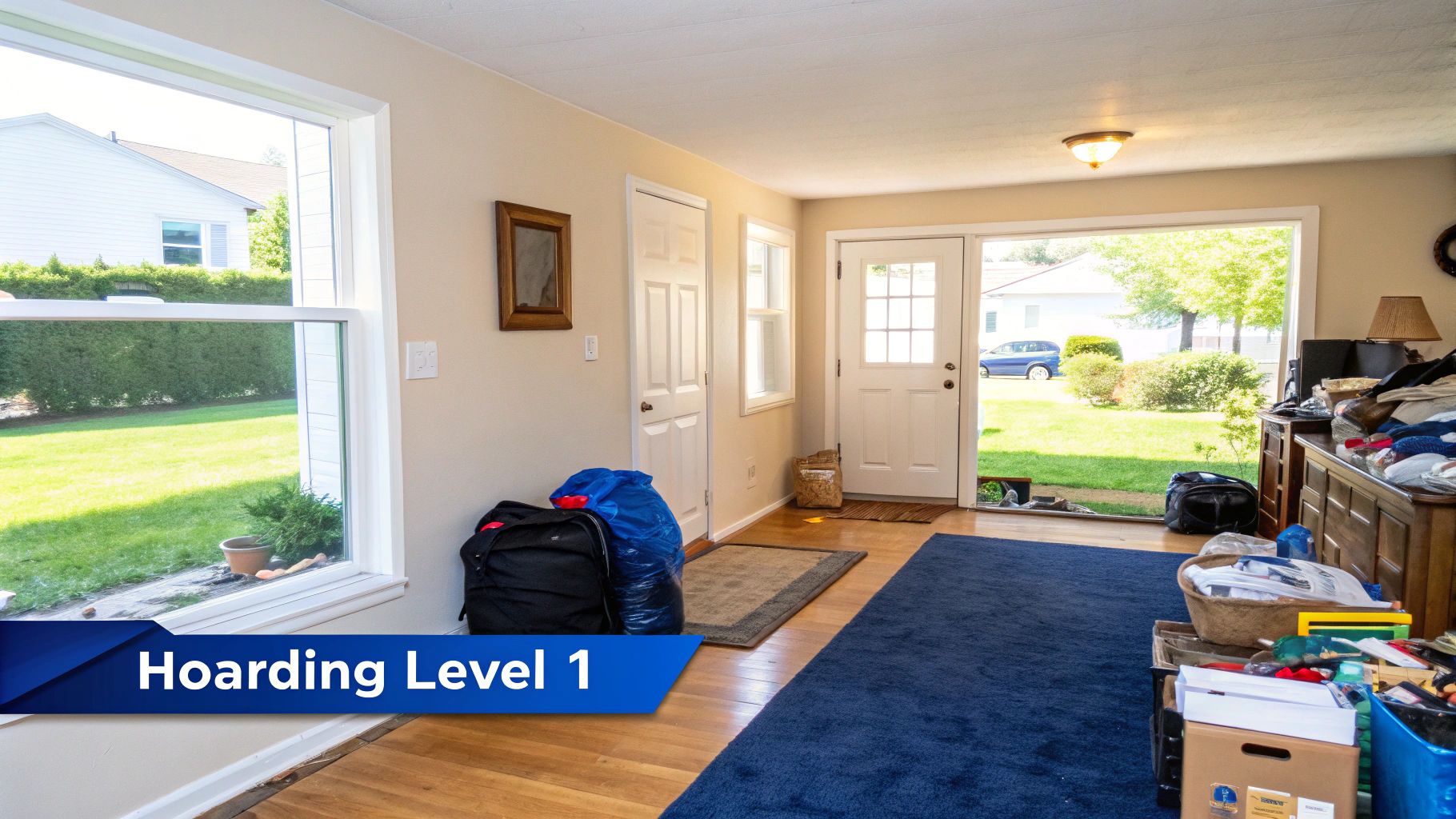
A common challenge for families and property managers is discerning the line between a messy home and the onset of a serious hoarding issue. At Level 1, a home can appear relatively normal. The crucial distinction lies not in the volume of items, but in the individual's emotional attachment to them.
This is not a matter of disorganization. It is the starting point of a progressive condition driven by deep-seated psychological factors. Unlike a cluttered room that can be addressed over a weekend, Level 1 hoarding involves a persistent, distressing struggle to part with items.
Recognizing this stage is a critical opportunity for intervention. It provides a crucial window to offer support and professional assistance before the clutter escalates into a hazardous environment that compromises the safety of the individual and the integrity of the property.
Key Visual Indicators Of Level 1
While every situation is unique and a definitive assessment requires professional expertise, certain tell-tale signs can indicate that the issue is more than untidiness. These are the clues to observe:
- Contained Clutter: The accumulations have not yet overtaken the entire living space. Typically, clutter is confined to specific areas, such as a home office, a spare bedroom, or a portion of the garage.
- Clear Pathways: The home remains navigable. Hallways, doorways, and emergency exits are clear and fully accessible.
- Functional Utilities: Kitchens and bathrooms are operational and generally usable. Preparing meals and personal hygiene are not significantly impeded.
- No Significant Odors Or Pests: At this early stage, the foul odors, pest infestations, or mold growth common in more severe hoarding situations are typically absent.
To assist in identifying these signs, the following table provides a clear breakdown of key indicators for a Level 1 hoarding environment.
Hoarding Level 1 Key Indicators
| Indicator | Description |
|---|---|
| Clutter Volume | Light to moderate, but noticeable. Does not obstruct daily life or essential functions. |
| Item Acquisition | Frequent but may not appear excessive yet. Shopping or collecting is a regular habit. |
| Disposal Difficulty | The individual exhibits anxiety or distress when faced with discarding items. |
| Safety Hazards | Minimal. No immediate fire risks, blocked exits, or structural hazards. |
| Sanitation | Generally clean, with functional kitchens and bathrooms. No biohazardous materials are present. |
| Structural Integrity | The property is not at risk of damage from the weight or nature of the accumulated items. |
This table highlights that the core issue at this stage is more about behavior and emotional attachment than the physical state of the home itself.
It is a significant misconception that hoarding only becomes a "real" problem when a house is packed to the ceiling. The truth is, at Hoarding Level 1, the underlying patterns are already established. Early, compassionate, and professional intervention is the most effective way to prevent long-term risks.
This mild stage often goes unnoticed, yet hoarding disorder affects an estimated 2.5% of the global population. This translates to approximately 1 in 40 adults, potentially impacting 5 to 15 million people in the U.S. alone.
Addressing the issue at this stage is a proactive measure that protects the property from future damage, mitigates liability, and, most importantly, supports the individual's well-being. For those seeking to help, understanding the psychological drivers is essential. You can find helpful strategies on how to stop being a hoarder and learn more about the condition in our guide on understanding and managing hoarding disorder.
The Hidden Risks of Early Stage Hoarding
It’s easy to view a hoarding level 1 situation as manageable clutter. However, dismissing it is a critical error. The true danger lies not in what is immediately visible, but in the subtle yet serious hazards that begin to compromise health, safety, and property value long before the situation appears critical.
From the outset, these accumulations create physical dangers. Small piles of belongings can quickly become trip-and-fall hazards, a risk that is particularly high for older adults or individuals with mobility challenges. Furthermore, stacks of paper, boxes, or clothing can act as fuel. If located near a doorway or window, they can obstruct an escape route in an emergency, escalating a minor fire into a tragedy.
From Clutter to Contamination
Physical obstructions are only part of the issue. Early-stage hoarding creates an ideal breeding ground for invisible health threats. When clutter prevents regular, thorough cleaning, dust, pet dander, and other allergens accumulate rapidly, degrading indoor air quality. This also creates dark, undisturbed areas where mold can thrive, especially in poorly ventilated spaces.
Pest infestations are another significant concern. Cluttered spaces provide shelter and hidden food sources for rodents and insects. Once established, these pests introduce bacteria, viruses, and waste, creating biohazard risks that are often invisible to the naked eye. This is why a professional assessment is essential—trained technicians are equipped to identify these hidden contaminants.
The seemingly mild dangers of hoarding level 1 are part of a global issue affecting between 1 in 20 and 1 in 50 people. Even at this early stage, cluttered homes are 4 times more prone to fire, and the presence of pests introduces serious health concerns. Property devaluation can also reach 20-40% in cases that are not addressed.
The Impact on Property and Liability
For landlords and property managers, what may appear as a tenant's messy habit is a significant business risk. The problems extend far beyond eventual cleanup costs and fall into three primary categories:
- Increased Liability: If an injury occurs due to a trip-and-fall or a fire starts because of the clutter, the property owner could face serious legal and financial consequences.
- Insurance Complexities: Filing an insurance claim for damage caused by hoarding can be challenging. A professional remediation company provides the detailed documentation needed to support a claim, but failure to resolve the hoarding issue could jeopardize future coverage.
- Property Devaluation: Over time, persistent clutter can cause permanent damage to floors, walls, and fixtures. This lowers the property's value and complicates future rental or sale.
Identifying these hidden dangers early is paramount. The issues in a hoarding level 1 home are foundational—what begins as a minor risk will escalate into a severe biohazard cleanup scenario if left unaddressed. You can learn more about these escalating threats by reading about the hidden dangers of hoarding environments and how professionals restore homes to safety. A proactive, professional approach is the only way to effectively mitigate these risks, protect the property, and ensure the well-being of all involved.
How Hoarding Levels Progress Over Time
Hoarding disorder is a progressive condition, meaning it almost invariably worsens without professional intervention. A hoarding level 1 situation can be compared to a slow, barely noticeable leak under a sink. Initially, a few drips seem harmless—easy to manage, easy to ignore. However, if left unattended, that minor leak can lead to warped cabinetry, mold growth, and even structural rot.
Similarly, what begins as manageable clutter can slowly escalate into an overwhelming and hazardous environment. This progression is not merely about accumulating more items. As the disorder intensifies, the risks multiply and become far more complex, transforming a once-functional home into a space that is inaccessible, unsanitary, and dangerous.
The diagram below illustrates how these risks compound as the condition worsens, starting with property concerns and escalating to severe health and financial crises.
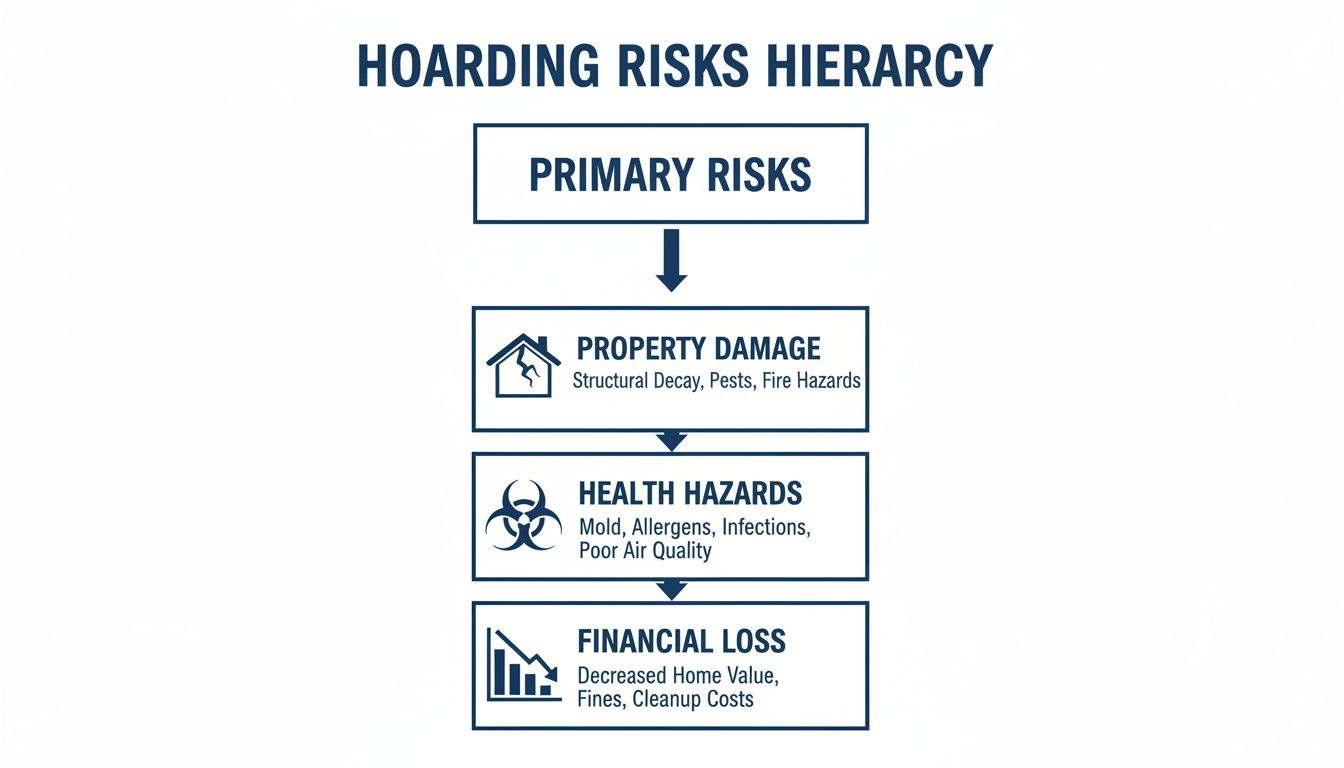
As shown, untreated hoarding creates a domino effect. What begins as simple property damage can spiral into significant health hazards and, ultimately, devastating financial loss for all parties involved.
Comparing Level 1 to More Severe Stages
Contrasting the early and late stages of hoarding makes it clear why early action is so critical. While professional cleanup is necessary at every level, the scope, cost, and complexity increase dramatically as the situation deteriorates.
Addressing the issue at hoarding level 1 is not just easier—it is a fundamentally different and less hazardous undertaking.
The table below provides a snapshot of how a situation can escalate, highlighting how the challenges in a Level 1 home are minor compared to those encountered in more advanced stages.
Hoarding Levels At A Glance
| Feature | Level 1 (Mild) | Level 3 (Moderate) | Level 5 (Severe) |
|---|---|---|---|
| Access & Egress | All exits, windows, and hallways are clear and fully accessible. | One or more exits are blocked; narrow pathways through clutter. | Pathways are impassable; exits are completely blocked. |
| Sanitation | Home is sanitary with functional utilities. No noticeable odors. | Visible pests (insects/rodents), strong odors, and grime on surfaces. | Severe biohazards (feces, urine, rot), non-functional utilities. |
| Structural Integrity | No structural damage. The home is safe. | Minor damage may be present (e.g., stained floors). | Significant structural damage from weight, moisture, or neglect. |
| Cleanup Scope | Primarily involves decluttering, organizing, and light cleaning. | Requires deep cleaning, pest control, and minor repairs. | Full-scale biohazard remediation and potential structural repairs. |
As the table shows, the escalation between levels is significant. A hoarding level 1 situation is contained, but by Level 3, genuine health risks are present. By Level 5, the home itself is often structurally compromised.
Intervening at the earliest stage is the most compassionate, cost-effective, and safest path forward. It prevents a manageable project from becoming a large-scale biohazard remediation job. By recognizing the signs and acting decisively, you can protect both the property and the people inside.
For a deeper dive into the specifics of each stage, you can explore our full guide on the different types and levels of hoarding.
The Professional Cleanup Process for Level 1 Hoarding
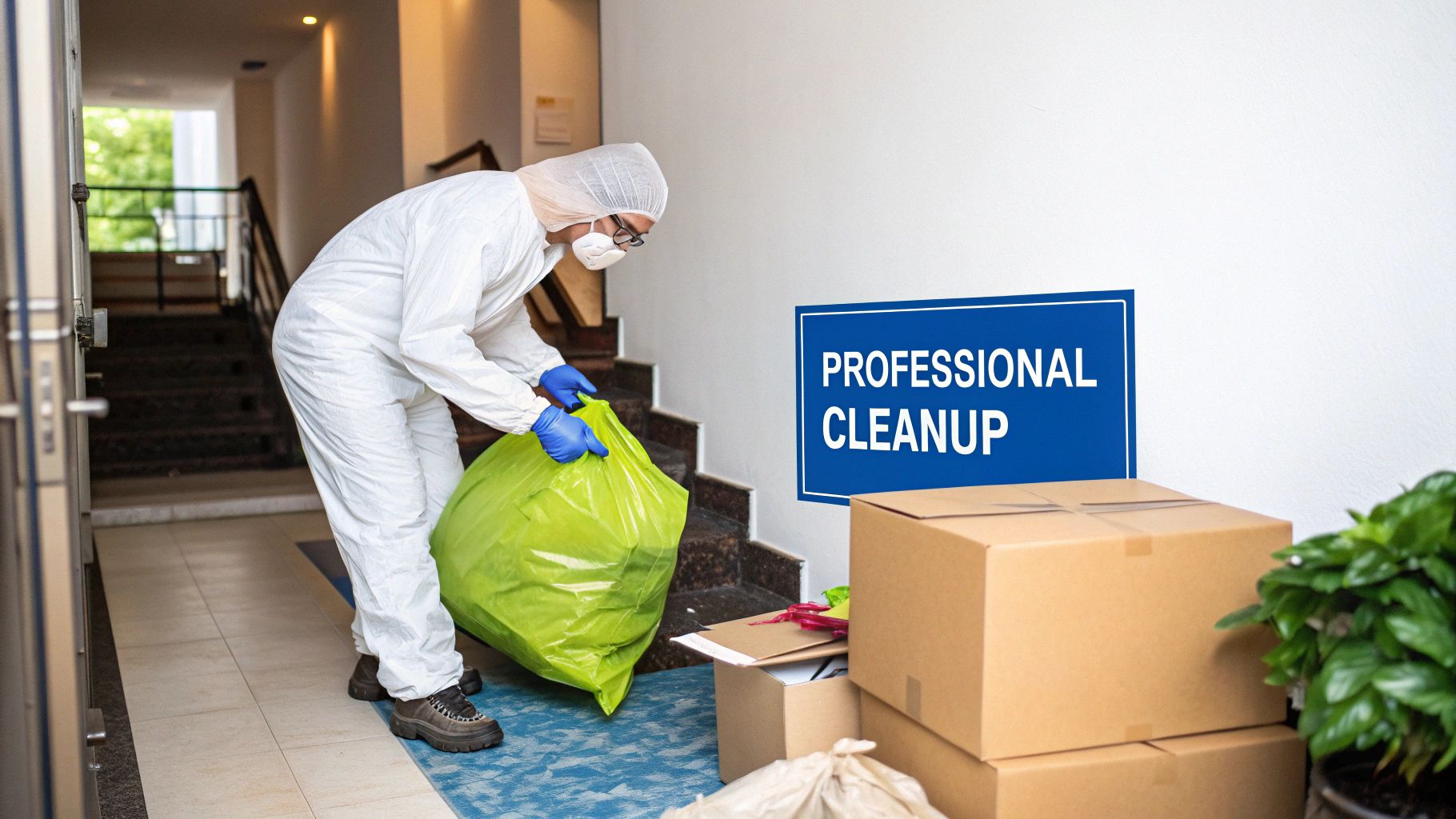
When addressing a hoarding level 1 situation, it is a mistake to assume a standard cleaning service is sufficient. This is not a tidying exercise. Proper resolution requires a professional biohazard remediation team—experts who employ a systematic, compassionate, and regulatory-compliant approach to restore a home to a safe condition.
The process is not about indiscriminately discarding items. It is a structured, respectful service designed to mitigate risks that are often invisible.
It begins with a discreet and thorough assessment. Our trained technicians evaluate the space, looking beyond the volume of clutter to identify potential biohazards such as hidden mold, pest droppings, or other contaminants. This critical first step allows us to develop a strategic work plan that prioritizes safety while respecting the individual and their property.
A Systematic Approach to Restoration
Once a plan is established, our technicians execute a strict, proven methodology. This is where the distinction between a simple cleanup and professional remediation becomes clear.
Equipped with appropriate Personal Protective Equipment (PPE), our team works through the home methodically:
- Careful Sorting: We sort through items with care, collaborating with the client when possible to distinguish between disposable materials, donatable goods, and personal belongings to be kept.
- Compliant Waste Disposal: Any materials classified as hazardous waste are handled in strict accordance with local, state, and federal regulations. This ensures that biohazards are disposed of safely and legally, protecting the property owner from liability.
- Deep Cleaning and Sanitization: After the clutter is removed, the restoration work begins. We deep clean all surfaces and then use EPA-approved disinfectants to eliminate invisible pathogens and bacteria, ensuring the environment is truly sanitary.
At its core, a professional hoarding level 1 cleanup is a health and safety intervention. The goal is to systematically remove hidden hazards and restore the environment, ensuring the well-being of occupants and preserving the property’s value.
Ensuring Safety and Discretion
In many areas, hoarding level 1 is an early indicator of a condition that can affect 4-6% of people over 55. For property owners, what may seem like a manageable amount of clutter can quickly reduce a property's rental value by 20-30% if ignored. Engaging professionals is crucial to protect the asset and prevent financial loss.
Every step we take is grounded in a trauma-informed approach, as we understand the emotional difficulty of these situations. We prioritize discretion, using unmarked vehicles upon request and maintaining clear, compassionate communication. This professional oversight ensures the cleanup is not only effective but also handled with the dignity everyone deserves.
To better understand the process, explore our guide on effective strategies for cleaning and sanitizing hoarded homes.
Practical Guidance for Property Owners and Managers
Whether you are a landlord who has discovered a concerning unit or a family member trying to help a loved one, identifying a hoarding level 1 situation requires a careful, strategic response. The key is to act with both empathy and diligence, ensuring you document all concerns clearly and professionally from the start.
Broaching this sensitive topic requires a compassionate, non-confrontational approach. The focus should be on safety and well-being, referencing specific observations rather than passing judgment. For property managers, this is also the time to review the lease agreement to clarify rights and responsibilities regarding property maintenance and safety standards.
Navigating Insurance and Cleanup Costs
One of the first questions that arises is whether insurance will cover the cost of professional cleanup. The answer depends on the policy's specifics and whether the hoarding has led to secondary damage, such as water or mold issues. Navigating this alone can be overwhelming.
This is where a professional remediation company becomes a critical partner. An experienced team understands what insurance carriers require. They provide the detailed documentation, photographic evidence, and expert assessments necessary to process a claim, simplifying the process and increasing the likelihood of a successful outcome.
Addressing a hoarding level 1 situation early is not just a safety measure—it is one of the most prudent financial decisions you can make. The cost of a professional cleanup at this stage is a fraction of the expense for the extensive biohazard remediation that higher hoarding levels almost always require.
As a property owner, protecting your investment is paramount. Understanding the details in a comprehensive landlord's guide to buy-to-let home insurance is an essential step in managing the unique risks associated with rental properties.
The Importance of Discretion and Professionalism
Privacy is paramount in these situations. A true professional remediation company understands this. They operate with the utmost discretion, using unmarked vehicles and maintaining a low profile to protect the occupant's privacy. This respectful approach helps minimize the stress and embarrassment individuals often feel, fostering a more cooperative and positive resolution for everyone involved.
Ultimately, early intervention in a hoarding level 1 case is about protecting your investment and ensuring a safe living environment. It prevents a manageable problem from escalating into a dangerous, costly, and emotionally draining crisis. To understand the legal aspects, it is beneficial to learn more about biohazard liability for landlords and the legal responsibilities you can't ignore.
Partnering with a professional ensures the situation is handled correctly, safely, and with the dignity all parties deserve.
Your Hoarding Level 1 Action Checklist

Identifying a potential hoarding level 1 situation requires a response that is both measured and decisive. While it can feel overwhelming, a clear plan of action can make all the difference.
This checklist is designed to provide property owners, managers, and family members with a practical path forward. Use it to navigate the situation systematically, with safety and compassion as your guiding principles.
Steps For A Proactive Response
This is not simply about clearing clutter; it's about establishing the foundation for a safe, healthy, and lasting resolution. Each step is intended to protect the property and, more importantly, to support the individual involved.
-
Document Everything Thoroughly: Before any action is taken, capture clear, time-stamped photographs and videos of the areas of concern. This objective evidence is invaluable for insurance claims or any potential legal documentation.
-
Review All Relevant Agreements: If you are a landlord, retrieve the lease agreement and review clauses related to property upkeep, safety standards, and health codes. For homeowners, consult your HOA or community bylaws.
-
Plan a Compassionate Conversation: This is the most delicate step. The approach must be rooted in empathy, not accusation. Frame the conversation around health and safety concerns—such as trip hazards, fire risks, or potential pest issues—rather than judgment. The goal is to express concern and offer support.
-
Contact Your Insurance Provider: Communicate with your insurance agent early in the process. It is essential to understand what your policy covers regarding property damage and cleanup costs associated with hoarding.
-
Consult a Professional Remediation Company: This is the most critical step. Engaging a certified team for an expert assessment is non-negotiable. Professionals are trained to identify hidden dangers, develop a safe and effective cleanup strategy, and provide the official documentation required by insurers and authorities.
Your Questions About Level 1 Hoarding, Answered
When faced with a potential hoarding level 1 situation, questions arise quickly. Obtaining clear, factual answers is the first step toward creating a plan that protects both the individual and the property. Here are some of the most common inquiries from families and property owners.
Can I Just Clean Up a Level 1 Hoard Myself?
It is tempting to view a Level 1 hoard as a simple decluttering project. However, the greatest threats are often invisible. You could easily encounter hidden mold, rodent droppings, or layers of dust containing allergens and bacteria.
Without the proper Personal Protective Equipment (PPE) and expertise in biohazard disposal, you risk compromising your own health. Our trained teams are equipped to identify these dangers immediately. We don't just make a space look clean; we restore it to a verifiably safe condition—a critical distinction that untrained individuals can miss.
Does My Insurance Policy Cover a Hoarding Cleanup?
This is often one of the most complex aspects. Most standard homeowner's or landlord policies do not cover the act of decluttering. However, they may cover secondary damage resulting from the hoarding, such as water damage from hidden leaks that caused mold, or pest infestations that damaged drywall.
A professional remediation company is your best advocate in this process. We document every detail with photographs and comprehensive reports, clearly linking the hoarding conditions to specific property damage. This provides the evidence your insurance claim needs for approval and removes a significant administrative burden from your shoulders.
How Long Will a Professional Cleanup Take?
A key advantage of acting on a Level 1 hoard is efficiency. Addressing the problem before it escalates means the solution is significantly faster. While every project is unique, a typical hoarding level 1 cleanup is far less time-intensive than the multi-week projects required for higher levels.
For most contained, early-stage situations, our team can often complete the entire remediation process in just a few days. This minimizes disruption for residents and allows property managers to restore a unit to a safe, habitable state quickly.
The most compassionate action is often the most practical one. A supportive, non-judgmental conversation focused on health and safety can open the door to professional help, preventing a manageable situation from escalating into a crisis.
How Do I Talk to My Loved One or Tenant About This?
This conversation must be handled with care. The key is to focus on health and safety, not on blame or judgment. Instead of making accusations, frame your concerns around objective risks, such as blocked exits creating a fire hazard or the danger of tripping and falling.
Using "I" statements can be highly effective. Saying, "I'm worried about the risk of falling" is received very differently than "You need to clean this up." Your goal is to be an ally, not an adversary. Suggesting a professional assessment can be positioned as obtaining an expert opinion to ensure the home is safe for everyone. This approach respects their dignity and encourages cooperation.
When navigating the complexities of a hoarding situation, you need a partner who understands the science of cleanup and the importance of compassion. The team at 360 Hazardous Cleanup is trained to handle every aspect of the job with professionalism and discretion, restoring the property to a safe, clean, and healthy condition. If you need a discreet and thorough assessment, contact us today.