The term "hoarder cleanup" often brings to mind images of hauling away clutter, but that perception barely scratches the surface.
Hoarder cleanup companies are, in fact, highly specialized biohazard remediation firms. They are called upon to safely clear extreme clutter and, more critically, decontaminate properties affected by hoarding disorder. This is not a task for a standard junk removal service—these are trauma-informed professionals trained to manage hazardous materials, invisible pathogens, and significant structural risks to restore a home to a safe, livable state.
What Hoarder Cleanup Companies Actually Do
The work of a professional remediation company extends far beyond decluttering. It is a complex integration of public health protocols, environmental safety, and compassionate support. It is more accurate to view these teams as biohazard remediation experts rather than just cleaners.
A conventional cleaning crew or a team performing basic house cleanouts lacks the training and equipment to address the realities of a hoarding environment. These homes frequently contain severe biohazards that are invisible to the untrained eye.
More Than Just Removing Clutter
A professional firm is trained to assess and manage the entire scope of risks. Our role is to mitigate a wide range of hidden dangers, which almost always includes:
- Biohazard Remediation: This involves the safe, compliant removal of biological hazards such as animal or human waste, extensive mold, and dangerous bacteria.
- Structural Assessment: The immense weight of hoarded items and prolonged moisture exposure can severely compromise a home's structural integrity. Professionals are trained to identify these risks.
- Pest Infestation Control: Cluttered environments are ideal breeding grounds for rodents, insects, and other pests. Managing these infestations is a critical step in the remediation process.
- Odor Neutralization: Specialized equipment is used to permanently eliminate odors that have permeated the structure of the home, which standard cleaning methods cannot address.
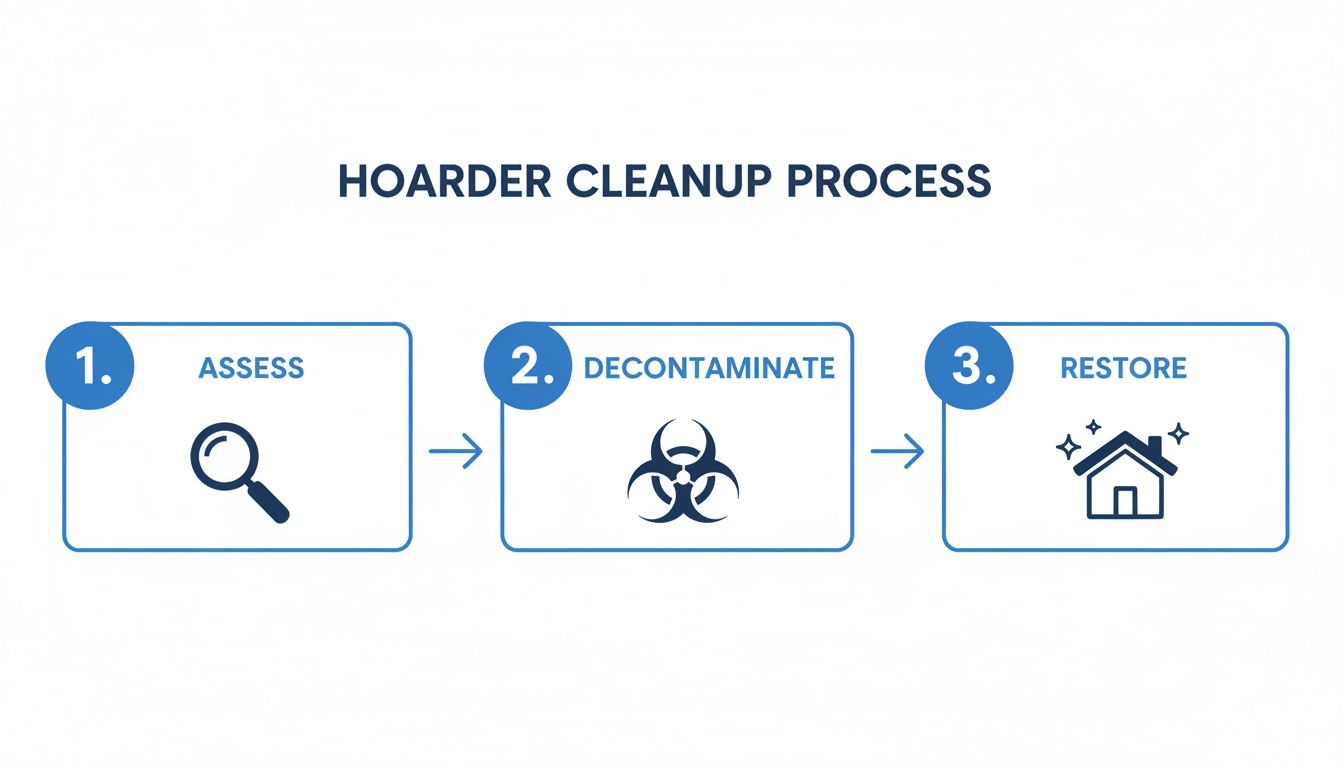
This graphic illustrates the core process. It’s not a simple cleanout; it’s a scientific, multi-stage remediation effort.
Understanding the Human Element
It is essential to recognize that hoarding is a complex mental health condition, not a lifestyle choice or a personal failing. The most reputable companies in this field operate from a trauma-informed perspective, always acknowledging the profound emotional attachment individuals may have to their belongings.
This compassionate approach is key to a successful and respectful cleanup. Hoarding disorder affects 2% to 6% of the global population—approximately 14 million people in the United States alone. Alarmingly, only about 15% of those affected seek professional help, which is why many properties deteriorate to such hazardous conditions.
The primary objective is not just cleaning. It is about restoring safety and making a home livable again, all while treating the individuals involved with the dignity and respect they deserve. This requires a delicate balance of technical skill and deep empathy.
When families attempt to manage a hoarding situation on their own, they often face significant health risks and immense emotional strain. The table below highlights why engaging professionals is not just easier—it's safer.
DIY vs. Professional Hoarder Cleanup: A Safety Comparison
This table outlines the critical differences between a DIY cleanup and hiring a certified biohazard remediation company. The focus is on safety, regulatory compliance, and achieving a truly safe outcome.
| Factor | DIY Approach | Professional Hoarder Cleanup Company |
|---|---|---|
| Safety Gear | Lacks proper Personal Protective Equipment (PPE), leading to exposure risks. | Utilizes OSHA-compliant, full-face respirators, biohazard suits, and specialized gloves. |
| Biohazard Handling | High risk of direct contact with feces, urine, bloodborne pathogens, and mold. | Follows strict protocols for containment, removal, and legal disposal of biohazards. |
| Structural Risks | Unable to properly assess hidden structural damage from weight or moisture. | Trained to identify compromised floors, walls, and ceilings before they collapse. |
| Disposal | Improper and often illegal disposal of hazardous materials in public landfills. | Adheres to all local, state, and federal regulations for hazardous waste transport. |
| Emotional Toll | Can be emotionally overwhelming and traumatic for family members. | Provides a compassionate, objective buffer to manage the process without judgment. |
| Effectiveness | Surface-level cleaning that often misses deep contamination and odors. | Uses commercial-grade equipment to fully decontaminate and neutralize odors at the source. |
Ultimately, a DIY approach often creates more problems than it solves, leaving behind hidden dangers and unresolved emotional trauma. A professional, certified company is the only way to ensure the property is truly safe. You can learn more about the hidden dangers of hoarding environments in our detailed guide.
The Professional Hoarding Remediation Process Explained
Understanding the professional hoarding cleanup process can significantly reduce anxiety. While it's easy to imagine chaos, the reality is a methodical, multi-stage procedure designed to safely and respectfully restore a home.
Every step is meticulously planned and executed with compassion. We recognize that we are not just clearing a space—we are assisting a person and their family through a deeply emotional journey. For this reason, our entire process, from the initial consultation to the final walkthrough, is built on a foundation of trust and clear communication.

Stage 1: Compassionate Assessment and Strategic Planning
The process begins with a discreet, on-site assessment. A project manager meets with the family or property owner to gain a comprehensive understanding of the situation. This involves more than a cursory glance at the clutter; we are there to identify hidden biohazards, evaluate for structural issues, and, most importantly, listen to understand the unique circumstances of the home.
Based on this assessment, we develop a customized action plan. This detailed roadmap for the project outlines safety protocols, a realistic timeline, and the specific goals, ensuring all parties know exactly what to expect.
A successful remediation project is built on a foundation of trust and a clear, agreed-upon plan. This initial consultation is where we listen, understand the unique needs of the situation, and explain how we will restore the home with dignity and care.
Stage 2: Systematic Sorting and Item Categorization
Once the plan is approved, our trained technicians begin their work. Adhering to strict safety standards, they enter the property in full Personal Protective Equipment (PPE) and methodically sort through the contents. This is a careful, meticulous process, not a rushed cleanout. We address one area at a time, giving each item the appropriate attention.
We approach this stage with profound respect, understanding that items that may appear to be trash can hold deep sentimental value. Our team is trained to:
- Identify Valuables and Sentimental Items: We diligently search for important documents, photographs, family heirlooms, cash, and other items of personal significance. These are always set aside for the family to review.
- Sort Recyclables: We separate all recyclable materials according to local guidelines to ensure the cleanup is as environmentally responsible as possible.
- Organize Donations: With the family's permission, usable items such as clothing, furniture, and books are gathered for donation to local charities.
- Isolate Hazardous Waste: Any biohazardous materials—from animal waste to mold-infested items and chemicals—are safely segregated and prepared for compliant disposal.
Stage 3: Deep Cleaning, Decontamination, and Restoration
After the clutter has been removed, the core remediation work begins. This is the critical phase that distinguishes a professional hoarder cleanup company from a standard junk removal service. Our objective is to identify and eliminate every hidden health threat to make the home truly safe and habitable.
This final stage involves several crucial steps. We begin by deep cleaning and disinfecting all surfaces—walls, floors, and ceilings—using hospital-grade, EPA-approved biocides. We then address specific biohazards, such as removing contaminated flooring or treating severe mold. To learn more, read about our effective strategies for cleaning and sanitizing hoarded homes.
Finally, we often utilize specialized equipment like ozone machines or hydroxyl generators to completely neutralize lingering odors that have permeated the home's structure. The space is then ready for any necessary repairs, such as new paint or flooring, completing its transformation into a safe, clean environment.
Navigating Hidden Biohazards And Safety Regulations
The most visible aspect of a hoarded home is the clutter, but the greatest threat lies in what is hidden beneath it. Attempting to clean such an environment without professional training is not just a formidable task; it's a serious risk to your health.
This is precisely why professional hoarder cleanup companies are essential. We are not a cleaning service; we are biohazard remediation specialists trained to identify and safely eliminate severe health threats in accordance with strict safety regulations. The scope of these dangers can be staggering.
Uncovering The Dangers In A Hoarded Home
Beneath the accumulated belongings, a hazardous ecosystem often thrives. Our teams are equipped to handle a host of biohazards that can cause severe illness or injury.
Common threats we encounter include:
- Pathogens from Waste: Animal or human feces, urine, and other bodily fluids are breeding grounds for pathogens like Hantavirus, E. coli, and Histoplasmosis. Exposure without proper PPE can lead to serious respiratory and gastrointestinal illnesses.
- Widespread Mold Growth: A small leak or spill trapped under clutter can create the perfect environment for toxic mold. It is crucial to understand the health risks of mold contamination that often lurk unseen.
- Pest Infestations: Rodents, cockroaches, and other pests are frequently present. They leave behind droppings and bacteria that contaminate surfaces and can chew through wiring, creating a significant fire risk.
- Sharps and Chemical Hazards: Broken glass, needles, and containers of unknown chemicals are often buried within the hoard, posing a direct threat of injury and chemical exposure.
The biohazard remediation industry, which includes hoarding cleanup, is a global market valued at approximately $2.5 billion annually. This growth is driven by stricter safety regulations and a greater understanding of the link between hoarding and self-neglect—a leading issue handled by adult protective services. The demand for certified, professional assistance has never been higher.
Adherence To Strict Regulatory Standards
Safely remediating a hoarding situation requires more than the right equipment; it demands strict adherence to the law. Federal and state regulations, particularly those from the Occupational Safety and Health Administration (OSHA), govern every step of the process. This legal framework protects our technicians, the public, and you as the property owner.
Hiring a certified company like 360 Hazardous Cleanup ensures that every step, from containment to disposal, is performed in full compliance with regulations. This protects you from legal liability and guarantees the property is truly safe for re-occupancy.
Professional firms are legally obligated to follow specific protocols. We use hospital-grade disinfectants, adhere to bloodborne pathogen standards where necessary, and ensure all biohazardous waste is transported to a licensed disposal facility. Without this expertise, individuals risk fines, legal liability, and continued exposure to hazardous materials.
Why Personal Protective Equipment Is Mandatory
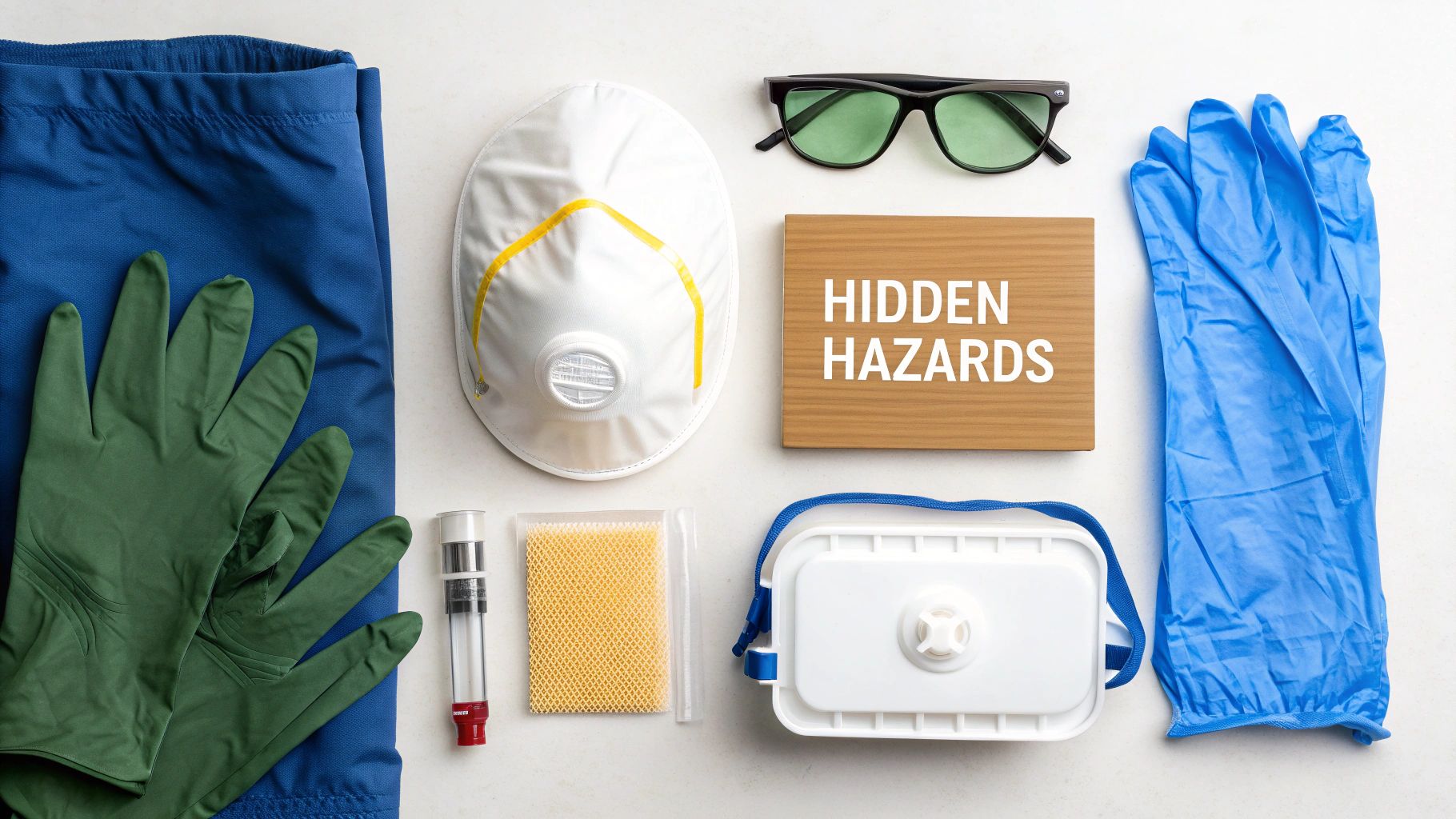
The most significant distinction between a professional and a DIY attempt is the correct use of Personal Protective Equipment (PPE). This involves far more than a simple dust mask and rubber gloves.
Our certified technicians wear full-face respirators with specialized filters, full-body biohazard suits, and multiple layers of puncture-resistant gloves. This equipment is non-negotiable for preventing:
- Inhalation of airborne mold spores and bacteria
- Skin contact with chemical or biological contaminants
- Exposure to dangerous bloodborne pathogens
These stringent safety measures underscore why a professional, regulated approach is the only responsible method for addressing a hoarded property. Our technicians are thoroughly trained to follow all regulations, ensuring their safety and allowing them to restore a home to a state of true decontamination. To see what these regulations entail, you can learn more about OSHA guidelines for biohazard cleanup in our article.
Understanding Cleanup Costs And Insurance Coverage
When facing a hoarding situation, the potential cost can be as overwhelming as the cleanup itself. Financial anxiety is a major concern for families and can unfortunately delay seeking necessary professional help.
However, there is no "one-size-fits-all" price for this type of remediation. Every home and situation is unique, meaning the scope of work varies dramatically between projects. Any reputable company will provide a detailed estimate only after a thorough on-site assessment.
Key Factors That Determine Cleanup Costs
The cost of a hoarding cleanup is calculated based on several specific variables tied to the labor, equipment, and safety protocols required to restore the home.
The primary factors influencing the final price include:
- Property Size: A larger home with more rooms will inherently require more time and labor to clear and decontaminate than a small apartment.
- Severity of the Hoard: This refers to the volume and density of the clutter. Professionals often classify projects by severity level to estimate the labor hours required.
- Presence of Biohazards: This is a major cost factor. Projects involving animal waste, widespread mold, or bodily fluids require specialized PPE, specific equipment, and certified disposal methods, all of which are reflected in the quote.
- Need for Structural Repairs: The weight of a hoard can cause structural damage. Contamination from waste may also saturate flooring and drywall, necessitating removal and replacement. These repairs contribute to the overall project cost.
It's crucial to view this not as a simple cleaning bill but as an investment in health and safety. The cost reflects the immense liability, specialized training, and regulatory compliance required to eliminate dangerous biohazards and restore a home.
Will Homeowner's Insurance Cover The Cost?
This is one of the most common questions we receive, and the answer is often more encouraging than people expect.
While a standard homeowner's policy may not cover the removal of personal belongings, it frequently does provide coverage for the property damage resulting from the hoarding.
For instance, if the hoard led to a burst pipe and subsequent water damage, your insurance may cover the necessary mold remediation. If biohazardous waste has saturated the flooring and subflooring, your policy will likely help cover the cost of decontamination and restoration for those areas.
An experienced firm like 360 Hazardous Cleanup serves as a powerful advocate in these situations. Our team is proficient in documenting damage and contamination using the specific language required by insurance carriers. We work directly with adjusters, providing the necessary evidence to process your claim. This advocacy can significantly reduce your out-of-pocket expenses and alleviate a substantial financial burden.
We have assisted countless families with this process. To understand it better, you can learn more about how insurance covers biohazard cleanup in our detailed guide. We are here to help you explore all your options.
Why Compassion And Discretion Are Essential
Beyond the biohazard suits and specialized equipment, the most critical tools for a professional hoarder cleanup company are compassion and discretion. It is vital to remember that hoarding is a complex mental health condition—not a lifestyle choice or a simple organizational failure. When managed without care, the cleanup process can inflict deep emotional trauma on an already vulnerable individual.
A trauma-informed approach is therefore not a bonus; it is a necessity. This means every interaction and action is guided by empathy, patience, and genuine respect for the person involved. A truly compassionate team understands they are not just clearing a property but helping a family navigate a deeply painful and personal crisis. This perspective transforms a potentially shameful event into a supportive step toward healing.
Upholding Privacy At Every Step
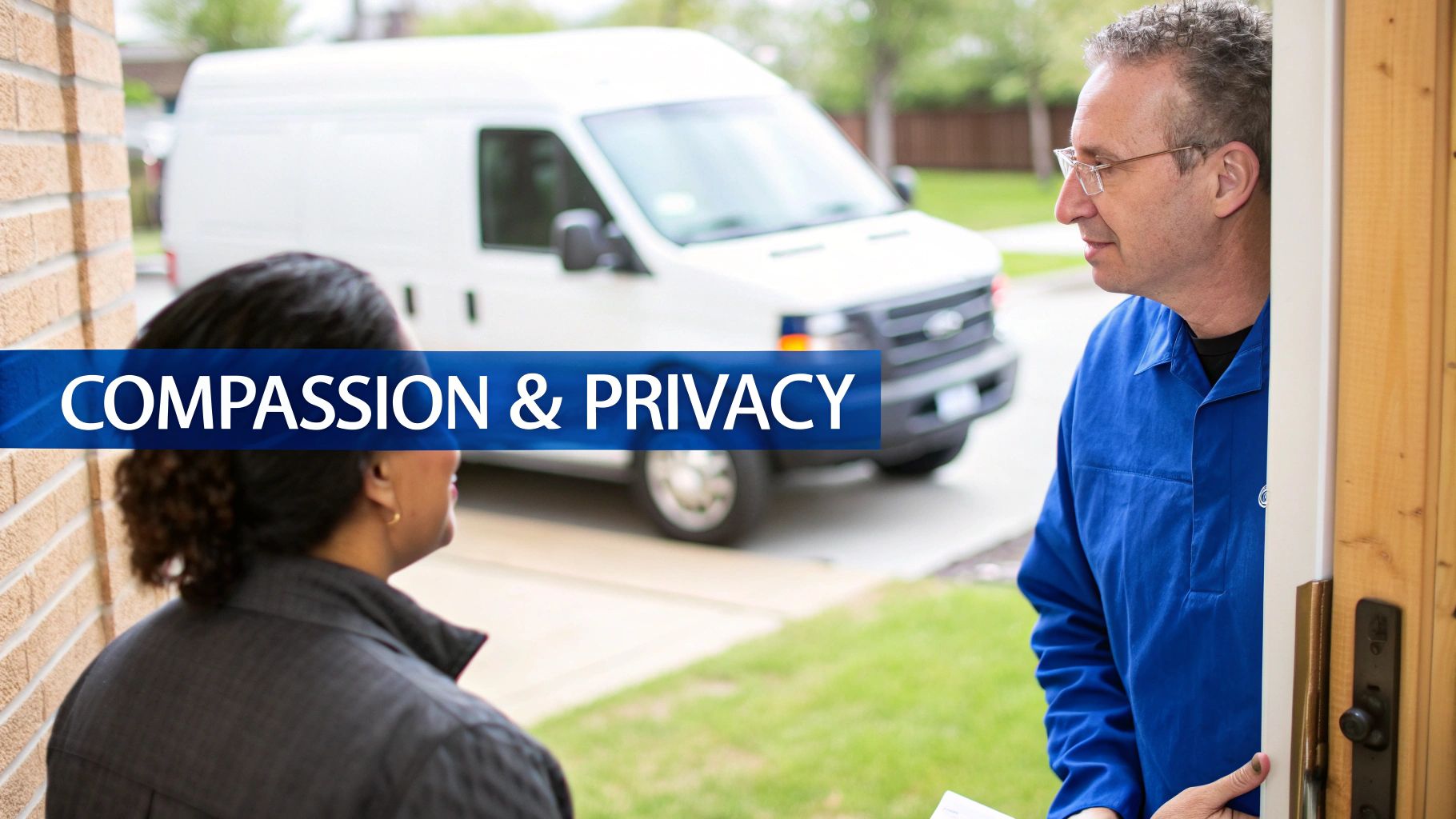
For families dealing with a hoarding situation, the fear of judgment from neighbors, friends, or officials can be paralyzing. Absolute discretion is a cornerstone of professional service. The goal is to create a safe, private environment where the family can focus on the task at hand without added stress or public scrutiny.
Leading companies like 360 Hazardous Cleanup take tangible steps to protect your privacy. This commitment is demonstrated through actions, not just words:
- Using Unmarked Vehicles: Technicians arrive in discreet, unmarked vans to prevent drawing unwanted attention.
- Confidential Communication: All conversations and project details are kept strictly confidential to protect your family's privacy.
- Professional and Non-Judgmental Staff: The crew is trained to be respectful, calm, and focused on the work, ensuring no one feels exposed or judged.
This level of discretion is more than a courtesy—it is essential for building the trust required to navigate such a difficult project.
"The cleanup isn't the end of the journey; for many, it's the beginning of a new chapter. Our role is to ensure that chapter starts with dignity, respect, and a restored sense of safety, free from judgment."
The Hallmarks Of A Compassionate Cleanup Partner
How can you identify a company that truly understands the human element? Observe their actions, not just their marketing. A compassionate company consistently demonstrates its commitment to the emotional side of the cleanup, recognizing the weight behind every item and decision.
They will always take the time to listen to your concerns and collaborate with you to create a plan that feels respectful and manageable. This includes carefully setting aside sentimental items, family heirlooms, and important documents rather than treating everything as disposable. It is this patient, person-first approach that makes all the difference.
Ultimately, the best hoarder cleanup companies understand their true mission is to restore more than just a home—it's to help restore peace of mind. By blending technical expertise with genuine human kindness, they provide a service that is not only effective but fundamentally supportive, paving the way for recovery.
How To Choose The Right Hoarder Cleanup Company
Making the decision to seek professional help is a significant step. The next critical task is selecting a team that is not only capable but also compassionate, trustworthy, and fully compliant with all safety regulations.
It is crucial to understand that not all hoarder cleanup companies are created equal. The distinction between a certified biohazard remediation firm and a standard junk hauler is stark. Choosing the right partner is not just about clearing clutter; it's about ensuring the home is truly safe and that everyone involved is treated with dignity.
Essential Questions To Ask Any Potential Provider
Before signing any agreement, it is imperative to vet the company thoroughly. Approach this as an interview for a highly sensitive role. Any reputable professional will welcome your questions and provide clear, honest answers.
Use this checklist to guide your conversation:
- Are you certified and insured? Do not accept a simple "yes." Request proof of specific certifications, such as those from the IICRC (Institute of Inspection, Cleaning and Restoration Certification) or OSHA HAZWOPER training. You must also verify they carry liability insurance specifically for biohazard remediation. Standard business insurance is insufficient.
- What is your experience with biohazards? Ask for specifics. How many hoarding projects have they managed that involved animal waste, mold, or bodily fluids? Their response is a key differentiator between a professional and a junk removal service.
- What is your protocol for sentimental items? A compassionate company will have a clear, respectful system for identifying, preserving, and returning valuables, photos, and heirlooms. Their answer reveals much about their overall approach.
- How do you ensure discretion and privacy? Inquire about their use of unmarked vehicles and the measures their team takes to maintain confidentiality on-site.
These questions are designed to protect you and help you hire a team that is both technically skilled and emotionally intelligent. For a deeper dive, review our guide on what to consider when choosing a biohazard cleanup company.
The Critical Difference Between Biohazard Experts And Junk Haulers
This may be the single most important distinction to understand. One type of company restores safety; the other simply removes items. This is not a task where cutting corners is an option—the health risks and potential legal liabilities are too severe.
Hiring an unqualified team for a biohazard job is like asking a handyman to perform surgery. While both might seem to solve a surface-level problem, only the trained professional has the knowledge and tools to address the underlying critical issues safely and effectively.
To clarify the difference, here is a comparison of a true biohazard professional versus a standard junk removal service.
Certified Biohazard Firm vs. Junk Removal Service
| Feature | Certified Biohazard Company (e.g., 360 Hazardous) | Standard Junk Removal Service |
|---|---|---|
| Training & Certification | Technicians hold OSHA and IICRC certifications for biohazard and pathogen handling. | Staff has general labor training with no specialized biohazard or safety certifications. |
| Safety Equipment | Uses full Personal Protective Equipment (PPE), including respirators and biohazard suits. | Typically uses basic work gloves and, at most, dust masks. |
| Scope of Work | Performs deep decontamination, disinfection, and odor removal to restore livability. | Focuses solely on removing physical clutter and hauling it away. |
| Regulatory Compliance | Adheres to all state and federal laws for the legal transport and disposal of hazardous waste. | Is not licensed or equipped to handle or dispose of biohazardous materials legally. |
| Insurance | Carries specific liability and workers' compensation insurance for biohazard remediation. | Lacks appropriate insurance, exposing you to significant liability if an accident occurs. |
Ultimately, choosing a company like 360 Hazardous Cleanup is an investment in guaranteed safety, full legal compliance, and genuinely compassionate service. With 24/7 availability, deep experience in these exact situations, and direct insurance advocacy, we provide the reliable partnership you need to navigate this challenging time.
Answering Your Questions About Hoarding Cleanup
Entering the world of hoarding remediation can be overwhelming, and it's natural to have many questions. We have compiled answers to the most common concerns to provide clarity and peace of mind.
How Long Does The Cleanup Process Usually Take?
There is no single answer, as every situation is unique. However, we can provide a general guideline. A smaller apartment with a manageable level of clutter might take 1-3 days to clear and sanitize.
Conversely, a large, multi-story home with extensive clutter and biohazard complications could require a week or longer. The final timeline depends on the property's size, the volume of items, the presence of hazardous materials, and the need for any structural repairs. A reputable company will provide a clear, realistic timeframe after an on-site assessment.
Is The Cleanup Process Confidential?
Absolutely. Confidentiality is a core component of our operations. We understand the sensitivity of these situations, and our entire process is designed to protect your family's dignity and privacy.
We arrive in unmarked vehicles to avoid drawing attention from neighbors. Our team is trained to be professional and non-judgmental, and we hold all project details in the strictest confidence. Our goal is to restore the home's safety without adding public stress to your family.
Protecting your family's privacy is not just a policy; it is a fundamental part of providing trauma-informed care. A respectful process is a confidential one.
What Happens To Sentimental Items And Valuables?
This is a primary concern for families, and one we take very seriously. Our mission is to remove clutter and hazards, not to erase a person's life and memories. Our technicians are trained to be meticulous.
We carefully sort through all items, searching for those of potential value—both sentimental and monetary. Items like family photos, important documents, jewelry, heirlooms, and personal keepsakes are immediately segregated. We create a "save" pile for the family to review, ensuring nothing important is lost. This process respects the individual's history while restoring their home.
When you need a partner who combines technical expertise with unwavering compassion, 360 Hazardous Cleanup is ready to help. We provide discreet, thorough, and respectful hoarding remediation services to restore safety and peace of mind. Contact us 24/7 to learn how we can support your family. Visit us at https://360haz.com.