You may be standing in a garage, a bathroom, a bedroom, or a rental unit, looking at a scene that turned serious faster than expected. There's a mess. There may be blood, bodily fluids, sewage, or a strong odor you can't place. Your first thought is often practical: get gloves, get a mask, find a hazmat suit at Lowe's, and handle it.
That instinct is understandable. When people are stressed, they reach for the fastest visible solution. A white disposable suit on a store shelf looks reassuring because it resembles what professionals wear. The problem is that looking protected and being protected are not the same thing.
In biohazard work, the danger usually isn't dramatic. It's microscopic. It's in fluids that soak through seams, in droplets that spread during wiping, in contaminated shoe soles, and in the mistakes people make when they take gear off too soon or in the wrong order. Even solid basic PPE habits matter, and this guide to using PPE correctly is a useful example of why procedure matters as much as the gear itself.
I've seen the same pattern repeatedly. Someone tries to solve a painful situation with hardware-store protection, then discovers too late that the suit was made for dust, paint, or debris, not bloodborne pathogens or chemical exposure. A stressful cleanup becomes an exposure event.
That's why a search for a hazmat suit at Lowe's needs a straight answer, not vague reassurance. If the concern is paint, dust, insulation fibers, or keeping your clothes clean, a consumer coverall can make sense. If the concern is biohazard contamination, the equipment, training, and disposal standards are in a completely different category. For a closer explanation of that risk gap, see this overview of why DIY biohazard cleanup is a serious health risk.
Introduction The Dangers of a DIY Approach to Biohazards
A person doesn't usually search for a hazmat suit at Lowe's on a calm day. It often happens after an accident, a traumatic event, an unattended death, a medical incident, or a sewage backup. The room feels urgent, and the brain starts reducing the problem to something manageable: buy a suit, bag the waste, disinfect the surface, move on.
That logic works for many household tasks. It fails with biohazards because the hazard isn't defined by how bad the room looks. It's defined by what may be present in the material, what spread you can't see, and whether the protective system matches the threat.
The suit isn't the system
A proper response depends on more than a coverall. It includes glove layering, face protection, footwear, containment, decontamination, removal sequence, waste handling, and training. Even the strongest suit can fail if it's paired with the wrong gloves or removed carelessly.
Practical rule: If your plan starts and ends with buying a white suit, the plan is already incomplete.
People often underestimate how exposure happens. They focus on the cleanup itself and ignore the moment after, when contaminated gloves touch a door handle, when a sleeve brushes the face, or when boot soles carry material into the rest of the home.
Stress makes bad equipment look good enough
Under pressure, a package labeled “protective coverall” can sound close enough to “hazmat suit.” It isn't. That wording gap causes real harm. Consumer products are often designed to keep paint, dust, or dirt off the user's clothing. Biohazard protection requires barriers engineered and tested for a different purpose.
That's why the smartest move in a high-stakes scene isn't confidence. It's caution. Before anyone starts scrubbing, lifting, or bagging contaminated material, they need to know whether the gear in mind is even intended for that environment. In many true biohazard situations, it isn't.
What Protective Suits Does Lowe's Actually Sell
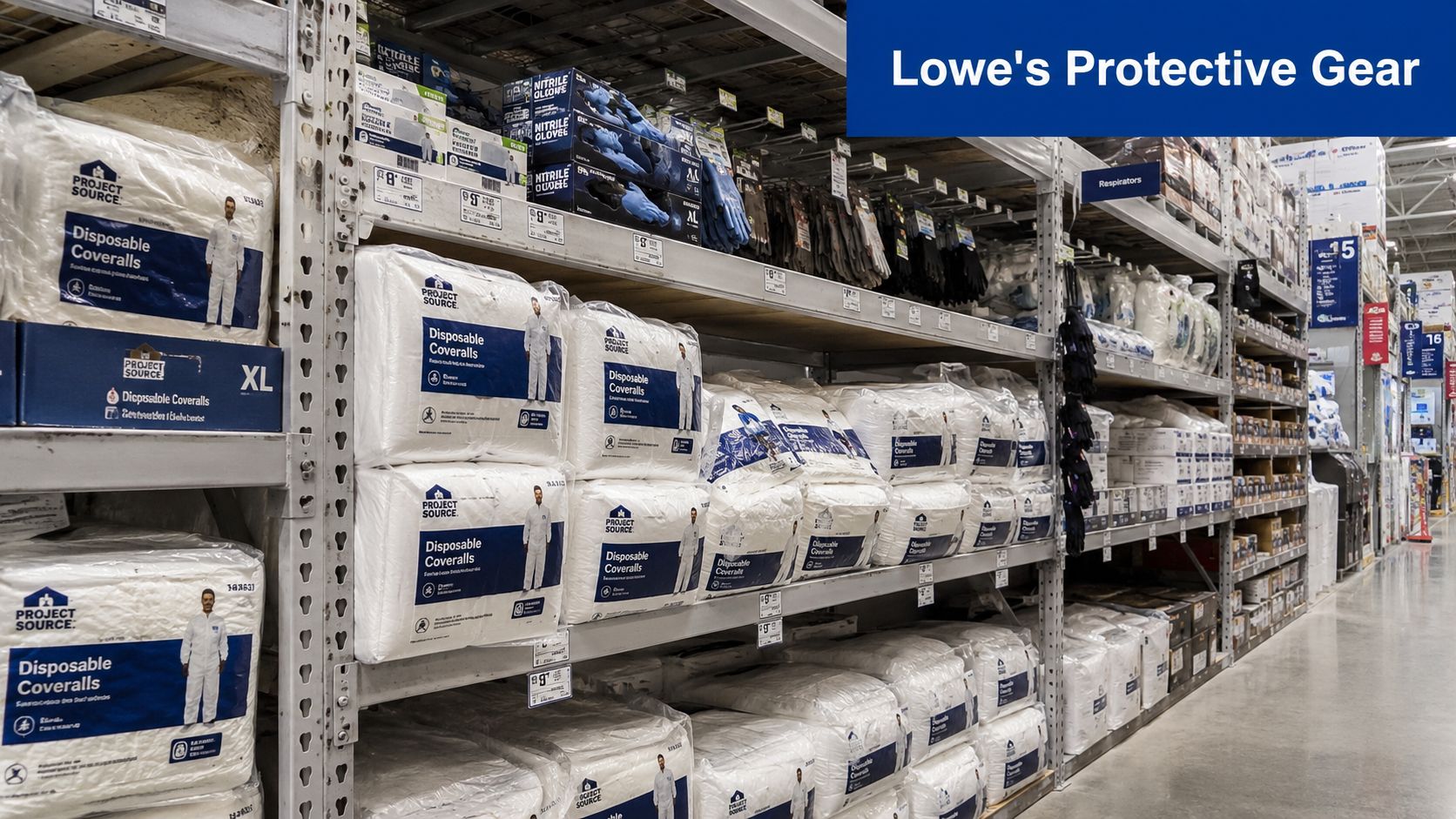
The term Hazmat Suit Lowe's usually refers to disposable coveralls sold alongside safety gear, painting supplies, or general cleanup products. Those items have legitimate uses. They just aren't designed for true hazmat or biohazard remediation.
What those suits are actually for
At a big-box retailer, the typical suit is a light-duty disposable coverall. It's usually intended for tasks such as:
- Painting projects: keeping overspray off clothes
- Dusty cleanup: attic dust, garage debris, sawdust
- Messy maintenance: gardening, sanding, basic dirt protection
- Light splash work: non-hazardous household tasks where clothing protection matters more than contamination control
These suits are useful because they're affordable, easy to put on, and disposable. They help with cleanup comfort. They are not the same thing as a certified hazmat system.
Why the confusion is dangerous
The biggest problem isn't that stores carry disposable coveralls. The problem is that many buyers assume any full-body white suit provides serious hazard protection. It doesn't. People searching “hazmat suit lowes” rarely understand that consumer-grade protective clothing lacks certified hazmat protection levels required for biohazard or chemical exposure, and data shows 78% of non-professional biohazard cleanup incidents involved improper PPE use due to this confusion according to Lowe's safety category context.
A painter's coverall can keep latex paint off your jeans. That doesn't mean it can keep contaminated fluid off your skin.
The material trade-off
Consumer coveralls are often made to be lightweight and breathable. For paint and dust work, that's helpful. You don't want heavy heat stress for a simple weekend project. But the same breathability that improves comfort can work against you in a biohazard setting, where the priority is resisting penetration and preventing contaminated material from reaching skin, clothes, or underlying layers.
A practical way to think about it is this:
| Product type | Main purpose | What it usually protects against |
|---|---|---|
| Consumer coverall | Keep clothing clean | Dust, dirt, paint overspray |
| Professional biohazard suit | Block hazardous exposure | Biological contaminants, certain chemicals, fluid penetration risks |
The phrase hazmat suit has a technical meaning in professional response work. Retail shelf products often use broad marketing language that sounds stronger than the actual protection provided. For household projects, that's an annoyance. For trauma scene or bodily fluid cleanup, it can become a serious exposure mistake.
Defining Professional-Grade Hazmat Suits
A real hazmat suit isn't one generic product. It's part of a classification system tied to hazard type, exposure route, and respiratory risk. That's why professionals don't start with “What suit do we have?” They start with “What are we walking into?”
The four protection levels
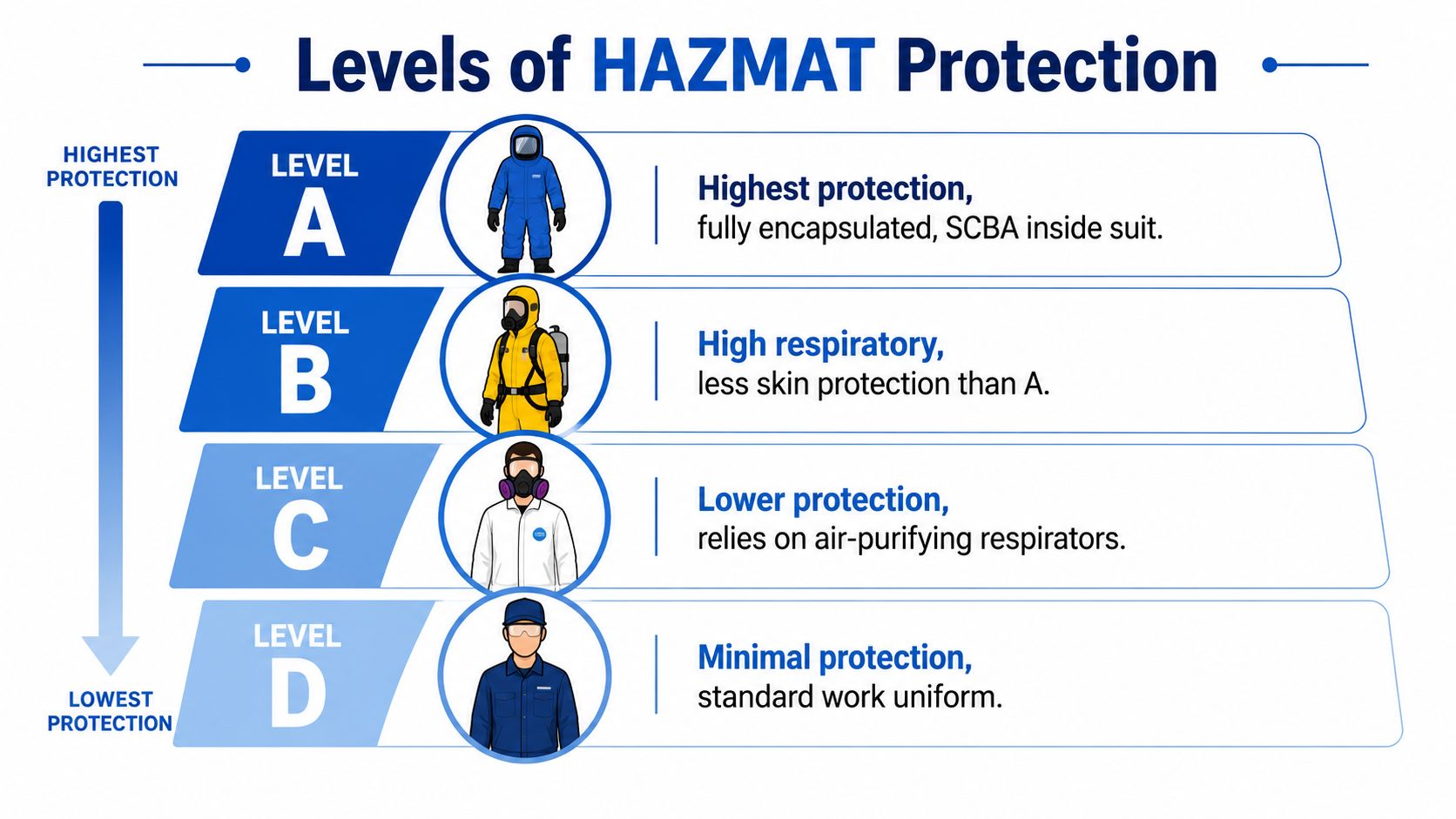
Hazmat suits are classified into four EPA-defined levels of protection, A through D. Level A provides maximum impermeability against gases and vapors with a fully encapsulating suit and SCBA, while Level D is basic workwear with no protection against hazardous materials as summarized in this hazmat suit classification reference.
Here's the practical meaning of each level:
Level A
Used when the substance is unknown or the inhalation and skin risks are severe. This is the highest level of skin and respiratory protection. The suit is fully encapsulating and works with SCBA, or self-contained breathing apparatus.Level B
Strong respiratory protection remains the priority, but skin protection is lower than Level A. This level may fit incidents where the atmosphere is dangerous but total vapor-tight encapsulation isn't required.Level C
Used when the hazard is identified and air-purifying respirators are appropriate. This is still specialized PPE, but it depends on known conditions and proper filter selection.Level D
Basic work clothing. Coveralls, boots, gloves, and standard site wear fit here. This level does not protect against hazardous atmospheres or serious contamination.
Why this matters for a Lowe's search
Most retail coveralls belong closest to the Level D end of the spectrum. That doesn't make them useless. It means they serve ordinary workplace or home project needs, not unknown or dangerous contamination environments.
The moment a scene may involve blood, bodily fluids, infectious material, or an unidentified substance, the PPE decision stops being a shopping decision and becomes a hazard assessment.
That distinction is often missing from casual online advice. A searcher sees “hazmat suit” and imagines one item. In real remediation, the phrase describes a category of engineered protection levels, each chosen based on the threat.
Selection requires hazard assessment
A suit can be too little, but it can also be wrong in a more technical way. The suit might protect the body while the respirator choice fails. Or the gloves may be chemically incompatible. Or the environment may demand a different donning and decontamination process.
That's why competent response work starts with evaluation, not purchase. If you want a deeper foundation on contamination categories and response thresholds, this guide on understanding biohazard safety levels gives useful context.
Consumer Coveralls vs Professional Biohazard Suits
The difference between a hardware-store coverall and a professional biohazard suit isn't branding. It's material science, seam construction, testing, and performance under stress.
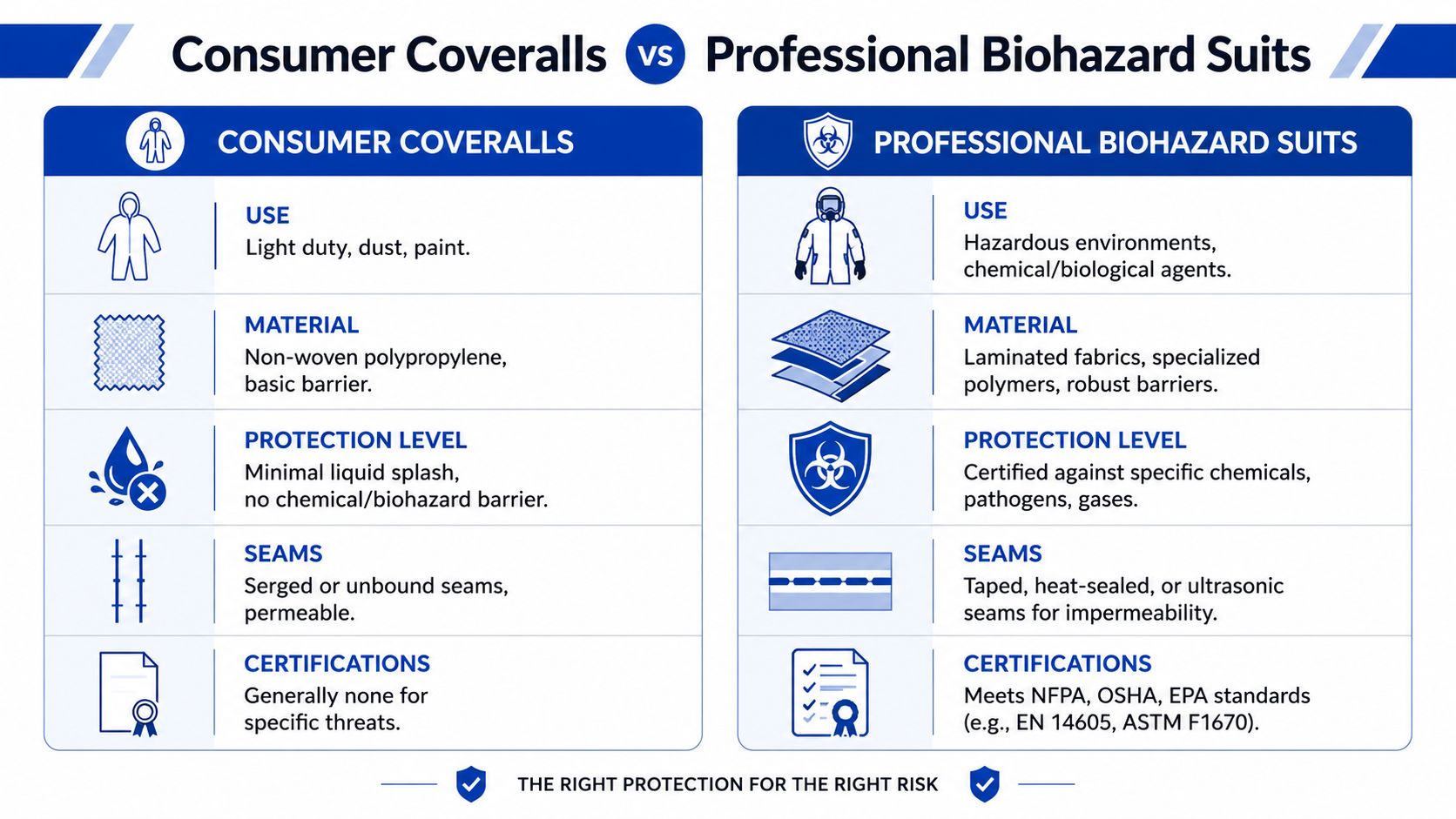
A simple comparison makes the gap clear:
| Feature | Consumer coverall | Professional biohazard suit |
|---|---|---|
| Intended use | Dust, paint, dirt | Biohazard and hazardous exposure work |
| Fabric goal | Lightweight, breathable, disposable | Barrier performance and contamination resistance |
| Seams | Basic stitched seams are common | Taped, sealed, or reinforced seams |
| Testing focus | General mess protection | Specific resistance standards for hazardous exposure |
| Removal protocol | Casual disposal after task | Controlled doffing to prevent self-contamination |
The fabric is built for a different job
A consumer coverall is closer to a shop barrier. It helps keep nuisance material off clothing. A professional biohazard suit is designed to keep hazardous material from getting through the fabric and through the joints where movement puts stress on the garment.
That stress point matters. Kneeling, reaching, lifting, and twisting put pressure on knees, elbows, seat panels, sleeves, and seams. The suit has to hold its barrier under those movements, not just while standing still.
ASTM standards are where the difference becomes real
Expert-grade hazmat suits for biohazard cleanup must meet ASTM F1670 for blood permeation resistance and ASTM F1671 for blood-borne pathogen penetration resistance, ensuring an impermeable barrier against biological contaminants even under physical stress, as described in this protective clothing standard overview.
That's the dividing line. If a suit isn't built and selected for that kind of performance, it shouldn't be treated as appropriate for blood or bodily fluid cleanup.
This video gives useful visual context on how protective gear differences play out in real use:
Seams fail before people expect them to
Many people focus on the front panel of a suit because that's what they see. Professionals worry about the seams first. Fluids don't need a large opening. They exploit stitching lines, zipper areas, wrists, ankles, and hood transitions.
A practical analogy fits here. A raincoat and a submarine both keep water out. Only one is designed for sustained pressure, vulnerable joints, and catastrophic failure if a seal gives way. Consumer coveralls are raincoats in this comparison.
Field insight: In contamination work, the weakest point usually decides whether the whole PPE setup succeeds.
PPE includes more than the suit
For true biohazard cleanup, the suit works with glove layers, taped wrist transitions, disposable boot protection, and controlled removal. The suit isn't the star of the show. It's one component in a barrier system.
That's why people who want to understand proper PPE selection should focus less on what looks official and more on what is tested, compatible, and used correctly. This overview of the importance of personal protective equipment in biohazard cleanup is useful if you want to understand the system, not just the garment.
Biohazard Cleanup and Regulatory Safety Standards
The most important shift in thinking is this: biohazard cleanup is not a tougher version of housecleaning. It is regulated work with training, medical, and procedural requirements.
OSHA treats this as occupational exposure work
OSHA's Bloodborne Pathogens Standard (29 CFR 1910.1030) mandates that all personnel involved in biohazard cleanup must be trained, immunized, and properly equipped, including annual training on risks, PPE use, and emergency response procedures, as outlined in this explanation of OSHA guidelines for biohazard cleanup.
That one sentence changes the entire discussion. It means the issue isn't just whether a homeowner can buy gloves and a suit. The issue is that professional cleanup exists inside a compliance framework built around exposure prevention.
Training changes what workers notice
A trained responder doesn't just look at the visible spill. They look at transfer points, porous materials, splash radius, likely hand-contact surfaces, hidden saturation, disposal streams, and the path contaminated waste will travel out of the structure.
That's why DIY cleanup often misses the most consequential details:
- Porous materials: padding, subfloor, grout lines, unfinished wood, fabric seams
- Cross-contamination paths: doorknobs, faucet handles, light switches, appliance pulls
- Doffing risk: contaminated gloves touching face, clothing, or skin during removal
- Waste handling: bagging, transport, and disposal requirements that aren't the same as ordinary trash in regulated scenarios
Biohazard safety isn't one decision. It's a chain of decisions, and the weak link is usually the one nobody knew to look for.
The suit alone doesn't satisfy the standard
A person can wear more visible gear and still operate outside safe practice. If they aren't trained in donning and doffing, don't understand exposure routes, and don't know how to segregate waste or disinfect affected materials correctly, the PPE creates false confidence.
In higher-risk hazardous substance response, OSHA's HAZWOPER standard sets formal training thresholds for responders who control releases and for post-emergency cleanup personnel. That framework reinforces the same point seen in biohazard remediation: dangerous scenes are handled by trained workers operating within defined protocols, not by untrained people improvising around retail gear.
Why this matters in homes and facilities
Families, landlords, maintenance teams, and facility managers are often trying to do the responsible thing quickly. The hard truth is that speed without compliance can expand the problem. Exposure, improper disposal, incomplete decontamination, and secondary contamination of unaffected areas can all follow.
The safest choice in a true biohazard setting isn't the strongest stomach in the room. It's the person or team trained to treat the site as a regulated hazard environment.
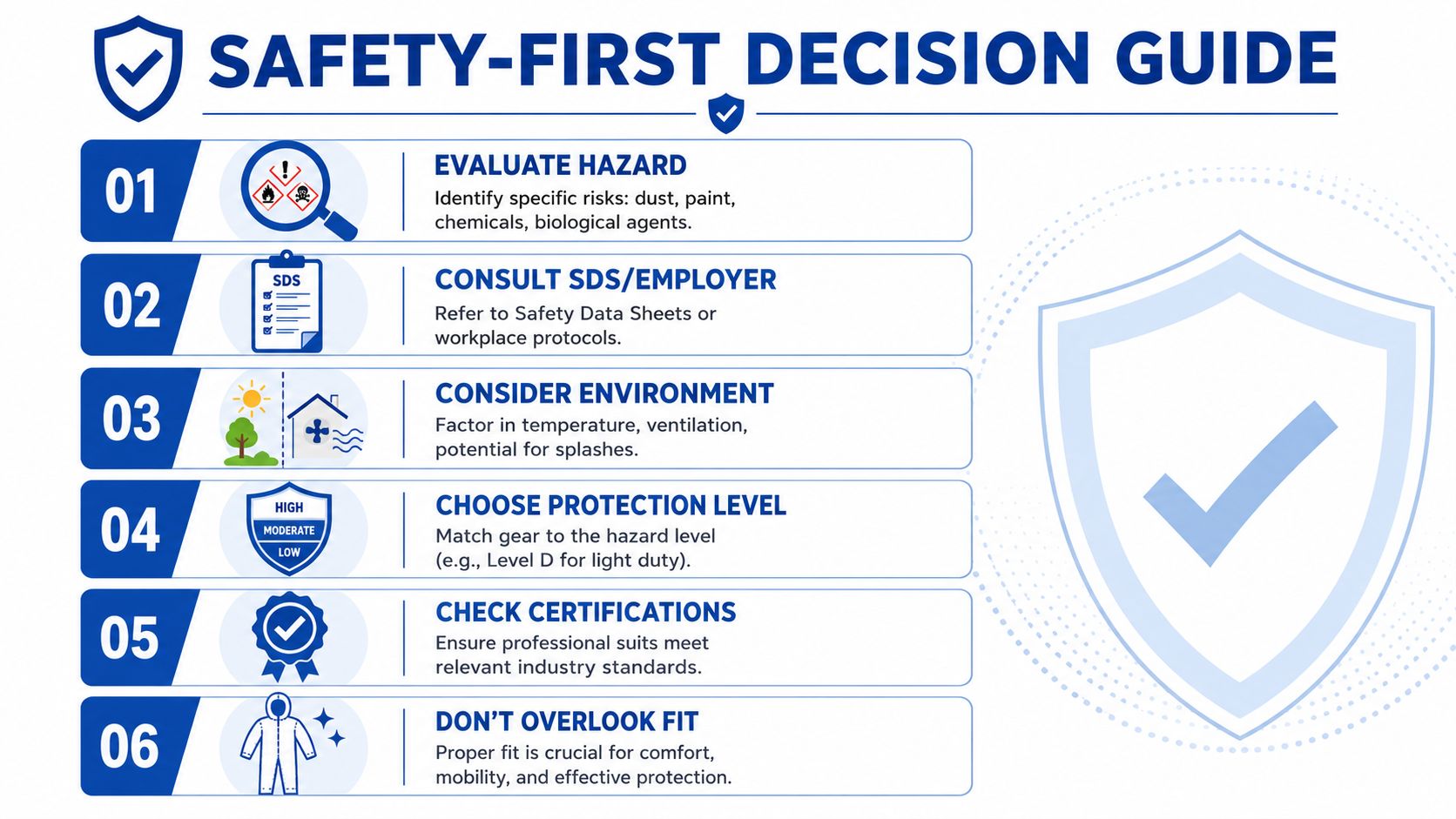
Making the Right Call A Safety-First Decision Guide
The easiest way to decide whether a Lowe's suit is enough is to stop asking what the suit looks like and start asking what the contamination is.
When a store-bought coverall is appropriate
A consumer coverall can be a reasonable choice for ordinary non-biohazard tasks such as:
- Painting walls or ceilings: keeping overspray off clothes and skin
- Cleaning a dusty garage or attic: reducing nuisance dust on clothing
- Yard and garden work: protecting from dirt and debris
- Light renovation debris: non-hazardous mess where contamination isn't the concern
That's the right lane for these products. They're convenience PPE, not high-risk response PPE.
When it's time to stop and call professionals
A consumer suit is not the right answer for these scenarios:
- Blood or bodily fluids anywhere in the space
- Unattended death or trauma scenes
- Crime scene contamination
- Sewage backups with suspected biological contamination
- Medical accident scenes
- Unknown substances or mixed contamination
If the material can infect, soak, spread, aerosolize, or transfer invisibly, retail coveralls aren't enough.
One rule that should never be ignored
Any suit contaminated by a hazardous chemical or biological agent must never be reused. Professional services follow strict single-use protocols because decontamination is unreliable, yet 62% of residential biohazard cleanup attempts in 2025 involved reused disposable coveralls, according to this discussion of reusable or disposable chemical PPE safety.
That matters because people often think the danger is over if the suit still looks intact. It isn't. Invisible contamination, material degradation, and transfer during storage or removal can turn that reused item into a source of exposure.
If protective gear has contacted a hazardous biological or chemical source, the decision has already been made. It goes out of service.
A practical decision checklist
Use this framework before doing anything:
- Identify the material. Is this dust and paint, or is it blood, sewage, or bodily fluid contamination?
- Look for hidden spread. Has material contacted porous surfaces, flooring edges, handles, shoes, or nearby objects?
- Ask whether removal is regulated. If disposal, disinfection, and exposure prevention require specialized handling, it's not a DIY cleaning task.
- Consider related hazards. Some scenes involve overlapping risks. In older buildings, for example, disturbance can raise separate concerns, and this guide to checking for asbestos insulation is a useful reminder that one hazard can hide behind another.
- Decide based on consequence, not convenience. If getting it wrong could expose family, staff, tenants, or responders, the safer decision is professional remediation.
For a broader explanation of why these scenes need trained handling, this overview of what biohazard cleanup is and why you should always hire a professional is a strong next step.
A Lowe's coverall can be the right tool for paint. It is not the right tool for a death scene, trauma cleanup, bodily fluids, or infectious contamination. Knowing that difference is what protects people.
If you're facing a scene involving blood, bodily fluids, unattended death, trauma, sewage contamination, or another serious biohazard, 360 Hazardous Cleanup is available 24/7 with compassionate, compliant remediation support. Their team handles cleanup discreetly, follows state and federal standards for collection and disposal, and helps families, property owners, facilities, and insurers move from crisis to safe recovery without unnecessary risk.