While the cost of crime scene cleanup often ranges between $1,000 and $5,000, this figure serves as a baseline. The final cost is determined by the specific circumstances of the incident, as the primary objective is not merely aesthetic cleaning but ensuring the property is biologically safe for reoccupation.
Understanding the True Value of Professional Cleanup
In the aftermath of a traumatic event, navigating the emotional and logistical challenges can be overwhelming. Financial concerns only add to this burden. However, understanding the costs involved in professional remediation can restore a sense of control during a deeply chaotic time.
Professional biohazard remediation is not a standard cleaning service. It is a critical, regulated process designed to restore safety, ensure legal compliance, and provide families and property owners with the necessary space to begin the healing process.
This service is akin to specialized medical care for a property. In a health crisis, a surgeon's expertise is non-negotiable; the same principle applies here. Certified biohazard remediation professionals are essential for managing hazardous materials that pose severe, often invisible, health risks. These technicians are trained to mitigate unseen dangers and restore a space to a safe, livable condition with the utmost dignity and discretion.
A Look at Typical Cleanup Costs
Every situation is unique and requires a tailored remediation plan, meaning costs will vary. However, having a general framework can help set expectations. This chart provides estimated starting points for common scenarios, illustrating how complexity impacts the resources required.

As shown, the more complex and widespread the contamination, the more intensive the resources needed to guarantee complete and safe remediation. This investment is not just for cleaning; it is for the complete neutralization of all biological threats.
To provide a clearer financial picture, the following are estimated cost ranges for different cleanup scenarios. These figures help set expectations, but a formal quote can only be provided after a professional, on-site assessment.
Estimated Cleanup Costs by Scenario
| Scenario Type | Typical Cost Range | Key Cost Factors |
|---|---|---|
| Unattended Death | $2,500 – $7,500+ | Time of discovery, structural damage, odor removal. |
| Suicide/Homicide | $3,000 – $10,000+ | Extent of biohazard spread, structural saturation, multi-room impact. |
| Hoarding | $5,000 – $25,000+ | Volume of clutter, presence of biohazards (waste, pests), structural issues. |
| Vehicular Biohazard | $750 – $2,500+ | Type of biohazard, vehicle size, extent of interior damage. |
| Tear Gas Removal | $2,000 – $8,000+ | Size of the property, type of tear gas agent used, HVAC system contamination. |
These figures reflect the unique challenges each situation presents. An unattended death discovered after a prolonged period, for instance, often requires far more extensive structural remediation than a more contained incident.
What Goes into the Cost
Industry standards recognize that hourly rates up to $250 are appropriate for this highly specialized work, reflecting the significant risks and technical skill required. A homicide scene contained to a single room might cost up to $3,000. Conversely, a large-scale event involving mass trauma or significant structural compromise can escalate into the tens of thousands.
The total cost encompasses far more than technician labor. It includes:
- Specialized Personal Protective Equipment (PPE) to ensure team safety.
- Advanced decontamination agents and the industrial equipment required for their application.
- Compliant collection and legal disposal of all biohazardous materials.
- Comprehensive documentation for insurance claims and legal records.
Understanding the specific needs that arise from certain tragedies, like the special death care for homicide victims, also helps put the necessity of these specialized services into perspective.
At 360 Hazardous Cleanup, our team is available 24/7 to provide compassionate and professional guidance. We believe in complete transparency, ensuring you understand every step of the process. For more information on our quoting methodology, please review our guide on navigating biohazard cleanup costs.
Key Factors That Influence Cleanup Pricing
Inquiries about the cost of crime scene cleanup often seek a single, fixed number. However, a one-size-fits-all price does not exist in biohazard remediation. Just as a surgeon cannot provide a flat fee without a full diagnosis, we cannot determine the cost without a thorough on-site assessment.
No two scenes are identical. The final cost of any professional biohazard remediation is based on a unique set of variables specific to each situation. Our quotes directly reflect the precise resources needed to render a property completely safe and free of biohazards.

A small, contained cleanup is analogous to a routine medical check-up—necessary but predictable. A complex scene with contamination spread throughout multiple rooms is more like major surgery, demanding a larger team, more advanced equipment, and a more intensive remediation plan. This distinction is key to understanding the significant variation in pricing.
The table below details the primary components we evaluate when preparing a scope of work and quote.
Detailed Breakdown of Cleanup Cost Components
| Cost Component | Description | Impact on Overall Price |
|---|---|---|
| Labor & Expertise | Hourly rates for certified technicians who are trained to handle biohazards safely and according to OSHA regulations. | High: This is often the largest cost, reflecting the specialized skills and risks involved. |
| Personal Protective Equipment (PPE) | Single-use biohazard suits, respirators, gloves, and boot covers required for each technician on site. | Moderate: Costs scale directly with the number of technicians and the duration of the job. |
| Scope of Contamination | The total square footage of the affected area and the severity of biohazard saturation. | High: Widespread contamination across multiple rooms or deep saturation into materials significantly increases labor and supply costs. |
| Specialized Equipment | Use of industrial-grade tools like HEPA air scrubbers, ozone generators, and foggers for deep cleaning and odor removal. | Moderate: Necessary for ensuring the property is fully decontaminated and safe for re-entry. |
| Biohazardous Waste Disposal | The legally mandated process of packaging, transporting, and incinerating all contaminated materials at a licensed facility. | Moderate to High: Disposal is highly regulated and priced by weight, which can add up quickly. |
| Material & Structural Removal | The cost of removing and replacing porous materials like drywall, carpet, subflooring, or furniture that cannot be salvaged. | Variable: Depends entirely on the extent of the damage; can be a major cost driver in severe cases. |
Each of these factors contributes to the final quote, ensuring that the work is not only thorough but also compliant with all safety and environmental regulations.
The Scope and Severity of Contamination
The most significant factor driving cost is the extent of contamination. A minor incident on a non-porous surface like tile is vastly different from a situation where biological fluids have saturated carpets, drywall, and the underlying subfloor.
Key on-site assessment factors include:
- Size of the Affected Area: A single room will inherently cost less to remediate than an entire floor or multiple areas of a property. The total square footage directly dictates the labor, equipment, and cleaning agents required.
- Nature of Biohazards: The type of biological material determines the remediation protocol. Bloodborne pathogens demand a different set of procedures and safety measures than chemical agents like tear gas.
- Structural Porosity: Biohazards readily absorb into porous materials such as wood, concrete, carpet, and drywall. In these cases, surface cleaning is insufficient. Contaminated materials must be professionally removed and disposed of, which increases the scope and cost.
The longer a scene remains unaddressed, the more severe the contamination becomes. Biological fluids have more time to penetrate deeper into structures, creating conditions for secondary issues like mold and bacterial proliferation. A rapid response is critical not only for safety but also to contain the complexity and cost of the remediation.
Labor and Specialized Resources
Engaging a professional biohazard remediation company is an investment in expertise, safety, and regulatory compliance. Our labor rates reflect the high level of skill and the significant risks our technicians assume daily. This ensures the job is completed correctly and safely the first time.
Our technicians undergo rigorous, ongoing training to meet and exceed strict OSHA (Occupational Safety and Health Administration) standards. This training enables them to safely manage dangerous pathogens, operate specialized equipment, and legally dispose of biohazardous waste.
This is a field where cutting corners is not an option. The investment in professional labor covers several critical areas:
- Personal Protective Equipment (PPE): Our teams utilize specialized, single-use gear, including respirators, full biohazard suits, and multiple layers of gloves. All PPE must be disposed of as regulated medical waste upon completion.
- Advanced Decontamination Technology: We use professional-grade disinfectants, powerful enzymatic cleaners, ozone generators for permanent odor elimination, and HEPA air scrubbers. This equipment is significantly more advanced than consumer-grade products.
- Regulated Disposal: Biohazardous waste cannot be discarded with regular trash. It must be packaged, transported, and incinerated according to strict federal and state regulations, a process that carries substantial costs.
The industry is expanding to meet these stringent requirements. The professional crime scene cleanup market is projected to grow from $117.36 million to $176.41 million by 2032, driven by increasing recognition of the need for true professional services.
Ultimately, every line item in a professional quote is tied to one central goal: restoring safety. From our technicians' training to the final disposal manifest, the price reflects the immense responsibility we undertake. To understand how these factors are integrated into a project plan, read our guide on comparing scopes of work for informed decisions.
Navigating Insurance for Biohazard Remediation
Following a traumatic event, the cost of restoring your property to a safe condition should not be an additional source of stress. Insurance often provides a critical safety net. For most families and property owners, the first question is, "Who pays for this?"
Fortunately, the answer is often more straightforward than anticipated. Most standard homeowner's, commercial property, and even auto insurance policies include coverage for property damage. This coverage typically extends to biohazard remediation, meaning professional cleanup services required after a crime, accident, or unattended death are frequently covered events.
Understanding Your Policy and Filing a Claim
While coverage is common, policy details vary. The first step is to review your insurance documents, specifically the property damage clause. A clear understanding homeowners insurance coverage is essential before proceeding.
Filing a claim can seem daunting, but a structured approach makes it manageable:
- Contact Your Insurance Agent Immediately: Inform them of the situation as soon as possible. They will confirm your coverage and provide a claim number, which is essential for all future communications.
- Document Everything: If it is safe and permissible, take photos and videos of the affected areas before any cleanup begins. This visual evidence is invaluable to the claims adjuster.
- Hire a Professional Remediation Company: Your insurance provider will require that the work be performed by a certified and insured company. It is critical to choose a provider with direct experience working with insurance carriers.
- Provide Detailed Invoices and Reports: The remediation company you select will generate all necessary documentation, including a detailed scope of work, itemized invoices, and proof of proper biohazard disposal. This documentation serves as the evidence the adjuster needs to approve and process your claim.
How a Professional Partner Becomes Your Advocate
An experienced biohazard remediation company like 360 Hazardous Cleanup serves as more than a cleanup crew—we become your advocate. We understand precisely what insurance adjusters require, down to the specific line-item details, to approve a claim for the full cost of remediation.
Our team communicates with insurance companies daily. We have established a proactive partnership model designed to lift the administrative burden from your shoulders.
We handle the complex paperwork, direct communication with the adjuster, and the meticulous documentation required. Our goal is to streamline the entire claims process, ensuring there are no delays or denials due to incomplete or incorrect information.
This approach not only alleviates financial stress but also allows you to focus on what matters most—your family and your well-being. By managing the insurance logistics, we help ensure you receive the full coverage you are entitled to, without the added trauma of navigating a complex system alone.
To learn more, please see our detailed guide on insurance coverage for biohazard cleanup. We are here to ensure no family has to navigate this process alone.
The Hidden Dangers and Costs of DIY Cleanup
In the wake of a traumatic event, the instinct to clean and restore normalcy is understandable. This often leads individuals to consider a DIY cleanup, primarily to save money.
However, attempting to remediate a biohazard scene yourself is a decision fraught with risks that can lead to devastating financial, emotional, and physical consequences.
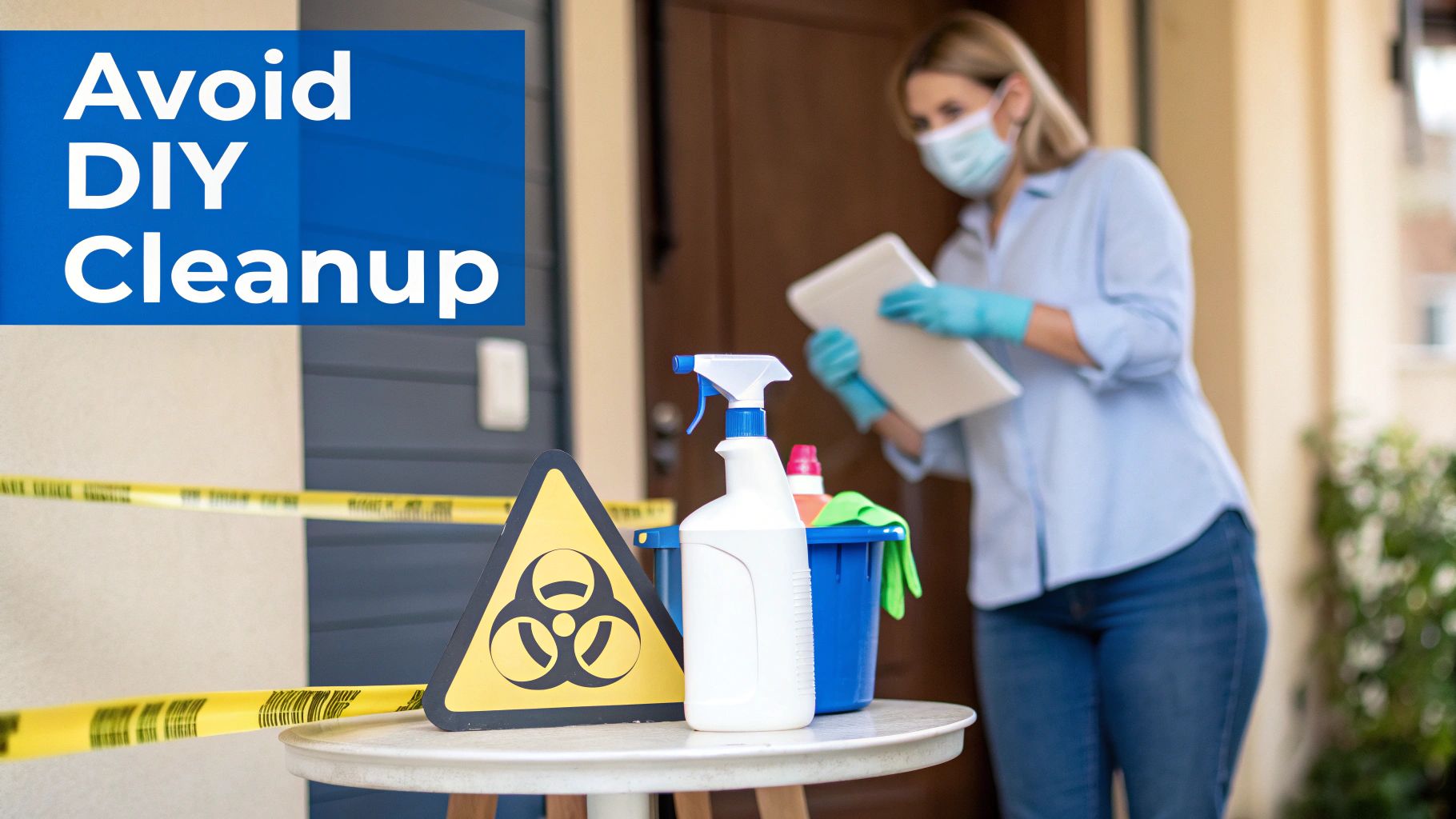
The true cost of a DIY approach extends far beyond cleaning supplies. It is measured in potential medical bills, significant legal fines, and the profound psychological toll on those who attempt it. Engaging professionals is not merely about cleaning; it is about mitigating every one of these risks.
The Overlooked Health and Safety Risks
The most immediate danger lies in what is invisible to the naked eye. Biohazardous materials, particularly blood and bodily fluids, can harbor dangerous bloodborne pathogens that remain viable on surfaces for days or weeks. Without proper Personal Protective Equipment (PPE) and validated decontamination protocols, you risk direct exposure to viruses such as HIV and Hepatitis B and C.
Surface wiping is insufficient. Biohazards are known to penetrate porous materials—drywall, wood subfloors, and even tile grout—creating a hidden reservoir of contamination. Household cleaners are not formulated to neutralize these threats, leaving behind a persistent health hazard for your family or future occupants.
The Legal and Financial Consequences
Beyond the health risks, improper disposal of biohazardous waste can result in severe legal penalties. Federal and state agencies like OSHA have extremely strict regulations governing the handling, transport, and destruction of these materials. They cannot be discarded with regular trash.
Violations can lead to thousands of dollars in fines and significant legal liability. If a future tenant or owner becomes ill due to incomplete decontamination, the property owner who performed the cleanup could be held responsible, turning a well-intentioned effort into a legal and financial catastrophe.
The real cost of crime scene cleanup is not the professional service fee—it's the catastrophic expense of getting it wrong. The investment in a certified team is a critical safeguard for your health, your finances, and your legal standing.
The Emotional Trauma of the Task
The psychological damage from cleaning a trauma scene is often the most severe and lasting cost. Confronting the physical remnants of a tragedy can inflict deep emotional wounds, potentially causing or exacerbating conditions like Post-Traumatic Stress Disorder (PTSD). No family member or property owner should ever have to bear that burden.
Hiring professionals creates a vital emotional buffer, affording you the space to grieve and heal. A professional team performs the work with technical expertise and compassionate detachment, restoring the area safely without compounding your trauma. The need for these specialized services is clear; the global biohazard and crime scene cleanup market was recently valued at around $1.8 billion and is projected to continue growing, as detailed in this report on the biohazard cleanup market size on datainsightsmarket.com.
Ultimately, choosing a professional service is an investment in peace of mind. It guarantees the job is done correctly, protecting you from every hidden danger. For a comprehensive overview, please read our guide on why DIY biohazard cleanup is a serious health risk.
Beyond Cleaning: Understanding Full Restoration Costs
Engaging a professional biohazard team is the critical first step, but it is not always the final one. The true cost of crime scene cleanup can extend beyond initial decontamination. Full restoration involves returning a property to a safe, livable, and emotionally neutral state, which often requires additional specialized services.
Once immediate biohazards are removed, secondary issues frequently become apparent. If left unaddressed, these problems can lead to long-term property damage, create ongoing health risks, and prevent anyone from feeling truly safe in the space again. It is important to understand these potential follow-up costs to form a complete financial picture.
Addressing Lingering Odors
One of the most persistent and distressing after-effects of a traumatic event is a lingering odor. This is not merely an unpleasant smell; it is an indicator that microscopic organic matter has penetrated deep into porous surfaces like wood, drywall, and carpet. Standard air fresheners and cleaning methods are ineffective against such deep-seated contamination.
Professional odor removal is a scientific process. It focuses on destroying odor-causing compounds at a molecular level, not just masking them.
- Ozone Generators: These machines release ozone (O3), which chemically alters the structure of airborne and surface-level particles, effectively neutralizing odors.
- Thermal Fogging: This process disperses a fine, heated mist of deodorizing agents that penetrate deep into walls, fabrics, and other porous materials that are otherwise unreachable.
- HEPA Air Scrubbers: High-Efficiency Particulate Air (HEPA) filtration systems are run continuously to capture and remove microscopic particles and contaminants from the air, significantly improving its quality.
Failure to properly eliminate these odors can render a space uninhabitable and serves as a constant, painful reminder of the event.
Repairing Structural Damage
In many instances, biohazards cause more than surface stains—they inflict actual structural damage. Bodily fluids are corrosive and can easily seep through carpet into the subfloor, saturate drywall, and compromise framing. When this occurs, surface cleaning is wholly inadequate for ensuring the property's safety.
True remediation means that any material that cannot be fully decontaminated must be professionally removed and replaced. This is a non-negotiable step in guaranteeing the long-term safety and structural integrity of the property.
This next phase of restoration often includes tasks such as:
- Removing and replacing contaminated carpeting, padding, and sections of the subfloor.
- Cutting out and replacing affected portions of drywall or plaster.
- Applying a sealant to materials like concrete or wood to encapsulate any residual contaminants and prevent them from off-gassing or seeping through.
These repairs are essential. They eliminate hidden biohazards and prevent major secondary problems like mold growth, which thrives when moisture is trapped within building materials. You can explore the key differences between biohazard cleanup and restoration services in our detailed guide.
Choosing a provider like 360 Hazardous Cleanup means you are partnering with a team that understands the full scope of restoration. We don’t just clean; we work to ensure your property is completely restored, protecting its value and preventing future complications.
Choosing a Compassionate and Compliant Provider
In the midst of a crisis, the task of selecting a biohazard cleanup company can feel overwhelming. Yet, this decision will have a profound impact on your financial, emotional, and physical well-being. The goal is not simply to find the lowest price but to partner with a team that will alleviate your burden, not add to it.
The company entrusted with this sensitive job must possess a rare blend of technical expertise and genuine compassion. Unfortunately, not all providers operate with the same high standards of safety and ethics. It is critical to identify and avoid predatory companies that may exploit vulnerable individuals and to choose a partner who will restore your property safely, respectfully, and completely.
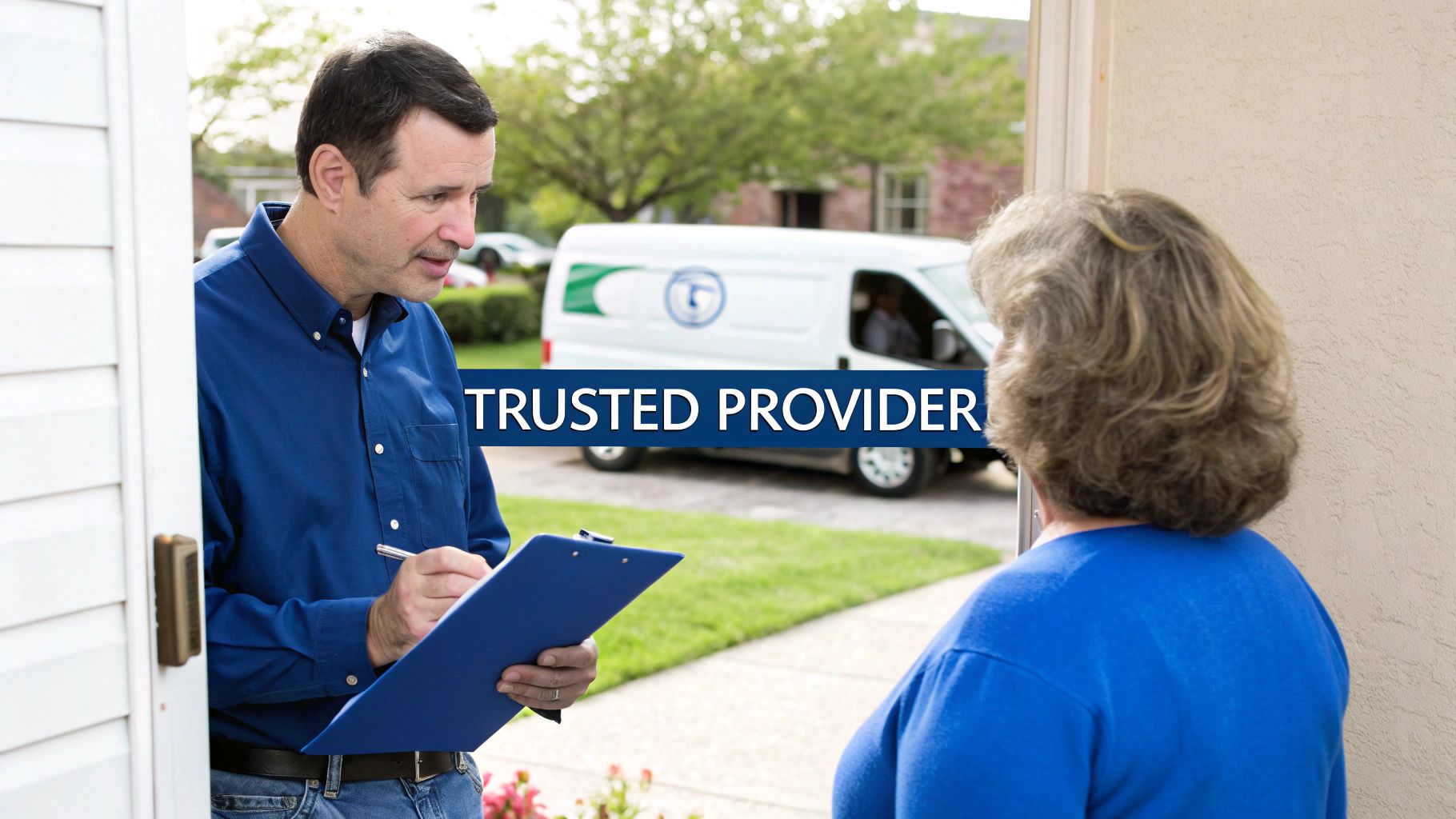
Non-Negotiable Qualifications to Verify
Before engaging any company, it is imperative to confirm they meet several non-negotiable professional standards. These criteria are essential safeguards that protect you from liability, guarantee proper execution of the work, and ensure the safety of all involved.
Always request and verify the following credentials:
- Proof of Proper Licensing and Certification: The company must provide documentation that their technicians are trained and certified in biohazard remediation. Look for credentials such as IICRC certification, which demonstrates adherence to industry best practices.
- Comprehensive Insurance Coverage: A reputable provider will carry general liability and workers' compensation, but the most critical policy is contractor's pollution liability insurance. This specialized coverage protects you from immense financial risk in the event of an error leading to environmental contamination.
- Adherence to OSHA Regulations: The company must strictly follow all OSHA (Occupational Safety and Health Administration) standards for handling bloodborne pathogens and other biohazards. This is a baseline legal and safety requirement.
These technical qualifications form the foundation of a professional service, ensuring every action taken on your property is safe, legal, and effective.
The Human Element of Professional Remediation
Beyond certifications and regulations lies the most critical factor: how a company treats you and your family. In these circumstances, compassion is as vital as compliance. The right team understands they are entering a home during one of life's most difficult moments and conducts themselves with the respect the situation demands.
A truly professional team operates with empathy at its core. They understand that their work is not just about cleaning a physical space but about helping people begin the process of healing. This commitment is reflected in every interaction, from the first call to the final walkthrough.
Look for a company that embodies these compassionate qualities:
- Discretion and Respect for Privacy: Professionals should arrive in unmarked vehicles upon request and work quietly to protect your family’s privacy from neighbors or media attention.
- Transparent and Clear Communication: The team should walk you through the process, provide a detailed and easy-to-understand estimate, and answer all your questions without using confusing jargon or pressuring you.
- 24/7 Rapid and Empathetic Response: A crisis doesn’t stick to business hours. A dedicated provider like 360 Hazardous Cleanup is available around the clock, ready to offer immediate support with a compassionate voice on the other end of the line.
At 360 Hazardous Cleanup, we founded our company on the principle of "No Family Left Behind." We combine decades of technical expertise with a deep commitment to handling every situation with professionalism and dignity, ensuring your property is restored safely and respectfully.
Answering Your Questions About Cleanup Costs
When managing the aftermath of a traumatic event, it is natural to have questions about the practical aspects, especially the cost. Our clients frequently ask these questions, and our goal is to provide clear, straightforward answers to assist you during this difficult time.
We are committed to providing the information you need to make confident decisions without adding to your stress.
How Long Does a Typical Cleanup Take?
There is no "typical" timeline, as the duration of a project depends entirely on the specific situation. A smaller, contained incident in a single room might be resolved in a few hours.
However, more complex scenarios require more time. If we are addressing contamination in multiple rooms, structural saturation into flooring or walls, or severe hoarding conditions, the remediation process could take several days to complete properly and safely. Upon arrival, our team conducts a thorough assessment to provide not only an accurate quote but also a realistic timeline for completion.
Will a Biohazard Claim Affect My Insurance Rates?
This is a common concern, and the answer is almost always no. Filing a claim for biohazard remediation generally does not impact your insurance premiums. Unlike a claim for a preventable event, such as a fire caused by negligence, insurers typically classify events requiring trauma cleanup as "no-fault" incidents.
These are considered unforeseen tragedies, not events that could have been prevented. Consequently, homeowners and property managers are rarely penalized with higher rates for utilizing their policy for this essential service. While it is always prudent to confirm the specifics with your agent, an adverse impact from this type of claim is rare.
Remember, insurance is designed for exactly these kinds of unexpected events. Using your policy to restore your property to a safe condition is precisely what it's for, and a professional remediation company can help you navigate the process.
Are There Financial Assistance Programs Available?
Yes, financial assistance is often available for those in need. Many states have Victim Compensation Programs specifically designed to help victims of violent crimes cover unexpected expenses, including professional cleanup services.
Eligibility requirements and coverage amounts vary by state, but these programs are an invaluable resource. The team at 360 Hazardous Cleanup has experience working with these agencies. We can help you identify potential resources and ensure you have the necessary documentation for your application. We are committed to exploring every available option to ease the financial burden on your family.
At 360 Hazardous Cleanup, we believe no one should have to face this journey alone. If you need immediate, compassionate, and professional biohazard remediation, our team is available 24/7. We’re here to provide a confidential, no-obligation estimate and answer any questions you have. Let us help restore safety and peace of mind with the expertise and dignity you deserve. Contact us today at https://360haz.com.