When an accident or trauma occurs, the most apparent dangers are often the ones you can see. However, lurking within blood and other potentially infectious materials (OPIM) is an invisible threat: common bloodborne pathogens.
These microscopic, disease-causing organisms, including Hepatitis B (HBV), Hepatitis C (HCV), and the Human Immunodeficiency Virus (HIV), are transmitted through contact with infected fluids. Exposure can lead to serious, life-altering health conditions, making professional and compliant remediation a non-negotiable aspect of safety.
Decoding the Invisible Dangers in Our Environment
What are bloodborne pathogens? They are microorganisms transmitted through contact with infected blood or certain bodily fluids. While often associated with healthcare settings, these pathogens can be present wherever an injury or trauma has occurred—from an industrial workplace to a private residence.
Understanding these threats is the first step toward ensuring true safety. These are not just abstract medical terms; they represent real-world risks that demand a serious, professional, and compassionate response.
A significant part of the danger lies in the resilience of these pathogens. For instance, the Hepatitis B virus can remain infectious on a dry surface for up to a week. This fact alone transforms a surface that appears clean into a hidden hazard, underscoring why professional expertise is critical.
Why Surface-Level Cleaning Is Not Enough
This is a critical misunderstanding that can lead to severe consequences. Using a sponge and household cleaner is not only insufficient but also dangerous when dealing with potential biohazards. Wiping a surface might remove a visible stain, but it often fails to eliminate the invisible microorganisms left behind.
This distinction is vital for property owners, facility managers, and families to grasp in high-stress situations.
Properly remediating a biohazard scene requires a scientific, methodical approach that addresses the danger at a microbial level. Without it, individuals are left vulnerable to infection long after an incident is over. The core principles of biohazard safety are built on three pillars:
- Containment: The first priority is to isolate the affected area to prevent cross-contamination and stop pathogens from spreading throughout the property.
- Decontamination: This step involves the application of EPA-registered, hospital-grade disinfectants that are proven to kill common bloodborne pathogens.
- Proper Disposal: All contaminated materials must be handled and disposed of in strict accordance with local, state, and federal regulations.
Attempting to manage a biohazard scene without the proper training, personal protective equipment (PPE), and compliant procedures not only fails to neutralize the threat but also places the person doing the cleaning at profound risk of exposure.
This is why professional remediation isn't merely a service—it's an essential measure to ensure a space is returned to a certifiably safe condition. For those entering careers with potential blood contact, such as in a phlebotomy certification program, this knowledge is fundamental.
You can delve deeper into these foundational safety protocols in our guide on understanding bloodborne pathogens and universal precautions. The same level of diligence required in a medical setting is absolutely essential for remediating a home or business, protecting every future occupant from potential long-term health consequences.
The Three Primary Threats: HIV, HBV, and HCV
When discussing common bloodborne pathogens, three are of primary concern due to the significant risk they pose in both occupational and accidental exposures. These are the "big three": Human Immunodeficiency Virus (HIV), Hepatitis B Virus (HBV), and Hepatitis C Virus (HCV).
Understanding their unique characteristics is the first step in appreciating the true dangers present at a biohazard scene. They are microscopic, but their impact can be severe and lifelong. This is not just a concern for healthcare facilities; it's a real danger anywhere blood or other potentially infectious materials (OPIM) are present.
Human Immunodeficiency Virus (HIV)
HIV is perhaps the most widely known of these pathogens. It attacks the body's immune system, specifically the CD4 cells (T cells), which are crucial for fighting off infection. Over time, HIV depletes these cells, weakening the body's ability to defend against other illnesses.
If left untreated, HIV can progress to its most advanced stage, Acquired Immunodeficiency Syndrome (AIDS). While modern antiretroviral therapies have transformed HIV into a manageable chronic condition for many, the risk of transmission remains a serious concern. Exposure can occur in an instant through a needlestick, a cut from a contaminated object, or a splash to the eyes, nose, or mouth.
Hepatitis B Virus (HBV)
Hepatitis B is a viral infection that targets the liver, causing significant inflammation. It can manifest as an acute (short-term) illness or develop into a chronic infection. Chronic cases are particularly dangerous, often leading to severe conditions like cirrhosis (scarring of the liver) and liver cancer.
What makes HBV an especially formidable threat in a biohazard situation is its remarkable resilience.
The Hepatitis B virus can survive and remain infectious on a dry surface, such as a countertop or floor, for up to seven days. This critical fact highlights why a simple wipe-down is never an adequate response after an incident involving blood.
This environmental hardiness means a space that appears clean could still harbor a potent, invisible danger long after the visible evidence has been removed. It is a key reason why professional decontamination is not just recommended—it is absolutely essential for safety.
Hepatitis C Virus (HCV)
Similar to Hepatitis B, the Hepatitis C virus also attacks the liver. HCV is the most common chronic bloodborne infection in the United States. A significant number of individuals with HCV are unaware they are infected because they may not experience symptoms for decades, while the virus silently causes progressive liver damage.
Over time, chronic HCV can lead to the same severe outcomes as HBV, including cirrhosis and liver cancer. Although modern antiviral medications can now cure most HCV infections, the risk of transmission in the workplace from needlesticks and other sharps injuries remains a major concern.
The image below helps visualize how these pathogens fit into the larger, often hidden, biohazard landscape.
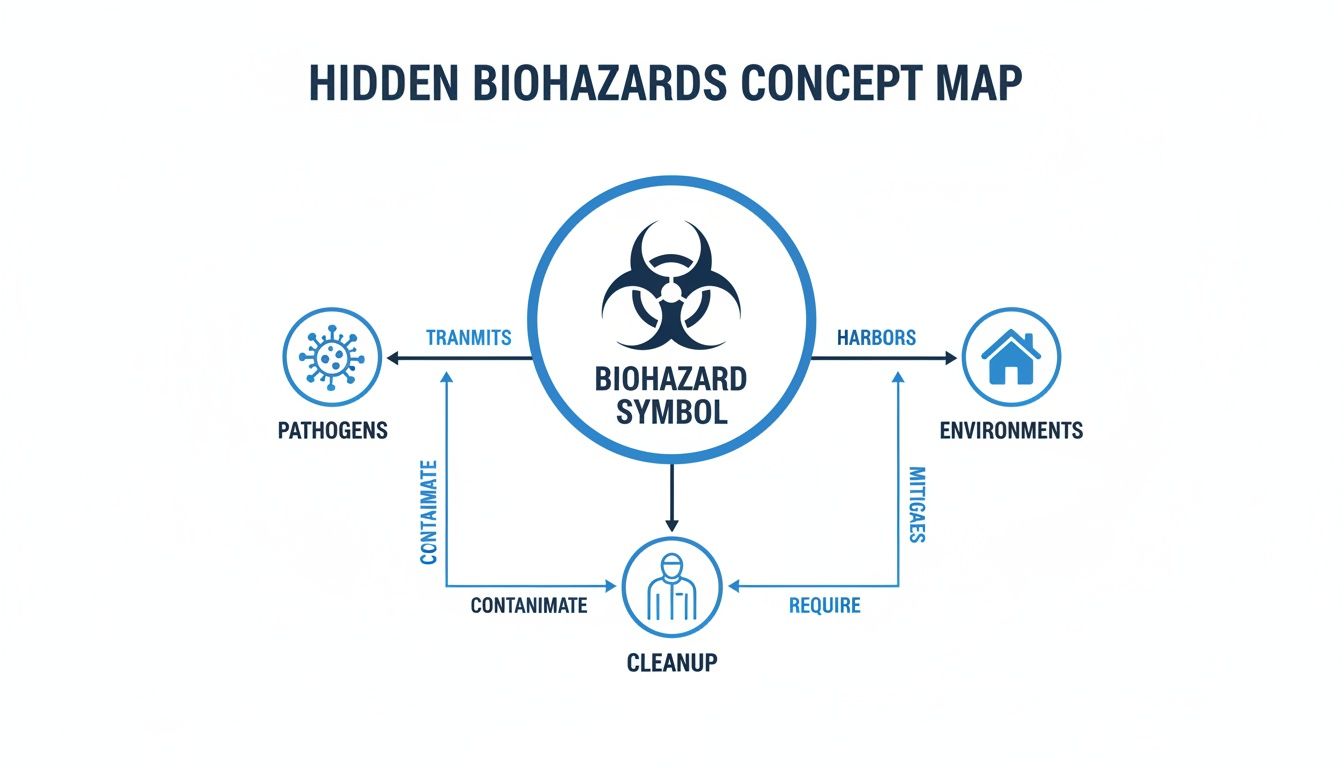
This map reinforces the connection between the viruses, the environments they contaminate, and the specialized remediation required to fully eliminate the threat.
To clarify these differences, here is a concise comparison of the three primary pathogens.
Overview of Common Bloodborne Pathogens
| Pathogen | Primary Health Impact | Common Transmission Routes | Environmental Survivability |
|---|---|---|---|
| HIV | Weakens the immune system, leading to AIDS if untreated. | Unprotected sex, shared needles, needlesticks, mother-to-child. | Very poor; dies within hours outside the body. |
| Hepatitis B (HBV) | Causes acute or chronic liver disease, cirrhosis, and liver cancer. | Blood, semen, and other body fluids; needlesticks; mother-to-child. | High; can survive on surfaces for up to 7 days. |
| Hepatitis C (HCV) | Primarily causes chronic liver infection, leading to cirrhosis and liver cancer. | Primarily through blood contact, especially shared needles and needlesticks. | Moderate; can survive on surfaces for up to 4 days. |
This table highlights the distinct characteristics of these pathogens, especially their varying abilities to survive on a surface and pose a continued risk of infection.
The Real-World Risk for Workers
These three viruses represent a significant occupational threat. OSHA estimates that approximately 3 million workers across various industries are exposed to these pathogens annually. The consequences are severe, leading to an estimated 66,000 HBV infections, 16,000 HCV infections, and up to 5,000 HIV transmissions each year from occupational exposures.
While healthcare workers are often considered the primary at-risk group, the danger extends to anyone who might encounter blood—including law enforcement, emergency responders, coroners, and property maintenance staff. Each virus presents unique challenges, from the environmental toughness of HBV to the silent, long-term damage caused by HCV.
To better understand the scope of potential dangers, you can explore other diseases commonly associated with biohazard scenes. This all underscores one critical point: meticulous, professional-grade remediation is required to ensure that once a scene is cleared, it is truly safe for everyone.
How Pathogens Spread in Everyday Environments
Biohazard risks are not confined to hospitals or laboratories. Any location can become a contaminated zone in an instant. A single accident can transform a warehouse, office, or family home into a complex biohazard scene, posing a silent but serious threat to all occupants.
For property managers, business owners, and families navigating a traumatic event, understanding how quickly contamination can spread highlights why even a seemingly small incident requires a professional, scientific response to restore safety.
From a Local Incident to a Widespread Hazard
Consider an accident at a manufacturing facility where a worker sustains a deep cut. Blood spatters onto a workstation, the floor, and surrounding equipment. If not immediately and correctly contained, the risk escalates rapidly.
An employee could unknowingly step in the blood and track contaminated footprints into breakrooms, offices, or even out to their personal vehicle. If the fluid is aerosolized, an HVAC system could potentially circulate microscopic droplets throughout the building. What began as a localized problem has now become a facility-wide risk, with pathogens hiding on surfaces far from the original incident.
This scenario demonstrates why untrained cleanup is so dangerous. Most individuals lack the training, equipment, and expertise to prevent cross-contamination effectively.
The greatest danger in biohazard remediation is not what is visible. It is the invisible contamination that spreads silently. A single footprint can carry pathogens to a new area, creating dozens of exposure points from one event.
Real-World Scenarios Beyond the Workplace
The home is meant to be a safe haven, but it can also become the site of a significant biohazard risk. These situations are incredibly sensitive and, unfortunately, all too common:
- Unattended Death: When an individual passes away and is not discovered for some time, the natural decomposition process releases bodily fluids. These fluids can saturate flooring, subflooring, furniture, and personal belongings, carrying common bloodborne pathogens deep into the home's structure.
- Hoarding Situations: In cases of severe hoarding, visible clutter often conceals unseen dangers. Used medical supplies, unsanitary waste, and undiscovered organic matter create a breeding ground for pathogens. Remediating these spaces requires navigating both physical and biological hazards.
- Traumatic Injuries at Home: A serious fall or other accident can result in significant blood loss. Similar to the industrial example, this blood can contaminate carpets, furniture, and personal items, leaving a lingering health risk for the family if not professionally remediated.
In each of these cases, the emotional toll is immense. Asking family members to handle the cleanup exposes them to serious health risks while compounding their trauma. A professional, compassionate remediation team is trained to manage both the physical cleanup and the emotional weight of these events. Learn more about the specific dangers professionals are equipped to handle in our guide on the list of bodily fluids and biohazard risks.
Why Standard Cleaning Protocols Fail
The primary challenge in all these environments is porosity. Pathogens do not simply sit on a surface; they are absorbed into it.
Standard household cleaners lack the efficacy to kill resilient viruses like Hepatitis B, which can survive for up to a week on a dry surface. Furthermore, materials like wood, drywall, carpet, and grout act like sponges, absorbing these fluids. Wiping the surface does nothing to address the pathogens that have soaked deep inside, where they remain active and capable of causing infection.
This is where professional biohazard remediation is essential. It is a scientific process, not merely cleaning. Certified technicians understand how different materials absorb contaminants. They use specialized tools to detect hidden moisture and rely on EPA-registered, hospital-grade disinfectants proven to kill bloodborne pathogens.
This meticulous approach does more than remove the visible signs of a tragedy—it neutralizes the invisible threat, ensuring a home or business is restored to a verifiably safe condition. It is about protecting the next person who enters from a danger they might never have known existed.
Navigating OSHA Regulations and Your Legal Responsibility
When an incident involving common bloodborne pathogens occurs in a workplace, it is not just a health crisis—it is a serious legal and regulatory matter. For employers, understanding and fulfilling your responsibilities extends far beyond checking a compliance box; it is about creating an environment where your team is genuinely protected from harm.
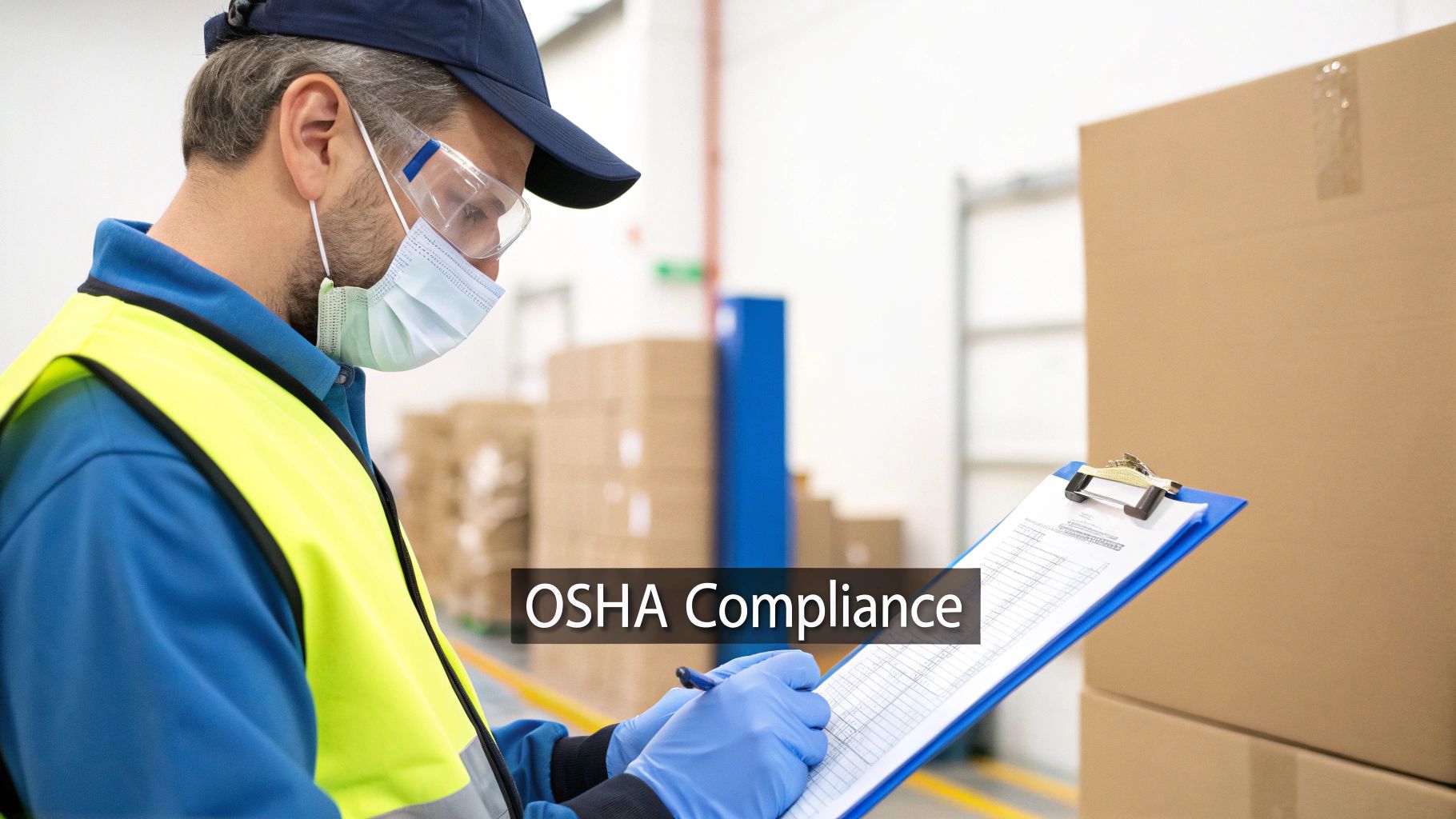
The foundation of this responsibility is the Occupational Safety and Health Administration's (OSHA) Bloodborne Pathogens Standard (29 CFR 1910.1030). This regulation is a comprehensive safety blueprint designed to protect every worker from exposure. Non-compliance can lead to significant fines, but more importantly, it leaves employees vulnerable and your business liable for preventable tragedies.
Core Components of OSHA's Standard
The OSHA standard is a mandate, not a suggestion. It requires employers to proactively document every step taken to eliminate or minimize the risk of occupational exposure. This is not a passive role; it demands active planning and execution, particularly if employees might reasonably anticipate contact with blood or other potentially infectious materials (OPIM).
These requirements work in concert to build layers of protection, making safety the default in your workplace. The key pillars every employer must have in place include:
- Exposure Control Plan (ECP): A written plan detailing how you will protect employees, from identifying job-specific risks to outlining post-exposure procedures. It must be reviewed and updated annually.
- Universal Precautions: A critical mindset that requires treating all human blood and OPIM as if it were infectious. This removes guesswork and ensures everyone operates with the highest level of caution.
- Engineering and Work Practice Controls: Tangible changes to the work environment and procedures, such as providing sharps disposal containers (engineering controls) or establishing safe needle-handling protocols (work practice controls).
- Personal Protective Equipment (PPE): Employers must provide appropriate PPE—such as gloves, gowns, masks, and eye protection—at no cost to employees whenever there is a risk of exposure.
- Hepatitis B Vaccination: The complete Hepatitis B vaccine series must be offered, free of charge, to any employee with occupational exposure risk.
- Post-Exposure Evaluation and Follow-Up: A confidential and clear plan for immediate medical evaluation and follow-up care must be in place if an exposure occurs.
- Training and Record-Keeping: All at-risk employees must receive annual training on the OSHA standard. Employers are also required to maintain detailed medical and training records.
Adhering to OSHA regulations is not about avoiding fines; it is a fundamental commitment to keeping people safe. A well-designed and consistently implemented Exposure Control Plan is the single most powerful tool an employer has to protect their team from the life-altering impact of a bloodborne pathogen exposure.
The Role of Professional Remediation in Compliance
OSHA's regulations extend to the response following a significant exposure event. In this context, a certified biohazard remediation company is not just helpful—it is an essential partner in maintaining compliance and ensuring safety.
Attempting to manage a major cleanup in-house without the required training, equipment, and certifications is a profound liability. It contradicts the spirit of OSHA's standard and exposes your organization to significant legal and financial risk. Recognizing universal warnings is part of this protocol, and a complete guide to laboratory hazard signs can be an invaluable resource.
When these protocols are correctly implemented, the results are clear. One study in a large hospital demonstrated a dramatic decrease in occupational bloodborne pathogen exposure incidents from 14.98% in 2016 to just 4.94% by 2022 after implementing targeted training and new safety controls. This is powerful evidence that these standards work.
Partnering with a professional team like 360 Hazardous Cleanup ensures the decontamination process adheres to every federal and state regulation, protecting both your employees and your business from future risk. You can learn more about OSHA's guidelines for biohazard exposure and workplace incidents in our detailed guide. It is the final, critical step in your safety plan, ensuring every aspect is managed with professional expertise.
Critical Steps to Take After an Exposure Incident
In the moments following a potential exposure to blood or infectious materials, it is natural to feel fear and stress. However, knowing the correct steps to take can make a critical difference in protecting your health. Acting quickly and calmly is your most powerful defense.
The first step is always the same: immediately and thoroughly wash the affected area. If you experienced a needlestick or cut, wash the site with soap and water. If blood or bodily fluid splashed onto your skin, nose, or mouth, flush the area with running water. For eye exposure, irrigate them with clean water, saline, or sterile irrigants for several minutes.
Immediate Reporting and Medical Care
As soon as you have decontaminated the area, you must report the incident to your supervisor or designated safety officer without delay. This is a critical step for documentation and for initiating the proper post-exposure protocol. Do not wait or downplay what happened; time is of the essence.
Your next immediate action is to seek a confidential medical evaluation. A healthcare professional must assess the risk of infection based on the specifics of the exposure and determine the necessary course of action. This cannot be postponed.
A key reason for immediate medical care is to determine if you are a candidate for Post-Exposure Prophylaxis (PEP). PEP is a course of medication that, when started within hours of exposure, can significantly reduce the risk of infection from pathogens like HIV.
Securing the Scene to Prevent Further Harm
While you focus on these critical health and safety steps, it is vital that the scene of the incident is professionally managed to prevent anyone else from being exposed. This is where professional biohazard remediation plays an essential supporting role.
Attempting to clean the area yourself or assigning the task to untrained staff creates a new wave of risk. A professional team like 360 Hazardous Cleanup will secure the area, establish proper containment, and begin the scientific decontamination process. This ensures that:
- No one else is exposed to the same common bloodborne pathogens.
- The area is decontaminated according to strict regulatory standards.
- All biohazardous waste is disposed of legally and safely.
By managing the environmental hazard, a professional remediation company allows individuals and organizations to focus completely on immediate medical needs and employee well-being. This coordinated response—addressing both personal health and scene safety—is the only way to manage an exposure incident responsibly and effectively, ensuring the chain of infection is broken for good.
Why Professional Biohazard Remediation Is Essential
When a traumatic event involving blood or bodily fluids occurs, the immediate impulse is often to clean up and restore normalcy as quickly as possible. While handling it yourself may feel proactive, this approach dangerously overlooks the invisible threats—the common bloodborne pathogens that linger long after the visible evidence is gone.
This is where professional biohazard remediation is not just a service, but a necessity. It is a scientific, highly regulated process essential for making a space truly safe again.
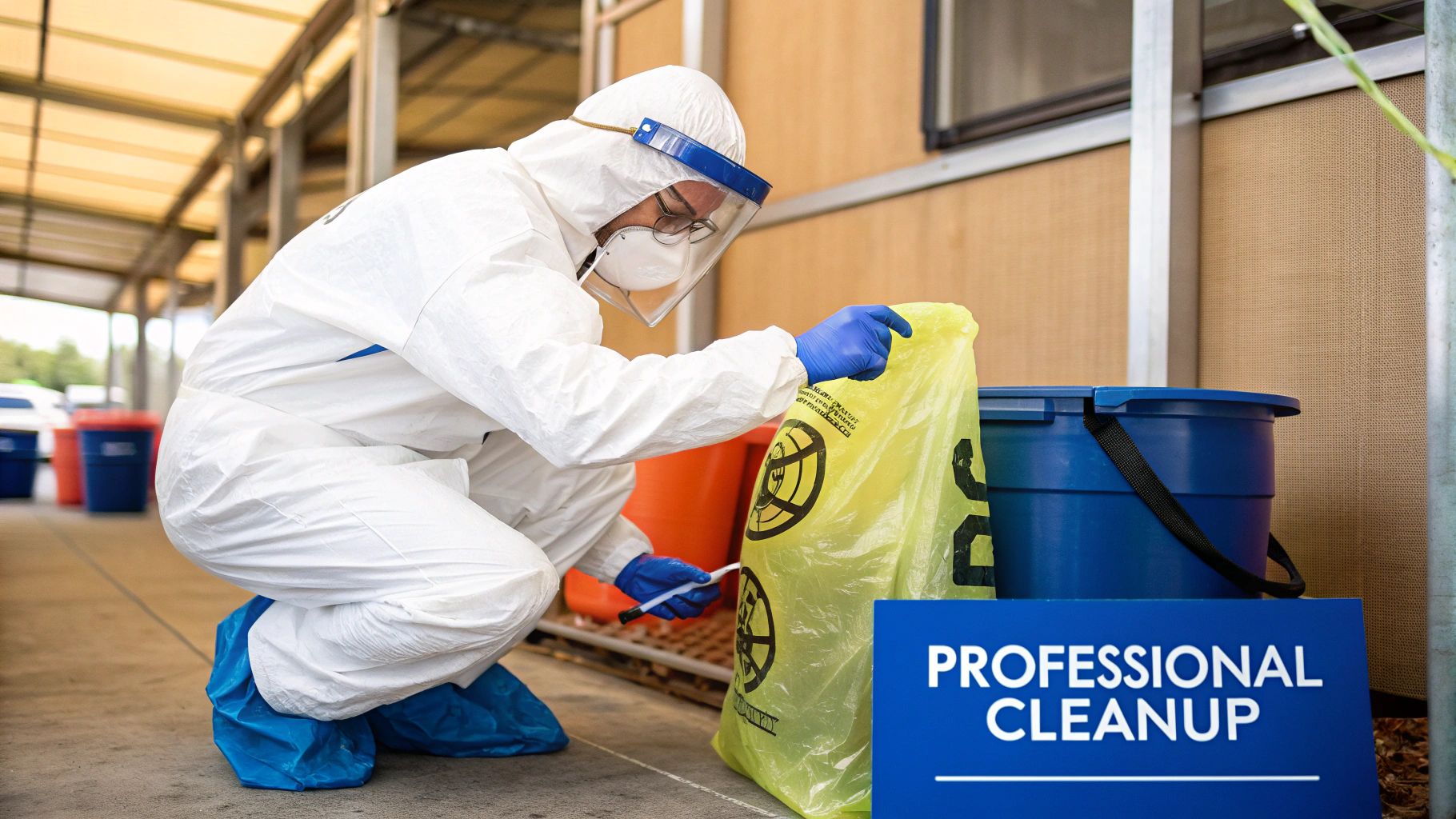
Attempting a DIY cleanup is a significant gamble. Standard household cleaners, including bleach, are often insufficient to kill resilient viruses like Hepatitis B. Worse, an untrained individual can unknowingly spread microscopic pathogens throughout a property, turning a contained incident into a widespread contamination risk.
The Scientific Approach of Certified Technicians
Certified technicians do not just "clean"—they execute a meticulous, multi-step protocol designed to eliminate risk at a microbial level. This process meets strict safety and regulatory standards and is fundamentally different from janitorial cleaning.
The process always begins with containment. Professionals establish a secure perimeter, often using physical barriers and negative air pressure systems to prevent airborne pathogens from escaping the affected area. This is a critical first step in protecting the rest of the property.
Only after the scene is contained does the removal of all biological matter begin. Technicians then apply EPA-approved, hospital-grade disinfectants—specialized chemicals formulated to destroy common bloodborne pathogens.
Finally, the process concludes with verification and proper disposal. This may involve using specialized testing to confirm the area is fully decontaminated. All biohazardous waste is then packaged, transported, and disposed of in accordance with strict local, state, and federal laws.
The difference between cleaning and professional remediation lies in the outcome: one makes a space look clean, while the other makes it verifiably safe. True remediation neutralizes invisible threats, providing documented safety for all future occupants.
More Than a Service—a Compassionate Response
The need for these rigorous safety protocols is a global reality. Annually, 118.54 million blood donations are collected worldwide, and the World Health Organization's efforts to ensure their safety highlight the persistent threat of contamination. The same expert procedures used in clinical settings are required at accident sites.
Beyond the technical expertise, choosing a professional biohazard remediation company provides an invaluable layer of compassionate and discreet support. Dealing with the aftermath of a traumatic event is emotionally overwhelming. A professional team manages the entire cleanup with sensitivity and respect, allowing families and property owners to focus on healing.
By restoring a space to a safe, livable condition, expert remediation offers more than just physical protection. It provides peace of mind. It helps those affected close a difficult chapter and move forward with confidence. Learn more about why this level of expert involvement is so critical in our guide to blood cleanup and why specialized care is essential for safety. It is the only way to ensure every hidden risk is addressed, leaving nothing to chance.
Frequently Asked Questions About Bloodborne Pathogens
When facing the aftermath of a traumatic event, having clear, factual information is essential. Below are answers to some of the most common questions we receive from property managers, business owners, and families navigating these difficult situations.
Can Pathogens Survive on Surfaces Like Carpet or Furniture?
Yes, absolutely. It is a common misconception that once a biological fluid dries, the danger is eliminated. In reality, certain pathogens are incredibly resilient.
The Hepatitis B virus (HBV), for example, can remain infectious on a dry surface for at least a week. While other pathogens, like HIV, are fragile and die quickly when exposed to air, it is impossible to know what pathogens are present without proper testing.
This is precisely why a visual inspection is never sufficient. Our certified technicians use EPA-registered, hospital-grade disinfectants and proven scientific methods to ensure every surface—from hard floors to porous materials like carpets and furniture—is fully decontaminated and safe.
Will My Insurance Policy Cover Biohazard Cleanup?
In many cases, yes. Most homeowner's, commercial, and property insurance policies provide coverage for professional biohazard remediation, particularly following a trauma, unattended death, or crime scene.
Navigating the claims process, however, can add stress during an already difficult time. This is where an experienced and professional remediation partner can provide critical support.
We work directly with insurance carriers every day. Our team can document the loss, manage the claim, and handle the necessary paperwork to help minimize your out-of-pocket expenses, allowing you to focus on what truly matters.
What Is the Difference Between Cleaning and Decontamination?
This is one of the most important distinctions in our industry and is critical for ensuring safety.
Cleaning addresses what is visible. It is the act of removing dirt, dust, and superficial grime. While it is a necessary first step, it does virtually nothing to kill the microscopic pathogens left behind.
Decontamination, on the other hand, is a rigorous, science-based process. It involves specific protocols, personal protective equipment, and specialized chemicals designed to completely eliminate or inactivate dangerous microorganisms like common bloodborne pathogens. Only after a multi-step process of cleaning, disinfecting, and verification can we certify that an area is truly safe and restored to regulatory standards.
When you’re facing a biohazard situation, you need a partner who brings expertise, compassion, and discretion. The team at 360 Hazardous Cleanup is available 24/7 to restore your property and provide peace of mind. Contact us today for immediate, professional assistance.