When a blood spill occurs, the actions taken in the first few minutes are critical for safety, containment, and proper remediation. The immediate priority is not to start cleaning—it is to secure the area and prevent any potential exposure to bloodborne pathogens.
Your First Moves After Discovering a Blood Spill
Discovering a blood spill, whether at home or in a professional setting, demands a calm and methodical response. The initial moments are focused on control. The actions you take—or fail to take—directly impact health risks, the potential for property damage, and legal liability.
The foundational rule is to treat all blood and bodily fluids as potentially infectious materials (PIM). This is the core principle of universal precautions, a standard established by the Occupational Safety and Health Administration (OSHA) to prevent exposure to bloodborne pathogens. It is impossible to determine if blood contains pathogens like Hepatitis B, Hepatitis C, or HIV by visual inspection alone. Therefore, you must assume it is infectious.
Immediate Risk Assessment for Blood Spills
Use this checklist to quickly assess the risks of a blood spill and understand the required level of response.
| Risk Factor | Small Spill (e.g., nosebleed on tile) | Large or Complex Spill (e.g., accident on carpet) |
|---|---|---|
| Volume | A few drops, easily contained. | Pools of blood, widespread spatter. |
| Surface | Non-porous (e.g., vinyl, sealed tile). | Porous (e.g., carpet, wood, fabric). |
| Location | Low-traffic, private area. | High-traffic area, public space. |
| Contaminants | Blood only. | Possible broken glass or other sharp objects. |
| Response | Can often be managed with a standard blood spill kit. | Requires professional biohazard remediation. |
This quick assessment helps frame the situation, but the foundational safety steps remain the same for any discovery.
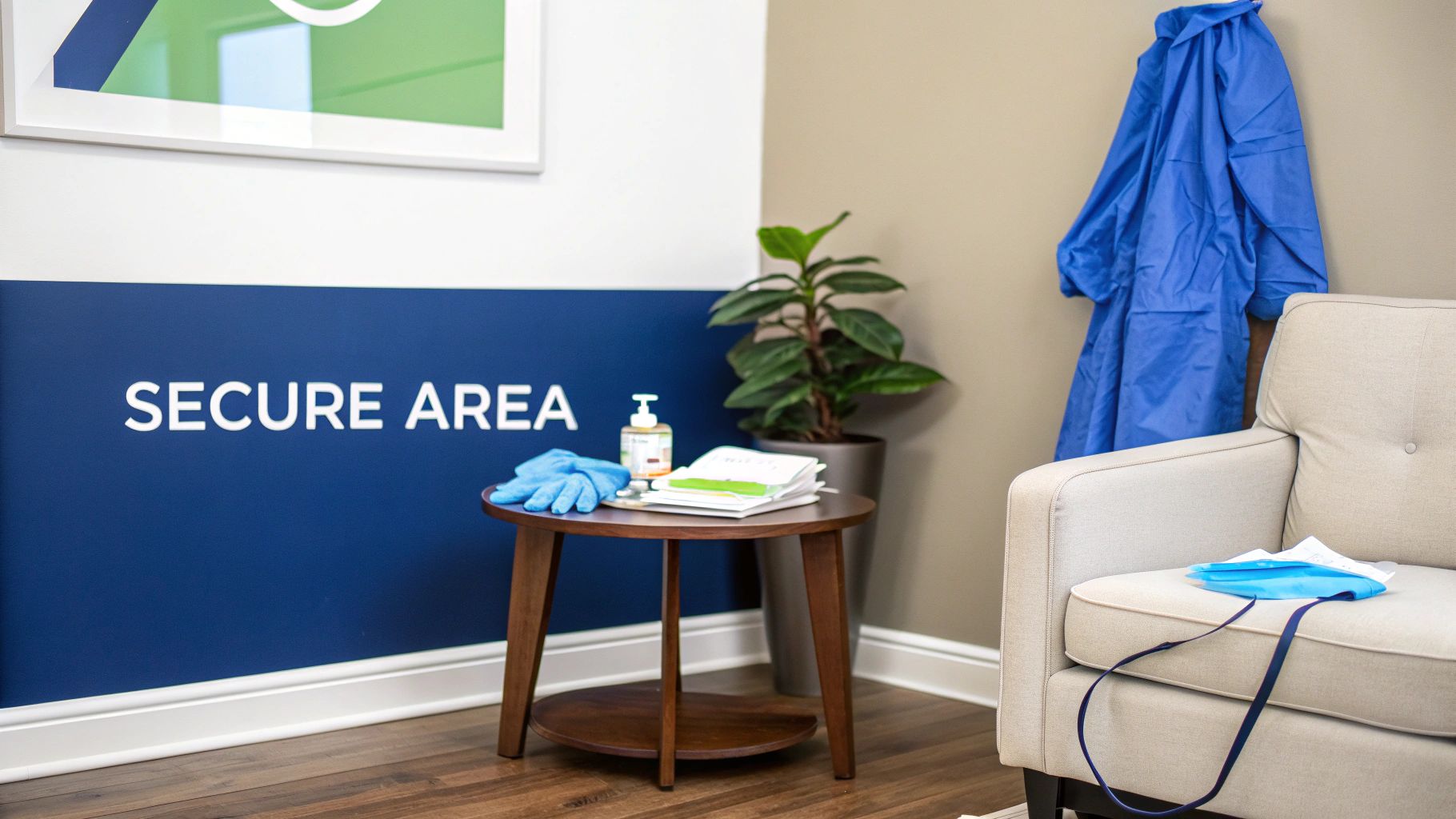
First, Secure the Area
Before taking any other action, prevent anyone from walking through or near the spill. This is the most important initial step, especially in public areas or homes with children and pets. You must isolate the contaminated zone to prevent foot traffic from spreading the biohazard throughout the property.
- In a business or public space: Use caution tape, rope, or even chairs to create a clear barrier. Post "Do Not Enter" or similar warning signs to alert others.
- In a private home: The most direct method is to close the door to the room. If it is an open-concept area, ensure family members and pets are kept far away from the spill.
This simple act of creating a perimeter is the single most effective way to contain the hazard before remediation begins. For a more detailed guide on immediate actions, refer to our checklist on what to do after discovering a biohazard.
Next, Get the Right PPE
Do not approach the spill without first equipping yourself with proper Personal Protective Equipment (PPE). Standard household gloves are insufficient for handling a blood spill clean up.
The purpose of PPE is to create an impermeable barrier between you and potential pathogens. Never touch contaminated materials with bare hands or risk a splash to your eyes or mouth.
Essential PPE for blood spill remediation includes:
- Nitrile Gloves: These are puncture-resistant and provide a reliable shield against bloodborne pathogens.
- Eye Protection: Goggles or a full face shield are critical to protect the mucous membranes of your eyes from splashes.
- Mask: A surgical mask helps prevent inhalation of aerosolized particles.
- Disposable Gown or Apron: This protects your skin and clothing from contamination.
This is not an overreaction; it is the professional standard for a critical reason. Taking these risks seriously is part of a necessary shift in public and corporate awareness regarding biological hazards. The growing global biohazard cleanup market reflects a greater understanding of the importance of managing these risks correctly. Adhering to proper PPE protocols is the foundation of any safe and effective cleanup.
The Right Way to Clean and Disinfect the Area
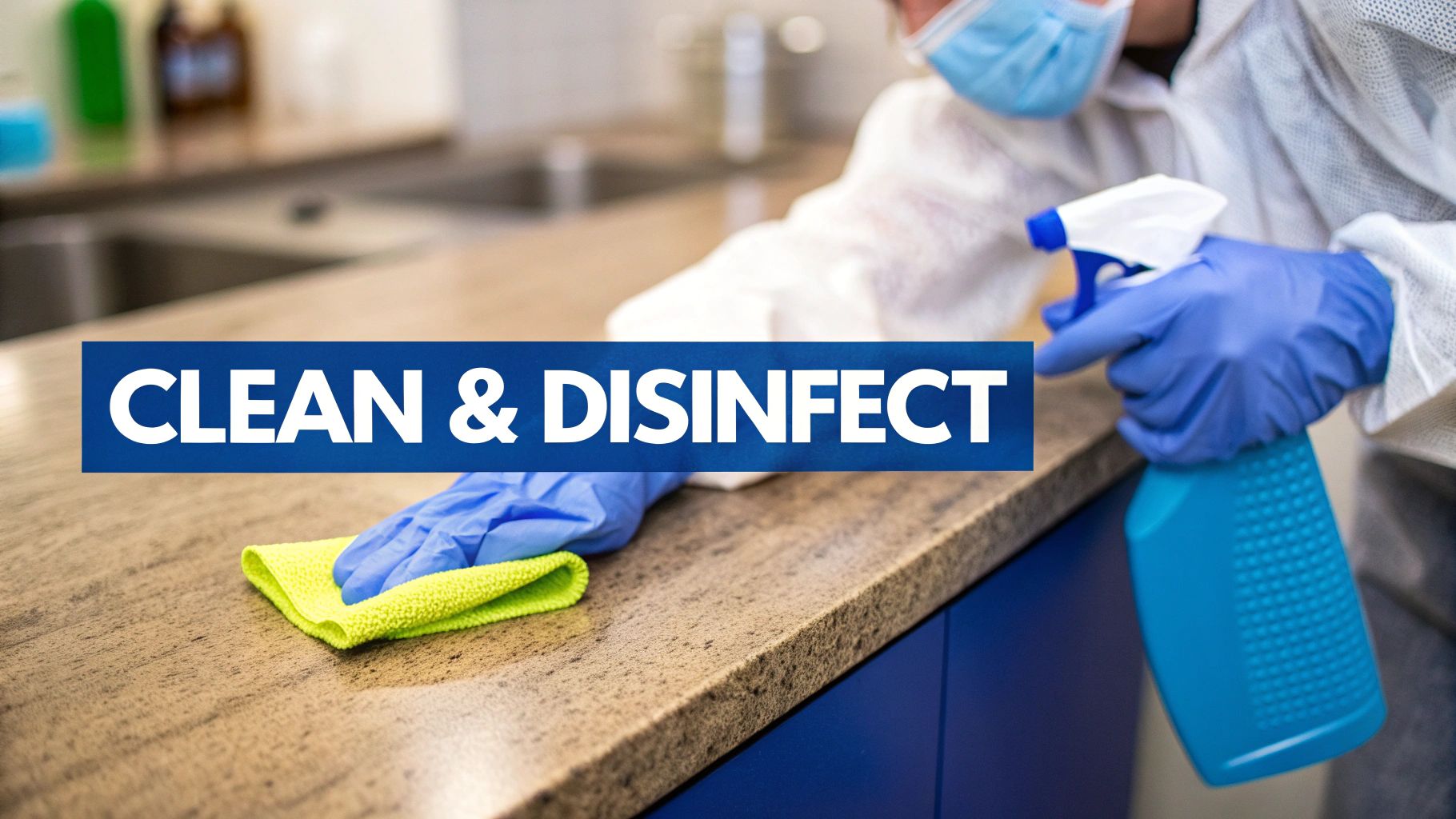
Once the scene is secure and you are wearing appropriate PPE, the cleanup process can begin. A common and dangerous mistake is believing that wiping up visible blood is sufficient. This assumption leaves invisible microbial hazards behind.
Proper remediation is a two-part process: first cleaning, then disinfection. Cleaning involves the physical removal of organic material—the visible blood and fluids. Disinfection is the chemical process that eliminates the microscopic, disease-causing pathogens left behind. Omitting either step renders the area unsafe.
The Critical Difference Between Cleaning and Disinfecting
The principle is similar to treating a wound: you would never apply antiseptic over a dirty wound without first washing it. The organic matter in blood acts as a shield, protecting pathogens from the chemicals designed to destroy them.
Spraying a disinfectant directly onto a pool of blood is ineffective and contrary to professional safety protocols. The chemical cannot penetrate the organic load, leaving a surface that may appear clean but remains a serious biological threat.
A common mistake is to confuse household cleaners with EPA-registered, hospital-grade disinfectants. While a standard cleaner might remove a stain, it is not formulated to kill dangerous pathogens like Hepatitis B, which can survive in dried blood for up to a week.
Using the correct product is essential. While a minor household spill differs from a major trauma scene, understanding product specificity is key. Guides on topics like the best floor cleaners for every surface highlight the importance of matching the right agent to the job.
Executing the Cleanup Process Safely
Your technique is as important as your tools. The objective is to remove contamination without spreading it. To achieve this, always work from the outside of the spill inward.
Starting in the middle and wiping outward smears the hazard across a larger area. The "outside-in" method contains the spill, systematically reducing the contaminated zone until it is eliminated.
Follow this professional procedure:
- Initial Removal: Gently cover the spill with absorbent materials, like paper towels or an absorbent powder from a spill kit, to soak up the liquid. Blot, do not wipe, to prevent spreading.
- Cleaning the Surface: Once the bulk of the spill is absorbed, use fresh disposable towels and a cleaning solution (such as soap and water for this step) to wipe the area clean, working from outside-in.
- Applying the Disinfectant: After the surface is visibly clean, apply an EPA-registered, hospital-grade disinfectant. The surface must be thoroughly saturated.
This methodical approach ensures the hazard is truly eliminated, not just moved around.
Understanding Dwell Time
This is one of the most overlooked and critical aspects of disinfection. Dwell time is the specific period a disinfectant must remain wet on a surface to kill the pathogens listed on its label.
If you spray and immediately wipe the surface dry, the disinfectant has not had time to work. Dwell time is typically 5 to 10 minutes, but you must check the product label for the exact requirement. The surface must remain visibly wet for the entire duration, which may require reapplying the disinfectant if it evaporates.
For a deeper dive into professional standards, our guide to biohazard cleanup best practices offers more detailed insights into these compliant procedures.
Adapting to Different Surfaces
Materials react differently to blood spills, requiring an adjusted approach based on porosity.
- Non-Porous Surfaces: These are the easiest to decontaminate. Materials like sealed tile, vinyl flooring, glass, or metal do not absorb liquids. With proper cleaning and disinfection, they can be fully restored to a safe condition.
- Porous Surfaces: These present a significant challenge. Carpet, unsealed wood, drywall, and grout can absorb blood, pulling it deep inside where it is not visible. Surface disinfection is ineffective in these cases, as pathogens can continue to thrive within the material itself.
This distinction is vital. A few drops of blood on a countertop can often be managed, but blood that has soaked into a carpet or seeped between floorboards requires professional intervention, which may include removing the affected materials and inspecting the subfloor. Attempting to clean saturated porous materials yourself creates a high risk of leaving a hidden, long-term biohazard.
Handling Biohazard Waste Disposal Correctly
Once the area is clean and disinfected, you are left with contaminated materials like gloves and towels. Disposing of these items in a standard trash can is a serious public health violation with potential legal consequences.
Proper disposal is the final, non-negotiable step in the cleanup process. It ensures the dangerous pathogens you have removed do not harm waste handlers, the public, or the environment. Strict local, state, and federal regulations govern this process for good reason.
What is Regulated Medical Waste?
Any item contaminated with blood or other potentially infectious materials (OPIM) is classified as regulated medical waste. This classification triggers a specific set of rules for handling and disposal.
As a general rule, if an item is saturated, dripping with blood, or could release blood if compressed, it is considered regulated waste.
This typically includes:
- Saturated Materials: Any paper towels, gauze, or absorbent powders used to soak up the spill.
- Contaminated PPE: The gloves, gowns, and masks that came into direct contact with blood.
- Sharp Objects: Any broken glass or needles mixed with the spill must be handled carefully and separately.
These items cannot be disposed of with regular garbage. They must follow a specific chain of custody to ensure they are neutralized before final disposal.
The Right Way to Contain It
Proper containment is paramount. All contaminated materials must be placed in designated, clearly marked, leak-proof containers that immediately signal the danger.
A common and dangerous mistake is double-bagging biohazard waste in regular trash bags. These bags are not puncture-resistant and lack the universal biohazard symbol required by law. This practice puts every person who handles the trash at risk.
The correct procedure involves two primary types of containers:
- Red Biohazard Bags: All soft materials—towels, used PPE, contaminated cloths—must be placed in a leak-proof red bag clearly printed with the universal biohazard symbol.
- Sharps Containers: Any sharp objects, such as glass fragments, must be carefully placed inside a rigid, puncture-proof sharps container. This is critical for preventing accidental cuts or needlesticks, a common mode of pathogen transmission.
Once sealed, these containers are subject to specific regulations for transport and disposal, which almost always requires collection by a licensed medical waste disposal company.
Why Professional Oversight is the Industry Standard
The complexity of biohazard disposal is a primary reason why professional services are required for significant spills. As regulations become stricter and public awareness of risks grows, the trauma cleaning industry continues to expand. Globally, a significant percentage of waste generated from health-related activities is hazardous, often involving blood that untrained individuals cannot manage safely. These trends underscore why regulations and best practices increasingly mandate professional remediation.
The Legal and Financial Risks are Real
For a business owner or homeowner, the consequences of improper disposal can be severe. A business may face substantial OSHA fines, lawsuits from exposed employees, and lasting reputational damage. Homeowners are also at risk of civil liability if their discarded waste harms someone.
These risks are precisely why engaging a certified remediation company is the most prudent decision for anything more than a minor spill. Professionals are not only equipped with the right gear and training; they also assume full responsibility for ensuring every piece of waste is managed and disposed of in compliance with the law, removing the legal burden from your shoulders.
When to Call a Professional for Blood Spill Cleanup
Recognizing your limitations is a critical component of safety. While this guide provides information for handling minor spills, there is a clear distinction between a small, manageable incident and a situation that demands a certified biohazard remediation team.
Attempting to clean a scene beyond your capability is not just ineffective—it is dangerous. You risk spreading invisible contaminants and creating a false sense of security, which can have devastating long-term consequences. Making the wrong call can lead to health risks, structural damage, and legal liability. Engaging a professional is a responsible choice to protect everyone who uses that space.
Scenarios That Always Require Professional Help
Certain situations are immediate red flags that place a blood spill clean up outside the scope of DIY methods. These are non-negotiable thresholds where the risks are too high for anyone but a trained and properly equipped specialist.
If you encounter any of the following, your first and only call should be to a professional remediation service.
- Spills Larger Than a Dinner Plate: The volume of biological fluid is a key indicator. Any spill larger than a standard dinner plate presents a significant exposure risk and a high likelihood of seepage into underlying materials.
- Blood on Porous Surfaces: When blood soaks into materials like carpet, wood, drywall, or grout, it is impossible to decontaminate with surface-level methods. Pathogens are drawn deep into the material's pores, where they can survive for days or weeks, creating a hidden and ongoing biohazard.
- Spills from a Traumatic Event: Any incident involving a crime, serious accident, or unattended death must be handled by professionals. These scenes often involve widespread contamination invisible to the naked eye and carry a profound emotional weight that requires a compassionate, discreet, and trauma-informed response.
For property managers and homeowners navigating this stressful situation, it's crucial to know the difference between a certified expert and a standard cleaning service. You can learn more about how to choose the right biohazard cleanup company in our detailed guide.
This simple decision tree helps visualize when it's necessary to escalate from simple bagging to calling a professional for safe remediation.
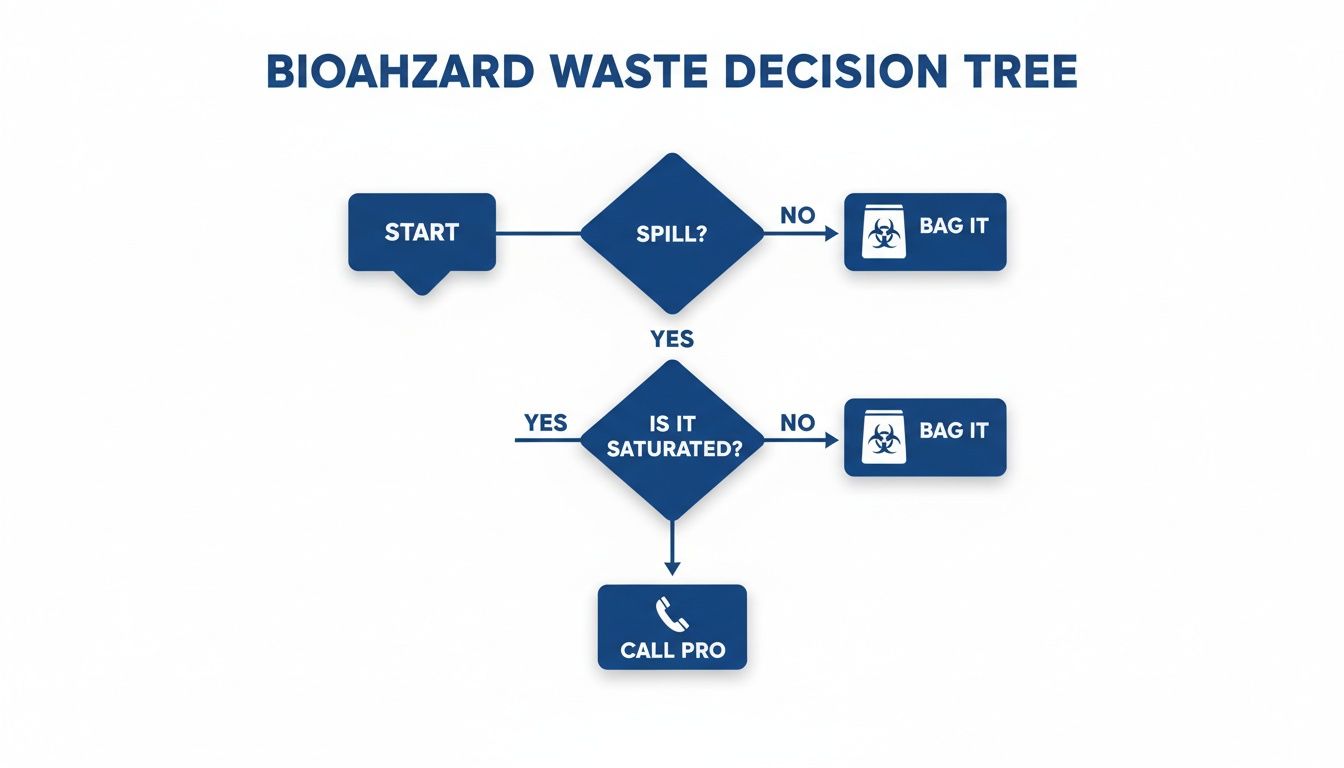
The flowchart makes it clear that saturation is the key factor. Once a material is soaked through, its proper disposal becomes a regulated task best left to certified experts.
The Hidden Dangers Professionals Are Trained to Find
What is visible is rarely the full extent of the contamination. As professional biohazard technicians, we are trained to identify dangers that an untrained individual would almost certainly miss. Our work goes far beyond cleaning what is visible on the surface.
A critical part of professional remediation is understanding how fluids behave. Blood can travel under baseboards, seep through floorboards into the subfloor, or be absorbed by drywall, creating a reservoir of pathogens completely hidden from view.
Professionals are equipped to identify and safely eliminate these unseen threats.
To understand the stakes, it helps to see a direct comparison of the two approaches.
DIY Cleanup vs Professional Remediation
| Cleanup Aspect | DIY Approach (Minor Spills) | Professional Service (360 Hazardous) |
|---|---|---|
| Scope | Small, contained spills on non-porous surfaces. | Any size spill, especially on porous materials or from traumatic events. |
| Equipment | Household gloves, paper towels, bleach/disinfectant. | Hospital-grade disinfectants, full PPE, specialized tools (e.g., ATP meters). |
| Contaminant Removal | Surface-level cleaning only. | Removes visible stains and addresses hidden saturation in subfloors, drywall, and HVAC. |
| Safety Protocols | Basic precautions, high risk of cross-contamination. | Strict containment zones, negative air pressure, and regulated disposal protocols. |
| Verification | Visual inspection only (unreliable). | Scientific testing to confirm the area is free of pathogens and safe for re-entry. |
| Waste Disposal | Household trash (improper for saturated materials). | All biohazardous materials are packaged, transported, and disposed of per state and federal laws. |
The table highlights why a professional response is so crucial for anything more than a minor incident. Here’s a deeper look at what our teams are trained to handle.
Structural Saturation
When blood soaks into a carpet, it penetrates the padding and reaches the wooden or concrete subfloor below. Without physically removing the affected materials and treating the structure, you are left with permanent stains, foul odors, and an environment conducive to mold and bacteria growth. We use moisture meters and other specialized tools to trace the full extent of the saturation.
Widespread Contamination
In a traumatic event, blood can become aerosolized, creating a fine mist that settles on walls, ceilings, and even inside ventilation systems. A professional team conducts a full assessment of the entire space to ensure every contaminated surface is found, decontaminated, and verified.
Cross-Contamination Prevention
It is incredibly easy to spread contaminants from one room to another on shoes, equipment, or through the air. Professionals prevent this by establishing containment zones, using negative air pressure machines to control airflow, and following a strict process for entering and exiting the work area. This meticulous approach is the standard of care required to ensure the problem is fully eliminated, not just spread around.
Why Trust and Compassion Matter in Remediation

When facing a situation that requires professional blood spill clean up, the technical proficiency of the remediation crew is only half of the equation. The human element is equally critical.
During a crisis, you are not merely hiring a service. You are inviting a team into your home or business during a time of intense stress and vulnerability. This is where trust and compassion become the bedrock of effective remediation. The right company understands their role extends beyond eliminating biological hazards—it involves restoring a sense of safety and navigating a difficult process with discretion and respect.
More Than a Service, A Partner in Recovery
Choosing a biohazard remediation provider is a significant decision, often made under immense pressure. The company you select becomes a temporary but important presence in your life. Their approach can either add to the stress or provide a source of stability and reassurance.
A compassionate, trauma-informed team understands the emotional weight of these events and operates with the awareness that behind every scene is a human story deserving of empathy. This mindset shapes every interaction, from the initial phone call to the final walkthrough, ensuring you feel supported, not just serviced.
The true measure of a remediation company is not just its ability to decontaminate a space, but its commitment to treating clients with dignity, privacy, and genuine care. This is the difference between simply cleaning a property and helping a family or business begin to recover.
Upholding the Highest Standards of Safety and Discretion
In an industry where safety is paramount, trust is built on proven expertise and unwavering reliability. There is no room for error. A professional remediation company demonstrates its commitment to excellence through strict regulatory adherence and complete operational preparedness.
These are the non-negotiable standards that define a trustworthy provider:
- Regulatory Compliance: Full adherence to all OSHA and EPA regulations is mandatory. This ensures every step of the cleanup and disposal process is handled safely and legally, protecting you from liability.
- 24/7 Rapid Response: Emergencies do not occur on a schedule. An elite team must be available around the clock, ready to dispatch within hours to secure the scene and begin remediation.
- Absolute Discretion: The arrival of a biohazard team should not add to the trauma. True professionals understand the need for privacy, using unmarked vehicles and discreet procedures to protect your confidentiality.
This commitment to professionalism is essential. As awareness of health risks grows, so does the demand for qualified, trustworthy remediation experts.
Navigating the Complexities of Insurance
After a traumatic event, navigating an insurance claim is the last thing anyone wants to do. A supportive remediation partner will lift this burden. Experienced companies work directly with insurance carriers daily and understand how to manage the claims process efficiently.
This includes:
- Proper Documentation: Meticulously documenting the scene with photos and detailed reports to build a solid claim.
- Direct Communication: Speaking directly with your insurance adjuster on your behalf to explain the necessary procedures and justify the scope of work.
- Guidance and Advocacy: Helping you understand your policy and advocating to ensure you receive the full coverage to which you are entitled.
This level of support transforms a contractor into a genuine ally. At 360 Hazardous Cleanup, our approach is built on this foundation. We combine decades of hands-on experience with a deep-seated commitment to compassion. Our goal is to ensure every client receives not only a technically flawless cleanup but also the respectful, supportive guidance they deserve. To learn more about our philosophy, explore our perspective on why compassion matters in discreet trauma cleanup.
Common Questions We Hear About Blood Spill Cleanup
When dealing with the aftermath of a blood spill, confusion and stress can arise quickly. Whether you are a property owner, a facility manager, or a family member, you likely have urgent questions about safety, liability, and the next steps. Based on our experience, we have compiled clear answers to the most common concerns.
What Are the Biggest Hidden Dangers of Cleaning Up Blood Myself?
The most serious dangers are those you cannot see. With blood, this danger is bloodborne pathogens. Viruses like HIV and Hepatitis B/C can survive outside the body for days, even weeks, remaining infectious on surfaces. Without professional-grade PPE, you risk exposure through microscopic cuts on your skin or an unseen splash to your eyes, nose, or mouth.
Another significant risk is saturation. Blood is a liquid and will seep deep into porous materials like subflooring, carpet padding, drywall, and concrete. While you may clean the surface, the biohazard can remain hidden within the structure of your property. Standard cleaning products cannot reach these areas, leading to persistent odors, structural decay, and hazardous mold growth that can compromise long-term health.
Does Insurance Cover Professional Biohazard Cleanup?
In the vast majority of cases, the answer is yes. Most standard homeowners and commercial property insurance policies cover biohazard remediation services. If the spill resulted from a covered event under your policy—such as an accident, trauma, or unattended death—the cleanup is typically included.
At 360 Hazardous Cleanup, we work directly with insurance carriers every day. We know how to navigate the specific language of your policy, provide all necessary documentation for your claim, and manage communication with your adjuster. Our goal is to streamline the process to alleviate additional stress during a difficult time.
Navigating an insurance claim can be overwhelming, but a reputable remediation company should act as your advocate. They should handle the claim documentation and direct billing, allowing you to focus on what matters most.
Why Is Using Bleach to Clean Blood a Bad Idea?
Reaching for bleach is a common impulse, but it is a mistake. OSHA and the CDC advise against using bleach for biohazard cleanup for several critical reasons. First, the organic compounds in blood neutralize bleach, rendering its disinfecting properties ineffective. You may be scrubbing, but you are not killing the pathogens.
Furthermore, bleach is highly corrosive. It can damage wood floors, corrode metal fixtures, and permanently discolor surfaces. The fumes are also harsh and dangerous to inhale, especially in poorly ventilated spaces. Professionals use EPA-registered, hospital-grade disinfectants that are specifically formulated to eliminate bloodborne pathogens without causing secondary damage to your property.
When you’re facing a blood spill, you need a partner you can trust to restore safety with expertise and compassion. For immediate, professional assistance, contact 360 Hazardous Cleanup at https://360haz.com.