A facility manager usually realizes they need an environmental compliance assessment at the worst possible moment. A permit renewal is coming due. A tenant reports an unusual odor near a drain. An insurer asks pointed questions after a spill, exposure event, or contamination concern. Someone pulls a training record or waste manifest and notices gaps that shouldn't be there.
That pressure is real because environmental compliance isn't just paperwork. It affects operations, insurance conversations, employee safety, vendor selection, documentation quality, and whether a site can keep moving without interruption.
Navigating the Complex World of Environmental Regulations
The first mistake people make is treating compliance as a binder on a shelf. The second is waiting until an inspector, buyer, lender, or carrier forces the issue. By then, the discussion has already shifted from prevention to damage control.
An environmental compliance assessment gives you a structured way to get ahead of that. It tells you what obligations apply, where the weak points are, what evidence you possess, and what needs correction before a small issue turns into a shutdown, claim dispute, or reputational problem. That matters in a field with real economic weight. The global environmental compliance services market was valued at $12.4 billion in 2025 and is projected to reach $22.1 billion by 2034 according to DataIntelo's environmental compliance services market report.
What the pressure looks like on the ground
A warehouse manager might be looking at stormwater records that don't match current operations. A clinic administrator may be unsure whether cleanup and disposal practices after a bodily fluid incident meet the right standard. A commercial property owner may be preparing for a transaction and suddenly needs confidence that waste handling, storage areas, and incident response records will stand up to review.
Those are different situations, but they create the same question. Are we actually compliant, or are we assuming we are?
Practical rule: If your compliance status depends on memory, verbal assurances, or an old certificate, you don't yet have a defensible position.
Insurance also belongs in this conversation earlier than many teams expect. If a site has pollution exposure, waste handling risk, or biohazard concerns, specialized coverage can affect how financial risk is transferred and how incident response gets funded. For managers reviewing that side of the picture, Schneider Insurance environmental solutions is a useful reference for understanding how environmental exposures are typically framed.
For biohazard-heavy environments, the legal and operational overlap gets even tighter. This overview of biohazard remediation laws and regulations helps clarify why cleanup, transport, documentation, and disposal can't be treated as ordinary janitorial work.
What Is an Environmental Compliance Assessment
An environmental compliance assessment is best understood as a full health check for your facility and operations. It doesn't ask only whether a problem is visible today. It asks whether your site's permits, practices, records, storage conditions, waste streams, and incident response methods would hold up under scrutiny.
That's why a solid assessment looks at both conditions and proof. A clean storage room doesn't help much if the labels are inconsistent, the training records are outdated, and nobody can produce the disposal documentation tied to a prior incident.
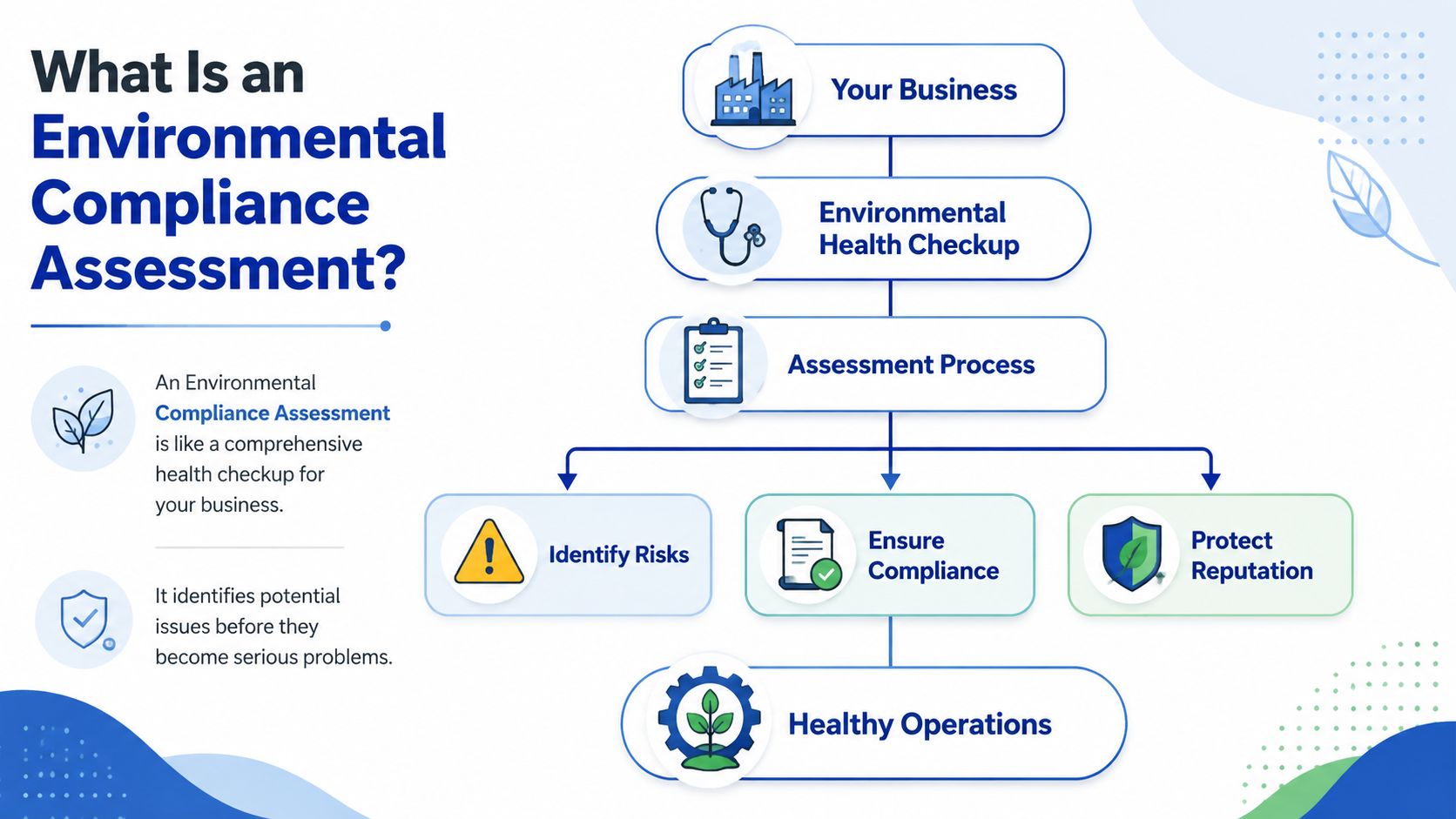
What it usually covers
Most assessments review several operational domains at once:
- Air-related obligations: Emissions sources, ventilation-related controls, permit conditions, and records that show systems were operated as required.
- Water and discharge issues: Floor drains, wastewater handling, stormwater pathways, spill controls, and sampling or monitoring records where applicable.
- Hazardous and regulated waste: Container condition, labeling, segregation, storage times, transporter documentation, manifests, and final disposal records.
- Chemical and material controls: Safety data sheets, storage compatibility, secondary containment, inventory management, and employee access to correct procedures.
- Biohazard and infectious exposure risks: Exposure control practices, PPE use, incident cleanup methods, regulated waste handling, and transport requirements.
What separates a real assessment from a checklist
A shallow review asks, “Do we have paperwork?” A real one asks, “Does the paperwork match the actual operation, and can we defend it?”
That difference matters most where material-specific compliance is involved. The strongest standard for a defensible assessment is the Full Material Declaration, typically in IPC-1752A format, because it breaks a product down to constituent materials and substances instead of relying on a broad Certificate of Conformity. That level of detail supports checking substances against RoHS and REACH candidate lists, identifying new SVHCs, and determining whether concentrations exceed the 0.1% w/w threshold for the article, as explained in this technical blueprint for material-specific environmental compliance. The same source notes that this level of detail is what allows organizations to quantify serious financial exposure, including the potential $10M+ cost of a product recall.
The best assessments don't reassure people. They remove uncertainty by replacing assumptions with evidence.
If you're building internal awareness around exposure sources and facility conditions, this guide to mitigating risks offers useful context for thinking beyond the obvious hazard in front of you.
Key Triggers and Governing Regulatory Frameworks
Few organizations order an environmental compliance assessment because they woke up feeling proactive. Most get there because something changed, or because someone with authority started asking harder questions.

Reactive triggers
These are the events that force clarity:
- An incident occurred: A spill, improper disposal event, bodily fluid contamination, or discharge concern puts the site under immediate pressure.
- A regulator or insurer asks for records: Once the request arrives, missing documentation becomes its own problem.
- A property transaction is underway: Buyers, lenders, and counsel want to know what liabilities they're inheriting.
- A complaint came from staff, neighbors, or tenants: Odors, visible staining, drainage issues, and improper storage are common catalysts.
In those moments, non-compliance stops being theoretical. It becomes operational. A proper assessment translates obligations into clear requirements, drives actions such as equipment upgrades or training, and uses continuous monitoring to prove ongoing adherence, integrating compliance into day-to-day operations, as described in Advisera's environmental compliance guidance.
Proactive drivers
The better time to assess a site is before a trigger forces the issue. Common examples include a facility expansion, a new production line, a change in chemicals or materials, a revised waste stream, an internal audit initiative, or preparation for a certification process.
Management teams usually gain the most value from this process. They're not just checking for violations. They're deciding whether current systems, staffing, vendors, and records can support the business they're planning to run next year.
Which frameworks usually matter
The regulatory picture varies by operation, but most facilities sit within some mix of federal, state, local, and industry-specific requirements. In practical terms, managers usually need to think across:
| Area | What gets examined |
|---|---|
| EPA-related obligations | Air, water, waste, discharge, storage, and reporting duties |
| OSHA requirements | Worker exposure, PPE, training, written plans, and incident procedures |
| State and local rules | Transport, disposal, permitting, notifications, and site-specific restrictions |
| Industry standards | Documentation practices, auditable systems, and sector expectations |
When the issue involves blood, bodily fluids, sharps, or potentially infectious materials, OSHA becomes especially important. This summary of OSHA guidelines for biohazard exposure and workplace incidents is a practical reference because many facilities underestimate how quickly a workplace event can cross into regulated cleanup territory.
The Four Phases of a Compliance Assessment
A good environmental compliance assessment follows a sequence. If the process feels chaotic, it usually means the scope was vague, the records were scattered, or the field team wasn't aligned on what they were trying to confirm.
Start with the workflow below.
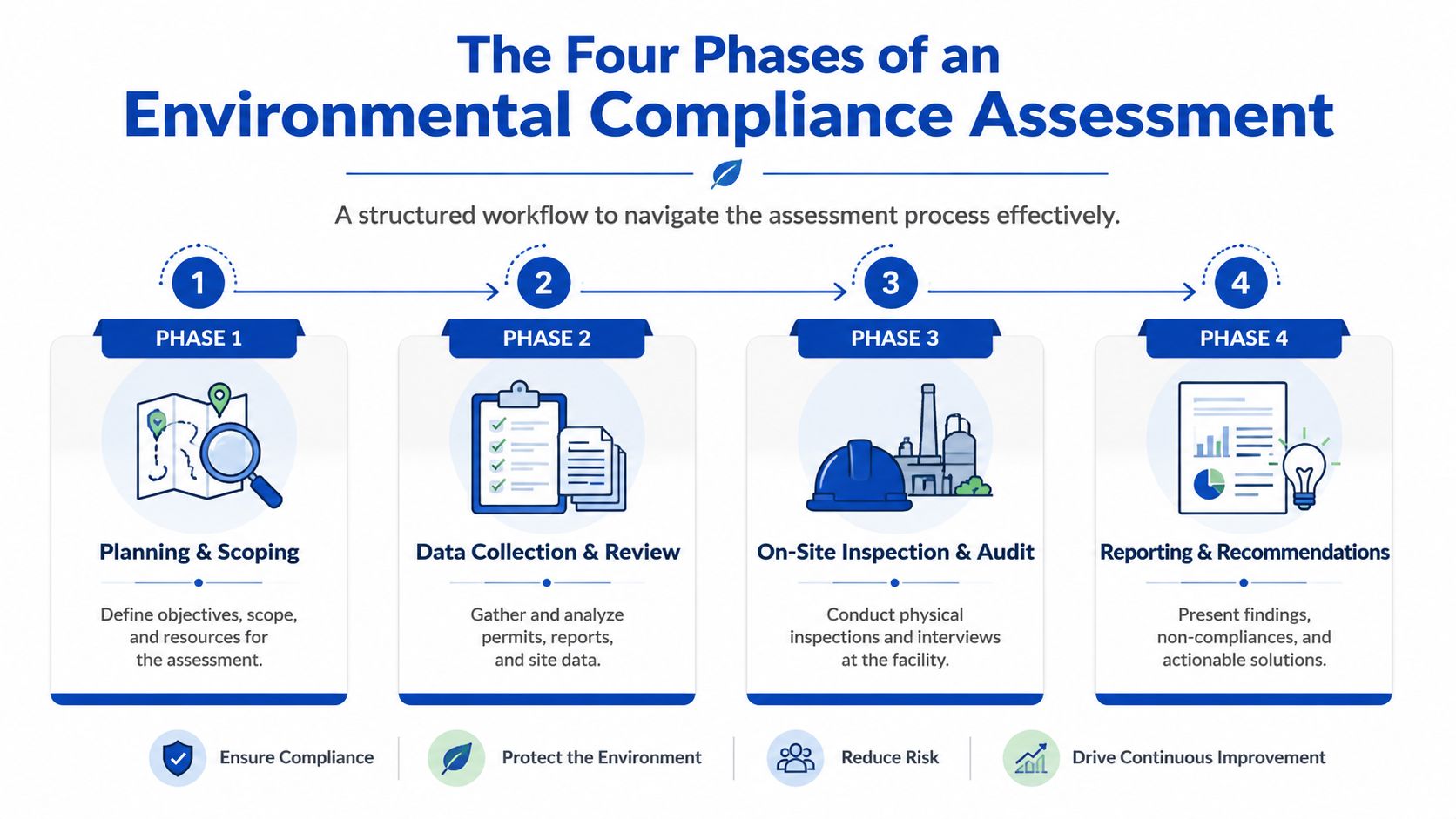
Phase one planning and scoping
This phase sets the boundaries. What site areas are included, which permits and incidents matter, what waste streams are in play, and who owns each record set.
A weak scope creates false comfort. For example, teams may review storage rooms and permits but skip janitorial closets, loading docks, satellite accumulation points, or off-hours incident handling. That's where mislabeling, secondary containment failures, and informal cleanup practices often hide.
Useful inputs at this stage include permit files, manifests, SDS libraries, training logs, exposure control plans, spill response procedures, contractor records, and prior inspection findings.
Phase two data collection and document review
This is the evidence-building stage. The assessor compares written obligations to what your records show. If a permit requires a control, can you prove it was maintained? If waste left the site, can you trace the chain from generation to final disposal? If staff are expected to use PPE, where are the training and fit-for-duty records?
This is also where technical structure matters more than many teams realize. A deep assessment requires a Bill of Materials linked to compliance data, version control for changes, and centralized storage, according to Adherent's documentation and reporting guidance. That same structure prepares organizations for future machine-readable requirements tied to the Digital Product Passport.
If five people store compliance records in five different places, your audit trail is already compromised.
A process-driven view of regulated cleanup can also help managers understand what assessors are trying to verify in the field. This step-by-step guide to the biohazard cleanup process is useful for that reason.
To see how a walkthrough mindset applies in practice, this video gives a helpful visual reference:
Phase three on-site inspection and audit
This phase tests the paper against reality. The assessor visits the site, inspects storage and work areas, interviews employees, and checks whether actual practices match written procedures.
Expect attention on details like:
- Container management: Are labels legible, current, and matched to contents?
- Segregation practices: Are incompatible materials stored apart?
- Emergency readiness: Can staff locate spill kits, PPE, and written response procedures quickly?
- Housekeeping quality: Are drains, floors, loading areas, and utility spaces showing signs of unmanaged release or poor cleanup?
- Contractor control: Do outside vendors follow site rules, or has the operation outsourced risk without oversight?
Phase four reporting and corrective action
The report should do more than list deficiencies. It should rank findings by risk, identify the governing obligation behind each issue, explain what evidence is missing or conflicting, and recommend practical corrective actions.
The best reports also assign owners and dates. “Improve waste handling” is useless. “Retrain receiving staff, relabel accumulation containers, replace damaged lids, and update transporter documentation process” can be executed.
Preparing for and Responding to Assessment Findings
An assessment goes smoother when the facility is organized before the assessor arrives. That doesn't mean staging a perfect site. It means reducing confusion so the review can focus on real risk instead of chasing missing files.
Before the assessment
Use a preparation file, whether it lives in a controlled shared drive or a physical compliance room. At minimum, gather:
- Permits and approvals: Current operating permits, discharge authorizations, waste registrations, and any agency correspondence.
- Safety and chemical records: SDSs, chemical inventories, storage maps, and incompatibility procedures.
- Training documentation: Attendance logs, role-specific instruction, exposure control training, and contractor onboarding records.
- Waste and disposal records: Manifests, transporter information, disposal certificates, and incident-related waste documentation.
- Response materials: Spill plans, emergency contacts, cleanup procedures, maintenance logs for response equipment, and inspection forms.
Assign one knowledgeable point of contact. That person doesn't need every answer, but they do need to know where the answers live.
After the report arrives
Don't treat findings as a verdict. Treat them as a prioritized work list tied to business continuity.
A useful response sequence looks like this:
- Stabilize the immediate risks. If a finding involves exposure, leakage, unsecured waste, or improper disposal, fix the condition first.
- Separate high-risk items from administrative gaps. A missing signature matters less than an active containment failure.
- Write a corrective action plan. Name the owner, the task, the proof required, and the completion date.
- Document your response. Photos, invoices, revised procedures, retraining logs, and disposal records all matter.
- Loop in stakeholders early. Legal, operations, facilities leadership, and insurance contacts should hear about material findings before they hear about them secondhand.
The report isn't the finish line. The defensible position comes from what you do next, and what you can prove you did.
Insurance coordination is often overlooked until a claim is already tense. For managers dealing with contamination, cleanup scope, or reimbursement uncertainty, this resource on insurance coverage for biohazard cleanup is worth reviewing early.
The Critical Role of a Specialist Remediation Partner
An assessment identifies the problem. It doesn't solve it. Once the findings point to regulated contamination, improper waste handling, or infectious exposure risk, the quality of the remediation partner becomes central to the compliance outcome.
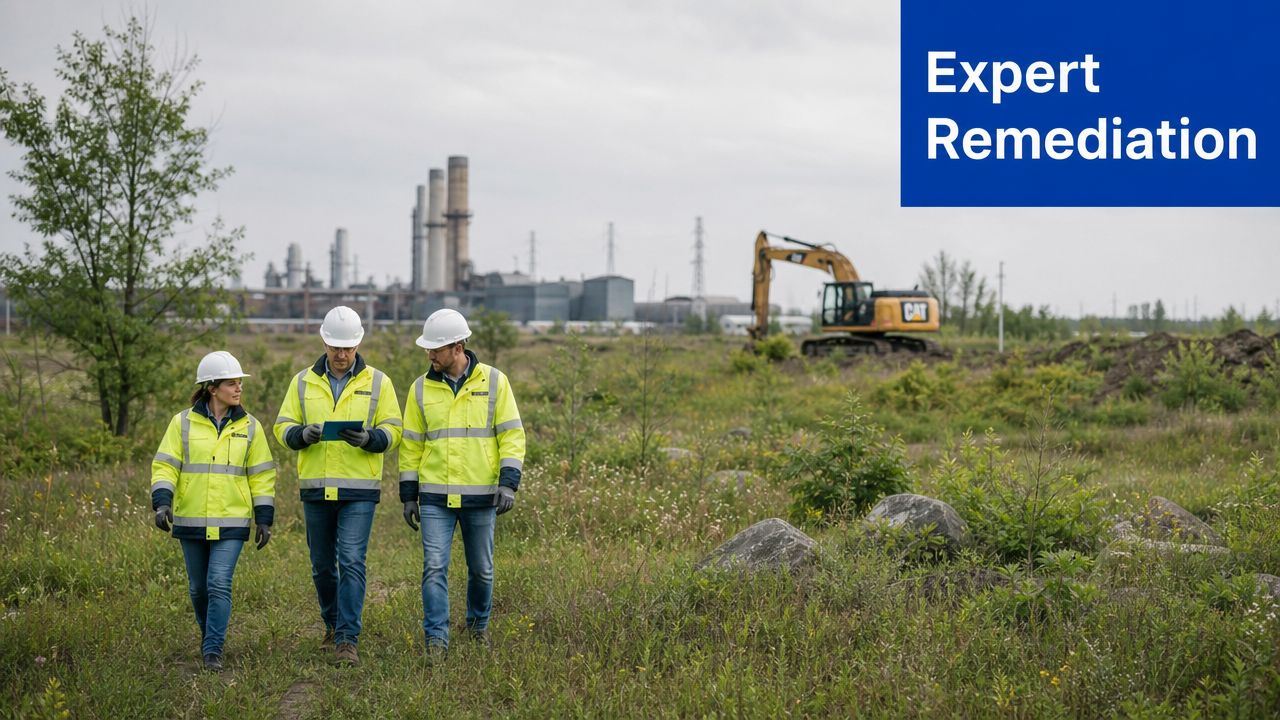
When general cleanup is not enough
A routine janitorial contractor can wipe a surface. They usually can't establish a compliant biohazard waste stream, package regulated waste correctly, maintain chain-of-custody records, or document decontamination in a way that supports later review.
That difference becomes obvious in healthcare, behavioral health, industrial, and property management settings. A bodily fluid release in a restroom, a trauma scene in a multifamily unit, a contaminated vehicle, or an industrial accident involving blood exposure all create obligations that go beyond cleaning for appearance.
OSHA's Bloodborne Pathogens Standard, 29 CFR 1910.1030, requires a written exposure control plan, employee training, proper PPE, and prohibits using standard waste disposal for biohazardous materials, requiring licensed transport and disposal, as summarized in this overview of biohazard cleanup requirements. Those tasks belong with trained professionals, not an improvised response.
What competent remediation looks like
A specialist partner should be able to handle the full chain:
| Need | What a qualified team provides |
|---|---|
| Hazard isolation | Scene control, restricted access, worker protection, and contamination mapping |
| Regulated cleanup | Proper disinfectants, contact-time discipline, removal of impacted porous material where needed |
| Waste compliance | Packaging, labeling, transport coordination, and disposal through licensed channels |
| Documentation | Work logs, waste records, clearance-related documentation where applicable, and client-ready reporting |
For high-risk water or sewage contamination, standards become even more exacting. In Category 3 water damage, clearance testing must confirm total bacteria counts on cleaned surfaces are below 10,000 CFU/cm² with no detection of pathogens such as coliforms, Salmonella, or Staphylococcus aureus, and post-remediation air sampling should not exceed outdoor ambient fungal spore levels, according to Advanced DRI's biohazard cleanup standards. That kind of verification is outside the scope of ordinary custodial work.
Only EPA-registered disinfectants with verified kill claims against specific pathogens are approved for biohazard remediation, and surfaces must remain saturated for the required contact time to ensure complete decontamination, as explained in this overview of safety standards in biohazard cleanup. That's one reason hurried “spray and wipe” responses so often fail under scrutiny.
If you're evaluating who should perform that work, this guide to finding and choosing a trusted cleanup partner is a practical place to start.
Beyond the Checklist The Future of Compliance
The next phase of environmental compliance assessment won't stop at permits, manifests, and training binders. It's moving toward a broader question. Who is affected by your operations, and are you accounting for cumulative harm in a defensible way?
A major gap today is Environmental Justice. The EPA recommends cumulative risk analyses to protect overburdened communities, yet few commercial frameworks put that into everyday compliance practice, leaving many businesses unprepared for growing scrutiny around “just” environmental impacts, according to the APHA policy brief on addressing Environmental Justice to achieve health equity.
For facility managers, that changes the standard from “Did we meet the rule?” to “Can we show that our controls, monitoring, and response planning reflect the actual exposure context around the site?” That's a more demanding question, but it's also where durable risk management is headed.
This future-facing view also overlaps with waste reduction, equipment lifecycle planning, and responsible material disposition. For teams thinking about those adjacent obligations, the ESG electronics recycling guide for businesses is a useful companion resource.
An environmental compliance assessment still starts with records, conditions, and corrective actions. But the facilities that handle future scrutiny best will be the ones that treat compliance as operational intelligence, not a once-a-year exercise.
When contamination, biohazard exposure, or regulated cleanup issues put your property or facility at risk, 360 Hazardous Cleanup provides the kind of professional, trauma-informed support that helps restore safety, protect documentation quality, and reduce compliance exposure. Their team handles sensitive, time-critical situations with discretion, regulatory discipline, and respect for the people affected, so you can move from uncertainty to a clear next step.