Small businesses often spend $500 to $2,000 per year on hazardous waste disposal, while larger operations can spend $5,000 to $50,000+ annually, and those numbers can change fast based on waste type, volume, and regulatory requirements. Per-unit pricing also varies widely, with used oil often priced at $0 to $5 per gallon, antifreeze at $2 to $7 per gallon, solvents at $5 to $20 per gallon, and lab packs at $250 to $800 per drum.
If you're dealing with hazardous waste right now, you're probably not asking an abstract budgeting question. You're asking what this is going to cost, how quickly it needs to be handled, and how to avoid making an expensive mistake while the clock is running.
That stress is justified. Hazardous waste disposal cost is rarely just a disposal number. The invoice usually reflects classification, packaging, transport, manifesting, labor, regulatory paperwork, and the disposal method itself. For homeowners, the issue often appears during a crisis, such as a garage chemical problem, a hoarding condition, or a biohazard event tied to a property. For facility managers, it usually arrives with a tighter deadline and more legal exposure.
The most useful way to think about cost is this: you're not paying only to remove material. You're paying to make the situation safe, legal, documented, and closed out correctly.
Understanding Your Hazardous Waste Disposal Cost
The first number people look for is the disposal price. The more important question is what that price includes.
A drum rate or gallon rate can help with rough planning, but it won't tell you the total cost of compliance. In practice, hazardous waste work gets priced as a chain of tasks. Someone has to identify the waste, package it correctly, prepare the paperwork, move it under the right transport rules, and deliver it to an approved facility. If any one of those steps is skipped or mishandled, the cheap quote stops being cheap.
Why one price rarely tells the whole story
A facility manager might have a modest amount of waste on site and still receive a bill that feels high for the volume involved. That usually happens because fixed requirements don't shrink just because the load is small. The truck still has to roll. The manifest still has to be prepared. The crew still has to handle the material safely.
For homeowners, the confusion often comes from comparing cleanup service pricing with industrial disposal pricing found online. Those are not the same thing. In residential settings, disposal is often one part of a broader remediation scope that can include containment, PPE, cleaning, decontamination, and documentation.
Practical rule: Don't compare quotes by the disposal line alone. Compare what each company is taking responsibility for from identification through final disposal.
Start with classification, not guesswork
The fastest way to get to a realistic cost is to classify what you have. Waste type, condition, and packaging status all matter. Old solvents, mixed liquids, damaged containers, automotive fluids, laboratory chemicals, and biohazard-contaminated materials each trigger different handling paths.
If you need a grounding in what counts as hazardous waste and how professionals sort through that question, this guide on what qualifies as hazardous waste and how it's disposed of safely is a useful place to start.
Once the material is properly identified, the quote becomes much easier to trust. Before that, any low number is just a placeholder.
What Really Drives Disposal Costs
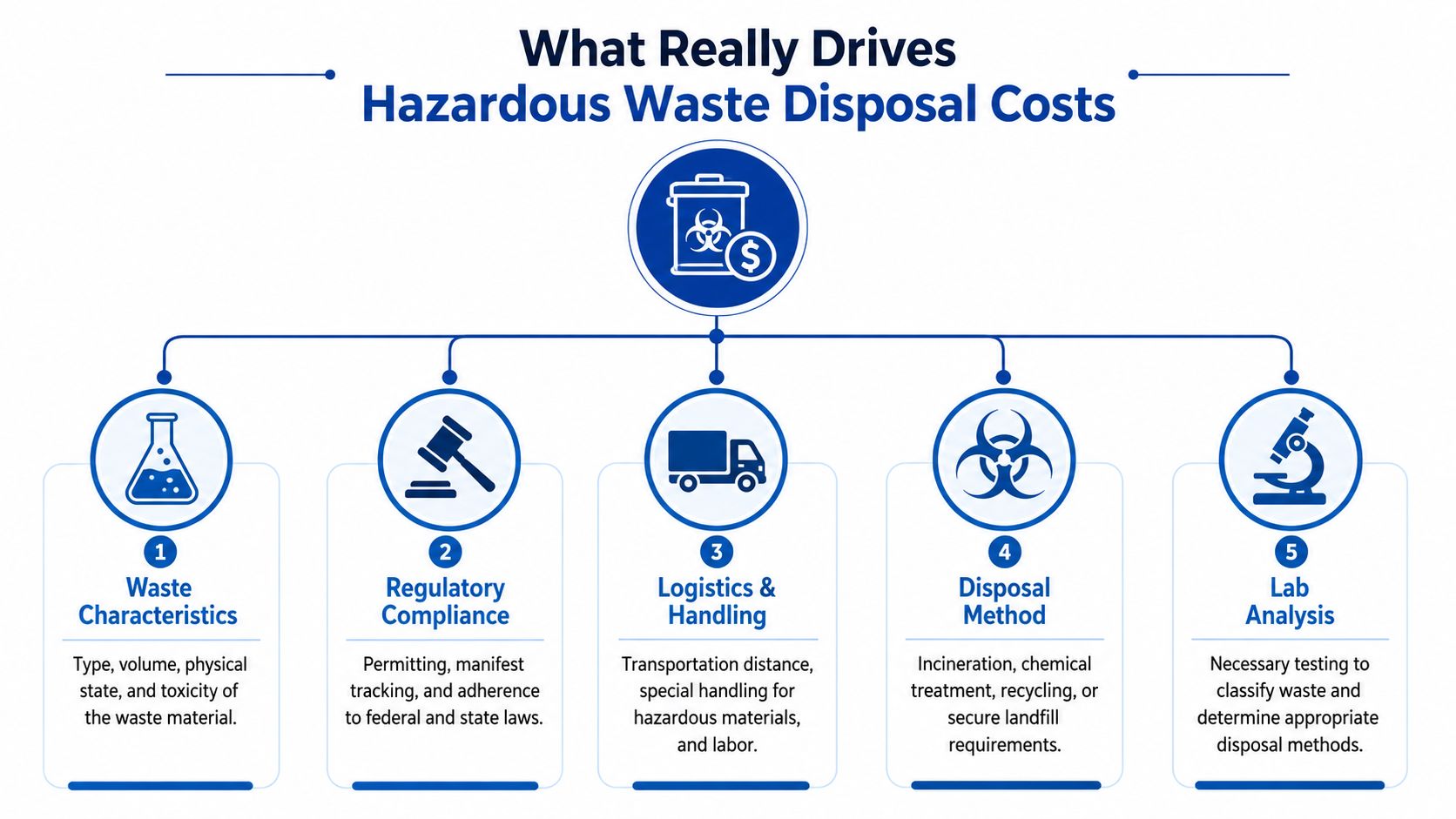
A hazardous waste invoice works a lot like a restaurant bill. The entrée gets your attention, but the final total reflects everything around it. Disposal is one line item. Transport, paperwork, handling, and compliance often make the bigger difference.
This visual gives a good overview of how those layers stack together.
Small jobs often carry a fixed-cost floor
For small to mid-size jobs, the cost structure is often driven by logistics more than by the actual mass of waste. Typical transportation fees run $75 to $200 per pickup, while overall disposal averages around $200 but can range from $75 to $500+ depending on the material and quantity, according to Angi's hazardous waste disposal cost guide.
That matters because a relatively small load can still require the same scheduling, vehicle, documentation, and site handling as a larger one. Clients often expect the bill to scale down neatly with weight. It usually doesn't.
Five drivers that change the final invoice
- Waste characteristics: A thin stream of used oil is different from a mixed solvent, and both are different from unstable, unknown, or contaminated materials. Toxicity, flammability, corrosivity, and physical state all affect how the waste can be packaged and where it can go.
- Logistics and access: Distance matters, but site conditions matter too. Narrow loading areas, after-hours pickups, damaged containers, or occupied facilities can all increase labor and planning time.
- Disposal method: Some wastes can be recycled or processed through comparatively simpler channels. Others require more specialized treatment or secure disposal.
- Labor and PPE: If the crew has to overpack leaking containers, segregate incompatible materials, or work inside controlled areas, labor becomes a meaningful cost driver.
- Waste profiling and analysis: When material is unknown or poorly labeled, professionals often need more front-end work to determine the proper handling path.
A lot of budget frustration comes from treating all hazardous waste as interchangeable. It isn't. A small quantity of difficult material can cost more to manage than a larger quantity of lower-risk waste.
To see how disposal fits into broader environmental protection responsibilities, this article on safe and responsible hazardous waste disposal adds helpful context.
A short walkthrough can also make the process easier to visualize.
Cost Estimates by Waste Type and Scenario
A facility manager may hear “$400 a drum” and assume the budget is set. Then the shipment needs profiling, a transporter, manifest paperwork, overpacks for damaged containers, and a disposal outlet that can accept the material. That is how a simple line item turns into the full cost of compliance.
Sample hazardous waste disposal cost ranges
The ranges below are screening numbers. They help with early budgeting, but they are not all-in project prices.
| Waste Type | Typical Cost Range (Per Unit) |
|---|---|
| Used oil | Often low-cost or recyclable, depending on contamination and pickup conditions |
| Antifreeze | Commonly priced by gallon, with higher costs if mixed or contaminated |
| Solvents | Usually more expensive per gallon because treatment options are narrower |
| Lab packs | Commonly priced per drum, plus labor for sorting, packing, and documentation |
| Standard 55-gallon lab pack | Often falls within a mid-range drum price, before transport and paperwork charges |
Published pricing from commercial waste vendors such as Veolia's hazardous waste disposal services shows the same pattern we see in the field. Waste type changes the disposal path, but packaging, transportation, and compliance work often decide the final invoice.
What those numbers mean in real settings
Clean, well-labeled automotive fluids from a small shop usually price far differently than mixed liquids from a neglected maintenance room. The first job may move through the process with standard containers and routine paperwork. The second may require field segregation, testing, repacking, and more labor before a truck can even be loaded.
This is why per-gallon or per-drum figures only tell part of the story.
For commercial sites, the most useful estimate is an all-in quote that separates disposal, transportation, labor, and documentation. That lets a facility manager see where cost is coming from and where better container management or waste segregation may lower future bills.
E-waste creates a similar budgeting trap. A box of old devices may look inexpensive to remove, but chain-of-custody, data concerns, and legal handling standards can change the scope quickly. The environmental consequences of e-waste are one reason low-bid disposal offers deserve a hard second look.
Commercial sites and residential properties are priced differently
Residential jobs usually are not quoted as simple disposal-only work. In a home, hazardous or biohazard waste is often part of a larger remediation scope that includes containment, removal of affected materials, cleaning, PPE, odor treatment, transport, and final disposal through approved channels.
That is why a homeowner dealing with a traumatic event, hoarding conditions, drug residue, or sewage contamination should ask for the full remediation cost, not just the waste haul-away charge. This guide to biohazard waste disposal services and requirements helps explain what that full scope can include.
A reliable quote matches the actual condition of the site. Labeled containers on accessible loading docks are one scenario. Leaking, mixed, or unknown materials in a basement, garage, or occupied workspace are another. 360 Hazardous Cleanup builds quotes around that reality so clients can see the actual compliance cost up front, instead of finding it later in change orders and disposal exceptions.
The Hidden Financial Risk of Non-Compliance
A low quote can get expensive fast if it leaves out the paperwork, approvals, and handling steps the waste requires.
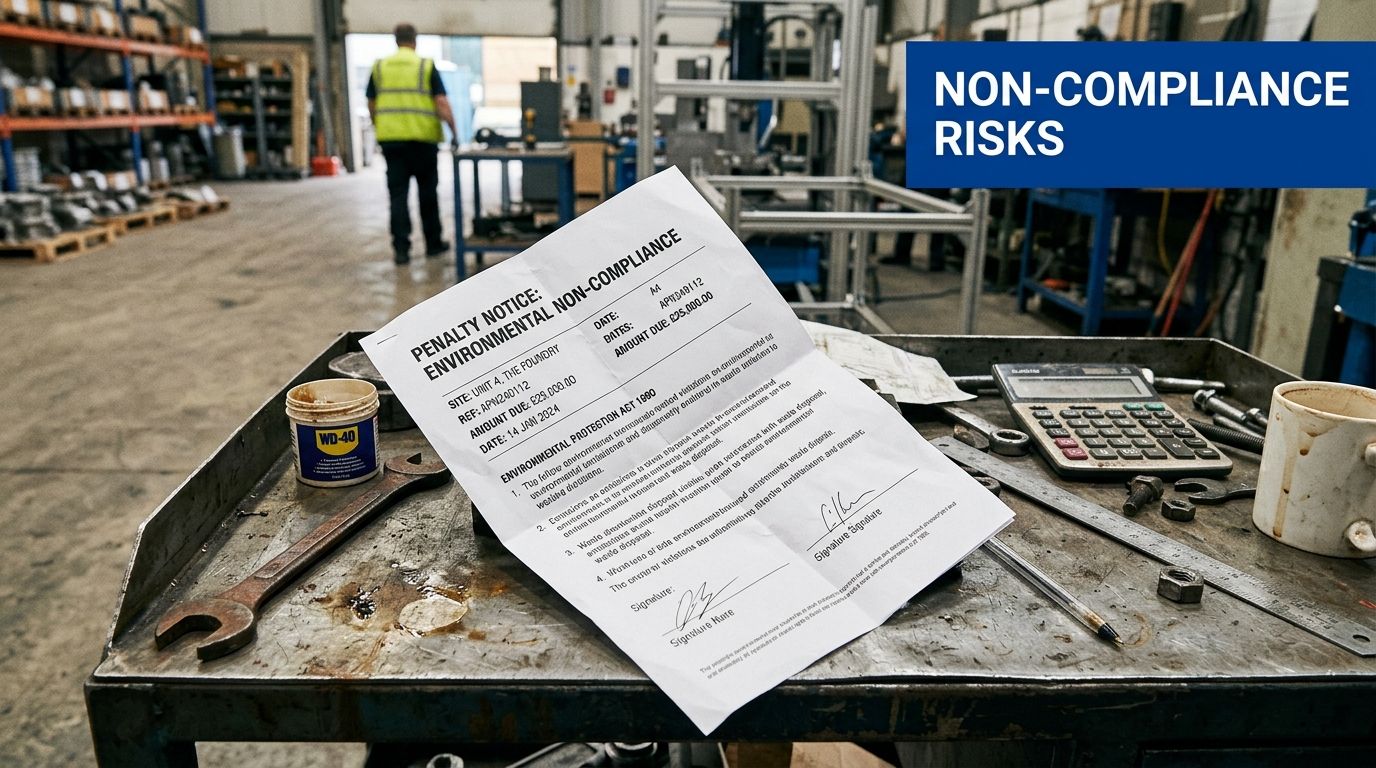
Improper disposal creates more than a cleanup problem. It can trigger agency scrutiny, delay a property transfer, complicate an insurance claim, and force a second contractor to come in and correct the record. I have seen clients pay once for the cheap removal and again for the compliant solution.
Generator status changes your cost structure
In New Jersey, annual hazardous waste generator fees are $30 for Very Small Quantity Generators, $835 for Small Quantity Generators, and $970 for Large Quantity Generators, with reporting fees ranging from $34 to $405 for complete biennial reports depending on tonnage, according to the New Jersey hazardous waste fee schedule.
Those numbers matter because disposal cost starts well before a truck arrives. Once a site falls into a higher generator category, the budget can change through registration, reporting, labeling, accumulation rules, employee training, and recordkeeping requirements. A facility handling 2,640 pounds or more of hazardous waste a year can move into a different regulatory tier under that framework, and that shift affects the total cost of compliance.
Shortcuts can cost far more than proper disposal
Hazardous waste violations can bring serious civil penalties, but the fines are only part of the exposure. The bigger hit often comes from business interruption, emergency response, re-profiling rejected waste, legal review, and cleanup after an inspector or downstream facility finds a problem. One bad waste determination or an incomplete manifest can turn a routine pickup into a much larger event.
The same pattern shows up in homes after trauma scenes, drug residue, sewage backups, or illegal dumping. If the scope is documented poorly, insurers and adjusters may question what was removed, why regulated handling was required, and whether the charges match the condition of the site. Property owners dealing with that pressure should review how insurance coverage for biohazard cleanup claims is usually documented and supported.
This risk is not limited to drums and liquid waste. Electronics, batteries, and mixed equipment can also create legal and environmental exposure if they are stored, shipped, or discarded carelessly. The environmental consequences of e-waste show why disposal decisions need the same discipline clients expect for any other regulated waste stream.
The safer financial decision is usually the clearer one. Identify the waste correctly, document the chain of custody, and get an all-in quote that includes transport, manifesting, treatment, and the regulatory steps required to close the job properly.
Navigating Insurance Coverage for Cleanup
Insurance is often the part clients dread most. They already have a contaminated site, an urgent decision, and a cost question they didn't expect to face that day. The paperwork can feel worse than the cleanup.
When insurance may help
In residential biohazard situations, coverage sometimes depends on the cause of loss, the policy language, and whether the event falls within covered property damage or a related remediation need. Commercial coverage can be even more policy-specific because carriers may separate pollution, environmental liability, and cleanup obligations.
The practical lesson is simple. Don't assume the answer is no, and don't assume the answer is yes. Get the loss documented correctly and get the scope described in plain language the adjuster can work with.
What makes claims easier to support
Adjusters usually need a clean chain of documentation. That means a clear description of the event, photographs where appropriate, a detailed scope of work, regulated waste handling records when applicable, and invoices that don't hide major line items inside vague wording.
When that documentation is weak, claims can stall or get reduced. Homeowners and property managers who run into a payment dispute may benefit from outside guidance on dealing with lowball settlement offers, especially when the cleanup was necessary and the carrier's number doesn't match the actual scope.
A strong explainer on insurance coverage for biohazard cleanup can help you understand what carriers often look for and how to organize the claim.
The role of the remediation contractor
A capable contractor doesn't practice law or rewrite your policy. What they can do is reduce confusion. They can document conditions thoroughly, describe the work in compliance terms, and present a scope that explains why each task was necessary for health, safety, and proper disposal.
That matters because insurance disputes often start when a cleanup invoice is too vague. The work may be justified, but if the file doesn't show why it was required, reimbursement becomes harder.
How to Get a Transparent and Accurate Quote
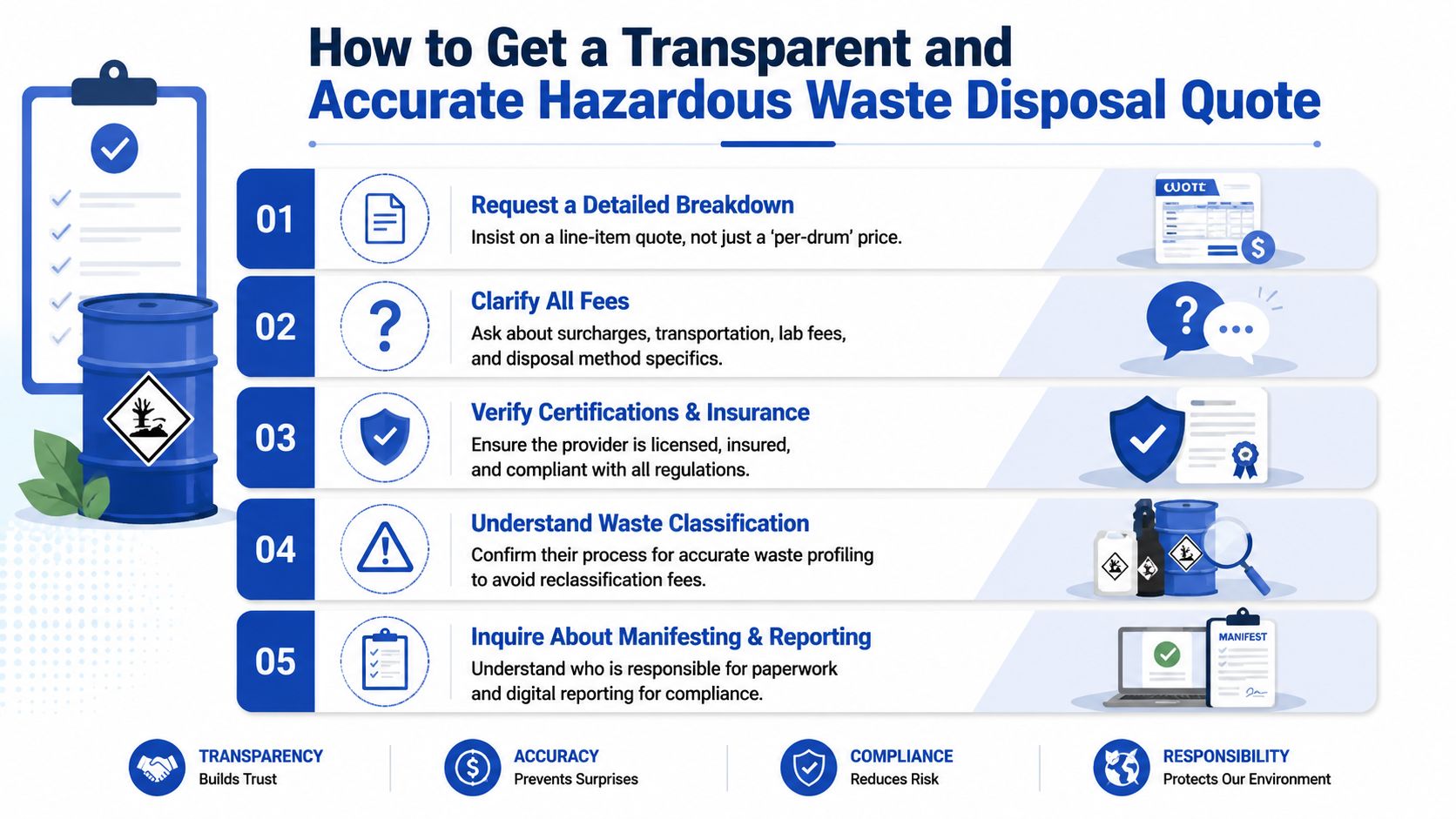
The best quote isn't always the lowest one. It's the one that tells you what problem is being solved, what assumptions the price depends on, and what extra charges could still appear.
This checklist captures what a transparent quote should make easy to see.
What should be itemized
A basic quoted price often excludes transportation fees, stop charges, fuel surcharges, manifesting fees, and state-specific disposal taxes. One industry explainer notes transport alone can run $65 to $200, and a trustworthy quote should itemize those costs up front in the transportation fee breakdown for hazardous waste disposal.
That means "per drum" is not enough. A useful quote should tell you whether the number includes pickup, packing, paperwork, and final disposal, or only one portion of the job.
Questions worth asking before you sign
- What waste assumptions is this quote based on: If the contractor hasn't identified the material carefully, ask what happens if the waste is reclassified after pickup.
- Which logistics charges are separate: Transportation, stop fees, fuel, and manifesting should be visible, not buried.
- Who handles packaging problems: If containers are leaking, unlabeled, overfilled, or incompatible, find out whether overpacking and segregation are included.
- What documentation will I receive: For businesses, this isn't optional. For homeowners, it still matters if insurance or future disclosure questions arise.
- What triggers change orders: Unknown waste, added labor, access problems, and after-hours work are common triggers. A good estimator says that clearly.
Red flags that usually lead to surprise billing
A short quote with a single disposal number can be fine for a very simple job. It becomes risky when the site is messy, mixed, damaged, or only partially identified.
Watch for these warning signs:
- Vague language: Terms like "cleanup as needed" without a defined scope usually shift risk to the client.
- No mention of manifests or disposal records: That suggests the paperwork side hasn't been thought through.
- No exclusions listed: Every real quote has assumptions and boundaries.
- No written explanation of added fees: If they can't explain extra charges before the job, they'll explain them after.
For a closer look at what transparent estimating should include, this article on transparent pricing in biohazard cleanup services is a strong reference.
Your Partner in Safety and Compliance
Hazardous waste disposal cost is never just about getting material off the property. It's about getting the job done in a way that protects people, satisfies legal requirements, and leaves a clear record of what happened.
The cheapest-looking option can become the most expensive when the quote excludes logistics, the waste is misclassified, or the paperwork doesn't hold up later. The safer approach is usually the simpler one. Identify the material correctly, insist on an itemized scope, and make sure the chain from pickup to disposal is documented.
That applies whether you're managing a warehouse, a clinic, a rental property, or a family home after a difficult event. Safety and compliance aren't premium add-ons. They are the work.
Good hazardous waste planning doesn't chase the lowest line item. It reduces the chance of a larger problem later.
Hazardous Waste Disposal FAQs
Is hazardous waste disposal cost usually charged by weight or by container
It can be quoted by gallon, drum, or pickup, depending on the waste stream. In real jobs, the final bill often reflects a mix of unit pricing and fixed service charges. That's why two jobs with similar weight can still price very differently.
Why does a small hazardous waste pickup still cost so much
Because the smallest jobs still require regulated handling steps. Scheduling, transport, paperwork, and safe loading create a baseline cost even when the volume is modest. For many low-volume generators, those fixed requirements matter more than the amount of waste itself.
What's usually missing from a low initial quote
The missing items are often the ones that hurt later. Common examples include transportation, fuel surcharges, stop charges, manifesting, state fees, additional labor for damaged containers, and costs tied to reclassification if the waste was not described accurately at the start.
Can homeowners compare their situation to industrial disposal rates
Only loosely. Homeowners often need remediation, not just disposal. That means the quote may include cleaning, removal of contaminated materials, PPE, odor work, containment, and documentation. Looking only at a per-drum number usually leads to the wrong expectation.
Is it cheaper to wait and combine waste into fewer pickups
Sometimes, but not always. Consolidating compatible, properly stored waste can help with scheduling efficiency. Waiting can also create bigger problems if containers degrade, labels fail, storage areas become noncompliant, or a generator status issue develops. The right answer depends on storage conditions and regulatory obligations.
What should I have ready before asking for a quote
Try to gather photos, container counts, known labels, approximate volumes, site access details, and any incident information that explains how the waste was created. If you don't know exactly what you're dealing with, say that clearly. Honest uncertainty is better than a confident but inaccurate description.
If you need help making sense of a hazardous waste situation, 360 Hazardous Cleanup provides confidential guidance, compliant remediation support, and clear documentation for residential and commercial properties. When the stakes involve safety, liability, and peace of mind, getting an accurate scope and a transparent quote early can make the entire process easier.