That faint basement smell. The bathroom paint that keeps bubbling back. The window that sweats every morning even when the rest of the house feels fine. These are the kinds of details people live with for months because they don't look urgent.
But some of the most important signs of mold in your home start exactly that way. Without a sound.
The U.S. EPA notes that suspected hidden mold often follows water damage and may be concealed behind drywall, wallpaper, paneling, carpets, ductwork, or roof materials, which is why surface clues matter so much during an early inspection (EPA guidance on mold and moisture in homes). What looks like a stain or a stale odor may point to active moisture inside the structure.
For homeowners, that can mean damage spreading behind finishes. For property managers, it can mean tenant complaints, documentation issues, and a much larger remediation scope if the source isn't handled fast. Even building improvements meant to help with efficiency need to be installed correctly, because moisture control depends on the whole assembly, including ventilation and insulation details such as how spray foam prevents moisture trapping.
The good news is that mold usually leaves clues before the situation becomes impossible to manage. The key is knowing which signs deserve immediate attention, what they usually mean, and when it's time to bring in a certified remediation team instead of trying to wipe the problem away.
1. Visible Black or Green Discoloration on Surfaces
Black or green spotting on grout, trim, drywall, or ceiling corners is one of the clearest signs that moisture has been sitting long enough to support growth. By the time you can see it, the issue is no longer theoretical. It needs to be documented, contained, and traced back to the water source.
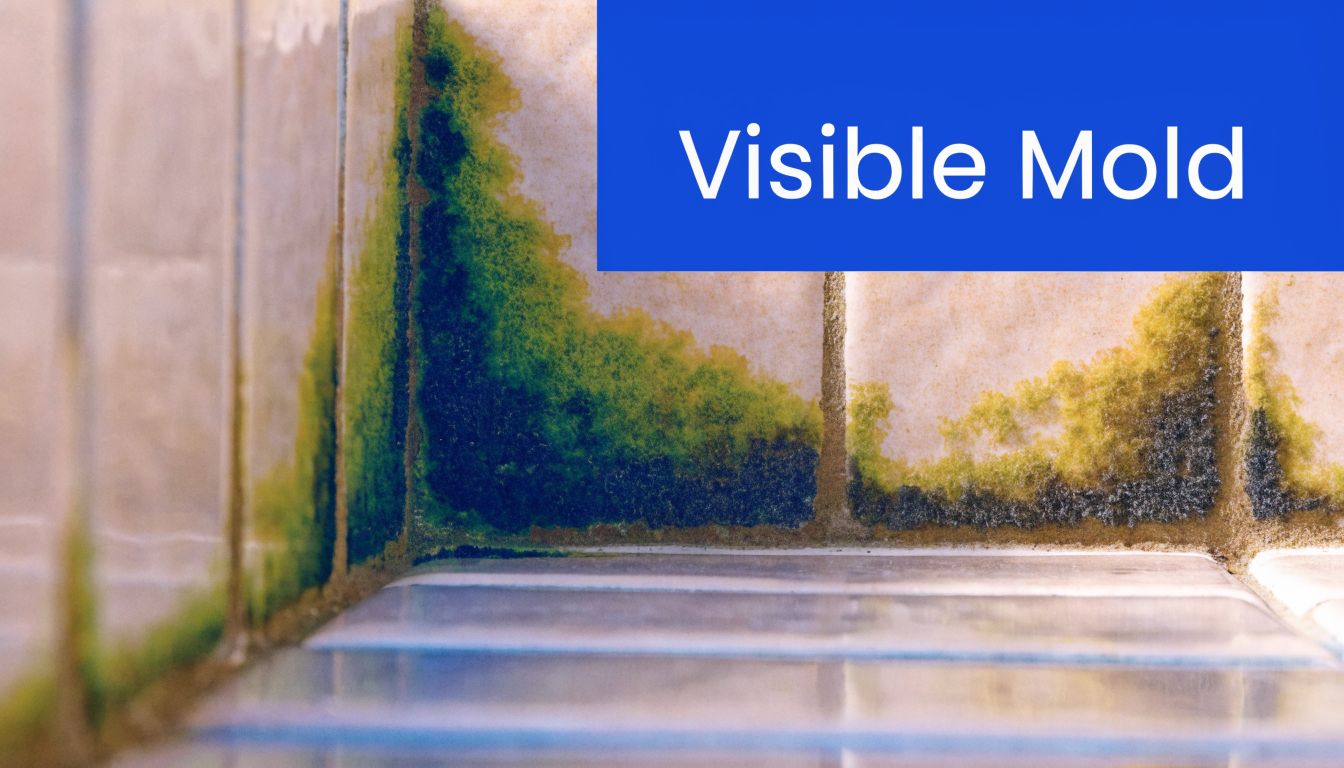
In homes, I see this dismissed around shower corners, under sinks, behind toilets, and along older window frames. In managed properties, it often appears first on ceiling tiles below roof penetrations, inside janitorial closets, near cold supply vents, or along basement walls after repeated damp weather. If the pattern is strongest below grade, review these signs your basement may be causing hidden mold or bacterial contamination.
Visible growth also creates a practical fork in the road. A small patch on a non-porous tile surface may call for moisture correction and careful cleaning. Growth on drywall, insulation, ceiling tile, carpet, or wood trim raises a different set of concerns, including concealed spread, material replacement, tenant communication, and whether containment is needed to protect adjacent rooms.
Surface color alone does not identify the species, and no one should make a health or liability decision based on appearance alone. What the staining does tell you is that conditions have supported colonization. If discoloration is already showing on painted walls, this guide to black mold on walls and what it may indicate can help you understand what may be happening behind the finish.
A recurring stain usually points to an unresolved moisture source. That source may be a slow plumbing leak, failed caulk, roof intrusion, window condensation, or a hidden drain problem that keeps materials damp. If leak investigation points toward waste or branch line issues, bring in professional drain leak services before repairs are closed up.
Use a simple field rule. If growth returns after cleaning, or if the material feels soft, swollen, or crumbly, stop treating it like a housekeeping issue.
A few immediate steps help protect both the building and the paper trail:
- Photograph the area before disturbing it: Include wide shots and close-ups with dates.
- Avoid dry scrubbing or sanding: Disturbing growth can spread contamination to nearby rooms.
- Check surrounding materials: Look at baseboards, cabinet backs, window framing, and the reverse side of adjacent surfaces when accessible.
- Separate cosmetic staining from material damage: Porous materials with visible growth often need removal, not paint.
- Escalate early in occupied properties: Fast reporting helps with scope control, resident complaints, and insurance documentation.
A few spots on bathroom grout and widespread growth on drywall or duct insulation do not carry the same risk. The difference is critical for containment, disposal, occupant safety, and whether a certified remediation team should take over immediately.
2. Persistent Musty Odor
You open a vacant unit or step into the basement after a week of rain, and the first thing that hits you is a stale, earthy smell. No stain is visible yet. No obvious patch of growth stands out. That odor still deserves the same level of attention as a visible defect because it often means moisture is sitting where you cannot see it.
A persistent musty odor is an inspection clue. It often tracks back to damp drywall inside a wall cavity, wet framing in a crawl space, contaminated insulation, a slow drain or supply leak, or debris and growth inside ductwork. In occupied buildings, odor complaints also create documentation, tenant relations, and insurance issues. Property managers should treat repeat odor reports as building-condition evidence, not comfort complaints.
Health agencies have long warned that mold follows moisture and can spread through building systems and personal items. You do not need a visible colony to justify a closer inspection. If the smell gets stronger after rain, after a shower, or when the HVAC system starts, that pattern helps narrow the search area and supports a targeted scope for a certified assessor or remediation contractor.
Basements are a common source because moisture enters from several directions at once. Groundwater vapor, poor drainage, condensation, and hidden leaks can all produce the same smell. If that is where the odor concentrates, this guide on signs of hidden mold or bacterial contamination in your basement gives useful context for what may be happening behind finishes. Bathroom ceiling and exhaust problems can create a similar odor pattern upstairs, especially in homes where moisture lingers after bathing. If that sounds familiar, review these steps for permanently removing mold from a bathroom ceiling.
Plumbing defects are another frequent trigger. A failed trap seal, leaking branch line, or drain leak inside a wall can keep materials damp for months before staining appears. If the odor follows a plumbing wall, vanity, laundry area, or floor assembly, bring in professional drain leak services before anyone closes the area up or paints over symptoms.
I give the same advice in houses, offices, and multifamily buildings. Do not try to solve a musty odor with fragrance, ozone, or surface wiping alone. Those steps can complicate the investigation and create the impression that the problem was addressed when the moisture source is still active.
The correct response is straightforward. Document where and when the odor is strongest, check whether weather or HVAC operation changes it, and escalate early if the property is occupied. That protects residents, supports a defensible remediation scope, and helps keep repair records aligned with insurance and compliance requirements.
3. Water Stains and Discoloration on Walls and Ceilings
A tenant reports a yellow ring spreading across the ceiling below an upstairs bath. A homeowner notices a brown patch returning through fresh paint near a window. In both cases, the stain matters because it points to moisture movement inside the assembly, and that is where mold, material damage, and insurance complications often start.
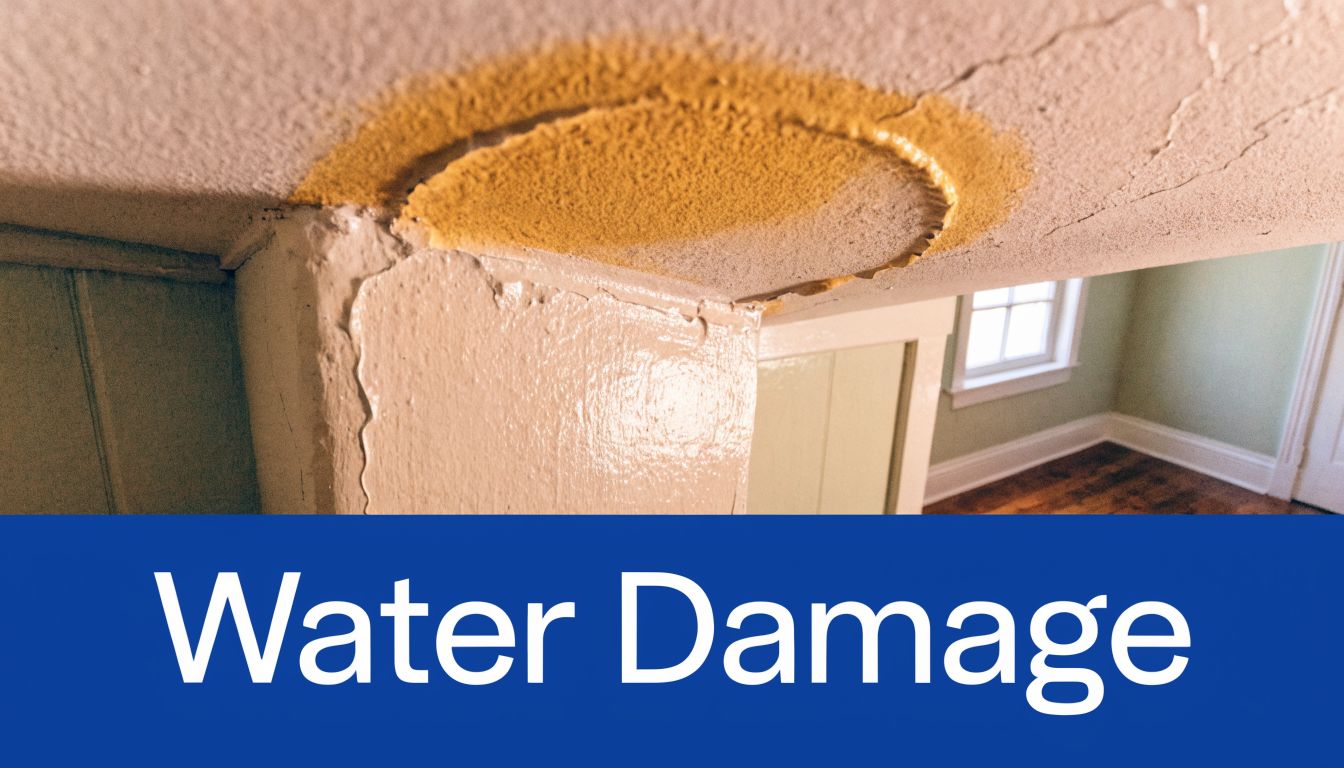
Water stains are evidence, not a finish problem. Paint failure, yellowing, gray shadowing, and recurring blotches on drywall or plaster usually mean water entered the space at some point and may still be entering now. If the mark keeps changing shape, darkening, or bleeding back through a repaired surface, treat it as an active building issue until a qualified inspection proves otherwise.
I give the same warning to owners and property managers. Repainting too early can erase the map that helps locate the source, support a claim, and define a clean remediation scope.
What a stain can tell you
The pattern and location often narrow the search. A ceiling stain under a bathroom can point to a supply leak, drain leak, failed toilet seal, or chronic condensation above the drywall. Stains near exterior walls can reflect roof entry, window failure, flashing defects, or drainage problems that let water travel farther than expected. In older homes and multifamily buildings, the visible mark may sit several feet away from the actual leak path.
That is why experienced teams do more than look at color. They check the moisture source, the materials affected, whether the cavity stayed wet long enough to contaminate insulation or framing, and whether occupants need protection during opening or cleanup. The broader property risks are outlined in this overview of hidden water damage, mold, bacteria, and structural issues.
A few practical rules help at this stage:
- Record the exact location. Note what is above, behind, or adjacent to the stain, such as a roof edge, shower wall, window, or air handler.
- Photograph changes over time. A dated photo series helps certified inspectors, adjusters, and restoration contractors determine whether the problem is active.
- Do not patch first. Primer, paint, and texture repairs can hide evidence that affects both diagnosis and coverage.
- Correct the moisture source before cleanup. If the leak, condensation, or drainage defect stays in place, staining and mold often return.
Bathroom ceilings are a common example. Repeated staining there may involve poor exhaust, attic air leakage, roof defects, or moisture trapped above the finish. If that area is part of the problem, review how to permanently remove mold from a bathroom ceiling before anyone scrubs, paints, or cuts into the surface.
If the stain appeared after a roof leak, overflow, pipe failure, or storm event, document it early and bring in certified help. That protects occupants, preserves evidence for insurance, and reduces the chance that one visible mark turns into a larger remediation and repair project.
4. Warped, Buckling, or Soft Drywall and Wood
A wall that feels soft near a shower, a baseboard that bows out, or flooring that lifts at the seams usually points to a moisture problem that has been active longer than occupants realize. By the time drywall or wood changes shape, water has often moved past the surface finish and into backing materials, insulation, or framing.
That changes the response.
For homeowners, warped materials can mean a larger repair scope than expected once the wall or floor is opened. For property managers, it can trigger documentation, tenant communication, temporary access limits, and questions about whether the damage is isolated or part of a broader building moisture issue. Cosmetic repair is rarely the right first step.
Why deformation matters
Drywall and wood do not buckle or soften without a cause. In the field, these signs often trace back to a slow plumbing leak, failed caulk at a wet area, window intrusion, condensate overflow, or repeated high humidity that never got corrected. If the material is already swollen or losing strength, there is a reasonable chance that hidden mold, deteriorated fasteners, or wet insulation are also present.
Wet building materials can support mold growth quickly after a water event, as noted earlier. Waiting for visible patches to appear is a mistake I see too often, especially when someone tries to save money by repainting, recaulking, or replacing trim before the source is identified.
Field note: If drywall feels soft or wood is swelling, avoid probing, cutting, or demolition without a plan for containment and documentation.
Common patterns include:
- Buckled baseboards in bathrooms: Often linked to repeated splash exposure, failed toilet seals, or water wicking from flooring.
- Soft subfloor near appliances: Common around dishwashers, refrigerators, and washing machines with slow leaks.
- Warped drywall below air handlers: Often tied to condensate drainage problems or chronic moisture around mechanical components.
- Swollen window trim or sill material: A frequent sign of condensation problems or exterior water entry.
The trade-off is simple. Early assessment costs less than hidden damage left in place. Once materials deform, certified inspection becomes more important because the job may involve moisture mapping, selective demolition, mold protocols, and records that support insurance review or building compliance. If you need context on why these cases can expand from a finish repair into a larger loss, review hidden water damage, mold, bacteria, and structural issues.
If occupants are present, treat soft or buckled materials as a building condition issue first and a repair issue second. Confirm the moisture source, document the damage, and bring in certified specialists who can determine whether the area needs containment, drying, removal, or a broader remediation plan.
5. HVAC System Issues and Visible Growth in Air Ducts
When mold affects HVAC components, the problem stops being local. Air movement changes the stakes.
A musty smell from vents, condensation on ductwork, repeated filter loading, dark buildup around registers, or visible growth inside an air handler can all point to contamination in the system. The CDC notes that mold can spread through HVAC systems, which is why mechanical spaces deserve special attention during any moisture investigation.
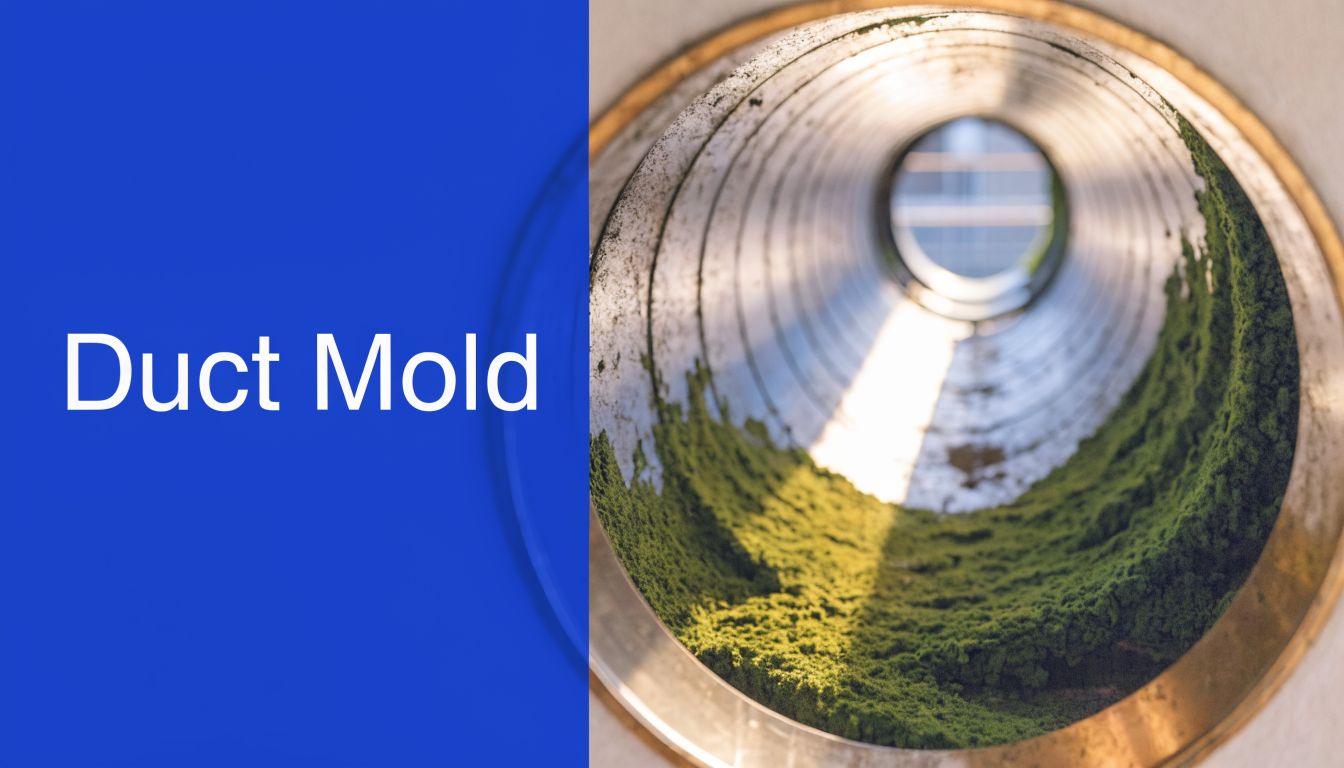
This matters in homes, but it matters even more in offices, clinics, long-term care environments, and other shared buildings. If the system is pulling spores from one wet area and distributing them elsewhere, complaints may appear far from the original source.
What to watch for in mechanical spaces
I don't recommend treating a dirty vent grille as proof of a mold event by itself. Dust happens. But a pattern of moisture, odor, and visible growth around HVAC components deserves a professional inspection.
Look closely at these areas:
- Supply and return grilles: Staining around registers can reflect condensation or contaminated airflow.
- Air handler cabinets: Moisture around coils, drain pans, or insulation often creates favorable conditions.
- Flexible duct and lined ductwork: Porous internal materials are harder to remediate once contaminated.
- Filters and surrounding housings: Fast recurring buildup can signal a bigger problem upstream.
Proper humidity control is part of HVAC performance, not an add-on. Guidance for mold prevention commonly treats indoor relative humidity in the 30% to 50% range as the safer band, with mold growth becoming likely above about 60% relative humidity and rapid colonization above about 70% relative humidity (indoor humidity and mold risk guidance).
This short video gives a useful visual sense of how mold concerns can show up around duct systems and interior air pathways.
The trade-off here is simple. Routine HVAC maintenance helps, but once contamination is suspected inside the system, ordinary filter changes and deodorizing sprays aren't enough. You need a team that understands containment, filtration, and when materials should be cleaned versus removed.
6. Excessive Humidity, Condensation, and Moisture on Windows
Condensation is one of the easiest warning signs to overlook because it feels ordinary. A little fog on a bathroom mirror doesn't sound serious. Water beading on a bedroom window every morning may seem like a seasonal nuisance.
But persistent condensation means moisture is staying in the building long enough to land on cooler surfaces. That creates recurring wetness around frames, sills, drywall edges, curtains, and trim. Those are all places where mold can take hold.
Humidity tells you whether the building is controlling moisture
This is the sign I want homeowners and facility teams to take more seriously. You don't need to wait for black spotting to know a room has a moisture-control problem.
Field guidance commonly treats 30% to 50% relative humidity as the prevention range, with mold growth becoming more likely above roughly 60% and rapid colonization above roughly 70%. In practical terms, if bathrooms, basements, crawl spaces, storage rooms, or poorly ventilated offices stay above that safer range, dehumidification and ventilation checks should start before stains show up.
Common scenarios include a basement with constantly damp window frames, a bathroom with no effective exhaust, a kitchen where steam lingers after every use, or an office perimeter where cold glass causes regular winter condensation. In each case, the moisture pattern matters more than the isolated droplet.
Window condensation is rarely the root problem by itself. It usually reflects a larger humidity, airflow, or insulation issue.
A few corrective steps make a real difference:
- Use a hygrometer: Spot readings in basements, bathrooms, and utility rooms help confirm whether humidity is staying too high.
- Verify exhaust paths: Bathroom and kitchen fans should vent outdoors, not into attics or wall cavities.
- Run dehumidification where needed: Basements and crawl spaces often need dedicated moisture control.
- Inspect the envelope: Air leaks, poor insulation, and failed seals can make condensation much worse.
- Watch hidden surfaces: Behind furniture, inside closets on exterior walls, and under window coverings are common trouble zones.
What doesn't work is wiping the glass every day and assuming the issue ends there. If moisture keeps returning, the building is still feeding the problem.
7. Allergic Reactions and Respiratory Symptoms in Building Occupants
Sometimes the first sign isn't on the wall. It's in the people using the space.
Residents may complain that they're congested every morning. An employee starts wheezing in one section of the building. A child coughs more at home than away from home. In healthcare and long-term care settings, staff may notice recurring irritation in the same corridor or department before anyone finds visible damage.
The CDC lists common mold sensitivity symptoms as stuffy nose, wheezing, and red or itchy eyes, or skin irritation. Harvard Health also notes that some people develop runny nose, itchy eyes, and coughing after exposure, and in a U.S. study of more than 40,000 children, almost 11% of children living in homes exposed to mold had asthma, compared with 7% of children not exposed to mold (Harvard Health on identifying mold and related health concerns).
Symptoms are a clue, not proof
This is an important distinction. Symptoms alone don't prove mold. They overlap with allergies, asthma, dust, and other indoor air quality issues.
What makes complaints more meaningful is the pattern. If symptoms cluster in one room, one shift, one wing, or one apartment stack, and there is also musty odor, dampness, condensation, or water history, the need for inspection goes up quickly.
A practical response looks like this:
- Document the reports: Note dates, rooms, and whether symptoms improve away from the building.
- Correlate with moisture history: Complaints near a prior leak, flood, or chronic condensation issue deserve priority.
- Avoid amateur diagnosis: Facilities staff shouldn't promise a medical cause. They should document and escalate environmental inspection.
- Communicate clearly: Occupants should know the concern is being investigated and that moisture sources are being addressed.
Health complaints matter most when they line up with building evidence such as odor, dampness, staining, or known water events.
For managers, this is also a risk-management issue. Delayed response can complicate tenant relations, workplace concerns, and insurance documentation. The right move is prompt assessment, not speculation.
8. Recent Water Events or Environmental Changes Affecting Moisture Levels
A property can look dry and still be on the clock for mold growth.
The pattern I watch closely is simple. A leak, overflow, storm intrusion, sump failure, frozen pipe, or HVAC outage happens. Cleanup addresses the visible water, but moisture stays behind in drywall, insulation, subfloors, cabinets, or wall cavities. A few days later, the building starts showing secondary signs that owners and managers often treat as separate issues, such as odor, staining, warped materials, or occupant complaints.
That timing matters for both safety and liability. After any recent water event, the threshold for a professional inspection should drop because hidden moisture changes remediation scope, tenant communication, and insurance documentation.
Several situations should trigger that response right away:
- Flooding or sewer-related intrusion: Category of water affects containment, cleaning methods, and what materials can realistically be saved.
- Roof, window, or facade leaks after storms: Water often travels along framing or ceiling cavities before it shows up on the surface.
- Humidity spikes or ventilation changes: Basement, attic, and crawl space conditions can shift fast after weather swings or equipment problems.
- Mechanical failures: If dehumidification, exhaust, or air conditioning stops during humid weather, interior moisture can rise enough to support growth in concealed areas.
Building age and regional conditions also affect risk. In Illinois and similar climates, seasonal humidity, freeze-thaw cycles, and storm-driven moisture create repeat exposure points that owners need to account for in maintenance plans. For local context, see why Illinois homes are at higher mold risk due to climate conditions.
The practical response is documentation and escalation. Keep the date of loss, photos, drying logs, contractor notes, moisture readings, and occupant reports in one file. That record helps certified specialists determine whether the structure dried properly, supports insurance review, and shows that the owner or manager responded in an organized, compliant way.
8-Point Mold Sign Comparison
| Item | Implementation Complexity 🔄 | Resource Requirements ⚡ | Expected Outcomes 📊 | Ideal Use Cases ⭐ | Key Advantages 💡 |
|---|---|---|---|---|---|
| Visible Black or Green Discoloration on Surfaces | Low, simple visual inspection but may miss hidden growth | Minimal, camera, PPE, basic inspection tools | High likelihood of surface contamination; indicates moisture problem requiring remediation | Routine facility walkthroughs, insurance documentation, immediate remediation triggers | Immediate, clear evidence for action; easy to document |
| Persistent Musty Odor | Low–Moderate, subjective detection; locating source can be tricky | Low, occupant reports, sniff tests, targeted moisture/thermal tools | Early warning of hidden growth; may reveal contamination before visuals | Hidden spaces (walls, attics, crawlspaces), early-stage investigations | Non‑invasive early detection; prompts targeted inspection |
| Water Stains and Discoloration on Walls and Ceilings | Low, visible but may need testing to confirm current activity | Low–Moderate, moisture meter, inspection, possible probe cuts | Signals past or active intrusion; guides source repair and mold prevention | Post‑leak investigations, roof/plumbing failure assessment | Points to moisture source; useful for insurance and prioritizing repairs |
| Warped, Buckling, or Soft Drywall and Wood | High, indicates advanced damage and structural risk | High, structural assessment, remediation contractors, material replacement | Confirms severe moisture and likely mold; requires major remediation and repair | Severe water damage sites, safety‑critical areas, long‑term leaks | Quantifies extent of damage; forces timely structural intervention |
| HVAC System Issues and Visible Growth in Air Ducts | High, complex remediation with high cross‑contamination risk | High, HVAC specialists, duct cleaning/replacement, system downtime | Building‑wide contamination mitigation; improved IAQ after remediation | Hospitals, large commercial buildings, recurring ventilation problems | Addresses system‑wide source; prevents widespread spore distribution |
| Excessive Humidity, Condensation, and Moisture on Windows | Moderate, monitoring and HVAC adjustments needed | Moderate, hygrometers, dehumidifiers, ventilation/HVAC upgrades | Prevents mold initiation when controlled; reduces recurrence | Preventive maintenance in bathrooms, basements, kitchens, seasonal control | Cost‑effective prevention; improves comfort and indoor air quality |
| Allergic Reactions and Respiratory Symptoms in Occupants | Moderate, symptoms are non‑specific; needs environmental correlation | Moderate, occupant surveys, medical documentation, environmental testing | Indicates occupant exposure and potential hidden contamination | Healthcare facilities, schools, offices with multiple complaints | Protects occupant health; documents liability and guides targeted remediation |
| Recent Water Events or Environmental Changes Affecting Moisture Levels | Low–Moderate, requires event tracking and increased inspections | Low, incident logs, increased visual checks, temporary monitoring devices | Enables proactive detection and correlation of events to damage | Post‑flooding, heavy rainfall, HVAC failures, seasonal humidity spikes | Supports proactive monitoring, faster response, and insurance documentation |
From Detection to Resolution Your Next Steps
A tenant reports a musty smell in one unit. Maintenance finds a stained ceiling tile. Two weeks later, the drywall feels soft, a neighboring unit starts complaining about headaches, and the insurer asks when the leak was first documented. That is how a small mold concern turns into a building management problem.
The next step is not just cleanup. The next step is control. Mold signs only matter if they lead to the right response for the material, the moisture source, the occupants, and the recordkeeping that follows.
Start by documenting conditions before anyone disturbs the area. Take clear photos. Note dates, locations, recent leaks, condensation, plumbing failures, roof issues, or HVAC problems. For property managers, log occupant complaints and maintenance actions in writing. For homeowners, keep receipts, moisture event timelines, and any communication with your carrier.
Then reduce the chance of spreading contamination. Avoid dry brushing, sanding, or opening walls without a plan. Once growth reaches porous materials, wall cavities, or ductwork, careless handling can spread spores into clean areas and complicate later testing, remediation, and insurance review.
Certified remediation specialists earn their value here. They do more than remove visible growth. They identify the moisture source, determine whether containment is needed, assess what can be cleaned versus what needs removal, and verify that materials are dry before rebuild work begins. In occupied settings, they also help set a safer work sequence so residents, staff, patients, or tenants are not exposed unnecessarily.
The trade-offs are real. Early intervention usually costs less and limits disruption, but partial work can leave hidden moisture behind. Waiting for clearer evidence may feel cheaper in the moment, yet delayed action often means more demolition, longer downtime, broader occupant impact, and a harder claim to document.
Compliance matters too. Multifamily buildings, healthcare settings, schools, offices, and senior living properties often need tighter documentation, occupant communication, vendor coordination, and disposal procedures than a small isolated issue in a single-family home. If vulnerable occupants are involved, the response standard should rise with that risk.
Insurance questions also start early. Carriers often want to see when the condition was discovered, what caused the moisture, what steps were taken to limit further damage, and whether the loss was sudden or ongoing. If materials are removed before the condition is documented, or if the moisture source is still unclear, the claim can become harder to support.
Choose a provider that can handle containment, air filtration, selective demolition, moisture verification, clearance planning when needed, and coordination with other trades. Mold is often tied to a larger problem such as roof failure, plumbing leaks, drainage defects, HVAC imbalance, or contaminated building materials after a water event.
If you are seeing warning signs now, act while the affected area is still manageable. 360 Hazardous Cleanup is one relevant option for professional support, especially in cases that require careful documentation, controlled remediation, and coordination with owners, occupants, and insurers.
If you've noticed musty odors, water stains, warped materials, or health complaints that seem tied to the building, 360 Hazardous Cleanup can help you evaluate the risk and plan a safe, compliant next step. Their team handles mold remediation and broader environmental hazards with a documentation-focused approach that supports homeowners, property managers, facilities, and insurance coordination.