That smell changes the mood in a house instantly. One minute you're at home. The next, every room feels contaminated, your pet may be panicking, and you're wondering whether opening windows is enough or whether the odor is about to settle into furniture, carpet, and ductwork.
Skunk odor is so stubborn because it isn't just a bad smell drifting through the air. It's made of thiols, including (E)-2-butene-1-thiol and 3-methyl-1-butanethiol, and those compounds cling to surfaces with unusual persistence. If a skunk incident isn't handled correctly, the odor can remain in a home for up to 2 weeks, and untreated incidents can recirculate through HVAC systems in 70% of cases, extending contamination by 5 to 7 days according to SERVPRO's skunk odor guidance.
Getting rid of skunk smell in house conditions takes the same mindset used in remediation work. First, stop the spread. Then remove contamination from people, pets, and surfaces in the right order. Finally, decide whether the problem is still a cleaning issue or whether it has become an air system and structural odor issue. That's why rapid response matters in contamination events. The earlier you act, the fewer materials absorb what should have stayed in one area.
The Unmistakable Odor and Your Immediate Plan
The first mistake most homeowners make is treating skunk odor like smoke, cooking smell, or pet odor. It isn't. Skunk spray behaves more like an oily contaminant that happens to announce itself through the whole house.
That distinction matters. If your dog came inside after being sprayed, or if air from outside pulled the odor indoors, the house can go from manageable to widespread contamination fast. Thiols don't just smell strong. They bond to skin, fur, fabrics, drywall, carpet fibers, and anything porous enough to hold oily residue.
What your plan should look like
A calm response beats a frantic one. Work in this order:
- Isolate the source. Keep the sprayed pet, person, or item from moving through the house.
- Ventilate strategically. Push air out of the affected zone instead of stirring odor deeper into the home.
- Decontaminate bodies first. If skin or fur still carries residue, every touched surface becomes a secondary cleanup problem.
- Treat surfaces by material type. Countertops, upholstery, bedding, carpet, and HVAC components all need different methods.
- Escalate early if needed. If odor reached ducts, wall cavities, or large porous areas, DIY may only reduce the problem instead of resolving it.
Skunk odor control isn't about masking smell. It's about chemically neutralizing the compounds causing it and preventing them from spreading.
Why panic creates more work
People under stress tend to do three things that make remediation harder. They scrub too aggressively, use the wrong cleaner, or run the HVAC without checking where the contamination started.
If that happened in your house, don't assume you've ruined your chances. It just means the next steps need to be more deliberate. The house can usually be stabilized quickly if you focus on containment first.
Immediate Actions for Damage Control
Your first half hour matters more than your fifth bottle of deodorizer. Before you start cleaning anything, stop the movement of odor through the home.
Start with containment
If a pet was sprayed, keep that pet outside or in one easy-to-clean transition area such as a garage, mudroom, or laundry room. If a person was sprayed, keep contaminated clothing and shoes from moving room to room.
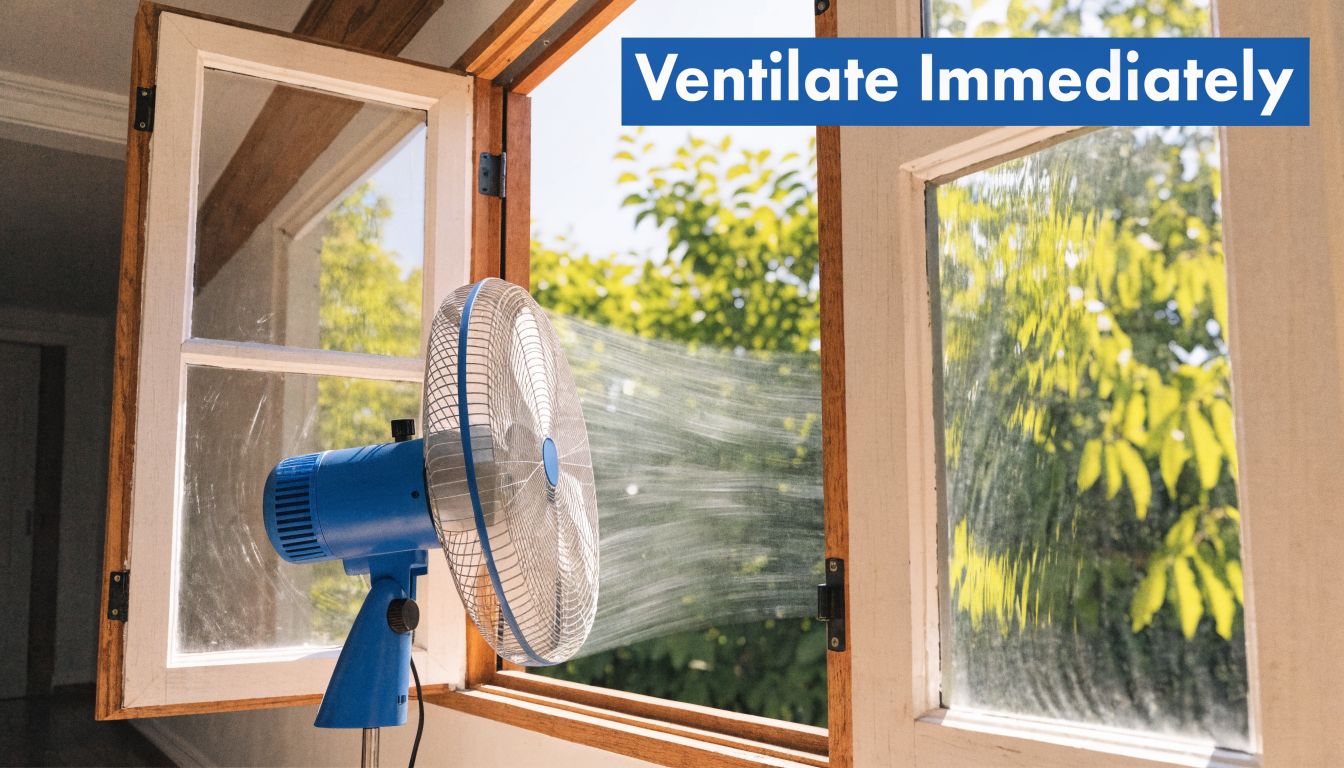
Close interior doors near the affected area. If the smell is concentrated in one section of the house, shut vents in that zone if possible so the system isn't actively pulling contaminated air through the ductwork. Open windows and exterior doors where you can create an outward airflow path.
A simple box fan in a window, pointed outward, helps pull contaminated air out. The goal isn't to blast air randomly. The goal is to create directional airflow so odor leaves the structure instead of circulating through it.
Decontaminate pets and people before surfaces
This step isn't optional. The Huntsman protocol recommends a cold water rinse followed by a mixture of 1 quart 3% hydrogen peroxide, ¼ cup baking soda, and 2 tsp Dawn dish soap. Applied within an hour of exposure, it can achieve 95% odor removal on skin or fur, and incomplete rinsing contaminates 70% of touched surfaces according to Huntsman Wildlife's skunk remover guidance.
Use cool water, not warm. Warm or hot water can spread oily compounds across more skin and fur. Work the solution through the affected areas carefully, avoid the eyes, and rinse thoroughly.
Practical rule: If the dog still smells strong after treatment, don't let it onto rugs, bedding, or upholstered furniture yet. You're not protecting the furniture later. You're protecting it right now.
Protect the mechanical systems
If odor has reached return vents, replace the HVAC filter after your initial ventilation push. If you're checking a furnace area while troubleshooting odor movement, basic mechanical caution matters too. Homeowners who are already dealing with a strong smell indoors may also want to review these urgent furnace gas safety tips so they don't confuse unrelated appliance issues with skunk contamination.
For the same reason, think of this as you would any other fast-moving household contamination event. The logic behind taking immediate steps after household damage appears applies here too. Limit spread first, then clean what's affected.
The Right DIY Solutions and What to Avoid
Once the source is contained, the next question is simple. What neutralizes skunk spray, and what just makes the room smell like skunk plus something else?
The answer is chemistry. The most reliable DIY option works because it oxidizes thiols, changing the odor-causing compounds instead of trying to cover them up.
The formula that actually works
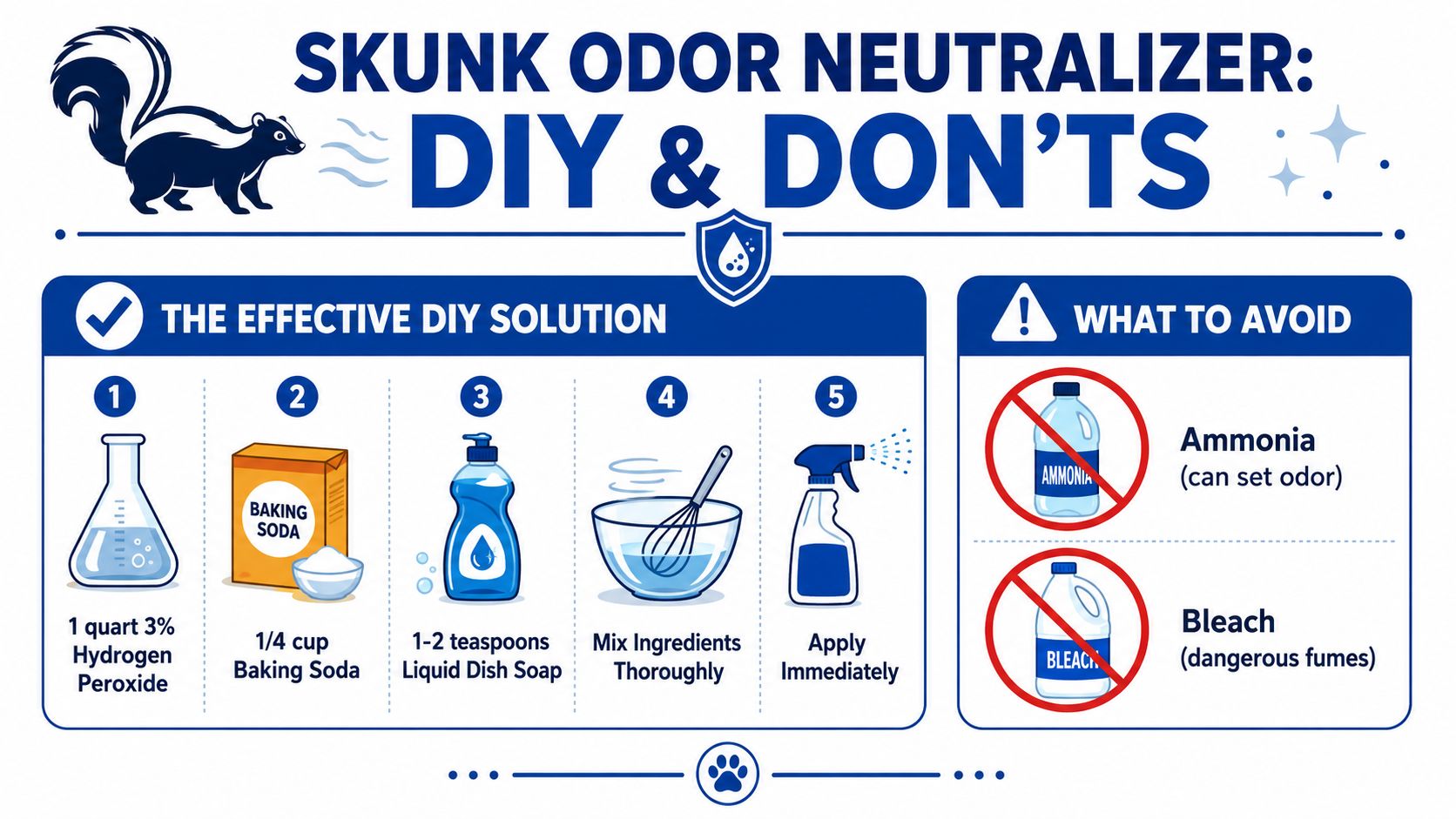
According to Blue Tick Pest Control's skunk odor remedy overview, a mixture of 1 quart 3% hydrogen peroxide, ¼ cup baking soda, and 1 teaspoon dish soap neutralizes over 90% of odor-causing compounds in under 5 minutes. That same source notes vinegar absorbs only 40% to 50% of odors, while bleach is risky for 60% of household fabrics.
DIY skunk neutralizer
1 quart 3% hydrogen peroxide
¼ cup baking soda
1 teaspoon dish soap
Mix it fresh and use it promptly.
Dish soap helps break up oily residue. Baking soda supports the reaction. Hydrogen peroxide does the primary odor-neutralizing work by oxidizing the thiols.
What people try that usually falls short
A lot of folk remedies survive because they seem to help at first. In practice, many of them either mask odor briefly or create a new cleaning problem.
| Method | What it does | Main trade-off |
|---|---|---|
| Peroxide mix | Neutralizes the odor compounds | Can affect delicate materials, so patch testing matters |
| Vinegar alone | Absorbs some odor | Limited effect on deeply embedded contamination |
| Bleach | Can work on some hard surfaces | Material damage risk, especially on fabrics |
| Tomato juice and fragranced cleaners | Mostly cover smell temporarily | Don't chemically solve the source |
Tomato juice has staying power as a household myth because it gives people another smell to focus on. It doesn't change the chemistry of skunk spray in the way peroxide does.
Safety rules that matter
Don't mix a batch and store it in a closed container. Use it fresh. Patch test any visible or delicate surface first, especially textiles, painted finishes, and natural stone.
Apply enough product to contact the contaminated area, but don't over-saturate carpet pads, mattresses, or upholstered cushions. Once skunk oils soak deeper into layered materials, surface cleaning alone often won't finish the job. That's one reason homeowners sometimes underestimate where DIY reaches its limit, much like they do in other contamination scenarios covered in why DIY biohazard cleanup is a serious health risk.
If a cleaner only changes what the room smells like, but the odor returns when the air warms up or the fabric gets damp, the source wasn't neutralized.
A Room-by-Room Guide to Deodorizing Surfaces
Good deodorization is less about one miracle product and more about matching the method to the material. Hard surfaces release contamination differently than upholstery, and washable fabrics behave differently than carpet backing or mattress foam.
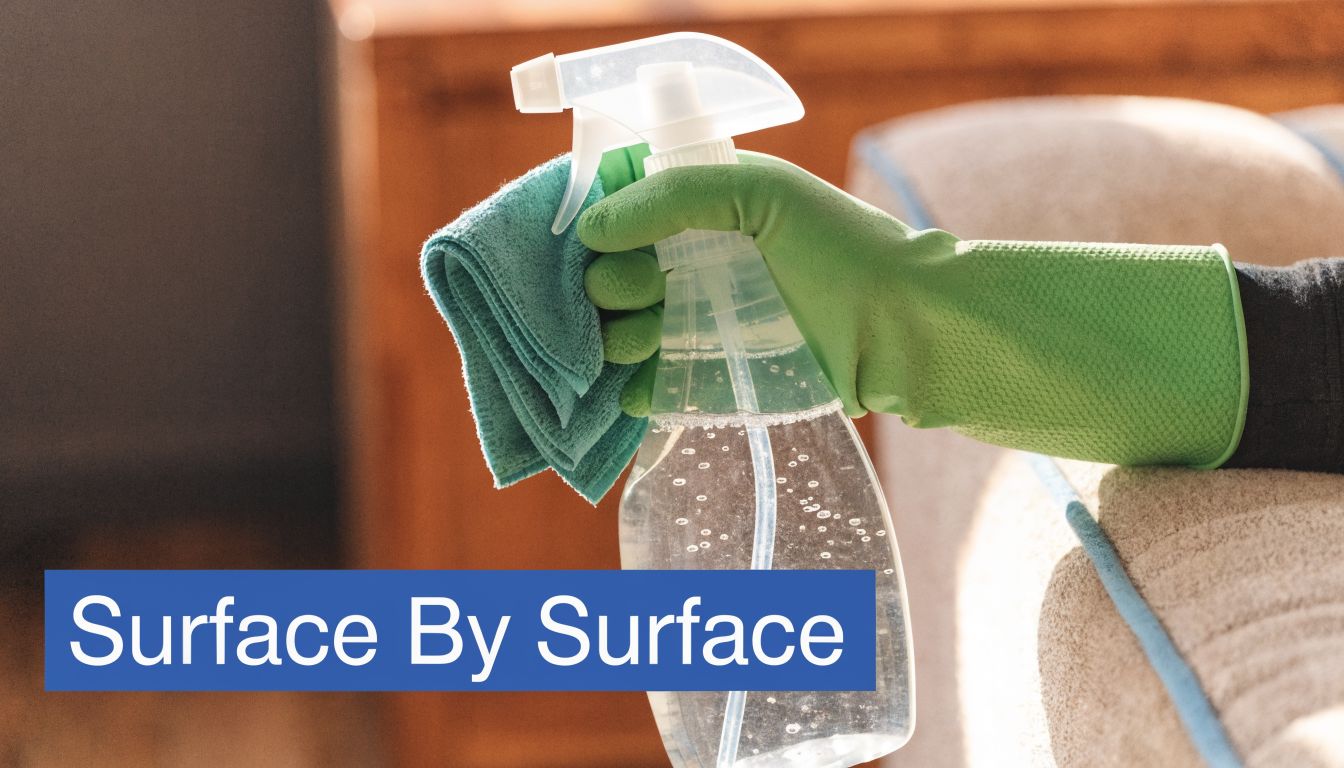
According to Healthline's skunk odor cleanup guidance, a multi-phase decontamination methodology is required. That includes immediate ventilation to reach 80% to 90% odor dilution, absorptive measures, and targeted surface treatment. For hard surfaces, a 1:9 bleach solution can achieve 95% thiol breakdown if applied within 24 hours. For carpets and upholstery, steam cleaning at 212°F (100°C) with enzymatic detergents can remove 90% of embedded oils. The same source warns that using hot water incorrectly can spread the oils and reduce effectiveness by over 50%.
Hard surfaces such as floors counters and trim
Use the least invasive effective option first. For sealed counters, tile, and some non-porous flooring, wipe contamination away rather than grinding it into seams and grout lines.
A practical sequence looks like this:
- Vent first: Move air out of the room before wet cleaning so you're not trapping odor indoors.
- Choose the right solution: On suitable hard surfaces, use a properly diluted cleaner and patch test if finish damage is possible.
- Wipe in one direction: Fold the cloth frequently so you're lifting residue instead of reapplying it.
- Rinse and dry: Residual cleaner and residual odor both need to leave the surface.
If paw traffic tracked skunk oils down a hallway, clean that traffic path all the way to the entry point. Missing that route is one reason a house still smells even after the obvious room seems clean.
Soft surfaces such as carpet upholstery and mattresses
Porous materials are where many skunk incidents stop being simple cleaning jobs. Carpet fibers may release odor after treatment, but the pad below can continue holding residue. Upholstery can smell improved on the surface while foam underneath still off-gasses.
Blot. Don't scrub. Scrubbing drives the oils deeper.
For larger soft-surface issues, enzymatic treatment followed by extraction or steam cleaning is usually more effective than repeated spraying. Homeowners dealing with odor that overlaps with pet contamination can also benefit from broader guidance on tackling pet odors effectively, especially when trying to tell the difference between surface odor and odor that's already embedded in soft goods.
A short visual walk-through can help when you're planning the work:
Laundry curtains and removable fabric items
Clothing, blankets, curtains, slipcovers, and washable pet bedding should be removed from the contaminated area before the smell migrates further. Air-drying is usually safer than machine-drying after treatment because a dryer can lock residual odor in.
Use separate loads for contaminated items. Bag items before carrying them through clean parts of the house if the smell is still strong. Similar care is used when handling other absorbent materials that trap contamination deep in fibers, including the kinds discussed in how to remove bloodstains from carpet. The principle is the same. Surface appearance can improve before the deeper contamination is gone.
The room that smells the strongest isn't always the room holding the most contamination. Hall runners, dog beds, and upholstered entry benches are frequent surprises.
Advanced Odor Removal and HVAC System Concerns
Whole-house skunk odor often becomes an air movement problem, not just a surface problem. If the smell seems to disappear and then return when the system runs, your HVAC is likely carrying part of the load.
What to check first
Start with the filter. If contaminated air circulated, replacing the HVAC filter is a sensible first move. Clean supply and return grilles if they were exposed. If a pet was sprayed near an intake or came inside while the system was pulling return air, odor can settle into filters and nearby duct sections.
Signs the issue has moved beyond a basic room cleanup include:
- Odor returns when the air handler runs
- The smell appears in multiple rooms that were never directly exposed
- The strongest odor is near vents rather than near furniture or flooring
- You cleaned visible surfaces, but the house still smells stale and sulfur-like
Tools that help and tools that can harm
Air purifiers with activated carbon and HEPA filtration can help reduce lingering airborne contamination. They're support tools, not substitutes for source removal. If thiols remain in carpet, padding, soft furniture, or duct insulation, filtration may improve the air while the materials continue releasing odor.
Professional remediation sometimes uses ozone as part of an unoccupied-space treatment plan, but that isn't a casual DIY tool. Ozone has respiratory risks, and it shouldn't be used around people, pets, or occupied indoor environments without proper controls and training. In odor work, misuse often creates false confidence because the space may smell different before the source has been resolved.
If the house smells better only while windows are open or machines are running, but rebounds later, the structure still holds contamination somewhere.
In larger or more sensitive settings such as offices, clinics, rentals, and common-area buildings, containment and compliance matter as much as deodorization. One option homeowners and property managers may consider in severe cases is professional odor remediation support from 360 Hazardous Cleanup, which handles biohazard and environmental contamination scenarios using a controlled, assessment-based approach.
When to Engage Professional Remediation Services
There comes a point when more scrubbing doesn't equal more progress. If the smell keeps returning, the issue usually isn't effort. It's depth of contamination.
Professional remediation makes sense when any of these conditions are present:
- Direct indoor spray: Walls, baseboards, furniture, or flooring took a concentrated hit.
- HVAC involvement: The odor is moving through vents or reappearing when the system cycles.
- Porous saturation: Carpet pad, upholstery foam, mattresses, or unfinished materials absorbed the spray.
- Sensitive occupants or settings: The property includes shared living spaces, rentals, medical environments, or anyone who can't tolerate ongoing odor exposure.
- Repeated DIY failure: The house smells improved for a few hours, then the odor returns.
Why professional help is different
A trained remediation crew doesn't just bring stronger products. They isolate contaminated zones, assess where the odor has migrated, and use material-specific treatment methods so they don't spread the residue while trying to remove it.
That matters because skunk odor can cross from a cleaning nuisance into a property contamination problem. Once it reaches ducts, soft contents, wall assemblies, or commercial work areas, the job needs process discipline. Choosing the right provider is part of risk mitigation, especially when occupant health, tenant habitability, or insurance documentation enters the picture. If you're trying to decide whether the problem has crossed that line, this guide on when a home needs a biohazard cleaning company gives a useful framework.
The goal isn't to prove you can handle everything yourself. The goal is to get your home back to clean, safe, and livable with the least collateral damage.
If you're dealing with a skunk odor event that's spread beyond a simple wash-down, 360 Hazardous Cleanup can help assess the contamination, identify where odor has migrated, and carry out safe, discreet remediation for homes, rentals, and commercial properties. In a stressful situation, having a team that understands containment, material limits, and compliance can save time and prevent the problem from spreading further.