A musty basement, a dark patch on a bathroom ceiling, drywall that bubbled after a leak, or a tenant who says the unit “smells off.” That's how a lot of mold problems in New Jersey start. By the time someone searches for a mold remediation company nj, they're usually not curious. They're stressed, short on time, and trying to figure out whether they're looking at a minor cleanup or a larger building issue.
Mold problems are rarely just about what you can see. They point to moisture, and moisture doesn't stay politely in one spot. It moves into wall cavities, insulation, subfloors, ceiling assemblies, and HVAC pathways. What makes the situation harder is that property owners often get conflicting advice. One person says to spray it with bleach. Another says tear everything out. Neither approach is reliable without understanding the source, the extent, and the risk of cross-contamination.
A calm response works better than a rushed one. The key is knowing when to bring in professional remediation, how the process should unfold, what credentials matter in New Jersey, and how to protect yourself on the insurance side if the damage traces back to a covered event.
Discovering Mold in Your NJ Property
The first sign usually isn't dramatic. It's often a smell.
You walk into a lower level that hasn't felt right since the last storm. A tenant mentions allergy symptoms that seem worse indoors. You notice speckling along a closet wall near an exterior corner. In commercial settings, a facility manager may hear about recurring ceiling stains or condensation around supply vents before anyone sees visible growth.
That moment matters because early assumptions cause expensive mistakes. People scrub visible staining, paint over it, or run a dehumidifier for a few days and hope the problem is resolved. Sometimes the stain lightens, but the underlying moisture driver remains active. Then the growth returns, often wider than before.
What the first discovery usually means
Visible mold can mean a current leak, an old leak that never dried correctly, chronic humidity, poor ventilation, or hidden condensation. In practical terms, the mold itself is only part of the job. The rest is finding out why building materials stayed damp long enough for growth to take hold.
A few signs should make you slow down and assess instead of cleaning blindly:
- Persistent odor that comes back after cleaning or after rain
- Discoloration near trim, baseboards, or supply registers
- Warping or soft drywall after a plumbing or roof event
- Recurring spots in the same area, especially in basements, crawlspaces, attics, and bathrooms
- Hidden-area suspicion, such as behind furniture, inside utility chases, or under flooring
For homeowners, one of the most common points of confusion is whether the material is just staining, mildew, or active mold growth. On painted walls, that distinction isn't always obvious without a proper inspection. If you're dealing with visible dark growth indoors, it helps to understand what it can look like in real homes, including examples like black mold on walls.
Mold cleanup fails most often when people treat the surface and ignore the moisture path behind it.
What doesn't work well
Wiping down an area with household cleaners can remove loose material. It doesn't fix wet insulation, a leaking sill, condensation inside a wall, or contaminated porous materials that should be removed under containment.
The other common mistake is overreacting and demolishing too much before anyone documents the conditions. That can complicate insurance, spread spores, and make it harder to trace the source. A measured, documented response is usually the safest path.
When to Call a Mold Remediation Professional
There's a difference between cleaning a small, isolated patch on a non-porous surface and dealing with a remediation project. The line becomes clear once the contamination is larger, recurring, hidden, or tied to a water event.
The New Jersey Department of Health guidance recommends professional remediation for visible mold growth covering more than 10 square feet, as summarized in this New Jersey mold remediation market report. That threshold matters because larger contamination usually requires containment, specialized cleaning methods, and controlled removal to avoid spreading spores through the property.
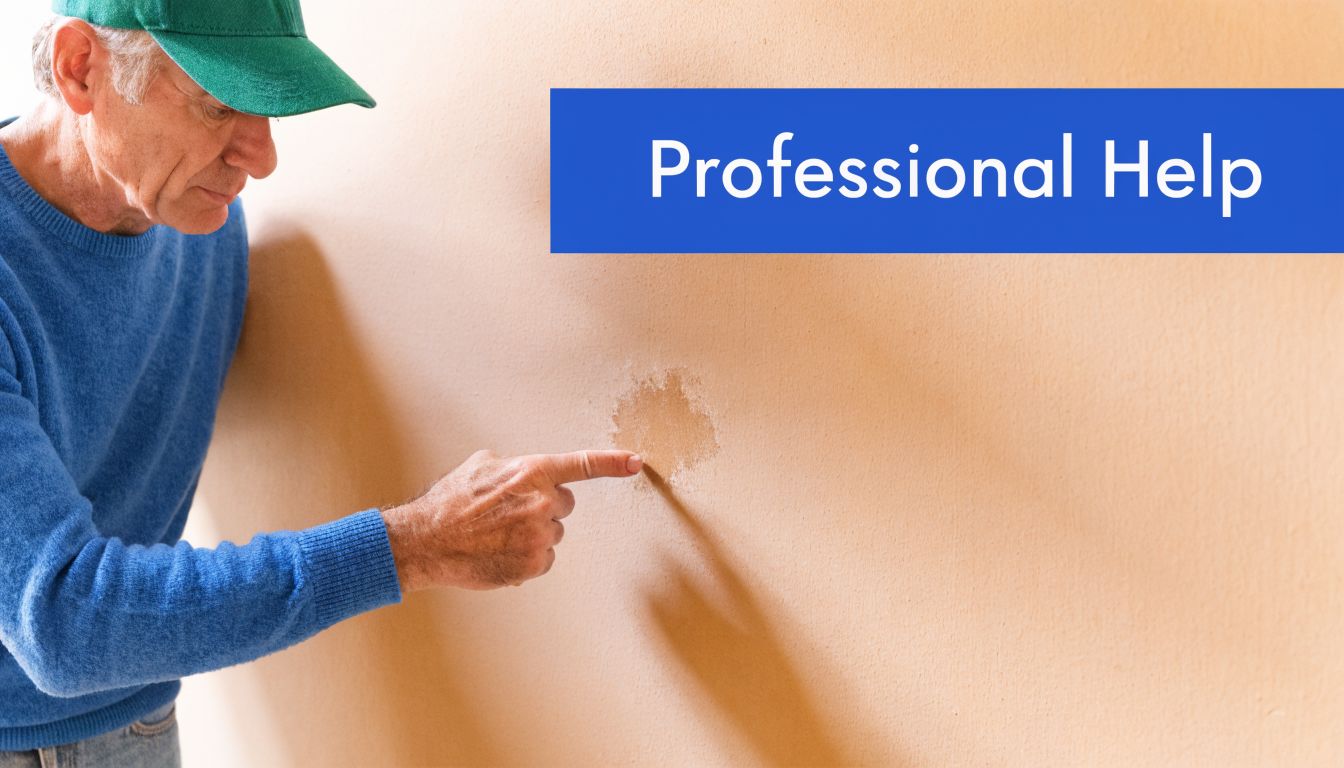
Clear signs it's time to stop DIY efforts
If any of the following are true, it's time to call a professional rather than keep experimenting:
- The affected area is large and clearly beyond a small wipe-down
- The mold came after a burst pipe, roof leak, sewer issue, or flooding event
- Drywall, insulation, carpeting, wood trim, or ceiling materials are involved
- The odor is strong but the source isn't visible
- Occupants have asthma, respiratory sensitivity, or health concerns
- The space is commercial, medical, multifamily, or otherwise occupied by multiple people
- The contamination may overlap with another hazard, such as sewage, hoarding debris, or decomposition-related conditions
Why DIY often makes the problem worse
Mold remediation isn't just cleaning. It's controlled removal and cleaning without contaminating the rest of the structure. Scrubbing a wall without containment can aerosolize spores. Pulling out wet materials without negative pressure can spread contamination into hallways, adjacent rooms, or HVAC returns.
What often works in a bathroom corner won't work in an attic, crawlspace, mechanical room, or occupied tenant unit. Porous materials complicate things further. Once mold grows into drywall paper, insulation, or carpet backing, the answer may be selective removal, not surface treatment.
Practical rule: If you can smell mold but can't confidently identify and correct the moisture source, the job is already beyond simple housekeeping.
For facility managers and landlords, there's another reason to call early. Delay tends to create secondary problems. A small roof leak turns into ceiling material damage. Condensation around ductwork affects nearby framing. Tenant complaints become documentation issues. The sooner the scope is defined, the more options you have.
The Professional Mold Remediation Process Step by Step
A proper remediation job should feel organized, not mysterious. Good crews don't just arrive with spray bottles and trash bags. They work through a sequence that protects unaffected areas, removes impacted materials correctly, and addresses the moisture conditions that allowed growth in the first place.
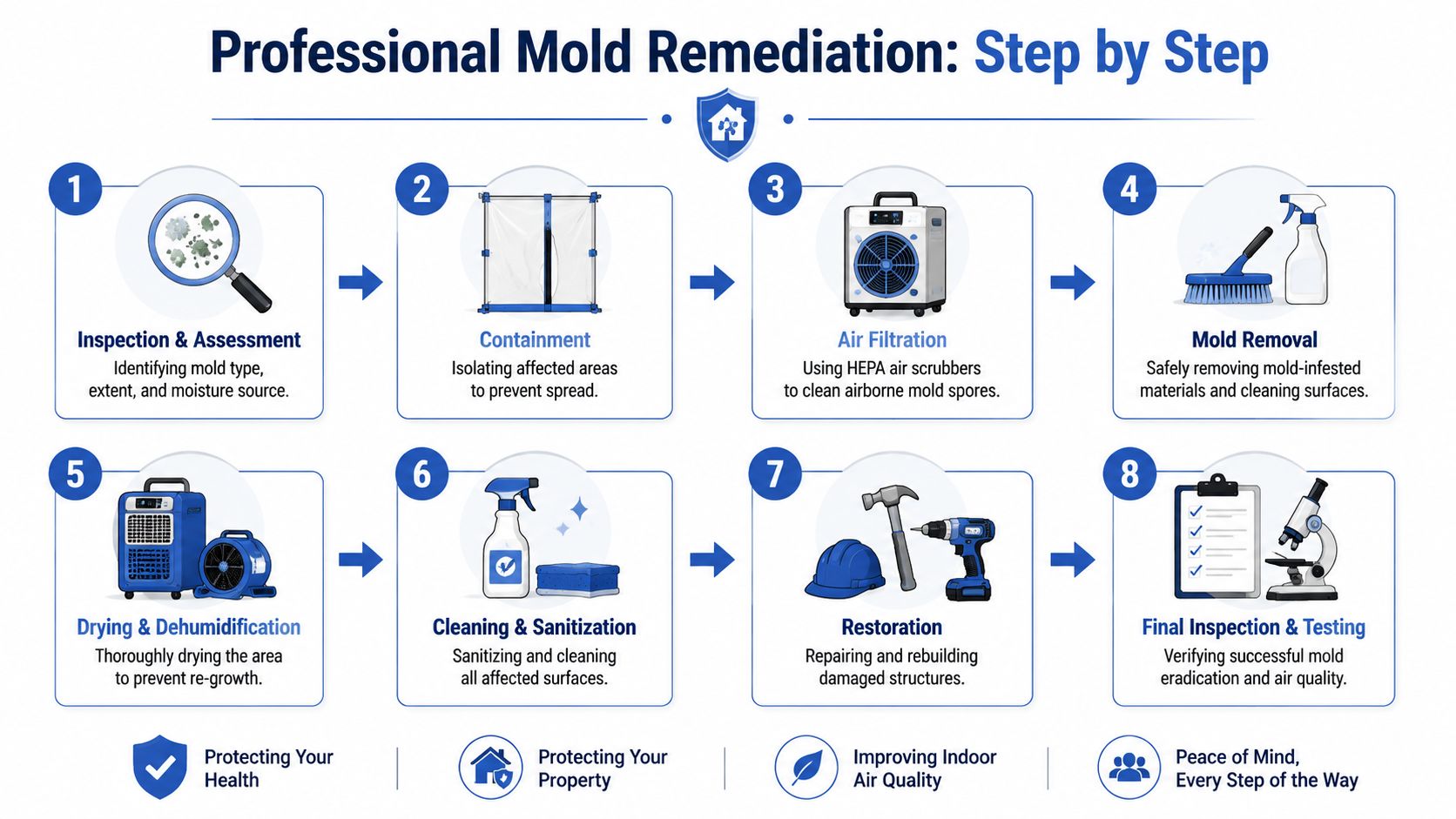
This process map gives a useful visual overview.
Inspection and scope development
The first step is identifying where moisture is present and how far the contamination likely extends. That typically includes visual inspection, moisture meters, and borescopes where hidden growth is suspected. Scientific benchmarks matter here. Moisture mapping is used to identify building materials with moisture content over 16%, HEPA filtration captures 99.97% of airborne particles, and negative pressure containment helps prevent cross-contamination. When the moisture source is fixed first, integrating these measures can reduce recurrence by 85%, according to New Jersey guidance and related standards summarized here.
A credible scope also separates what can be cleaned from what needs removal. That judgment is one of the biggest differences between experienced remediation and guesswork.
For a deeper discussion of process and risk control, this guide on mold remediation by biohazard cleaning companies, safety, insurance, and best practices is useful background.
Containment and air control
Containment is what keeps a mold job from becoming a whole-building problem. Crews isolate the work area with polyethylene barriers and establish negative pressure so disturbed particles move toward filtration equipment, not into occupied space.
This part matters most in homes with children, in multifamily buildings, and in medical or office environments where occupants may still be nearby. Hallways, shared returns, and adjacent suites need protection before demolition begins.
A short walkthrough can help make that easier to picture:
Removal, cleaning, and drying
Once containment is stable, impacted porous materials are removed as needed. Depending on the conditions, that can include drywall sections, insulation, carpeting, or other materials that won't reliably return to a safe condition through surface cleaning alone.
The cleaning phase usually includes several layers of work:
- Controlled demolition of unsalvageable materials
- HEPA vacuuming of settled particulate on structural surfaces
- Detailed cleaning of remaining framing, sheathing, or non-porous components
- Drying and dehumidification to bring the area back under control before rebuild
Not every mold problem calls for tearing a room to the studs. Not every stain can be left in place, either. The right answer depends on material type, depth of impact, and moisture history.
The best remediation crews remove enough to solve the problem, but not so much that they create unnecessary reconstruction.
Verification and return to service
At the end, the area should be visibly clean, dry, and ready for the next trade or for post-remediation verification if that's part of the project. In commercial and higher-risk settings, documentation matters almost as much as the cleaning itself. Property owners need a clear record of what was found, what was removed, what was cleaned, and what moisture correction was required.
That record protects the building long after the equipment leaves.
Understanding NJ Regulations and Certifications
New Jersey creates a lot of confusion for property owners because the state doesn't require a dedicated mold remediation license in the way many people assume. That doesn't mean standards are optional. It means you need to look harder at certifications, training, written protocols, and the quality of the company's documentation.
The market is crowded. There are at least 44 BBB-listed mold testing and remediation companies in New Jersey, and reputable firms are commonly identified by certifications such as IICRC and ESA, which signal adherence to recognized industry practices in a state without formal government licensing requirements, according to the BBB's New Jersey mold testing directory.

What to ask before hiring
A good screening conversation is straightforward. Ask what standards the crew follows, what certifications the technicians hold, how containment is built, and whether they separate inspection from remediation when needed to avoid conflicts.
These questions help quickly:
| Question | Why it matters |
|---|---|
| What certifications do your technicians hold? | Shows whether training is formal or informal |
| How do you contain the work area? | Reveals whether they understand cross-contamination control |
| How do you document moisture and scope? | Distinguishes real assessment from sales talk |
| Do you provide written protocols and completion records? | Protects owners, managers, and insurers |
| How do you handle occupied properties? | Critical for tenant, patient, or staff safety |
What certifications actually tell you
A credential by itself doesn't guarantee good work, but it tells you the company has invested in recognized training. That should include contamination control, PPE, removal practices, drying principles, and worker safety.
For owners who want to understand why this matters beyond marketing badges, this breakdown of why certifications and training matter beyond the basics, including OSHA HAZWOPER, EPA, and IICRC standards is worth reading.
There's a broader contractor lesson here too. Whether you're hiring for environmental work, structural repair, or site prep, the same vetting discipline applies. This resource on vetting concrete contractors for NJ projects is a good example of how to evaluate trade partners based on qualifications, scope clarity, and execution standards rather than price alone.
A company that can't explain its containment plan in plain language usually won't execute it well in the field.
Red flags that deserve caution
Property owners should be wary of vague promises, free “inspections” that immediately turn into pressure to sign a large demolition scope, and companies that can't produce written procedures. Another concern is a contractor who talks only about killing mold, not controlling moisture and removing impacted materials correctly.
In New Jersey, the absence of licensing makes due diligence more important, not less.
Estimating Mold Remediation Costs and Timelines in NJ
Costs vary widely because mold projects are driven by scope, access, material type, and reconstruction needs. A bathroom ceiling patch is one kind of job. A crawlspace with hidden framing damage, or a commercial suite with multiple wet wall cavities, is another.
In New Jersey, professional remediation typically runs $1,500 to $3,000 for small jobs under 50 square feet, $3,000 to $6,000 for medium jobs between 50 and 100 square feet, and more than $10,000 for large contamination, according to the cost ranges summarized in the verified New Jersey market data.
What changes the price
Two jobs with similar square footage can price very differently. The cost usually moves based on factors like these:
- Location of the growth. Attics, crawlspaces, and tight utility areas take more labor.
- Material affected. Drywall and insulation are handled differently than concrete or metal.
- Containment complexity. Occupied spaces, medical settings, and multifamily properties require more protection.
- Access and disposal. Limited access can slow removal and cleanup.
- Repairs after remediation. Removal may be only part of the total project cost.
What changes the schedule
Timelines depend less on square footage alone and more on drying, access, and whether the moisture source has been corrected before the cleanup starts. A straightforward isolated job can move quickly. A project involving ongoing leaks, hidden cavities, or multiple stakeholders usually takes longer because decisions have to be documented and sequenced.
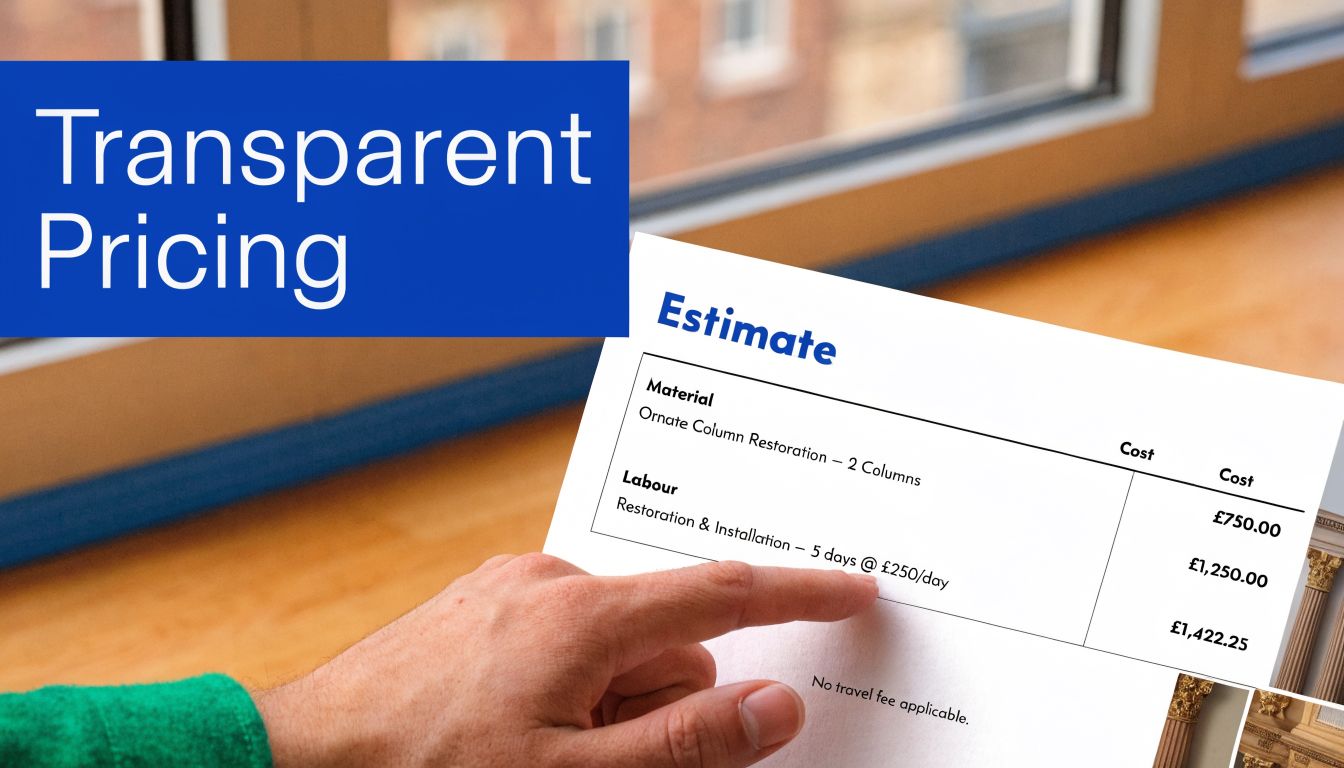
A reliable quote should spell out the remediation scope separately from rebuild. That distinction helps owners compare proposals more accurately and avoid confusion over what's included. If you want a practical model for reading cleanup estimates, this guide to navigating biohazard cleanup costs through a transparent quoting process gives a useful framework.
The cheapest estimate often excludes the parts that keep mold from returning, especially containment, drying time, and detailed documentation.
Navigating Insurance and Documentation for Mold Damage
Many property owners get blindsided by this realization. They assume mold damage will be covered because the cleanup is necessary. Insurance doesn't always work that way.
A major gap in the New Jersey market is that many remediation providers handle the physical work but offer little help with coverage questions. Standard homeowner policies often exclude mold unless it resulted from a covered event. At the same time, cleanup costs can range from $2,000 to over $25,000, and direct carrier coordination can make a meaningful difference for stressed owners, as noted in this discussion of the insurance navigation gap in mold remediation.
When coverage may become a dispute
Insurance questions usually turn on the cause, not just the presence of mold. A sudden covered water loss may be treated differently than long-term humidity, deferred maintenance, or repeated seepage. That's why early documentation matters so much.
Useful records typically include:
- Photos of visible damage and moisture conditions
- Date of discovery and date of the triggering event
- Leak reports, plumbing findings, or roofer notes
- Written remediation scope and material list
- Moisture readings and drying documentation
- Invoices separated by remediation, disposal, and rebuild
What property owners should do early
Call the carrier early if the mold followed a distinct water event. Don't throw away damaged materials or start broad demolition before conditions are documented unless there's an immediate safety reason to do so. Keep communication in writing when possible.
For homeowners and landlords, one of the most helpful things a remediation contractor can do is speak clearly about what they can document and what they can't promise. No ethical company should guarantee coverage. They should, however, be able to assemble a file that makes the claim easier to understand.
This practical guide on how to talk to your insurance company about cleanup services, common pitfalls, and what you should know can help you prepare before that first adjuster conversation.
Good documentation doesn't create coverage. It gives the carrier a clearer, defensible picture of what happened and what the cleanup required.
For commercial properties, the same principle applies, but with more stakeholders. Facility managers may need records for ownership, risk management, tenants, and insurers at the same time. A disorganized file slows everything down.
Why 360 Hazardous Cleanup Is Your Trusted Partner
Some mold jobs are straightforward. Others aren't.
A rental unit may have mold growth alongside hoarding conditions. A building may have water damage mixed with sewage exposure. An unattended death scene can involve both biological contamination and microbial growth in the same environment. In those cases, hiring separate vendors for each hazard creates handoff problems, documentation gaps, and safety risks.
That's where integrated remediation matters. As noted in this overview of complex contamination scenarios involving mold and broader environmental hazards, a multidisciplinary response is safer than using separate, uncoordinated contractors when mold coexists with other biohazards.
The right partner in those settings needs more than mold experience. They need disciplined containment, regulated waste handling, occupant protection, documentation that stands up to scrutiny, and the judgment to know when a site involves more than one category of risk. They also need to handle difficult properties with discretion and respect, especially when families, tenants, patients, or staff are already under strain.
That combination is what separates routine cleaning from true remediation support.
If you need calm, qualified help with mold, biohazards, or a complicated property loss in New Jersey, 360 Hazardous Cleanup is available 24/7. Their team handles sensitive situations with discretion, clear documentation, and a safety-first approach that protects occupants, property, and the people responsible for making hard decisions under pressure.