When grappling with the loss of a loved one, the last thing you should have to manage is the emotional and technical burden of biohazard remediation. However, understanding the costs involved is a necessary step in restoring the property to a safe, habitable condition.
Professional unattended death cleanup is not a standard cleaning service. The cost typically starts around $2,500 and can exceed $10,000. In cases involving severe structural contamination, costs can surpass $25,000.
The final price is determined by critical factors, including the time elapsed before discovery, the extent of the biological contamination, and the types of materials impacted within the home.
A Compassionate Guide to Unattended Death Cleanup Costs
Navigating the financial aspects of this process can feel overwhelming. At 360 Hazardous Cleanup, we believe transparency is essential for making an informed decision during an incredibly difficult time.
Unlike a janitorial or maid service, unattended death remediation is a highly regulated process of containing, removing, disinfecting, and legally disposing of potentially infectious biological materials. This work is absolutely essential for mitigating health risks to anyone who enters the property from bloodborne pathogens and other serious biohazards.
For a foundational understanding of these situations, we have prepared a detailed guide explaining what an unattended death entails from a professional remediation perspective.
What Drives the Final Cost?
There is no "one-size-fits-all" pricing for biohazard remediation. Every scene is unique, and a certified team must conduct a thorough on-site assessment to develop an accurate scope of work.
Factors such as the type of flooring, the size of the affected area, and the duration the scene remained undiscovered play a significant role in the final cost. A situation discovered within a day on a non-porous tile floor will be far less complex and costly than one that has remained for weeks, allowing biohazards to penetrate carpets, subflooring, and drywall.
A true biohazard remediation company prioritizes safety and regulatory compliance above all else. The costs directly reflect the specialized training, personal protective equipment (PPE), and strict protocols required to manage hazardous materials correctly and restore the property to a safe state.
To provide a clearer picture, we've broken down the primary factors that influence the total cost. This table highlights what a professional team evaluates when creating your estimate.
Key Factors Influencing Unattended Death Cleanup Costs
The table below summarizes the key variables that determine the total cost of professional biohazard remediation.
| Cost Factor | Description | Potential Cost Impact |
|---|---|---|
| Time Elapsed | The duration between the time of death and the discovery of the scene, which directly impacts the severity of decomposition. | High: Longer delays lead to more extensive saturation, pervasive odors, and greater structural damage, increasing labor and material costs. |
| Extent of Contamination | The volume of biological material and the total square footage that has been affected. | High: Larger areas or multiple rooms require more technicians, more specialized cleaning agents, and a longer project timeline. |
| Affected Materials | The types of surfaces involved, from non-porous tile to porous materials like carpet, wood, and drywall. | Medium to High: Porous materials often cannot be salvaged and must be removed and replaced. Non-porous surfaces may only require disinfection. |
| Structural Damage | Whether biohazards have penetrated subflooring, wall studs, concrete, or insulation. | High: This necessitates demolition, structural cleaning, and sealing, adding significant labor and disposal costs to the project. |
| Biohazard Disposal | The regulated process for transporting and disposing of all contaminated materials as biomedical waste. | Medium: These costs are based on the total weight and volume of the waste and are governed by strict federal and provincial regulations. |
Ultimately, each of these elements contributes to the final price, which is why a professional on-site assessment is critical for an accurate and fair quote.
Why Professional Remediation Is Non-Negotiable
It is a common and dangerous misconception that a standard cleaning service can manage the aftermath of an unattended death. This misunderstanding creates significant risks.
Comparing professional biohazard remediation to standard cleaning is like comparing a surgeon to a first-aid provider. One addresses deep, invisible threats that can cause lasting harm, while the other only addresses a surface-level problem. Attempting a DIY cleanup—or hiring a company without the proper training and certifications—is not only insufficient but actively hazardous for all involved.
The Invisible Dangers Left Behind
What is visible after an unattended death is only a fraction of the hazard. The true danger lies in what cannot be seen. The area is contaminated with biohazardous materials, including blood and bodily fluids, which can harbor dangerous bloodborne pathogens.
Viruses such as HIV, Hepatitis B, and Hepatitis C can remain viable on surfaces for days or even weeks, posing a significant infection risk. Standard household cleaners are not formulated to neutralize these threats. In fact, their use can spread contaminants, worsening the situation and placing anyone who enters the property at serious risk.
Structural Contamination and Lingering Odors
One of the most complex challenges is contamination that has seeped below the surface, penetrating porous materials where it is impossible to see or reach with conventional cleaning.
- Subfloor Saturation: Bodily fluids can penetrate carpets and floorboards, contaminating the subfloor, concrete slab, and potentially the ceiling of the level below.
- Drywall and Insulation: Walls and insulation act like sponges, absorbing biological matter and odors that become a persistent source of contamination and malodor.
- HVAC Systems: Airborne bacteria and mold spores can be drawn into the ventilation system, circulating throughout the entire property each time the heating or air conditioning is activated.
These deep-seated issues require specialized equipment. Certified technicians utilize tools like industrial-grade air scrubbers, thermal foggers, and ozone generators to neutralize odors and pathogens at their source, restoring safe air quality. Simply cleaning visible surfaces is never sufficient.
Professional remediation is not just about cleaning. It is about restoring a safe, livable environment through a methodical, science-based approach that eliminates all biological threats—seen and unseen—to protect current and future occupants.
The High Cost of Improper Cleanup
While the professional unattended death cleanup cost may seem like a significant upfront investment, it is a critical expenditure for safety and liability protection. Attempting to cut corners with an unqualified provider almost always leads to greater expenses and risks down the road.
If contamination is not fully eradicated, property owners can face serious consequences:
- Declined Property Value: Lingering odors and biological stains can make a property difficult to sell or rent.
- Ongoing Health Risks: Improperly cleaned areas can become breeding grounds for bacteria and mold, posing chronic health risks to future occupants.
- Legal Liability: If a future tenant or owner becomes ill from residual contamination, the original property owner could be held legally liable.
- Higher Future Costs: A failed cleanup often necessitates hiring professionals later for a more extensive—and expensive—remediation, effectively meaning you pay twice.
Engaging a certified professional from the outset is the only way to ensure the work is completed correctly and safely. To learn more, read our guide on why you need to call certified trauma and biohazard specialists after an unattended death. It is an investment in your peace of mind and the complete restoration of your property.
Decoding the Line Items on Your Cleanup Invoice
Receiving an invoice for an unattended death cleanup can be daunting, but understanding the individual charges provides clarity on the cost. It also demonstrates the extensive work required for a professional, legally compliant remediation process. This is less a simple bill and more a detailed plan for protecting people, property, and public health.
Transparency is a cornerstone of our professional practice. In the biohazard remediation industry, hourly rates for a certified team can range from $200-$300 per hour, with average project costs often totaling $3,400. These figures are not arbitrary; they directly reflect the complexity of mitigating both physical and airborne hazards created when bodily fluids impact porous materials.
To help you understand exactly what you are paying for, here is a breakdown of the most common line items on a professional remediation estimate or invoice.
Common Line Items on a Remediation Invoice
| Service or Item | Average Cost Range | Purpose |
|---|---|---|
| Certified Technician Labor | $200 – $300 / hour | Compensates for the specialized skills of trained and certified technicians managing hazardous materials and executing multi-step safety protocols. |
| Personal Protective Equipment (PPE) | $100 – $500+ | Includes single-use hazmat suits, respirators, gloves, and boot covers required to protect workers from bloodborne pathogens. |
| Air Scrubbers & HEPA Filtration | $150 – $400 / day | Industrial-grade machines that run continuously to capture and remove microscopic airborne contaminants, ensuring safe air quality. |
| Specialized Disinfectants & Chemicals | $50 – $250+ | Hospital-grade, EPA-approved solutions designed to kill dangerous pathogens. Standard cleaners are ineffective and unsafe for this work. |
| Biohazardous Waste Disposal | $75 – $300+ | Covers regulated packaging, transport, and incineration of contaminated materials, with costs often calculated by weight. |
| Odor Remediation (Ozone/Fogging) | $200 – $600+ | Advanced equipment used to neutralize deeply embedded odors in structural materials that surface cleaning cannot reach. |
| Structural Repairs (Drywall, Flooring) | Varies widely | Costs for removing and replacing contaminated structural elements like drywall, subflooring, or carpeting. |
Each of these items plays a critical role in restoring a property to a safe, habitable condition. Let's examine the primary cost drivers in more detail.
Labor Costs for Certified Technicians
The largest portion of any invoice is labor, but this is fundamentally different from a standard hourly wage. You are investing in the deep expertise of IICRC-certified technicians who have undergone rigorous training in bloodborne pathogens, respiratory protection, and hazardous waste operations.
This level of skill is essential for both safety and legal compliance. Our technicians follow a meticulous, multi-step process that includes establishing containment zones, safely removing all contaminated materials, disinfecting every surface, and performing tests to verify complete remediation. Their training prevents cross-contamination and guarantees the environment is returned to a certifiably safe state.
Specialized Equipment and Consumables
True remediation requires highly specialized technology unavailable in retail stores. Every piece of equipment we use serves a specific, science-backed purpose in eliminating biohazards at a microscopic level.
- Personal Protective Equipment (PPE): This includes single-use, hazmat-grade suits, full-face respirators with specific filter cartridges, multiple layers of gloves, and boot covers. This gear is the barrier between our team and infectious diseases and is disposed of as regulated medical waste after a single use.
- Air Scrubbers with HEPA Filters: These industrial-strength units run continuously throughout the project to capture and trap airborne bacteria, mold spores, and other microscopic threats, scrubbing the air and restoring safe breathing conditions.
- Ozone Generators and Thermal Foggers: For severe odors, these machines attack and neutralize odor-causing molecules that have penetrated deep into wood, concrete, and drywall. This is a critical final step that no amount of surface cleaning can replicate.
- Proprietary Disinfectants: Our technicians utilize hospital-grade, EPA-approved disinfectants proven to eliminate bloodborne pathogens and other dangerous microorganisms on contact.
Understanding how different service industries structure their billing can be helpful. For instance, looking into common issues with junk removal pricing and hidden fees provides a good contrast and highlights why transparent, line-item billing is so important in our line of work.
The infographic below breaks down the different levels of cleaning involved in biohazard remediation.
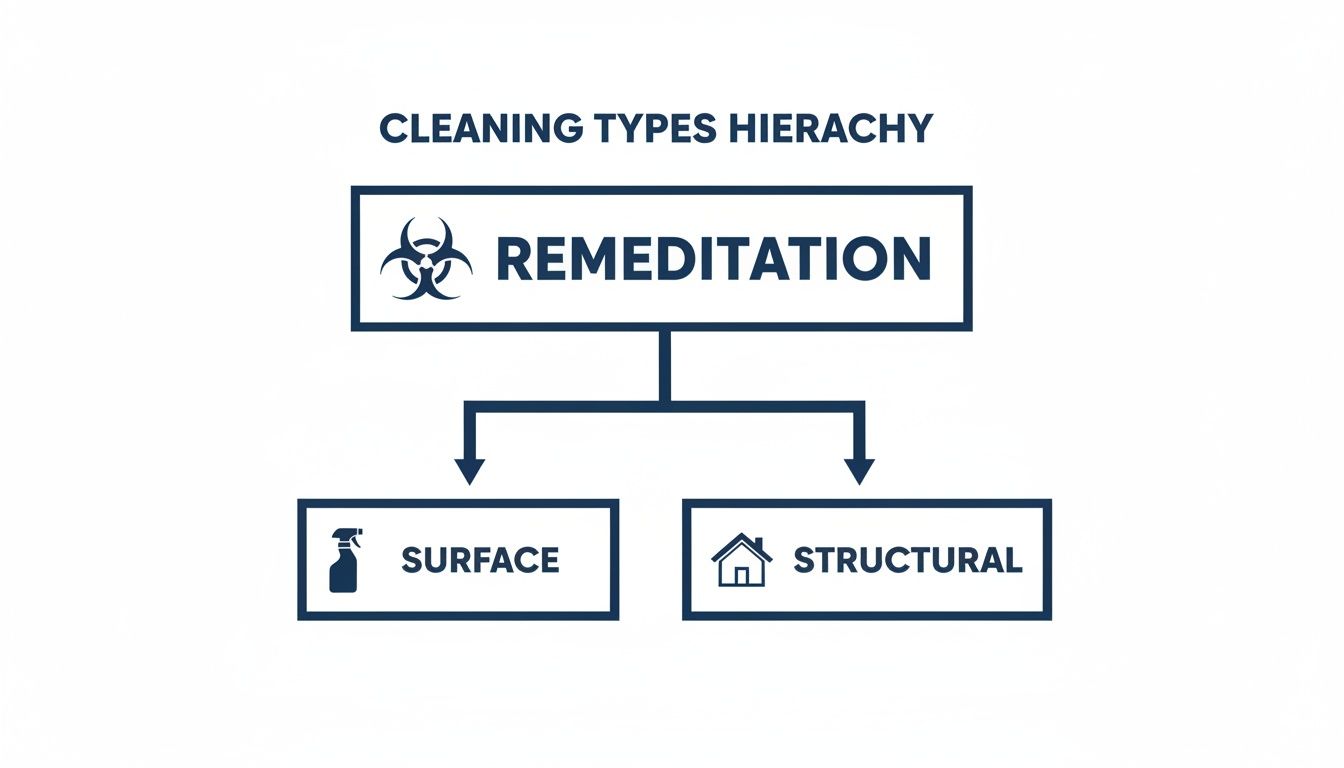
As you can see, true remediation is a top-down process, covering both the visible surface contamination and the unseen structural problems to ensure total safety.
Biohazardous Waste Disposal
One of the most heavily regulated and critical components of the job is the disposal of biohazardous waste. Every contaminated item—from personal effects like carpeting and furniture to structural materials like drywall and subflooring—must be packaged, transported, and incinerated according to strict federal, provincial, and local laws.
The cost for this service, typically calculated by weight, reflects the "cradle-to-grave" legal liability that a certified remediation company assumes. This ensures contaminated materials are permanently destroyed and never pose a risk to the community or the environment.
This meticulous process is supported by detailed tracking paperwork, providing you with legal proof that all hazardous waste was handled in full compliance with all applicable regulations. To see how these items are documented in a formal proposal, review our guide on comparing scopes of work for informed decisions. Ultimately, every line item works toward a single goal: a safe, fully restored property and your peace of mind.
How Real-World Scenarios Affect Cleanup Pricing
While abstract line items are helpful, understanding how they apply to real-world situations provides greater clarity. The final price for an unattended death cleanup is a direct reflection of the specific circumstances at the property. Two situations that appear similar at first glance can have vastly different remediation needs and costs.
To illustrate how this works, let's examine two distinct scenarios. These examples will show exactly how variables like the time of discovery and flooring type create unique challenges that directly shape the scope of work and the final cost.
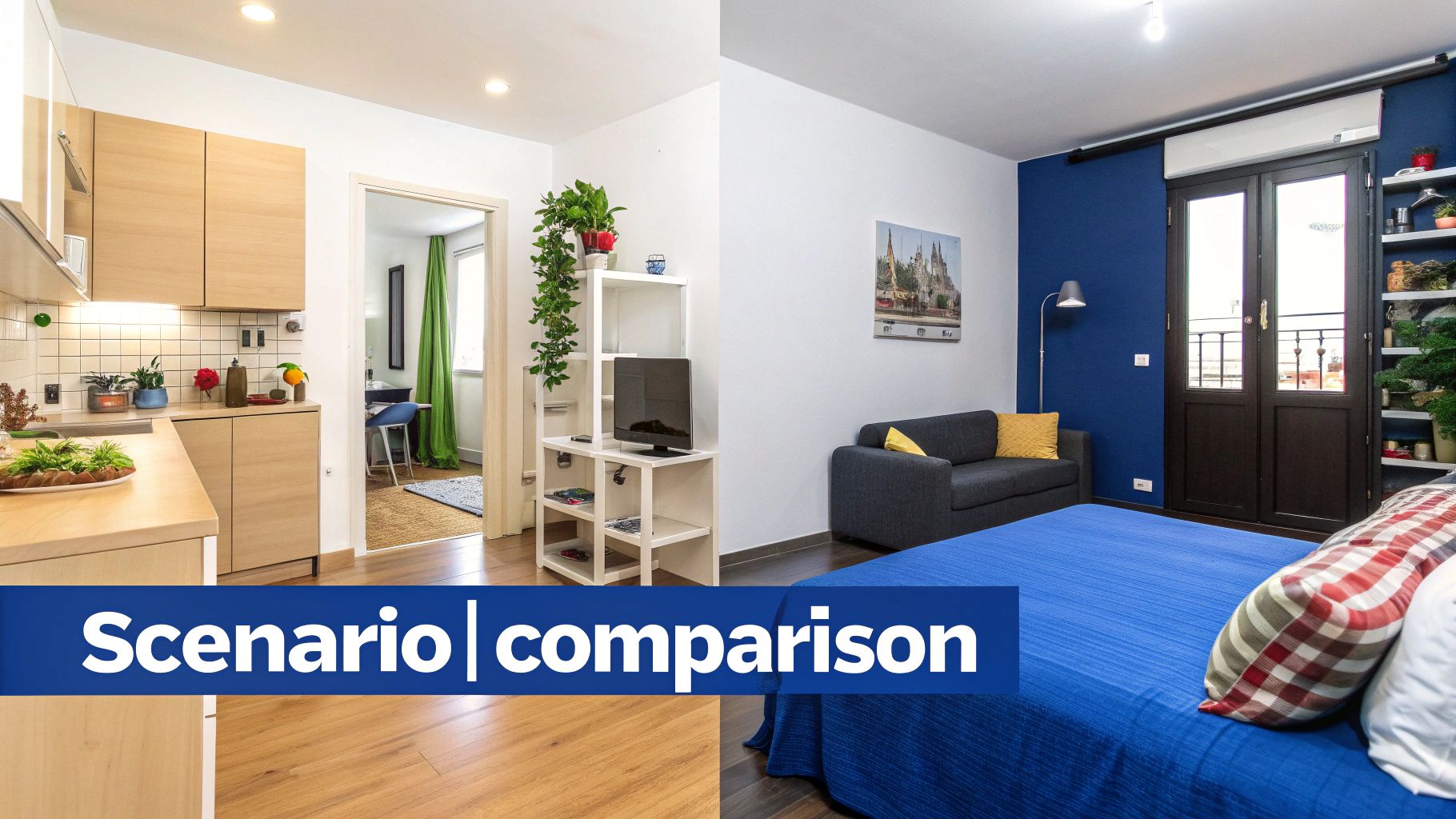
Scenario A: Minimal Contamination in an Apartment
Consider a small, one-bedroom apartment with modern vinyl plank flooring. In this scenario, the individual was discovered within 24 hours. While the circumstances are tragic, the biohazard impact from a technical standpoint is relatively contained.
The remediation process in this situation would look like this:
- Limited Scope: The affected area is small and confined to the non-porous vinyl flooring, which prevents deep saturation.
- Surface-Level Cleaning: Technicians can thoroughly clean and disinfect the immediate area without requiring removal of flooring or other structural elements.
- Minimal PPE Usage: The team still requires full personal protective equipment (PPE), but the shorter duration of the job means fewer suits and supplies are consumed.
- Efficient Timeline: The entire project can often be completed in a few hours, which significantly contains labor costs.
For a project like this, the cleanup cost would likely fall on the lower end of the spectrum, between $2,500 and $4,000. The prompt discovery and non-porous flooring were key factors in preventing biohazards from migrating into the subfloor—a complication that dramatically increases costs.
Scenario B: Extensive Contamination After Delayed Discovery
Now, consider a similar-sized apartment, but with two critical differences: the flooring is carpeted, and the individual was not discovered for over two weeks in a warm climate.
This delay completely transforms the project into a much more complex and hazardous undertaking.
- Widespread Contamination: Bodily fluids have had ample time to saturate the carpet, penetrate the padding, and seep deep into the wooden subfloor.
- Structural Removal: In this case, the carpet and affected sections of the subfloor are unsalvageable. They must be professionally cut out, carefully packaged, and disposed of as regulated medical waste.
- Intense Odor Remediation: Advanced decomposition creates powerful, persistent odors that permeate everything—drywall, insulation, and the HVAC system. This requires multi-day treatments with specialized equipment like ozone generators and thermal foggers to eliminate the odor at its source.
- Multi-Day Project: This level of remediation is no longer a job of a few hours. It becomes a multi-day project requiring several technicians and a significant amount of heavy-duty equipment.
An on-site assessment is not a formality; it is an essential diagnostic step. Only by physically inspecting the property can a certified technician accurately identify the full extent of both visible and hidden contamination, ensuring the final quote is comprehensive and fair.
While the national average for unattended death cleanup may start around $1,500 to $5,000, a scenario involving prolonged decomposition can easily escalate to between $10,000 and $25,000. The cost is driven by the affected square footage and the duration of active decomposition.
These two scenarios clarify why a flat price cannot be given over the phone. Every situation is unique, and specific details—from the flooring material to the time elapsed—dictate the necessary steps to restore the property to a safe and habitable state.
For a closer look at the science behind this process, you can read our guide on decomposition and the biohazards behind unattended deaths.
Navigating Insurance Coverage for Cleanup Costs
One of the first questions we receive is, "How will I pay for this?" In the wake of a traumatic event, the financial burden can feel as overwhelming as the emotional one. The good news is that you likely will not have to manage the unattended death cleanup cost alone.
Many people are surprised to learn that specialized biohazard remediation is often covered by insurance. In the vast majority of cases, standard homeowner's, commercial property, and even renter's insurance policies include provisions for such events. This is because a biohazard incident is considered a severe form of property contamination that renders the space unsafe and unlivable—precisely the kind of risk property insurance is designed to cover.
Starting the Insurance Claims Process
When filing a claim for biohazard cleanup, time is critical. Your first step should be to contact a professional remediation company like 360 Hazardous Cleanup. We can dispatch a team immediately to assess the full scope of work.
This initial assessment is the cornerstone of your insurance claim. We meticulously document everything with photographs, detailed notes, and scientific readings. This creates a comprehensive report that provides the insurance adjuster with a clear, evidence-based understanding of the situation's severity and legitimacy, forming the foundation for claim approval.
A true biohazard remediation partner does more than just clean; they become your advocate. We work directly with insurance carriers, speaking their language and providing the detailed evidence they need to process your claim fairly and without delay.
Why Professional Advocacy Matters
Navigating an insurance claim is complex and stressful under the best of circumstances, let alone while grieving. A seasoned remediation partner removes this entire burden from your shoulders. We manage all communication with your insurance provider, submit the correct documentation, and field any technical questions from the adjuster.
Here is how an expert partner streamlines the process:
- Direct Billing: Whenever the policy allows, we bill the insurance company directly. This minimizes or eliminates any upfront, out-of-pocket costs for you.
- Detailed Documentation: We provide a line-item scope of work that justifies every charge, linking it directly to industry-standard safety protocols and regulations.
- Faster Approval: We have established relationships with insurance carriers. We understand their documentation requirements, which often helps expedite approvals and makes the experience less stressful for you.
When trying to figure out the financial side of things, it can be useful to look at broader information. Exploring guides on how families pay for post-death services can offer insights into how systems like Medicare, Medicaid, and private insurance work in these situations.
You are not expected to be an expert in biohazard science or insurance terminology—that is our role. By managing the complexities of the claim, we free you to focus on what truly matters: taking care of yourself and your family. For more details, our guide on insurance coverage for biohazard cleanup provides further information. Our goal is simple: to restore your property safely without adding financial strain.
Finding a Cleanup Partner You Can Trust
Once you understand the scope of the work, the most critical step is choosing the right company for the job. This is not like hiring a standard cleaning service. You are entrusting a deeply sensitive and complex task to a team that must be more than just technicians—they must be professional, compassionate, and unwavering in their integrity.
The right company does not just restore a property; they provide a sense of stability and peace of mind when it is needed most. Certain credentials are non-negotiable and distinguish a true biohazard specialist from an unqualified operator. Making the right choice directly impacts the safety of the space and the final unattended death cleanup cost.
Your Checklist for Vetting a Biohazard Company
To help you make a clear-headed decision, use this checklist. Any reputable company will have this information readily available and will welcome your questions. Transparency is the bedrock of trustworthy service in this field.
- Certifications and Licensing: Are the technicians certified by the IICRC (Institute of Inspection, Cleaning and Restoration Certification)? This is the gold standard for trauma and biohazard remediation.
- Proof of Insurance: The company must carry comprehensive liability and workers' compensation insurance specifically for biohazard work. This is non-negotiable and protects you from any liability while they are on your property.
- Transparent Safety Protocols: Ask about their process. How do they use Personal Protective Equipment (PPE)? How do they establish containment zones to prevent cross-contamination? A professional team always prioritizes safety.
- Discretion and Professionalism: Inquire about their approach to privacy. Reputable companies often use unmarked vehicles upon request to protect your family’s privacy during this difficult time.
Hiring a professional biohazard remediation company is an investment in safety and certainty. When you choose a partner who meets these high standards, you're ensuring the job isn't just done, but done right.
The after-death cleaning market is growing, with some estimates projecting it to expand from $1.2 billion in 2026 to $2.6 billion by 2033. As more companies enter this field, it becomes even more critical to partner with an experienced, established leader to avoid the financial and emotional toll of a job done poorly. You can learn more about the exploding unattended death cleanup market and what it means for property owners.
Ultimately, you are looking for a team that possesses both technical expertise and a deep understanding of the human element of their work. They should be your advocate, guiding you through the process with clear communication, empathy, and a total commitment to restoring a sense of safety and order.
Your Questions About The Cleanup Process, Answered
When dealing with the aftermath of an unattended death, practical questions are inevitable. We understand. Here are clear, straightforward answers to the questions we hear most often from families and property managers.
How Long Does The Cleanup Process Usually Take?
There is no single answer, as the duration depends entirely on the unique circumstances of the scene. If the discovery was made relatively quickly, a less complex cleanup might only take a few hours.
However, in cases where a significant amount of time has passed, the work becomes much more involved. Extensive structural contamination and deep-seated odors can require several days of intensive remediation to ensure the property is truly safe and habitable again. A reputable company will provide a realistic timeline after conducting a thorough on-site assessment.
Do I Have To Pay For The Cleanup Services Upfront?
This is a significant source of stress for families. In most situations, you will not be expected to pay for the full cost out of pocket immediately. Professional remediation companies understand that this is an unplanned and often overwhelming expense.
An experienced company will often work directly with your insurance provider. By billing the insurance carrier, they can significantly reduce or eliminate your upfront financial burden, allowing you to focus on more important matters.
They should walk you through all payment options during your initial conversation, explaining how they coordinate with insurance and what your deductible responsibilities might be.
What Happens To Contaminated Personal Belongings?
Navigating personal items is often the most emotionally challenging part of this process. For the safety of everyone involved, any porous items that have absorbed biohazardous materials—such as mattresses, upholstered furniture, rugs, and clothing—cannot be safely salvaged.
By law, these items must be professionally documented, removed, and disposed of as regulated medical waste. Conversely, non-porous belongings like jewelry, glassware, or hard plastics can almost always be cleaned, disinfected, and safely returned to the family. Your remediation team will create a detailed inventory of all discarded items for your records and the insurance claim.
At 360 Hazardous Cleanup, we understand you need clear answers and compassionate support. Our experienced team is available 24/7 to guide you through every step, from the initial phone call to the final insurance documentation. We are here to restore the property with the professionalism and care you deserve. Contact us today for immediate, discreet assistance.