An unattended death occurs when a person passes away alone and is not discovered for a period of time, such as days, weeks, or longer. It is a profoundly tragic event that extends far beyond the initial discovery. Critically, it creates an immediate and hazardous biohazard scene that requires a highly specialized, professional response to ensure the area is safe and habitable again.
Defining an Unattended Death and Its Aftermath
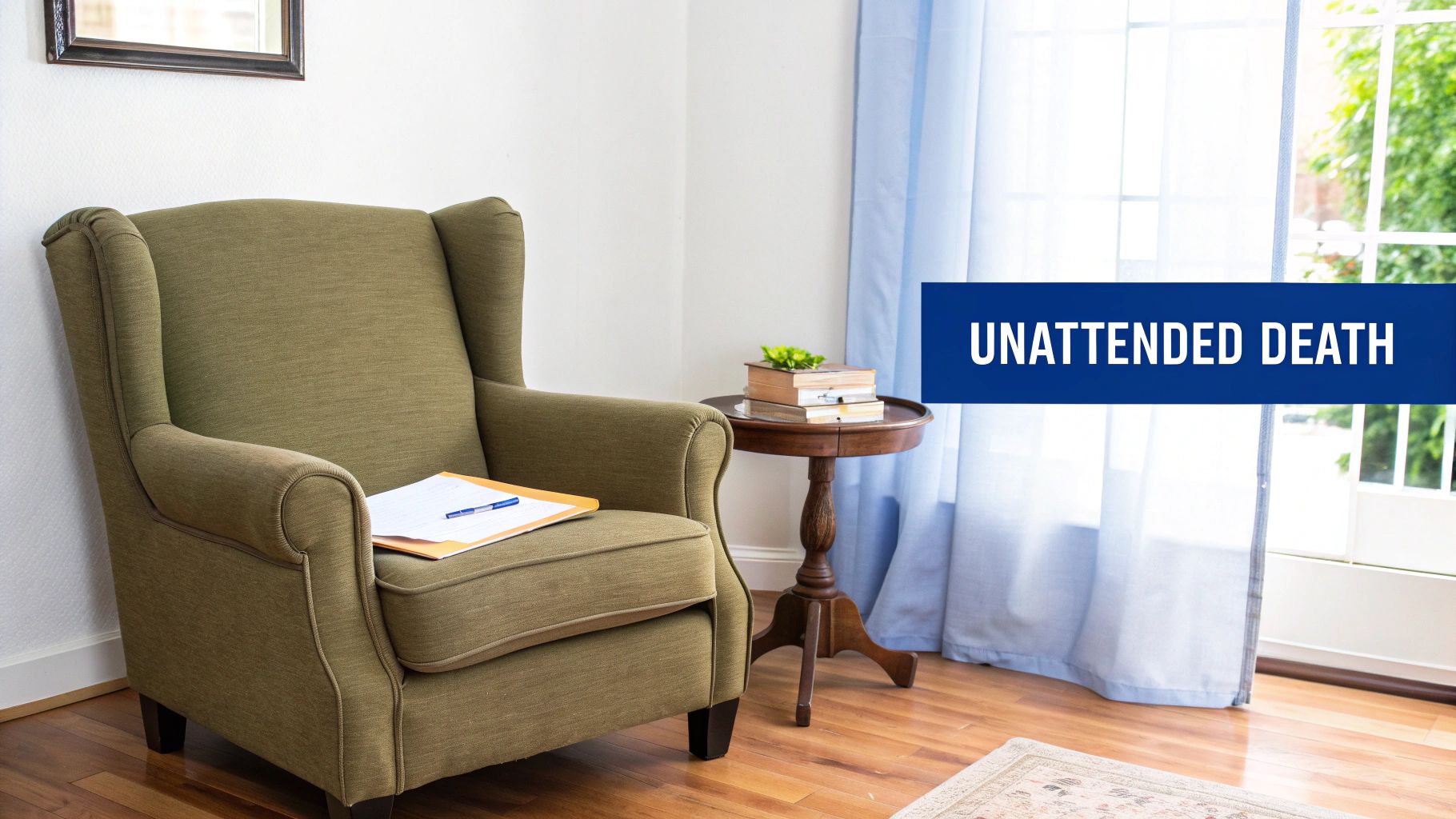
When people hear the term "unattended death," they often imagine the heartbreaking moment of discovery. While that experience is incredibly traumatic, the aftermath creates serious public health and safety issues that must be addressed with professional expertise. As soon as a person dies, the natural process of decomposition begins. This process releases bodily fluids and airborne pathogens that can contaminate a home, posing a significant health risk to anyone who enters.
This is not a task for a standard cleaning crew; it is a complex biohazard remediation scene. The environment becomes filled with dangerous bacteria, viruses, and other microorganisms that saturate porous materials like carpet, drywall, wood flooring, and furniture. Understanding what an unattended death truly is means recognizing the invisible dangers that remain long after the deceased has been respectfully removed.
The Immediate Biohazard Risks
The primary reason an unattended death requires a professional team is the presence of severe biological hazards. The longer a body remains undiscovered, the more extensive and dangerous the contamination becomes.
Key risks include:
- Bloodborne Pathogens: Viruses such as Hepatitis B, Hepatitis C, and HIV can remain active in blood and other bodily fluids for extended periods.
- Bacterial Growth: Decomposition fosters an environment for harmful bacteria, which leads to severe contamination and a powerful, persistent odor that cannot be eliminated with household products.
- Structural Contamination: Biological fluids can seep deep into subflooring, penetrate wall cavities, and even circulate through HVAC systems. Standard cleaning methods cannot reach these areas and are unsafe. You can explore the science behind decomposition and biohazards to better understand these risks.
The Official Response and Investigation
Once an unattended death is discovered, an official protocol is initiated. Law enforcement and the local coroner or medical examiner will arrive to determine the cause of death and confirm that no foul play was involved. It is often helpful to understand the circumstances when an autopsy is required to gain insight into this part of the process.
These situations are more prevalent than many realize. According to the CDC, there were 222,698 fatalities from unintentional injuries in 2023 alone. This figure includes incidents like falls or accidental poisonings, which can easily result in an individual passing away alone, highlighting the critical need for established, professional protocols.
The Hidden Dangers of an Unattended Death Scene
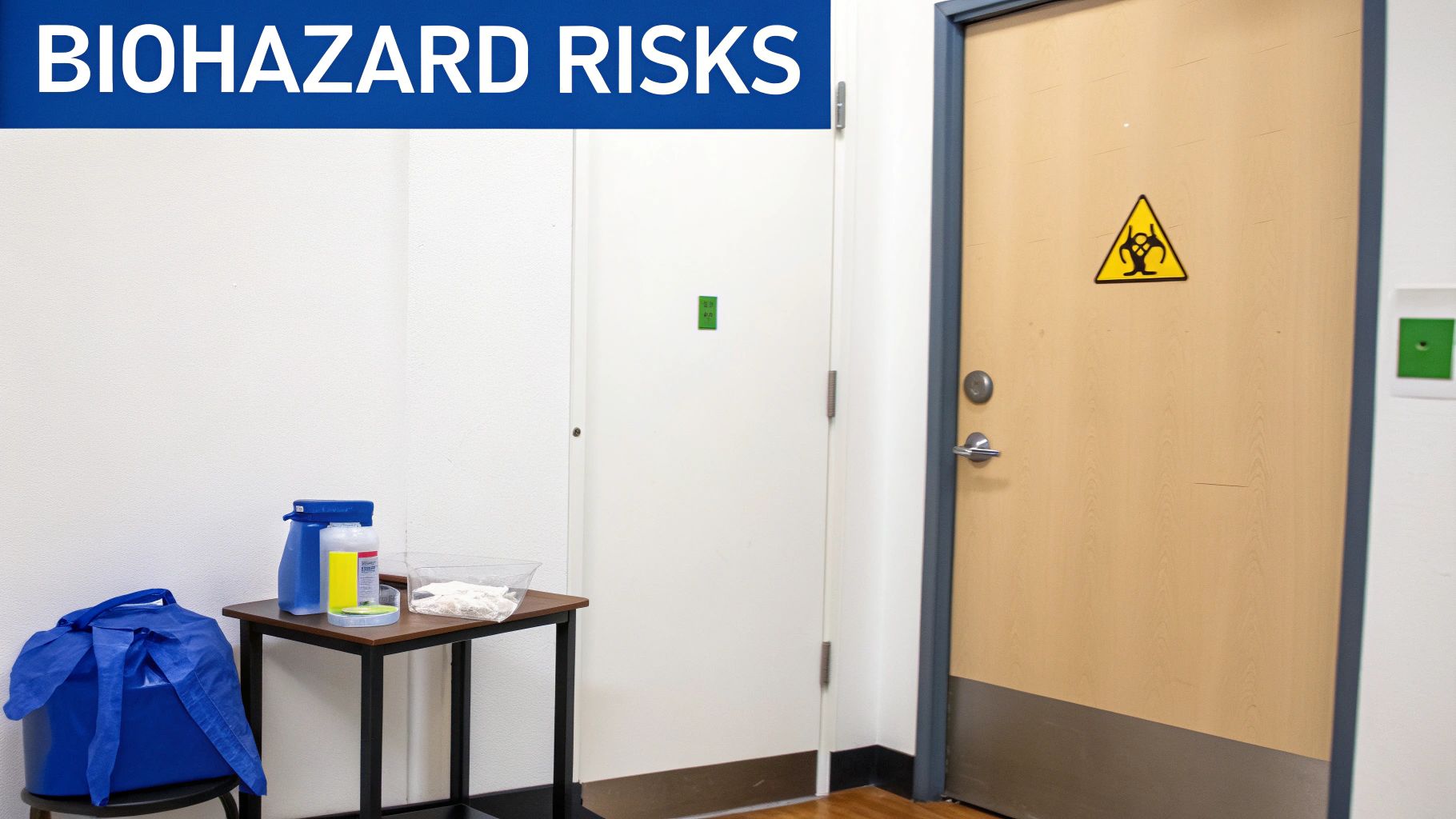
Once the coroner and law enforcement have concluded their investigation and released the property, the most critical phase of managing an unattended death begins. The initial tragedy may be over, but a silent, invisible threat remains. This is when a home transforms from an investigation site into a serious biohazard zone, putting anyone who enters at significant risk.
Decomposition begins within hours, releasing bodily fluids and airborne microorganisms that contaminate the surrounding area. This is not merely a matter of an unpleasant odor or a visible stain; it is a deep, pervasive contamination that seeps into all porous materials. Similar to how oil soaks into soil, biological fluids penetrate wood flooring, drywall, carpets, and even the underlying concrete subfloor.
Understanding the Biological Risks
Attempting to clean up after an unattended death without professional training and equipment is incredibly dangerous. The scene is saturated with pathogens that can cause severe, lasting illness. These are not theoretical risks; they are a real and present danger in the air and on every surface.
Some of the most serious biohazards present at the scene include:
- Bloodborne Pathogens: Viruses like Hepatitis B, Hepatitis C, and HIV can survive in dried blood and fluids for days or even weeks. Exposure can occur through a minor cut or contact with the eyes, nose, or mouth.
- Harmful Bacteria: The decomposition process creates a breeding ground for bacteria such as E. coli and Salmonella. These microbes can become airborne, leading to respiratory infections and other serious illnesses.
- Mold and Fungi: The moisture released from bodily fluids provides the perfect environment for aggressive mold and fungal growth, which can trigger chronic respiratory problems and allergic reactions long after the initial event.
The greatest misconception is that what you cannot see cannot harm you. In a biohazard scene, the most significant dangers are microscopic pathogens that have saturated the structure of the building itself.
Why Professional Remediation Is Non-Negotiable
This level of contamination is precisely why certified biohazard remediation is not just recommended—it is essential for safety. Household cleaners, including bleach, are inadequate for this task. They cannot penetrate materials deeply enough to eliminate pathogens, and mixing them can create toxic fumes, adding another layer of danger.
Certified professionals arrive with specialized Personal Protective Equipment (PPE), including full-body biohazard suits, respirators, and multiple layers of gloves, to ensure their safety. They follow strict, industry-regulated protocols to contain the area, remove all contaminated materials, and disinfect what remains. This process often requires removing sections of flooring or drywall to access the contamination underneath.
This meticulous process ensures the property is not just visually clean but biologically safe for future occupants. To fully appreciate the gravity of the situation, it is helpful to learn more about the various diseases commonly associated with biohazard scenes and understand why engaging experts is the only safe and responsible choice.
Real-World Scenarios and Why They Require Professionals
An unattended death is not confined to a specific type of location. It can occur anywhere—from a single-family home to a high-rise apartment or even a workplace. Each environment presents unique and complex challenges, underscoring why a professional, compassionate, and highly skilled team is required to manage the aftermath.
Unfortunately, these situations are more common than many people think. Recent data reveals a troubling trend: preventable injury-related deaths in homes have increased by a significant 233% since 1999. This alarming statistic is largely driven by falls and unintentional poisonings, particularly among older adults living alone.
In fact, the 35.2 million injuries that occur at home each year outnumber the combined total from public places, workplaces, and motor vehicle accidents. This makes professional biohazard remediation in residential settings an absolutely critical service.
Common Unattended Death Scenarios
The specifics of the situation dictate the required scope of remediation. While no two scenes are identical, most fall into a few common categories, each with its own set of challenges that only a professional can resolve.
- Elderly Individuals Living Alone: This is one of the most frequent scenarios. An elderly person passes away from natural causes, an accident, or a fall and is not discovered for days or weeks. In these cases, remediation often involves a deep, forensic-level cleaning where biological matter has had time to permeate floors, furniture, and personal belongings.
- Multi-Unit Residential Buildings: In a condominium or apartment complex, an unattended death creates risks that extend beyond a single unit. Odors and biohazards can travel through shared ventilation systems, wall cavities, and plumbing, affecting neighbors. Such a situation demands a discreet yet rapid response to contain the hazard before it becomes a building-wide issue.
- Workplace or Commercial Properties: Though less common, an unattended death at a business places immense legal and safety responsibility on the owner. The area must be remediated to strict OSHA standards to ensure it is safe for employees and customers to return. The emotional toll on coworkers also necessitates a compassionate, professional approach to the cleanup.
Beyond the biohazard risks, an unattended death often leaves behind profound emotional scars; for those grappling with the aftermath, understanding trauma counselling can be a vital step towards healing.
Regardless of the location, every case requires a meticulous and highly regulated cleanup. Simply wiping down visible surfaces is insufficient—it leaves dangerous pathogens behind and puts people at risk. For a full breakdown of the process, our guide on why hiring a biohazard remediation company is a life-saving decision offers crucial insights.
A professional team does not just restore the physical space; they provide the support and expertise needed to navigate this difficult time with dignity and care.
Navigating Insurance Claims and Legal Requirements
The aftermath of an unattended death involves more than just the physical cleanup. There is a complex web of legal procedures and financial responsibilities that can feel overwhelming, especially for families and property managers already dealing with a traumatic event. Understanding what to expect can make a significant difference.
The process begins once law enforcement and the medical examiner have completed their investigation. Only after they have determined there is no ongoing criminal activity will they formally release the property. This release signals that biohazard remediation can begin, but it also initiates a series of administrative tasks.
Demystifying the Insurance Process
One of the most common concerns for our clients is the cost of professional remediation. Fortunately, in many cases, existing insurance policies cover this expense.
Most standard homeowners, commercial, and landlord insurance policies include provisions for biohazard cleanup following a traumatic event like an unattended death. This coverage is typically filed under clauses related to property damage. However, filing a claim correctly requires meticulous documentation and clear communication with adjusters—tasks that are difficult to manage while grieving.
This is where a professional remediation partner becomes your strongest advocate. At 360 Hazardous Cleanup, we take this burden off your shoulders. We work directly with your insurance provider, submitting all required evidence—from detailed reports and photographs to moisture readings—to ensure the claim reflects the full scope of work needed to make the property safe. To learn more, see our guide on how homeowners insurance covers biohazard cleanup.
A reputable biohazard remediation company does more than just clean. They act as your liaison with the insurance company, providing the expert documentation needed to process your claim efficiently and minimize your out-of-pocket expenses.
Ultimately, navigating these requirements should not be an additional burden. By handling the insurance claim and adhering to every legal and regulatory standard, a compassionate and experienced team allows you to focus on what truly matters: healing. We ensure the property is not only physically restored but that every administrative and financial detail is managed with professionalism and care, offering you complete peace of mind.
Why Professional Remediation Is the Only Safe Option
After an unattended death, the difference between a standard cleaning service and professional biohazard remediation is monumental. To put it in perspective: one is like wiping down a kitchen counter, while the other is akin to a surgeon sterilizing an operating room. One addresses visible messes; the other eradicates invisible, life-threatening dangers.
Attempting to clean the scene yourself or hiring a general cleaning company is not just ineffective—it is extremely dangerous. Household cleaners are not formulated to eliminate resilient bloodborne pathogens. They cannot neutralize bacteria that have saturated porous materials like drywall, subflooring, and wooden beams, creating a false sense of security while leaving behind a ticking time bomb of biological hazards.
The Dangers of Inadequate Cleanup
Without the proper training, specialized equipment, and industry certifications, anyone entering the area is exposed to serious health threats. Professional biohazard technicians, in contrast, are trained in the complex science of decomposition. They understand precisely how to return a space to a biologically safe state, leaving nothing to chance.
The risks of improper cleanup are severe:
- Persistent Health Hazards: Lingering bacteria, viruses, and mold spores can lead to long-term respiratory problems and infectious diseases for future occupants or visitors.
- Incomplete Odor Removal: Decomposition odors are deeply embedded in the structure of a building. Only specialized techniques can break them down at a molecular level for permanent elimination.
- Structural Damage: If contaminated materials are not properly identified and removed, biohazardous fluids can continue to corrode and degrade the property's structure, leading to costly future repairs.
- Emotional Trauma: The psychological toll on family members who attempt such a cleanup is profound. Confronting the scene can cause lasting emotional distress and complicate the grieving process.
This is why a formal, structured process must be followed after an unattended death is discovered. The remediation step is the final, critical part of restoring safety after authorities complete their work.
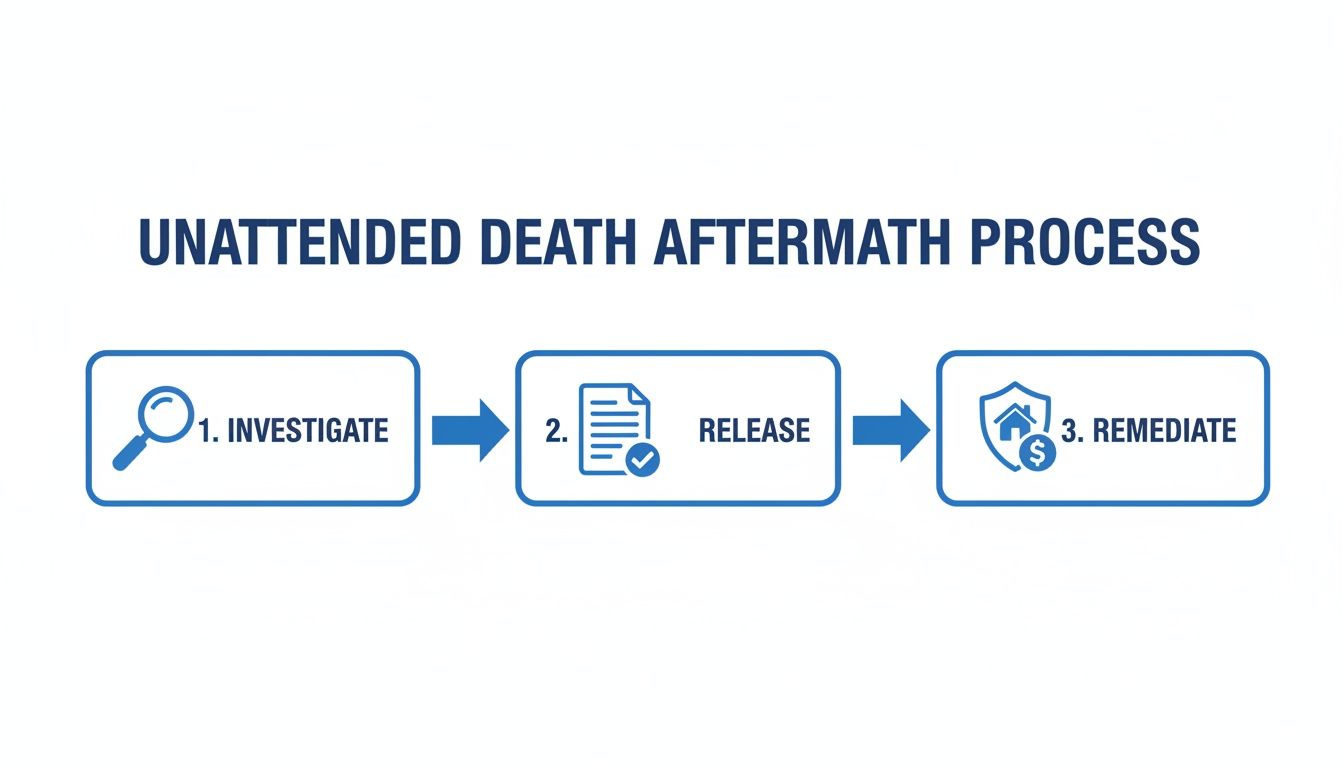
As this process illustrates, professional remediation is not just a recommendation; it is the essential final stage in making a property safe and habitable again.
The difference between a well-intentioned attempt and a professional service is stark. Here is a clear comparison.
DIY Cleanup vs Professional Biohazard Remediation
| Aspect | DIY Cleanup Attempt | Professional Service |
|---|---|---|
| Safety Gear | Basic gloves, masks. Often inadequate for microscopic airborne pathogens. | Full Personal Protective Equipment (PPE), including respirators and biohazard suits. |
| Cleaning Agents | Household cleaners (bleach, ammonia). Ineffective against many pathogens. | EPA-registered, hospital-grade disinfectants and proprietary chemical solutions. |
| Effectiveness | Surface-level cleaning only. Cannot penetrate porous materials or remove all pathogens. | Deep structural remediation. Removes all biohazards from subfloors, drywall, and framework. |
| Odor Removal | Masking agents (air fresheners). Odors return as bacteria continues to grow. | Odor is eliminated at the source using specialized equipment like ozone generators. |
| Waste Disposal | Illegal and unsafe disposal in regular trash, posing a public health risk. | Legal, documented disposal of biohazardous waste according to federal and state laws. |
| Long-Term Risk | High risk of lingering health hazards, structural decay, and emotional trauma. | Guarantees a completely sanitized, safe, and livable environment. Peace of mind. |
Ultimately, a DIY approach risks your health, property, and emotional well-being. A professional service provides a guaranteed, safe, and final resolution.
Adherence to Strict Safety Regulations
Biohazard remediation is a highly regulated industry governed by strict standards from agencies like the Occupational Safety and Health Administration (OSHA) and the Environmental Protection Agency (EPA). These are not mere guidelines; they are enforceable rules that dictate everything from the type of personal protective equipment (PPE) technicians must wear to the precise protocols for legally transporting and disposing of biohazardous waste.
A certified remediation company doesn't just "clean" a room. We restore it to a scientifically verifiable standard of safety, providing you with documentation that proves the property is completely free from biological threats. It’s a promise of safety backed by science and regulatory compliance.
These regulations are especially critical when an unattended death occurs in a workplace. Tragically, it's estimated that 385 workers die each day from hazardous workplace conditions. Incidents such as chemical exposures, falls, or workplace violence can result in incredibly complex biohazard scenes. Professional remediation is the only way to ensure coworker safety and maintain full compliance with OSHA. For more on this, the AFL-CIO's annual report offers sobering insights into workplace safety.
Choosing a company like 360 Hazardous Cleanup means every action taken is methodical, safe, and legally compliant. Our commitment to rigorous training and unwavering adherence to all federal and state laws is your guarantee that a property is not just visually clean—but completely, biologically safe for everyone.
How to Choose a Qualified and Compassionate Cleanup Partner
In a time of profound stress and grief, choosing the right biohazard remediation company is one of the most critical decisions you will make. This choice directly impacts your family's safety and your own peace of mind.
Not all providers operate at the same standard, and knowing what to look for can protect you from further distress. The right partner does more than just clean; they provide support, guidance, and a clear path forward.
The first step is to verify their technical qualifications. A reputable company must possess the right credentials to handle the complex biohazards associated with what an unattended death leaves behind. These are non-negotiable requirements that ensure the job is performed safely and legally.
Essential Credentials and Certifications
When evaluating a potential partner, you must see proof of several key qualifications:
- Proper Licensing and Insurance: The company must be fully licensed to handle and transport biohazardous waste. Equally important, they must carry comprehensive liability insurance to protect your property and their technicians.
- IICRC Certification: The Institute of Inspection, Cleaning and Restoration Certification (IICRC) is the gold standard in our industry. Holding this certification demonstrates a commitment to rigorous training and the highest professional standards.
- Regulatory Compliance: Ensure they have a deep understanding of—and strict adherence to—all OSHA and EPA regulations. There is no room for error in this area.
Beyond certifications, true professionalism is evident in how a company treats you. A team that prioritizes a trauma-informed approach understands they are not just entering a work site, but a place of personal tragedy.
Qualities That Matter Most
Technical expertise is only half of the equation; the human element is just as critical.
Look for a partner who offers transparent communication, patiently answers all your questions, and operates with complete discretion. Many reputable companies, including ours, use unmarked vehicles to protect your family’s privacy during an already difficult time.
This compassionate, people-first approach is at the heart of our ‘No Family Left Behind’ promise. We know that restoring a property is only part of the job. For more detailed guidance, see our article on finding and choosing a trusted cleanup partner.
Your Questions Answered: Navigating Unattended Death Cleanup
When processing an unattended death, it is normal to have a flood of questions. It is a confusing and stressful time, and you need clear, straightforward answers. Here are some of the most common concerns we help families and property managers address.
How Long Does the Remediation Process Take?
The timeline for biohazard remediation depends on the unique circumstances of the scene. Key factors include the duration the situation went undiscovered and the extent to which contaminants have affected the building's structure.
A more contained scene might be resolved in a few hours, while a complex situation could extend over several days. Our team is trained to work as efficiently as possible, but our primary focus is always to restore the area to a safe, livable condition without compromising safety or health regulations. We do not cut corners—every step is deliberate and thorough.
Will Insurance Cover the Cleanup Costs?
This is one of the most frequent and important questions we receive. For most people, the answer is yes. The vast majority of homeowners, commercial, and property insurance policies provide coverage for biohazard remediation services following a traumatic event like an unattended death.
Navigating the claims process alone can be incredibly overwhelming. That is why we handle it for you. We work directly with your insurance provider, submitting all the necessary documentation and professional assessments to ensure your claim is processed correctly. Our goal is to lift that financial burden from your shoulders.
How Do You Ensure the Property Is Truly Safe?
Making a space look clean is not enough; it must be biologically and microscopically safe. We follow a strict, multi-step protocol to achieve this. The process begins with removing all contaminated materials, followed by disinfecting every surface with EPA-registered, hospital-grade agents. The final step is to neutralize any lingering odors at their source, leaving no trace behind.
We don't just guess when a property is safe—we prove it with science. We use ATP (adenosine triphosphate) testing, the same technology hospitals rely on to confirm sterilization. This test detects any living microorganisms, giving you documented, scientific proof that the area is 100% safe for re-occupancy.
What Happens to Personal Items?
We understand that we are not just dealing with objects, but with memories. Our team treats every personal belonging with the deepest respect and compassion. We carefully assess each item to determine what can be safely salvaged and what is too contaminated to be restored.
Items that can be saved are restored using specialized cleaning and decontamination methods. Unfortunately, porous materials like fabric or paper that have absorbed biological fluids must be disposed of as regulated biohazardous waste. We keep you informed throughout this entire process, documenting every decision with care.
When you need a compassionate expert to guide you through this, 360 Hazardous Cleanup is ready to help. We manage every detail of the cleanup so you can focus on what matters most. Contact us 24/7 for immediate assistance at https://360haz.com.